Sheepadoodle Breed Guide: The Gentle Giant of the Doodle World (2026)
The Sheepadoodle is an Old English Sheepdog-Poodle cross that weighs 55-80 pounds and has the temperament of a stuffed animal that somehow came to life.
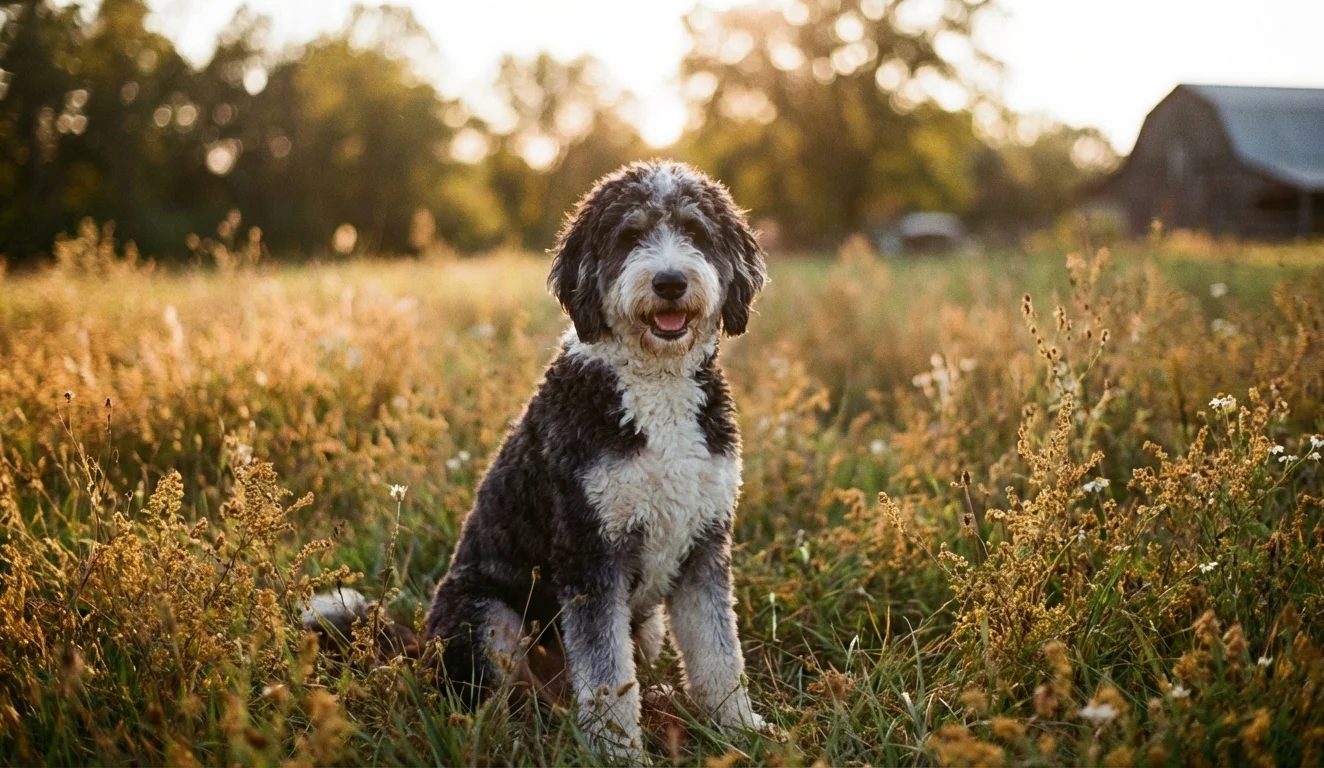
The Sheepadoodle is a cross between an Old English Sheepdog and a Standard Poodle, and it produces one of the largest dogs in the doodle family. Standards typically weigh 55-80 pounds and stand 21-27 inches tall, with a lifespan of 12-15 years. They’ve got the shaggy, black-and-white look that makes people stop you on the street and the calm, gentle temperament that makes everyone who meets one want to take it home. We get it. Sheepadoodles are hard to resist.
In Short: 55–80 lbs, 12–15 years. Moderate energy. Low-shedding (often called hypoallergenic, though no dog truly is). Watch for Ear Infections. Great for families and first-time owners.
But here’s our honest take: Sheepadoodles are a significant commitment that a lot of people underestimate because the dog looks like a big teddy bear. Sixty-plus pounds of fluffy dog needs serious grooming, we’re talking daily brushing and professional grooming bills that rival what you’d spend on your own haircuts. And while they’re calmer than Goldendoodles or Labradoodles, they’re still a big dog with real exercise needs and a herding instinct that can surface in unexpected ways. If you’ve been looking at other doodle breeds, we’ve also got profiles for Goldendoodles, Bernedoodles, Labradoodles, and Aussiedoodles, worth comparing before you decide.
Sheepadoodle at a Glance
| Trait | Details |
|---|---|
| Size | Standard: 60-80 lbs / Mini: 25-45 lbs / Micro: 15-25 lbs |
| Height | Standard: 22-27 in / Mini: 15-20 in / Micro: 14-16 in |
| Lifespan | 12-15 years |
| Energy Level | Moderate, active but not frantic |
| Shedding | Low (varies by coat type and generation) |
| Good with Kids | Excellent, one of the best large-breed family dogs |
| Good with Other Pets | Yes, typically great |
| Trainability | High, intelligent and eager to please |
| Price Range | $1,500-$3,500 from a reputable breeder |
History
The Sheepadoodle cross originated in the United States, likely in the early 2000s, though the exact date isn’t well documented. The US Army actually experimented with Old English Sheepdog-Poodle crosses as military working dogs in the 1960s, a detail that surprises most people. The modern Sheepadoodle as a companion dog emerged much later, when the designer breed trend was in full swing and breeders began exploring crosses beyond the Labradoodle and Goldendoodle.
The Old English Sheepdog is a British herding breed that dates back to the early 1800s. Despite the name, they were primarily drovers, moving cattle and sheep to market, rather than flock guardians. The shaggy double coat protected them in harsh English weather. They’re known for a calm, adaptable temperament with a goofy playfulness that persists well into adulthood. The breed’s recognizable “bearlike shuffle” gait comes from their unique body structure, higher at the hindquarters than at the shoulders.
The Standard Poodle brings intelligence (ranked #2 by Dr. Stanley Coren), athleticism, and the low-shedding coat that drives demand for every doodle cross. Standard Poodles are 40-70 pounds of lean muscle under those curls, genuinely athletic dogs that happen to also be excellent family companions.
The Sheepadoodle is not AKC recognized. Like all designer crosses, there’s no breed standard, which means significant variation in size, coat, and temperament between individual dogs. Still, the Sheepadoodle is more consistent than some doodle crosses because both parent breeds are large, intelligent, and gentle, the baseline traits tend to carry through reliably.
Sheepadoodle Generations
- F1: One Old English Sheepdog parent, one Standard Poodle parent. Most genetic diversity, but coat type varies from curly to straight.
- F1B: F1 Sheepadoodle bred back to a Poodle. Curlier coat, more predictable low-shedding. The most recommended generation for allergy-conscious buyers.
- F2: Two F1 Sheepadoodle parents. Most variable generation for coat and other traits.
Size and Appearance
Sheepadoodles come in three size categories, though the standard is by far the most common.
Standard Sheepadoodle: 60-80 pounds, 22-27 inches tall. Males tend toward the upper end of this range. This is a large, sturdy dog, not as heavy as a Bernedoodle, but similar in height. They need space.
Mini Sheepadoodle: 25-45 pounds, 15-20 inches tall. Bred using a Miniature Poodle. These have become popular for people who love the Sheepadoodle look but need a more apartment-friendly size.
Micro Sheepadoodle: 15-25 pounds, 14-16 inches tall. The smallest option, using a Toy or very small Miniature Poodle. Less common and can carry more health variability due to the extreme size difference between parent breeds.
Coat Types
- Curly coat: Poodle-dominant. Tightest curls, lowest shedding, most grooming-intensive. Common in F1B Sheepadoodles.
- Wavy coat: The most common coat type in F1 Sheepadoodles. Soft, flowing texture. Low-to-moderate shedding. Still needs daily brushing.
- Straight coat: Takes after the Old English Sheepdog side. May include a double coat, which means more shedding than the other types. Less common in later generations.
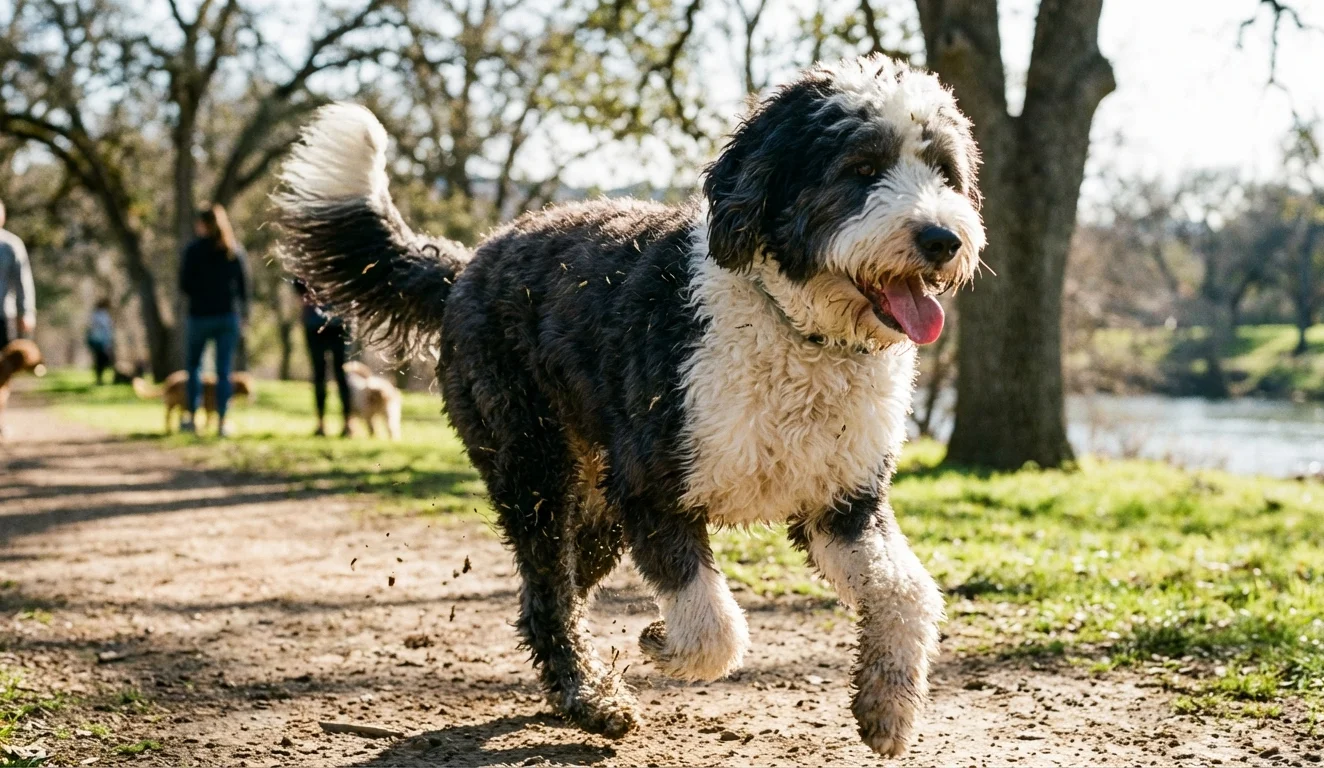
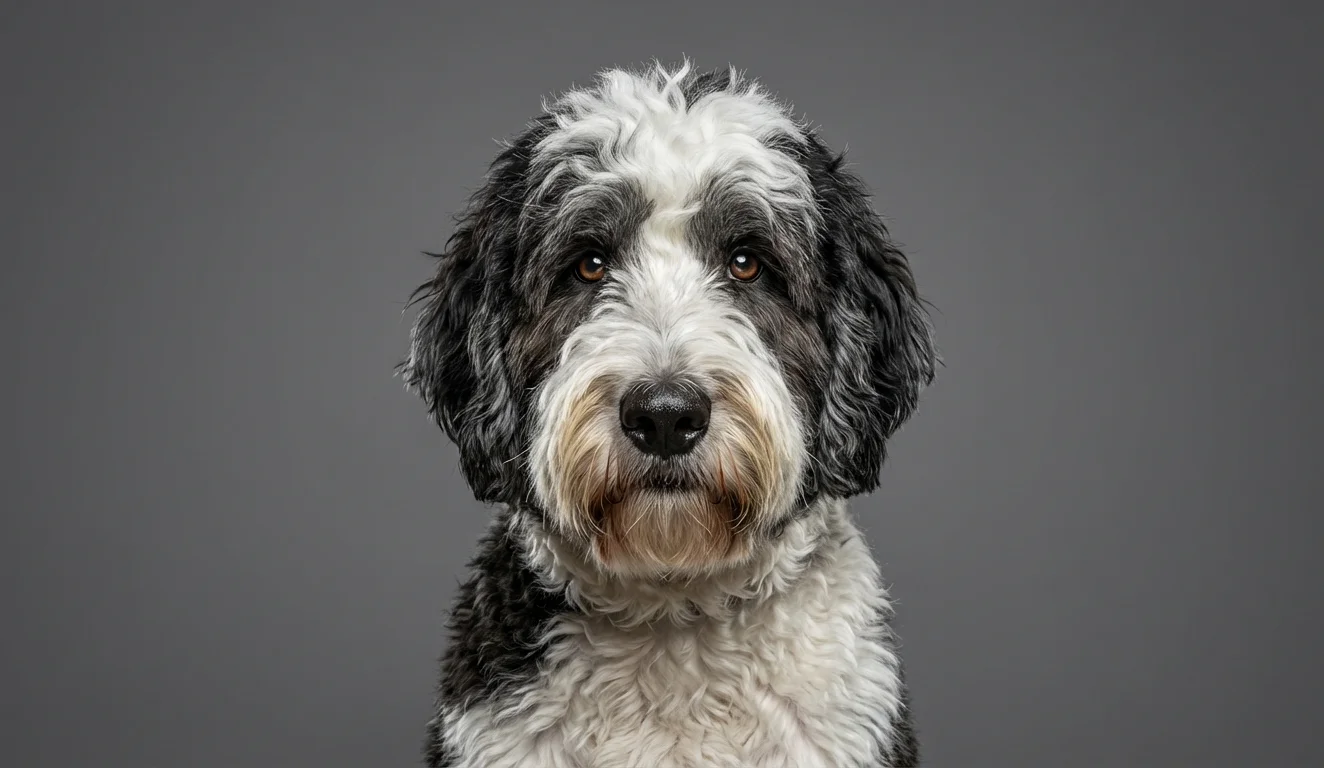
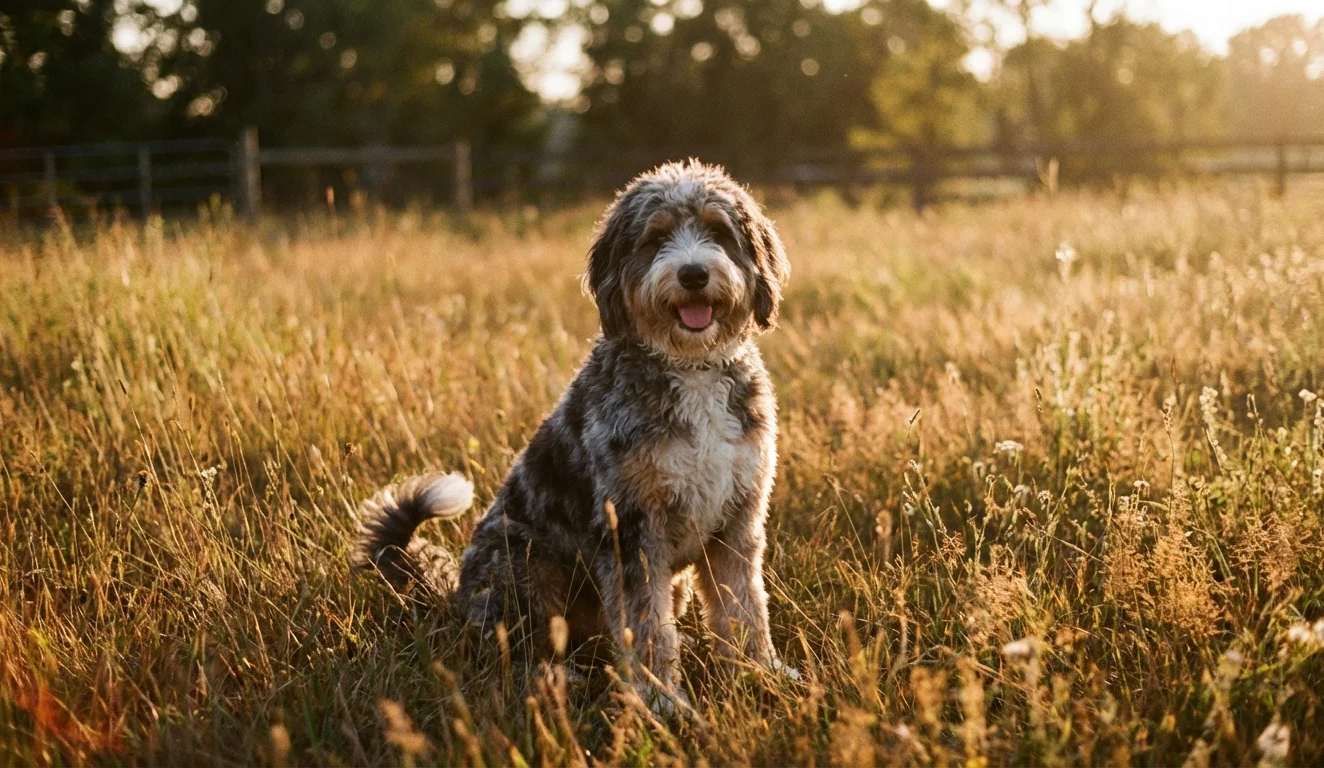
Colors are one of the Sheepadoodle’s standout features. The most iconic look is black and white, large patches of each color, often with a white blaze on the face. Grey and white (a faded version of the black-and-white pattern as the dog ages), solid black, solid white, tri-color, and red and white are all possible. Many Sheepadoodles lighten as they mature. A jet-black puppy may be steel grey by age 2. This “fading” gene comes from the Poodle side and is something to expect rather than worry about.
Sheepadoodle Temperament
The Sheepadoodle temperament is the breed’s biggest selling point, and we think it’s genuinely deserved. These are remarkably easygoing dogs for their size.
They’re gentle in a way that large dogs often aren’t. The Old English Sheepdog brings a natural gentleness, these are dogs that were bred to guide animals, not attack them. Sheepadoodles inherit that soft touch. They’re careful around small children, patient with other animals, and rarely confrontational. Multiple owners we’ve spoken to describe their Sheepadoodle’s default state as “lying next to whoever seems like they need company the most.”
Intelligence shows up as attentiveness, not hyperactivity. With Poodle smarts and sheepdog awareness, Sheepadoodles are tuned into their families. They read moods well and adjust accordingly, calm when things are calm, playful when the energy picks up. This emotional intelligence is probably why they’re increasingly popular as therapy dogs.
The herding instinct is real, though. Old English Sheepdogs are herders, and that behavior can surface in Sheepadoodles, particularly with small children. You may notice your Sheepadoodle circling the kids in the backyard, body-blocking them from going certain directions, or gently nudging people to keep the group together. It’s not aggression. It’s instinct. But it needs supervision with very small children who might be knocked over by a 70-pound dog trying to redirect them.
Separation anxiety is moderate. Sheepadoodles are social dogs that prefer company, but they’re not quite as clingy as smaller doodle crosses like the Cavapoo. Most Sheepadoodles can handle 4-6 hours alone if they’ve been exercised and given something to do. Beyond that, you’ll want to arrange for company.
Exercise Needs
Sheepadoodles need about 60 minutes of exercise per day, which places them in the middle of the doodle pack, more than a Cavapoo, less than a Goldendoodle or Aussiedoodle.
What works well:
- Long walks or moderate hikes (they’re good on trails but aren’t tireless the way a herding breed would be)
- Fetch sessions, they’re natural retrievers and the Poodle side makes them ball-motivated
- Swimming, if they take to water (many Sheepadoodles love it, thanks to the Poodle’s water retriever heritage)
- Dog park time for socialization (they generally play well with other dogs)
Mental stimulation is important too. Puzzle feeders, training sessions, and nose work all engage the Poodle brain. A Sheepadoodle that gets physical exercise but no mental challenge can become restless and mouthy.
One advantage of the Sheepadoodle over more high-energy doodle crosses: they actually have an off switch. After a solid walk or play session, they’re genuinely content to flop on the floor and relax. This is the Old English Sheepdog influence. Goldendoodle owners would kill for that quality.
Grooming
Grooming is the Sheepadoodle’s biggest ongoing demand, and we’re not exaggerating when we say it’s close to a part-time job for owners who keep the coat long.
Daily brushing is not optional. Regardless of coat type, Sheepadoodles need to be brushed every single day to prevent matting. Their coats are thick and can mat rapidly, within 48 hours of missed brushing, you’ll start finding tangles. A large slicker brush and a steel comb are your essential tools. Budget 15-20 minutes per brushing session for a standard-sized Sheepadoodle.
Professional grooming every 6-8 weeks is standard. A full groom for a large Sheepadoodle runs $80-$120, more than most breeds because of the time involved. Many owners opt for a shorter “puppy cut” or “teddy bear cut” to reduce day-to-day maintenance, which is a practical choice we’d recommend. A full, flowing Sheepadoodle coat is gorgeous but honestly unrealistic for most households.
Ear care requires weekly attention. The floppy ears and potential ear canal hair (from the Poodle side) create a warm, moist environment where infections thrive. Clean ears weekly with a vet-approved ear cleanser.
Annual grooming costs for a standard Sheepadoodle land between $700-$1,200. That’s the price of maintaining 60+ pounds of low-shedding coat, and it’s something to factor into your budget before committing.
Sheepadoodle Health Issues
Sheepadoodles benefit from hybrid vigor as a crossbreed, but both parent breeds contribute specific conditions worth monitoring.
Hip Dysplasia, Moderate prevalence, as expected for a large-breed cross. The hip joint develops improperly, leading to arthritis and pain. X-ray screening (OFA evaluation) of both parents before breeding is the standard preventive measure. Treatment ranges from supplements and weight management for mild cases to surgery at $1,500-$6,000 for severe cases.
Bloat (Gastric Dilatation-Volvulus/GDV), A serious, life-threatening emergency where the stomach fills with gas and rotates. Deep-chested dogs like Standard Poodles and Old English Sheepdogs are predisposed, and Sheepadoodles inherit that risk. Signs include a distended abdomen, restlessness, unproductive retching, and drooling. This is a veterinary emergency, get to a vet immediately. Surgery costs $3,000-$7,500. Preventive gastropexy (tacking the stomach to the body wall during spay/neuter surgery) is worth discussing with your vet.
Addison’s Disease (Hypoadrenocorticism), The adrenal glands don’t produce enough hormones. Low-to-moderate prevalence, inherited primarily from the Standard Poodle side. Signs include lethargy, vomiting, weight loss, and collapse. Treatment involves lifelong hormone replacement at $1,000-$5,000 depending on the protocol.
Sebaceous Adenitis, An inflammatory skin condition that affects the oil glands. Low prevalence but worth mentioning because Standard Poodles carry significant risk. Signs include dry, scaling skin, patchy hair loss, and a musty odor. Management costs $500-$2,000 and typically involves medicated baths and supplements.
Ear Infections, Common. The floppy ears and dense coat make Sheepadoodles prone to chronic ear issues. Individual treatment costs $100-$500, but recurring infections can add up over the dog’s lifetime.
Health Testing Checklist
A responsible Sheepadoodle breeder should provide:
- OFA hip evaluations (both parents)
- Eye exam (CERF or OFA)
- Cardiac evaluation
- Thyroid screening
- DNA panel for breed-specific conditions
Training
Sheepadoodles are smart and willing, which makes training satisfying for most owners. They’re not quite as lightning-quick as a purebred Poodle, but they make up for it with a steady, calm learning style that retains well.
Positive reinforcement is the way to go. Sheepadoodles are sensitive dogs that respond to tone of voice and emotional energy. They wilt under harsh corrections and light up with praise. Treats work well as motivators, though some Sheepadoodles are more play-motivated than food-motivated.
Start managing herding behavior early. If your Sheepadoodle starts circling children or nudging people with its body, redirect that energy into structured activities. Herding instinct can become problematic if it’s left unaddressed, especially in a large dog. Teaching a solid “leave it” and “place” command gives you tools to manage it.
Socialization during 8-16 weeks is important for any breed this size. A 70-pound dog that’s nervous around strangers is difficult to handle. Expose your Sheepadoodle puppy to various people, places, dogs, and situations during the critical socialization window. The naturally calm temperament makes this easier than with more reactive breeds, most Sheepadoodle puppies take new experiences in stride.
Leash training deserves early attention. A standard Sheepadoodle has the strength to pull you around if it wants to. Front-clip harnesses help while you’re building loose-leash skills, but consistent training from puppyhood is the real solution. They learn leash manners relatively quickly once the expectation is clear.
Cost
Sheepadoodles are in the mid-range for designer breed pricing, but their large size means higher ongoing costs for food, grooming, and gear. This isn’t a budget pet.
Purchase Price
- Reputable breeder: $1,500-$3,500. Standard Sheepadoodles are typically at the lower end. Minis and micros cost more because of the breeding complexity involved. Black-and-white parti patterns are the most in-demand color.
- Adoption/rescue: $200-$500. Sheepadoodles do end up in rescues, often because owners underestimated the grooming commitment or the dog’s eventual size. If you find one in rescue, it’s often already past the most labor-intensive puppy stage.
First-Year Costs
| Expense | Estimated Cost |
|---|---|
| Spay/neuter (consider preventive gastropexy) | $400-$800 |
| Vaccinations and first-year vet visits | $400-$800 |
| Crate, bed, bowls, leash, harness (large-dog sizing) | $250-$450 |
| Puppy training class | $150-$300 |
| Food (first year) | $500-$900 |
| Grooming (first year, starting around 4 months) | $400-$700 |
| Total first-year estimate | $2,100-$3,950 |
Ongoing Monthly Costs
Expect $100-$250 per month once the first year is done:
- Food: $50-$100/month (large dogs eat a lot)
- Grooming: $80-$120 every 6-8 weeks (roughly $50-$75/month)
- Pet insurance: $30-$55/month
- Treats, toys, misc: $20-$35/month
Lifetime Cost
Over a 13-year lifespan, a standard Sheepadoodle will cost approximately $20,000-$42,000 including purchase price, food, grooming, veterinary care, and supplies. The combination of large-dog food costs and doodle-level grooming expenses makes this one of the more expensive breeds to maintain.
Is a Sheepadoodle Right for You?
A Sheepadoodle might be a great fit if you:
- Want a large, gentle family dog that’s great with kids
- Have a house with a yard (standard-sized Sheepadoodles need space)
- Can commit to daily brushing and regular professional grooming
- Are looking for a calm-but-active large breed that actually relaxes at home
- Want a smart, trainable dog that responds well to positive reinforcement
- Can handle the financial commitment of a large, high-grooming-needs breed
A Sheepadoodle is probably NOT the right choice if you:
- Live in a small apartment (unless you’re looking at the mini or micro size)
- Don’t want to deal with daily coat maintenance and professional grooming costs
- Are on a tight budget for pet care
- Want a guard dog or watchdog (they’re too friendly for that)
- Can’t handle a dog that may try to herd your children
- Prefer a low-maintenance breed in terms of grooming
Related Breeds
If you’re considering this breed, you might also want to look at:
FAQ
Are Sheepadoodles hypoallergenic?
Not technically, no dog is, but Sheepadoodles are low-shedding, which makes them more tolerable for people with mild dog allergies. The degree of shedding depends heavily on the coat type and generation. F1B Sheepadoodles with curly coats shed the least and produce less airborne dander. F1 Sheepadoodles with straight, Old English Sheepdog-type coats can shed moderately, especially if they inherited the double coat. If allergies are your primary concern, request an F1B from a breeder and ask to spend time with their dogs before purchasing.
How big do Sheepadoodles get?
Standard Sheepadoodles typically reach 60-80 pounds and 22-27 inches tall, with males at the upper end. Mini Sheepadoodles settle around 25-45 pounds and 15-20 inches. Full adult size is usually reached by 12-16 months, with some filling out in muscle mass until about 2 years. The biggest surprise for many Sheepadoodle owners is just how quickly these dogs grow during the first six months, a 5-pound puppy can easily be 50 pounds by month six.
Do Sheepadoodles change color?
Yes, and dramatically. Most black-and-white Sheepadoodle puppies will lighten to grey-and-white by the time they’re 2-3 years old. This is called “fading” or “clearing,” and it’s caused by a gene inherited from the Poodle side. Solid black puppies may fade to silver or grey. The white portions stay white. It surprises some owners, but it’s completely normal and just part of how these dogs mature. If you want a Sheepadoodle that stays dark, some breeders can advise on which pairings are less likely to produce fading, but there’s no guarantee with any doodle cross.
Are Sheepadoodles good with other dogs?
Generally, yes. Sheepadoodles tend to be friendly and non-aggressive with other dogs. Their herding background means they’re socially aware, they read canine body language well and usually play appropriately. Standard-sized Sheepadoodles need to be supervised around very small dogs simply because of the size differential. A Sheepadoodle playing enthusiastically with a 10-pound dog creates a risk just through physics, even with the best intentions.
What’s the difference between a Sheepadoodle and a Goldendoodle?
The parent breed swap makes a noticeable difference. Sheepadoodles use an Old English Sheepdog (calm, herding instinct, shaggy coat), while Goldendoodles use a Golden Retriever (enthusiastic, retrieving drive, wavy coat). Sheepadoodles tend to be calmer, have a more noticeable herding instinct, and often display the black-and-white coloring that Goldendoodles don’t carry. Goldendoodles are generally more outgoing with strangers and higher-energy. Both are excellent family dogs. The choice usually comes down to energy level preference and whether you want a slightly more laid-back (Sheepadoodle) or more exuberant (Goldendoodle) dog.