Bernedoodle Breed Guide: The Gentle Giant Doodle With a Stubborn Streak (2026)
Bernedoodles live twice as long as purebred Bernese Mountain Dogs. Here's what that cross actually gets you, the good, the stubborn, and the grooming bills.
The Bernedoodle is a cross between a Bernese Mountain Dog and a Poodle, bred for the Bernese’s calm, affectionate temperament and the Poodle’s intelligence and low-shedding coat. Standard Bernedoodles weigh 70-90 lbs, stand 23-29 inches tall, and live 12-18 years, roughly double the lifespan of a purebred Bernese Mountain Dog.
In Short: 60–90 lbs, 12–18 years. Moderate-to-high energy. Low-shedding (often called hypoallergenic, though no dog truly is). Watch for Hip Dysplasia and Elbow Dysplasia. Great for families and first-time owners.
That mix of calm personality, those gorgeous tri-color coats, and, let’s be honest, this is the big one, a lifespan that’s roughly double what a purebred Bernese gets? It’s not hard to see why Bernedoodles have taken off. But there are some things you should know first.
Bernedoodle at a Glance
| Trait | Details |
|---|---|
| Parent Breeds | Bernese Mountain Dog + Poodle |
| Size (Standard) | 70-90 lbs, 23-29 inches |
| Size (Mini) | 25-49 lbs, 18-22 inches |
| Size (Tiny/Toy) | 10-24 lbs, 12-17 inches |
| Lifespan | 12-18 years (size-dependent) |
| Coat | Wavy to curly, low to non-shedding |
| Colors | Tri-color, phantom, sable, black, black & white |
| Temperament | Affectionate, goofy, loyal, can be stubborn |
| Exercise | 60 minutes/day |
| Grooming | Moderate-high (professional grooming every 6-8 weeks) |
| Price Range | $2,000-$5,000 |
History of the Bernedoodle
The Bernedoodle’s origin story has a clear starting point. Sherry Rupke of SwissRidge Kennels in Ontario, Canada, is widely credited with intentionally breeding the first Bernedoodles in 2003. Rupke’s goal was specific: take the Bernese Mountain Dog’s famously sweet, loyal temperament and combine it with the Poodle’s intelligence, hypoallergenic coat, and, most importantly, longer lifespan.
That last point matters a lot. Purebred Bernese Mountain Dogs have one of the shortest lifespans of any breed, averaging just 6-8 years according to data from the Bernese Mountain Dog Club of America. Cancer rates in the breed are staggering, a 2005 study published in the Journal of the American Animal Hospital Association found that nearly 67% of Bernese Mountain Dogs died from cancer-related causes.
By introducing Poodle genetics, Bernedoodle breeders aimed to harness hybrid vigor (heterosis) to reduce those health risks. And the results have been encouraging. First-generation (F1) Bernedoodles regularly live 12-15 years, with smaller variants pushing toward 15-18 years.
The breed isn’t recognized by the AKC (no designer breeds are), but Bernedoodles can be registered with the Designer Breed Registry and the International Designer Canine Registry.
Size and Appearance
Bernedoodles come in three size categories, determined by the size of the Poodle parent.
Standard Bernedoodle
Standard Bernedoodles use a Standard Poodle parent and typically weigh 70-90 lbs with a height of 23-29 inches at the shoulder. Some males exceed 90 lbs. Standard Bernedoodles are big dogs, make sure your living space and vehicle can handle that before committing.
Mini Bernedoodle
Mini Bernedoodles pair a Bernese Mountain Dog with a Miniature Poodle, producing dogs in the 25-49 lb range at 18-22 inches tall. Mini Bernedoodles have become the most popular size variant because they fit apartment living while still feeling like a “real” dog (their words, not ours).
Tiny/Toy Bernedoodle
Tiny Bernedoodles use a Toy Poodle parent and weigh 10-24 lbs at 12-17 inches tall. These are less common and often require multigenerational breeding to achieve consistently. Tiny Bernedoodles also tend to have the longest lifespans, frequently reaching 15-18 years.
Bernedoodle Coat Colors
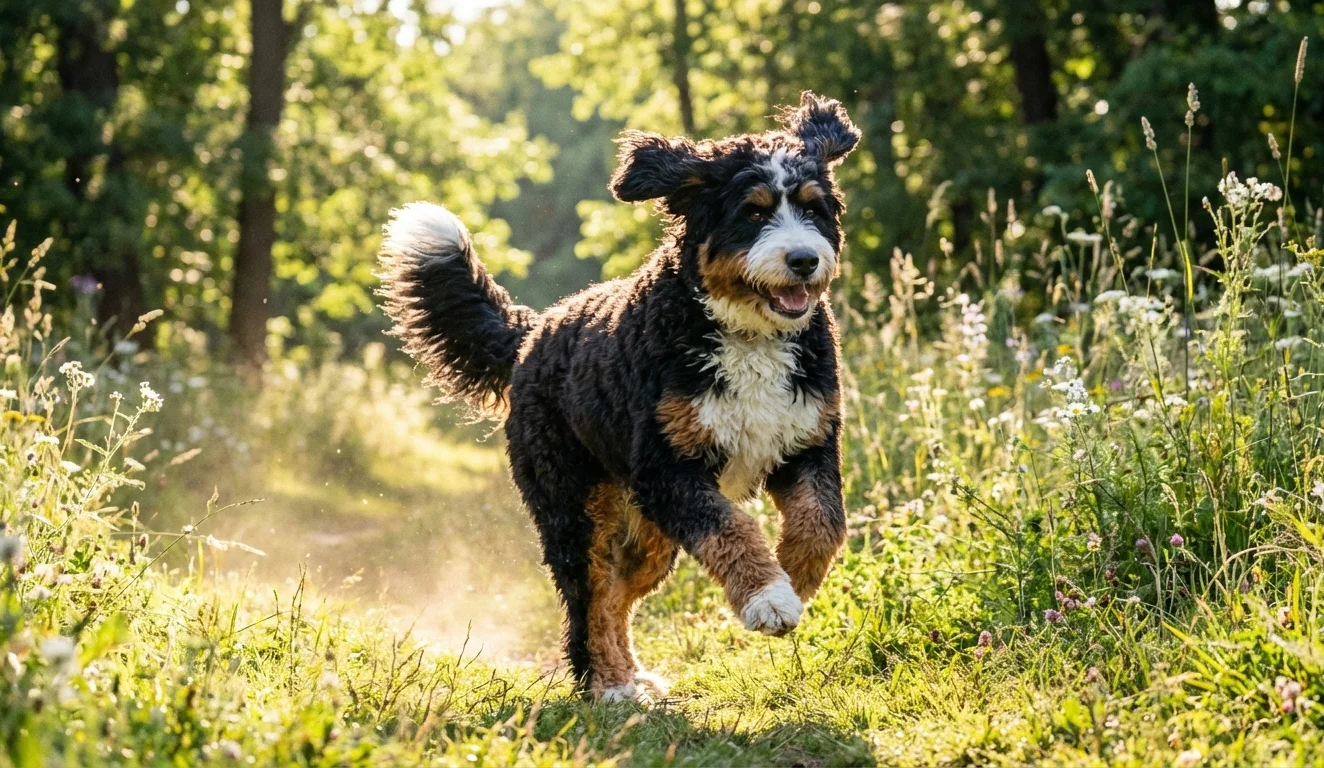
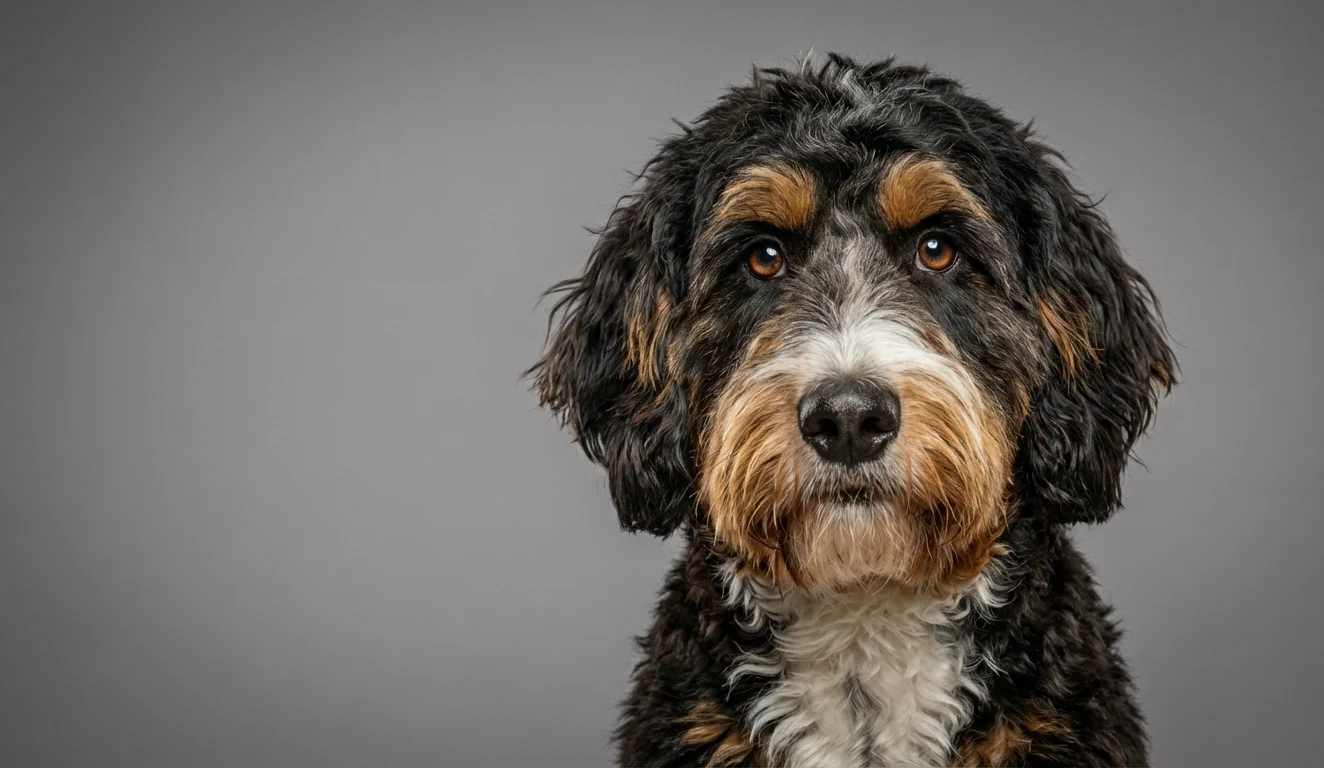
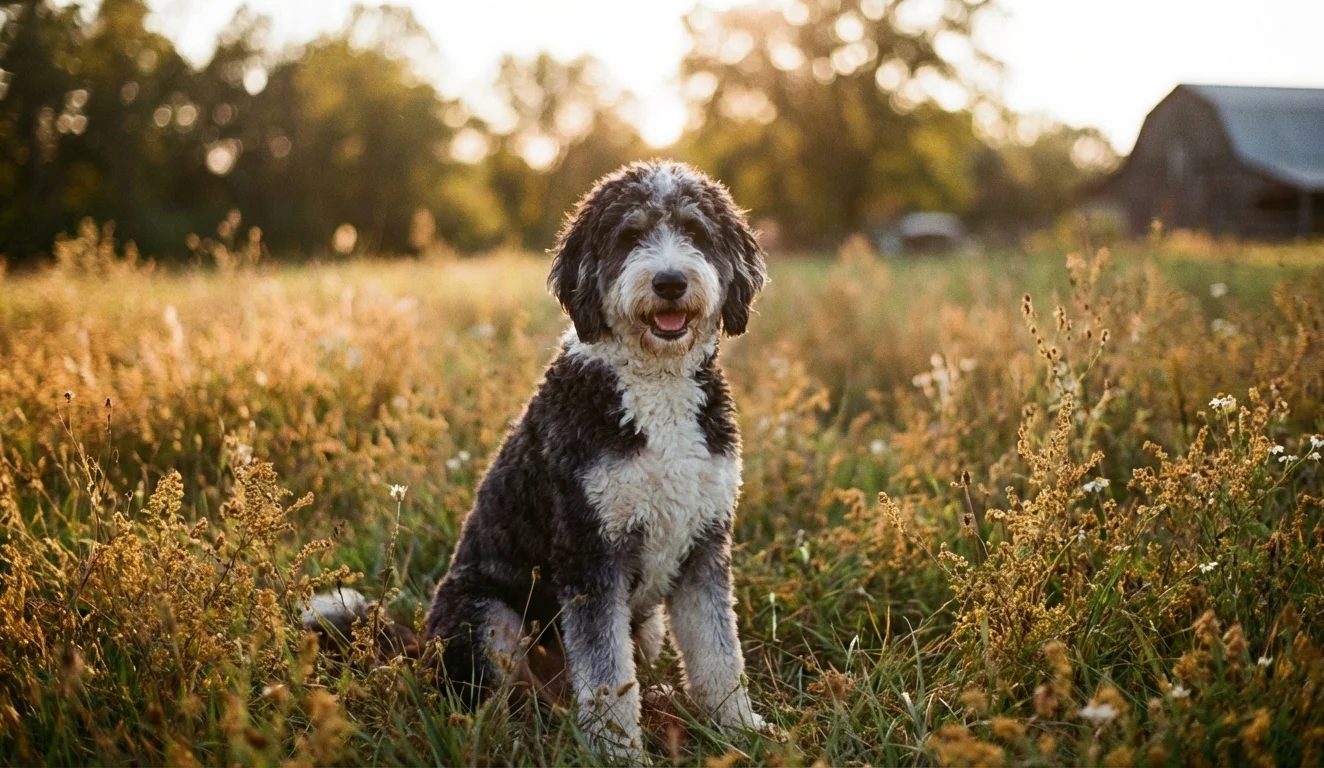
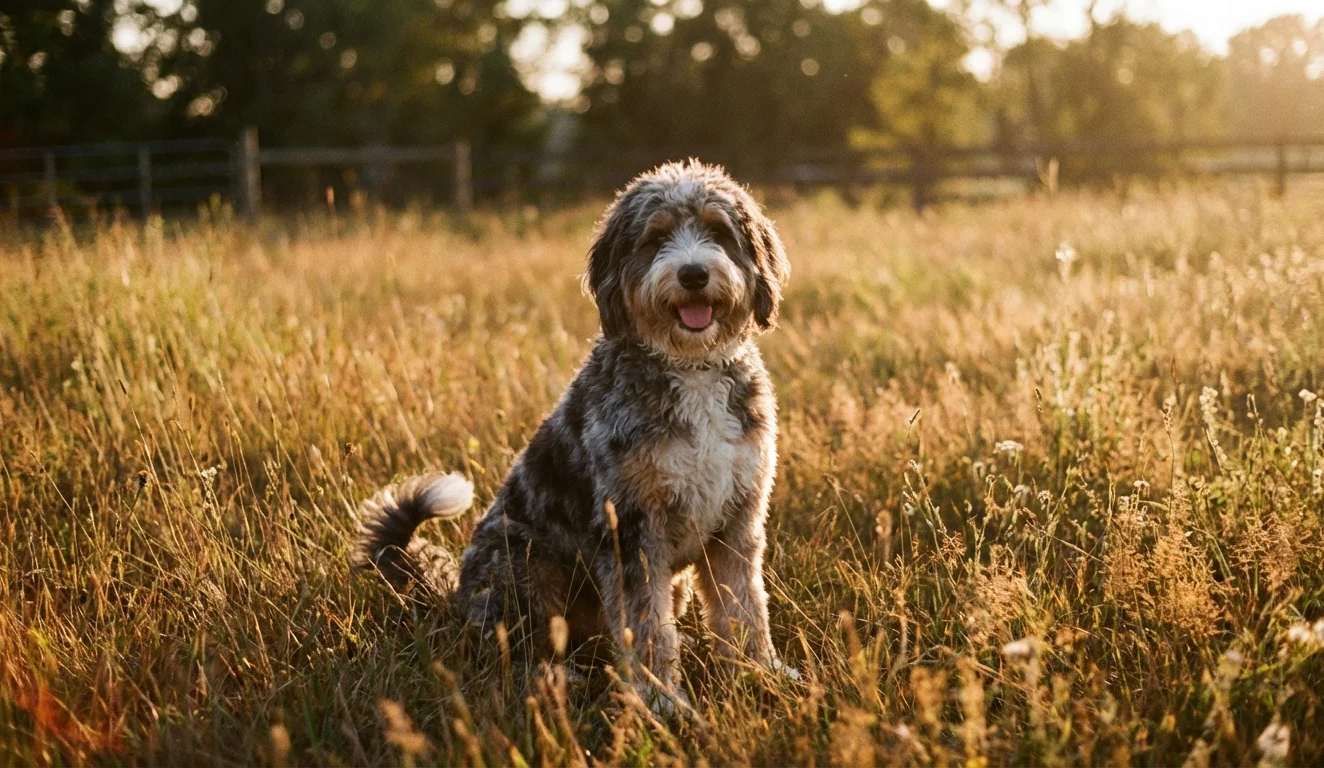
The tri-color coat, black, white, and rust, is the Bernedoodle’s signature look and the most sought-after pattern. It mirrors the classic Bernese Mountain Dog coloring and commands the highest prices from breeders.
Other Bernedoodle color patterns include:
- Phantom: black with tan/rust markings above the eyes, on the muzzle, chest, and legs (similar to a Rottweiler pattern)
- Sable: black-tipped hairs over a lighter base that often lightens with age
- Black and white (also called “tuxedo”)
- Solid black: the most common and typically least expensive
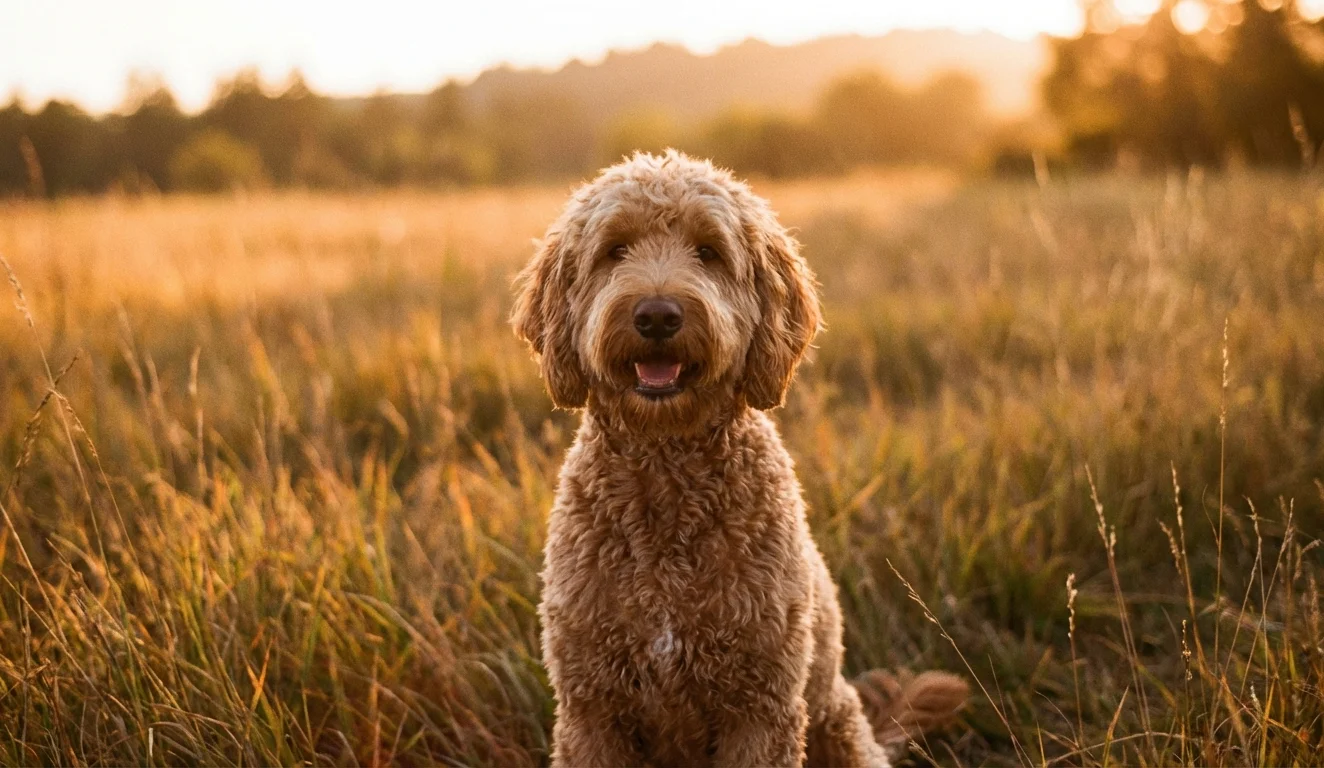
A Bernedoodle’s coat texture ranges from straight to wavy to curly, depending on how strongly the Poodle coat gene expresses. Curlier coats shed less but require more grooming.
Bernedoodle Temperament
Bernedoodles have the kind of temperament that makes you wonder why anyone gets a different dog. They’re goofy and sweet and want nothing more than to be wherever you are. Think of a dog that’s happy to hike five miles in the morning and then sleep on your feet all afternoon. That’s a Bernedoodle.
But here’s what breeders sometimes downplay: Bernedoodle puppies can be stubborn. Not aggressive, not destructive, just willfully, cheerfully defiant. You’ll ask a Bernedoodle puppy to sit, and they’ll stare at you like you’ve asked them to file taxes. This stubbornness typically comes from the Bernese side and usually fades as Bernedoodles mature (around 2-3 years old).
Adult Bernedoodles tend to mellow significantly. They’re the kind of dog who’s happy to hike 5 miles with you in the morning and then sleep on your feet for the rest of the afternoon. Bernedoodles are generally great with kids and other pets, though early socialization matters, especially with Standard Bernedoodles, since a poorly socialized 80 lb dog is a problem regardless of breed.
One thing to watch for: separation anxiety. Bernedoodles form such strong bonds that being left alone for extended periods (8+ hours regularly) can lead to anxious behaviors like barking, chewing, or house-training regression. If you work long hours away from home, a Bernedoodle may not be the best fit, or you’ll need to budget for daycare or a dog walker.
Exercise Needs
Bernedoodles need about 60 minutes of daily exercise, a mix of walks, play sessions, and mental stimulation. That’s moderate by doodle standards. Bernedoodles aren’t as high-energy as Aussiedoodles or Labradoodles, but they’re not couch potatoes either.
What Bernedoodles really love:
- Hiking: the Bernese Mountain Dog heritage shows here. Bernedoodles are natural trail dogs.
- Snow: seriously, most Bernedoodles go absolutely wild in snow. The Bernese side was literally bred for the Swiss Alps.
- Swimming: many Bernedoodles enjoy water, though it’s not universal. Introduce water gradually.
- Fetch and tug: classic, reliable, and great for burning energy in the backyard.
Mental stimulation matters too. Puzzle feeders, training sessions, and nose work help keep a Bernedoodle’s Poodle brain occupied. A bored Bernedoodle will find ways to entertain itself, and you probably won’t love what it picks.
Standard Bernedoodles can handle more intense exercise than their smaller counterparts. Tiny Bernedoodles have shorter legs and smaller reserves, 30-45 minutes of daily activity is typically enough for the toy-sized variants.
Grooming
Bernedoodle grooming requirements depend almost entirely on coat type, and coat type is a genetic lottery, even within the same litter.
Curly-coated Bernedoodles shed the least but need the most maintenance. Plan on:
- Daily brushing (or at minimum every other day) to prevent matting
- Professional grooming every 6-8 weeks ($60-$100+ per session for a Standard Bernedoodle)
- Regular ear cleaning, those floppy ears trap moisture and debris
Wavy-coated Bernedoodles are the sweet spot for most owners. They shed minimally and can get away with brushing 3-4 times per week.
Straight-coated Bernedoodles shed the most (still less than a purebred Bernese) and need the least grooming, brushing 1-2 times per week is usually sufficient.
Regardless of coat type, budget for:
- Nail trimming every 2-3 weeks
- Teeth brushing (ideally daily, realistically 3x/week)
- Eye area cleaning, especially for lighter-colored Bernedoodles prone to tear staining
A quick reality check: grooming costs add up. At $80 per professional grooming session every 6-8 weeks, you’re looking at $520-$695 per year just for haircuts. Add in brushes, shampoo, ear cleaner, and the occasional emergency mat removal, and grooming easily becomes one of the biggest ongoing expenses of Bernedoodle ownership.
Bernedoodle Health Issues
The biggest selling point of the Bernedoodle, and it’s a legitimate one, is dramatically improved health and lifespan compared to the purebred Bernese Mountain Dog.
But Bernedoodles aren’t immune to health problems. Here’s what to watch for:
Hip and Elbow Dysplasia
Both Bernese Mountain Dogs and Standard Poodles are prone to hip dysplasia. According to OFA (Orthopedic Foundation for Animals) data, approximately 20.8% of Bernese Mountain Dogs evaluated showed dysplastic hips. Standard Poodles come in lower at around 11.9%. Bernedoodles fall somewhere in between.
Ask your breeder for OFA hip and elbow clearances on both parents. This is non-negotiable, any breeder who doesn’t health test shouldn’t get your money.
Cancer Risk
While Bernedoodles have substantially lower cancer rates than purebred Bernese Mountain Dogs, the risk isn’t zero. The Bernese side carries predispositions to histiocytic sarcoma and lymphoma. F1 Bernedoodles (50/50 cross) benefit most from hybrid vigor here.
Eye Problems
Progressive retinal atrophy (PRA) and cataracts can appear in Bernedoodles, inherited from both parent breeds. Reputable breeders test for PRA through genetic panels. Ask to see results from tests like the OptiGen PRA panel.
Skin Issues
Bernedoodles can develop hot spots, allergies, and skin sensitivities. This is particularly common in curlier-coated Bernedoodles where moisture gets trapped against the skin. Regular grooming and keeping the coat clean reduces the risk.
Von Willebrand’s Disease
A blood clotting disorder that can come from the Poodle side. It’s testable, and again, responsible breeders screen for it.
The Lifespan Advantage
Here’s the bottom line on Bernedoodle health. Purebred Bernese Mountain Dogs live an average of 6-8 years, according to the Bernese Mountain Dog Club of America. Standard Bernedoodles average 12-15 years. Mini Bernedoodles often reach 14-17 years. Tiny Bernedoodles can hit 15-18 years.
That’s not a small difference. For people who love the Bernese temperament but can’t handle the heartbreak of a 7-year lifespan, the Bernedoodle offers a real alternative.
Training a Bernedoodle
Bernedoodles are intelligent, they’ve got Poodle in them, after all, and the Poodle is the second-smartest dog breed according to Stanley Coren’s The Intelligence of Dogs (1994). But intelligence and trainability aren’t always the same thing.
The Bernese Mountain Dog side brings a stubborn streak that can frustrate first-time dog owners. A Bernedoodle understands what you’re asking, they just might decide they’d rather not. This is especially pronounced during the first 12-18 months.
What works with Bernedoodles:
- Positive reinforcement: treats, praise, and play. Bernedoodles respond poorly to harsh corrections. Yelling or physical punishment will make a Bernedoodle shut down, not comply.
- Short, varied training sessions: 10-15 minutes, 2-3 times per day. Bernedoodles get bored with repetition faster than breeds like Labs or Golden Retrievers.
- Early socialization: expose Bernedoodle puppies to different people, dogs, environments, and sounds between 8-16 weeks. This window matters enormously for long-term temperament.
- Patience: this is the big one. If you’re the type who needs immediate, crisp obedience, a Bernedoodle might test your limits. If you can laugh at a puppy who rolls onto its back mid-training session, you’ll do fine.
Bernedoodles excel at therapy work thanks to their calm, people-oriented nature. Many Bernedoodle owners pursue therapy dog certification once their dog matures past the goofy puppy stage.
Bernedoodle Cost
Purchase Price
Bernedoodle puppies from reputable breeders typically cost $2,000-$5,000. Price depends on several factors:
- Color: tri-color Bernedoodles command the highest prices, often $3,500-$5,000+
- Size: mini and tiny Bernedoodles usually cost more than standards due to higher breeding difficulty
- Generation: F1b Bernedoodles (75% Poodle) are often priced higher because of more predictable, curlier coats
- Breeder reputation: established breeders with extensive health testing charge more (and they should)
Red flags on pricing: If you see a Bernedoodle advertised under $1,500, investigate carefully. Low prices often signal puppy mills, backyard breeders who skip health testing, or scams. The health testing alone (OFA hips/elbows, genetic panels, cardiac, ophthalmologist exams) costs breeders $500-$800+ per parent dog.
Monthly Costs
Budget $120-$250 per month for a Standard Bernedoodle, broken down roughly as:
| Expense | Monthly Estimate |
|---|---|
| Food (high-quality kibble or fresh) | $50-$100 |
| Pet insurance | $30-$60 |
| Grooming | $45-$90 (averaged monthly) |
| Treats and chews | $15-$30 |
| Miscellaneous (toys, supplements, flea/tick) | $15-$30 |
First-Year Costs
The first year with a Bernedoodle is the most expensive. Between purchase price, initial vet visits, spay/neuter, supplies (crate, bed, leash, bowls), and puppy training classes, expect to spend $4,000-$8,000+ in year one.
Is a Bernedoodle Right for You?
A Bernedoodle is a great fit if you:
- Want a large, affectionate family dog with a long lifespan
- Love the Bernese Mountain Dog look and temperament but want a healthier dog
- Can commit to regular grooming (both at home and professional)
- Have time to spend with your dog, Bernedoodles don’t do well left alone all day
- Are patient enough to work through the stubborn puppy phase
- Have the budget for a higher-maintenance breed ($120-$250/month)
A Bernedoodle might NOT be right if you:
- Want a low-grooming dog, Bernedoodles need consistent coat care
- Work long hours with no dog care option, separation anxiety is real with this breed
- Need a highly obedient working dog, Bernedoodles are smart but independently minded
- Are on a tight budget, between purchase price and ongoing grooming, Bernedoodles aren’t cheap
- Want a high-energy running or biking partner, Bernedoodles are moderate-energy, not athletes
Related Breeds
If you’re considering this breed, you might also want to look at:
Frequently Asked Questions About Bernedoodles
Are Bernedoodles hypoallergenic?
Bernedoodles are often marketed as hypoallergenic, but no dog breed is truly 100% hypoallergenic. Bernedoodles with curlier coats (especially F1b Bernedoodles, which are 75% Poodle) produce significantly less dander and shed far less than purebred Bernese Mountain Dogs. The American College of Allergy, Asthma & Immunology notes that all dogs produce allergens, the difference is how much. Allergy sufferers should spend time with a Bernedoodle before committing to purchase, as individual reactions vary.
How long do Bernedoodles live?
Bernedoodles have a lifespan of 12-18 years depending on size, which is significantly longer than purebred Bernese Mountain Dogs (6-8 years average). Standard Bernedoodles typically live 12-15 years, Mini Bernedoodles average 14-17 years, and Tiny/Toy Bernedoodles can reach 15-18 years. Smaller Bernedoodle variants tend to live longer, which is consistent with the general pattern seen across all dog breeds. Genetics, diet, exercise, and preventive veterinary care all influence individual Bernedoodle lifespan.
Do Bernedoodles shed?
Bernedoodle shedding depends heavily on coat type, which varies even within a single litter. Curly-coated Bernedoodles shed very little and are the best option for people concerned about dog hair. Wavy-coated Bernedoodles shed minimally, noticeably less than a purebred Bernese Mountain Dog. Straight-coated Bernedoodles shed the most, though still less than a full Bernese. F1b Bernedoodles (backcrossed to Poodle) have the most consistently low-shedding coats because of their higher Poodle genetics percentage.
Are Bernedoodles good with kids?
Bernedoodles are widely regarded as excellent family dogs and generally do very well with children. The breed’s Bernese Mountain Dog heritage gives Bernedoodles a patient, gentle disposition, while the Poodle side adds playfulness and intelligence. Standard Bernedoodles are large dogs (70-90 lbs), so supervision around toddlers and small children is always recommended, not because of aggression, but because of sheer size. Early socialization with children helps Bernedoodles develop confident, relaxed behavior around kids of all ages.
What’s the difference between F1 and F1b Bernedoodles?
An F1 Bernedoodle is a first-generation cross, 50% Bernese Mountain Dog and 50% Poodle. F1 Bernedoodles have the most genetic diversity and benefit most from hybrid vigor, but their coat type is less predictable. An F1b Bernedoodle is an F1 Bernedoodle bred back to a Poodle, making the puppy 75% Poodle and 25% Bernese. F1b Bernedoodles have curlier, more consistently low-shedding coats, which makes them popular with allergy sufferers. The trade-off is that F1b Bernedoodles may lose some of the Bernese Mountain Dog’s distinctive tri-color pattern and stocky build.