Standard Poodle Breed Guide: The Smartest Dog Nobody Takes Seriously (2026)
Standard Poodles are athletic, wicked smart, and nothing like the prissy stereotype. Here's what owning one actually looks like.
The Standard Poodle is one of the most misunderstood breeds in America. They stand 21-27 inches tall, weigh 40-70 pounds depending on sex, and live an impressively long 10-18 years. Behind the fancy haircuts and show-ring reputation is a dog that was originally bred to leap into freezing water and retrieve ducks all day. That’s not a lap dog. That’s an athlete.
In Short: 40–70 lbs, 10–18 years. High energy. Low-shedding (often called hypoallergenic, though no dog truly is). Watch for Addison’s Disease and Hip Dysplasia. Great for families and first-time owners, apartment-friendly.
We’d argue the Standard Poodle is the most underrated breed out there. People see the continental clip and write them off as high-maintenance fashion accessories. Meanwhile, Poodle owners know the truth: these dogs are scary smart, genuinely funny, and will outwork most sporting breeds on any given Saturday. If you can get past the haircut prejudice, you might be looking at one of the best all-around dogs that exists.
Standard Poodle at a Glance
| Trait | Details |
|---|---|
| Breed Group | Non-Sporting (AKC) |
| Height | Males: 22-27 in / Females: 21-25 in |
| Weight | Males: 60-70 lbs / Females: 40-50 lbs |
| Life Expectancy | 10-18 years |
| Coat | Curly, dense, single coat |
| Colors | Black, White, Apricot, Brown, Silver, Blue, Red, Cream |
| Temperament | Intelligent, Active, Alert, Faithful |
| Shedding | Low (but grooming-intensive) |
| Energy Level | High |
| Good With Kids | Yes |
| Hypoallergenic | Yes (low-shedding, not truly allergen-free) |
History of the Standard Poodle
The word “Poodle” comes from the German Pudelhund, meaning “splashing dog.” And that tells you everything about what this breed was actually designed to do. Standard Poodles originated in Germany as water retrievers, probably during the 15th or 16th century, though France adopted the breed so thoroughly that the Poodle became France’s national dog. The French call them Caniche, from canard, duck.
Those elaborate grooming clips that look so ridiculous? They had a purpose. Hunters shaved the legs and torso to reduce drag in the water while leaving puffs of fur around the joints and chest to protect vital organs from cold. The pom-pom on the tail helped hunters spot their dog in tall reeds. Fashion ruined a perfectly practical haircut.
Standard Poodles gained AKC recognition in 1887, making them one of the earliest registered breeds in America. Over the 20th century, they transitioned from working water dogs to show dogs to, increasingly, family companions. But the retrieving instinct is still there. Take a Standard Poodle near water and watch what happens.
Size and Appearance
Standard Poodles are bigger than most people expect. Males typically stand 22-27 inches at the shoulder and weigh 60-70 pounds. Females run 21-25 inches and 40-50 pounds. There’s a noticeable size difference between the sexes in this breed, more so than in many others.
Build
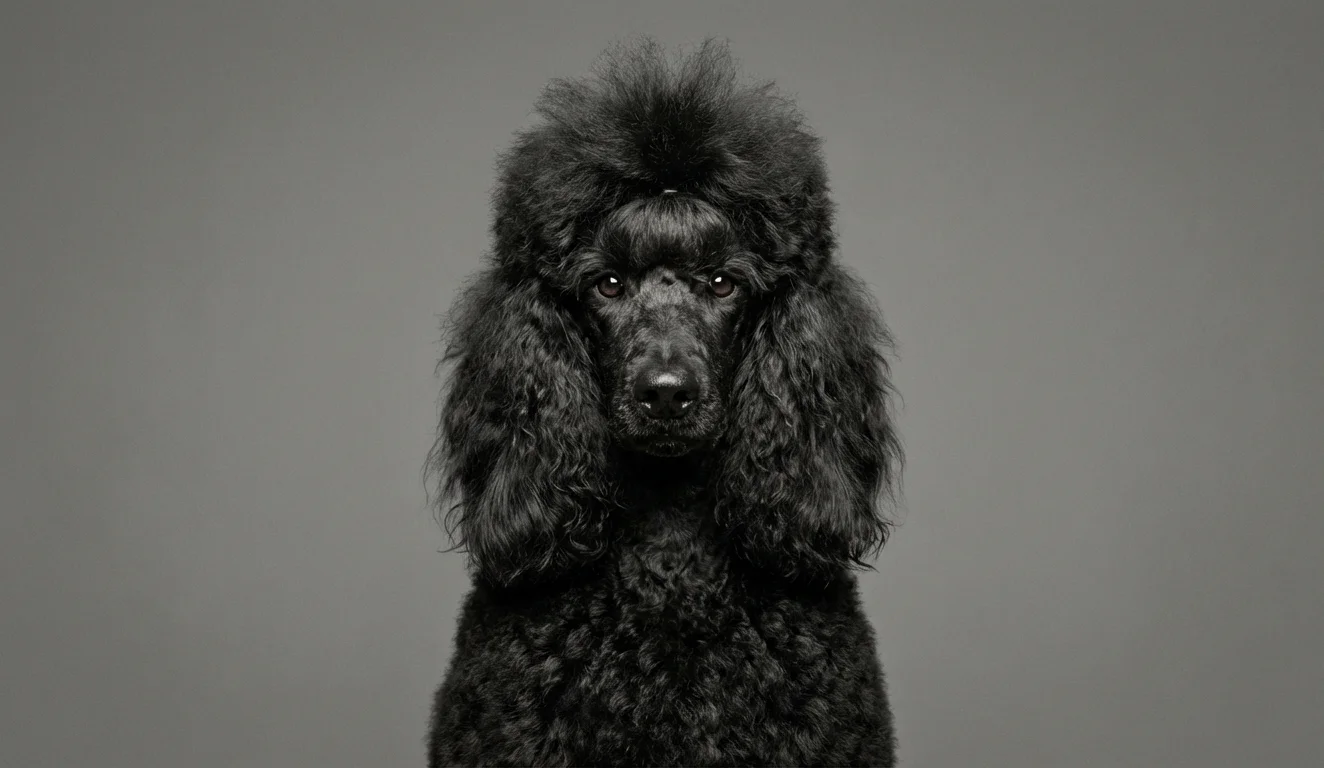
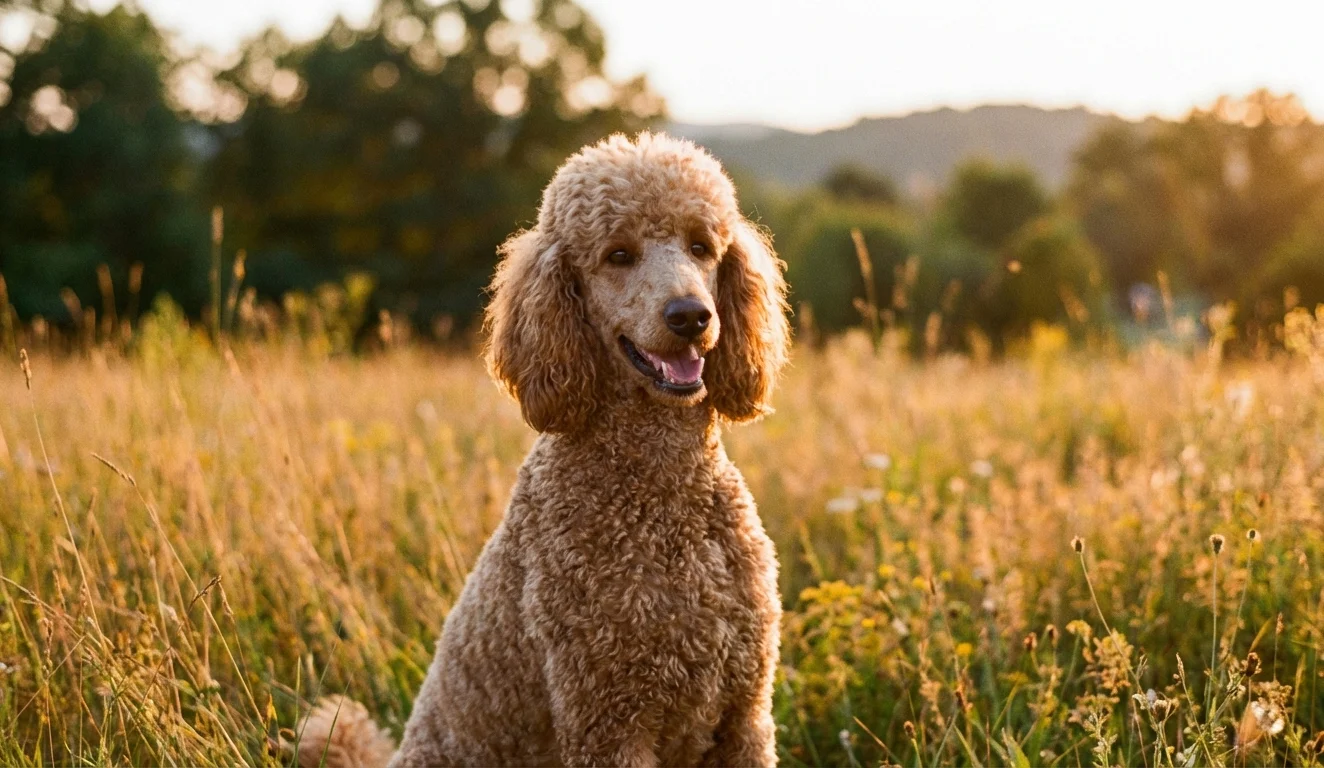
The Standard Poodle has a square, balanced build, the length of the body roughly equals the height at the shoulder. They’re athletic and leggy without looking fragile. Under that curly coat is a muscular, well-proportioned dog built for endurance.
Coat and Color
The Poodle coat is unique. It’s a single-layer coat of dense, curly hair (not fur) that grows continuously, much like human hair. This is why Poodles don’t shed in the traditional sense, the dead hair gets trapped in the curls instead of falling on your couch. Great for allergies. Terrible if you skip grooming.
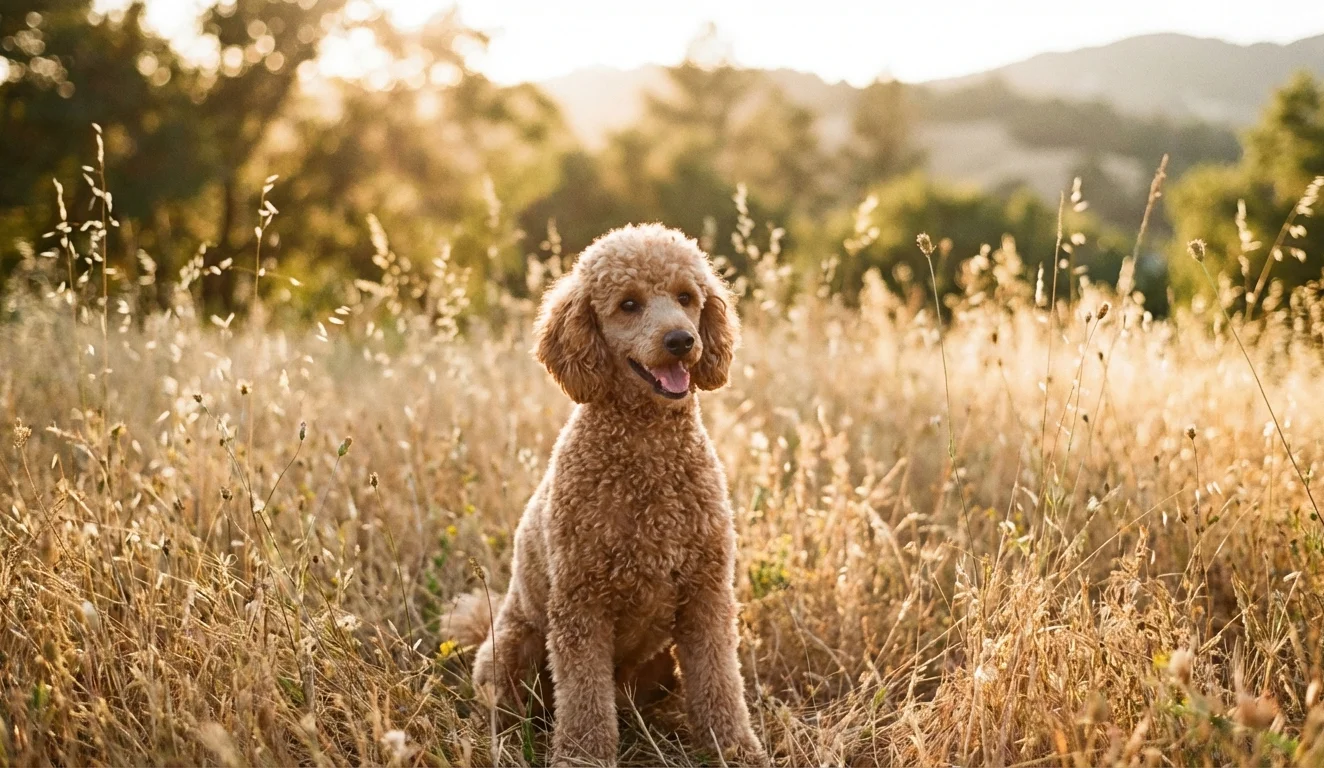
Standard Poodles come in a wide range of solid colors: black, white, apricot, brown, silver, blue, red, and cream. The AKC requires solid colors for the show ring, but parti-colored Poodles (two or more colors) exist and are increasingly popular. We think the reds and apricots are particularly striking, but we’re biased.
Standard Poodle Temperament
Poodles are the second most intelligent dog breed according to Stanley Coren’s The Intelligence of Dogs, ranking just behind Border Collies. But intelligence in Poodles looks different than in, say, a German Shepherd. Poodles are clever in a way that feels almost human, they read emotions, anticipate routines, and sometimes seem to be making fun of you.
What living with a Standard Poodle is actually like:
- They learn fast. Almost too fast. A Standard Poodle will pick up a new command in under five repetitions. They’ll also learn things you didn’t intend to teach them, like how to open the pantry door or which drawer has the leashes in it.
- They’re sensitive. Poodles are emotionally attuned to their owners in a way that can be surprising. Harsh corrections or a tense household will genuinely affect them. This isn’t a breed you can bully into compliance.
- Separation anxiety is real. Standard Poodles bond deeply and don’t do well left alone for long stretches. Eight-plus hours home alone is a recipe for destructive behavior or obsessive barking.
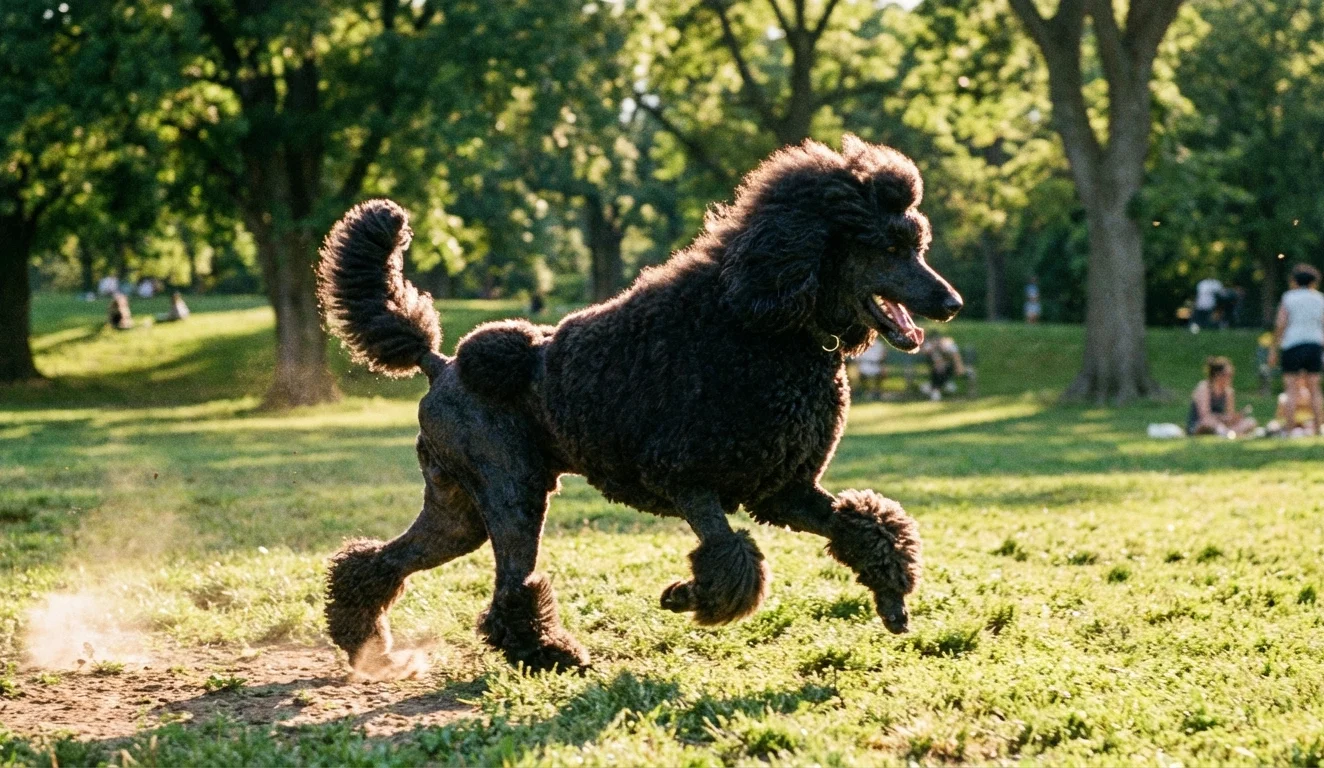
- They have a goofy side. Despite the elegant appearance, Poodles are clowns. They’ll prance around with a toy, do zoomies that look choreographed, and invent games to amuse themselves. The dignified image is marketing. Behind the curtain is a dog that makes you laugh daily.
One thing we’d want you to know: Standard Poodles can be reserved with strangers. They’re not Labs, they don’t love everyone immediately. They’ll warm up, but there’s an initial assessment period. Some people mistake this for aloofness. It’s actually discernment.
Exercise Needs
Standard Poodles need about 60 minutes of exercise per day, and they’re happiest when that exercise involves some variety. A Poodle that does the same walk around the same block every day will get bored, and a bored Poodle will let you know about it.
What works well for Standard Poodles:
- Swimming. This is a water dog. Most Standard Poodles take to water naturally and will swim until you make them stop.
- Retrieving games. The instinct is still strong. Fetch, dock diving, and hunt tests all tap into what Poodles were bred to do.
- Agility and obedience. Standard Poodles excel in competitive agility, their combination of speed, intelligence, and handler focus makes them natural performers.
- Long walks and hikes. They have the stamina for serious trail time without the hyperactive edge of some sporting breeds.
Mental stimulation matters as much as physical exercise with this breed. Puzzle feeders, training sessions, and nose work keep their brains engaged. A Standard Poodle that’s physically tired but mentally understimulated will still find trouble.
Grooming
Here’s the trade-off with Standard Poodles: they barely shed, but they require more grooming than almost any other breed. That curly coat grows continuously, and if you don’t stay on top of it, mats form fast, sometimes within a week.
The grooming reality:
- Daily brushing is ideal, especially if you keep the coat longer. At minimum, brush thoroughly two to three times per week.
- Professional grooming every 4-6 weeks is essentially mandatory. Expect to pay $75-$120 per session for a Standard Poodle, sometimes more depending on the clip and your area.
- Ear cleaning weekly, Poodles grow hair inside the ear canal, which traps moisture and can lead to infections.
- Teeth brushing two to three times per week.
Many pet owners opt for a simple “puppy clip” or “kennel clip”, the coat trimmed to a uniform 1-2 inches all over, which is far easier to maintain than show-ring styles. We’d strongly recommend this approach unless you genuinely enjoy grooming as a hobby. The fancy clips look gorgeous at Westminster, but maintaining one at home is a part-time job.
Annual grooming costs for a Standard Poodle typically run $900-$1,400, which is significantly more than most breeds. Factor this into your budget before committing.
Standard Poodle Health Issues
Standard Poodles are generally healthy dogs with one of the longer lifespans among medium-to-large breeds, 10-18 years, with many reaching 14 or 15. But there are conditions to watch for.
Addison’s Disease (Hypoadrenocorticism)
Standard Poodles are significantly overrepresented for Addison’s disease compared to the general dog population. This condition occurs when the adrenal glands don’t produce enough cortisol and aldosterone. Symptoms can be vague, lethargy, vomiting, weight loss, poor appetite, which makes early diagnosis tricky. Once diagnosed, Addison’s is manageable with lifelong medication, but treatment costs range from $1,000-$5,000 initially plus ongoing monthly medication.
Hip Dysplasia
The OFA database shows that Standard Poodles have a moderate prevalence of hip dysplasia. It’s less common than in breeds like German Shepherds or Bulldogs, but still worth screening for. Reputable breeders should provide OFA hip evaluations for both parents. Treatment can cost $1,500-$6,000 depending on severity.
Bloat (Gastric Dilatation-Volvulus)
As a deep-chested breed, Standard Poodles are at elevated risk for bloat, a life-threatening emergency where the stomach fills with gas and can twist. Symptoms include a distended belly, unproductive retching, restlessness, and drooling. This is a rush-to-the-emergency-vet situation. Some owners opt for prophylactic gastropexy (stomach tacking) during spay/neuter surgery to reduce risk. Emergency treatment costs $2,000-$7,500.
Sebaceous Adenitis
This is an inflammatory skin condition that’s particularly associated with Standard Poodles. It destroys the sebaceous glands, leading to scaling, hair loss, and secondary skin infections. Treatment costs $500-$2,000 and usually involves medicated shampoos and oil treatments. It’s not life-threatening but can be chronic and frustrating.
Progressive Retinal Atrophy (PRA)
PRA causes gradual vision loss and eventual blindness. A DNA test can identify carriers. Ask breeders for PRA testing results, responsible Standard Poodle breeders will have this done. Treatment is limited, costing $2,000-$3,000 primarily for diagnosis and supportive care.
Training a Standard Poodle
Training a Standard Poodle is, frankly, a pleasure. These are dogs that want to learn, learn quickly, and retain what they’ve learned. Poodles rank second in working intelligence, and you feel that ranking every time you introduce a new concept.
What makes Standard Poodles easy to train:
- They pick up commands in fewer than five repetitions on average
- They’re highly motivated by both food rewards and praise
- They enjoy the process of learning, it’s mental stimulation for them
- They read handler body language exceptionally well
Common training mistakes with Poodles:
- Being too harsh. Poodles are sensitive. Heavy corrections can make them shut down or become anxious. Positive reinforcement works dramatically better than punishment with this breed.
- Not challenging them enough. If your training sessions feel boring to you, they definitely feel boring to your Poodle. Keep sessions short, varied, and progressively more challenging.
- Skipping socialization. Because Standard Poodles can be reserved with strangers, early socialization is especially important. Expose them to different people, environments, and situations between 8-16 weeks.
Standard Poodles excel at obedience, agility, rally, tracking, and even herding trials. If you want a dog that can compete in practically any canine sport, the Standard Poodle is hard to beat.
Standard Poodle Cost
Purchase Price
A Standard Poodle puppy from a reputable breeder typically costs $1,000-$3,000. Show-quality dogs from champion lines can run significantly higher. Color can affect price too, reds and parti-colors often command a premium.
Rescue Poodles are available for $200-$500 through breed-specific rescues like the Poodle Club of America Rescue Foundation. Adults and seniors are easier to find than puppies in rescue.
Monthly Costs
| Expense | Monthly Estimate |
|---|---|
| Food (high-quality kibble) | $40-$60 |
| Professional grooming (averaged) | $75-$120 |
| Preventive vet care (averaged) | $15-$30 |
| Pet insurance | $30-$50 |
| Treats and chews | $10-$20 |
| Miscellaneous (toys, supplies) | $10-$20 |
| Total | $120-$250 |
The grooming line item is what separates Standard Poodle costs from most other breeds. That $75-$120 per month is essentially non-negotiable unless you learn to groom at home, which is doable but requires a significant investment in equipment (clippers, table, dryer) and time to learn.
First-year costs including purchase, supplies, initial vet visits, and spay/neuter typically run $3,500-$6,000.
Is a Standard Poodle Right for You?
A Standard Poodle is a great fit if you:
- Want an intelligent, trainable dog that keeps you on your toes
- Have allergies or prefer a low-shedding breed
- Can commit to regular professional grooming (and the budget for it)
- Want a dog that’s athletic enough for hiking and swimming but calm enough at home
- Have time to spend with your dog, Poodles need companionship
- Enjoy training and mental challenges
A Standard Poodle might NOT be right if you:
- Want a low-maintenance dog (the grooming requirements are real)
- Are gone from home 8+ hours a day without a dog walker or daycare
- Want an instant-friends-with-everyone kind of dog, Poodles are warm but selective
- Don’t want to budget $900+ per year for grooming alone
- Prefer a dog that’s more independent and less emotionally tuned in
The Standard Poodle is one of those breeds that converts people. Owners who got a Poodle on a whim or because of allergies often become die-hard breed evangelists within a year. There’s something about living with a dog that’s both genuinely athletic and genuinely funny that gets under your skin. We think they deserve way more respect than they get.
Related Breeds
If you’re considering this breed, you might also want to look at:
Frequently Asked Questions
Are Standard Poodles hypoallergenic?
Standard Poodles are as close to hypoallergenic as a dog can get, but no breed is truly allergen-free. Poodles produce less dander than most breeds because their curly coat traps dead hair and skin cells instead of releasing them into the air. People with mild to moderate dog allergies often do well with Poodles, but if you have severe allergies, spend extended time with a Standard Poodle before committing. The proteins in saliva and urine also trigger allergic reactions, and Poodles produce those just like every other dog.
How big do Standard Poodles get?
Standard Poodles are medium-to-large dogs. Males typically weigh 60-70 pounds and stand 22-27 inches at the shoulder. Females are noticeably smaller at 40-50 pounds and 21-25 inches. The “Standard” designation means they’re over 15 inches tall, anything shorter is classified as a Miniature or Toy Poodle. Some Standard Poodles from European lines can exceed 70 pounds, so ask your breeder about the size of previous litters if a specific size range matters to you.
Do Standard Poodles bark a lot?
Standard Poodles have a moderate barking tendency. They’re alert dogs that will bark to notify you of visitors, unusual sounds, or something out of place, think of it as a built-in doorbell. They’re not typically nuisance barkers like some smaller breeds, but a bored or anxious Standard Poodle can develop excessive barking habits. Adequate exercise, mental stimulation, and companionship are the best prevention. If barking becomes an issue, Poodles respond well to training corrections because they’re so attuned to their owners’ feedback.
How long do Standard Poodles live?
Standard Poodles have one of the longest lifespans among medium-to-large breeds, typically 10-18 years. Many Standard Poodles live well into their mid-teens when they receive proper care. Factors that influence longevity include genetics (buying from health-tested parents matters), maintaining a healthy weight, regular veterinary care, and dental health. The wide lifespan range reflects the variability in the breed, dogs from health-tested lines with attentive owners tend to land on the higher end.
What’s the difference between Standard, Miniature, and Toy Poodles?
All three are the same breed, the difference is size. Standard Poodles are over 15 inches at the shoulder (typically 21-27 inches). Miniature Poodles are 10-15 inches. Toy Poodles are under 10 inches. Temperament is broadly similar across all three sizes, though Standard Poodles tend to be calmer and more athletic, while Toys can be more high-strung. The Standard is the original size, Miniatures and Toys were bred down from Standards over centuries. If you want a Poodle that can be a serious exercise partner, the Standard is your only real option.