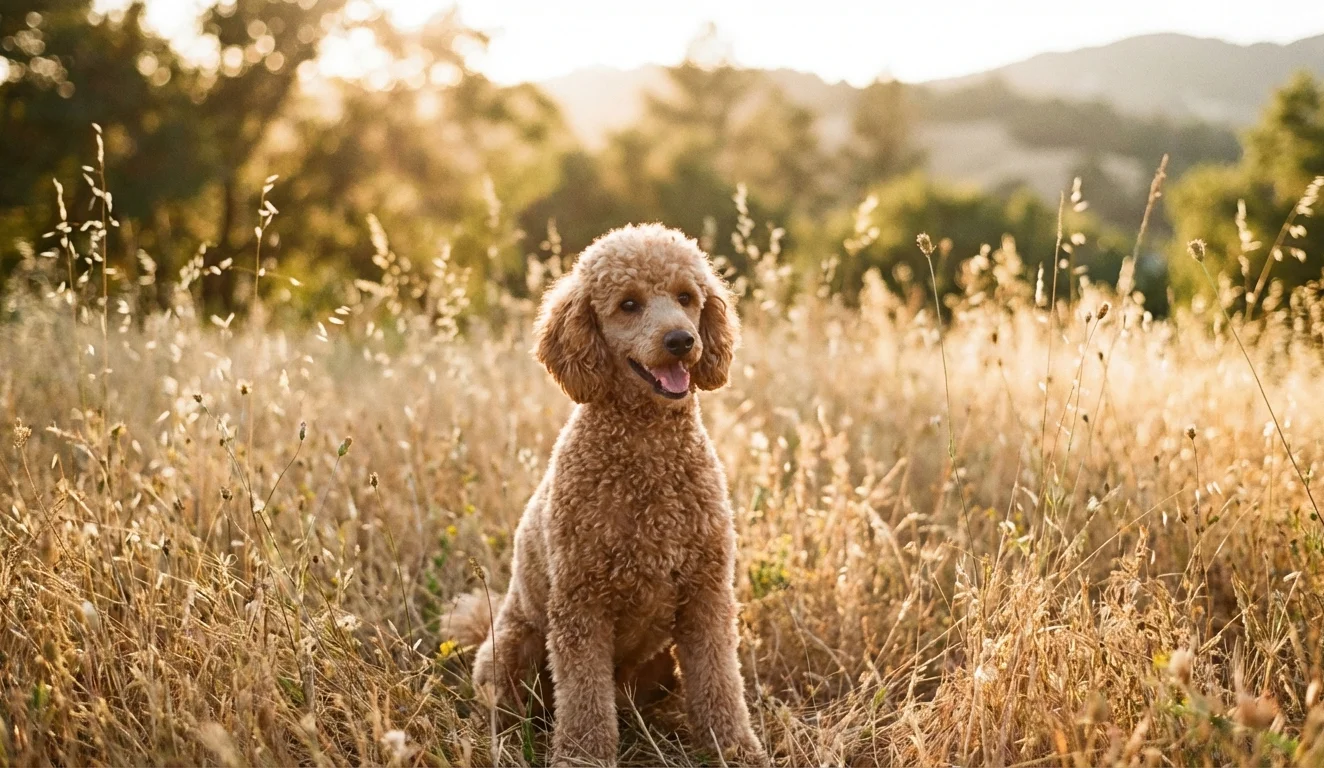
Miniature Poodle Breed Guide: The Brains in a Smaller Package (2026)
Miniature Poodles are the second-smartest breed in the world crammed into a 10-15 pound body. Here's why they're not just a shrunken Standard.
The Miniature Poodle stands 10-15 inches tall, weighs 10-15 pounds, and lives an impressively long 10-18 years. Don’t let the size fool you. This is the same dog that ranks #2 on Stanley Coren’s canine intelligence list, the same working brain as the Standard Poodle, just housed in a body that fits on your lap. They’re athletic, they’re opinionated, and they will absolutely outsmart you if you’re not paying attention.
In Short: 10–15 lbs, 10–18 years. High energy. Low-shedding (often called hypoallergenic, though no dog truly is). Watch for Patellar Luxation. Great for families and first-time owners, apartment-friendly.
We think the Miniature Poodle is one of the most underrated dogs out there. People see the fancy haircut and assume this is some kind of decorative accessory dog. That’s wrong. Miniature Poodles were bred down from Standards that retrieved ducks in freezing water, and they still carry that drive. If you want a small dog that actually acts like a real dog, one that hikes, learns tricks in a single session, and has genuine athletic ability, the Mini Poodle deserves a serious look. (We also have a Standard Poodle profile if you’re considering the larger version.)
Miniature Poodle at a Glance
| Trait | Details |
|---|---|
| Breed Group | Non-Sporting (AKC) |
| Height | 10-15 inches |
| Weight | 10-15 lbs |
| Life Expectancy | 10-18 years |
| Coat | Curly, dense, single coat |
| Colors | Black, White, Apricot, Silver, Brown, Blue, Cream, Red, Cafe Au Lait, Grey |
| Temperament | Intelligent, Active, Faithful, Alert |
| Shedding | Low (hypoallergenic) |
| Energy Level | High |
| Good With Kids | Yes |
| Apartment Friendly | Yes |
| First-Time Owner Friendly | Yes |
History
The Poodle’s origin story doesn’t start in a Parisian salon. It starts in the marshes of Germany, where “Pudelhund” (literally “splashing dog”) worked as a water retriever for hunters. The breed’s iconic clips weren’t fashion, they were functional. Hunters shaved the coat to reduce drag in water while leaving fur around the joints and organs for warmth.
Standard Poodles came first. The Miniature Poodle was developed later, likely in the 17th and 18th centuries, as breeders selected smaller Standards for truffle hunting and eventually for companionship. The French aristocracy fell hard for the breed, and Poodles became France’s national dog, even though they’re German in origin. The Miniature size was recognized by the AKC as part of the Poodle breed standard, with all three sizes (Standard, Miniature, Toy) competing in their respective categories.
The Miniature Poodle isn’t a separate breed from the Standard or the Toy. They’re all Poodles. The AKC distinguishes them purely by height: Toys are under 10 inches, Miniatures are 10-15 inches, and Standards are over 15 inches. But generations of size-specific breeding have created some real differences in health profiles and personality tendencies, which we’ll get into below.
Size and Appearance
Miniature Poodles stand between 10 and 15 inches at the shoulder and weigh 10-15 pounds. They’re squarely built, meaning their body length roughly equals their height, giving them that balanced, athletic look.
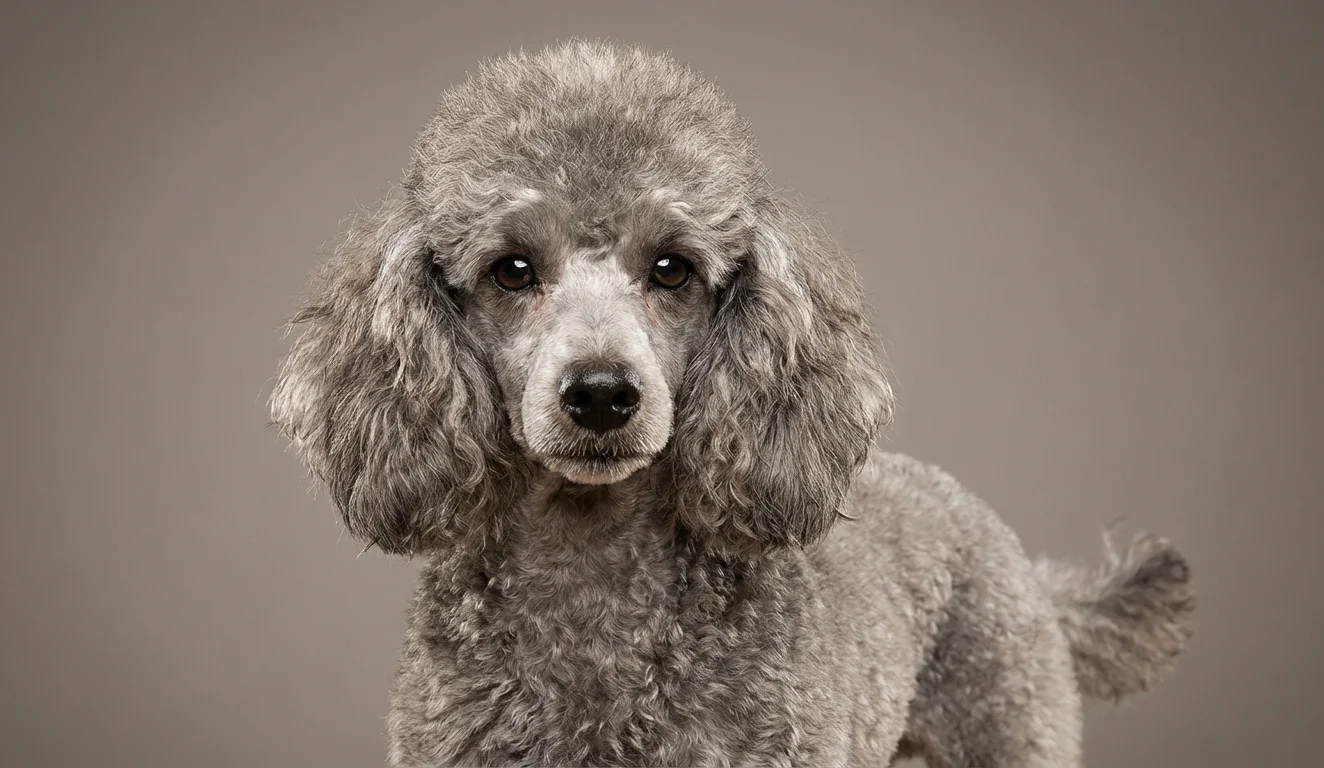
The coat is the signature feature. Miniature Poodles have a single-layer curly coat that grows continuously, more like human hair than typical dog fur. This is why they’re considered hypoallergenic, they shed minimally and produce less dander. But “hypoallergenic” doesn’t mean “allergy-proof.” People with severe allergies should spend time with a Poodle before committing.
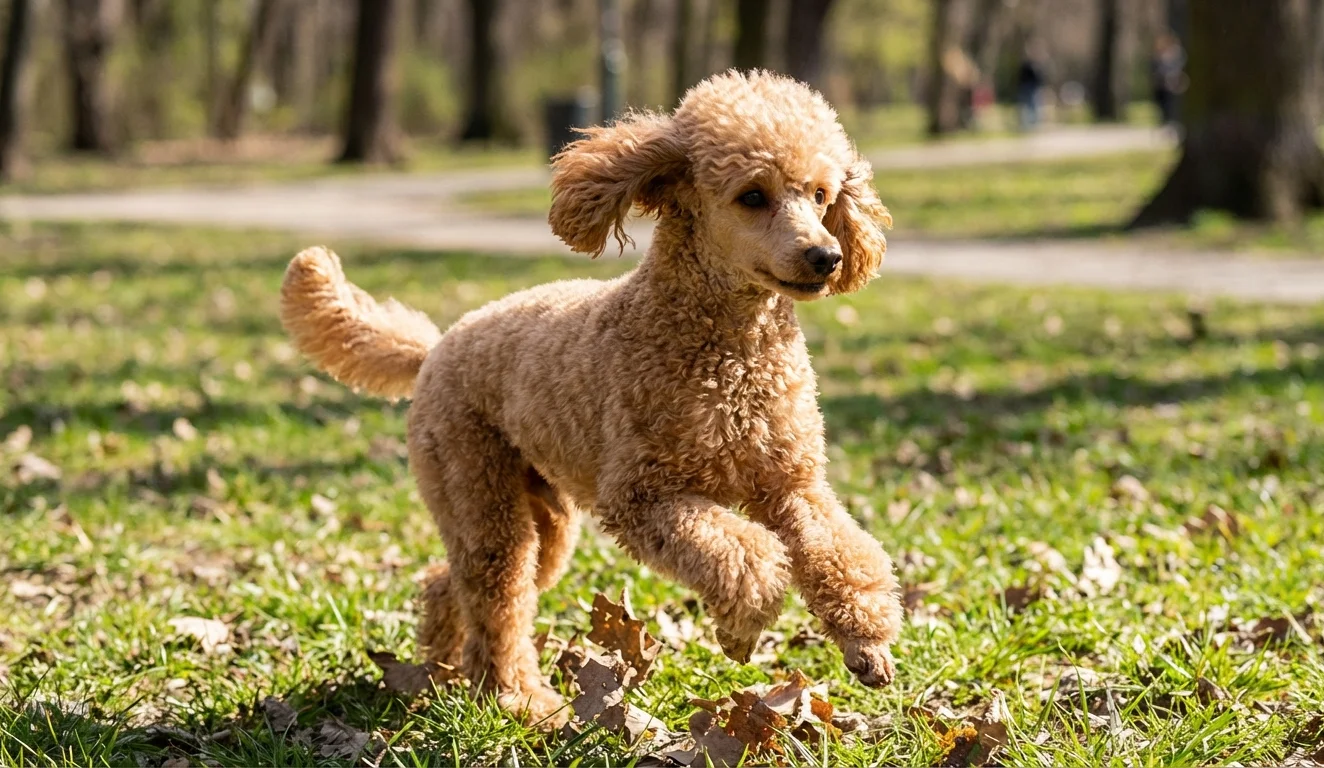
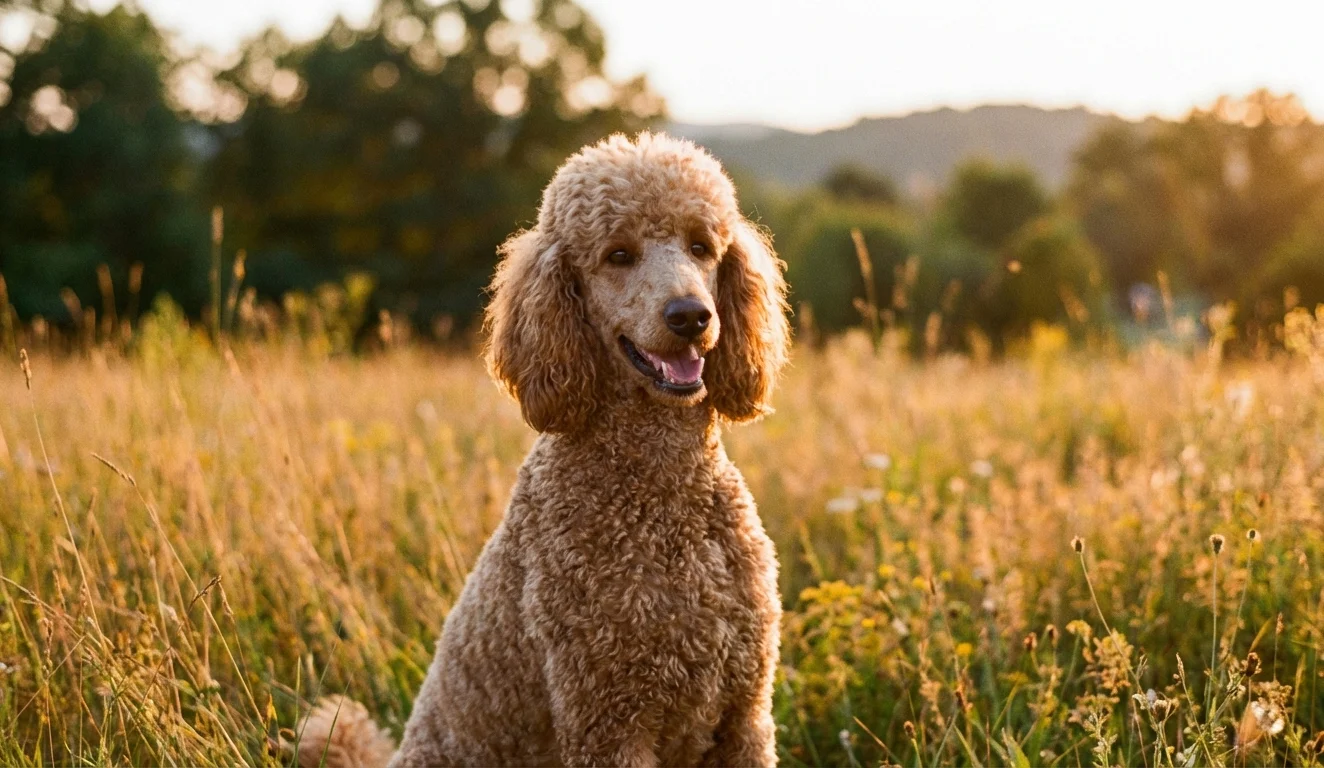
The breed comes in a staggering range of solid colors: black, white, apricot, silver, brown, blue, cream, red, cafe au lait, and grey. Parti-colored Poodles (two or more colors) exist but aren’t shown in AKC conformation. Apricot Miniature Poodles tend to be especially popular, though the color can fade over time.
Most pet Miniature Poodles sport a simple “puppy clip” or “lamb clip” rather than the elaborate show cuts you see on TV. Your groomer will thank you.
Miniature Poodle Temperament
Here’s where the Miniature Poodle separates itself from the Standard. Standards tend to be calmer and more reserved with strangers. Miniature Poodles? They’re busier. More vocal. A little sassier. They bond intensely with their people and can be genuinely clingy, this is a dog that wants to know where you are at all times.
What to expect from a Miniature Poodle’s personality:
- Wickedly smart. This isn’t just marketing. Miniature Poodles learn new commands faster than almost any breed alive. The flip side is that they get bored easily, and a bored Mini Poodle gets creative in ways you probably won’t enjoy.
- Alert and vocal. Miniature Poodles have a moderate-to-high barking tendency. They’ll alert you to the mailman, the neighbor’s cat, a suspicious leaf. You’ll need to work on “quiet” training early.
- Sensitive. Poodles in general are emotionally tuned-in dogs, and the Miniature is no exception. They pick up on your mood. Harsh corrections or chaotic household tension can genuinely stress them out.
- Playful well into old age. Many Miniature Poodle owners report that their dogs stay puppy-like in energy and attitude even at 10 or 12 years old. That longevity of spirit is one of the breed’s best qualities.
Our honest take: the Miniature Poodle is not a passive lapdog. If you want a small dog that sits quietly on the couch all day, look elsewhere. This is a small dog with big-dog energy and big-dog intelligence.
Exercise Needs
Miniature Poodles need about 60 minutes of exercise per day. That’s more than most people expect from a dog this size, but remember, this is a sporting breed in a compact frame.
Good exercise options for Miniature Poodles include brisk walks, off-leash play in a fenced yard, and structured activities like agility courses. Miniature Poodles are genuinely excellent at agility, their combination of speed, intelligence, and desire to work with a handler makes them natural competitors at the AKC level. Plenty of Mini Poodles earn agility titles that would make a Border Collie owner nod in respect.
Mental exercise matters just as much as physical. Puzzle toys, training sessions, and scent work can tire out a Miniature Poodle faster than a walk around the block. We’d actually argue that mental stimulation is more important than physical exercise for this breed. A Miniature Poodle that gets a 30-minute walk plus a 15-minute training session is usually more satisfied than one that gets an hour of walking and nothing else.
Swimming is another great option. Poodles are water dogs by heritage, and most Miniature Poodles take to water readily. Just remember that their small size means they chill faster than a Standard would, so keep water sessions reasonable in cold weather.
One thing that separates the Miniature Poodle from many small breeds: they can actually keep up with an active lifestyle. Hiking, jogging (at a moderate pace), dog sports, road trips, the Mini Poodle is a legitimate adventure companion in a portable size. They’re the anti-purse dog.
A Miniature Poodle that doesn’t get enough stimulation will bark more, chew things, and possibly develop anxiety behaviors. They’re not destructive dogs by nature, but boredom changes that equation fast.
Grooming
This is the part where people either love or leave the Poodle. The Miniature Poodle’s curly coat doesn’t shed much, which is fantastic for allergies and your furniture. But it grows continuously and mats easily, which means grooming is a real commitment.
Grooming schedule for Miniature Poodles:
- Daily brushing with a slicker brush to prevent mats (skip a day and you’ll regret it)
- Professional grooming every 4-6 weeks for clipping, bathing, and ear cleaning, budget $50-$80 per session
- Ear checks weekly: Poodles grow hair inside the ear canal, which traps moisture and can lead to infections
- Teeth brushing 2-3 times per week: small breeds are more prone to dental issues
- Nail trims every 2-3 weeks
If you let the coat grow out without brushing, you’ll end up with a matted mess that can only be fixed by shaving the dog down completely. We’ve seen it happen. It’s not pretty, and it’s uncomfortable for the dog.
The upside of all this grooming? You get to choose how your dog looks. Miniature Poodles can wear dozens of different clips. Most pet owners stick with a practical short clip that’s easy to maintain between groomer visits.
Miniature Poodle Health Issues
Miniature Poodles are generally healthy dogs with an impressive lifespan of 10-18 years. Some individuals live past 15 without major issues. But the breed does have some genetic predispositions worth knowing about.
Patellar Luxation
This is the most common health issue in Miniature Poodles. The kneecap (patella) slips out of its normal groove, causing intermittent lameness. It ranges from mild (the dog occasionally skips a step) to severe (requires surgical correction). Treatment costs range from $1,500-$3,000 per knee if surgery is needed.
Progressive Retinal Atrophy (PRA)
PRA causes gradual vision loss and eventual blindness. It’s an inherited condition, and a DNA test can identify carriers. Reputable breeders test for PRA before breeding. Treatment is limited, with costs around $2,000-$3,000 for diagnostics and management.
Legg-Calve-Perthes Disease
This condition involves the deterioration of the femoral head (the ball part of the hip joint) due to reduced blood flow. It typically shows up in puppies between 4-12 months old. Surgery is usually required, costing $1,500-$4,000.
Epilepsy
Poodles have a moderate predisposition to epilepsy. Seizures can often be managed with medication, though some dogs require lifelong treatment. Costs vary widely, $500-$5,000 depending on severity and treatment needs.
Addison’s Disease
Addison’s disease (hypoadrenocorticism) occurs when the adrenal glands don’t produce enough hormones. It’s sneaky, symptoms like lethargy, vomiting, and weight loss can mimic other conditions. Once diagnosed, it’s manageable with lifelong hormone replacement, costing $1,000-$5,000 over the dog’s life.
Always ask a breeder for health clearances. The Poodle Club of America recommends hip evaluations, ophthalmologist exams, PRA-Optigen DNA testing, and patellar evaluations for Miniature Poodles.
Training
Training a Miniature Poodle is genuinely fun. They’re fast learners who thrive on positive reinforcement and they retain what they learn remarkably well. The Poodle’s circus dog history isn’t an accident, these dogs were performing complex tricks for European audiences centuries ago because they could.
Training tips for Miniature Poodle owners:
- Keep sessions short and varied. Ten-minute sessions twice a day work better than one long session. Miniature Poodles learn fast, but they also get bored fast.
- Use positive reinforcement. Poodles are sensitive dogs, harsh methods backfire badly with this breed. Treats, praise, and play rewards work wonders.
- Start socialization early and keep it going. Miniature Poodles can become timid or snappy with strangers if not properly socialized.
- Work on “quiet” early. The barking tendency is manageable with consistent training, but it’s much harder to fix once it becomes a habit.
- Challenge them. Once basics are solid, move to advanced tricks, rally obedience, or scent work. A Miniature Poodle that has a “job” is a happier dog.
One thing we’d flag: Miniature Poodles can develop small dog syndrome if owners let them get away with behaviors they wouldn’t tolerate in a larger breed. Jumping on people, demand barking, resource guarding, these aren’t cute just because the dog weighs 12 pounds. Train your Mini Poodle like you’d train a Lab and you’ll have an incredibly well-mannered companion.
Cost
Purchase Price
A Miniature Poodle puppy from a reputable breeder typically costs $1,000-$3,000. Show-quality puppies or puppies from champion bloodlines can exceed that range. Be cautious of prices significantly below $1,000, that often signals a puppy mill or backyard breeder cutting corners on health testing.
Rescue is another option. Breed-specific rescues like the Carolina Poodle Rescue or Poodle Rescue of New England regularly have Miniature Poodles available, typically for $200-$500.
Monthly Costs
| Expense | Monthly Estimate |
|---|---|
| Food (high-quality small breed formula) | $25-$45 |
| Professional grooming (averaged monthly) | $50-$80 |
| Preventive vet care (averaged) | $10-$25 |
| Pet insurance | $25-$50 |
| Treats and chews | $10-$15 |
| Miscellaneous (toys, supplies) | $10-$20 |
| Total | $130-$235 |
First-Year Costs
Expect to spend $3,500-$6,000 in the first year, which includes the purchase price, initial vet visits, spay/neuter, vaccinations, supplies, and getting your grooming routine established. Grooming is the biggest ongoing expense that catches people off guard, those 4-6 week professional appointments add up to $600-$960 per year.
Is a Miniature Poodle Right for You?
A Miniature Poodle is a great fit if you:
- Want a smart, trainable dog in a manageable size
- Have allergies or prefer minimal shedding
- Live in an apartment or smaller home (they adapt well)
- Are willing to commit to regular grooming appointments
- Want a dog that can keep up on hikes but also relax at home
- Enjoy training and want a dog that loves to learn
A Miniature Poodle might NOT be right if you:
- Don’t want to deal with professional grooming every month
- Want a quiet dog, Miniature Poodles are alert barkers
- Prefer a low-maintenance, independent breed
- Are gone for long stretches, they’re prone to separation anxiety
- Want a dog that’s content with minimal mental stimulation
The Miniature Poodle sits in a sweet spot that very few breeds occupy. Athletic enough for long hikes, small enough for apartment life, smart enough to learn anything you teach them. We honestly think they deserve way more attention than they get. The fancy haircut reputation scares people off, which is a shame, underneath all that curly coat is one of the most capable small dogs you can own.
Related Breeds
If you’re considering this breed, you might also want to look at:
Frequently Asked Questions
How long do Miniature Poodles live?
Miniature Poodles have one of the longest lifespans of any breed, ranging from 10-18 years. Most healthy Miniature Poodles live 12-15 years, though many reach their late teens with good care. Keeping a Miniature Poodle at a healthy weight, maintaining dental health, and staying current on preventive care are the biggest factors in longevity.
Are Miniature Poodles hypoallergenic?
Miniature Poodles are considered hypoallergenic because their curly coat sheds minimally and traps dander rather than releasing it into the air. No dog is truly 100% hypoallergenic, all dogs produce some allergens through saliva, urine, and skin. But Miniature Poodles are among the best breeds for allergy sufferers. Spend time with one before committing if you have severe allergies.
What is the difference between a Miniature Poodle and a Toy Poodle?
Size is the main distinction. Miniature Poodles stand 10-15 inches and weigh 10-15 pounds. Toy Poodles are under 10 inches and weigh 4-6 pounds. Beyond size, Toy Poodles tend to be more fragile physically, more prone to hypoglycemia and dental disease, and often a bit more anxious. Miniature Poodles are generally the sturdier and more versatile of the two. We have a full Toy Poodle profile if you’re comparing the two sizes.
Do Miniature Poodles bark a lot?
Yes, Miniature Poodles tend to be vocal. They’re alert dogs by nature and they’ll bark at doorbells, strangers, other dogs, and sometimes just because they want your attention. This is manageable with training, teaching a “quiet” command early and rewarding calm behavior goes a long way. But if you need a truly quiet dog, you should know this tendency going in.
Are Miniature Poodles good with children?
Miniature Poodles are generally good with children, especially when raised together. They’re playful and patient enough for older kids who understand how to handle a dog gently. With very young children (toddlers), supervision is important, not because the dog is aggressive, but because at 10-15 pounds, a Miniature Poodle can be accidentally injured by rough handling. Teaching kids to respect the dog’s space matters with any breed this size.