Bichon Frise Breed Guide: The Happy Dog That Requires Serious Grooming (2026)
Bichon Frises look like cotton balls with legs and have the personality to match. Here's what it takes to keep that coat white and that tail wagging.
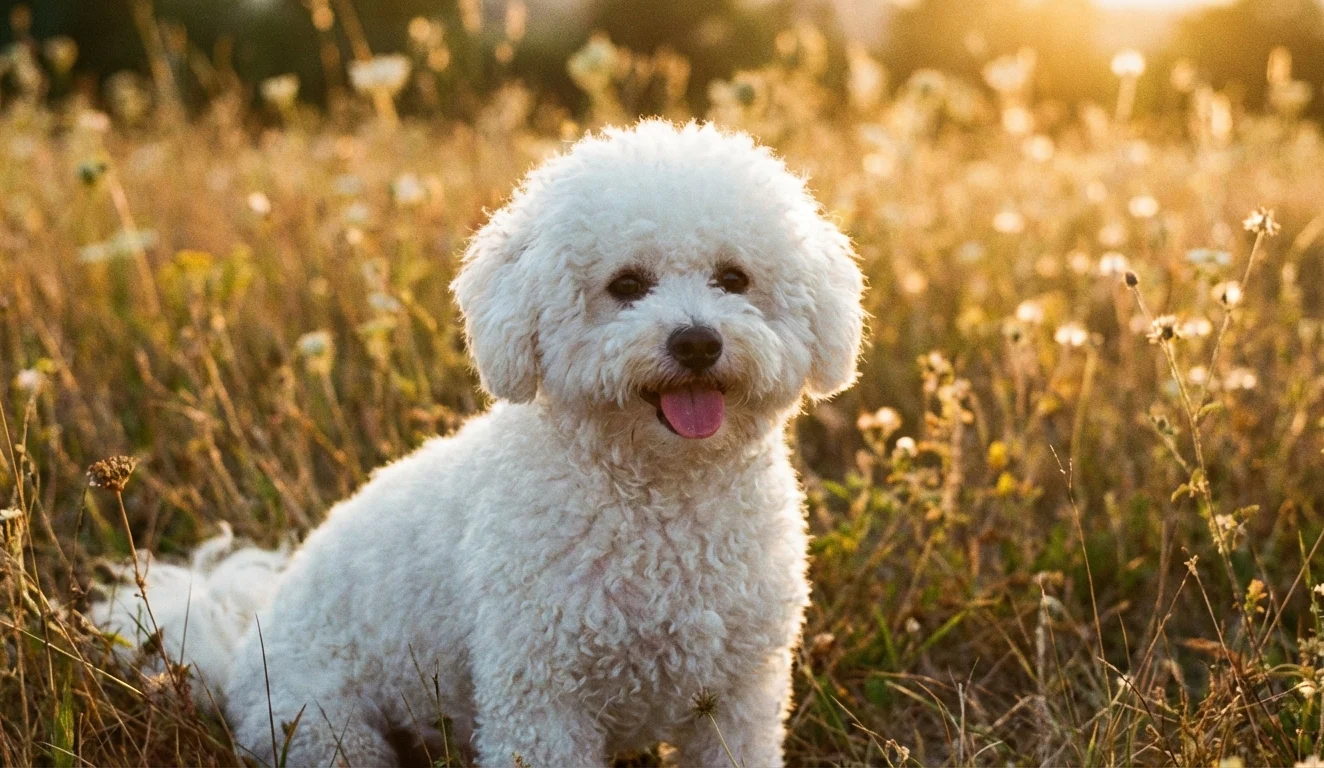
The Bichon Frise is a small, cheerful dog that weighs 12-18 pounds, stands about 9.5-11.5 inches tall, and lives 14-15 years. That white powder-puff coat is the first thing people notice, but the personality underneath it is what hooks you. Bichons are genuinely happy dogs, not in a performative, anxious-to-please way, but in a “life is great and I’m here for it” way that’s surprisingly infectious.
In Short: 12–18 lbs, 14–15 years. Moderate-to-high energy. Low-shedding (often called hypoallergenic, though no dog truly is). Watch for Patellar Luxation and Allergies (Skin). Great for families and first-time owners, apartment-friendly.
We think the Bichon Frise might be the most underrated small breed out there. They get lumped in with “prissy lap dogs” by people who’ve never lived with one, which is unfortunate. Yes, the grooming is a real commitment. Yes, they look like they belong on a satin pillow. But Bichons are tougher and more athletic than their appearance suggests. They were circus performers in the 19th century, doing tricks and walking tightropes, because they’re smart, agile, and basically fearless. The fancy haircut is optional. The personality is not.
Bichon Frise at a Glance
| Trait | Details |
|---|---|
| Breed Group | Non-Sporting (AKC) |
| Height | 9.5-11.5 in (both sexes) |
| Weight | 12-18 lbs (both sexes) |
| Life Expectancy | 14-15 years |
| Coat | Double coat, soft, dense undercoat; curly outer coat |
| Colors | White (may have cream, buff, or apricot shadings) |
| Temperament | Playful, Curious, Peppy, Cheerful |
| Shedding | Low |
| Energy Level | Moderate-High |
| Good With Kids | Yes |
| Good With Other Dogs | Yes |
| Good With Cats | Yes |
| AKC Recognition | 1972 |
History
The Bichon Frise belongs to a family of small white dogs called Barbichon breeds, which includes the Bolognese, Havanese, Maltese, and Coton de Tulear. The Bichon’s ancestors likely originated in the Canary Islands, specifically Tenerife, which is why they were sometimes called “Bichon Tenerife”, though some historians trace them to the Mediterranean region generally.
Spanish and Italian traders brought these little white dogs along shipping routes in the 13th and 14th centuries, and European nobility went wild for them. The Bichon became a favorite of the French and Spanish courts. Henry III of France was reportedly so obsessed with his Bichons that he carried them in a basket hung around his neck. Whether you find that endearing or excessive probably says something about you.
The French Revolution was rough on the Bichon. When the aristocrats fell, so did their dogs. Bichons went from royal courts to the streets, where they survived by performing tricks with organ grinders and circus acts. That’s actually where they developed their talent for performing, they weren’t bred for it, they adapted to it to survive. The breed nearly went extinct after World War I but was revived by French breeders in the 1930s. The AKC recognized the Bichon Frise in 1972, and they’ve been steadily popular ever since.
Size and Appearance
Bichons are small dogs with a big visual presence, mostly because of that coat. Males and females are roughly the same size: 9.5-11.5 inches at the shoulder and 12-18 pounds. Under all that hair, they’re compact and well-proportioned.
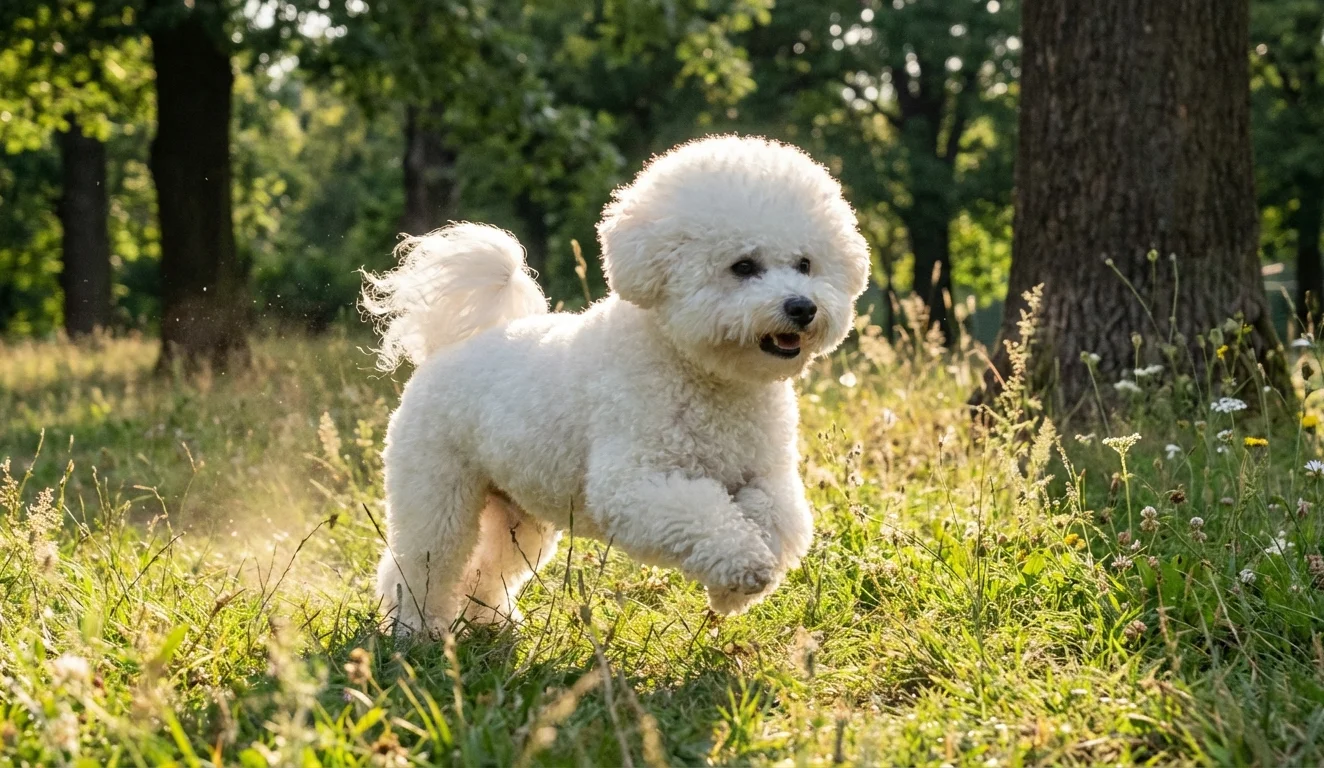
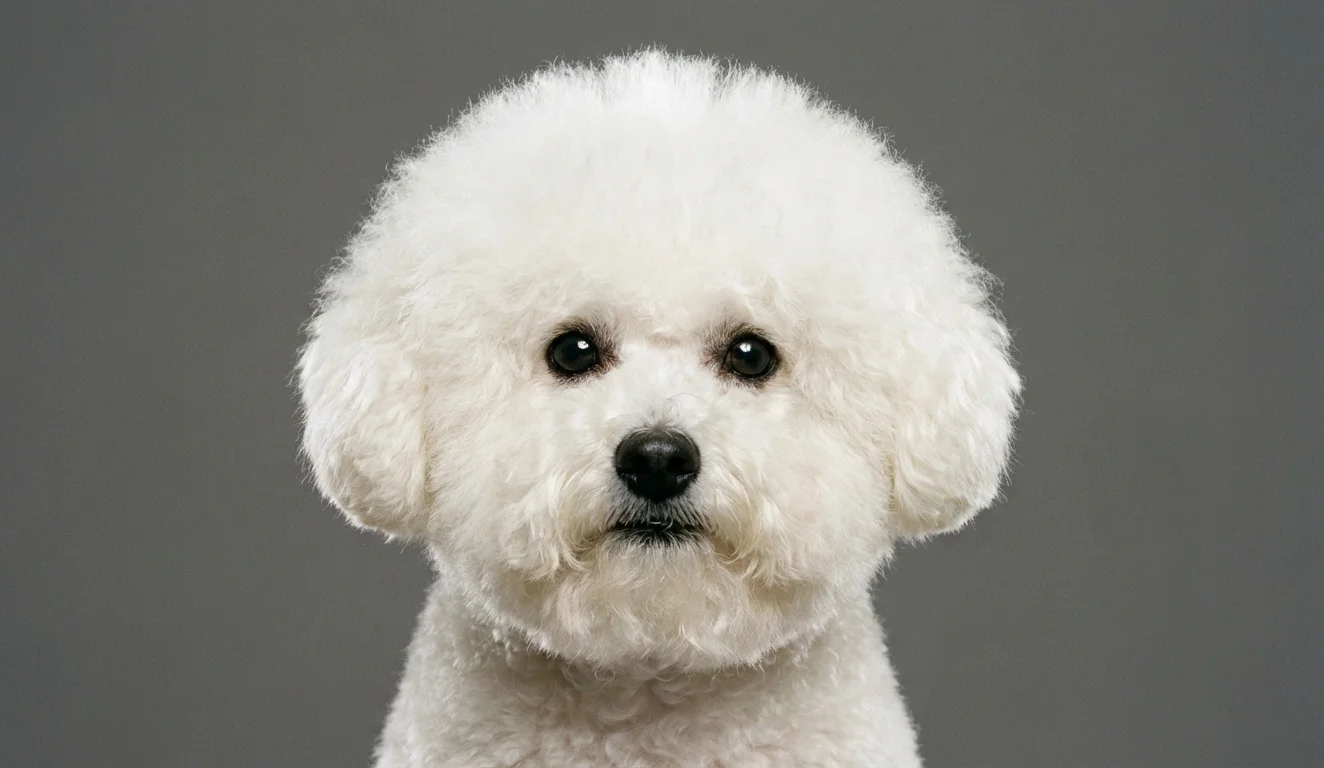
The coat is the breed’s signature. It’s a double coat with a soft, dense undercoat and a coarser, curly outer coat. When properly groomed, it stands away from the body, giving the Bichon that characteristic rounded “powder-puff” look. The hair grows continuously (like human hair) rather than going through shedding cycles, which is why Bichons are considered hypoallergenic and why grooming is an ongoing commitment.
Color is always white, though puppies and some adults show slight cream, buff, or apricot shadings around the ears and body. These shadings are acceptable in the breed standard but typically fade as the dog matures.
The overall impression should be a small, sturdy dog that moves with a springy, effortless gait, not a delicate ornament. A well-bred Bichon looks like it could hold its own on a hike, because it can.
Bichon Frise Temperament
The Bichon Frise temperament is their biggest selling point, and it’s genuine, not a trait you have to carefully manage or bring out with the right training.
What Bichon owners actually experience:
- Relentlessly cheerful. Bichons have a default mood setting of “delighted.” They wake up happy. They greet you happy. They go to the vet happy (well, most of them). It’s not manic energy, it’s a baseline contentment that’s almost therapeutic to be around.
- People-oriented without being needy. Bichons want to be with you, but they’re not usually the clingy, anxious type. They’ll follow you around the house, sit near you while you work, and greet guests with genuine enthusiasm. They do get separation anxiety if left alone too long, though.
- Good with basically everyone. Kids, other dogs, cats, strangers, Bichons are accepting across the board. They were bred to be companion dogs, and that’s exactly how they behave. Dog parks, family gatherings, trips to the pet store, Bichons handle social situations with ease.
- Sensitive. This is the flip side of their gentle nature. Bichons don’t handle harsh treatment well. Yelling, rough handling, or tense household environments affect them visibly. They pick up on human emotions more than a lot of breeds.
There’s one quirk worth mentioning: the Bichon Blitz. Most Bichon owners know this term. It’s a sudden burst of frantic energy where the Bichon tears around the house at full speed, bouncing off furniture, spinning in circles, and generally looking possessed. It lasts 30-60 seconds and then they’re calm again. It’s completely normal and honestly one of the most entertaining things about the breed.
Exercise Needs
Bichons need about 30 minutes of exercise per day, which makes them a great fit for people who want an active companion without a massive time commitment.
A couple of short walks plus some indoor playtime covers the physical requirements. Bichons are happy to adapt to your activity level, they’ll go on longer walks if you want, or be content with a quick loop around the block on a busy day.
Good exercise options for Bichons:
- Short to moderate walks (they have small legs, so pace yourself)
- Indoor play sessions with toys, Bichons are surprisingly good at fetch
- Agility courses (many Bichons excel at agility because of their speed and willingness to perform)
- Social outings, a trip to the pet store or a friend’s house counts as stimulation for this social breed
- Trick training doubles as mental exercise and Bichons are naturals at it
Heat tolerance is moderate. Bichons handle warm weather better than many double-coated breeds, but they still need shade and water during summer exercise. Cold weather is where that coat earns its keep, they handle winter walks without issue.
Grooming
Here’s where we stop sugarcoating things. Bichon Frise grooming is a serious, ongoing commitment. If you’re not prepared for it, this isn’t your breed.
That beautiful white coat doesn’t maintain itself. It mats, it tangles, it stains, and it grows continuously. Skipping grooming isn’t an option, it leads to painful matting close to the skin, which can cause sores and infection.
The real Bichon grooming schedule:
- Daily brushing. Not optional. Five to ten minutes with a slicker brush and comb to prevent mats from forming. This is a daily habit, like brushing your own teeth.
- Professional grooming every 4-6 weeks. A Bichon that skips a grooming appointment quickly becomes a matted mess. Budget $50-$85 per session depending on your area.
- Bathing every 2-4 weeks with a whitening shampoo to keep the coat bright.
- Face cleaning daily to prevent tear staining. Bichons are prone to reddish-brown tear stains under the eyes. Regular wiping with a damp cloth and possibly a tear stain remover helps.
- Ear cleaning weekly. The hair grows inside the ear canal and can trap moisture.
- Nail trimming every 2-3 weeks.
The cost adds up. Between professional grooming sessions, brushes, combs, whitening shampoo, tear stain products, and ear cleaners, grooming a Bichon costs $800-$1,200 per year. Many experienced Bichon owners learn to do at least some grooming at home to manage costs, but professional grooming is hard to avoid entirely.
Bichon Frise Health Issues
Bichons are generally healthy dogs with an impressive 14-15 year lifespan. But they do have several breed-specific health concerns.
Patellar Luxation
The most common orthopedic issue in Bichons, the kneecap slips out of its groove, causing lameness. It ranges from Grade 1 (occasional slip, self-correcting) to Grade 4 (permanent dislocation). Mild cases may never need treatment. Surgery for severe cases costs $1,500-$3,000 per knee. Ask breeders for OFA patella evaluations on both parents.
Allergies and Skin Issues
Bichons are prone to skin allergies that cause itching, redness, and recurrent infections. Environmental allergens (pollen, dust mites) are the most common triggers. Management typically involves a combination of medicated baths, antihistamines, and sometimes prescription medications like Apoquel or Cytopoint. Annual costs for allergy management run $500-$2,000.
Cataracts
Moderate prevalence in Bichons. Cataracts cloud the lens of the eye and can lead to vision loss. They sometimes appear in younger dogs (juvenile cataracts) due to a genetic predisposition. Surgery to remove cataracts costs $2,000-$4,000 per eye. Reputable breeders have annual CERF eye exams done on breeding dogs.
Hip Dysplasia
Less common in Bichons than in large breeds, but it does occur at moderate rates. Symptoms include limping, difficulty with stairs, and reluctance to exercise. Treatment costs $1,500-$6,000 depending on severity. Weight management reduces stress on affected joints.
Bladder Stones
Bichons have a breed predisposition to forming bladder stones (specifically calcium oxalate and struvite stones). Symptoms include frequent urination, blood in urine, and straining. Treatment may involve dietary management, medication, or surgery ($1,000-$3,000). Keeping your Bichon well-hydrated is the simplest preventive measure.
Training
Bichons are highly trainable dogs, more so than a lot of people expect from a small breed. They’re intelligent, food-motivated, and genuinely enjoy the interaction that training provides.
Their circus performer heritage shows up in training. Bichons pick up tricks quickly and seem to enjoy performing for an audience. If you’ve ever wanted a dog that spins on command, walks on hind legs, or waves at visitors, a Bichon will learn it faster than most breeds.
Training tips for Bichon owners:
- Positive reinforcement only. Bichons are sensitive and shut down under harsh correction. A firm “no” is the harshest thing you should need.
- Trick training is excellent mental stimulation. Bichons love learning new tricks and the praise that comes with getting them right.
- House training requires patience. Like many small breeds, Bichons can take longer to house train, their small bladders and occasional stubbornness about going outside in bad weather slow the process. Consistent scheduling and lots of praise for outdoor success work best.
- Early socialization is important but usually easy. Bichons are naturally social, so expose them to new experiences early and they’ll take to them readily.
The biggest training challenge with Bichons is usually separation anxiety management. Because they bond so closely with their people, some Bichons struggle when left alone. Gradual desensitization, leaving for short periods and slowly increasing duration, works better than just leaving and hoping for the best.
Bichon Frise Cost
Purchase Price
A Bichon Frise puppy from a reputable breeder costs $1,000-$2,500. The wide range reflects differences in health testing, pedigree, and breeder reputation. Puppies from parents with full health clearances (patella, hips, eyes, cardiac) will be on the higher end, and worth it.
Bichon rescue organizations typically charge $250-$500 for adoption. Bichon Frise Club of America Rescue is a good starting point.
Monthly Costs
| Expense | Monthly Estimate |
|---|---|
| Food (high-quality small breed) | $25-$40 |
| Preventive vet care (averaged) | $10-$20 |
| Pet insurance | $25-$45 |
| Professional grooming | $25-$45 |
| Tear stain and grooming products | $5-$15 |
| Treats and chews | $10-$15 |
| Miscellaneous (toys, supplies) | $5-$15 |
| Total | $80-$175 |
First-Year Costs
Budget $2,500-$4,500 for the first year with a Bichon. Grooming setup costs (quality slicker brush, comb, grooming table if you plan to do it yourself, clippers) can run $150-$400 on their own. Factor in professional grooming from day one, getting a puppy comfortable with the grooming process early makes life much easier.
Is a Bichon Frise Right for You?
A Bichon is a great fit if you:
- Want a genuinely happy, people-loving companion that gets along with everyone
- Can commit to daily brushing and regular professional grooming
- Live in an apartment or house, Bichons adapt well to both
- Have allergy concerns (Bichons are one of the better hypoallergenic options)
- Want a trainable small dog with real intelligence and personality
A Bichon is probably NOT right if you:
- Don’t want to deal with a serious grooming routine
- Are away from home for long hours daily (separation anxiety is a real concern)
- Want a low-maintenance dog that “takes care of itself”
- Are bothered by tear staining and the upkeep required to manage it
- Expect a guard dog or a dog with independent, hands-off temperament
The Bichon Frise is a genuinely great dog that comes with one non-negotiable: the grooming. If you can handle that commitment, you’re getting a 14-15 year companion that will be happy to see you every single day without fail. If the grooming sounds like too much work, we’d steer you toward a lower-maintenance breed. There’s no shame in that, knowing what you’re willing to maintain is half the battle of choosing the right dog.
Related Breeds
If you’re considering this breed, you might also want to look at:
Frequently Asked Questions
Are Bichon Frises hypoallergenic?
Bichons are one of the more hypoallergenic breeds available. Their coat grows continuously rather than going through shedding cycles, so they drop very little hair and dander into the environment. But no dog breed is completely hypoallergenic, all dogs produce allergens through saliva, dander, and urine. If you have allergies, spend time with a Bichon before committing to make sure your specific allergies tolerate the breed. Most allergy sufferers do well with Bichons, but individual reactions vary.
Do Bichon Frises bark a lot?
Bichons have a moderate barking level. They’re not silent, they’ll alert you to visitors, unusual sounds, and sometimes things only they can perceive. But they’re not typically excessive barkers like some terrier breeds. Bichons that bark excessively are usually bored, anxious, or seeking attention. Training and adequate mental stimulation go a long way toward keeping barking reasonable.
How often do Bichon Frises need grooming?
Daily brushing at home is non-negotiable. Professional grooming should happen every 4-6 weeks. If you skip the daily brushing, mats form close to the skin within days, and those mats can only be removed by shaving, which means starting the coat over from scratch. Professional groomers familiar with the Bichon breed standard can maintain the classic rounded powder-puff look, but a shorter “puppy cut” is easier to maintain and perfectly acceptable for pet dogs.
Are Bichon Frises good apartment dogs?
Bichons are excellent apartment dogs. They’re small, they don’t shed much, they don’t need huge amounts of exercise, and they’re generally quiet enough to be good neighbors. The main consideration for apartment living is exercise, Bichons still need their daily walks and playtime, even without a yard. And separation anxiety can be an issue if you’re gone for long stretches. But in terms of size and temperament, Bichons are one of the best breeds for apartment living.
What is the Bichon Blitz?
The Bichon Blitz (also called “zoomies” or FRAP, Frenetic Random Activity Periods) is a sudden burst of wild energy where a Bichon sprints around the house, spins in circles, bounces off furniture, and generally looks like they’ve lost their mind. It lasts about 30-60 seconds and ends as suddenly as it started. It’s completely normal, harmless, and honestly hilarious. Most Bichon owners come to look forward to it. Puppies and young adults do it more frequently, but even older Bichons get the occasional Blitz.