Miniature Schnauzer Breed Guide: The Small Dog That Doesn't Act Like One (2026)
Miniature Schnauzers are smart, sturdy terriers that shed almost nothing and have opinions about everything. Here's the full picture.
The Miniature Schnauzer weighs 11-20 pounds, stands 12-14 inches tall, and lives 12-15 years. If you’re looking for a small dog that doesn’t feel like a small dog, this is probably your breed. Mini Schnauzers don’t have the fragility of most toy breeds or the neurotic energy of many terriers. They’re sturdy, confident, and adaptable in a way that makes them one of the most versatile small dogs around.
In Short: 11–20 lbs, 12–15 years. Moderate-to-high energy. Low-shedding (often called hypoallergenic, though no dog truly is). Watch for Pancreatitis and Hyperlipidemia. Great for families and first-time owners, apartment-friendly.
We think the Miniature Schnauzer is one of the most underrated breeds for people who want a smaller dog but don’t want the trade-offs that usually come with small-dog ownership. They’re hypoallergenic, they don’t shed, they’re good with kids, they get along with other animals, and they’re smart enough to train without a fight. The catch? They bark. Oh boy, do they bark. But we’ll get to that.
Miniature Schnauzer at a Glance
| Trait | Details |
|---|---|
| Breed Group | Terrier (AKC) |
| Height | 12-14 inches |
| Weight | Males: 11-20 lbs / Females: 11-18 lbs |
| Life Expectancy | 12-15 years |
| Coat | Wiry double coat with hard outer coat |
| Colors | Salt & Pepper, Black, Black & Silver, White |
| Temperament | Friendly, Smart, Alert |
| Shedding | Low (hypoallergenic) |
| Energy Level | Moderate to High |
| Good With Kids | Yes |
| Apartment Friendly | Yes |
History of the Miniature Schnauzer
The Miniature Schnauzer was developed in Germany in the late 19th century by crossing the Standard Schnauzer with smaller breeds, most likely the Affenpinscher and possibly the Miniature Pinscher or Poodle. The goal was to create a smaller version of the Standard Schnauzer that could serve as a farm ratter and family companion. They succeeded spectacularly.
The Standard Schnauzer had been a farm dog in Germany for centuries, working as a vermin hunter, guard dog, and general-purpose farm companion. Miniaturizing the breed made it more practical for smaller homes while preserving the standard’s alert, spirited personality. The first recorded Miniature Schnauzer appeared in German breed records in 1888.
The AKC recognized the Miniature Schnauzer in 1926 under the Terrier group, an interesting classification, since the breed’s development is more closely tied to German working dogs than to the British terrier breeds. The Miniature Schnauzer has been one of the most popular breeds in America since the mid-20th century, consistently ranking in the AKC’s top 20. And unlike some breeds that are popular because of trends, the Mini Schnauzer’s popularity has held steady for decades because the dogs are just genuinely good at being family pets.
Size and Appearance
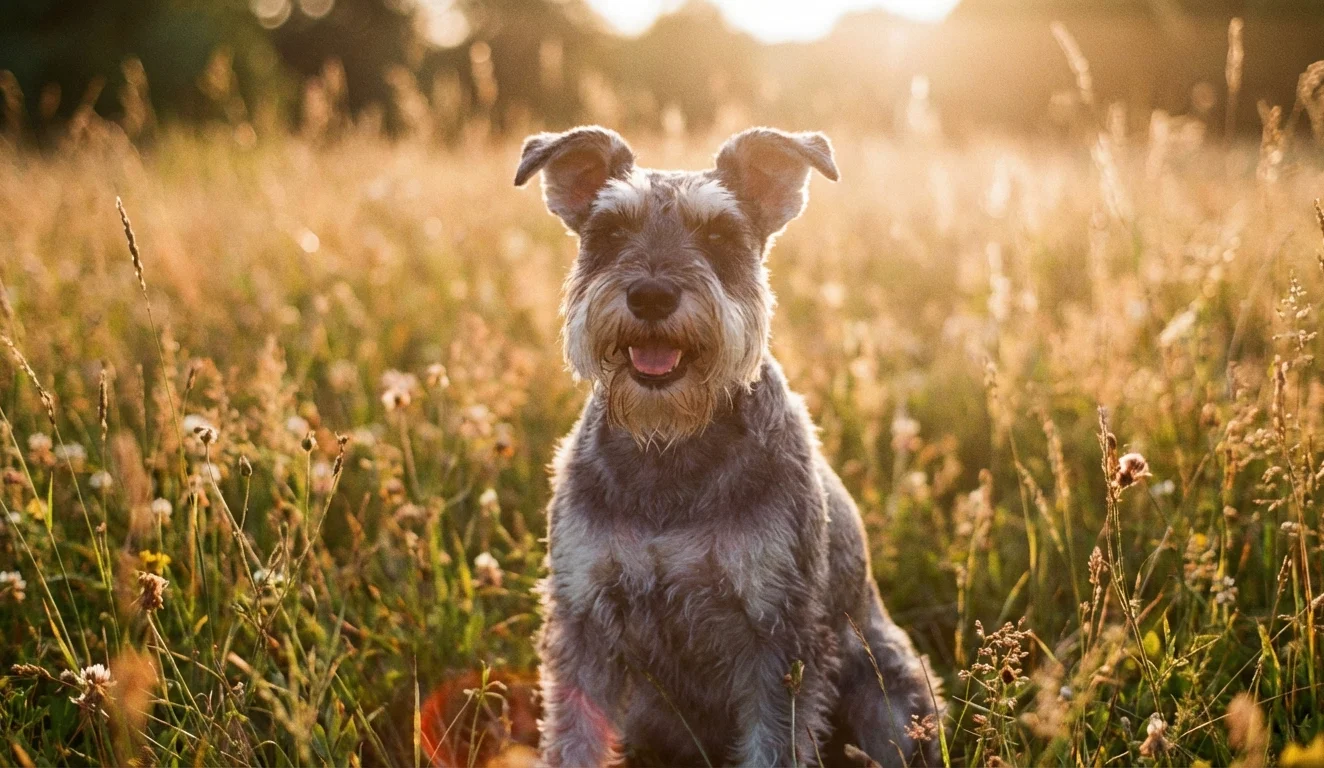
Miniature Schnauzers are small, square-proportioned dogs with a distinctive look that you can spot from a block away. Males and females are similar in size, standing 12-14 inches at the shoulder and weighing 11-20 pounds. The weight range is broad because there’s real variation in the breed, some Mini Schnauzers are compact little tanks at 18-20 pounds while others are quite lean at 11-12 pounds.
Build
The Miniature Schnauzer has a sturdy, square build, height roughly equal to body length. They’re solidly constructed for their size, with good bone and a level back. Nothing about a healthy Mini Schnauzer looks delicate, which is part of what separates them from many toy and small breeds.
The Schnauzer Look
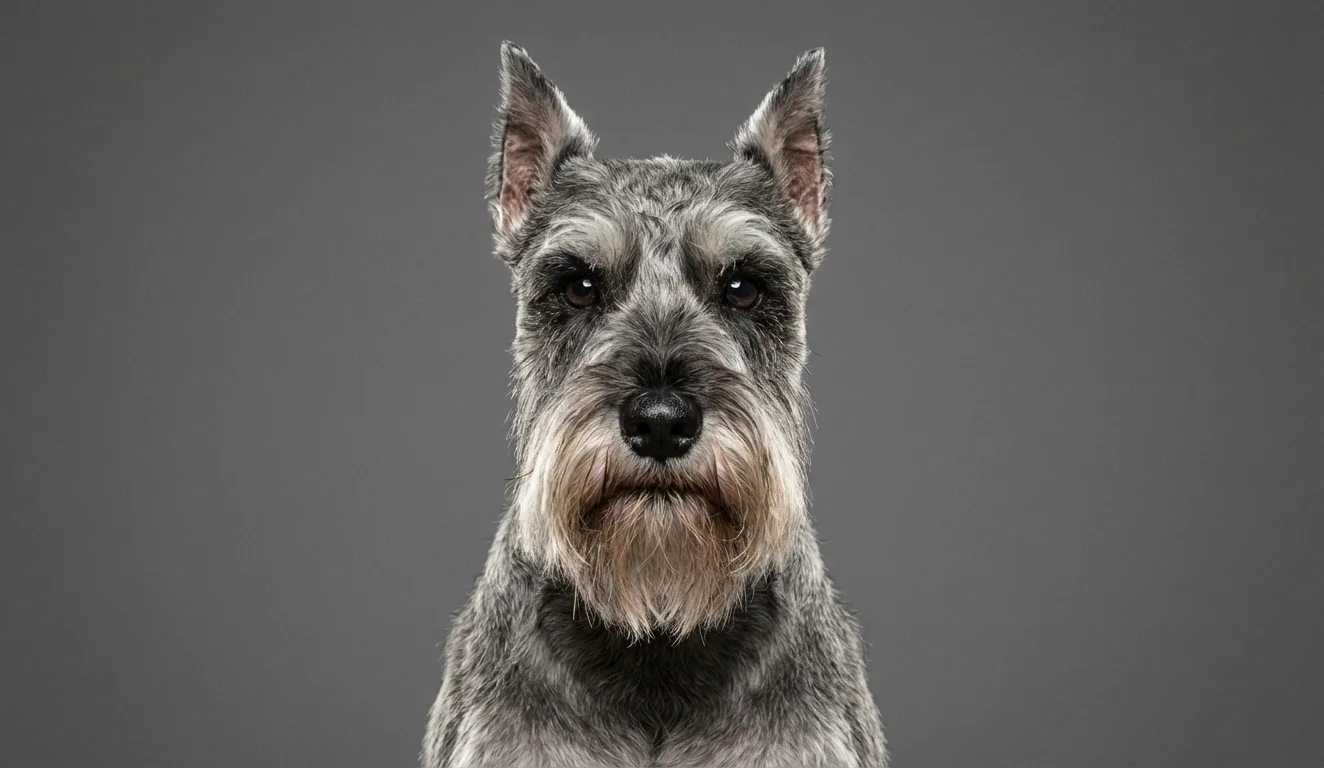
The defining feature is the furnishings, the bushy eyebrows, long beard, and leg feathering that give the Miniature Schnauzer its distinguished, almost professorial appearance. These furnishings grow from the wiry outer coat and require regular grooming to maintain. Without grooming, a Miniature Schnauzer ends up looking like a very small, confused wizard.
Coat and Colors
The Miniature Schnauzer has a double coat: a wiry, hard outer coat and a softer undercoat. AKC-recognized colors are salt and pepper (by far the most common, a banded pattern that creates a silvery gray appearance), black, black and silver, and white.
The wiry coat doesn’t shed like typical dog fur. Instead, it grows continuously and needs to be hand-stripped (for show dogs) or clipped (for pet dogs) every 6-8 weeks. This low-shedding quality, combined with the coat structure, makes the breed a strong option for allergy sufferers.
Miniature Schnauzer Temperament
The AKC describes the Miniature Schnauzer as “friendly, smart, and obedient.” We’d agree with all three, but we’d add “nosy” and “vocal” to round out the picture. A Mini Schnauzer wants to know what’s happening at all times and has no hesitation about commenting on it.
Living with a Miniature Schnauzer:
- They’re alert to everything. Every doorbell, every passing dog, every car door slamming, your Mini Schnauzer hears it and has an opinion. The breed’s barking level is high, and “alert barking” is the most frequent complaint from owners. They’re not barking for no reason, they’re reporting. The problem is, they report on things that don’t need reporting.
- They’re genuinely people-friendly. Unlike many terrier breeds that can be nippy or standoffish, Mini Schnauzers tend to be sociable with people. They like meeting strangers (after a brief announcement bark) and do well in social environments.
- They’re adaptable. This is one of the breed’s biggest strengths. Mini Schnauzers do well in apartments, houses, cities, suburbs, with singles, with families, with other pets. They adjust to their environment without the extremes you see in more high-strung breeds.
- They have terrier stubbornness, but less of it. Mini Schnauzers are independent thinkers with moments of “I’d rather not,” but they’re more cooperative than most true terrier breeds. They won’t blindly obey like a Golden Retriever, but they won’t launch a full rebellion like a Jack Russell either.
One thing that sets the Mini Schnauzer apart from a lot of small breeds: they’re not typically nervous, anxious, or yappy in the way that people associate with small dogs. The barking is alert-driven, not anxiety-driven. There’s a difference, and it matters. A nervous bark is hard to train away. An alert bark can be managed with consistent training.
Exercise Needs
Miniature Schnauzers need about 45 minutes of exercise per day. That’s more than a true lapdog but manageable for almost any lifestyle.
Good exercise for Mini Schnauzers:
- Two moderate walks per day (20-25 minutes each)
- Off-leash play in a fenced yard, they love to chase things
- Interactive games, fetch, tug, hide-and-seek
- Nose work and scent games, these tap into the breed’s ratting heritage and are excellent mental stimulation
- Agility and rally obedience, Mini Schnauzers are surprisingly competitive in these sports
What to keep in mind:
- Mini Schnauzers have a strong prey drive. Squirrels, rabbits, and small critters will trigger a chase instinct. Keep them leashed or in enclosed areas.
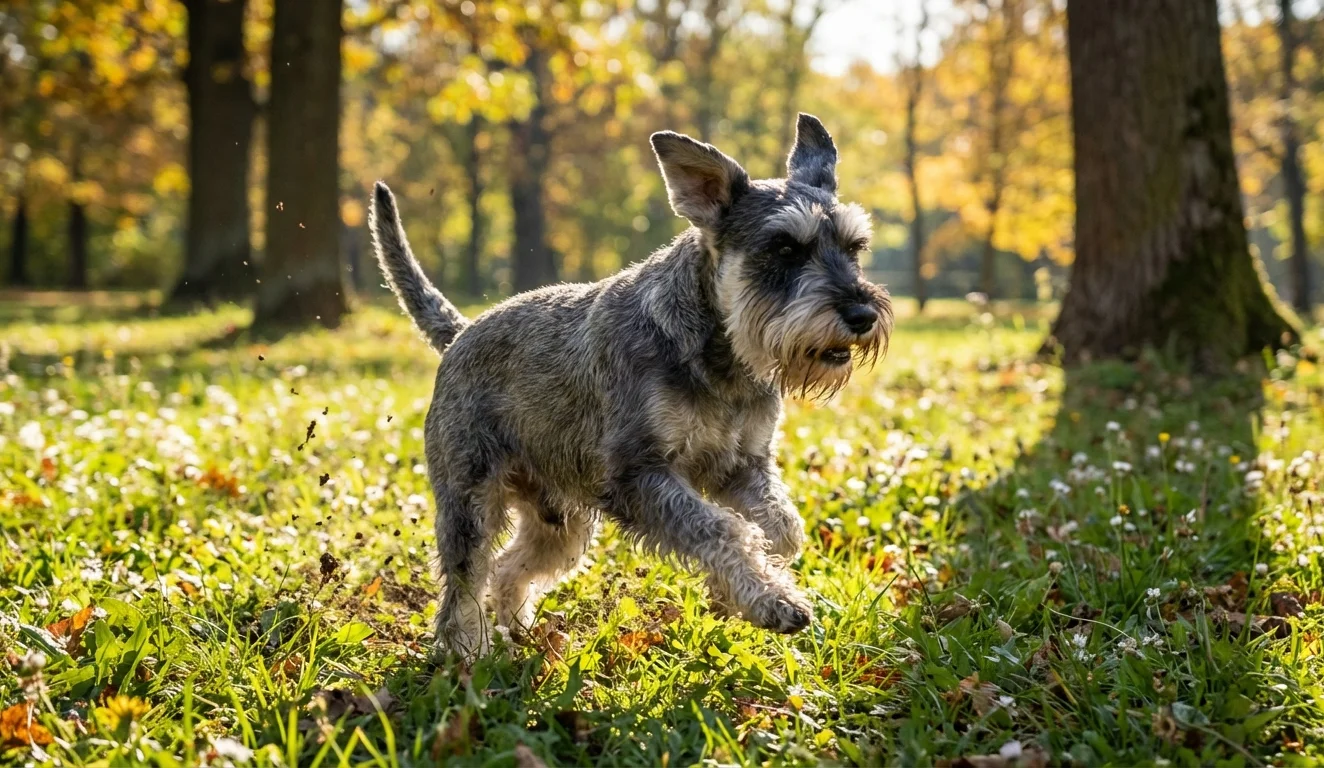
- They’re surprisingly athletic for their size. Don’t assume a small dog needs a small amount of activity, an under-exercised Mini Schnauzer will channel its energy into barking, digging, or finding creative trouble.
- They handle moderate cold well (the wiry coat provides decent insulation) but don’t love extreme heat. Adjust outdoor time accordingly.
The good news is that Mini Schnauzers are adaptable about how they get their exercise. If you miss a long walk, a vigorous play session in the living room will work. They’re not going to spiral into anxiety over a single low-activity day the way a Border Collie would.
Grooming
Here’s where the Miniature Schnauzer asks for more effort than the average small dog. That distinctive wiry coat doesn’t maintain itself.
Professional Grooming
Most Mini Schnauzer owners visit a professional groomer every 6-8 weeks for a full grooming session, which includes body clipping or hand-stripping, beard trimming, eyebrow shaping, ear cleaning, nail trim, and bath. This runs $50-$80 per visit, totaling roughly $400-$650 per year for professional grooming alone.
Hand-stripping vs. clipping: Show dogs are hand-stripped, which involves plucking the dead outer coat by hand to maintain the correct wiry texture and color. Pet dogs are typically clipped, which is faster, cheaper, and more comfortable for the dog. Clipping does soften the coat texture over time and can slightly fade the color, but most pet owners find the trade-off perfectly acceptable.
At-Home Grooming
Between professional visits:
- Brush the furnishings (beard, eyebrows, legs) every 2-3 days with a slicker brush to prevent matting
- Wipe the beard after meals: food collects in there, and it’s exactly as gross as it sounds
- Trim around the eyes if hair is impairing vision
- Brush teeth 3-4 times per week: small breeds are prone to dental issues
- Check ears weekly for wax buildup
The non-shedding trade-off is that you’re paying for regular grooming instead of buying lint rollers. For allergy sufferers, that’s a trade worth making. Your furniture stays clean, your clothes stay hair-free, and you develop a first-name relationship with your groomer.
Miniature Schnauzer Health Issues
Miniature Schnauzers live 12-15 years and are a generally healthy breed. But they have a unique set of health concerns, some of which are unusual compared to other breeds and relate specifically to how Mini Schnauzers metabolize fat.
Pancreatitis
This is the #1 health concern in the breed. Miniature Schnauzers are significantly more susceptible to pancreatitis (inflammation of the pancreas) than other breeds, likely connected to their tendency toward high blood fat levels. Acute pancreatitis causes severe abdominal pain, vomiting, and lethargy and can be life-threatening. Treatment costs $1,000-$5,000 depending on severity.
Prevention involves keeping your Mini Schnauzer on a low-fat diet, avoiding table scraps entirely — and that includes the cheese you’re “sneaking” them —, and maintaining a healthy weight. This is one breed where diet management isn’t a suggestion, it’s a medical necessity.
Hyperlipidemia
Mini Schnauzers are genetically prone to elevated blood triglycerides and cholesterol. This condition is common in the breed and often exists alongside pancreatitis risk. Your vet should run a lipid panel during annual bloodwork. Management involves diet modification and sometimes medication, costing $200-$1,000 per year for ongoing treatment.
Urinary Stones
Miniature Schnauzers are prone to developing calcium oxalate and struvite bladder and kidney stones. Symptoms include frequent urination, straining, blood in urine, and accidents in the house. Treatment ranges from dietary management to surgical removal ($1,000-$3,000). Encouraging water intake and feeding a diet formulated for urinary health can reduce risk.
Progressive Retinal Atrophy (PRA)
PRA causes gradual vision loss and eventual blindness. Moderate prevalence in the breed. A DNA test can identify carriers. Reputable breeders test for PRA before breeding.
Mycobacterium Avium Complex (MAC)
This is a rare but breed-specific concern, Miniature Schnauzers have a genetic susceptibility to this mycobacterial infection. MAC causes systemic illness with symptoms including weight loss, lethargy, swollen lymph nodes, and respiratory issues. It’s rare, but the breed’s predisposition is documented in veterinary literature. Treatment costs $1,000-$5,000 and outcomes vary.
Training a Miniature Schnauzer
Mini Schnauzers are highly trainable dogs that enjoy learning. They’re smart, food-motivated, and eager to engage with their owners. Of all the terrier breeds, the Mini Schnauzer is probably the most cooperative and least likely to tell you to go kick rocks when you ask for a sit.
Training tips:
- Use positive reinforcement with food rewards. Mini Schnauzers are motivated by treats, which makes shaping behavior straightforward.
- Start bark management early. Teach “quiet” as one of the first commands. Reward silence. Don’t inadvertently reward alert barking by responding to it, this is easier said than done, we know.
- Socialization between 8-16 weeks sets the foundation for a well-adjusted adult. Expose them to varied environments, people, and other animals.
- Keep training sessions engaging and varied. Mini Schnauzers enjoy learning new things but lose interest with too much repetition.
- Housetraining is generally easier than with most small breeds, but still requires consistency. Crate training works well.
Common mistakes:
- Ignoring early barking because “it’s cute” or “they’re just a puppy.” The barking gets worse, not better, without intervention.
- Over-treating. Mini Schnauzers are prone to weight gain and pancreatitis. Use low-fat, small training treats and account for treat calories in their daily food intake.
- Assuming small means easy. Mini Schnauzers are smart dogs that need mental engagement. A bored Mini Schnauzer is an inventive Mini Schnauzer, and that’s not always a good thing.
Miniature Schnauzer Cost
Purchase Price
A Miniature Schnauzer puppy from a reputable breeder costs $1,000-$2,500. Show-quality puppies from champion bloodlines run $2,500-$4,000+. The breed’s consistent popularity keeps prices in the mid-to-upper range for small dogs.
Mini Schnauzer rescue organizations are active nationwide. Adoption fees typically range from $200-$500.
Monthly Costs
| Expense | Monthly Estimate |
|---|---|
| Food (high-quality, low-fat formula) | $25-$45 |
| Professional grooming (averaged) | $35-$70 |
| Preventive vet care (averaged) | $15-$25 |
| Pet insurance | $25-$45 |
| Treats and chews | $5-$15 |
| Miscellaneous (toys, supplies) | $5-$15 |
| Total | $80-$175 |
Grooming is the notable recurring expense. Budget $400-$650 per year for professional grooming on a 6-8 week cycle. The non-shedding coat requires it.
First-Year Costs
Budget $2,500-$4,500 for the first year including purchase price, puppy vet visits, spay/neuter, supplies, grooming, and training. Ask your vet about a baseline lipid panel during the first year, knowing your Mini Schnauzer’s blood fat levels early helps with dietary planning. Annual blood work ($100-$200) should become a routine expense for this breed.
Is a Miniature Schnauzer Right for You?
A Miniature Schnauzer is a great fit if you:
- Want a small, sturdy dog that doesn’t feel fragile or nervous
- Need a hypoallergenic breed with minimal shedding
- Live in an apartment or house, they adapt well to both
- Have kids, other dogs, or cats, Mini Schnauzers generally get along with everyone
- Are a first-time owner looking for a trainable, forgiving small breed
- Can commit to regular professional grooming every 6-8 weeks
A Miniature Schnauzer is probably NOT right if you:
- Want a quiet dog, barking is part of the package
- Don’t want to deal with grooming costs and maintenance for the wiry coat
- Plan to feed table scraps freely, the breed’s pancreatitis susceptibility makes diet management non-negotiable
- Want a truly independent dog that’s happy on its own for long periods
- Prefer a low-energy dog that’s content with minimal exercise
The Miniature Schnauzer is a breed that punches well above its weight class. They have the confidence and sturdiness of a much bigger dog, the trainability of a sporting breed, and the hypoallergenic coat that a lot of small-dog seekers want. The barking is real and the grooming costs add up, but those are manageable trade-offs for what you get, a smart, adaptable, genuinely fun companion that’ll be with you for 12-15 years. For a lot of people, especially apartment dwellers and allergy sufferers, the Mini Schnauzer is close to the ideal small dog.
Related Breeds
If you’re considering this breed, you might also want to look at:
Frequently Asked Questions
Are Miniature Schnauzers hypoallergenic?
Yes, as much as any dog can be. The Miniature Schnauzer’s wiry, double coat grows continuously rather than going through typical shedding cycles. They produce less dander than most breeds and leave almost no hair on furniture or clothing. The AKC lists them among breeds recommended for allergy sufferers. But no dog is truly 100% hypoallergenic, all dogs produce some allergens through skin cells, saliva, and urine. If you have serious allergies, spend time around Miniature Schnauzers before committing to the breed.
Do Miniature Schnauzers bark a lot?
Yes. This is consistently the most-reported behavioral trait in the breed. Mini Schnauzers are alert dogs that bark at doorbells, passing pedestrians, other animals, and anything that strikes them as noteworthy (which is a lot of things). The barking is alert-driven rather than anxiety-based, which means it responds reasonably well to training, but you’ll never eliminate it entirely. Consistent “quiet” command training starting in puppyhood, combined with not rewarding bark behavior, will help manage the volume. If you live in a noise-sensitive environment, this is something to weigh carefully.
What’s the best diet for a Miniature Schnauzer?
Because of the breed’s susceptibility to pancreatitis and hyperlipidemia, a low-fat diet is recommended for all Miniature Schnauzers. Look for dog foods with fat content below 12% on a dry-matter basis. Royal Canin Miniature Schnauzer Adult is formulated specifically for the breed. Avoid table scraps, especially fatty foods, cheese, and greasy meats. Your vet should run a lipid panel during annual bloodwork to monitor triglyceride and cholesterol levels. If levels are elevated, a prescription diet and/or medication may be necessary.
How often do Miniature Schnauzers need grooming?
Professional grooming every 6-8 weeks is the standard recommendation. This keeps the body coat trimmed, the furnishings (beard, eyebrows, legs) shaped, and prevents matting. Between professional visits, brush the furnishings 2-3 times per week and wipe the beard after meals. If you let the grooming schedule slip beyond 8-10 weeks, you’ll likely be dealing with mats that are uncomfortable for the dog and time-consuming to remove. Budget $50-$80 per grooming session, or $400-$650 per year.
Are Miniature Schnauzers good with children?
Yes. Miniature Schnauzers are one of the better small breeds for families with kids. They’re sturdy enough to handle the rougher play that young children dish out (unlike many toy breeds), they’re patient, and they genuinely enjoy being part of family activity. Their moderate size means they’re not easily knocked over by toddlers but also not large enough to accidentally injure a small child. As with any breed, supervise interactions between dogs and young children, and teach kids how to interact respectfully with the dog.