Alaskan Malamute Breed Guide: Built Like a Freight Train, Sheds Like a Blizzard (2026)
The Alaskan Malamute is a powerful, pack-driven sled dog that will out-shed, out-eat, and out-stubborn almost anything else with four legs.
The Alaskan Malamute weighs 75-85 pounds, stands 23-25 inches at the shoulder, and lives 10-14 years. Those are the breed standard numbers. In practice, a lot of Malamutes tip the scale at 90-100+ pounds, because breeders (and owners) have been selecting for size for decades. This is one of the oldest Arctic sled dog breeds, built not for speed but for raw hauling power. If the Siberian Husky is the marathon runner of the sled dog world, the Malamute is the bodybuilder pulling a loaded freight sled through three feet of snow.
In Short: 75–85 lbs (often larger), 10–14 years. High energy, needs 60-90 minutes of daily exercise. Very heavy shedder, twice-yearly coat blows are legendary. Watch for Hip Dysplasia. Best for experienced, active owners with a securely fenced yard.
The AKC recognized the Alaskan Malamute in 1935, and the breed has maintained a steady fanbase ever since. People fall in love with the wolf-like looks, the thick plush coat, and the impression that they’re getting a rugged outdoor companion. And they are, if they’re prepared for a dog that thinks independently, sheds enough fur to insulate a cabin, and has strong opinions about everything from dinner time to which direction the walk should go.
Alaskan Malamute at a Glance
| Trait | Details |
|---|---|
| Breed Group | Working (AKC, 1935) |
| Height | Males: 25 in / Females: 23 in |
| Weight | Males: 85 lbs / Females: 75 lbs |
| Life Expectancy | 10-14 years |
| Coat | Thick, dense double coat |
| Colors | Light Gray, Black & White, Sable & White, Red & White, Seal & White |
| Temperament | Affectionate, Loyal, Playful |
| Shedding | Very High |
| Energy Level | High |
| Good With Kids | Yes (with supervision) |
| First-Time Owner Friendly | No |
History
The Alaskan Malamute is named after the Mahlemut (also spelled Mahlemiut), an Inupiaq people who lived along the coast of the Kotzebue Sound in northwestern Alaska. The Mahlemut developed these dogs over centuries, possibly thousands of years, as heavy-duty freight haulers. While other Arctic sled dogs were bred for speed, the Mahlemut’s dogs were bred to pull heavy loads over long distances at a steady pace. Food, supplies, hunting gear, and entire camp setups needed to move across frozen terrain, and these dogs were the engine that made it possible.
The Mahlemut treated their dogs as valued working partners, not disposable tools. The dogs lived among families, played with children, and were selectively bred for strength, endurance, and a cooperative temperament. This family integration is why modern Malamutes are typically friendly and affectionate with people, aggression wasn’t tolerated in dogs that shared living space with kids.
The breed nearly disappeared during the Alaska Gold Rush of 1896, when prospectors crossbred sled dogs recklessly, trying to create the fastest or most powerful hauling dogs. The Mahlemut’s relatively isolated location helped preserve some purebred stock. In the early 1900s, breeding programs began to restore the breed. During World War II, Malamutes served in search-and-rescue operations, as pack animals, and on Arctic expeditions. The AKC recognized the breed in 1935, and Alaska named it the official state dog in 2010.
Size and Appearance
The AKC standard calls for males at 25 inches and 85 pounds, females at 23 inches and 75 pounds. But “giant” Malamutes weighing 100-140 pounds exist and are common enough that you’ll see them at every dog park in cold-weather states. These oversized Mals aren’t considered standard, but plenty of breeders produce them intentionally. Whether you want one that size is your call, just know that bigger bodies mean more stress on joints and potentially shorter lifespans.
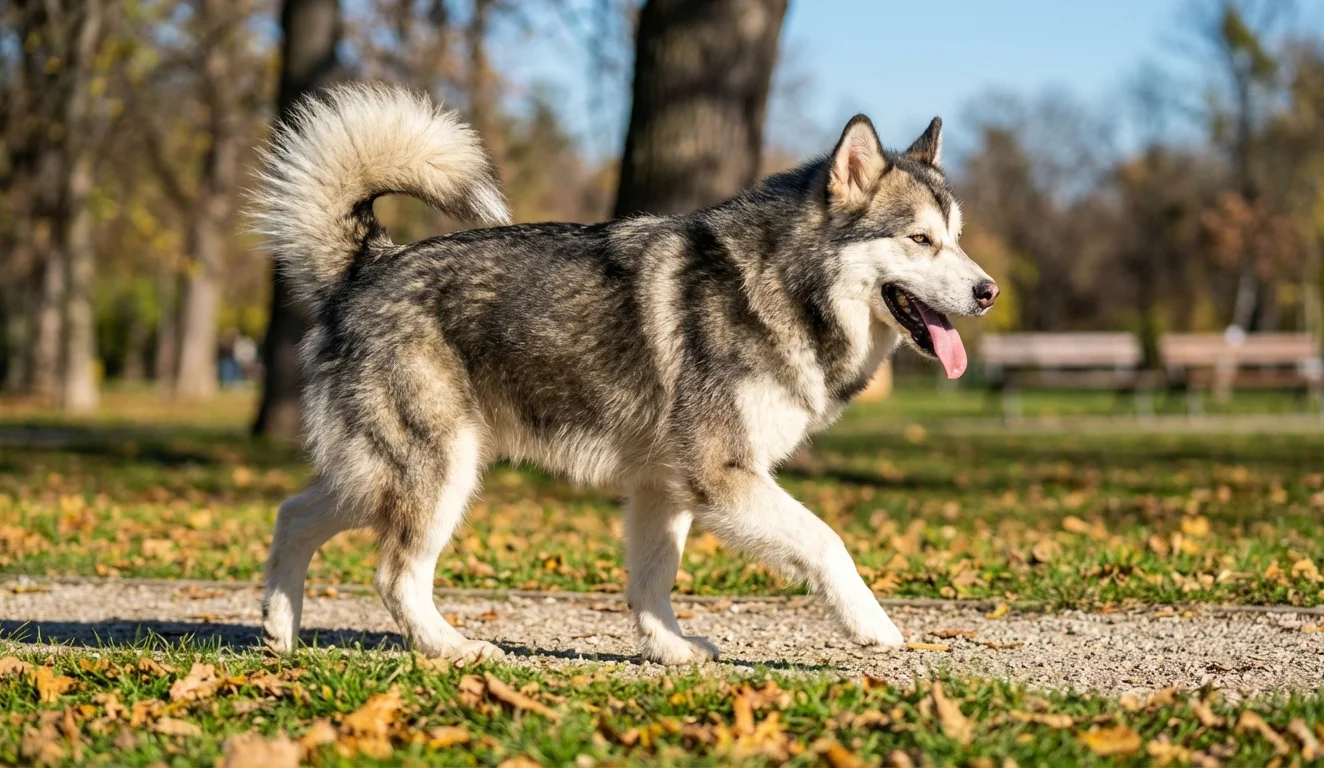
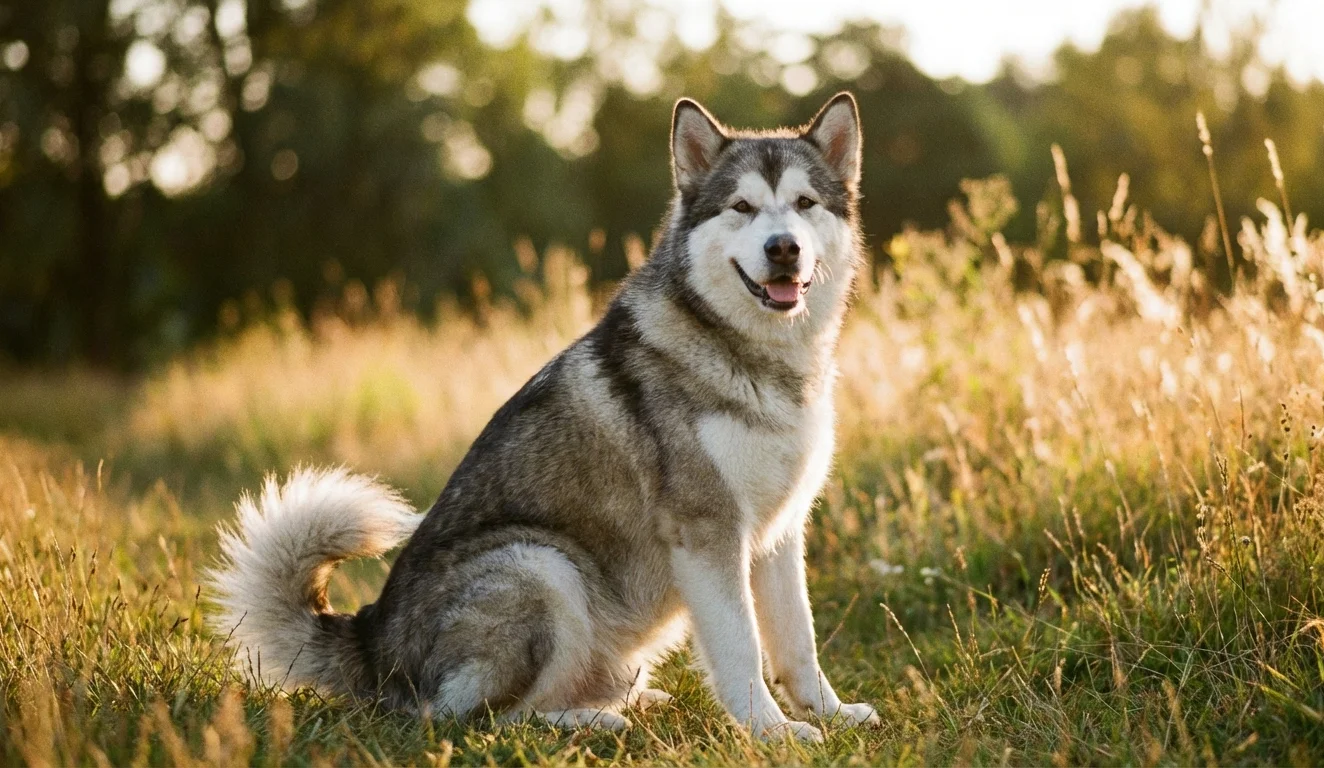
Malamutes are built thick. Broad chest, heavy bone, substantial muscle, big snowshoe-like feet with tough pads and fur between the toes (built-in snow boots). They carry themselves with a confident, steady gait that looks effortless even when they’re hauling weight. The overall impression is power, not elegance.
Coat and Color
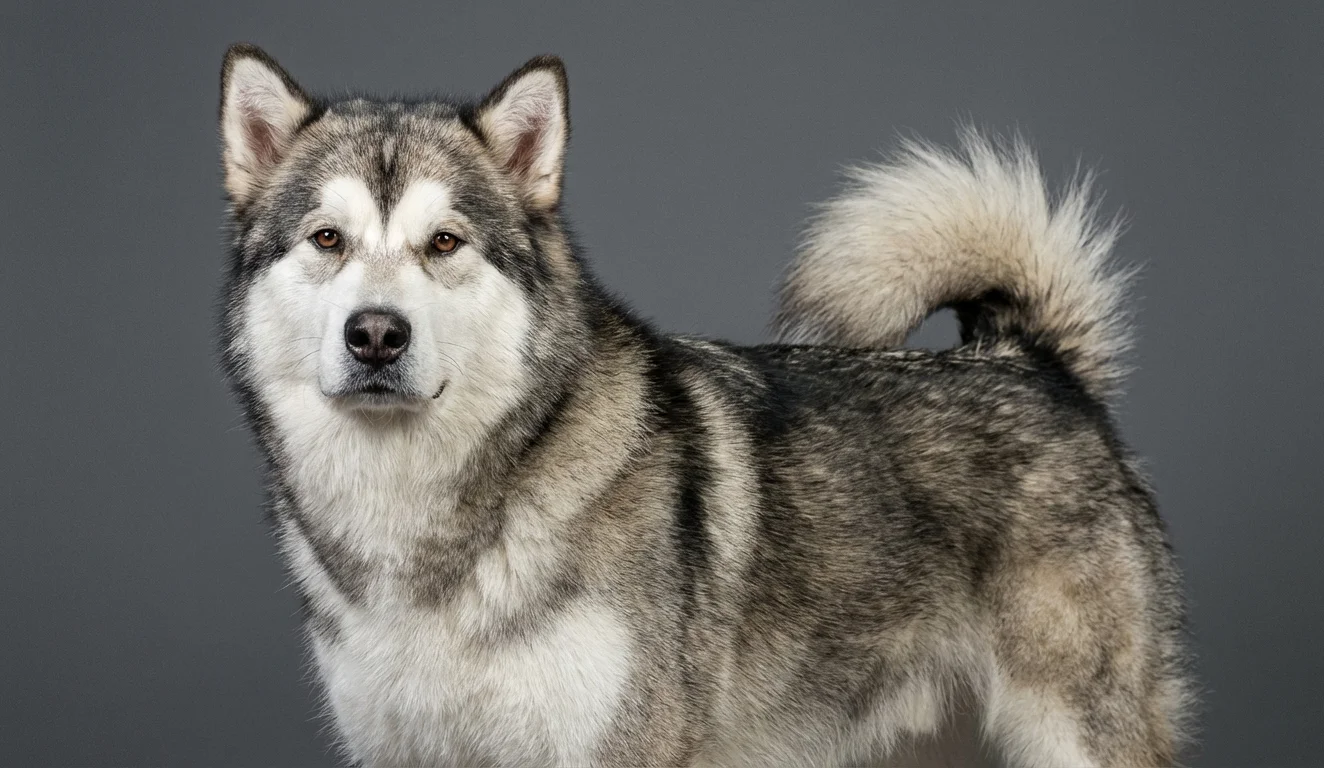
The coat is a dense, plush double coat designed for Arctic survival. The outer coat is coarse and stands off the body. The undercoat is woolly and 1-2 inches deep. It’s waterproof, wind-resistant, and absolutely magnificent, right up until it starts coming out in clumps all over your house twice a year.
Common colors include light gray and white, black and white, sable and white, red and white, and seal and white. The face usually features a cap and/or a bar pattern, and many Malamutes have a dark “mask” or “goggles” marking. Unlike Huskies, Malamutes always have brown eyes, blue eyes are a disqualification in the breed standard.
Alaskan Malamute Temperament
Malamutes are often compared to Siberian Huskies, and while they share some traits (independence, stubbornness, an intense desire to pull things), they’re really quite different dogs. Malamutes are calmer, more dignified, and more physically imposing. They don’t have the Husky’s frantic energy or constant vocalizing. Instead, they have a quiet confidence and a tendency to do things on their own schedule.
What living with a Malamute is really like:
- Pack-oriented and loyal. Malamutes bond deeply with their family. They’re not one-person dogs, they love the whole pack. But this pack drive also means they have opinions about hierarchy. They’ll test boundaries, especially during adolescence, and they need an owner who can establish clear, consistent leadership without being harsh.
- Independent thinkers. Like most Arctic breeds, Malamutes were bred to make their own decisions. If a command doesn’t make sense to them, they’ll ignore it. This isn’t defiance for the sake of defiance, it’s a deeply ingrained working trait. You need to convince a Malamute that cooperating with you is in their interest.
- Dog-aggressive tendencies. This is the trait that catches people off-guard. Many Malamutes have same-sex aggression, and some are aggressive with all unfamiliar dogs. Early socialization helps, but it doesn’t always eliminate the tendency. The Alaskan Malamute Club of America openly acknowledges this, stating that the breed can be “aggressive with other dogs.” If you’re expecting a dog-park social butterfly, a Malamute may not be it.
- Affectionate with people. Despite their size and wolf-like appearance, Malamutes are terrible guard dogs. They love people, strangers included. A Malamute is far more likely to greet an intruder with a wagging tail than with a growl.
- Prey drive. Malamutes have a strong prey drive. Cats, rabbits, squirrels, and small dogs can all trigger it. Introductions with small animals should be done very carefully, and many Malamute owners simply don’t keep small pets.
Exercise Needs
Alaskan Malamutes need 60-90 minutes of exercise per day. They’re high-energy dogs, but they’re not hyperactive the way some working breeds are. Their energy is more sustained and steady, think long hike, not a frantic sprint.
Good exercise options for Malamutes:
- Hiking. This is arguably the ideal Malamute activity. They have the endurance to go all day on trails, and they love being outdoors in cooler weather. Many Malamute owners report that their dogs are calmer and happier on hiking days.
- Weight pulling. This is a natural fit for the breed and one of the few dog sports where Malamutes genuinely excel. Organized weight pull competitions exist, but you can also set up backyard pulling exercises with a proper harness and weighted sled.
- Skijoring and bikejoring. Harnessing a Malamute to pull you on skis or a bike channels their hauling instinct. In winter climates, this is one of the best ways to exercise a Malamute.
- Long, structured walks. Not a leisurely stroll, Malamutes want to move with purpose. A 45-minute walk at a good pace, twice a day, covers the basics.
Heat warning: Like all Arctic breeds, Malamutes suffer in hot weather. That thick double coat is a liability when temperatures climb above 80F. Exercise should happen in early morning or after sunset during summer months. Provide shade, fresh water, and cooling options. If you live in a consistently hot climate (looking at you, Arizona and Texas), a Malamute is probably not the best fit, their quality of life suffers in sustained heat.
Grooming
Alaskan Malamutes shed on a scale that’s hard to describe to people who haven’t experienced it. The breed “blows” its undercoat twice a year, and during those periods (usually 2-3 weeks in spring and fall), you will pull out fistfuls of woolly undercoat every single day. It will be on your clothes, your furniture, in your car, and somehow in rooms the dog has never entered.
Grooming routine:
- Brush 2-3 times per week outside of coat blow season, using an undercoat rake and a slicker brush
- Daily brushing (sometimes twice daily) during coat blows to stay ahead of the fur explosion
- Bath every 6-8 weeks: Malamutes don’t tend to smell bad, but they need occasional baths to keep the coat healthy. Many owners take them to a self-serve dog wash during coat blow to use the high-velocity dryers, which blast out loose undercoat far more effectively than brushing alone.
- Nail trims every 2-3 weeks
- Never shave the coat. The double coat insulates against both cold and heat. Shaving can cause sunburn, coat texture changes, and thermoregulation problems.
Professional deshedding sessions ($60-$100) during coat blow are worth every penny. A groomer with a high-velocity dryer can remove more undercoat in one session than you can in a week of brushing.
Alaskan Malamute Health Issues
Malamutes are a relatively healthy breed overall, with a good lifespan for their size. The 10-14 year range is above average for a large breed. Still, they have some conditions to watch for.
Hip Dysplasia
The OFA database shows that approximately 12% of Alaskan Malamutes are affected by hip dysplasia, placing them in the moderate-risk category for large breeds. The condition occurs when the hip joint doesn’t develop properly, leading to arthritis and pain. Symptoms include limping, reluctance to climb stairs, and decreased activity. Treatment ranges from weight management and physical therapy ($500-$1,500 per year) to total hip replacement surgery ($3,500-$7,000 per hip). Reputable breeders screen parents via OFA or PennHIP evaluation.
Chondrodysplasia (Dwarfism)
This is a genetic condition specific to Malamutes, it causes abnormal cartilage and bone development, resulting in shortened, bowed legs. It’s inherited as an autosomal recessive trait, meaning both parents must carry the gene. A DNA test is available, and responsible breeders test for it. Affected puppies are usually identified by 3-4 weeks of age. There’s no cure, though mild cases can live comfortable lives. Diagnosis costs $200-$500. Management varies.
Hypothyroidism
Malamutes are predisposed to underactive thyroid function, which shows up as weight gain, lethargy, coat changes (thinning, dullness), and skin problems. It’s easily diagnosed with blood work and managed with daily thyroid hormone supplementation, typically $200-$500 per year for medication and monitoring. Most dogs return to normal energy and coat quality once treatment begins.
Progressive Retinal Atrophy (PRA)
PRA causes gradual loss of vision, progressing to blindness. It’s not painful, but it’s irreversible. A DNA test exists to identify carriers. Reputable breeders should test breeding stock. Diagnosis and monitoring costs run $1,000-$2,500 over the life of the condition.
Bloat (Gastric Dilatation-Volvulus)
Large, deep-chested breeds like the Malamute are at elevated risk for bloat, a life-threatening condition where the stomach fills with gas and can twist on itself. Symptoms include a distended abdomen, restlessness, non-productive retching, and drooling. This is a veterinary emergency, treatment is surgery, costing $2,000-$5,000. Preventive gastropexy (surgically tacking the stomach to the body wall) can be done during spay/neuter for $400-$800 and dramatically reduces the risk.
Training
Training a Malamute requires patience, consistency, and a healthy respect for the fact that this dog is going to negotiate with you at every turn. They’re intelligent, ranked in the top third of working intelligence by most assessments, but their independence means they don’t perform on command like a German Shepherd or a Border Collie.
What works with Malamute training:
- Positive reinforcement with high-value rewards. Malamutes are food-motivated, which is your biggest advantage (they love to eat, sometimes too much). Real meat, cheese, and novel treats get better results than standard kibble pieces.
- Short, varied sessions. Repetition bores a Malamute fast. Five-minute sessions with different exercises work better than 20 minutes of the same thing.
- Early and ongoing socialization. Given the breed’s potential for dog aggression, puppy socialization classes and regular positive exposure to other dogs are critical. Start early and keep it up through adolescence.
- Firm but fair leadership. Malamutes don’t respond to dominance-based training or harsh corrections. They shut down or become defiant. But they do need clear, consistent rules. Think calm authority, not yelling.
- Leash training from day one. A full-grown Malamute that pulls on leash is physically difficult for most people to control. Loose-leash walking and “leave it” commands should be priorities from puppyhood. A front-clip harness helps manage pulling while training progresses.
Cost
Purchase Price
An Alaskan Malamute puppy from a reputable breeder costs $1,200-$2,500. Show-quality puppies and dogs from established working lines may run $3,000+. Because Malamutes are frequently surrendered by owners who underestimated the breed’s needs, rescue is a viable option, expect $300-$600 from a breed-specific rescue organization.
Monthly Costs
| Expense | Monthly Estimate |
|---|---|
| Food (high-quality, large breed formula) | $60-$100 |
| Preventive vet care (averaged) | $20-$35 |
| Pet insurance | $35-$55 |
| Treats and chews | $15-$25 |
| Miscellaneous (toys, supplies, grooming) | $20-$40 |
| Total | $150-$255 |
First-Year Costs
Beyond the purchase price, first-year expenses typically run $3,000-$5,000. That includes vaccinations, spay/neuter (with preventive gastropexy, ideally), a heavy-duty crate, initial supplies, puppy training classes, and enough lint rollers to fill a shopping cart. Budget for a secure fence if you don’t already have one, Malamutes are diggers, and a standard 4-foot fence won’t contain them.
Is an Alaskan Malamute Right for You?
An Alaskan Malamute could be a great fit if you:
- Are an experienced dog owner comfortable with independent, strong-willed breeds
- Live in a cooler climate or can manage heat precautions year-round
- Have a large, securely fenced yard (6 feet minimum with dig guards)
- Enjoy hiking, outdoor activities, or are interested in pulling sports
- Can commit to 60-90 minutes of daily exercise
- Don’t mind epic amounts of shedding and frequent grooming
- Want a loyal, affectionate family dog that bonds deeply with its people
An Alaskan Malamute is probably not right if you:
- Are a first-time dog owner
- Live in a hot climate without reliable cooling options
- Have cats, rabbits, or other small animals in the home
- Want a dog that’s reliably friendly with other dogs at the park
- Live in an apartment or a home without a fenced yard
- Work long hours and can’t provide enough exercise
- Want a dog that obeys commands eagerly and consistently
- Are looking for a guard dog (they’re too friendly with strangers)
The Alaskan Malamute is a magnificent, ancient breed that’s deeply rewarding for the right owner and deeply frustrating for the wrong one. They’re not a “set it and forget it” dog. They need exercise, mental engagement, grooming, and an owner who understands that “stubborn” is just another word for “thinking for themselves.” But if you’re the kind of person who respects a dog with a strong personality and you’ve got the space and climate to support one, a Malamute will be one of the most loyal, entertaining, and genuinely cool dogs you’ll ever own.
Related Breeds
If you’re considering this breed, you might also want to look at:
Frequently Asked Questions
What’s the difference between an Alaskan Malamute and a Siberian Husky?
Size is the most obvious difference, Malamutes are significantly larger (75-85+ lbs vs. 35-60 lbs). But temperament differs too. Malamutes are calmer, quieter, and more physically powerful, while Huskies are faster, more vocal, and higher-energy. Malamutes were bred to haul heavy freight slowly. Huskies were bred to pull light loads quickly over long distances. Malamutes are also more likely to show dog aggression, while Huskies tend to be friendlier with other dogs. Both shed like it’s their job. Both are independent. Both will ignore you when they feel like it.
Are Alaskan Malamutes good with kids?
Generally, yes. Malamutes are affectionate and playful with children, thanks to centuries of living alongside families. The concern is size, a playful 85-pound Malamute can easily knock over a small child without meaning to. Supervision is a must, especially with toddlers. Teach kids not to bother the dog while eating, and teach the dog basic manners around small humans. With proper introductions and oversight, Malamutes and kids tend to do well together.
Do Alaskan Malamutes howl?
Malamutes do vocalize, but they’re generally quieter than Siberian Huskies. They “woo-woo” more than they bark, and some Malamutes howl in response to sirens or when they’re excited. The vocalization is typically less frequent and less dramatic than Husky howling. But a bored or frustrated Malamute can be plenty loud. Individual variation is real, some Malamutes barely make a sound, while others have full conversations.
Can Alaskan Malamutes live in apartments?
It’s not recommended. Malamutes need space, a securely fenced yard is strongly preferred. Their size, exercise needs, and shedding make apartment life difficult for both the dog and the owner. If you’re in an apartment and set on a Malamute, you’d need to commit to multiple daily outdoor exercise sessions and accept that your small space will be covered in fur. Most breed clubs and rescues discourage apartment placement for Malamutes.
How much do Alaskan Malamutes eat?
An adult Malamute typically eats 3-5 cups of high-quality dry food per day, split into two meals. That’s roughly $60-$100 per month depending on the brand. Malamutes are surprisingly food-efficient for their size, they were bred to work hard on modest rations in Arctic conditions. The flip side is that they love food and will overeat if given the chance. Free-feeding is a bad idea with this breed. Monitor portions and body condition closely, because an overweight Malamute puts extra strain on joints that are already predisposed to problems.