Cane Corso Breed Guide: 110 Pounds of Loyalty With a Side of Intimidation (2026)
The Cane Corso is a powerful Italian mastiff that bonds fiercely with its family and makes strangers think twice about knocking on your door.
The Cane Corso is an Italian mastiff that weighs 85-110 pounds, stands 23.5-27.5 inches tall, and lives 9-12 years. That’s the clinical version. The real version is that this is a dog built like a linebacker who will lean against your legs on the couch and then stare down the FedEx driver like a bouncer at an exclusive club. They’re one of the most misunderstood breeds out there.
In Short: 85–110 lbs, 9–12 years. Moderate-to-high energy. Moderate shedding. Watch for Hip Dysplasia. Good with kids, but better for experienced owners.
We think the Cane Corso is one of the best dogs in the world, for the right person. And that qualifier matters more here than with almost any other breed. A Cane Corso in the wrong hands isn’t just inconvenient. It’s potentially dangerous. Not because the breed is aggressive by nature, but because a 100-pound dog with a protective instinct and no training is a liability. If you’re willing to put in the work, though, you’ll get a dog that’s smarter than most people give it credit for, deeply loyal, and surprisingly sensitive.
Cane Corso at a Glance
| Trait | Details |
|---|---|
| Breed Group | Working (AKC) |
| Height | Males: 25-27.5 in / Females: 23.5-26 in |
| Weight | Males: 99-110 lbs / Females: 85-99 lbs |
| Life Expectancy | 9-12 years |
| Coat | Short, dense, coarse |
| Colors | Black, Gray, Fawn, Red, Brindle |
| Temperament | Intelligent, Loyal, Reserved |
| Shedding | Moderate |
| Energy Level | Moderate-High |
| Good With Kids | Yes (with socialization) |
| First-Time Owner Friendly | No |
History
The Cane Corso traces back to ancient Rome. These dogs descend from the Roman war dog known as the Canis Pugnax, a massive molosser used in warfare, hunting wild boar, and guarding property. The name “Cane Corso” likely derives from the Latin cohors, meaning guardian or protector, which tells you everything about what this breed was bred to do.
After the fall of the Roman Empire, the Cane Corso became a farmstead dog across southern Italy. They herded cattle, guarded livestock from wolves, and protected families in rural areas where calling the police wasn’t exactly an option. For centuries, the breed was a working fixture of Italian agriculture, especially in the southern regions of Puglia, Campania, and Basilicata.
By the mid-20th century, the Cane Corso had nearly gone extinct. Industrialization gutted the small Italian farms that relied on these dogs. A group of Italian breed enthusiasts began a recovery effort in the 1970s, tracking down remaining Corsos in the countryside. The breed was recognized by the Italian Kennel Club in 1994 and the AKC in 2010. So while the Cane Corso looks ancient, its official recognition is remarkably recent.
Size and Appearance
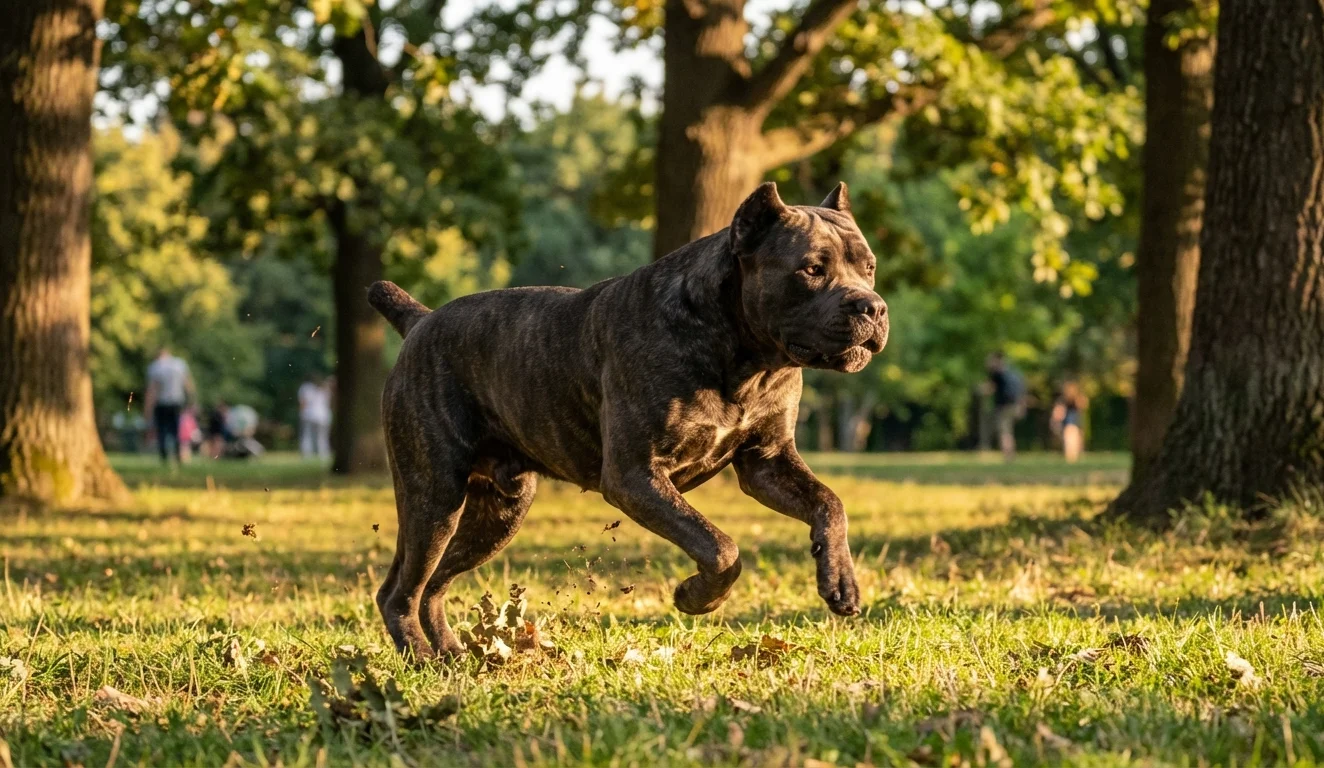
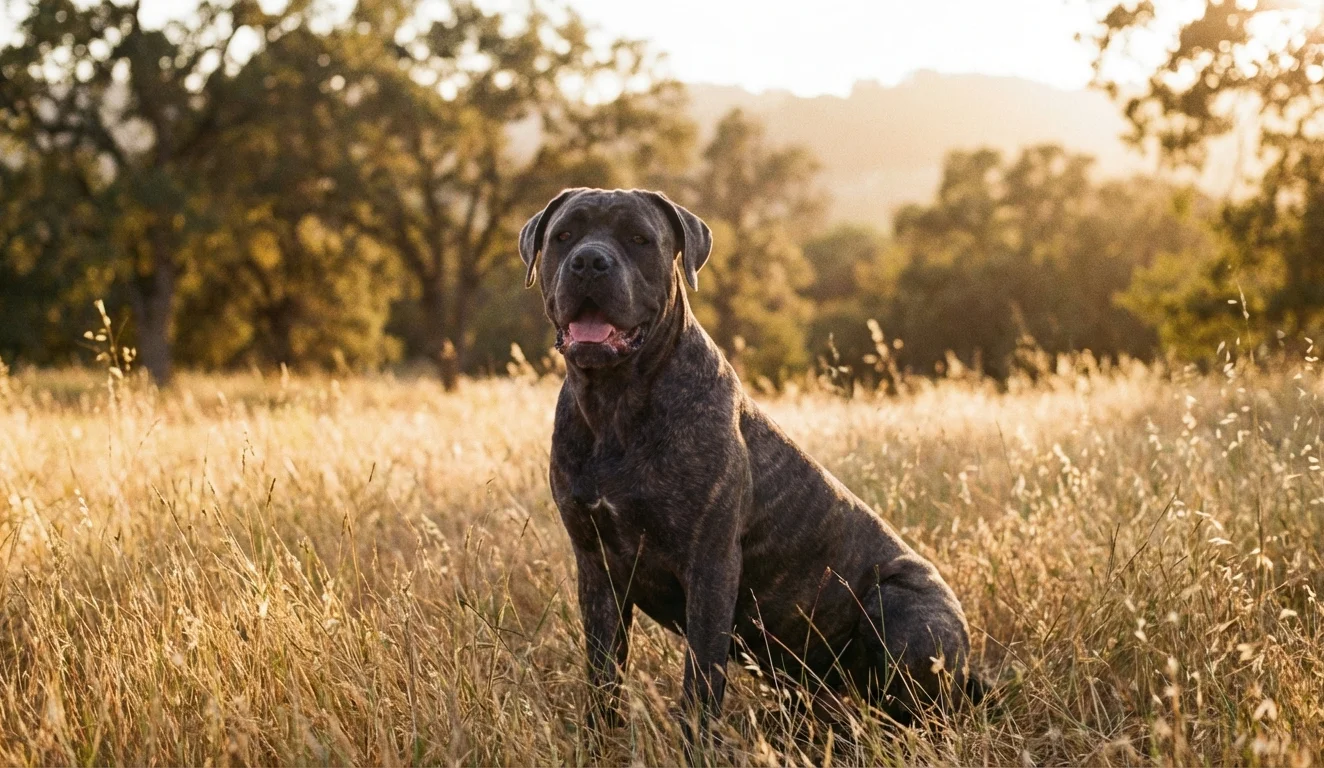
Male Cane Corsos stand 25-27.5 inches at the shoulder and weigh 99-110 pounds, though many males exceed that and push toward 120. Females are slightly smaller at 23.5-26 inches and 85-99 pounds. These are large, muscular dogs with a wide chest and an imposing silhouette.
The Cane Corso’s head is where you really see the breed’s power. It’s broad, with a pronounced stop and a muzzle that’s roughly one-third the total length of the skull. Their jaws are undershot (the lower jaw extends slightly beyond the upper), which gives them that distinctive wide, square look.
Coat and Color
The coat is short, dense, and coarse, almost bristly to the touch. It has a light undercoat that thickens in winter. Cane Corsos come in black, gray (both light and lead gray), fawn (light and dark), red, and brindle variations. Black and gray are the most common colors you’ll see. Some Corsos have a small white patch on the chest, which is acceptable in the breed standard.
Ear cropping is still common in the breed, though it’s purely cosmetic and increasingly controversial. Natural ears are floppy and triangular. We’d recommend leaving them natural.
One thing that surprises first-time Corso owners is the tail. Traditionally docked to a short stub, many Corsos today are kept with natural tails, long, thick, and powerful enough to clear a coffee table in one sweep. Like ear cropping, tail docking is cosmetic and increasingly uncommon outside of working farm environments.
Cane Corso Temperament
The Cane Corso is not a golden retriever. This is a dog that was bred to make decisions independently, to assess threats, guard territory, and protect its family without waiting for a command. That independence is part of what makes the breed fascinating, and also what makes it challenging.
With their family, Corsos are affectionate in a way that surprises people who only know the breed by reputation. They’ll press their entire body against you, follow you room to room, and get visibly upset when you leave. They bond intensely to their people. Some Corso owners describe them as “Velcro dogs,” which is both endearing and occasionally inconvenient when you’re trying to use the bathroom alone.
With strangers, Corsos are reserved. Not aggressive, reserved. They’ll watch a new person carefully, keep their distance, and warm up on their own timeline. This is normal breed behavior and should be respected, not forced. A well-socialized Corso will tolerate strangers politely but may never be enthusiastic about them.
The honest reality: Corsos are not typically good with other dogs, especially same-sex pairings. Their prey drive can be high, and they generally aren’t great with cats either. Early socialization helps, but the breed’s dog-selectiveness is something to plan around, not something to assume you’ll train out.
Exercise Needs
Cane Corsos need about 60 minutes of exercise per day. They’re not the highest-energy breed in the working group, they won’t run you into the ground like a husky, but they do need consistent activity to stay mentally and physically healthy.
Good exercise options for Corsos:
- Long walks or hikes. A 45-minute walk at a brisk pace is a solid baseline. Corsos aren’t great joggers over long distances because of their bulk, but they can handle moderate-pace outings well.
- Training sessions. Mental exercise counts. Corsos are smart and enjoy having a job to do. Obedience work, nose work, or structured play can tire them out as much as physical exercise.
- Yard play. A fenced yard is almost a necessity for this breed. They like patrolling their territory, and off-leash play (in a secure area) lets them move at their own pace.
A Cane Corso without enough exercise will get destructive. And when a 100-pound dog decides your furniture is a chew toy, the damage isn’t subtle. Boredom in this breed often shows up as chewing, digging, or excessive barking.
Exercise needs change with age. Corso puppies should not be over-exercised, their large frame is growing rapidly and too much impact (jumping, running on hard surfaces, long hikes) can damage developing joints. A good rule of thumb is 5 minutes of structured exercise per month of age, twice daily. So a 4-month-old puppy gets two 20-minute sessions. Senior Corsos (7+ years) may slow down and prefer shorter, more relaxed walks, pay attention to their cues and adjust accordingly.
Grooming
The Cane Corso is about as low-maintenance as a large breed gets on the grooming front. That short, coarse coat doesn’t mat or tangle, and it doesn’t require professional grooming.
Basic grooming routine:
- Weekly brushing with a rubber curry comb or bristle brush to remove loose hair and distribute skin oils
- Bath every 6-8 weeks or when dirty, their coat doesn’t hold odor as much as longer-coated breeds
- Nail trims every 2-3 weeks: those big nails can crack or split if left too long
- Ear cleaning weekly: especially if the ears are left natural, since floppy ears trap moisture
- Wrinkle care: some Corsos have facial wrinkles that need wiping to prevent bacterial buildup
Shedding is moderate. You’ll notice more hair in spring and fall, but it’s nothing compared to a double-coated breed like a German Shepherd or Husky. A good lint roller and weekly brushing keep it manageable.
Cane Corso Health Issues
The Cane Corso has a lifespan of 9-12 years, which is actually decent for a breed this size. But there are breed-specific health concerns you should know about before buying.
Hip Dysplasia
Hip dysplasia is common in the Cane Corso. The OFA evaluates Corsos with a higher-than-average rate of dysplastic hips compared to many breeds. This is a condition where the hip joint doesn’t develop properly, leading to arthritis and pain over time. Treatment ranges from $1,500-$6,000, depending on severity, weight management and joint supplements can help manage mild cases, while severe cases may need total hip replacement surgery.
Bloat (Gastric Dilatation-Volvulus)
Bloat is a life-threatening emergency where the stomach fills with gas and can twist on itself. Deep-chested breeds like the Cane Corso are at elevated risk. Symptoms include a swollen abdomen, unproductive retching, restlessness, and drooling. If you see these signs, get to an emergency vet immediately, this condition kills fast. Treatment costs $2,000-$7,500. Many Corso owners discuss prophylactic gastropexy (a preventive surgical stomach tack) with their vet, often done at the time of spay/neuter.
Cherry Eye and Ectropion
Eye issues are moderately common in Corsos. Cherry eye occurs when the gland of the third eyelid prolapses, it looks like a red, fleshy mass in the corner of the eye. Ectropion is a drooping of the lower eyelid that exposes the inner surface. Both conditions are treatable with surgery ($500-$1,500 per eye), and neither is usually life-threatening, but they can cause chronic irritation if left untreated.
Demodectic Mange
Young Corsos sometimes develop demodectic mange, caused by Demodex mites that are normally present on all dogs but can overpopulate in dogs with immature immune systems. It typically shows up as patchy hair loss, often around the face and front legs. Treatment costs $200-$1,000 and most dogs grow out of it as their immune system matures.
Training
Here’s the good news: Cane Corsos are highly intelligent and genuinely want to work with their handler. They were bred to take direction, and they pick up commands quickly.
Here’s the catch: they’ll also test you. Corsos are not blindly obedient the way a Labrador might be. They have opinions about things, and if they don’t respect your leadership, they’ll make their own decisions. That’s fine when they’re deciding which end of the couch to lie on. It’s a problem when they’re deciding how to react to a stranger at the door.
Training priorities for Cane Corso owners:
- Start socialization early and never stop. The window between 8-16 weeks is critical, but socialization should be a lifelong practice for this breed. Expose them to different people, dogs, environments, sounds, and surfaces.
- Obedience is non-negotiable. A reliable recall, sit, stay, and “leave it” aren’t optional with a dog this powerful. You need voice control.
- Use positive reinforcement with structure. Corsos respond well to food rewards and praise, but they also need consistency and clear boundaries. Permissive training doesn’t work with this breed.
- Don’t skip leash manners. A 110-pound dog that pulls on leash is a safety hazard. Invest in leash training early.
We’d strongly recommend working with a trainer who has experience with guardian breeds. A generic puppy class probably won’t cut it for a Corso.
Common training mistakes with Corsos:
- Waiting too long to start training. A 15-pound Corso puppy that jumps up is cute. A 100-pound adult that does the same thing is a safety problem. Start from day one.
- Using dominance-based methods. The “alpha” approach creates a fearful or confrontational dog, not a respectful one. Corsos respect leadership, but leadership means consistency and fairness, not intimidation.
- Assuming socialization is “done” after puppy class. Corsos need ongoing exposure to novel situations throughout their life. A Corso that stops getting socialization at 6 months may become increasingly suspicious of new people and situations as it matures.
Cost
Purchase Price
A Cane Corso puppy from a reputable breeder costs $1,500-$3,000. Dogs from champion bloodlines or imported European lines can run $3,500-$5,000+. Be wary of breeders offering Corsos under $1,000, health testing and responsible breeding aren’t cheap, and a low price tag often means corners were cut.
Monthly Costs
| Expense | Monthly Estimate |
|---|---|
| Food (high-quality, large breed) | $60-$100 |
| Preventive vet care (averaged) | $20-$40 |
| Pet insurance | $40-$80 |
| Treats and chews | $15-$25 |
| Miscellaneous (toys, supplies) | $10-$30 |
| Total | $120-$275 |
First-year costs are higher. Factor in spay/neuter ($300-$500), initial vaccinations and vet visits ($300-$500), a crate large enough for a Corso ($100-$200), and training classes ($200-$600). Budget $3,000-$5,000 for the first year beyond the purchase price.
Is a Cane Corso Right for You?
A Cane Corso could be a great fit if you:
- Have experience with large or guardian breeds
- Can commit to ongoing training and socialization, not just a puppy class, but consistent work for the life of the dog
- Have a securely fenced yard
- Want a dog that bonds deeply to your family and actually notices when someone’s at the door
- Are physically capable of handling a powerful dog on leash
- Live in an area without breed-specific legislation that restricts mastiff-type breeds (check your local laws)
A Cane Corso is probably not right if you:
- Are a first-time dog owner
- Have a multi-dog household, especially with same-sex dogs
- Want a dog that loves everyone and greets strangers enthusiastically
- Live in a small apartment without outdoor space
- Travel frequently or work long hours away from home, Corsos don’t do well with isolation
- Aren’t willing to invest in professional training
The Cane Corso isn’t a dog for people who want easy. But for owners who put in the effort, the socialization, the training, the leadership, the reward is a bond that’s hard to describe. Your Corso will look at you like you hung the moon. And then look at the mail carrier like they’re trespassing. That duality is the entire breed.
One more thing worth mentioning: check your homeowner’s insurance before buying a Cane Corso. Some insurance companies have breed restriction lists that include the Cane Corso, and certain municipalities have breed-specific legislation (BSL) that restricts or bans mastiff-type breeds. It’s frustrating and often unfair, but it’s a reality that prospective Corso owners need to research before committing.
Related Breeds
If you’re considering this breed, you might also want to look at:
Frequently Asked Questions
Are Cane Corsos aggressive?
Cane Corsos are not inherently aggressive, but they are protective. There’s a meaningful difference. A well-bred, well-socialized Cane Corso is calm and confident, not reactive or looking for a fight. Problems arise when Corsos are poorly socialized, improperly trained, or specifically encouraged to be aggressive. The breed’s protective instinct is hardwired, and that’s a feature for many owners, but it requires responsible management. Any dog can be dangerous without proper training, and that risk scales with size.
Can a Cane Corso live in an apartment?
Technically, yes, but we wouldn’t recommend it for most people. Cane Corsos are surprisingly calm indoors and don’t need a mansion, but they do need space to move around and a yard for exercise and mental stimulation. An apartment Corso would need multiple daily outings and access to parks or open spaces. The bigger issue is building restrictions and breed bans, many apartment complexes and insurance companies have restrictions on mastiff-type breeds.
How much does a Cane Corso eat?
An adult Cane Corso eats roughly 4-6 cups of high-quality dry food per day, split into two meals. The exact amount depends on the dog’s size, age, activity level, and the calorie density of the food. Feeding twice daily (rather than once) is recommended to reduce bloat risk. Expect to spend $60-$100 per month on food alone. Slow-feeder bowls are a worthwhile investment for this breed, since fast eating increases bloat risk.
Do Cane Corsos drool a lot?
It depends on the individual dog and the tightness of their lip structure. Corsos with tighter lips drool less than those with looser jowls. As a breed, they drool less than a Mastiff or Saint Bernard, but more than a Lab or German Shepherd. Expect some drool after drinking water, eating, or when they’re excited. Keep a towel handy if you have a loose-lipped Corso, your walls will thank you.
Are Cane Corsos good with children?
Cane Corsos can be excellent with children in their own family. They tend to be gentle and patient with kids they’ve grown up with, and many Corso owners report their dogs being remarkably careful around small children. The caveat: this is a big, powerful dog, and interactions with young kids should always be supervised. Corsos may not be as tolerant of unfamiliar children, especially those who are loud or unpredictable. Socialization with children from puppyhood makes a significant difference.