English Mastiff Breed Guide: The World's Heaviest Couch Potato Has Entered the Chat (2026)
The English Mastiff is a gentle, massive, gloriously lazy guardian that might weigh more than you and will definitely out-drool you.
The English Mastiff weighs 120-230 pounds, stands 27.5-30+ inches at the shoulder, and lives 6-10 years. Let those weight numbers sink in for a moment. Two hundred and thirty pounds. That’s an adult human. That’s a dog that outweighs most NFL running backs. The English Mastiff is one of the heaviest dog breeds on the planet, and when one decides to lean against your leg, you’ll feel it in your skeletal system. The AKC recognized the Mastiff in 1885, making it one of the earliest breeds in the registry, and it’s been quietly (very quietly) winning over giant-breed enthusiasts ever since.
In Short: 120–230 lbs, 6–10 years. Low energy, happy with a couple short walks. Moderate shedder, heavy drooler. Watch for Hip Dysplasia and Bloat (GDV). Best for experienced owners who have space, patience, and a mop for the drool.
Here’s what you need to understand about the English Mastiff before you fall in love with those soulful eyes and enormous head: this breed redefines what it means to own a dog. Your furniture budget will change. Your car situation might change. Your food bill will definitely change. And your concept of personal space will disappear entirely, because 200 pounds of dog that thinks it’s a lap pet leaves no room for boundaries. But for the right owner? There are few breeds as gentle, as devoted, or as spectacularly absurd to live with.
English Mastiff at a Glance
| Trait | Details |
|---|---|
| Breed Group | Working (AKC, 1885) |
| Height | Males: 30+ in / Females: 27.5+ in |
| Weight | Males: 160-230 lbs / Females: 120-170 lbs |
| Life Expectancy | 6-10 years |
| Coat | Short, dense, close-lying |
| Colors | Fawn, Apricot, Brindle (all with dark mask) |
| Temperament | Gentle, Dignified, Good-Natured |
| Shedding | Moderate |
| Energy Level | Low |
| Good With Kids | Yes (with supervision due to size) |
| First-Time Owner Friendly | No |
History
The English Mastiff has one of the longest documented histories of any dog breed. Mastiff-type dogs appear in ancient Babylonian reliefs dating back to 2500 BC, and similar dogs were used by the Romans in gladiatorial combat and warfare. Whether those ancient dogs are direct ancestors of the modern English Mastiff is debatable, but the lineage is old enough that “ancient breed” isn’t marketing spin, it’s just accurate.
In medieval England, Mastiffs served as estate guardians, war dogs, and, unfortunately, participants in blood sports like bear-baiting and bull-baiting. The Magna Carta (1215) even mentions Mastiffs, it required that Mastiffs kept in royal forests have their toes removed to prevent them from chasing the king’s deer. (Medieval England was not a great time to be a dog.)
The breed nearly went extinct after World War II. Food rationing in Britain made keeping a dog that ate as much as a person impractical, and by the end of the war, the English Mastiff population had dwindled to dangerously low numbers. Breeders imported dogs from the United States and Canada to rebuild the breed in England. The modern English Mastiff is a product of that post-war reconstruction, selectively bred for a gentle, stable temperament that’s a far cry from the war dogs and bear-baiters of centuries past.
Size and Appearance
The English Mastiff doesn’t do anything small. Males stand at least 30 inches at the shoulder, the breed standard has no upper limit, and typically weigh 160-230 pounds. Females are slightly smaller at 27.5+ inches and 120-170 pounds. The heaviest dog ever recorded was an English Mastiff named Aicama Zorba, who weighed 343 pounds in 1989. (That’s not aspirational. That’s a health problem. But it tells you what this breed is capable of in terms of sheer mass.)
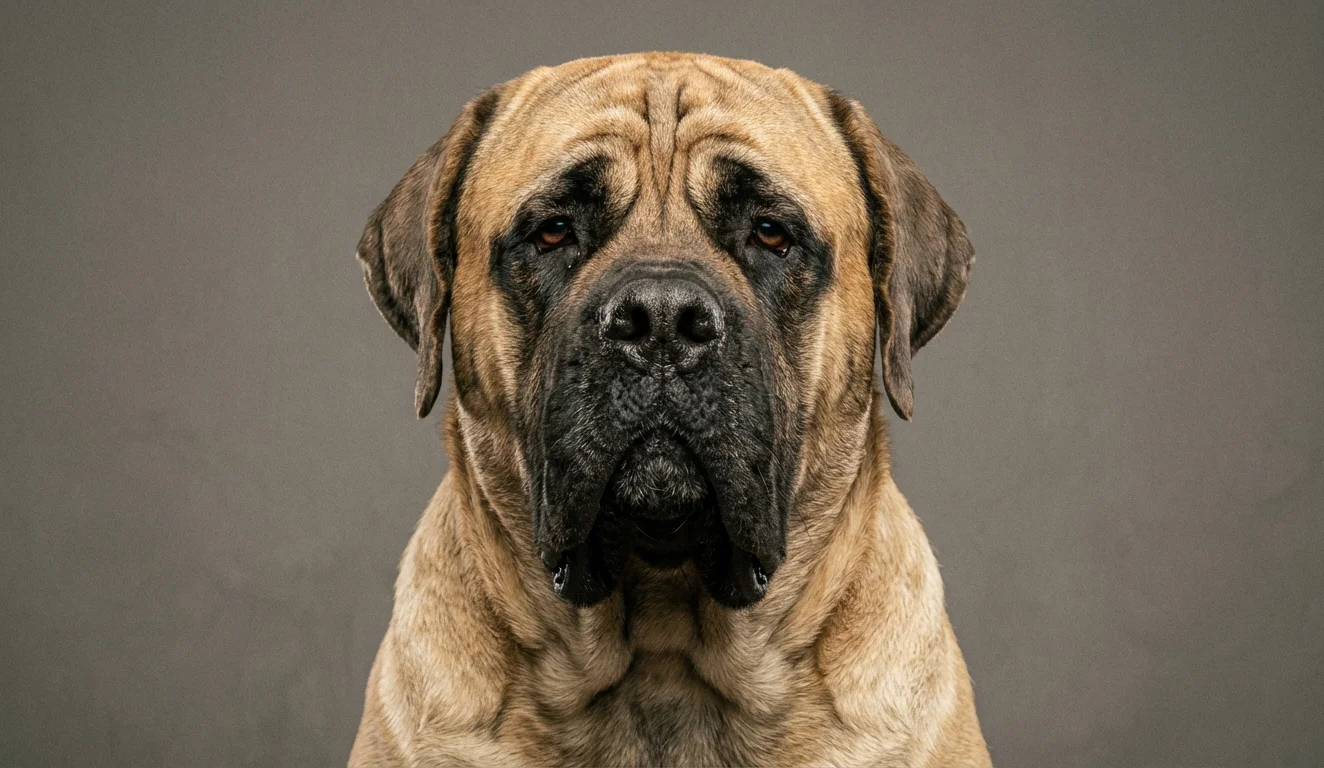
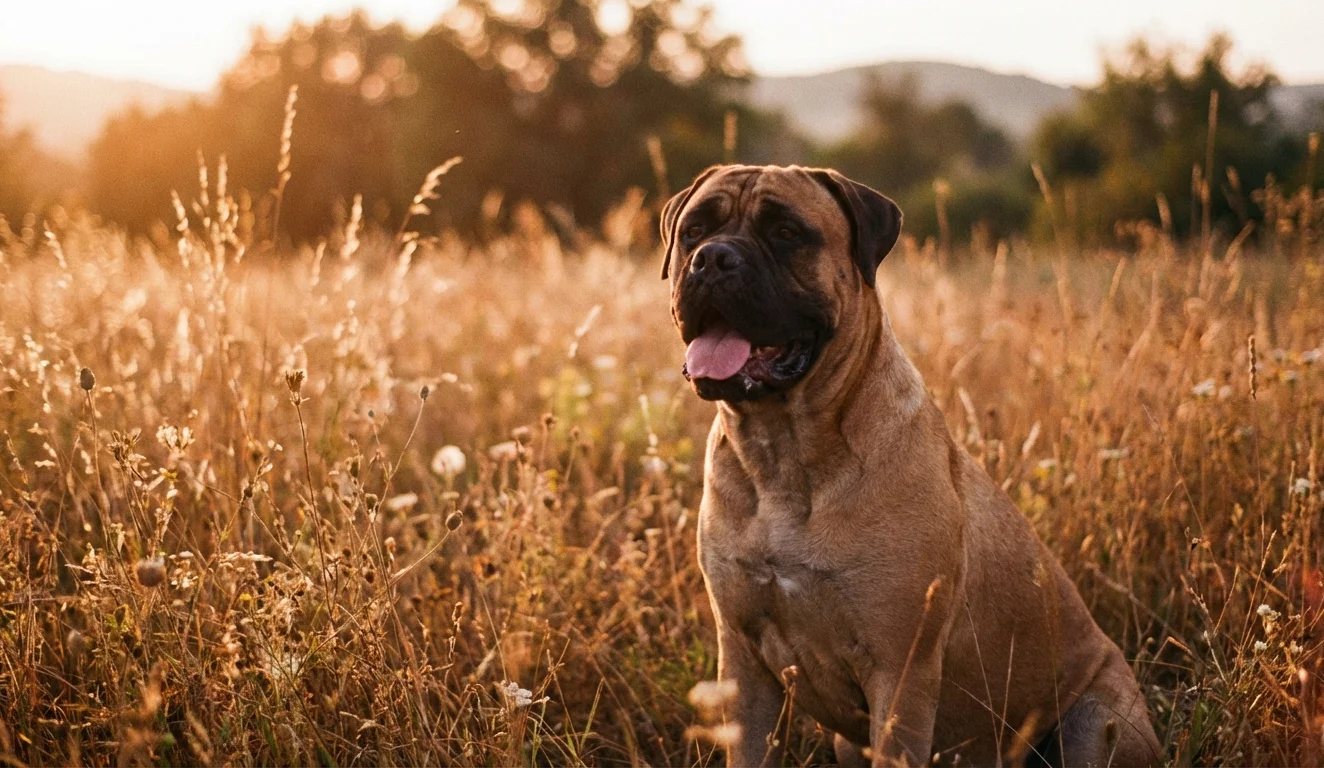
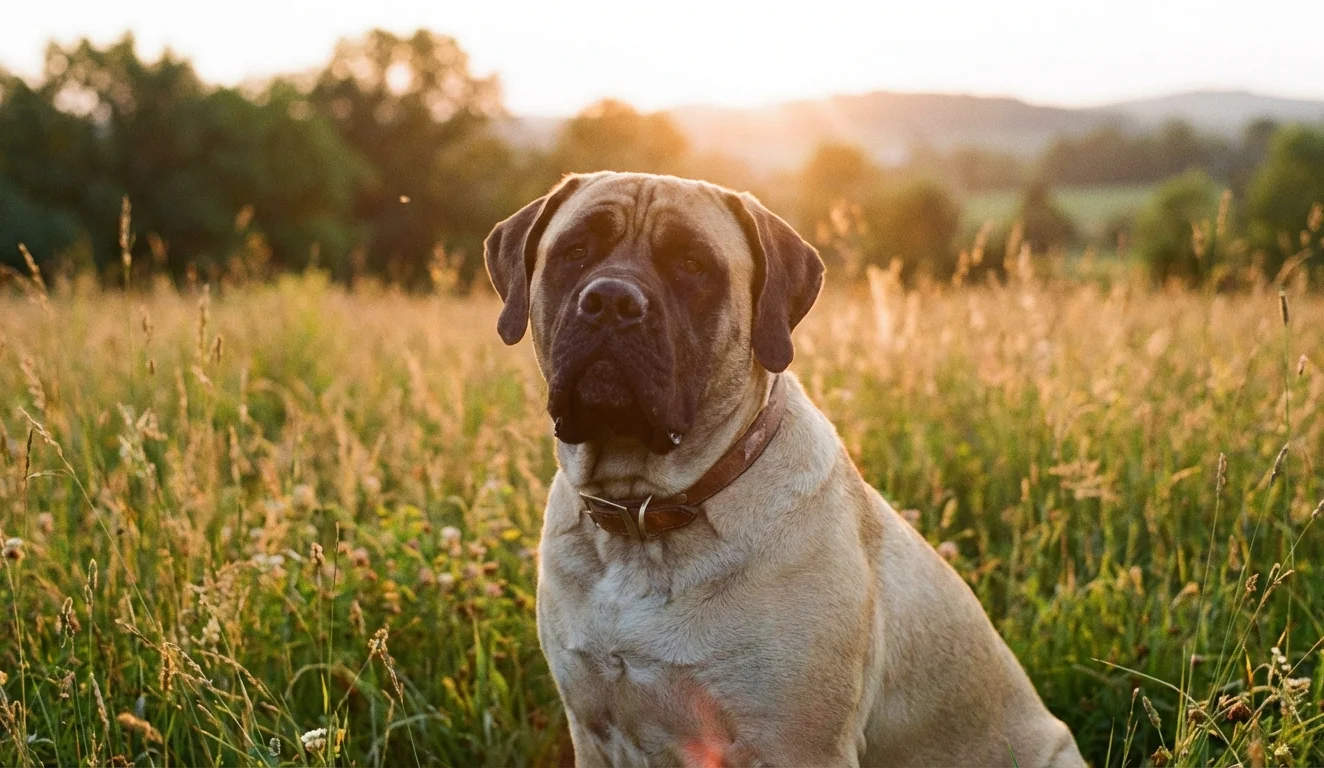
The head is the breed’s most defining physical feature: massive, broad, and square, with deep-set eyes, a short broad muzzle, and heavy wrinkles across the forehead. The expression is supposed to look “alert but kindly,” and most Mastiffs nail that description. They look like they’re contemplating something mildly amusing while deciding whether standing up is worth the effort.
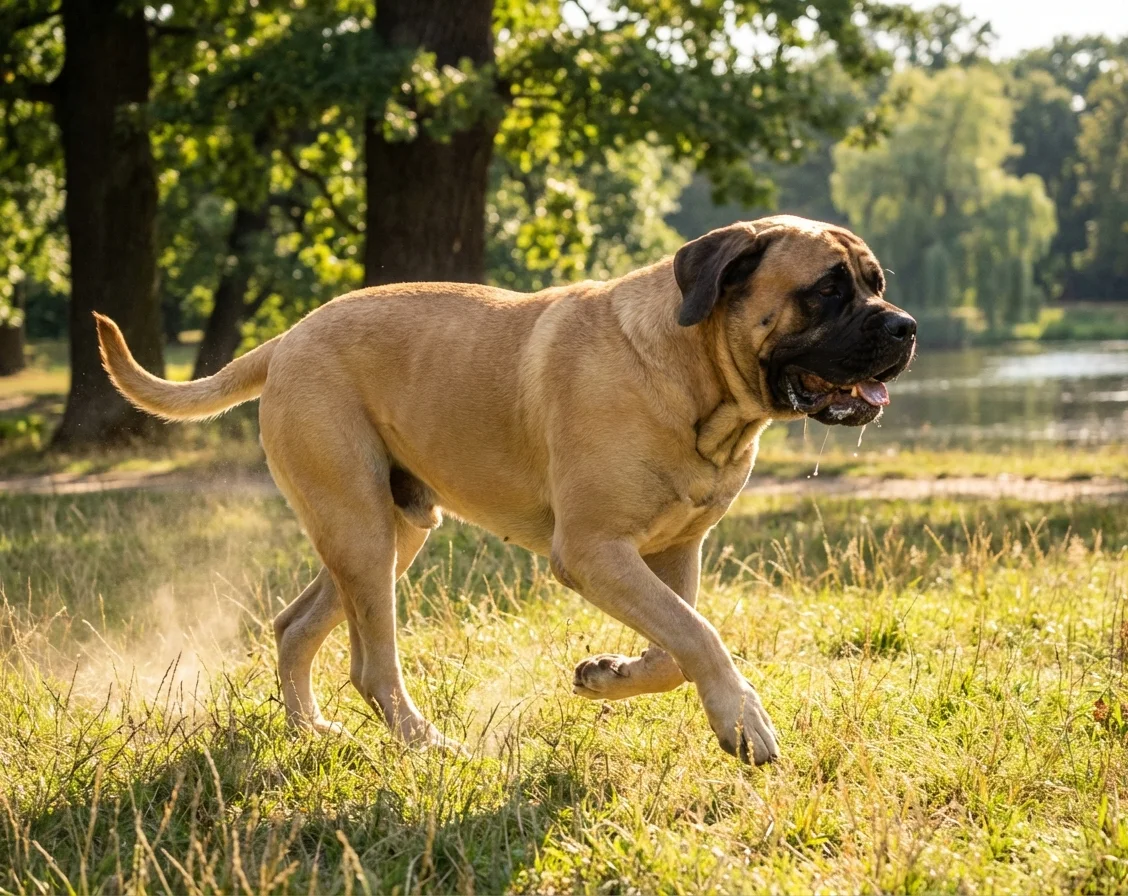
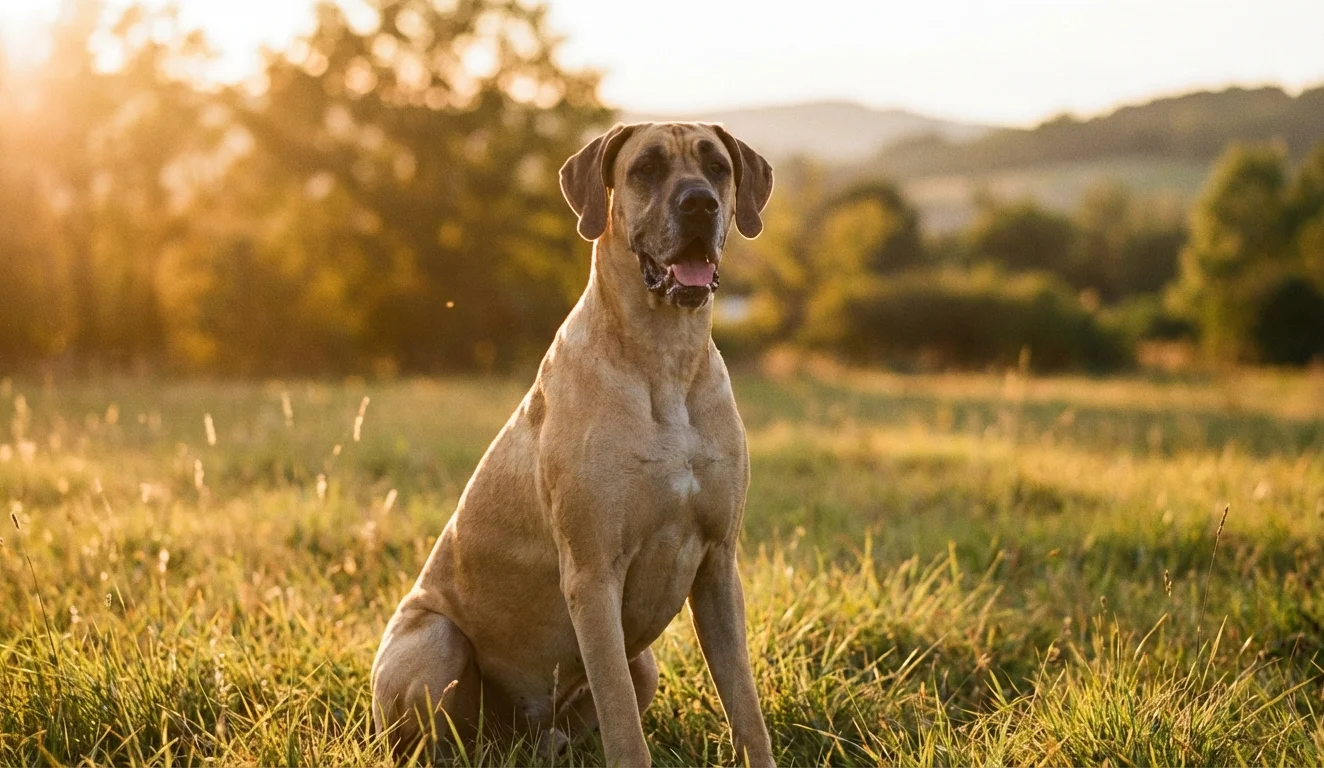
The body matches the head, broad chest, thick neck, heavy bone, straight powerful legs. Everything about the Mastiff’s build says “mass.” They’re not athletic-looking dogs. They’re built like a living wall.
Coat and Color
The coat is short, dense, and flat. Three color variations are standard: fawn (light tan to golden), apricot (a warmer, reddish-gold), and brindle (dark stripes over a fawn or apricot base). All colors feature the trademark dark mask on the muzzle and ears, with dark coloring around the eyes. The short coat is low-maintenance, which is good, because everything else about owning a Mastiff is high-maintenance.
English Mastiff Temperament
If the English Mastiff were a person, they’d be that large, quiet friend who barely talks at parties but makes everyone feel safe just by being in the room. They’re gentle, patient, and operate at a speed that can charitably be described as “unhurried.”
What living with an English Mastiff is actually like:
- Gentle with everyone. Mastiffs are famously good with children, other pets, and even strangers once they’ve sized up the situation. The breed’s gentleness is genuine, not trained into them but bred into them over generations of selecting for stable temperament. A Mastiff puppy with a toddler is one of the most heartwarming things you’ll see, though you’ll want to supervise because the puppy will outweigh the toddler in about six weeks.
- Protective without being aggressive. Mastiffs guard by presence, not by attack. They position themselves between their family and anything they perceive as a threat. Most intruders take one look at a 200-pound dog standing in the doorway and immediately reconsider their life choices. Mastiffs rarely need to do more than show up.
- Lazy by design. This is a low-energy breed. Adult Mastiffs can sleep 14-16 hours a day. They’ll go for a walk, they’ll play for a few minutes, and then they’ll find the nearest soft surface and collapse. If you’ve been wanting a dog that matches your Netflix schedule, the Mastiff is your breed.
- Emotionally tuned in. For a dog that looks like a medieval siege weapon, the Mastiff is remarkably sensitive. They notice changes in household mood, dislike raised voices, and can become anxious or withdrawn if the home environment is chaotic. They thrive in calm, stable households.
- Stubborn in the most polite way possible. A Mastiff that doesn’t want to do something will simply not do it. They won’t fight you. They won’t run away. They’ll just stand there, 200 pounds of passive resistance, looking at you with an expression that says, “I’ve heard your request and I’m declining.” Good luck moving them.
Exercise Needs
English Mastiffs need 20-30 minutes of exercise per day. That’s it. Two short, leisurely walks cover the requirement. This is one of the lowest-energy breeds you can own, and it’s a genuine advantage for people who want a big dog without the big exercise commitment.
Exercise guidelines for Mastiffs:
- Short, moderate walks. Two 15-minute walks per day at a comfortable pace keeps an adult Mastiff healthy. They’re not interested in power walking, trail running, or anything that requires sustained effort.
- Yard time. A fenced yard where they can amble around, sniff, and patrol at their own pace is ideal. Don’t expect fetch enthusiasm. Most Mastiffs will watch the ball land and then look at you as if to say, “You threw it. You go get it.”
- Puppy exercise restrictions. This is critical with Mastiffs. Puppies are growing at an extraordinary rate, some gain over 5 pounds per week. Their joints, bones, and growth plates are under immense strain. No running, no jumping, no stairs, and no long walks until at least 18 months old. Gentle, supervised play only.
- No exercise after meals. Bloat risk is extremely high in this breed. Wait at least 60-90 minutes after eating before any activity.
- Heat intolerance. Mastiffs overheat quickly. Their mass generates a lot of body heat, and their short muzzle limits cooling efficiency. Summer exercise should be limited to early morning or late evening, and air conditioning is a necessity, not a luxury.
Grooming
The short coat is the easiest part of owning an English Mastiff. Everything else about grooming involves managing drool, wrinkles, and the general mess that comes with a dog this big.
Grooming routine:
- Brush once a week with a rubber curry brush to control shedding and distribute skin oils
- Clean facial wrinkles daily. Bacteria and moisture collect in the folds around the muzzle and forehead. Wipe with a damp cloth, then dry thoroughly. Skip this, and you’ll be dealing with skin infections that smell bad and require veterinary treatment.
- Bath as needed: roughly every 6-8 weeks, though this is a logistical project. Bathing a 180-pound dog at home requires either a walk-in shower, a yard with a hose (in warm weather), or a trip to a self-serve dog wash with an appropriately sized tub. Professional grooming baths typically run $60-$100 for a dog this size.
- Nail trims every 2-3 weeks
- Drool management. English Mastiffs are champion droolers. After eating, after drinking, when excited, when hot, and sometimes just because they exist. Keep towels in every room. Wipe the jowls after meals and water. Accept that your walls, furniture, and clothing will have drool on them. This is the Mastiff life.
English Mastiff Health Issues
The English Mastiff’s health profile is the main reality check for prospective owners. The breed is predisposed to several conditions, and veterinary care for a dog this size is significantly more expensive than for smaller breeds, higher drug doses, larger surgical equipment, and longer procedure times all increase costs.
Hip and Elbow Dysplasia
The OFA database reports that approximately 20% of English Mastiffs show evidence of hip dysplasia, and elbow dysplasia rates are similarly elevated. The combination of extreme weight and rapid growth puts enormous stress on developing joints. Symptoms include limping, difficulty rising, reluctance to exercise, and bunny-hopping on stairs. Treatment ranges from pain management and weight control ($500-$2,000 per year) to total joint replacement ($5,000-$8,000 per joint). Breeders should provide OFA or PennHIP certifications for both parents.
Bloat (Gastric Dilatation-Volvulus)
This is the emergency that every Mastiff owner needs to know about. The breed’s deep chest makes them among the highest-risk breeds for GDV. The stomach fills with gas, can rotate on itself, and cuts off blood supply to vital organs. Without surgery, it’s fatal, often within hours. Symptoms include a swollen, hard abdomen, unproductive retching, drooling, pacing, and obvious distress. Emergency surgery costs $3,000-$6,000. Preventive gastropexy ($400-$1,000), where the stomach is surgically tacked to the body wall, is strongly recommended and can be done during spay/neuter.
Heart Disease
Dilated cardiomyopathy (DCM) and other heart conditions occur at elevated rates in English Mastiffs. DCM causes the heart to enlarge and weaken, reducing its ability to pump blood effectively. Symptoms may not appear until the disease is advanced, watch for lethargy, coughing, labored breathing, and exercise intolerance. Diagnosis involves echocardiography ($400-$600). Treatment with medication costs $1,000-$3,000 per year. Annual cardiac screening by a board-certified cardiologist is recommended.
Cruciate Ligament Tears
The combination of heavy weight and relatively active puppyhood makes English Mastiffs prone to cranial cruciate ligament (CCL) tears, the dog equivalent of an ACL tear. This typically requires surgical repair, and in a dog this size, the surgery is complex. TPLO (tibial plateau leveling osteotomy) surgery costs $3,500-$6,500 per knee. About 40-60% of dogs that tear one cruciate will eventually tear the other.
Osteosarcoma
Bone cancer is disproportionately common in giant breeds, and the English Mastiff is no exception. It typically affects the limbs, causing lameness and swelling. Diagnosis involves X-rays and biopsy ($500-$1,500). Treatment options include amputation ($2,000-$4,000), chemotherapy ($3,000-$10,000), or palliative care. The prognosis is unfortunately poor in most cases.
Training
Training an English Mastiff is an exercise in timing. You want to establish good habits when the dog is small enough to physically manage, because by the time they’re full-grown, physical correction is off the table, you can’t out-muscle a 200-pound dog, and you shouldn’t try.
What works:
- Start at 8 weeks. Basic manners, name recognition, and socialization should begin immediately. The window for easiest learning closes fast with this breed.
- Positive reinforcement only. Mastiffs are sensitive and will shut down with harsh handling. Treats, praise, and consistency get results. Force gets a dog that either becomes fearful or decides you’re not worth listening to.
- Socialization is the priority. Expose the puppy to as many people, places, sounds, and experiences as possible during the first 16 weeks. An unsocialized Mastiff that becomes fearful or reactive is a serious problem because of the sheer size involved.
- Leash training early. By 6 months, your Mastiff will weigh 80-100 pounds. By a year, 120-160. You need reliable leash manners established before the dog outgrows your ability to physically control a bad pull. A front-clip harness or head halter (properly introduced) helps enormously.
- Keep expectations realistic. A Mastiff will learn basic obedience, sit, down, stay, come, leave it. They’ll do it reliably in familiar settings. But they’ll never have the precision of a German Shepherd or the eagerness of a Golden Retriever. Accept that “usually compliant with a slight delay” is a trained Mastiff.
Cost
Purchase Price
An English Mastiff puppy from a reputable breeder typically costs $1,800-$3,500. Show-quality dogs from health-tested champion lines can run $4,000+. Rescue adoption through breed-specific organizations is $300-$600 and is worth exploring, Mastiffs are surrendered more often than you’d think, usually by owners who didn’t anticipate the size, drool, or veterinary costs.
Monthly Costs
| Expense | Monthly Estimate |
|---|---|
| Food (high-quality, giant breed formula) | $80-$150 |
| Preventive vet care (averaged) | $30-$50 |
| Pet insurance | $50-$80 |
| Treats and chews | $15-$30 |
| Miscellaneous (supplies, drool towels, cleaning) | $20-$40 |
| Total | $195-$350 |
First-Year Costs
First-year costs beyond purchase price run $4,000-$7,000. That covers vaccinations, spay/neuter with gastropexy, a giant-breed crate (XXL, and they’re not cheap), an orthopedic dog bed that can support 150+ pounds, puppy training classes, initial vet workup, and supplies. Everything costs more when it’s Mastiff-sized: bigger beds, bigger bowls, bigger crates, bigger medication doses. Your car might also become a consideration, a full-grown Mastiff doesn’t fit comfortably in a sedan.
Is an English Mastiff Right for You?
An English Mastiff could be a great fit if you:
- Have experience with large or giant breeds
- Live in a house with enough space for a 200-pound dog to move and rest comfortably
- Want a low-energy companion that doesn’t need hours of daily exercise
- Appreciate a calm, gentle dog that provides a sense of security through size alone
- Have a vehicle that can transport a giant-breed dog
- Can afford the higher veterinary and food costs associated with the breed
- Don’t mind drool, genuinely don’t mind it, not “I’ll tolerate it” but “drool doesn’t bother me”
- Are home frequently, as Mastiffs thrive on family presence
An English Mastiff is probably not right if you:
- Are a first-time dog owner
- Live in a small apartment or have limited indoor space
- Want an active dog for running, hiking, or outdoor adventures
- Live in a hot climate without reliable air conditioning
- Are on a tight budget (giant-breed ownership is expensive)
- Have a low tolerance for drool, snoring, or gas (Mastiffs produce all three generously)
- Travel frequently and can’t take the dog with you (good luck finding a dog sitter for a 200-pound dog)
- Want a dog with a lifespan longer than 10 years
The English Mastiff is the kind of dog that rearranges your life around its existence, sometimes literally, because you’ll be rearranging furniture to accommodate it. But for the right person, there’s nothing quite like coming home to a dog that’s so happy to see you it trembles with its whole massive body, then leans against you with the full weight of its affection (and its 180 pounds). They’re ridiculous, they’re wonderful, and they’re not for everyone. If you’ve read this far and you’re still in, you might be a Mastiff person.
Related Breeds
If you’re considering this breed, you might also want to look at:
Frequently Asked Questions
How big do English Mastiffs actually get?
The AKC standard says males should be at least 30 inches tall and females at least 27.5 inches, with no upper size limit. Most males weigh 160-230 pounds, though some exceed that. The world record holder, Zorba, weighed 343 pounds, but that’s not typical or healthy. A well-proportioned male at 180-200 pounds is a big, healthy Mastiff. Don’t select a breeder based on who produces the biggest dogs, excessive size comes with excessive health problems.
Do English Mastiffs bark a lot?
No. Mastiffs are among the quieter breeds. They’ll bark at something unusual, a knock at the door, a strange sound, but they’re not nuisance barkers. Their guard strategy is presence, not noise. One deep, resonant bark from a Mastiff is usually enough to get anyone’s attention. The sounds you’ll hear most are snoring (very loud), grunting when getting comfortable, and the wet slap of drool hitting the floor.
Can English Mastiffs be left alone?
Not for long periods. Mastiffs are people-oriented dogs that can develop separation anxiety if left alone regularly for 8+ hours. They do best in homes where someone is present for most of the day. If you work full-time away from home, consider a dog walker or daycare, though finding daycare that accommodates a 200-pound dog is its own challenge. Crate training helps with short absences, but you’ll need a crate large enough for the dog to stand, turn, and lie down comfortably, which takes up serious floor space.
Are English Mastiffs good with other pets?
Generally, yes. Mastiffs are typically gentle with other dogs and can coexist peacefully with cats, especially if raised together. Their low prey drive is an advantage here, they’re less likely to chase small animals than many breeds. But their sheer size means they can accidentally hurt a small pet just by stepping on it or lying on it. Supervise interactions with much smaller animals, and make sure smaller pets have escape routes to spaces the Mastiff can’t access.
How much does an English Mastiff eat per day?
An adult Mastiff eats 6-10 cups of high-quality dry food per day, split into two meals. That’s $80-$150 per month in food costs alone. Mastiffs don’t actually eat as much relative to their body weight as you might expect, their low energy level means they don’t burn calories the way an active breed does. The bigger concern is portion control. Overweight Mastiffs face accelerated joint deterioration and shortened lifespans. Keep them lean. Your vet and a body condition score chart are better guides than the dog’s opinion on how much dinner should be.