Tibetan Mastiff Breed Guide: The World's Most Expensive Guard Dog Doesn't Care About Your Money (2026)
The Tibetan Mastiff is a 150-pound ancient guardian breed that's equal parts majestic and maddening. Here's what owning one actually looks like.
The Tibetan Mastiff is a massive guardian breed that weighs 70-150 pounds, stands 24-26 inches tall, and lives 10-12 years. They were bred to guard livestock and monasteries in the Himalayan plateau, at elevations above 15,000 feet, in freezing temperatures, against wolves and snow leopards. That context explains almost everything about this dog’s personality: independent, territorial, nocturnal, and not remotely interested in doing tricks for treats.
In Short: 70–150 lbs, 10–12 years. Moderate energy (they come alive at night). Heavy seasonal shedding. Watch for Hip Dysplasia. Best for experienced owners with space and patience.
Let’s get one thing out of the way: yes, a Tibetan Mastiff puppy once sold for $1.95 million in China. No, that’s not normal, and no, it doesn’t reflect the breed’s typical value or suitability as a pet. The Tibetan Mastiff is an ancient, deeply impressive dog, but it’s a working guardian breed, not a status symbol. People who buy one for bragging rights usually end up rehoming it within two years. People who understand the breed and respect its instincts can have a genuinely extraordinary companion. The difference is preparation.
Tibetan Mastiff at a Glance
| Trait | Details |
|---|---|
| Breed Group | Working (AKC) |
| Height | Males: 26+ in / Females: 24+ in |
| Weight | Males: 90-150 lbs / Females: 70-120 lbs |
| Life Expectancy | 10-12 years |
| Coat | Dense double coat with heavy mane |
| Colors | Black, Brown, Blue/Gray, Gold, Red Gold |
| Temperament | Independent, Reserved, Intelligent, Protective |
| Shedding | Heavy (one massive annual blowout) |
| Energy Level | Moderate (peaks at night) |
| Good With Kids | Older children only |
| AKC Recognition | 2006 |
History
The Tibetan Mastiff is one of the oldest dog breeds on the planet. A 2020 study published in Molecular Biology and Evolution found that the breed carries a genetic mutation from ancient Tibetan wolves that allows them to thrive at high altitudes, a trait that took thousands of years of natural and selective breeding to develop. These dogs have been guarding Tibetan nomads, monasteries, and villages in the Himalayan region for at least 3,000 years.
The breed’s working life in Tibet was straightforward but demanding. During the day, Tibetan Mastiffs were typically kept tied near the home or monastery. At night, they were released to patrol the property perimeter. This schedule explains one of the breed’s most distinctive (and frustrating) traits for modern owners, they’re nocturnal. A Tibetan Mastiff that sleeps all afternoon and starts barking at 10 PM isn’t broken. It’s doing exactly what it was bred to do.
Western contact with the breed came in the mid-1800s when Queen Victoria received one as a gift. The AKC didn’t formally recognize the Tibetan Mastiff until 2006, making it a relatively recent addition to the registry despite being one of the world’s oldest breeds. In their homeland, the breed has declined significantly as modernization reduces the need for livestock guardians, though conservation efforts by the Tibetan Mastiff Preservation Society and dedicated breeders continue.
Size and Appearance
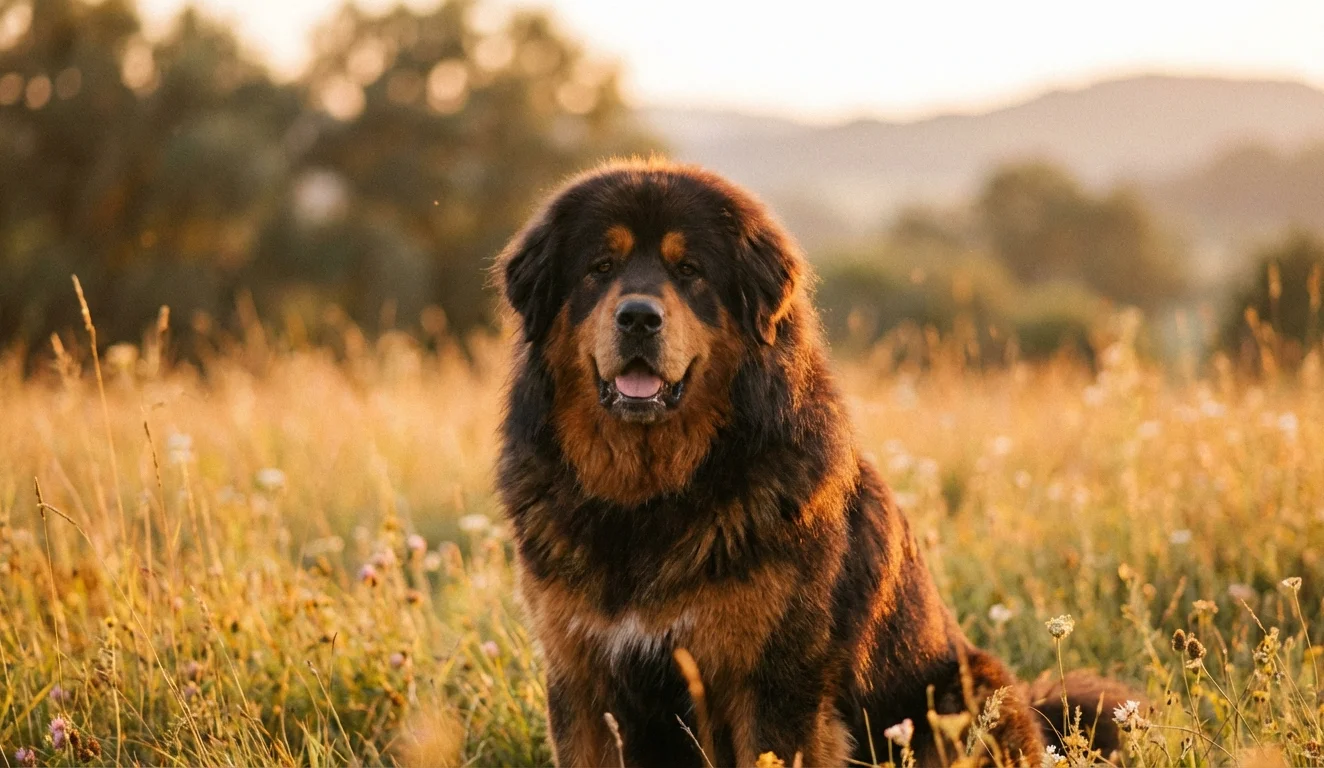
Tibetan Mastiffs are big. Males stand at least 26 inches at the shoulder and typically weigh 90-150 pounds, though some exceed that. Females are slightly smaller at 24 inches minimum and 70-120 pounds. They’re heavy-boned, broad, and built with the solidity of a dog that was designed to physically intimidate predators.
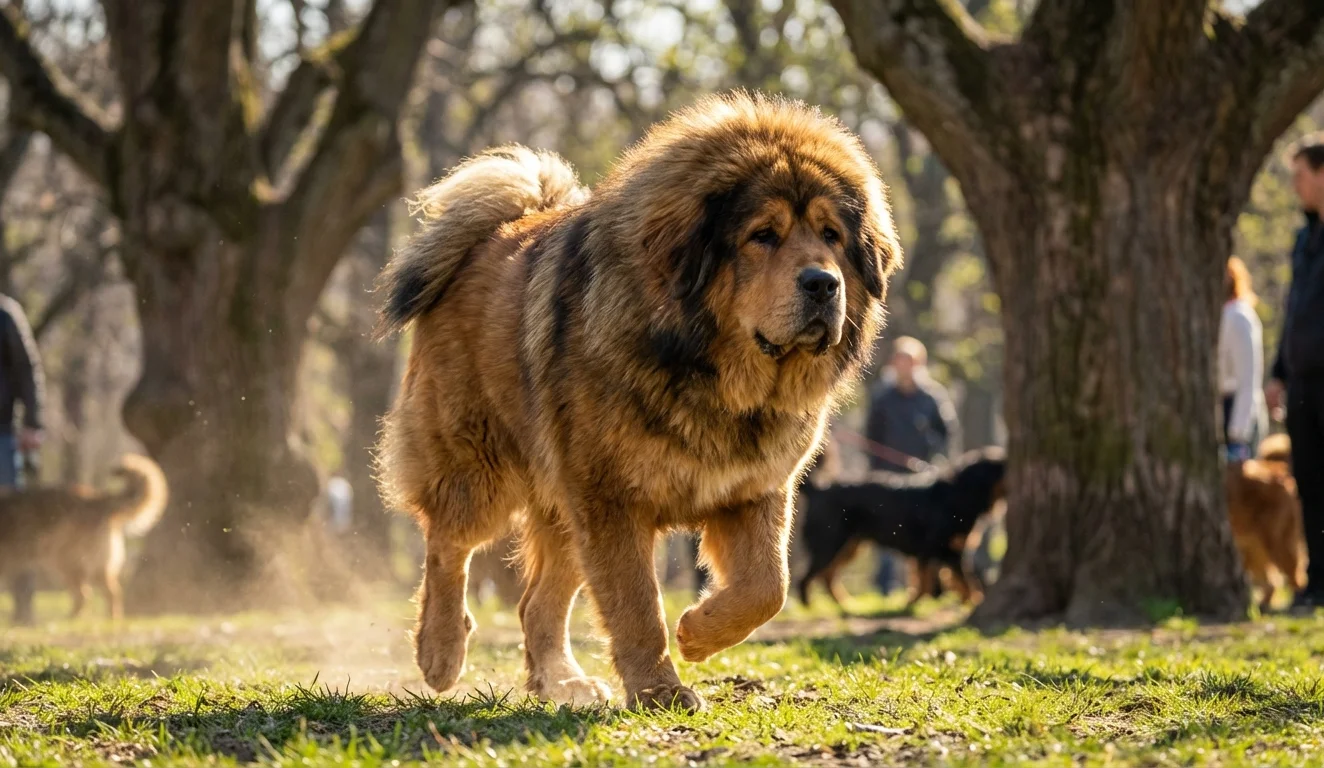
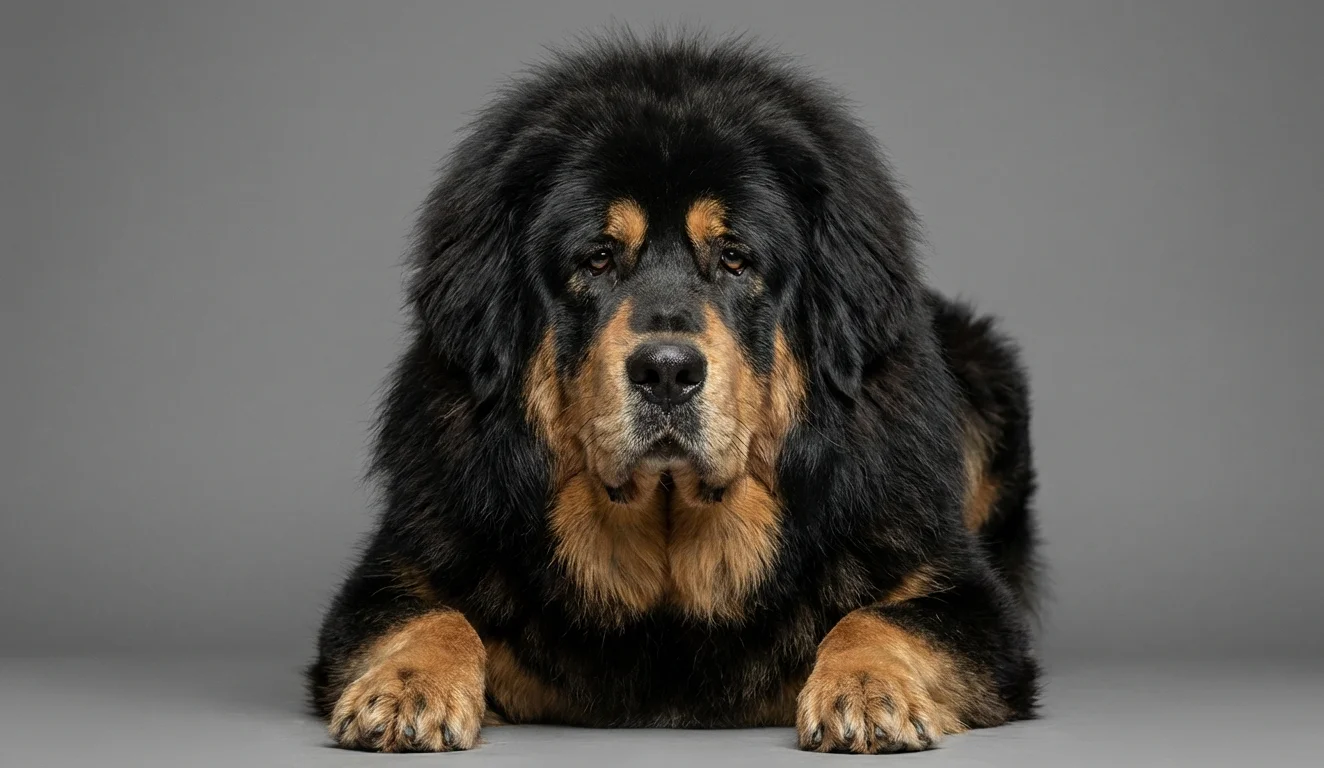
The most striking feature is the mane, a thick ruff of fur around the neck and shoulders that gives males, in particular, a lion-like appearance. It’s not decorative. That dense fur protected the dog’s throat and neck from wolf bites during confrontations in the Himalayas. The rest of the coat is equally impressive: a long, thick outer coat over a dense, woolly undercoat that can handle temperatures well below zero.
Their expression is distinctive, alert, watchful, and serious. Tibetan Mastiffs have deep-set, almond-shaped eyes and a broad, heavy head. The tail is set high and curls over the back when the dog is alert. Everything about their appearance communicates “do not approach unless invited.” That’s not accidental. These dogs were bred to be a visual deterrent before they ever had to use their teeth.
One thing that surprises people: despite their mass, Tibetan Mastiffs move with surprising agility. They’re not clumsy dogs. When a Tibetan Mastiff decides to run, there’s a fluid, powerful grace to the movement that hints at their predator-deterrent origins.
Tibetan Mastiff Temperament
The AKC describes the Tibetan Mastiff as “independent, reserved, intelligent, and protective.” That’s accurate but incomplete. Here’s the unfiltered version: this is a dog that has been making its own decisions for thousands of years and sees no reason to stop now just because you’d prefer otherwise.
Tibetan Mastiffs bond deeply with their family but on their own terms. They’re not Golden Retrievers who want to be touching you at all times. A Tibetan Mastiff might lie in the same room as you, casually keeping track of where everyone is. They show affection, but it’s dignified, a lean against your leg, a head placed on your lap, a quiet follow from room to room.
What you need to know about Tibetan Mastiff temperament:
- Territorial instincts are non-negotiable. This dog will consider your property its territory and anything unfamiliar on that property a potential threat. This includes delivery drivers, the neighbor’s kid, and your cousin visiting from out of town. Socialization helps, but you can’t fully override thousands of years of guardian breeding.
- They’re nocturnal. Tibetan Mastiffs become most active and alert at dusk and through the night. This means barking. Significant barking. In their natural environment, this kept wolves away from the flock. In a suburban neighborhood, it keeps your neighbors awake.
- Strangers are not welcome. Tibetan Mastiffs are naturally suspicious of unfamiliar people. They won’t typically attack without provocation, but they will position themselves between their family and the stranger and make it clear through body language that the stranger should leave.
- They’re surprisingly gentle with their family. For all their intensity with outsiders, Tibetan Mastiffs tend to be calm and affectionate with the people they know and trust. Many owners describe them as “giant teddy bears” at home, which is a real contrast to the serious guardian persona they present to the world.
Exercise Needs
Tibetan Mastiffs need about 45-60 minutes of exercise per day, but it’s a different kind of exercise than what you’d do with a Lab or a Shepherd. These dogs aren’t built for fetch or agility courses. They’re built for patrolling.
Long, moderate-paced walks are ideal. Tibetan Mastiffs enjoy covering ground at their own pace, checking scents, surveying the surroundings. Two 20-30 minute walks per day, plus access to a securely fenced yard, works well for most adults.
Exercise considerations for Tibetan Mastiffs:
- A securely fenced yard is close to mandatory. The fence needs to be at least 6 feet high, Tibetan Mastiffs are capable jumpers when motivated, and a squirrel or stray cat on the other side of a 4-foot fence is plenty of motivation.
- Off-leash exercise in unfenced areas is a bad idea. Their recall is unreliable, and if they perceive a threat, they’ll act on instinct rather than your command.
- Puppies need carefully managed exercise. Those big, heavy bodies are growing fast, and too much high-impact activity on developing joints leads to orthopedic problems. No forced running or jumping until at least 18 months.
- Heat sensitivity is real. That incredible double coat is built for Himalayan winters, not July in Texas. Exercise in warm weather should be limited to early morning and late evening.
A Tibetan Mastiff that doesn’t get enough physical and mental stimulation will find ways to entertain itself. Digging craters in your yard is a favorite. So is rearranging your furniture.
Grooming
Tibetan Mastiffs have a long, dense double coat that needs brushing 2-3 times per week during most of the year. Once a year, typically in late spring, they blow their entire undercoat in a shedding event that lasts 4-8 weeks. During this period, daily brushing isn’t just recommended, it’s survival. The amount of fur that comes off a Tibetan Mastiff during blowout season is staggering. You could stuff a small couch.
Outside of blowout season, the coat is surprisingly low-maintenance for its length. The outer coat resists matting better than you’d expect, and the natural oils keep it relatively clean. Baths every 6-8 weeks are sufficient unless the dog gets into something especially gross.
Grooming basics:
- A slicker brush and an undercoat rake are your two primary tools. Use the rake during blowout season to pull out the loose undercoat.
- Never shave a Tibetan Mastiff. The double coat insulates against both cold and heat, and shaving can permanently damage the coat texture and regrowth pattern.
- Check ears weekly and clean as needed. The drop ears can trap moisture.
- Nail trims every 2-3 weeks. Most Tibetan Mastiffs don’t wear their nails down naturally on soft ground.
The mane requires extra attention. It’s thicker and longer than the body coat and more prone to tangles, especially behind the ears and under the “bib” area. A pin brush works well for working through the mane without pulling.
Tibetan Mastiff Health Issues
Tibetan Mastiffs are generally healthy for a giant breed, with a lifespan of 10-12 years, longer than many breeds their size. But they do have some genetic predispositions to watch for.
Hip Dysplasia
The OFA database shows that Tibetan Mastiffs have a moderate incidence of hip dysplasia. In a breed this heavy, malformed hip joints lead to arthritis, pain, and mobility issues. Treatment ranges from $1,500-$6,500 depending on severity and whether surgery is needed. Always verify that both parents have OFA hip clearances before purchasing a puppy.
Hypothyroidism
Tibetan Mastiffs have a breed-specific quirk: they naturally have lower thyroid hormone levels than most breeds. This means a standard thyroid panel might flag a perfectly healthy Tibetan Mastiff as hypothyroid. Work with a vet who knows the breed or consult the Tibetan Mastiff Health Database for breed-specific reference ranges. Actual hypothyroidism costs about $200-$500 annually to manage with medication.
Canine Inherited Demyelinative Neuropathy (CIDN)
This is a rare but breed-specific neurological condition that appears in Tibetan Mastiff puppies around 7-10 weeks of age. Affected puppies show progressive weakness in the hind legs. There’s no treatment, and affected dogs typically don’t survive past four months. Responsible breeders test for the genetic marker. Ask about it.
Elbow Dysplasia
Like hip dysplasia, elbow dysplasia involves abnormal joint development and is moderately common in the breed. Symptoms include front-leg lameness, especially after exercise. Surgical correction costs $2,000-$5,000 per elbow. OFA elbow clearances on breeding dogs reduce the risk.
Autoimmune Thyroiditis
Distinct from simple hypothyroidism, this is an immune-mediated destruction of the thyroid gland. It’s seen with moderate frequency in Tibetan Mastiffs. Lifelong thyroid hormone supplementation manages the condition at $200-$600 per year.
Training
Training a Tibetan Mastiff requires recalibrating everything you think you know about dog training. Standard obedience techniques that work beautifully with retrievers and shepherds will bounce right off this breed. Not because Tibetan Mastiffs are unintelligent, they’re quite smart. It’s because they were bred for thousands of years to think independently, and no amount of treats is going to override that programming.
What works with Tibetan Mastiffs:
- Mutual respect. Tibetan Mastiffs respond to owners they respect, not owners who try to dominate them. Harsh corrections make them shut down or become defiant. Calm, consistent leadership works.
- Early socialization is non-negotiable. Between 8 and 16 weeks, expose your puppy to as many people, environments, sounds, and (controlled) dog interactions as possible. An undersocialized Tibetan Mastiff at 120 pounds is a liability, not a pet.
- Short, purposeful training sessions. Ten minutes, maximum. This dog will not drill the same command 50 times and will actively resent being asked to.
- Accept the limitations. A perfectly trained Tibetan Mastiff will still have unreliable recall, will still bark at night, and will still decide that some commands are suggestions. The goal is a well-socialized, manageable dog, not a competition obedience candidate.
This breed is absolutely not for first-time owners. Even experienced dog owners often find Tibetan Mastiffs humbling. If you’ve never owned a guardian breed, foster one first or spend serious time with breed mentors before committing.
Cost
Purchase Price
A Tibetan Mastiff puppy from a reputable breeder costs $2,000-$5,000 in the US. Show-quality dogs from imported lines can run $5,000-$10,000 or more. Those viral headlines about million-dollar Tibetan Mastiffs are anomalies from the Chinese luxury market and don’t reflect reality.
Rescue is an option through the American Tibetan Mastiff Association rescue program and breed-specific rescues. Adoption fees typically run $300-$700. Given that many Tibetan Mastiffs end up in rescue because their owners underestimated the breed, there are often adults available who need experienced homes.
Monthly Costs
| Expense | Monthly Estimate |
|---|---|
| Food (high-quality, large breed) | $70-$120 |
| Preventive vet care (averaged) | $25-$45 |
| Pet insurance | $50-$90 |
| Treats and chews | $15-$30 |
| Miscellaneous (toys, supplies) | $15-$30 |
| Total | $150-$300 |
First-Year Costs
Budget $4,500-$8,000 for your first year with a Tibetan Mastiff. This includes the purchase price, initial vet workups, vaccinations, spay/neuter (which many breed experts recommend delaying until 18-24 months for giant breeds), a heavy-duty crate, fencing upgrades, and supplies. The first year with a giant breed is always expensive.
Is a Tibetan Mastiff Right for You?
A Tibetan Mastiff is a great fit if you:
- Have significant experience with large, independent guardian breeds
- Own property with a securely fenced yard (6-foot minimum)
- Live in a rural or semi-rural area where nighttime barking won’t cause neighbor conflicts
- Want a naturally protective dog without aggressive tendencies
- Can commit to extensive socialization during puppyhood
- Appreciate a dog that’s bonded to you but not needy
A Tibetan Mastiff is probably NOT right if you:
- Live in a suburban neighborhood with close neighbors (the nocturnal barking will be a problem)
- Want a dog that’s eager to please and responsive to commands
- Have young children (the breed’s size and guardian instincts create risk)
- Live in a warm climate without excellent air conditioning
- Are a first-time dog owner (this isn’t the breed to learn on)
- Want a dog you can take to the dog park or on off-leash hikes
- Rent your home (most landlords and insurance companies won’t allow this breed)
The Tibetan Mastiff is a remarkable dog, ancient, intelligent, and deeply loyal in a way that doesn’t look like what most people expect from loyalty. They won’t fetch your slippers. They’ll stand between you and danger without hesitation. For the right owner with the right setup, that trade-off is more than worth it.
Related Breeds
If you’re considering this breed, you might also want to look at:
FAQ
Are Tibetan Mastiffs dangerous?
Tibetan Mastiffs are not inherently dangerous, but they are powerful guardian dogs with strong territorial instincts. A well-socialized Tibetan Mastiff raised by an experienced owner is typically calm, steady, and non-aggressive. Problems arise when the breed ends up with inexperienced owners who don’t socialize properly or can’t manage a 120-pound dog with independent decision-making skills. The breed is banned or restricted in some municipalities and by some homeowner’s insurance policies, check local regulations before purchasing.
How much do Tibetan Mastiffs actually cost?
In the US, expect to pay $2,000-$5,000 from a reputable breeder. The multi-million-dollar prices you see in headlines were part of a speculative bubble in the Chinese luxury pet market that peaked around 2013-2014 and has since collapsed. Many of those expensive dogs were later abandoned when the fad ended. In the real world, a Tibetan Mastiff costs about the same as other large purebred guardian breeds.
Can Tibetan Mastiffs live in apartments?
No. This is not an apartment breed under any reasonable circumstance. They need a securely fenced yard for patrolling, they bark at night, and their size alone makes apartment living impractical. A house with land is the ideal setup. If you’re in a condo or apartment, look at other breeds.
Why do Tibetan Mastiffs bark at night?
It’s genetic. These dogs were bred to patrol and guard at night for thousands of years. They’d sleep during the day and become active at dusk, barking to warn predators away from the flock. Modern Tibetan Mastiffs still follow this pattern. You can manage it to some degree by bringing the dog inside at night, using white noise, and maintaining a consistent routine, but you will never fully eliminate it. This is the single biggest reason Tibetan Mastiffs end up in rescue.
Do Tibetan Mastiffs get along with other dogs?
It depends. Tibetan Mastiffs can coexist with other dogs in the household, especially if raised together, but they tend to be dominant and can be aggressive toward unfamiliar dogs, particularly same-sex dogs. They’re not dog-park dogs. Introductions to new animals should be gradual and supervised. Many Tibetan Mastiff owners find that a single-dog household (or pairing with a calm, submissive companion breed) works best.