Great Dane Breed Guide: The Gentle Giant Who Thinks He's a Lap Dog (2026)
Great Danes are the tallest dog breed in the world, but most of them just want to sit on your feet and lean against your legs.
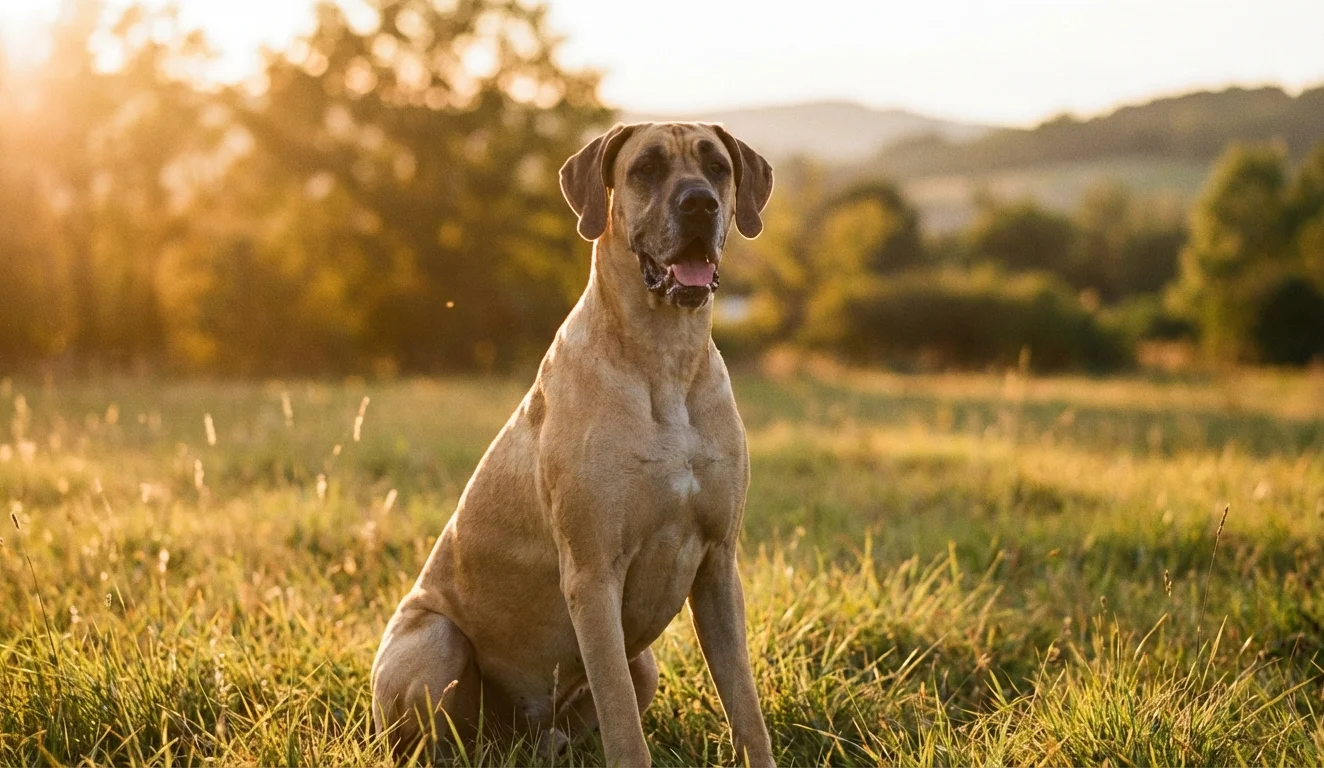
The Great Dane is the tallest dog breed recognized by the AKC. Males stand 30-32 inches at the shoulder (often taller) and weigh 140-175 pounds. Females are 28-30 inches and 110-140 pounds. They live 7-10 years. If you’ve never stood next to a Great Dane, the first time is startling, these dogs can look you in the eye without trying very hard, and when they stand on their hind legs, they’re taller than most NBA players.
In Short: 110–175 lbs, 7–10 years. Moderate energy. Moderate shedding. Watch for Bloat (Gastric Dilatation-Volvulus) and Hip Dysplasia. Good with kids, but better for experienced owners.
What pictures don’t convey about Great Danes is that they have absolutely no idea how big they are. A Dane will try to curl up in your lap. A Dane will attempt to fit on a loveseat. A Dane will step on your foot with the force of a small horse and then look confused about why you yelped. We think they’re one of the best breeds for people who want a big dog but don’t want a high-energy tornado, as long as you’re prepared for the realities of giant breed ownership, which include shorter lifespans, bigger vet bills, and a lot more drool than you’re probably expecting.
Great Dane at a Glance
| Trait | Details |
|---|---|
| Breed Group | Working (AKC) |
| Height | Males: 30-32 in / Females: 28-30 in |
| Weight | Males: 140-175 lbs / Females: 110-140 lbs |
| Life Expectancy | 7-10 years |
| Coat | Short, smooth, dense |
| Colors | Fawn, Brindle, Blue, Black, Harlequin, Mantle, Merle |
| Temperament | Friendly, Patient, Dependable |
| Shedding | Moderate |
| Energy Level | Moderate |
| Good With Kids | Yes |
| First-Time Owner Friendly | No |
History
The “Great” in Great Dane refers to size, not nationality, these dogs aren’t actually Danish. The breed was developed in Germany, where they were originally called Deutsche Dogge (German Mastiff). The misnomer stuck thanks to an 18th-century French naturalist, Georges-Louis Leclerc, who saw the breed in Denmark and called it Grand Danois. Germans have been annoyed about this ever since.
The breed’s origins go back at least 400 years, and probably further. Early Great Danes were bred from crosses between English Mastiffs and Irish Wolfhounds to create a dog powerful enough to hunt wild boar, an animal that could kill most dogs without breaking a sweat. These hunting Danes were broader, heavier, and far more aggressive than today’s version. They wore spiked collars and worked in packs to corner boar until the hunter arrived.
By the 1800s, the breed had shifted from boar hunter to estate guardian and companion of German nobility. Breeders began selecting for a calmer, more elegant temperament while keeping the imposing size. The AKC recognized the Great Dane in 1887, making it one of the earliest recognized breeds in America. The Great Dane Club of America was founded in 1889, the fourth breed club established in the US.
Size and Appearance
There’s no polite way to say this: Great Danes are enormous. The breed standard puts males at 30-32 inches at the shoulder and 140-175 pounds, but many males exceed these numbers. Zeus, a Great Dane from Otsego, Michigan, held the Guinness World Record at 44 inches tall at the shoulder. That’s over three and a half feet, before he lifted his head.
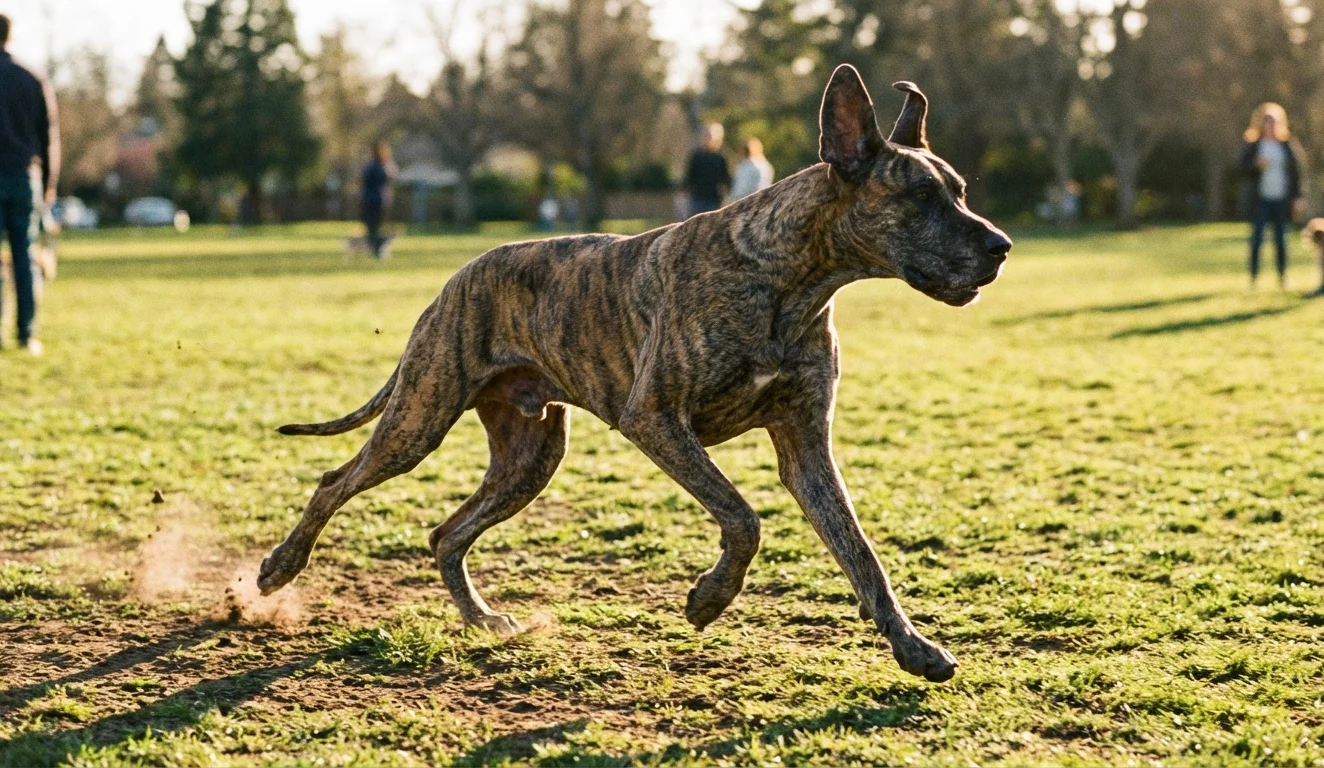
Danes have a long, rectangular body with a deep chest and long legs. Despite their size, they should look athletic rather than bulky. A well-built Dane has clean lines and moves with a surprising amount of grace for a dog that weighs more than most adult humans.
Coat and Color
Great Danes have seven recognized color patterns, which is more variety than most breeds offer:
- Fawn: golden with a black mask
- Brindle: fawn base with black stripes
- Blue: steel blue/gray
- Black: solid black
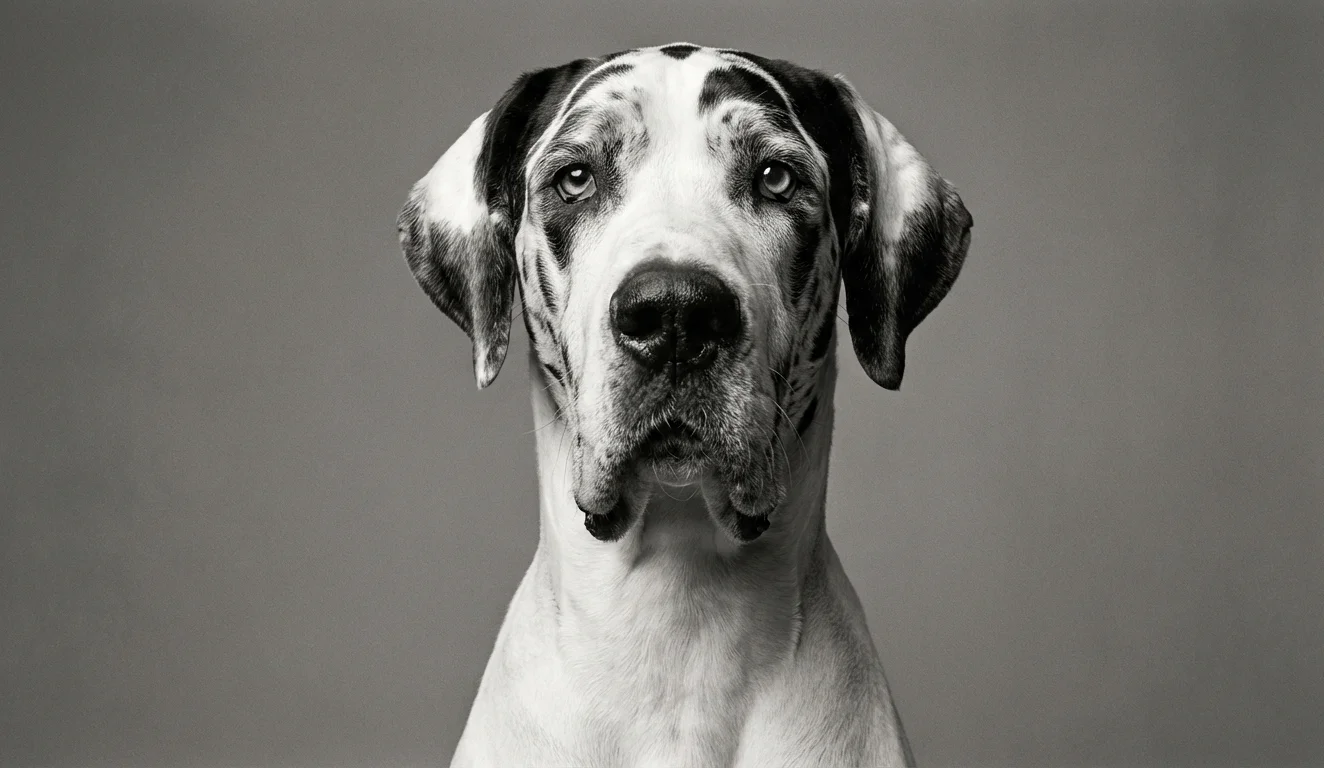
- Harlequin: white base with irregular black patches (the most recognizable Dane pattern)
- Mantle: black and white, resembling a blanket draped over the body
- Merle: gray base with darker patches
The coat itself is short, smooth, and easy to maintain. It lies flat against the body and doesn’t require much beyond basic brushing.
Great Dane Temperament
The nickname “gentle giant” exists because of Great Danes. They earned it.
Danes are patient, affectionate, and genuinely friendly with almost everyone they meet. They lack the wariness of stranger-suspicious breeds, a Dane is more likely to lean against a new person’s legs than to bark at them. They’re confident without being pushy, calm without being lazy, and tolerant of the kind of chaos that comes with a busy household.
What living with a Great Dane is actually like:
- They lean. This is a breed-specific behavior called the “Dane lean.” Your Great Dane will press its full body weight against your legs, your side, your back, whatever surface you’re presenting. It’s affectionate. It can also knock over a small adult if you’re not braced for it.
- They’re sensitive. Danes pick up on emotional energy more than you’d expect from a dog this size. They sulk when scolded, perk up when praised, and seem to know when you’re having a bad day. Harsh corrections don’t work well with this breed because they take things personally.
- They’re moderate-energy as adults. A young Dane (under 2) can be a wrecking ball of gangly energy. But adult Danes are surprisingly chill. They’re content to lounge for most of the day, as long as they get their walk and some attention.
- Counter surfing is effortless. A standing Great Dane can reach anything on your counters, dining table, or even the top of your refrigerator. You will need to rethink your kitchen layout.
Exercise Needs
Great Danes need about 45 minutes of exercise per day, less than you’d expect for a dog this size. They’re moderate-energy dogs that are content with a couple of good walks and some playtime.
Important exercise cautions for Danes:
- Puppies need carefully managed exercise. Great Dane puppies are growing at an alarming rate (some gain 5-7 pounds per week), and their joints are fragile during development. Avoid running, jumping, or extended walks on hard surfaces until at least 18 months old. Short, gentle play sessions are better.
- No intense exercise after eating. The bloat risk in Great Danes is extremely high, and exercise after meals is a contributing factor. Wait at least an hour after feeding before any activity.
- Watch for overheating. Danes don’t handle heat well. Keep summer exercise to early morning or evening, and always bring water.
A Dane that doesn’t get enough exercise won’t destroy your house the way a bored husky will, but they may become restless, bark more, or develop anxious behaviors. The bigger issue with under-exercised Danes is weight gain, which puts dangerous stress on their joints and heart.
Grooming
Great Danes are low-maintenance groomers. The short coat doesn’t mat, doesn’t need trimming, and doesn’t require professional grooming.
Grooming routine:
- Weekly brushing with a rubber curry comb or soft bristle brush
- Bath every 6-8 weeks: bathing a Great Dane is a workout in itself, and many owners use walk-in showers or take their Dane to a self-service dog wash with an elevated tub
- Nail trims every 2-3 weeks
- Ear cleaning weekly if the ears are natural (floppy ears trap moisture)
- Dental care: brush 2-3 times weekly
The drool situation depends on individual lip tightness. Some Danes drool minimally. Others leave strings of drool on your walls, ceiling, and clothing. Harlequin and mantle Danes tend to have looser lips (and more drool) than fawn or brindle Danes, though there’s individual variation. Keep towels in every room. This isn’t an exaggeration.
Great Dane Health Issues
This is the hard part of loving a Great Dane. The breed’s lifespan is 7-10 years, and many don’t reach 10. Giant breeds age faster than smaller dogs, and Danes face several serious health conditions.
Bloat (Gastric Dilatation-Volvulus)
Great Danes have one of the highest bloat rates of any breed, some studies estimate a lifetime incidence of 37-42%. Bloat occurs when the stomach fills with gas and potentially twists on itself (volvulus), cutting off blood supply. It’s fatal without emergency surgery, and even with surgery, mortality rates are 15-33%. Treatment costs $2,000-$7,500.
We’d recommend discussing prophylactic gastropexy with your vet. This preventive surgery tacks the stomach to the abdominal wall, preventing the twist. It’s often done at the time of spay/neuter and significantly reduces risk.
Dilated Cardiomyopathy (DCM)
DCM is common in Great Danes and is the #1 cardiac killer of the breed. The heart muscle weakens and the chambers enlarge, reducing the heart’s ability to pump blood effectively. A 2019 study in the Journal of Veterinary Internal Medicine found that approximately 35% of Great Danes develop DCM during their lifetime. Symptoms include lethargy, coughing, difficulty breathing, and exercise intolerance. Treatment costs $3,000-$10,000 and is management-focused, not curative. Annual cardiac screening (echocardiogram) starting at age 2 is strongly recommended.
Hip Dysplasia
The OFA rates Great Danes with a 12-13% incidence of hip dysplasia in evaluated dogs. The combination of rapid growth and heavy body weight makes this breed particularly susceptible. Treatment ranges from $1,500-$6,000 depending on severity.
Osteosarcoma (Bone Cancer)
Great Danes are among the breeds with the highest rates of osteosarcoma, an aggressive bone cancer that typically affects the legs. It usually appears in dogs over age 5, and the first sign is often sudden lameness. Treatment typically involves amputation followed by chemotherapy ($5,000-$10,000), and the prognosis is guarded even with treatment.
Wobbler Syndrome
Also called cervical spondylomyelopathy, this condition involves compression of the spinal cord in the neck. Great Danes, particularly young males, are overrepresented. Symptoms include a wobbly, uncoordinated gait (especially in the hind end). Treatment is $5,000-$10,000, with surgical and medical management options.
Training
Great Danes are intelligent and eager to please, which makes them quite trainable. They rank high among working breeds for biddability, they actually want to do what you’re asking, as long as you’re asking nicely.
Training considerations specific to Danes:
- Sensitivity matters. Danes wilt under harsh corrections. Positive reinforcement is the way to go. Raised voices and physical corrections will damage your relationship with a Dane more than with most breeds.
- Manners training is safety training. A jumping Great Dane can knock over adults and seriously injure children or elderly people. “Off,” “sit,” and “place” commands need to be rock-solid by adolescence.
- Leash training has to happen early. You cannot muscle a 150-pound dog that decides to go somewhere. Leash manners need to be established before they physically outmatch you, which happens fast.
- Socialization should include novel experiences. Danes need exposure to stairs, slippery floors, car rides, and different environments. A fearful Great Dane is a real problem because they may bolt or shut down, and you can’t easily pick them up and carry them out.
Danes mature slowly, mentally, they’re puppies until age 2-3. Be patient with adolescent goofiness. That enormous yearling who just knocked over your coffee table isn’t being defiant. He just hasn’t figured out where his legs end yet.
Cost
Purchase Price
A Great Dane puppy from a reputable breeder costs $1,000-$3,000. Show-quality Danes from champion lines can cost $3,000-$5,000+. Rare color patterns like harlequin sometimes command premium prices.
Monthly Costs
| Expense | Monthly Estimate |
|---|---|
| Food (giant breed formula) | $80-$150 |
| Preventive vet care (averaged) | $20-$50 |
| Pet insurance | $50-$100 |
| Treats and chews | $15-$25 |
| Miscellaneous (toys, supplies, drool towels) | $15-$30 |
| Total | $150-$350 |
Everything costs more with a giant breed. Medications are dosed by weight, so flea prevention, heartworm medication, and anesthesia all cost more. Boarding is more expensive. Dog beds need to be XL. Crates are the size of a small room. A Great Dane’s first year can easily cost $4,000-$7,000 beyond the purchase price when you factor in giant-breed crate ($150-$250), puppy vaccinations, spay/neuter, and the inevitable emergency vet visit when your puppy eats something it shouldn’t.
Is a Great Dane Right for You?
A Great Dane could be a great fit if you:
- Want a big, gentle dog that’s calmer than most large breeds
- Have enough space in your home for a dog that takes up a LOT of physical space (they don’t need a huge yard, but they need room indoors to stretch out)
- Are comfortable with a shorter lifespan and the emotional weight that comes with it
- Can afford the higher costs associated with giant breed ownership
- Want a dog that’s good with kids and other pets
- Don’t mind drool on your clothes, walls, and occasionally your ceiling
A Great Dane is probably not right if you:
- Want a dog that’ll be your companion for 12-15 years
- Are on a tight budget, giant breed vet bills are genuinely expensive
- Travel frequently and need to board your dog (not all facilities accept giant breeds)
- Live in a small space with no room for a dog bed the size of a twin mattress
- Want a high-energy exercise partner for running or hiking long distances
- Can’t handle the emotional reality of giant breed health issues
There’s a saying among Dane owners: “The only bad thing about Great Danes is that you don’t get enough time with them.” It’s true. Seven to ten years isn’t long enough for a dog this good. But the people who love Danes will tell you that the years you get are worth it, that the trade-off between lifespan and personality is one they’d make every time.
Related Breeds
If you’re considering this breed, you might also want to look at:
Frequently Asked Questions
How long do Great Danes live?
The average Great Dane lifespan is 7-10 years, with most falling in the 8-9 year range. This is shorter than almost any other breed, and it’s the single hardest thing about owning a Dane. Giant breeds age faster at a cellular level, their bodies grow so quickly and so large that the biological machinery wears out sooner. Some Danes live past 10, but they’re the exception. Cardiac issues and cancer are the leading causes of death.
Are Great Danes good apartment dogs?
Surprisingly, Great Danes can do well in apartments. They’re moderate-energy dogs that are content to lounge most of the day, and they don’t need a yard to burn off excess energy. The practical challenges are size-related: can a Great Dane physically move around your apartment layout? Are the doorways wide enough? Can you get them in and out for walks easily? And does your building allow giant breeds? Many apartment complexes have weight limits (often 50-75 pounds) that exclude Danes entirely.
Do Great Danes drool a lot?
It varies by individual, but as a breed, yes, Great Danes are moderate to heavy droolers. The drool increases around mealtimes, when they’re hot, when they’re excited, and after drinking water. Some Danes are relatively dry-mouthed while others leave puddles. If drool is a dealbreaker for you, meet adult Danes before committing to the breed and pay attention to lip tightness. Dogs with tighter flews (lips) drool less.
How much does it cost to feed a Great Dane?
An adult Great Dane eats 6-10 cups of food per day, depending on their size, activity level, and the calorie density of the food. At current prices for quality large/giant breed formulas, that’s roughly $80-$150 per month. Danes should eat a food formulated for large or giant breeds, the calcium-to-phosphorus ratio matters for skeletal health. Puppies especially need giant breed puppy food to manage growth rate and reduce the risk of developmental orthopedic disease.
Are Great Danes good with other dogs?
Generally, yes. Great Danes are typically friendly with other dogs, especially if socialized from a young age. They tend to be patient and non-confrontational, their size alone usually prevents other dogs from picking fights. Same-household multi-dog situations usually work well with Danes, though the logistical challenges of having multiple giant dogs (space, food costs, vet bills) are real. At dog parks, Danes are usually gentle but their size can accidentally intimidate or bowl over smaller dogs during play.