Newfoundland Breed Guide: 150 Pounds of Drool and Devotion (2026)
Newfoundlands are giant, gentle water dogs that will save your kid from a swimming pool and then drool on your couch. Here's what owning one actually costs and requires.
The Newfoundland is a giant breed that tips the scales at 100-150 pounds, stands 26-30 inches tall, and lives 9-10 years. Those numbers don’t fully prepare you for seeing one in person. Newfoundlands, Newfies, if you prefer, are enormous dogs with massive heads, webbed feet built for swimming, and a thick double coat that makes them look even bigger than they already are. They were bred to haul nets and rescue drowning people from the icy waters off Newfoundland, Canada. That rescue instinct is still there, which is why your Newfie will probably try to “save” your kids from the bathtub.
In Short: 100–150 lbs, 9–10 years. Moderate energy. Heavy shedder, expect fur everywhere. Watch for Hip Dysplasia and Elbow Dysplasia. Great for families and first-time owners.
We feel obligated to tell you upfront: this breed will break your heart with how short their lives are. Nine to ten years is the average, and some don’t make it that far. Giant breeds pay a cruel tax for their size, and Newfoundlands are no exception. The time you get with them is shorter than you want. But every Newfie owner we’ve talked to says the same thing, they’d do it again in a heartbeat, even knowing how it ends. That says a lot about what kind of dog this is.
Newfoundland at a Glance
| Trait | Details |
|---|---|
| Breed Group | Working (AKC) |
| Height | Males: 28-30 in / Females: 26-28 in |
| Weight | Males: 130-150 lbs / Females: 100-120 lbs |
| Life Expectancy | 9-10 years |
| Coat | Thick, heavy double coat |
| Colors | Black, Brown, Gray, Landseer (white and black) |
| Temperament | Sweet, Patient, Devoted, Gentle |
| Shedding | Very High |
| Energy Level | Moderate |
| Good With Kids | Exceptional |
| Good With Other Dogs | Yes |
| Good With Cats | Yes |
| AKC Recognition | 1886 |
History
Newfoundlands come from the island of Newfoundland in eastern Canada, same place the Labrador Retriever’s ancestors came from, oddly enough. The exact origins are debated. Some historians think Newfoundlands descended from Viking “bear dogs” brought to North America around 1000 AD. Others point to crosses between indigenous dogs and European breeds brought by Portuguese and English fishermen in the 15th and 16th centuries.
What’s not debated is what the breed was used for. Newfoundlands worked alongside fishermen as water rescue dogs and draft animals. They hauled heavy fishing nets through frigid water, pulled carts loaded with fish, and rescued people who fell overboard. Their webbed feet, water-resistant double coat, and powerful swimming stroke made them uniquely suited for the job. A Newfoundland’s swimming style is actually a modified breaststroke, different from the dog paddle most breeds use.
The breed’s lifesaving reputation isn’t folklore. In 1828, a Newfoundland reportedly saved the crew of a ship wrecked off the coast of Nova Scotia by swimming a line to shore through massive waves. Lewis and Clark brought a Newfoundland named Seaman on their expedition across North America. And J.M. Barrie based Nana, the beloved dog-nanny in Peter Pan, on his own Newfoundland. The AKC recognized the breed in 1886.
Size and Appearance
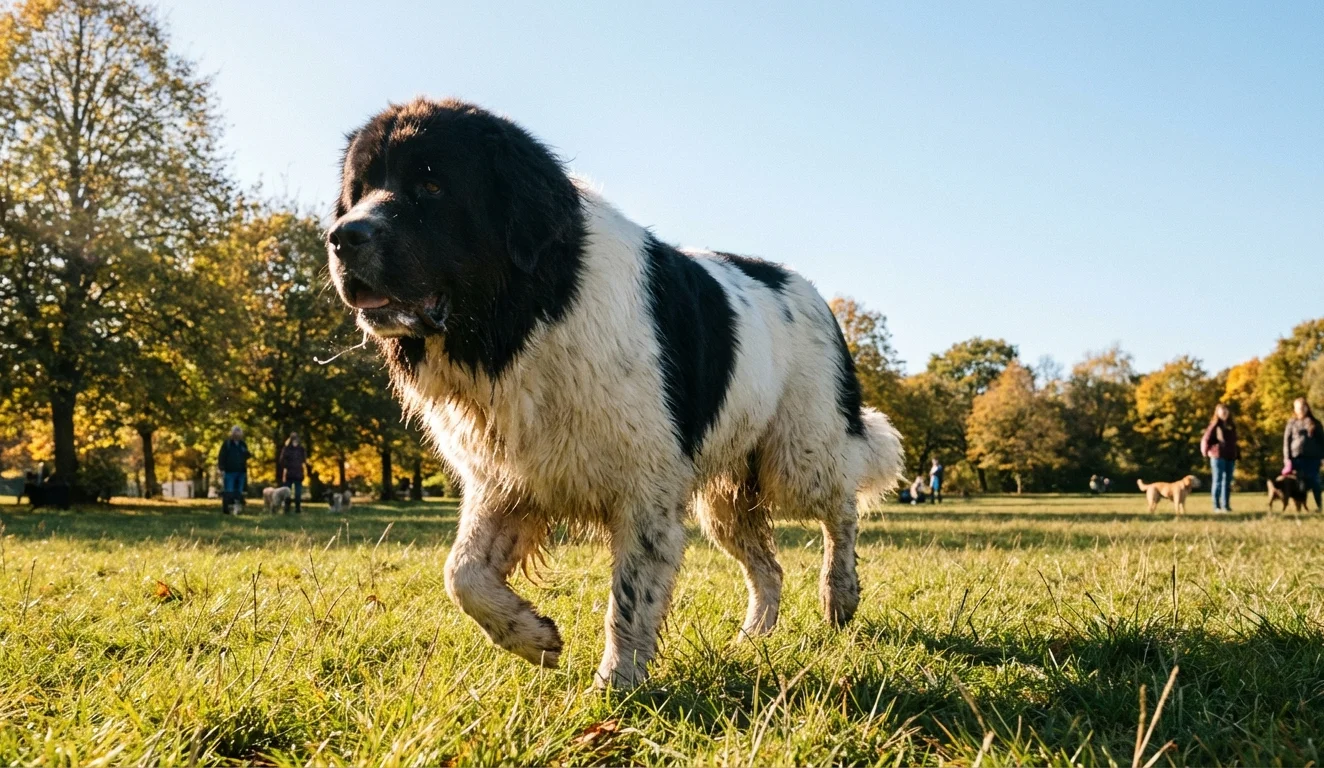
There’s no delicate way to put this: Newfoundlands are huge. Males stand 28-30 inches at the shoulder and weigh 130-150 pounds, though some males exceed 170 pounds. Females are 26-28 inches and 100-120 pounds. This is a breed that takes up physical space in a way that affects your entire living situation.
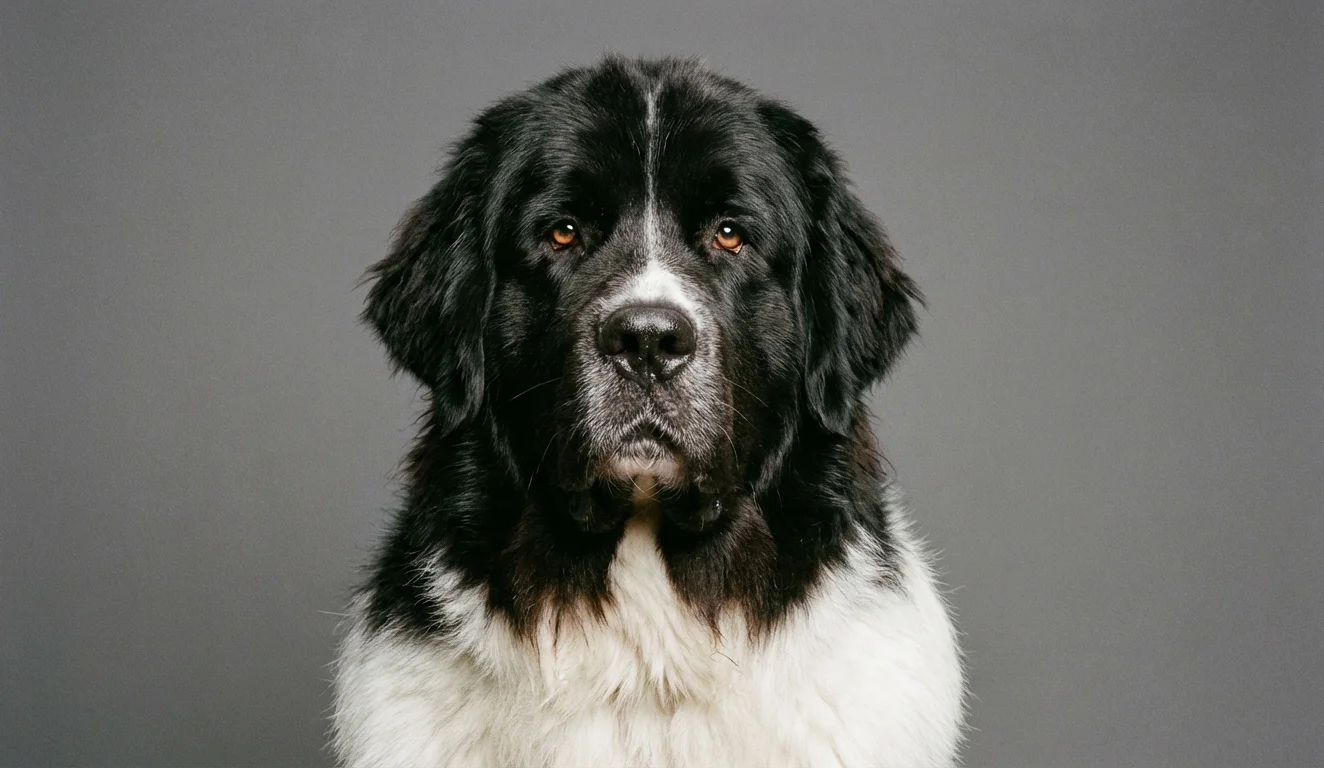
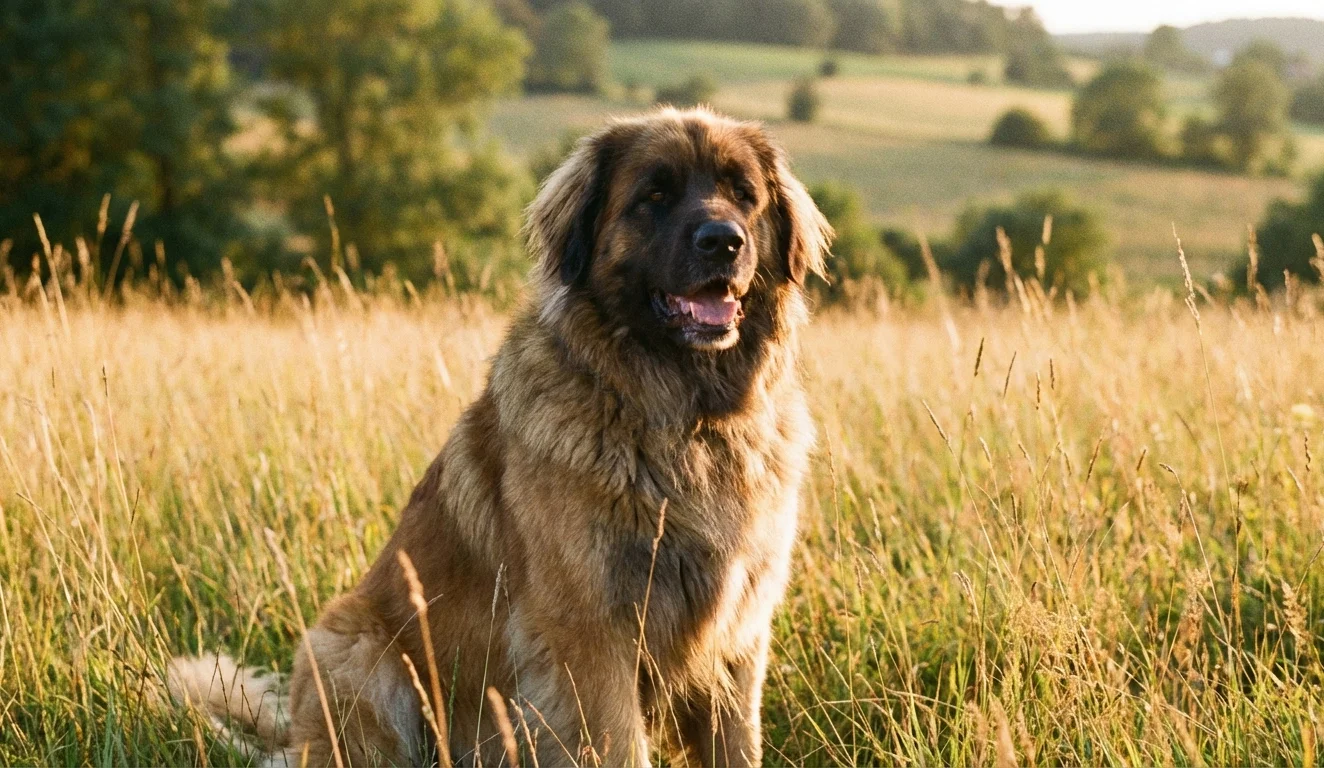
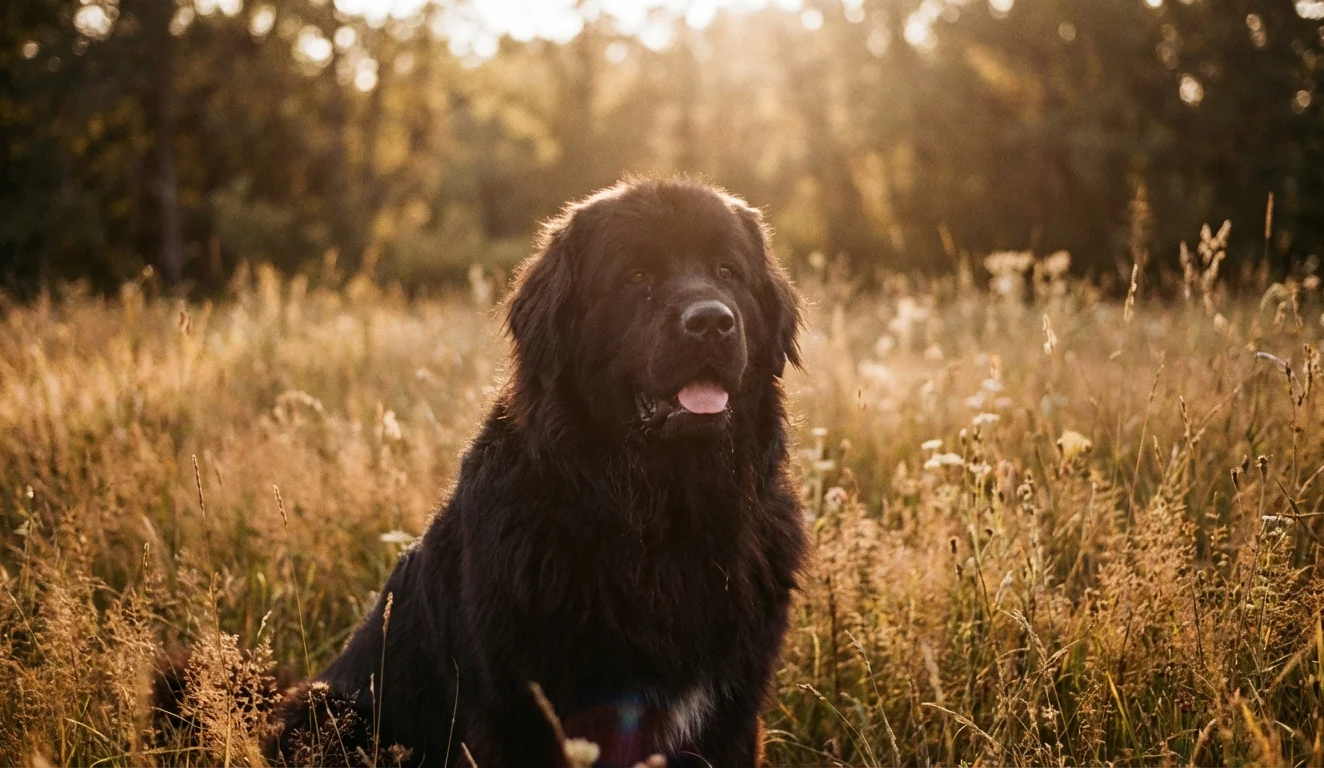
The body is massive and well-muscled, built for powerful swimming. The head is broad with a deep muzzle and soft, expressive eyes that somehow manage to look both wise and slightly dopey at the same time. The feet are large and webbed, actually webbed, not just a marketing claim, which makes them exceptional swimmers.
The coat is thick, heavy, and designed for cold water. It comes in four recognized colors: black (the most common), brown, gray, and Landseer (white with black markings). The Landseer pattern is named after the painter Sir Edwin Landseer, who featured Newfoundlands prominently in his work. In some countries, the Landseer is considered a separate breed entirely, but the AKC considers it a color variation of the Newfoundland.
About drool: Newfoundlands drool. Not a little. A lot. After drinking, after eating, when they’re hot, when they’re excited, when they’re sleeping, there’s really no drool-free version of Newfoundland ownership. Most Newfie owners keep towels stashed around the house. Some Newfie owners have wiped drool off their ceiling. This is not an exaggeration.
Newfoundland Temperament
The Newfoundland temperament is the single biggest reason people fall in love with this breed. These are profoundly gentle dogs with an almost supernatural instinct for caretaking.
What makes Newfoundland temperament special:
- The “nanny dog” reputation is real. Newfoundlands are instinctively gentle and watchful around children. They position themselves between kids and perceived danger, they tolerate being climbed on and grabbed, and they seem to genuinely enjoy the chaos that comes with small humans. We don’t throw around the phrase “best breed for families” lightly, but Newfoundlands have a legitimate claim to that title.
- Calm without being lazy. Newfoundlands are moderate-energy dogs. They’re not frantic, they don’t pace, they don’t demand constant attention. But they’re not sluggish either. A Newfie that wants to play will bring you a toy with surprising persistence.
- Sweet with everything. Other dogs, cats, strangers, the plumber, Newfoundlands are friendly to basically every living creature. They’re terrible guard dogs if you’re looking for intimidation. Their size might scare someone who doesn’t know the breed, but that’s about it.
- Water-obsessed. Most Newfoundlands will try to get into any body of water they encounter. Puddles, lakes, your kids’ wading pool, the water bowl if it’s big enough. This isn’t a preference, it’s an instinct that runs deep.
The one downside of the Newfoundland temperament is how much they bond. These dogs attach strongly to their family and don’t handle being left alone well. A Newfoundland left alone for 8-10 hours daily is a Newfoundland that’s going to develop anxiety issues.
Exercise Needs
Newfoundlands need about 45 minutes of exercise per day. That’s less than you might expect for a dog this size, and it’s one reason why Newfoundlands can work for less active families despite their massive frame.
The best exercise for a Newfoundland is, unsurprisingly, swimming. Their body is literally built for it. If you have access to a lake, a dog-friendly beach, or even a large enough pool, your Newfie will be in heaven. Land-based exercise should be moderate, walks, not jogs. Their joints carry a lot of weight and don’t need the additional stress of high-impact activities.
Exercise considerations for Newfoundlands:
- Avoid exercising in heat. Newfoundlands overheat quickly thanks to that heavy coat. In summer, exercise early in the morning or late in the evening. Keep fresh water available always.
- Puppies need careful exercise management. Too much too soon damages growing joints. For puppies, stick to the 5-minutes-per-month-of-age rule and avoid stairs until they’re fully grown.
- Cart pulling (drafting) is a traditional Newfoundland activity that many Newfies still enjoy. It taps into their working heritage.
- Water rescue training is available through some Newfoundland breed clubs and gives these dogs a genuine job to do.
An under-exercised Newfie won’t destroy your house like a bored Husky would. But they may become lethargic, gain weight, and develop behavioral issues like excessive barking or anxious behavior.
Grooming
Owning a Newfoundland means accepting that dog hair is now a permanent feature of your life. The thick double coat sheds year-round with two major blowouts annually, typically in spring and fall. During blowouts, you could fill a garbage bag with hair in a single brushing session.
Grooming routine for a Newfoundland:
- Brush 2-3 times per week minimum with an undercoat rake and slicker brush
- Daily brushing during shedding season (and you’ll still be amazed at how much hair there is)
- Bathe every 4-6 weeks, a significant production with a dog this size. Many Newfie owners invest in a professional grooming session for bath time, or install a dog-washing station in their garage
- Check ears weekly for moisture and debris
- Trim nails every 2-3 weeks
- Clean facial wrinkles and jowls regularly to manage drool buildup
The coat should never be shaved. That double coat insulates against both cold and heat. Shaving a Newfoundland removes their temperature regulation and puts them at higher risk for sunburn and overheating, the opposite of what most people intend.
Newfoundland Health Issues
This is the section that’s hardest to write about giant breeds. Newfoundlands are predisposed to several serious health conditions, and their 9-10 year lifespan reflects the toll that extreme size takes on a dog’s body.
Hip and Elbow Dysplasia
Both conditions are common in Newfoundlands. Hip dysplasia occurs when the hip joint doesn’t form correctly, causing pain and mobility issues over time. Elbow dysplasia involves abnormal development of the elbow joint. Treatment ranges from medication management ($200-$600/year) to surgery ($1,500-$6,000 for hips, $1,500-$4,000 for elbows). All Newfoundland breeding stock should have OFA evaluations for both hips and elbows.
Dilated Cardiomyopathy (DCM)
This is the heart condition that keeps Newfoundland owners up at night. DCM causes the heart muscle to weaken and enlarge, reducing its ability to pump blood effectively. It’s a progressive condition with moderate prevalence in the breed. Symptoms include lethargy, coughing, difficulty breathing, and exercise intolerance. Treatment costs $3,000-$10,000 and typically involves lifelong medication. Reputable breeders screen with cardiac evaluations, and annual cardiac checkups are recommended for all Newfoundlands.
Cystinuria
A genetic condition where the kidneys don’t properly filter the amino acid cystine, leading to stone formation in the urinary tract. Newfoundlands have a breed-specific form of cystinuria. A DNA test is available, and responsible breeders test for it. Treatment for stones costs $2,000-$5,000.
Subvalvular Aortic Stenosis (SAS)
A heart defect where the aorta narrows below the aortic valve, forcing the heart to work harder. It ranges from mild (no treatment needed) to severe (risk of sudden death). Cardiac screening in puppies can detect it early. Treatment costs $2,000-$8,000.
Heat Sensitivity
Not a disease exactly, but a real health concern. Newfoundlands are built for cold water, not warm climates. Heatstroke is a genuine risk, especially during summer. Air conditioning isn’t optional if you live in a warm climate, it’s a medical necessity for this breed.
Training
Here’s the good news: Newfoundlands are among the most trainable giant breeds. They’re eager to please, sensitive to their owner’s tone, and respond well to positive reinforcement. The AKC rates their trainability as high, which is accurate.
The challenge isn’t intelligence or willingness, it’s managing a puppy that will grow to 130+ pounds while it’s still learning the rules. A Newfoundland puppy that jumps on people is a cute annoyance at 25 pounds. At 100 pounds, it’s a hazard. Start training early and prioritize basic manners above all else.
Training priorities for Newfoundland owners:
- Leash manners. A 150-pound dog that pulls on leash can drag an adult across a parking lot. Loose-leash walking must be taught early.
- “Off” and “down” commands. Essential for a dog this size.
- Socialization. Newfoundlands are naturally friendly, but a poorly socialized Newfie that’s anxious around strangers becomes a 150-pound liability.
- Water safety. If you plan to have your Newfie around water (and you should), invest in water safety and basic water rescue training.
Newfoundlands are sensitive dogs. Harsh corrections don’t just fail, they actively damage the bond between you and your dog. Positive methods work far better with this breed. They want to make you happy. Help them figure out how.
Newfoundland Cost
Purchase Price
A Newfoundland puppy from a reputable breeder costs $1,500-$3,000. Expect to pay on the higher end for puppies from health-tested parents with cardiac, hip, elbow, and cystinuria clearances. Some show-quality puppies from champion lines can exceed $4,000.
Newfoundland rescue organizations exist and typically charge $400-$800. Adult Newfoundlands that need rehoming often come through breed-specific rescues.
Monthly Costs
| Expense | Monthly Estimate |
|---|---|
| Food (high-quality large/giant breed) | $80-$120 |
| Preventive vet care (averaged) | $20-$40 |
| Pet insurance | $45-$80 |
| Grooming supplies/professional grooming | $20-$50 |
| Treats and chews | $15-$25 |
| Miscellaneous (toys, supplies, drool towels) | $15-$35 |
| Total | $150-$350 |
Newfoundlands are one of the most expensive breeds to own, period. They eat a lot, they need bigger everything (beds, crates, harnesses), and their vet bills tend to be higher because of the health conditions associated with giant breeds. Pet insurance is strongly worth considering. A single cardiac episode can cost thousands.
First-Year Costs
Budget $4,000-$7,000 for your first year with a Newfoundland. Between the purchase price, XL supplies, initial vet workups, spay/neuter (more expensive for giant breeds), and food costs, the first year hits hard.
Is a Newfoundland Right for You?
A Newfoundland is a great fit if you:
- Have space. This dog needs room, a house with a yard is strongly recommended.
- Want the gentlest family dog on the planet and have kids who will benefit from growing up with a protective giant
- Don’t mind drool, hair, and general messiness
- Can afford the higher costs associated with a giant breed
- Live in a moderate to cool climate (or have good air conditioning)
A Newfoundland is probably NOT right if you:
- Live in a small apartment or space without outdoor access
- Can’t handle heavy shedding and drool (both are constant and unavoidable)
- Are on a tight budget, giant breed ownership is expensive
- Work long hours and the dog would be alone most of the day
- Live somewhere hot without reliable climate control
Newfoundlands are a commitment of space, money, and emotion. They take up half the couch, they cover everything you own in hair, and they leave drool marks on places you didn’t know drool could reach. They also lean against your legs when you’re having a bad day, they watch over your kids like it’s their life’s purpose, and they greet every morning like it’s the best thing that ever happened to them. The math on whether that’s worth it is up to you. For most Newfie owners, it’s not even close.
Related Breeds
If you’re considering this breed, you might also want to look at:
Frequently Asked Questions
How big do Newfoundlands get?
Male Newfoundlands typically reach 130-150 pounds and stand 28-30 inches at the shoulder. Females are 100-120 pounds and 26-28 inches. But some males exceed 170 pounds. Growth is slow, Newfoundlands don’t reach full size until 2-3 years of age. During the growth phase, proper nutrition and controlled exercise are critical for healthy joint development.
Are Newfoundlands good swimmers?
Newfoundlands are among the best swimming breeds in the world. Their webbed feet, water-resistant double coat, massive lung capacity, and unique breaststroke-style swimming motion make them natural water dogs. They were literally bred to rescue drowning people in rough, frigid ocean waters. Most Newfoundlands take to water instinctively, though introducing puppies to water gradually and calmly produces the best results.
Do Newfoundlands drool a lot?
Yes, significantly. Newfoundlands have loose jowls that don’t contain saliva well, especially after eating, drinking, or when they’re warm. Some individual Newfoundlands drool more than others, “dry-mouthed” Newfies exist but they’re the exception. Most owners keep towels around the house and learn to dodge the head shake. If drool is a dealbreaker, this isn’t your breed.
How long do Newfoundlands live?
The average Newfoundland lifespan is 9-10 years. Some live to 12, but that’s uncommon. Giant breeds generally have shorter lifespans than smaller dogs, and Newfoundlands are no exception. Heart disease (particularly dilated cardiomyopathy) is the leading cause of death in the breed. Annual cardiac screenings, maintaining a healthy weight, and buying from breeders who test for heart conditions give your Newfoundland the best chance at a longer life.
Can Newfoundlands live in warm climates?
They can, but it requires significant accommodations. Newfoundlands were built for cold, wet environments and overheat easily. If you live in a warm climate, air conditioning is mandatory (not just nice to have), exercise must be limited to cooler parts of the day, and you need to be constantly vigilant about signs of heatstroke. Many Newfoundland owners in southern states provide wading pools, cooling mats, and limit outdoor time during summer months. It’s doable, but it’s extra work.