Bernese Mountain Dog Breed Guide: The Sweetest Dog With the Shortest Clock (2026)
The Bernese Mountain Dog has one of the best temperaments in the dog world and one of the most heartbreaking lifespans. Here's what you should know.
The Bernese Mountain Dog weighs 70-115 pounds, stands 23-27.5 inches at the shoulder, and lives 7-10 years. That last number is the one that keeps coming up in every conversation about this breed, and it should, because the Bernese Mountain Dog’s lifespan is genuinely short, even by large-breed standards. A Golden Retriever gets 10-12 years. A Lab gets 11-13. Berners get 7-10, and the average is closer to 7-8.
In Short: 70–115 lbs, 7–10 years. Moderate energy. Heavy shedder, expect fur everywhere. Watch for Cancer (Histiocytic Sarcoma) and Hip Dysplasia. Great for families and first-time owners.
We’re leading with the hard truth because we think it’s dishonest not to. The Bernese Mountain Dog might be the sweetest, gentlest, most lovable large breed on the planet. They have a temperament that ruins you for other dogs. They’re patient with kids, calm in the house, gorgeous to look at, and they’ll lean their 100-pound body against your legs like a furry, tricolored wall of affection. And then cancer takes about half of them before age 8. If you can accept that reality, really sit with it, and you still want a Berner, we get it. We absolutely get it. But you need to go in with open eyes.
Bernese Mountain Dog at a Glance
| Trait | Details |
|---|---|
| Breed Group | Working (AKC) |
| Height | Males: 25-27.5 in / Females: 23-26 in |
| Weight | Males: 80-115 lbs / Females: 70-95 lbs |
| Life Expectancy | 7-10 years |
| Coat | Long, thick, slightly wavy double coat |
| Colors | Tricolor (Black, White, Rust) |
| Temperament | Good-natured, Calm, Faithful |
| Shedding | Very High |
| Energy Level | Moderate |
| Good With Kids | Yes |
| First-Time Owner Friendly | Yes |
History
The Bernese Mountain Dog comes from the farmlands around Bern, Switzerland, where it’s one of four Swiss mountain dog breeds (Sennenhund). For centuries, Berners worked as all-purpose farm dogs in the Swiss Alps. They pulled milk carts to market, the breed could haul loads up to ten times their own weight. They drove cattle, guarded property, and served as companions to Swiss farming families.
The breed is old, though exactly how old is debated. Some historians trace the Berner’s ancestors to mastiff-type dogs brought to Switzerland by Roman soldiers over 2,000 years ago. What’s less debated is that by the late 1800s, the Bernese Mountain Dog was being displaced by more industrialized farming methods and was in serious decline.
Professor Albert Heim, a Swiss geologist and dog enthusiast, is credited with saving the breed. He discovered remaining examples in the Swiss countryside in the early 1900s and championed a breeding program to restore the population. The first Bernese Mountain Dogs came to the United States in 1926, and the AKC recognized the breed in 1937. The Bernese Mountain Dog Club of America was established in 1968 and has since become one of the more active breed clubs in the country, particularly around health research, for reasons that will become clear in the health section.
Size and Appearance
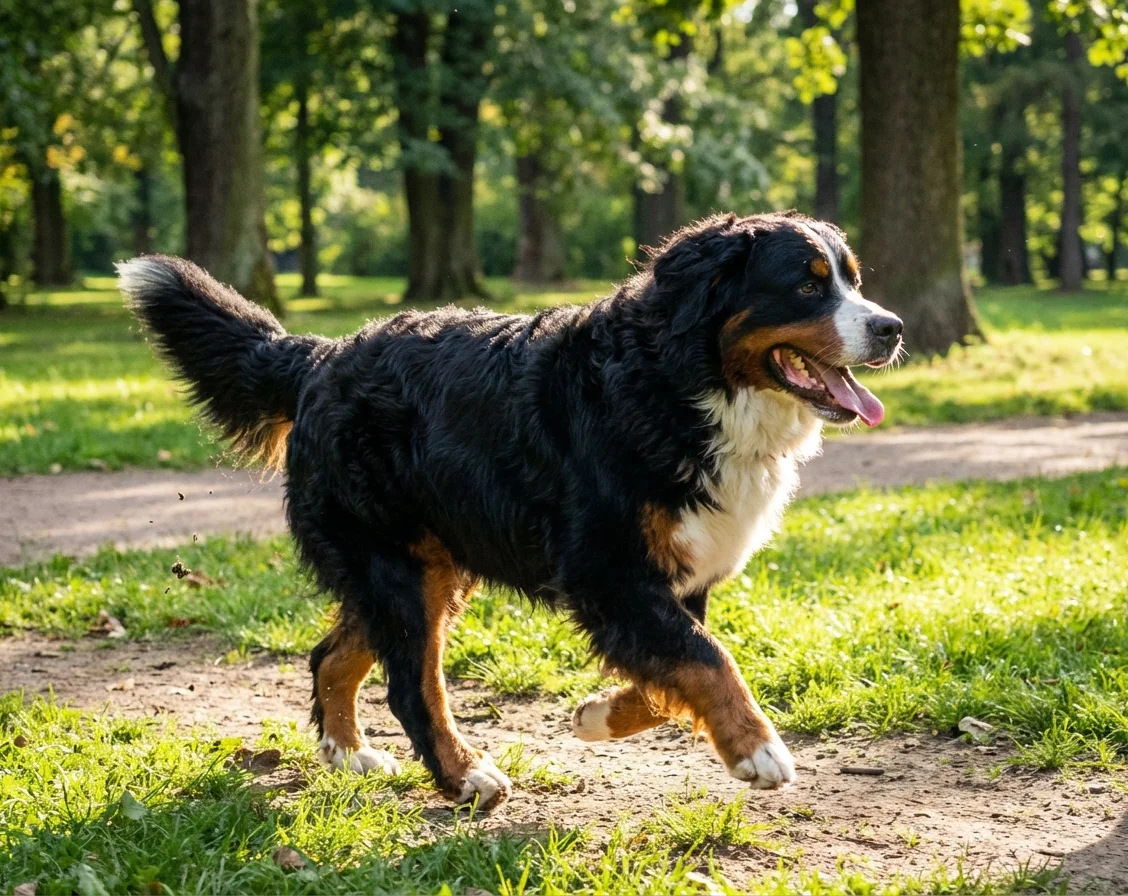
Bernese Mountain Dogs are large, sturdy, and well-proportioned. Males stand 25-27.5 inches at the shoulder and weigh 80-115 pounds. Females are 23-26 inches and 70-95 pounds. They’re not as heavy as a Mastiff or as tall as a Great Dane, but they’re substantial dogs with a broad chest, strong legs, and a frame built for physical labor in rough terrain.
The breed has a distinctive, immediately recognizable look. Nobody confuses a Bernese Mountain Dog with another breed.
Coat and Color
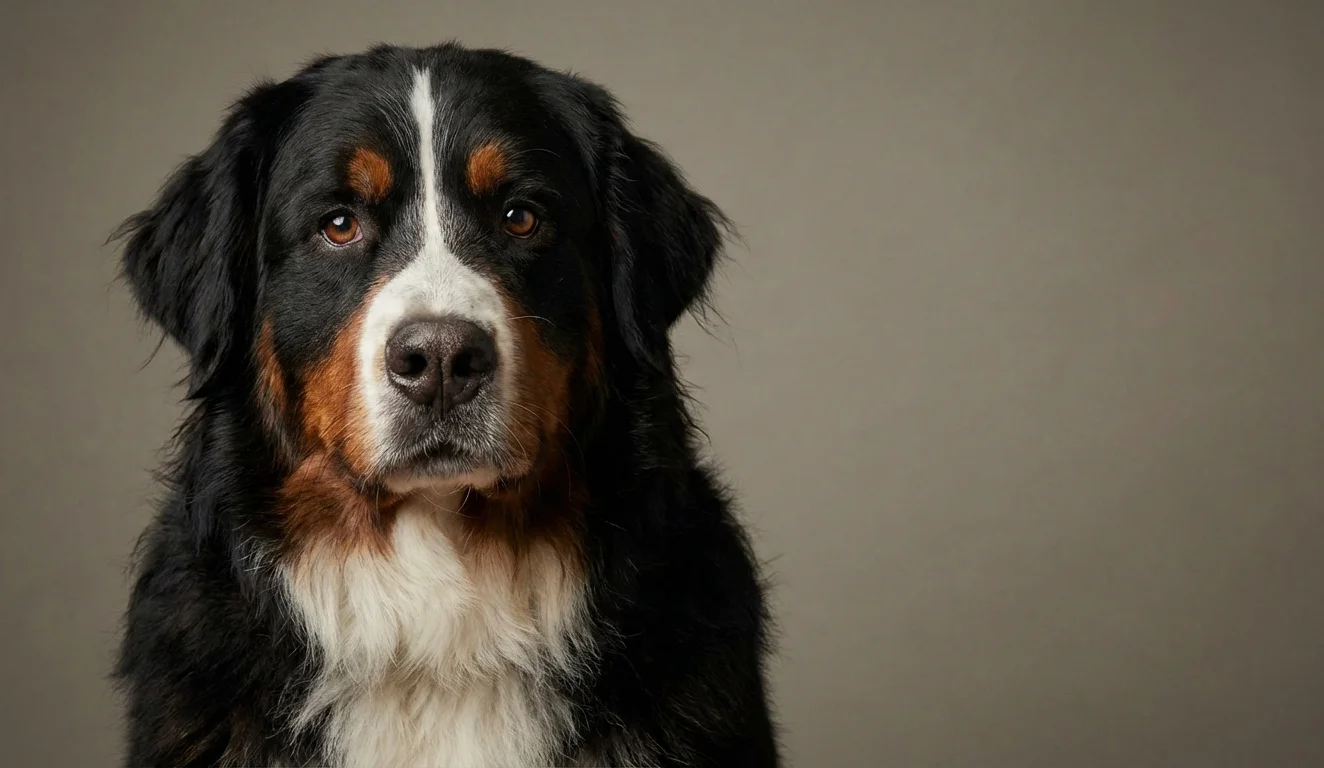
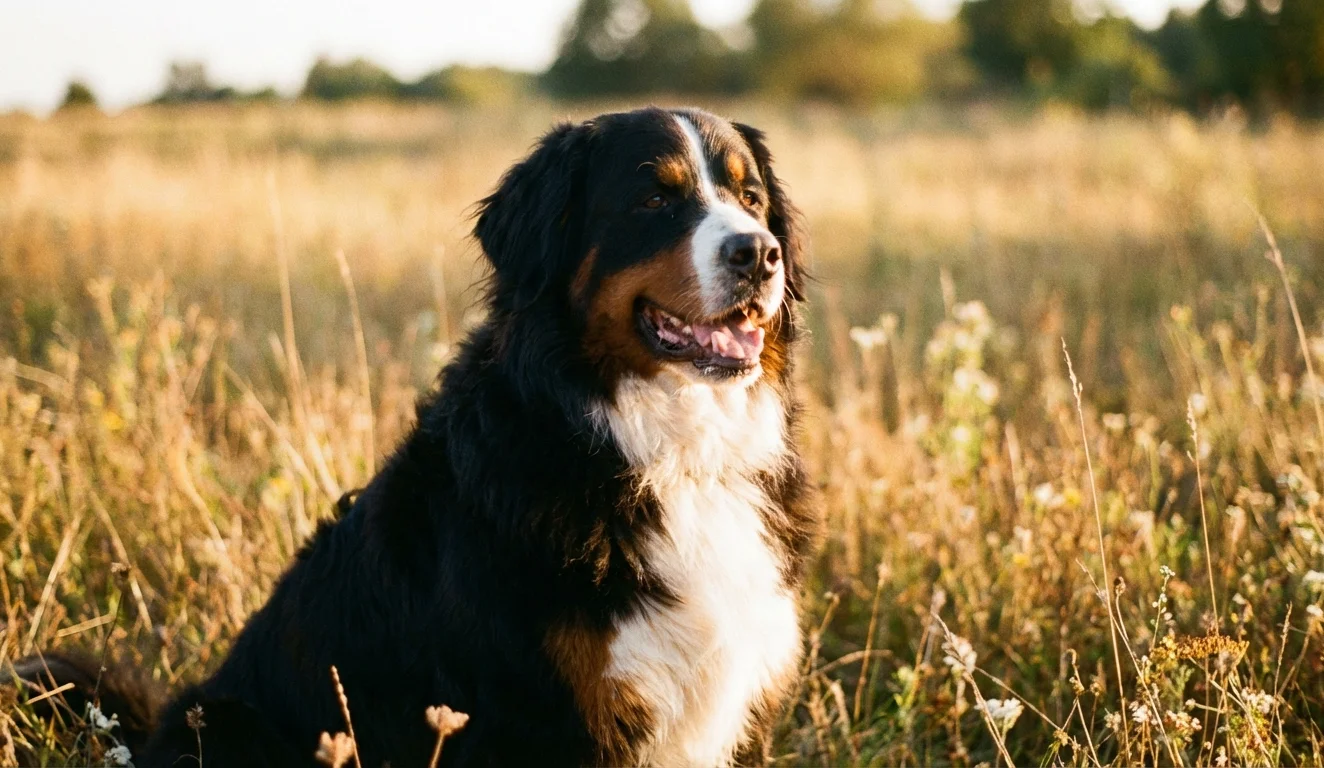
Bernese Mountain Dogs come in exactly one color pattern: tricolor. The base is jet black, with rich rust markings above the eyes, on the cheeks, on the sides of the chest, and on the legs. White appears on the chest (an inverted cross or “Swiss cross” marking is ideal), between the eyes as a blaze, and on the tip of the tail. The symmetry and clarity of these markings matter in the show ring but don’t affect the dog’s quality as a pet.
The coat itself is long, thick, and slightly wavy, never curly. It’s a dense double coat designed for cold mountain weather. The undercoat is woolly and insulating. The outer coat is longer, slightly coarser, and naturally shiny when healthy. This coat is beautiful. It’s also going to end up on every piece of clothing you own, every piece of furniture, and in every corner of your house.
Bernese Mountain Dog Temperament
This is where the Bernese Mountain Dog earns its devoted following. The temperament is, without exaggeration, one of the best in the entire dog world.
Berners are calm. Not lethargic, calm. There’s a steadiness to them that’s hard to explain until you’ve been around one. They don’t react to loud noises by panicking. They don’t meet strangers with suspicion. They approach life with a grounded, confident gentleness that makes them exceptional family dogs.
What living with a Berner is actually like:
- They adore children. This is not a caveat-heavy statement. Berners are remarkably gentle and patient with kids of all ages. They’ll tolerate tail-pulling from toddlers, play gently with older children, and seem to instinctively moderate their size and strength around small humans. They’re one of the very few large breeds where we’d say “great with kids” without adding a long list of qualifications.
- They’re “shadow dogs.” Berners want to be in the same room as their people. Not demanding attention necessarily, just… present. They’ll lie at your feet while you work, follow you to the kitchen, and position themselves wherever the family is gathering. If you go to the bathroom, the Berner is probably lying outside the door.
- They mature slowly. Berners are puppies in big dog bodies until about age 2-3. That means a clumsy, exuberant 90-pound adolescent who still thinks he fits on your lap. It’s simultaneously the most frustrating and the most endearing phase.
- They’re good with other animals. Berners are generally friendly with other dogs and tolerant of cats. They lack the prey drive that makes some working breeds risky around smaller animals.
- They’re sensitive. Berners pick up on tension in the household. Raised voices, arguments, and stress affect them visibly. They may retreat, become clingy, or seem depressed in tense environments. This sensitivity also means they respond poorly to harsh training methods.
Our honest take: owning a Berner is like having the world’s nicest roommate who also happens to weigh 100 pounds and shed enough to stuff a pillow every week. They don’t demand much beyond your presence and affection. They’re the kind of dog that makes you rearrange your life to spend more time at home.
Exercise Needs
Bernese Mountain Dogs need about 60 minutes of exercise per day. They’re moderate-energy dogs, active enough to enjoy a long walk or hike but not so wired that they’re bouncing off the walls if you miss a day.
Good exercise for Berners:
- Daily walks of 30-45 minutes. Berners enjoy a good walk at a moderate pace. They’re not speed demons, think “pleasant stroll” rather than “power walk.”
- Hiking. This is arguably the Berner’s ideal activity. They were bred for mountainous terrain, and most Berners take to trails naturally. Their thick coat and sturdy build make them excellent cool-weather hiking companions.
- Carting. Some Berner owners get into cart-pulling, which taps into the breed’s historical purpose. The Bernese Mountain Dog Club of America even offers carting titles. It’s fun, the dogs love it, and it’s a conversation starter at the park.
- Backyard play. Berners are happy with a game of fetch or tug in the yard, though they tend to play in bursts rather than sustained sessions.
Heat sensitivity is significant. That thick black coat absorbs heat, and Berners are prone to overheating. In warm weather, keep exercise to cool morning or evening hours. Provide shade and water constantly. Some Berner owners invest in cooling vests for summer months. If you live in a consistently hot climate (Florida, Texas, Arizona), a Bernese Mountain Dog may not be the best fit.
A Berner that doesn’t get enough exercise might gain weight (which stresses their joints) or become mildly restless, but they won’t destroy your house. This isn’t a breed that expresses boredom through destruction, they’re more likely to mope.
Grooming
The Bernese Mountain Dog’s coat is high-maintenance. There’s no way around it.
Grooming routine:
- Brush 2-3 times per week minimum, using a slicker brush and undercoat rake. The long coat tangles, especially behind the ears, on the chest, and around the “feathering” on the legs.
- Daily brushing during shedding season. Berners blow their undercoat in spring and fall, and the volume of fur is staggering. During these 2-3 week periods, you’ll fill a grocery bag with fur at each brushing session.
- Bath every 4-6 weeks. Berners aren’t smelly dogs, but the coat picks up dirt and debris. A good bath with a deshedding shampoo helps manage the loose undercoat.
- Professional grooming every 6-8 weeks if you want help with the coat, a full groom runs $60-$100 for a dog this size.
- Nail trims every 2-3 weeks. Those big paws grow big nails.
- Ear checks weekly. The floppy ears can trap moisture.
The shedding is very heavy. Year-round, with those two seasonal blowouts that are even heavier. Berners shed dark hair (black) and light hair (white) in roughly equal measure, so it shows up on everything regardless of your furniture color. A good vacuum is a non-negotiable purchase.
Bernese Mountain Dog Health Issues
This is the section no Berner lover wants to write. The Bernese Mountain Dog has serious health problems, and the breed’s lifespan of 7-10 years reflects that reality.
Cancer (Histiocytic Sarcoma)
Cancer is the #1 killer of Bernese Mountain Dogs. The Bernese Mountain Dog Club of America’s health surveys consistently show that cancer accounts for roughly 50% of all Berner deaths. Histiocytic sarcoma, an aggressive cancer of the immune system cells, is particularly devastating in this breed. Studies suggest that the incidence of histiocytic sarcoma in Berners may be as high as 25%, compared to less than 1% in most other breeds.
This is a breed-specific crisis, and it’s the primary reason the average Berner lifespan is so short. Researchers at UC Davis, Colorado State, and multiple European universities are actively studying the genetic basis of histiocytic sarcoma in Bernese Mountain Dogs. Treatment costs $5,000-$15,000, and the prognosis is often poor.
What you can do: buy from a breeder who participates in the Berner-Garde Foundation’s open health database and who selects for longevity in their breeding program. Ask about cancer history in the lineage. Dogs from lines where parents and grandparents lived past 10 are worth seeking out, even if the wait list is longer.
Hip and Elbow Dysplasia
Both conditions are common in Berners. The OFA reports that approximately 20% of Bernese Mountain Dogs evaluated have hip dysplasia, one of the higher rates among large breeds. Elbow dysplasia is similarly common. Reputable breeders screen both parents for OFA hip and elbow clearances before breeding. Treatment for hip dysplasia runs $1,500-$6,000. Elbow dysplasia is $1,500-$4,000.
Bloat (Gastric Dilatation-Volvulus)
As a large, deep-chested breed, Berners are at moderate risk for bloat. Symptoms include a distended abdomen, unproductive retching, restlessness, and drooling. This is a life-threatening emergency requiring immediate veterinary intervention. Treatment costs $2,000-$7,500. Prophylactic gastropexy (surgical stomach tacking) is worth discussing with your vet, especially if done during spay/neuter.
Progressive Retinal Atrophy (PRA)
PRA causes gradual vision loss. A DNA test can identify carriers, and responsible breeders test for it. Treatment costs $2,000-$3,000 for diagnosis and management, but the condition itself is not treatable, it progresses to blindness over time.
Training
Bernese Mountain Dogs are highly trainable and genuinely want to make you happy. They’re intelligent, attentive, and responsive to positive reinforcement. Of the large working breeds, Berners are among the easiest to train.
Training notes for Berner owners:
- They’re sensitive to correction. Berners take harsh words to heart. A firm “no” is enough, yelling or physical corrections will make them shut down and become fearful. Positive reinforcement (treats, praise, play) produces far better results.
- Early socialization matters. Berners are naturally friendly, but some can develop shyness or timidity without proper socialization during the 8-16 week window. Expose them to different people, environments, and experiences early and often.
- Puppy growth considerations. Berner puppies grow fast and are clumsy during their growth phase. Avoid activities that stress growing joints, no running on hard surfaces, no jumping from heights, no intense fetch sessions until at least 12-18 months old. Slow walks and controlled play are better.
- Leash training early. A 100-pound Berner that pulls on leash is hard to manage. Start loose-leash walking as a puppy when the size difference is still in your favor.
- They respond well to a job. Obedience, carting, therapy work, and rally are all activities where Berners excel. They like having something to do, and structured activities strengthen the bond.
One of the best things about training a Berner is their food motivation. They love treats, and they’ll work hard for them. Just be mindful of portion control, Berners gain weight easily, and extra weight is especially hard on their joints.
Cost
Purchase Price
A Bernese Mountain Dog puppy from a reputable breeder costs $1,500-$3,500. Dogs from health-tested, longevity-focused breeding programs may cost more, and they’re worth every penny. Given the breed’s cancer rates, buying from a breeder who tracks health outcomes and selects for longer-lived lines is one of the most important decisions you’ll make.
Berner rescue exists but isn’t common, the breed’s popularity means wait lists for rescue dogs can be long. Adoption fees are typically $300-$600.
Monthly Costs
| Expense | Monthly Estimate |
|---|---|
| Food (large breed formula) | $50-$90 |
| Preventive vet care (averaged) | $20-$40 |
| Pet insurance | $50-$100 |
| Treats and chews | $10-$20 |
| Grooming supplies/sessions | $15-$40 |
| Miscellaneous (toys, supplies) | $10-$25 |
| Total | $120-$275 |
Pet insurance deserves special mention here. Given the breed’s predisposition to cancer, hip dysplasia, and other expensive conditions, pet insurance for a Bernese Mountain Dog is closer to a necessity than a luxury. Enroll early, before any pre-existing conditions develop, and choose a plan with meaningful cancer coverage. A single cancer treatment can cost $10,000+, and a hip surgery runs $4,000-$6,000 per hip.
First-year costs beyond purchase price typically run $3,000-$5,500.
Is a Bernese Mountain Dog Right for You?
A Bernese Mountain Dog could be a great fit if you:
- Want a gentle, calm large breed that’s excellent with children
- Live in a cooler climate (or can manage heat in warm weather)
- Have space for a large dog, not necessarily a huge yard, but room for them to stretch out
- Can handle heavy shedding and regular grooming
- Are emotionally prepared for a shorter lifespan and potential health challenges
- Want a dog that’s happy with moderate exercise, long walks and hikes rather than running marathons
- Can afford the higher costs associated with large-breed health care and insurance
A Bernese Mountain Dog is probably not right if you:
- Live in a consistently hot climate without good cooling options
- Can’t handle a 7-10 year lifespan (this is the #1 reason people hesitate on the breed, and it’s completely valid)
- Are on a tight budget, between purchase price, insurance, food, and potential medical costs, Berners aren’t cheap
- Want a high-energy dog for running, biking, or intense outdoor sports
- Don’t want to deal with heavy shedding and coat maintenance
- Are away from home most of the day, Berners are social dogs that don’t thrive in isolation
There’s a Berner saying that goes: “A short life of a good dog is still a life well lived.” Berner people are a specific kind of dog person, they’ve accepted the trade-off and decided that the quality of the years matters more than the quantity. If that resonates with you, this breed will fill your home with more warmth, more fur, and more quiet joy than you thought a dog could bring. Just don’t skip the health insurance.
Related Breeds
If you’re considering this breed, you might also want to look at:
Frequently Asked Questions
How long do Bernese Mountain Dogs actually live?
The honest answer is 7-10 years, with the average falling around 7-8. This is shorter than most large breeds, and the primary reason is the breed’s extremely high cancer rate. About half of all Bernese Mountain Dogs die of cancer, with histiocytic sarcoma being the most common type. Some Berners live past 10, and breeders who track longevity data are making progress, but the breed hasn’t dramatically improved its average lifespan yet. If you’re considering a Berner, look for breeders who participate in the Berner-Garde Foundation and who can show you longevity data for their lines.
Are Bernese Mountain Dogs good for first-time owners?
Yes, with caveats. The temperament is excellent for first-time owners, Berners are patient, trainable, and not particularly challenging behaviorally. The challenges are practical: size, shedding, heat sensitivity, and especially the health issues and associated costs. A first-time owner who is prepared for the financial commitment and the emotional reality of a shorter lifespan can do very well with a Berner. They’re one of the more forgiving large breeds when it comes to training mistakes because they’re so eager to please.
Do Bernese Mountain Dogs do well in hot weather?
Not particularly. Their thick, dark double coat makes them heat-sensitive, and they’re most comfortable in cooler temperatures. Berners living in warm climates need air conditioning, restricted exercise during hot hours, constant water access, and shade. Some owners use cooling vests or cooling mats. If you live somewhere that’s hot and humid for more than a few months a year (the Southeast, Southwest, or Gulf Coast), think carefully about whether a Berner is the right breed for your climate. They were literally bred for Swiss mountain winters.
How much do Bernese Mountain Dogs shed?
Very heavily. Berners shed year-round, with two major coat blows per year (spring and fall) where the volume increases dramatically. The long, tricolored coat means you’ll find black, white, and rust-colored hair on everything. Regular brushing (2-3 times weekly, daily during blows) is required to manage it. A quality vacuum, we’re talking a $300+ vacuum, not a $50 model, is a worthwhile investment for Berner owners. If heavy shedding is a dealbreaker for you, this isn’t the breed.
What should I look for in a Bernese Mountain Dog breeder?
More than most breeds, breeder selection matters enormously with Berners because of the cancer issue. Look for a breeder who: health-tests both parents (OFA hips and elbows, CAER eyes, cardiac exam, and PRA/vWD genetic testing), participates in the Berner-Garde Foundation’s open health database, can show you longevity data for their lines (parents and grandparents who lived past 8-9 is a good sign), and is transparent about cancer history in their dogs. A good Berner breeder won’t hide health information, they’ll volunteer it. Expect to be on a waitlist of 6-12 months for a well-bred Berner. That wait is worth it.