American Bulldog Breed Guide: 100 Pounds of Loyalty With a Stubborn Streak (2026)
The American Bulldog is an athletic, muscular working dog that will protect your family and then try to sit in your lap. Here's the honest rundown.
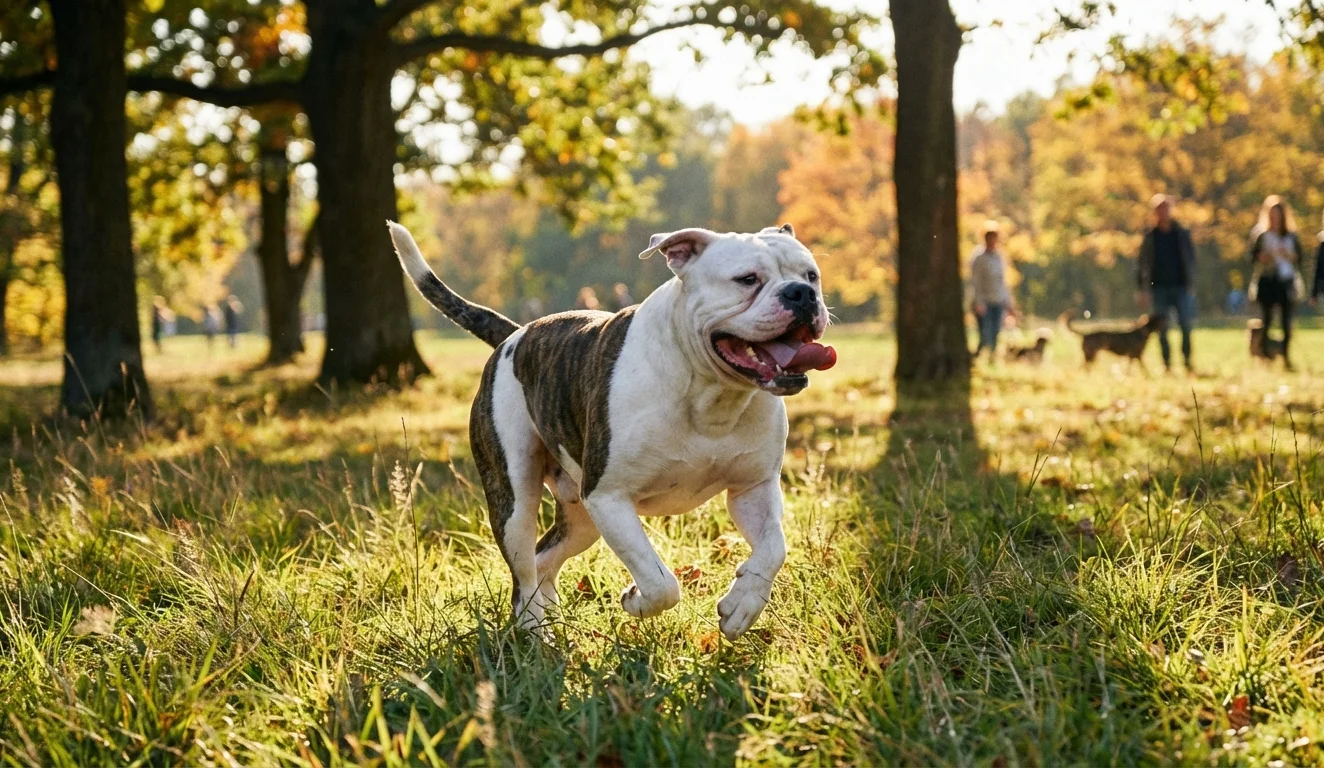
The American Bulldog weighs 60-120 pounds and stands 20-28 inches tall, a substantial, muscular dog that looks like it was designed to pull something heavy and then guard it. They live 10-12 years, which is respectable for a breed this size. Unlike the squat, pushed-face English Bulldog, the American Bulldog is an athletic, functional working dog with a longer muzzle, longer legs, and the ability to actually, you know, breathe and exercise. The AKC hasn’t fully recognized them yet (they’re in the Foundation Stock Service), but that hasn’t stopped them from being one of the most popular large breeds in the country.
In Short: 60–120 lbs, 10–12 years. Moderate energy. Moderate shedding. Watch for Hip Dysplasia and ACL Tears. Best for experienced dog owners who want a loyal, protective family dog and don’t mind drool on everything they own.
Let us be direct: the American Bulldog is not a beginner dog. They’re powerful, strong-willed, and they need an owner who can provide consistent leadership without being harsh. In the right household, one with experience, patience, and a solid fence, they’re incredible family dogs. Loyal, goofy, gentle with kids, and alert enough to make anyone think twice about approaching your property uninvited. In the wrong household, their size and stubbornness can become serious problems. Know what you’re signing up for.
American Bulldog at a Glance
| Trait | Details |
|---|---|
| Breed Group | Foundation Stock Service (AKC) |
| Height | Males: 22-28 in / Females: 20-26 in |
| Weight | Males: 75-120 lbs / Females: 60-90 lbs |
| Life Expectancy | 10-12 years |
| Coat | Short, smooth |
| Colors | White, white with patches of brindle, red, brown, fawn, or black |
| Temperament | Loyal, Confident, Gentle, Protective |
| Shedding | Moderate |
| Energy Level | Moderate |
| Good With Kids | Yes (with socialization) |
| Good With Other Dogs | Selective (same-sex aggression common) |
| Good With Cats | Varies (prey drive possible) |
| AKC Recognition | Foundation Stock Service (not fully recognized) |
History
The American Bulldog is one of the closest living descendants of the Old English Bulldog, the original working bulldog that was used in England for bull-baiting, farm work, and property guarding. When English settlers brought their bulldogs to the American South in the 17th and 18th centuries, the dogs adapted to a different kind of work: catching feral pigs, guarding farms, and serving as all-purpose working dogs in rural communities.
While the English Bulldog was being bred smaller and flatter-faced for the show ring, the American Bulldog stayed functional. Southern farmers didn’t care about breed standards, they cared about whether a dog could pin a wild boar, protect livestock from predators, and double as a family companion. The result is a dog that looks like what people imagine when they think “bulldog”, athletic, powerful, and built for work.
By the mid-20th century, the American Bulldog was nearly extinct. Two breeders, John D. Johnson and Alan Scott, are credited with saving the breed. Johnson’s dogs were stockier and more bulldog-like (now called the “Bully” or “Classic” type), while Scott’s were more athletic and leaner (the “Standard” type). Most modern American Bulldogs are a blend of both lines, though you’ll still see breeders emphasizing one type or the other. The breed entered the AKC’s Foundation Stock Service in 2019 and is working toward full recognition.
Size and Appearance
The size range in American Bulldogs is dramatic. A small female might be 60 pounds and 20 inches tall. A large male can hit 120 pounds and stand 28 inches at the shoulder. That’s the difference between a medium and a giant dog. If you’re getting an American Bulldog, ask the breeder about the parents’ size to set realistic expectations.
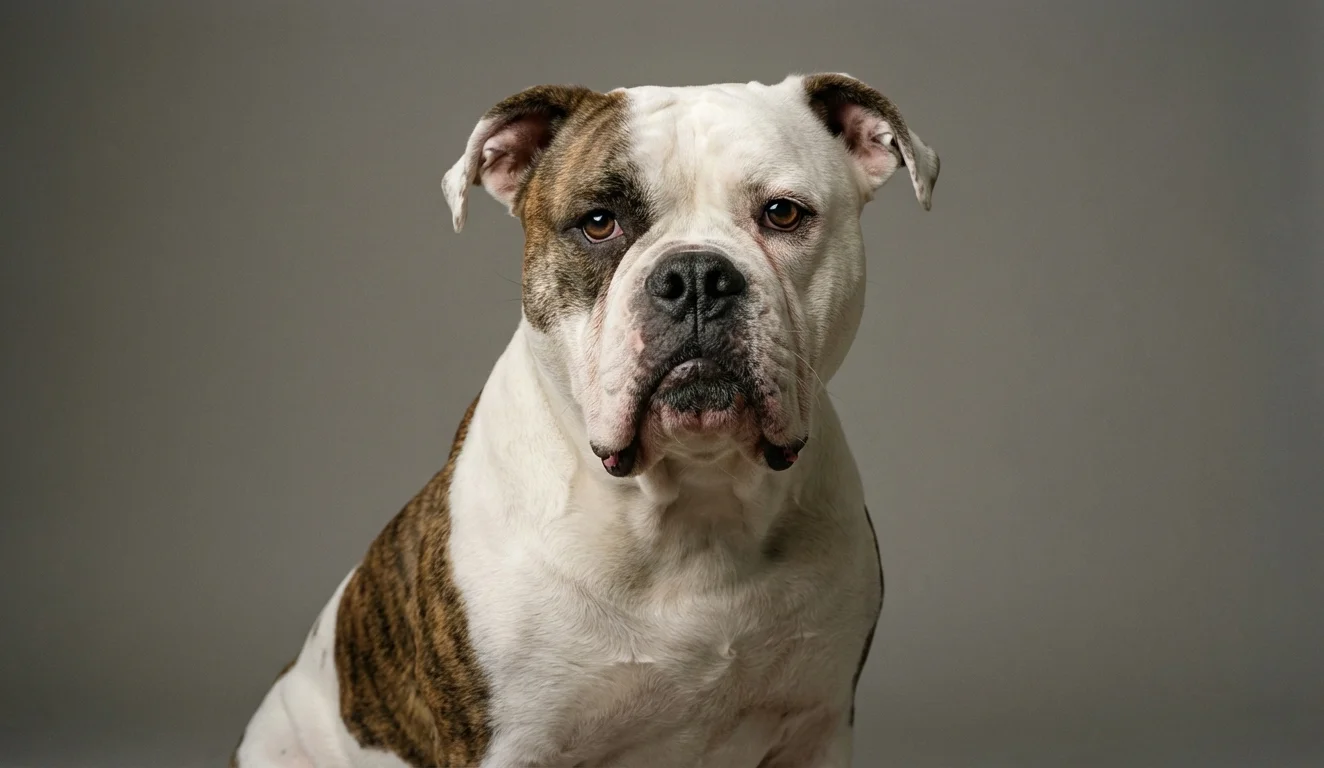
There are two general body types. The Johnson/Bully type is heavier, broader, with a shorter muzzle and more pronounced underbite. The Scott/Standard type is leaner, more athletic, with a longer muzzle and a more “pitbull-like” appearance. Many American Bulldogs today are hybrids of both types. Neither is better, it’s a matter of preference and what you want the dog to do.
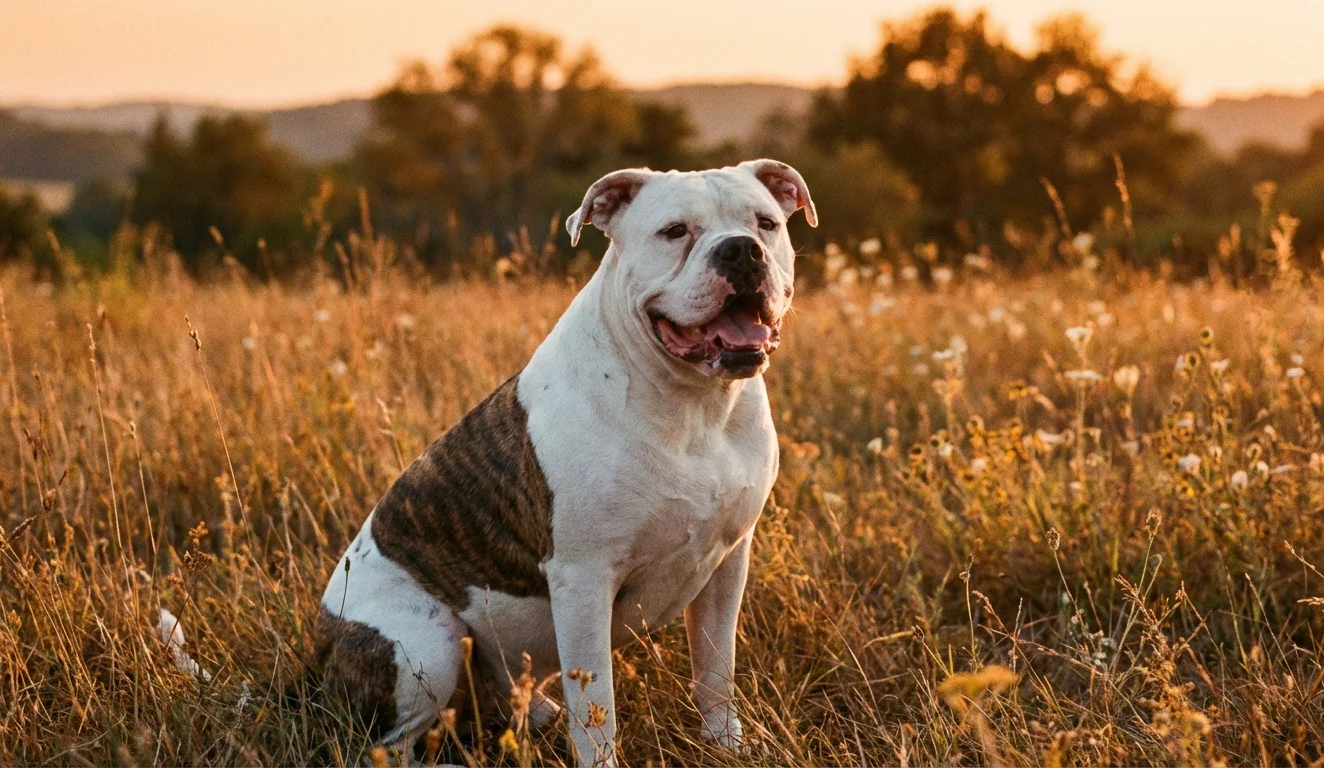
The coat is short and smooth, predominantly white with patches of brindle, red, brown, tan, fawn, or black. The breed is muscular without being exaggerated, you should see definition but not the cartoonish muscle mass you sometimes see in dogs bred purely for appearance. American Bulldogs should look like they could work all day, because historically, they did.
American Bulldog Temperament
American Bulldogs are complicated dogs in the best way. They’re simultaneously tough and tender, a dog that will stand its ground against a threat and then curl up in your lap like it weighs 15 pounds instead of 100.
What life with an American Bulldog really looks like:
- Fiercely loyal. American Bulldogs bond deeply with their families. This loyalty is one of their greatest strengths, but it needs to be channeled through proper socialization so it doesn’t become overprotectiveness.
- Gentle with “their” kids. Properly raised American Bulldogs are patient and tolerant with children in their family. They’re sturdy enough to handle rough play without reacting, and many develop a particular protectiveness over the youngest family members. Supervision is always smart with a dog this size.
- Dog-selective. This is the honest part. Many American Bulldogs, especially males, have same-sex dog aggression. Early socialization helps, but this trait is deeply rooted in the breed. Dog parks can be risky. Introductions with new dogs should be careful and controlled.
- Confident but not aggressive. A well-bred, well-socialized American Bulldog is calm and self-assured. They don’t go looking for trouble. But they won’t back down from it either, which means the owner needs to be the decision-maker in every interaction.
- They think they’re lap dogs. Every American Bulldog owner has the same story: 100 pounds of muscle trying to sit in their lap on the couch. They’re affectionate to the point of being absurd.
We want to be honest about the breed’s reputation. American Bulldogs appear on some breed-specific legislation lists and some insurance company restricted breed lists. Whether this is fair is a separate debate, the practical reality is that you need to check your local laws and your homeowner’s or renter’s insurance policy before getting one. Being surprised by a breed restriction after you’ve already bonded with a dog is a situation nobody wants.
Exercise Needs
American Bulldogs need 45-60 minutes of exercise daily. They’re moderate-energy dogs, not the marathon athletes some working breeds are, but they definitely need more activity than their English Bulldog cousins.
What works for American Bulldog exercise:
- Brisk walks at a steady pace. They’re not sprinters (they overheat easily) but they enjoy a good, purposeful walk.
- Tug-of-war and structured play sessions. American Bulldogs love to pull and grip, it’s in their DNA. Playing tug is great exercise and relationship building, but establish rules (drop on command, game stops if teeth touch skin).
- Moderate hikes in cooler weather. Their brachycephalic tendencies (especially in Bully-type dogs) mean heat is a concern. Early morning or evening exercise during summer is non-negotiable.
- Weight pulling is a natural sport for the breed. Some American Bulldogs compete in organized weight pull events.
- Avoid extended running or biking, especially in warm weather. Their body type and breathing capacity aren’t designed for sustained cardio.
A critical note about heat: American Bulldogs, particularly the shorter-muzzled Bully type, are heat-sensitive. They can overheat quickly and dangerously. Exercise in hot weather is not just uncomfortable for them, it can be life-threatening. Keep it cool, keep it moderate, and always have water available.
Grooming
American Bulldog grooming is about as low-maintenance as it gets for a dog this size.
The short, smooth coat needs brushing once a week, a rubber curry brush or bristle brush works fine. It takes about five minutes. They shed moderately year-round with heavier shedding in spring and fall. You’ll notice white hair on your dark clothes.
The details that matter:
- Wrinkles and skin folds. Bully-type American Bulldogs with facial wrinkles need daily or every-other-day cleaning between the folds. Moisture and bacteria build up there and can cause irritation or infection. A damp cloth and thorough drying does the job.
- Drool management. American Bulldogs drool. Some more than others, with Bully types generally being heavier droolers than Standard types. Keep towels handy. Accept that your walls and furniture will get drool marks.
- Nails. Trim every 2-3 weeks. A 100-pound dog with overgrown nails can do real damage to floors (and your legs during enthusiastic greetings).
- Dental care. Bulldogs of all types are prone to dental crowding. Regular brushing and dental chews help prevent periodontal disease.
- Ears. Check weekly and clean as needed. American Bulldogs don’t have the floppy ears that trap moisture, but they still benefit from routine ear care.
Budget about 10 minutes a week for grooming. The biggest time investment isn’t the coat, it’s the wrinkle cleaning and drool wiping.
American Bulldog Health Issues
American Bulldogs are healthier than English Bulldogs by a wide margin, but their size and build create some breed-specific health risks.
Hip Dysplasia
The most common structural health issue in American Bulldogs. The OFA reports about 33% of American Bulldogs evaluated show some degree of hip dysplasia. That’s a high number. Always ask breeders for OFA hip certifications on both parents. Treatment ranges from conservative management ($500-$1,500/year) with weight control, physical therapy, and NSAIDs to total hip replacement ($3,500-$7,000 per hip) in severe cases.
ACL (Cranial Cruciate Ligament) Tears
The combination of heavy body weight and athletic activity makes American Bulldogs prone to ACL injuries. A blown ACL causes sudden lameness and usually requires surgical repair. TPLO surgery (the most common repair) costs $3,500-$6,000 per knee. About 40-60% of dogs that tear one ACL will eventually tear the other. Pet insurance that covers orthopedic conditions is a wise investment with this breed.
Cherry Eye
A prolapse of the third eyelid gland that appears as a red, swollen mass in the corner of the eye. It’s common in American Bulldogs and usually appears in the first two years of life. Surgical correction costs $500-$1,500 per eye. Don’t let a vet remove the gland entirely, tacking it back in place (pocket technique) preserves tear production and prevents dry eye later.
Brachycephalic Airway Syndrome
More common in Bully/Johnson-type American Bulldogs with shorter muzzles. Symptoms include noisy breathing, snoring, exercise intolerance, and overheating. Mild cases are managed by keeping the dog at a healthy weight and avoiding heat. Severe cases may benefit from surgical correction (soft palate resection, stenotic nares correction) at $1,500-$4,000.
Skin Allergies
American Bulldogs are predisposed to environmental and food allergies that manifest as itchy skin, hot spots, and recurrent ear infections. Allergy management can be the breed’s most frustrating ongoing health expense, ranging from $500-$2,000/year depending on severity and treatment approach (Apoquel, Cytopoint injections, or allergy testing and immunotherapy).
Training
Training an American Bulldog requires confidence and consistency. They’re intelligent dogs that learn quickly but won’t always choose to comply. It’s not defiance exactly, it’s more like they need to be convinced that doing what you ask is worth their while.
What works:
- Establish leadership early and calmly. American Bulldogs respect confident, consistent handling. They don’t respect yelling, and they’ll meet force with resistance. Be the leader, not the dictator.
- Positive reinforcement with a firm foundation. Use treats, praise, and play as rewards, but also be clear and consistent about boundaries. “No” should mean “no” every single time, not just when you feel like enforcing it.
- Socialization is the single most important thing you’ll do with an American Bulldog puppy. Between 8-16 weeks, expose them to as many different people, dogs, environments, and situations as possible. This window is your best chance to raise a well-adjusted adult. Continue socialization throughout adolescence, this breed can become reactive during the “teenage” phase if socialization drops off.
- Obedience classes are strongly recommended. A group class forces socialization while building training skills. Work with a trainer who has experience with bully breeds and uses balanced, fair methods.
- Leash manners are non-negotiable. A 100-pound dog that pulls on a leash is a safety hazard. Start leash training from day one. A front-clip harness or head halter can help, but consistent training is the long-term solution.
House training is typically average for American Bulldogs, expect 4-6 months for full reliability with consistent crate training.
American Bulldog Cost
Purchase Price
An American Bulldog puppy from a reputable breeder costs $1,500-$3,500. Show-quality or dogs from working lines with extensive health testing may cost more. Be cautious of “XXL” or “exotic” American Bulldogs, these terms often indicate breeders prioritizing appearance over health. A breeder who health-tests both parents (hips, cardiac, eyes minimum) and can show you the results is worth the investment. Rescue American Bulldogs are available through organizations like American Bulldog Rescue for $200-$500.
Monthly Costs
| Expense | Monthly Estimate |
|---|---|
| Food (high-quality kibble, large breed) | $50-$80 |
| Preventive vet care (averaged) | $20-$35 |
| Pet insurance | $40-$65 |
| Grooming supplies | $5-$10 |
| Treats and chews | $15-$25 |
| Miscellaneous (toys, supplies) | $10-$20 |
| Total | $140-$235 |
First-Year Costs
Budget $4,000-$7,000 for the first year, including purchase price. Large dogs cost more across the board, more food, higher vet costs, bigger crates, sturdier toys, and higher insurance premiums. The cost of a good training class ($200-$400) is money well spent and should be considered non-optional with this breed.
Is an American Bulldog Right for You?
An American Bulldog is a great fit if you:
- Have experience with large, strong-willed breeds
- Want a loyal, protective family dog that bonds deeply
- Have a securely fenced yard (six-foot fence minimum)
- Can provide daily exercise and mental stimulation
- Are prepared to invest heavily in early socialization
- Have checked your local breed-specific legislation and insurance policies
An American Bulldog is probably NOT right if you:
- Are a first-time dog owner (consider starting with a more forgiving breed)
- Live in an area with breed-specific legislation that includes American Bulldogs
- Frequently visit dog parks or want a dog that’s universally friendly with other dogs
- Rent and can’t verify your landlord allows the breed
- Aren’t physically capable of handling a powerful dog on a leash
- Live in a hot climate without air conditioning (heat intolerance is real)
The American Bulldog is a throwback to what bulldogs were before the show ring got hold of them, athletic, functional, devoted working dogs. They’re not the easiest breed to own, but they inspire a loyalty in their owners that mirrors the loyalty they give. Get one for the right reasons, raise it well, and you’ll have a partner that would walk through a wall for you. Just make sure you’ve got a strong enough fence that it doesn’t have to.
Related Breeds
If you’re considering this breed, you might also want to look at:
Frequently Asked Questions
Are American Bulldogs aggressive?
Not inherently. A well-bred, well-socialized American Bulldog is confident and calm, not aggressive. But the breed was developed for guarding and catch work, so they have protective instincts and can be dog-selective. The difference between a well-mannered American Bulldog and a problem dog almost always comes down to breeding, socialization, and ownership. Skipping early socialization with this breed is asking for trouble.
What’s the difference between an American Bulldog and a Pit Bull?
They’re distinct breeds with different histories. American Bulldogs are larger (60-120 lbs vs. 30-60 lbs for most pit bull-type dogs), were bred primarily as farm and catch dogs, and have a stockier build with a broader head. American Pit Bull Terriers were bred from a mix of bulldogs and terriers for different purposes. The breeds are sometimes confused because of visual similarities, especially in the Standard/Scott type of American Bulldog.
Can American Bulldogs live in apartments?
It’s not ideal. Their size alone makes apartment living challenging, a 100-pound dog in a small space is a lot of dog. They also need a fenced yard for exercise and bathroom breaks. If apartment living is your only option, you’d need to commit to multiple daily walks, regular outings, and a lot of environmental management. Most American Bulldogs do best in houses with yards.
Do American Bulldogs drool a lot?
Depends on the type. Johnson/Bully-type dogs with looser jowls drool significantly, especially after drinking water, during exercise, and when food is nearby. Standard/Scott-type dogs with tighter lips drool less. Either way, keeping a towel handy is part of the American Bulldog lifestyle. If drool is a dealbreaker, this isn’t your breed.
How long do American Bulldogs live?
10-12 years is the expected lifespan, which is reasonable for a dog this size. Some live longer, especially those kept at a healthy weight with good preventive care. The biggest lifespan threats are the orthopedic issues (hip dysplasia, ACL tears) that can reduce quality of life if not managed, and the potential for heat-related emergencies.