Bouvier des Flandres Breed Guide: The Bear-Dog That Herds Cattle and Steals Hearts (2026)
The Bouvier des Flandres looks like a giant, bearded teddy bear. In reality, it's a powerful herding dog with a sharp mind and a calm disposition that will surprise you.
The Bouvier des Flandres weighs 70-110 pounds, stands 23.5-27.5 inches tall, and lives 10-12 years. The name translates from French as “cow herder of Flanders,” which tells you exactly what this dog was built to do. But the résumé doesn’t stop at cattle. Bouviers have served as police dogs, military dogs, cart pullers, guard dogs, and, for the past several decades, as impressively bearded family companions. They look like someone crossed a German Shepherd with a dust mop, and they’re about as serious-minded as that combination suggests.
In Short: 70–110 lbs, 10–12 years. Moderate energy. Low shedding (but heavy grooming). Watch for Hip Dysplasia. Best for experienced owners who want a calm, confident large dog and don’t mind spending quality time with a grooming table.
The Bouvier is a breed that rewards patience. They’re not going to perform tricks for visitors or zoom around a dog park. They’re going to stand there looking noble and slightly unimpressed while quietly assessing whether anyone in the room is a threat. Then they’ll lie at your feet and keep one eye open. It’s a working dog’s demeanor, calm on the surface, ready underneath. If that sounds like your kind of dog, keep reading.
Bouvier des Flandres at a Glance
| Trait | Details |
|---|---|
| Breed Group | Herding (AKC) |
| Height | Males: 24.5-27.5 in / Females: 23.5-26.5 in |
| Weight | Males: 80-110 lbs / Females: 70-90 lbs |
| Life Expectancy | 10-12 years |
| Coat | Double coat, rough, tousled outer coat with dense undercoat |
| Colors | Fawn to black, salt and pepper, gray, brindle |
| Temperament | Loyal, Protective, Calm, Intelligent |
| Shedding | Low (hair gets caught in coat) |
| Energy Level | Moderate |
| Good With Kids | Yes |
| Good With Other Dogs | Yes (with socialization) |
| Good With Cats | Yes (with early socialization) |
| AKC Recognition | 1929 |
History
The Bouvier des Flandres was developed in the Flanders region, the flat agricultural plains spanning parts of modern Belgium, France, and the Netherlands. Farmers there needed a versatile working dog that could herd cattle, guard the farm, pull carts to market, and generally do whatever heavy-duty work the day required. They weren’t breeding for looks. They were breeding for function, and the result was a thick-coated, powerful, level-headed dog that could work all day in harsh weather.
The breed nearly went extinct during World War I. The Flanders region was devastated by trench warfare, and most Bouvier breeding stock was lost. A Belgian army veterinarian named Captain Darby is credited with saving the breed by rescuing Bouviers from the battlefield and establishing a breeding program. Bouviers served as ambulance dogs, messenger dogs, and sentry dogs during both World Wars, work that showcased their intelligence and steady temperament under pressure.
The AKC recognized the Bouvier des Flandres in 1929. The breed has never been popular in the mainstream sense, they’ve consistently ranked between #80 and #100 on the AKC’s popularity list. Bouvier people tend to prefer it that way. The breed attracts a dedicated, knowledgeable owner base rather than impulse buyers, which has kept breeding standards relatively high. Former U.S. President Ronald Reagan owned a Bouvier named Lucky, which gave the breed a brief moment in the spotlight during the 1980s.
Size and Appearance
The Bouvier is a large, powerful, compact dog. Males typically weigh 80-110 pounds and stand 24.5-27.5 inches. Females are somewhat smaller at 70-90 pounds and 23.5-26.5 inches. The overall impression is of a square, sturdy dog, slightly taller than long, heavily boned, and muscular under all that fur.
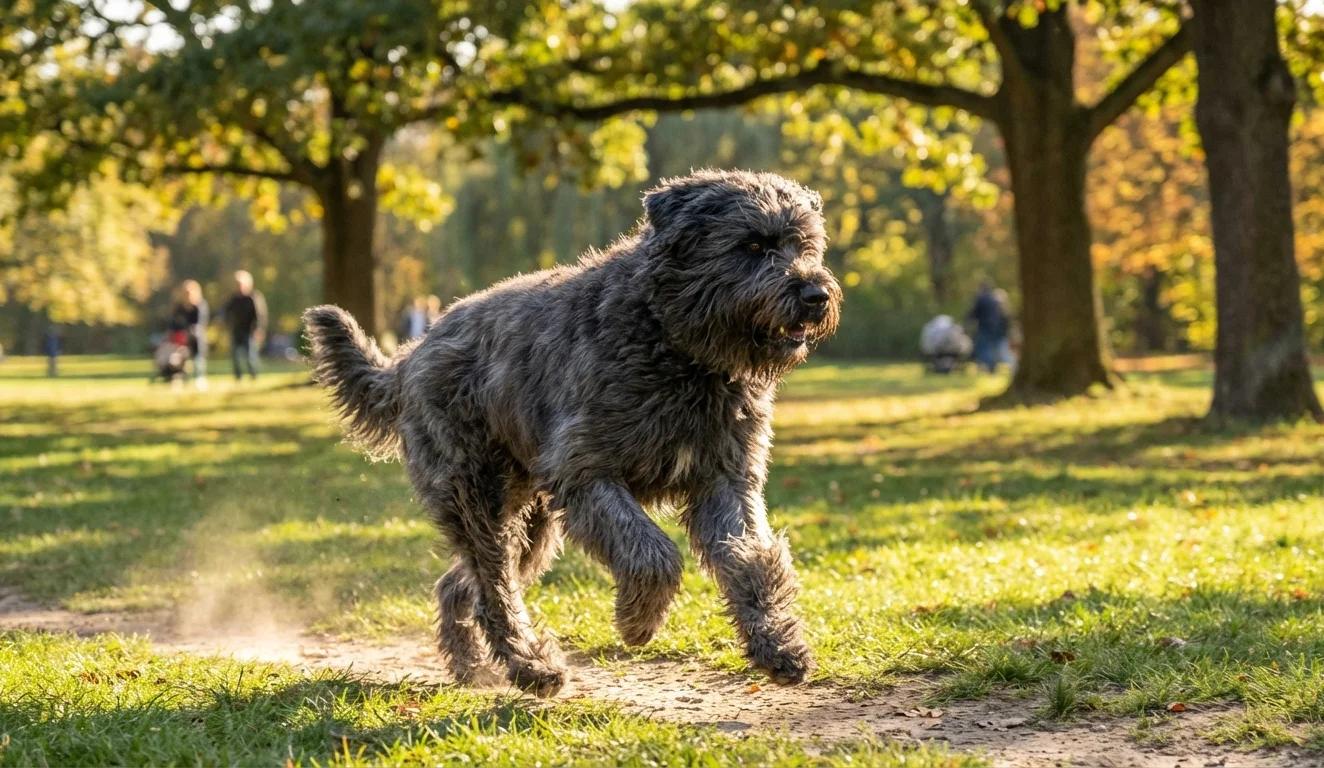
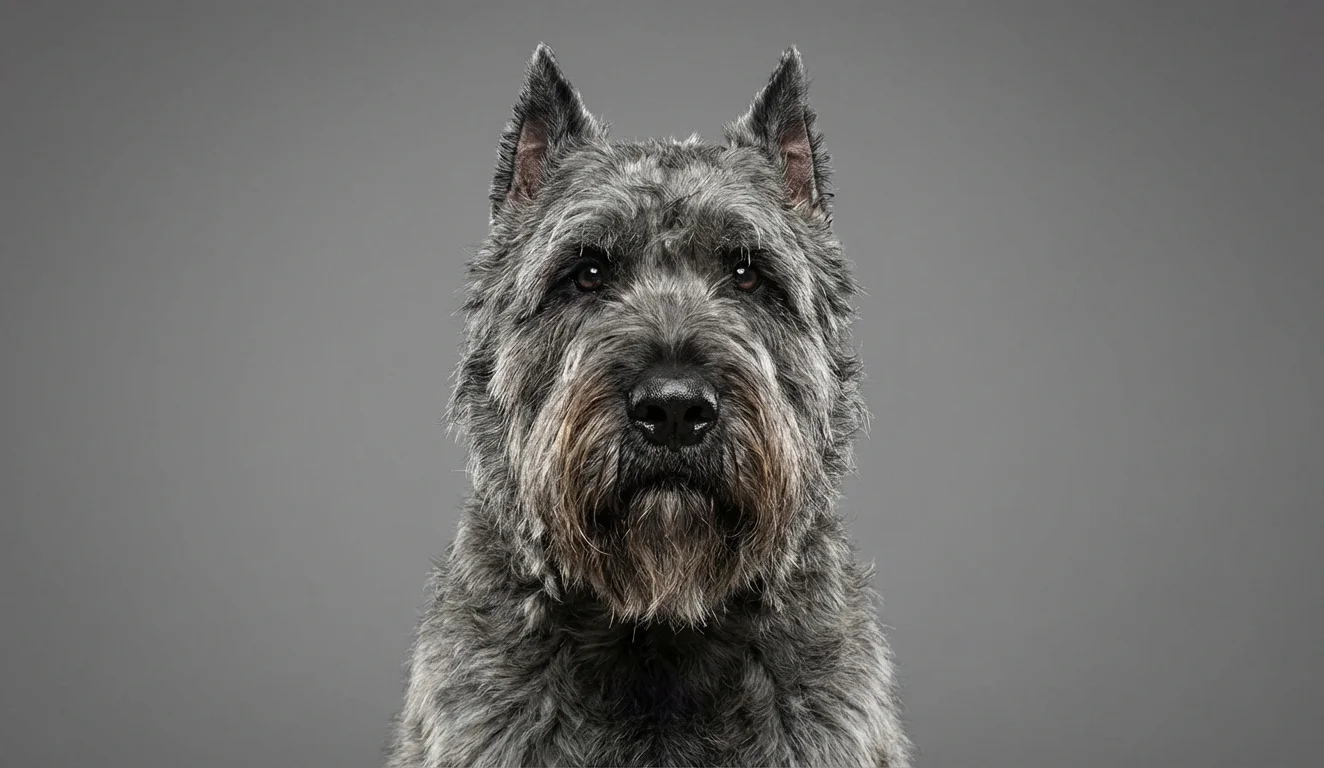
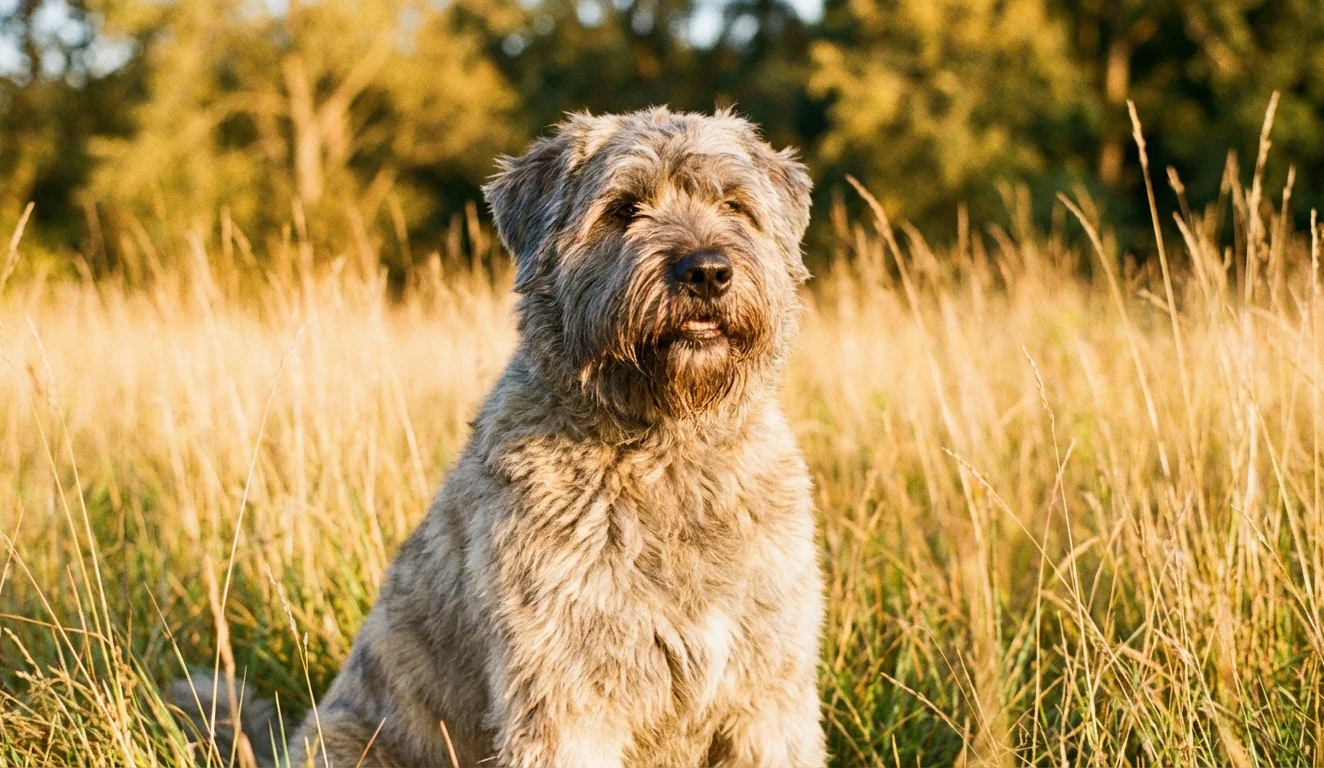
And there is a lot of fur. The Bouvier’s coat is its most distinctive visual feature, a rough, tousled double coat that forms a prominent beard, mustache, and eyebrows. The outer coat is harsh and dry to the touch, about 2.5 inches long. The undercoat is dense and fine. Together, they create a weatherproof barrier that allowed the original Bouviers to work through Belgian winters without flinching. Colors range from fawn to black, with salt-and-pepper, gray, and brindle also common.
The head is impressive, broad and flat on top, with the heavy beard and mustache giving the dog an almost scholarly appearance. The ears are set high and may be natural (triangular, falling forward) or cropped (historically done for working dogs to prevent injury). Natural ears are becoming the standard as cropping falls out of favor. The body is powerful and well-muscled without being bulky, and the tail is traditionally docked, though undocked tails are increasingly common.
Bouvier des Flandres Temperament
Bouviers have a temperament that experienced dog people love and casual dog owners sometimes misread. They’re not aloof, they’re discerning. They’re not unfriendly, they’re selective about who gets their enthusiasm.
What day-to-day life with a Bouvier looks like:
- Calm and steady. Bouviers don’t get rattled. Loud noises, chaotic environments, new situations, they take it all in stride with a composure that’s almost unnerving. This is a dog that was bred to work on a battlefield. Your doorbell is not going to faze it.
- Protective without being aggressive. Bouviers are natural guardians. They’ll position themselves between their family and anything they perceive as a potential threat. This protective instinct is controlled, not frantic, a Bouvier assesses the situation before reacting, which is exactly what you want in a guardian breed.
- Devoted to family, reserved with strangers. Your Bouvier will love your family completely. Strangers will get a polite evaluation and maybe, eventually, a tail wag. This is normal for the breed. Pushing a Bouvier to be a social butterfly is a losing game.
- Surprisingly gentle with kids. Despite their size, Bouviers are patient and careful with children. They seem to understand the size difference and adjust accordingly. Many Bouvier owners report that the dog becomes particularly watchful when the kids are around.
- Independent thinkers. Bouviers aren’t defiant, but they do think through commands before executing them. If you’ve owned Golden Retrievers that live to please, the Bouvier’s deliberate approach to obedience will be an adjustment.
Our take on the breed: Bouviers are the strong, silent type of the dog world. They don’t need to be the center of attention. They don’t need constant reassurance. They just need their people nearby and something to watch over. It’s a profoundly satisfying temperament if you appreciate a dog with quiet confidence.
Exercise Needs
Bouviers need 45-60 minutes of exercise daily. They’re moderate-energy dogs, nothing like the frenetic drive of a Border Collie, but they absolutely need daily activity to stay healthy and mentally balanced.
What works for Bouvier exercise:
- Long walks at a steady pace. Bouviers are natural walkers, they’ll maintain a comfortable pace for miles without getting tired or pulling excessively.
- Herding is the gold standard for mental and physical exercise if you have access to livestock or herding instinct tests. The breed retains strong herding drive, and giving them cattle or sheep work is like speaking their first language.
- Cart pulling (carting or drafting) is a traditional Bouvier activity that many dogs still enjoy. Breed clubs sometimes hold carting events and competitions.
- Moderate hiking. Bouviers handle trails well, though the thick coat makes them heat-sensitive. Stick to cooler weather and morning/evening hikes during summer.
- Swimming works for some Bouviers, though the heavy coat gets waterlogged. If your Bouvier likes water, that’s great, just be prepared for the post-swim grooming project.
Don’t over-exercise Bouvier puppies. Large breed puppies are susceptible to joint damage during growth. Keep exercise moderate and avoid sustained running, jumping, or stairs until the dog is at least 18 months old and the growth plates have closed.
Grooming
Here’s the trade-off with a Bouvier: they don’t shed much (loose hair gets trapped in the coat), but they need significant grooming to maintain that coat. This is a high-maintenance grooming breed.
Weekly routine:
- Brush thoroughly 2-3 times per week minimum, using a pin brush and a slicker brush to work through the coat and remove trapped dead hair. Skip a week and you’ll be dealing with mats.
- Comb through the beard and mustache daily. Food, water, and general debris collect in the facial hair constantly. A dirty Bouvier beard is not a pleasant thing.
- Check ears weekly. The hair around the ears can trap moisture, leading to infections.
Every 6-8 weeks:
- Professional grooming or a thorough home grooming session. The coat needs to be trimmed and shaped, the furnishings (beard, eyebrows, leg hair) maintained, and any mats removed. A professional grooming session for a Bouvier runs $80-$150 depending on location and coat condition.
- Some owners learn to do their own grooming, which saves money but requires investing in quality tools (clippers, scissors, grooming table) and learning the breed’s trim pattern.
Twice a year:
- The coat should be stripped or have dead undercoat thoroughly removed during seasonal transitions. This is a significant grooming event that can take 2-4 hours.
If you’re not willing to commit to regular grooming, the Bouvier is the wrong breed. A neglected Bouvier coat becomes a matted, uncomfortable mess that can cause skin problems. There’s no low-maintenance version of this dog’s coat.
Bouvier des Flandres Health Issues
Bouviers are reasonably healthy for a large breed, but there are conditions to watch for.
Hip Dysplasia
The OFA reports approximately 16% of Bouviers evaluated show hip dysplasia, moderate for a large breed. Responsible breeders screen for it and only breed dogs with good or excellent hip scores. Treatment ranges from weight management and anti-inflammatories ($300-$800/year) to total hip replacement ($3,500-$7,000) in severe cases. Keeping your Bouvier lean is the best preventive measure, every extra pound adds stress to the hips.
Elbow Dysplasia
Elbow dysplasia is another orthopedic concern, with various developmental issues affecting the elbow joint. Symptoms include front-leg lameness, especially after exercise. Surgical treatment ranges from $1,500-$4,000 per elbow depending on the specific pathology. OFA elbow evaluations are recommended for breeding dogs.
Bloat (Gastric Dilatation-Volvulus)
Bouviers have the deep chest that puts them in the at-risk category for bloat, a life-threatening emergency where the stomach twists. The mortality rate without surgery is nearly 100%. Surgery costs $3,000-$8,000. Prevention strategies include feeding smaller, more frequent meals, avoiding exercise for an hour after eating, and considering a prophylactic gastropexy (stomach tacking) during spay/neuter surgery for an additional $400-$800.
Hypothyroidism
More common in Bouviers than the general dog population. Symptoms include weight gain, lethargy, skin changes, and coat thinning. Fortunately, it’s easily diagnosed with a blood test ($50-$150) and managed with daily thyroid medication ($20-$50/month). Most hypothyroid dogs return to normal with proper treatment.
Subaortic Stenosis (SAS)
A congenital heart condition where the area below the aortic valve is narrowed. The OFA recommends cardiac screening for Bouvier breeders. Mild cases may not need treatment. Moderate to severe cases carry a risk of sudden death and may require beta-blocker medication ($30-$100/month) or, less commonly, surgery. Always ask breeders for cardiac clearances.
Training
Bouviers are intelligent and trainable, but they require a handler who understands the difference between a biddable breed and an independent one. A Bouvier will learn whatever you teach it. Whether it chooses to perform on command every single time is a different question.
Training approach that works:
- Start early. Bouvier puppies are cute and cuddly, and it’s tempting to be permissive. A 15-pound Bouvier puppy jumping on guests is funny. An 80-pound Bouvier doing the same thing is a problem. Establish rules from day one.
- Be consistent and fair. Bouviers respect confident leadership. They don’t respond well to yelling or physical correction, they’ll become stubborn or shut down. Firm, calm, and consistent is the way.
- Socialization is critical. The breed’s natural reserve around strangers can become fearfulness or defensive aggression without proper socialization. Expose puppies to diverse people, dogs, environments, and situations between 8-16 weeks and continue through adolescence.
- Obedience training should be ongoing, not just a puppy class. Bouviers benefit from structured training throughout their lives, it gives their working mind a job and strengthens the handler-dog bond.
- Challenge their intelligence. Bouviers get bored with repetitive drills. Mix up training sessions with problem-solving, scent work, and new environments.
House training is usually straightforward with Bouviers. They’re clean dogs with good instincts, and most are reliable by 4-5 months with consistent crate training.
Bouvier des Flandres Cost
Purchase Price
A Bouvier des Flandres puppy from a reputable breeder costs $2,000-$3,500. The breed isn’t produced in high volume, so expect a waiting list of 6-12 months from a good breeder. Breeders who do full health testing (hips, elbows, heart, eyes, thyroid) charge at the higher end, and you should insist on seeing those clearances. Rescue Bouviers are occasionally available through the American Bouvier Rescue League, typically for $300-$600.
Monthly Costs
| Expense | Monthly Estimate |
|---|---|
| Food (high-quality kibble, large breed) | $50-$75 |
| Preventive vet care (averaged) | $20-$30 |
| Pet insurance | $40-$60 |
| Professional grooming (averaged) | $30-$50 |
| Treats and chews | $15-$20 |
| Miscellaneous (toys, supplies) | $10-$20 |
| Total | $165-$255 |
First-Year Costs
Budget $4,500-$7,500 for the first year, including purchase price. Grooming costs are the distinctive budget item with this breed, whether you go professional or DIY, maintaining a Bouvier’s coat is an ongoing time and financial commitment that you should plan for before getting the dog.
Is a Bouvier des Flandres Right for You?
A Bouvier des Flandres is a great fit if you:
- Have experience with large, independent-minded breeds
- Want a calm, confident guardian that bonds deeply with the family
- Are committed to regular grooming (or can budget for professional grooming)
- Have a house with a fenced yard, Bouviers need space
- Appreciate a dog that’s quietly observant rather than the life of the party
- Can provide daily exercise and mental stimulation
A Bouvier des Flandres is probably NOT right if you:
- Want a dog that’s enthusiastically friendly with everyone it meets
- Aren’t prepared for the grooming commitment (this is non-negotiable)
- Live in a hot climate without excellent air conditioning (that coat is a liability in heat)
- Are a first-time dog owner, the Bouvier’s independence requires experienced handling
- Want a low-cost dog to maintain (large breed + grooming = significant ongoing expenses)
- Live in an apartment (the size and exercise needs make it impractical)
The Bouvier des Flandres is a dog for people who appreciate substance over flash. They’re not the prettiest dog at the park (though Bouvier owners would disagree). They’re not the friendliest. They’re not the most obedient. But they’re solid, dependable, loyal to their core, and they bring a presence to your household that few breeds can match. A well-raised Bouvier is the kind of dog that makes you feel like everything’s under control, even when it isn’t.
Related Breeds
If you’re considering this breed, you might also want to look at:
Frequently Asked Questions
Are Bouviers des Flandres good family dogs?
Yes, for the right family. Bouviers are patient with children, loyal to their people, and naturally protective. They’re best with families that have some dog experience, can meet the grooming and exercise needs, and appreciate a calm, steady temperament over a bouncy, outgoing one. Families with very young children should supervise interactions, not because Bouviers are dangerous, but because they’re large enough to accidentally knock over a toddler.
Do Bouviers des Flandres shed?
Technically yes, but the loose hair gets trapped in the thick outer coat rather than falling on your furniture. This means less hair on your couch but more matting in the coat if you don’t brush regularly. The trade-off is clear: less environmental shedding in exchange for more grooming work. People with mild dog allergies sometimes do better with Bouviers than with heavy-shedding breeds, though no dog is truly hypoallergenic.
How much grooming does a Bouvier need?
A lot. Expect 2-3 brushing sessions per week (20-30 minutes each), daily beard maintenance, and professional grooming or thorough home grooming every 6-8 weeks. This is one of the highest-maintenance breeds when it comes to coat care. If grooming sounds like a chore rather than bonding time, consider a lower-maintenance breed.
Are Bouviers des Flandres aggressive?
No. They’re protective, which is different. A well-socialized Bouvier will be reserved with strangers but not aggressive. They’ll alert you to someone at the door and position themselves protectively, but they shouldn’t be lunging or snarling at people. Aggression in a Bouvier usually indicates either poor socialization, poor breeding, or both. The breed’s natural temperament is calm and controlled.
Can a Bouvier des Flandres live in a warm climate?
They can, but you’ll need to manage the heat carefully. That thick double coat was designed for Belgian winters, not Texas summers. Air conditioning is a must, and outdoor time should be limited to early morning and evening during hot months. Some owners in warm climates keep the coat trimmed shorter for comfort, which is a reasonable compromise for a pet dog that isn’t being shown.