Miniature American Shepherd Breed Guide: All the Aussie, Half the Dog (2026)
The Miniature American Shepherd packs Australian Shepherd brains into a smaller package. They're brilliant, beautiful, and will absolutely herd your children.
The Miniature American Shepherd weighs 20-40 pounds and stands 13-18 inches tall, basically an Australian Shepherd that someone put through the wash on hot. They live 12-13 years, come in the same gorgeous merle and tricolor patterns as their larger cousins, and have the same sharp intelligence that makes Aussies one of the most capable working breeds on the planet. The AKC only recognized them in 2015, making them one of the newest breeds, but they’ve already rocketed to the top 40 in popularity. There’s a reason for that.
In Short: 20–40 lbs, 12–13 years. High energy. Moderate to heavy shedding. Watch for MDR1 Gene Mutation. Best for active owners who want a smart, versatile dog in a mid-sized package.
We’ll be blunt: the Miniature American Shepherd is not a beginner’s dog. It’s a dog for people who want to do things with their dog, agility, obedience, hiking, herding, or at minimum, daily structured exercise and mental challenges. Put a Mini American in a low-activity household and you’ll end up with a neurotic, destructive little genius who’s bored out of its mind. But match it with the right owner? Few breeds are more rewarding.
Miniature American Shepherd at a Glance
| Trait | Details |
|---|---|
| Breed Group | Herding (AKC) |
| Height | Males: 14-18 in / Females: 13-17 in |
| Weight | Males: 20-40 lbs / Females: 20-40 lbs |
| Life Expectancy | 12-13 years |
| Coat | Double coat, medium length, straight to wavy |
| Colors | Black, blue merle, red, red merle (all with or without white/tan markings) |
| Temperament | Intelligent, Loyal, Energetic, Versatile |
| Shedding | Moderate to Heavy |
| Energy Level | High |
| Good With Kids | Yes (may herd them) |
| Good With Other Dogs | Yes (with socialization) |
| Good With Cats | Varies (herding instinct may kick in) |
| AKC Recognition | 2015 |
History
The Miniature American Shepherd’s origin story is simpler than most breeds: people loved Australian Shepherds but wanted them smaller. In the late 1960s, small Aussies spotted at rodeos in California caught the eye of breeders who began selectively breeding the smallest Aussies together. By the 1980s, these little dogs had a following, particularly among equestrians who wanted a smart travel companion that fit better in horse trailers and RVs.
They were originally called “Miniature Australian Shepherds,” which caused years of controversy within the Australian Shepherd community. Many Aussie breeders opposed the name, arguing it diluted the integrity of the Australian Shepherd breed. The compromise was a name change, “Miniature American Shepherd”, which allowed the breed to pursue AKC recognition on its own terms.
The AKC recognized the Miniature American Shepherd in 2015, and the breed has been on a popularity tear ever since. They’re now the 32nd most popular breed in America, up from nowhere a decade ago. The equestrian connection persists, you’ll see Mini Americans at horse shows across the country, waiting patiently by trailers or trotting alongside their owners at barns. But the breed has expanded well beyond that niche into suburban homes, apartments, and anywhere an owner can keep up with them.
Size and Appearance
There’s a meaningful size range in this breed. Males stand 14-18 inches and females 13-17 inches, with weights spanning 20-40 pounds. A small female Mini American looks like a completely different dog than a large male. If size matters to you, ask the breeder about the parents’ measurements and what they typically produce.
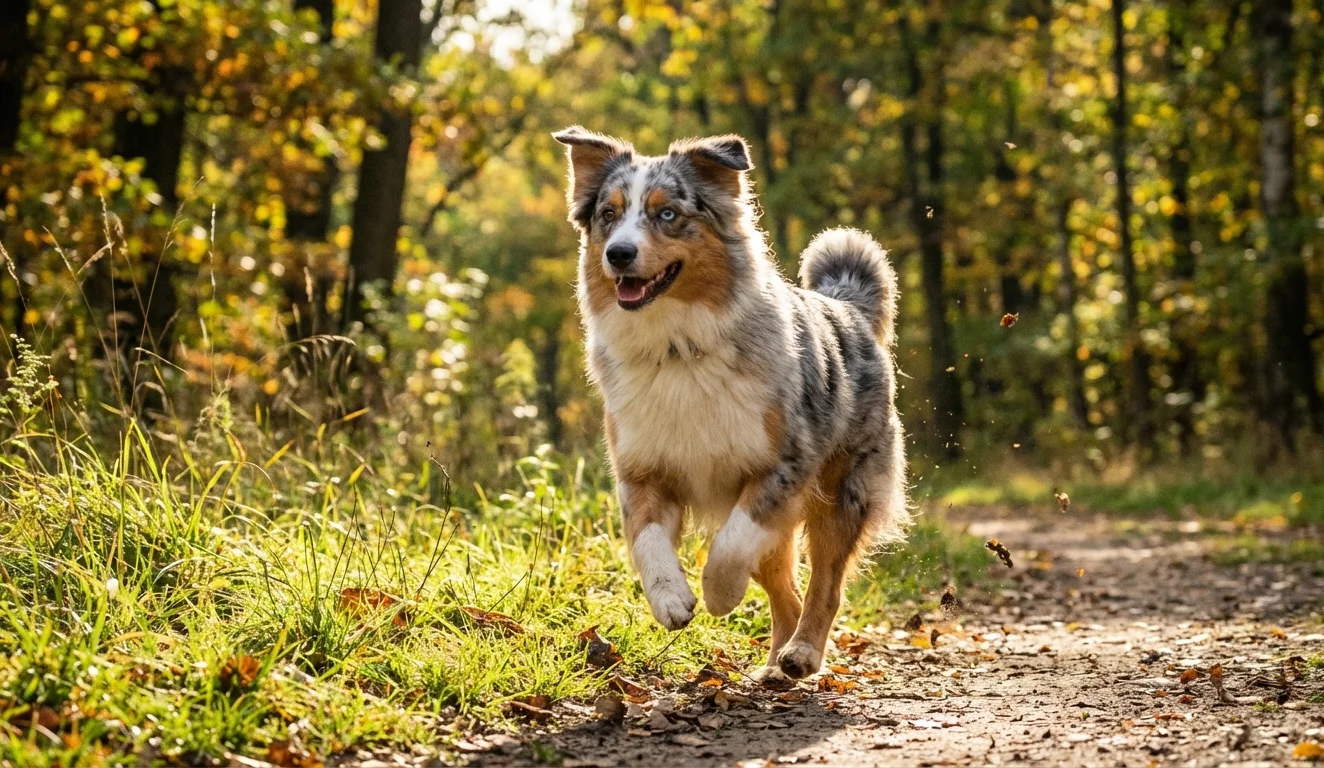
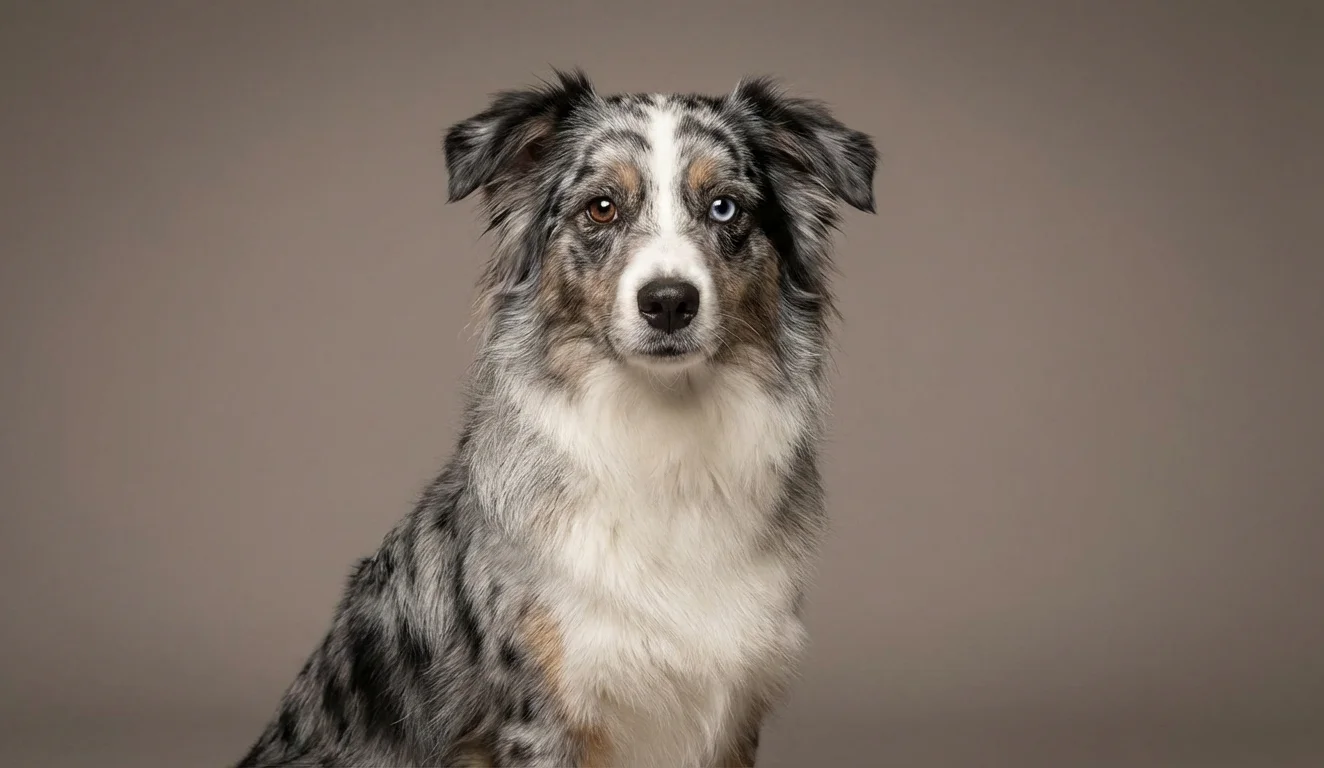
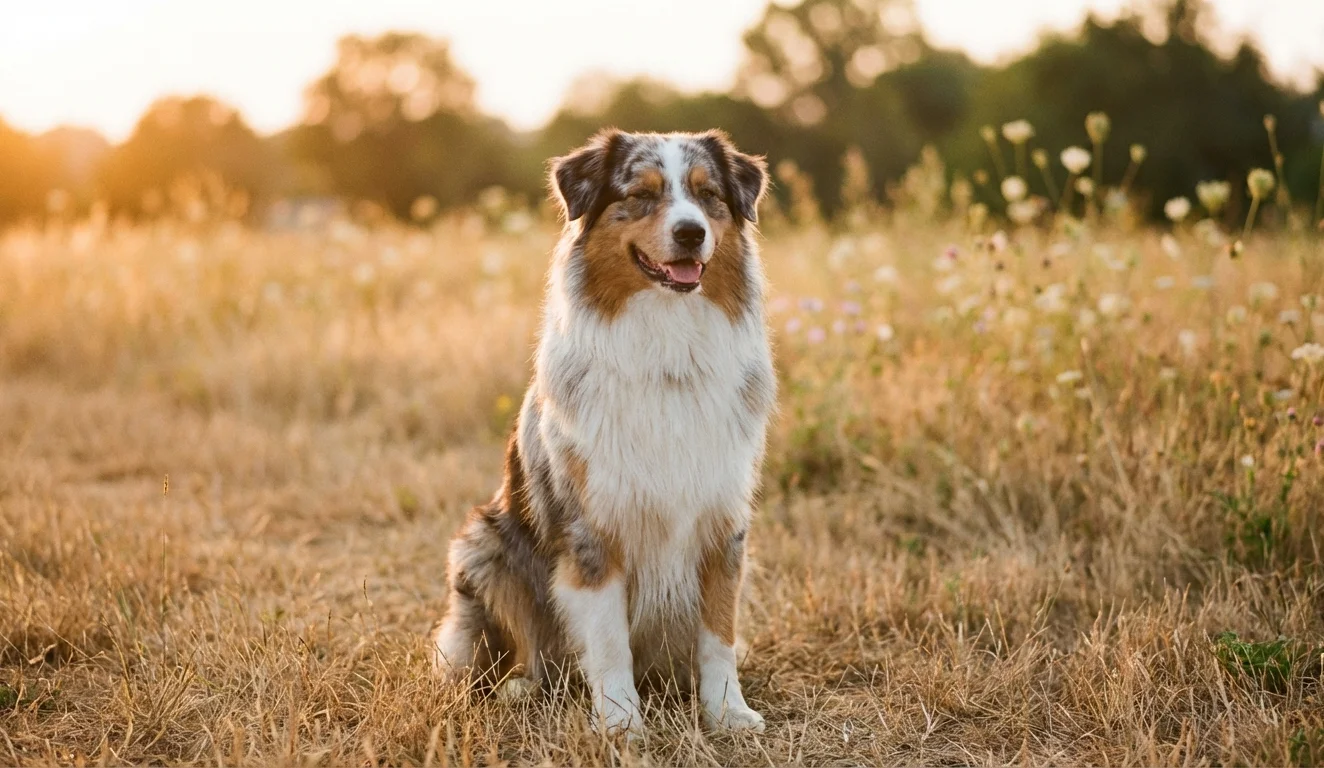
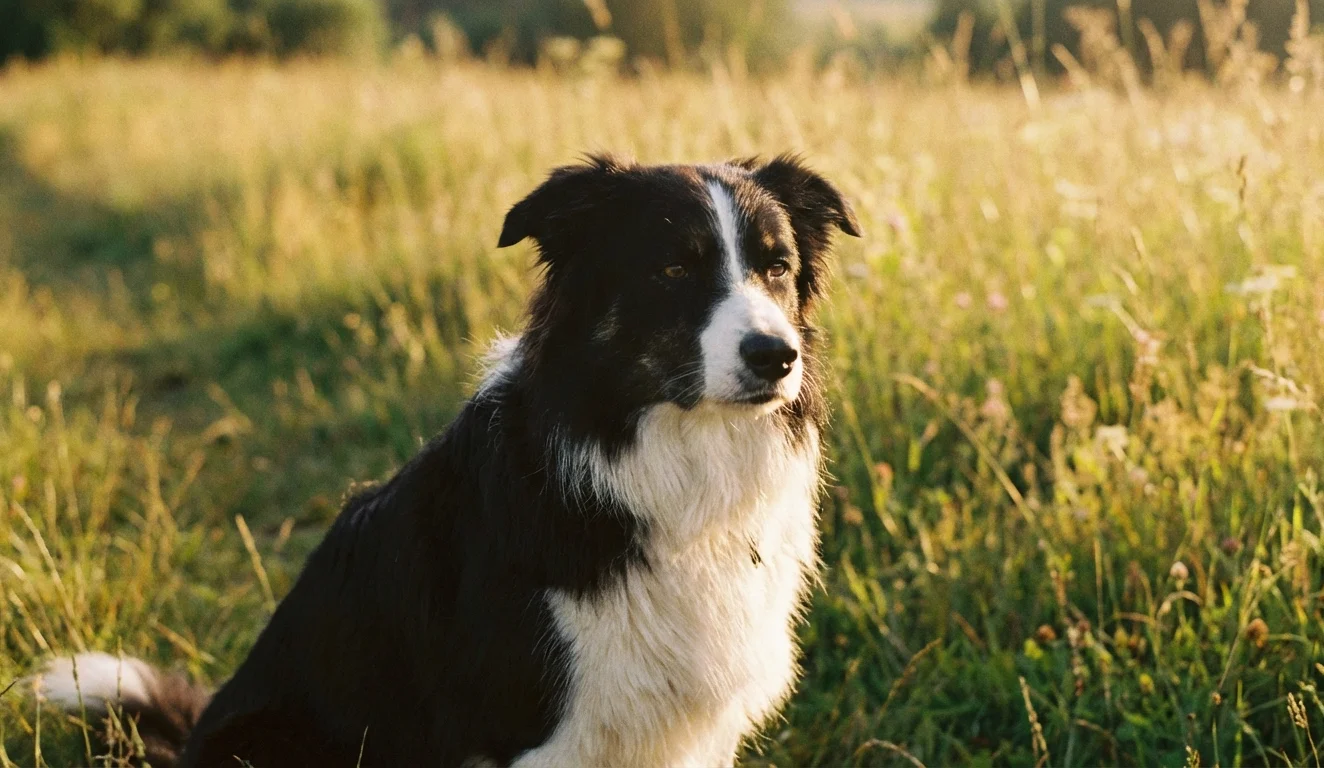
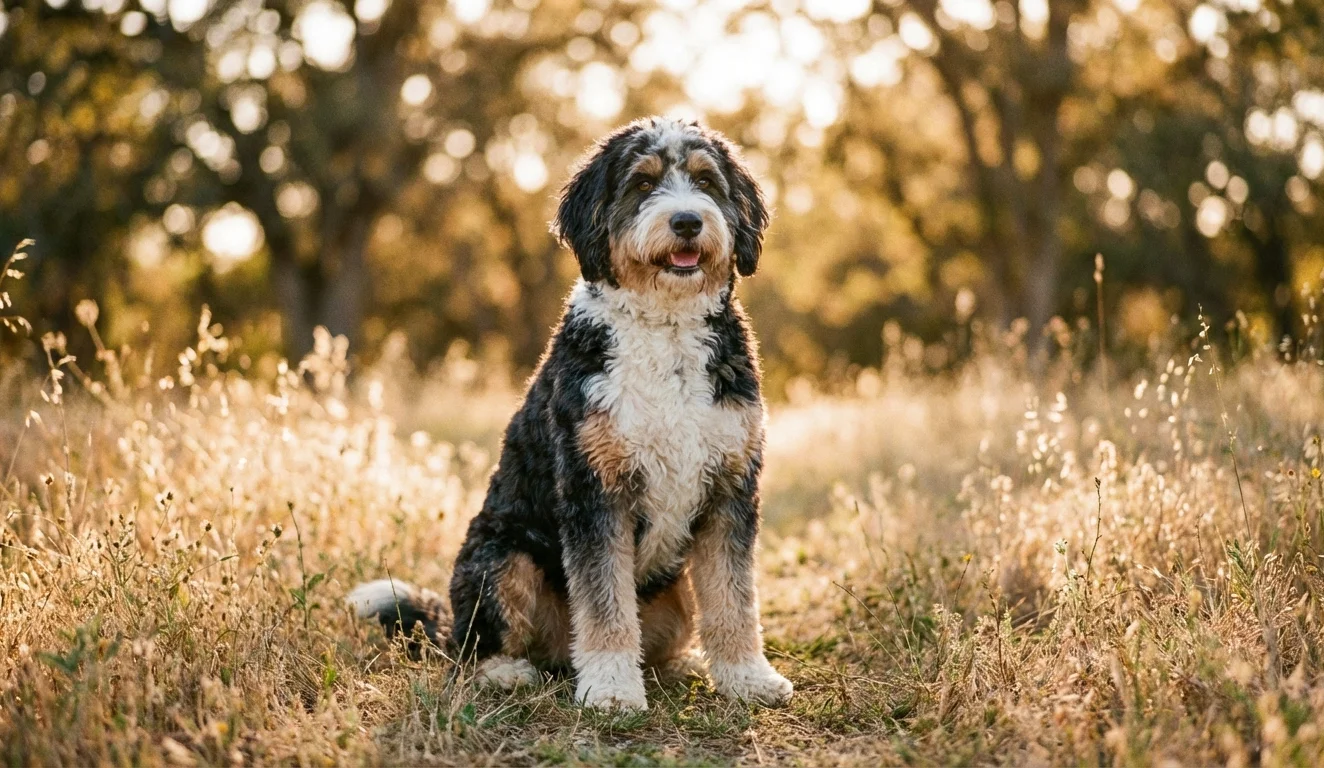
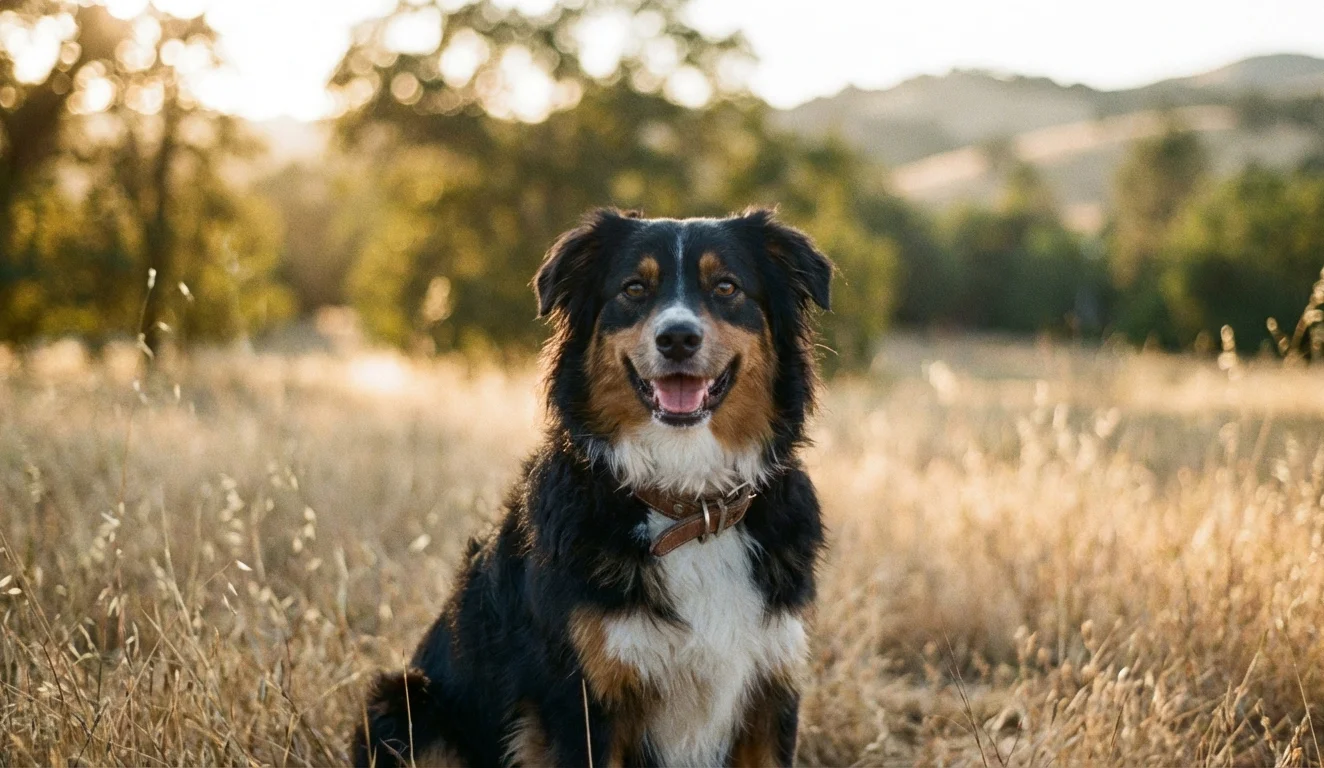
The coat is the showstopper. Mini Americans come in four base colors, black, blue merle, red, and red merle, all potentially combined with white markings and copper points. Merle dogs are particularly striking, with their marbled, patchwork coat patterns. The eyes can be brown, blue, amber, or any combination, including heterochromia (one eye each color). A blue-eyed blue merle Mini American is one of the most visually arresting dogs you’ll encounter.
The overall build is balanced and athletic, slightly longer than tall, with moderate bone and a natural or docked bobtail. They look like dogs that can work all day, because they can. Nothing about the Mini American is extreme or exaggerated. They’re proportionate, functional, and built for agility rather than brute strength.
Miniature American Shepherd Temperament
Mini Americans inherited the Australian Shepherd’s brain, and that brain needs a job. This is the defining characteristic of the breed, they are intensely intelligent dogs that require mental stimulation the way other breeds require food.
What daily life with a Mini American actually looks like:
- Velcro dogs. Mini Americans bond tightly to their people and want to be involved in everything you do. Going to the kitchen? They’re coming. Going to the bathroom? They’re waiting outside the door. This is endearing until you realize you haven’t gone anywhere alone in months.
- They will herd your kids. Not aggressively, but they’ll nip at heels and try to keep the group together. It’s instinct, not aggression, but small children can find it scary. Training can manage it, but the impulse never fully disappears.
- Watchful and alert. Mini Americans notice everything. A new car on the street, a neighbor walking by, a weird noise from the basement, they’ll let you know. This makes them decent watchdogs but can tip into reactivity if not socialized well.
- Reserved with strangers. They’re not aggressive, but Mini Americans are typically one-family dogs. They warm up to new people on their own schedule. Early and ongoing socialization is important to prevent this from becoming fearfulness.
One thing we appreciate about this breed: they’re genuinely versatile. A Mini American can be a competitive agility dog in the morning and a calm couch companion at night (once exercised). They have an off-switch that many high-drive breeds lack. But you have to earn that off-switch by meeting their needs first.
Exercise Needs
Mini Americans need 60-90 minutes of exercise daily, and some of that needs to engage their brain, not just their legs.
A 20-minute walk around the block is an appetizer for this breed, not a meal. They want to run, chase, problem-solve, and work. If you’re a runner, hiker, or cyclist, a Mini American will be thrilled. If your idea of exercise is a walk to the mailbox, look at a different breed.
Exercise ideas that work for this breed:
- Running or jogging (once the dog is physically mature, around 12-18 months)
- Hiking with off-leash time in safe areas, their recall tends to be good given their handler-focus
- Agility training. Mini Americans dominate agility competitions relative to their numbers. They’re fast, nimble, and love the challenge
- Herding trials if you have access. Even if you don’t, herding-style games (like treibball) give them a productive outlet
- Puzzle toys and snuffle mats for indoor days. A frozen Kong won’t replace a hike, but it’ll buy you 30 minutes of peace
- Fetch with a ball launcher. They have tremendous stamina for retrieve games
Under-exercised Mini Americans develop behavioral problems quickly: barking, destructive chewing, spinning, pacing, and obsessive behaviors like shadow-chasing. If your Mini American is doing these things, the first question should always be “is this dog getting enough exercise and mental work?”
Grooming
That beautiful coat comes with a maintenance cost. Mini Americans have a double coat that sheds year-round, with two heavy blowouts per year (spring and fall) that can carpet your home in fur.
Grooming routine:
- Brush 2-3 times per week minimum. During shedding season, daily brushing with an undercoat rake is the only way to stay ahead of the fur situation. An undercoat rake or de-shedding tool is worth every penny.
- Bathe every 4-6 weeks or as needed. Overbathing strips the coat’s natural oils.
- Check and clean ears weekly. The semi-erect ears can trap moisture and debris.
- Trim nails every 2-3 weeks.
- Pay attention to the feathering on the legs and behind the ears, these areas mat easily.
Don’t shave a Mini American. The double coat insulates against both heat and cold, and shaving disrupts that system. The coat also doesn’t grow back normally after shaving. If you live in a hot climate, keep the dog well-brushed and provide shade and water. The coat is doing its job.
If you have allergies or can’t handle dog hair on every surface you own, the Mini American is the wrong breed. There’s no getting around the shedding with this one.
Miniature American Shepherd Health Issues
Mini Americans are generally healthy, but they share some genetic health concerns with their Aussie cousins.
MDR1 Gene Mutation
This is the big one. Roughly 50% of Mini Americans carry the MDR1 (Multi-Drug Resistance 1) gene mutation, which makes them dangerously sensitive to certain common medications including ivermectin (a dewormer), loperamide (Imodium), and some anesthetic drugs. Dogs with two copies of the mutation can have life-threatening reactions to these medications. A simple DNA test ($50-$150) identifies carriers. Every Mini American owner should know their dog’s MDR1 status. Tell every vet who treats your dog. Put it on a tag. This is not optional information.
Hip Dysplasia
The OFA rates approximately 6% of Mini Americans as dysplastic, better than many breeds, but not negligible. Hip evaluations are recommended for breeding dogs. Treatment ranges from conservative management with anti-inflammatories and weight control ($200-$500/year) to total hip replacement ($3,500-$7,000) in severe cases.
Progressive Retinal Atrophy (PRA)
A genetic eye disease that causes progressive vision loss. DNA testing is available, and reputable breeders screen for it. There’s no treatment, but affected dogs adapt if the decline is gradual. Annual eye exams through the OFA/CERF program cost $200-$400.
Epilepsy
Mini Americans have a moderate predisposition to idiopathic epilepsy, typically appearing between ages 1-5. Most cases are manageable with daily medication ($30-$100/month). Diagnosis involves ruling out other causes of seizures, which can cost $500-$2,000 in testing. Well-managed epileptic dogs live normal lifespans.
Training
This is where Mini Americans shine. They’re among the most trainable breeds, period. They learn fast, remember well, and genuinely enjoy the training process. If you’ve only owned breeds that needed 50 repetitions to learn a command, a Mini American’s learning speed will surprise you.
Training tips for Mini Americans:
- Start early. These dogs are learning whether you’re teaching them or not. An untrained Mini American puppy will figure out its own rules, and you won’t like them.
- Use positive reinforcement. They’re sensitive dogs, harsh corrections can damage the bond and create avoidance behaviors. They want to please you. Just show them what “please” looks like.
- Channel the herding instinct. Rather than trying to eliminate nipping and chasing behaviors, redirect them into appropriate outlets. Treibball, herding lessons, or even structured fetch games give the instinct somewhere to go.
- Work on socialization relentlessly between 8-16 weeks. The breed’s natural reserve around strangers can become problematic reactivity without proper exposure to new people, dogs, and environments.
- Teach a solid “off-switch.” Practice settling on a mat and rewarding calm behavior. A Mini American that never learns to relax is exhausting to live with.
Crate training and house training are typically quick with this breed. Most Mini American puppies are reliably house-trained by 4 months with consistent schedules.
Miniature American Shepherd Cost
Purchase Price
A Miniature American Shepherd from a reputable breeder costs $1,500-$3,000. Merle-patterned dogs and those from competitive bloodlines often command the higher end. Demand is high and good breeders frequently have waiting lists of 6-12 months. Be wary of “bargain” Mini Americans, cheap puppies often come from breeders who skip health testing, and the MDR1 issue alone makes health screening non-negotiable. Rescue Mini Americans are available through breed-specific organizations for $200-$500.
Monthly Costs
| Expense | Monthly Estimate |
|---|---|
| Food (high-quality kibble) | $30-$50 |
| Preventive vet care (averaged) | $15-$25 |
| Pet insurance | $30-$50 |
| Grooming supplies/occasional professional grooming | $10-$25 |
| Treats and chews | $10-$20 |
| Miscellaneous (toys, supplies) | $10-$20 |
| Total | $105-$190 |
First-Year Costs
Budget $3,500-$6,000 for the first year, including purchase price, puppy vaccinations, spay/neuter, and the initial round of health screenings (especially MDR1 DNA testing). Investing in a good training class ($150-$300) during puppyhood pays dividends for years.
Is a Miniature American Shepherd Right for You?
A Mini American is a great fit if you:
- Are active and can provide 60-90 minutes of daily exercise and mental stimulation
- Want a dog you can train to a high level, whether for competition or everyday life
- Are home frequently, these dogs don’t do well left alone for 8+ hours
- Have experience with herding or high-drive breeds (or are willing to learn fast)
- Want a devoted, loyal companion that’s tuned into your every move
A Mini American is probably NOT right if you:
- Work long hours and the dog would be home alone most of the day
- Prefer a low-energy, low-maintenance dog
- Can’t handle significant shedding
- Aren’t prepared to invest time in training and socialization
- Want a dog that’s friendly with everyone it meets, Mini Americans are typically reserved
- Have very young children and aren’t prepared to manage herding behavior
The Miniature American Shepherd is a phenomenal dog in the right hands. The problem is that their good looks and manageable size attract people who aren’t ready for their intensity. If you want a pretty dog that’s easy to manage, get a Cavalier. If you want a brilliant, athletic partner who’ll keep up with whatever you throw at it, and judge you a little when you’re being lazy, the Mini American might be your breed.
Related Breeds
If you’re considering this breed, you might also want to look at:
Frequently Asked Questions
Is a Miniature American Shepherd just a small Australian Shepherd?
Genetically, yes, they share common ancestry, and the Mini American was developed by selectively breeding small Aussies. But the AKC recognizes them as separate breeds with separate standards. The main differences are size (Mini Americans top out where small Aussies start) and the fact that Mini Americans have been bred specifically for companionship and versatility rather than livestock work. Still, many retain strong herding instinct.
Do Miniature American Shepherds bark a lot?
More than average. They’re alert dogs that notice everything, and they tend to vocalize about it. Training can reduce nuisance barking, but you won’t get a silent dog. If you live in an apartment with thin walls, be prepared to invest significant time in bark management training, or consider a quieter breed.
Can Miniature American Shepherds be left alone?
They can handle alone time better than some velcro breeds, but 8+ hours daily is too much. They’re prone to separation anxiety, which manifests as destruction, barking, and sometimes attempts to escape. Crate training helps, as does providing puzzle toys when you leave. If you work full-time, a midday dog walker or doggy daycare a few days a week makes a real difference.
What’s the difference between a Miniature American Shepherd and a Miniature Australian Shepherd?
This gets confusing. “Miniature Australian Shepherd” is the breed’s old name before the AKC recognized it as the Miniature American Shepherd in 2015. Some breeders still use the old name, especially those not registering with the AKC. If a breeder is selling “Mini Aussies,” ask which registry they use and whether they do the same health testing as AKC breeders. The dog is functionally the same, the name is the political part.
Are Miniature American Shepherds hypoallergenic?
No. They shed heavily and produce normal amounts of dander. If you have dog allergies, this is not the breed for you. No amount of brushing or bathing will make a Mini American compatible with allergies.