Rough Collie Breed Guide: More Than Just the Lassie Dog (2026)
The Rough Collie is gentle, loyal, and smarter than most people give it credit for. Here's what the breed is actually like when the cameras aren't rolling.
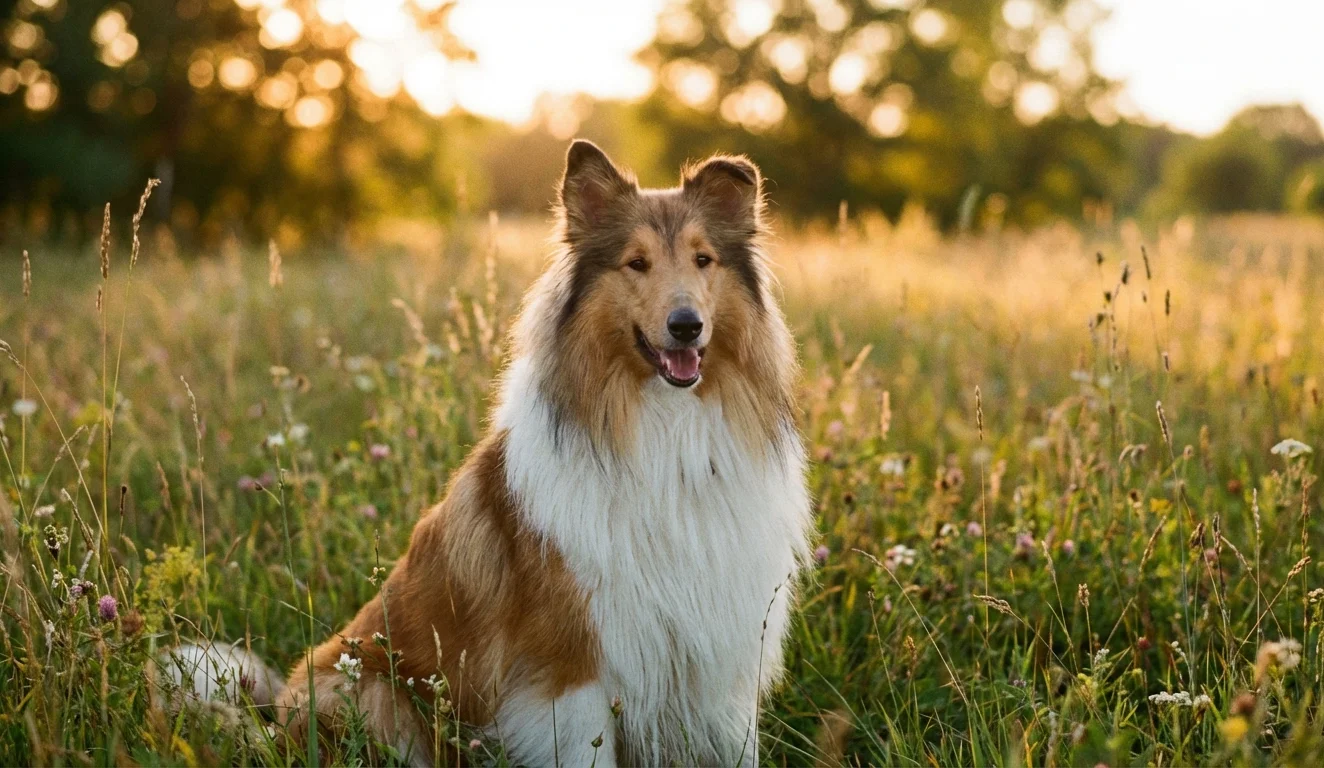
The Rough Collie is a medium-to-large herding dog that weighs 50-75 pounds, stands 22-26 inches tall, and lives 12-14 years. If you’re picturing Lassie right now, that’s exactly the dog we’re talking about. The 1943 film Lassie Come Home turned the Rough Collie into one of the most recognizable breeds on Earth. It also created expectations that real Collies have been quietly not meeting ever since, because no actual dog is going to rescue Timmy from a well every episode.
In Short: 50–75 lbs, 12–14 years. Moderate-to-high energy. Heavy shedder. Watch for Collie Eye Anomaly and Multidrug Sensitivity (MDR1 Gene). Great for families and first-time owners.
What the Lassie phenomenon did get right is the Rough Collie’s temperament. This is one of the gentlest, most intuitive breeds you can own. Rough Collies read emotions. They know when something is wrong before you’ve said a word. We think the Rough Collie is one of the most underappreciated family dogs available, less popular than it should be because people forgot about it after the Lassie craze died down. It’s calmer than a Border Collie, friendlier than a German Shepherd, and better with kids than almost anything in the herding group. The coat is a commitment, though. We won’t pretend otherwise.
Rough Collie at a Glance
| Trait | Details |
|---|---|
| Breed Group | Herding (AKC) |
| Height | Males: 24-26 in / Females: 22-24 in |
| Weight | Males: 60-75 lbs / Females: 50-65 lbs |
| Life Expectancy | 12-14 years |
| Coat | Long, dense double coat with harsh outer coat |
| Colors | Sable & White, Tricolor, Blue Merle, White |
| Temperament | Devoted, Graceful, Friendly, Loyal, Intelligent |
| Shedding | High |
| Energy Level | Moderate to High |
| Good With Kids | Yes (excellent) |
| Good With Cats | Yes |
| Good With Other Dogs | Yes |
| First-Time Owner Friendly | Yes |
History
The Rough Collie descends from herding dogs in the Scottish Highlands, where shepherds relied on agile, intelligent dogs to manage sheep across rugged terrain. The breed’s ancestors were smaller and less refined than today’s Collie, working dogs bred strictly for function in harsh terrain.
Everything changed when Queen Victoria visited Balmoral Castle in Scotland during the 1860s and fell in love with the Collie. Her enthusiasm turned the breed into a fashionable companion among British aristocracy practically overnight. Breeders began selecting for a more elegant appearance, the longer, narrower head, the fuller coat, the more upright carriage. The dog that emerged was taller and more beautiful than the original Highland herding dogs, though it retained much of the working temperament.
The breed came to America in the late 1800s and was one of the first breeds recognized by the AKC in 1885. J.P. Morgan, the financier, was an early Collie enthusiast and helped establish the breed among American elites. But it was Hollywood that truly defined the Rough Collie’s place in culture. The original Lassie Come Home film in 1943, followed by the long-running TV series, made the Rough Collie a household name. Breed registrations soared. Then, as with many breed fads, they gradually declined. Today the Rough Collie sits around #40 in AKC popularity, well-loved but no longer the sensation it once was.
Size and Appearance
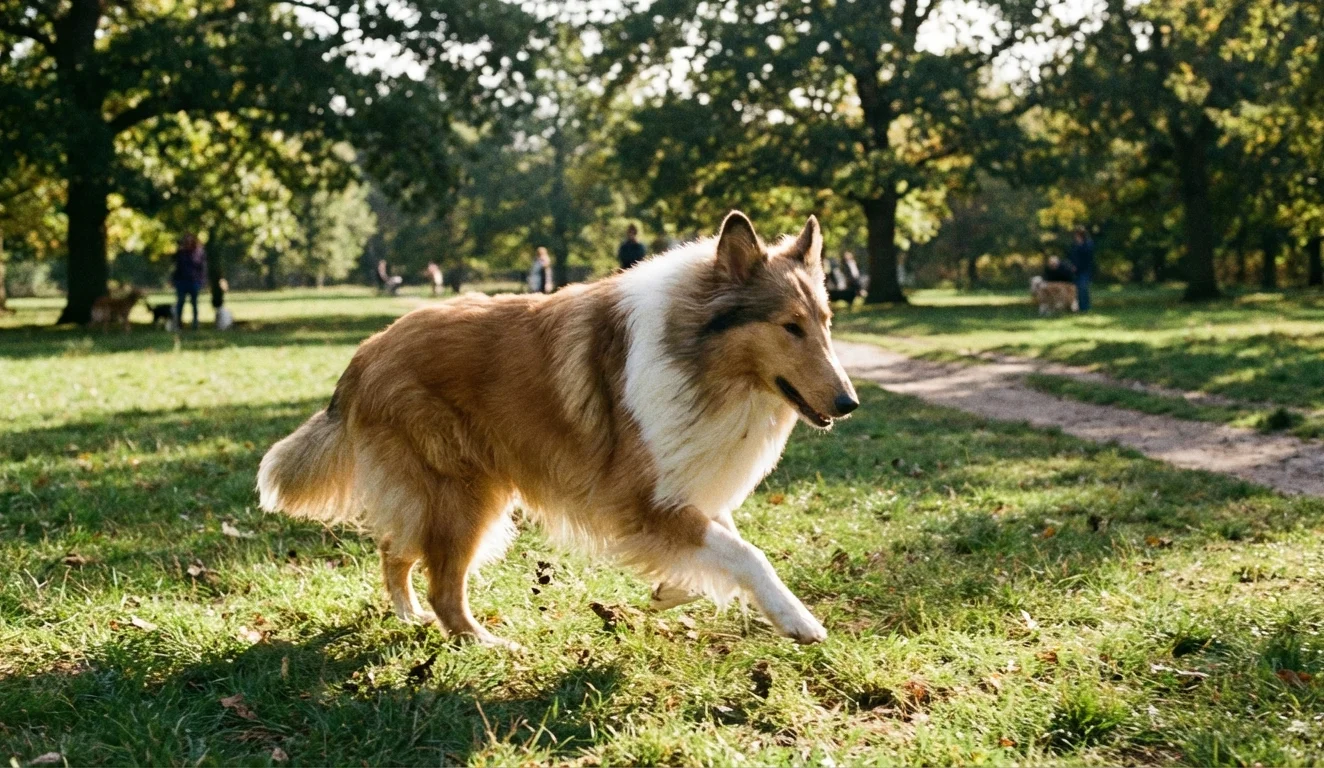
Rough Collies are larger than many people expect. Males stand 24-26 inches at the shoulder and weigh 60-75 pounds. Females are slightly smaller at 22-24 inches and 50-65 pounds. That’s a solidly medium-to-large dog, though the long coat can make them appear even bigger than they actually are.
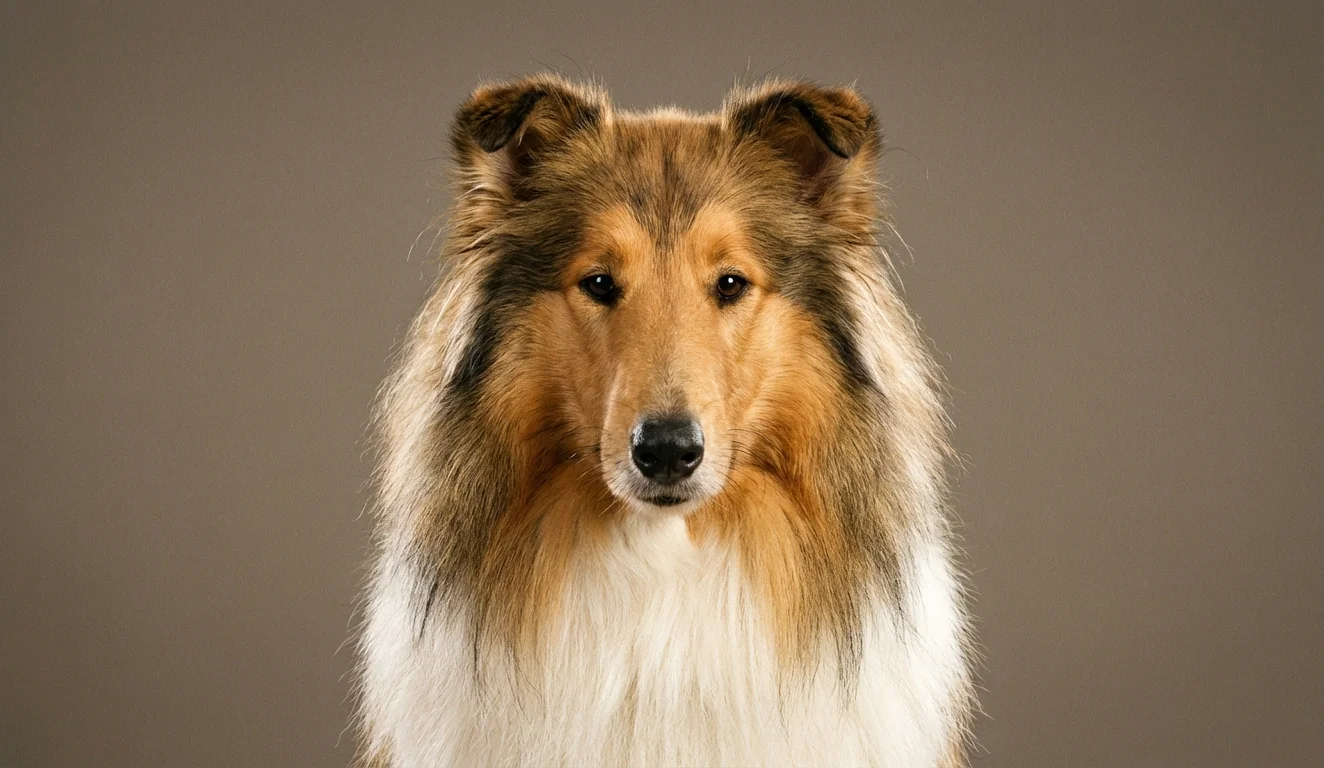
The coat is the Rough Collie’s most dramatic feature. It’s a long, dense double coat with a harsh outer layer and a soft, thick undercoat. The mane around the neck and chest is especially full, it’s called the “frill”, and gives the breed that majestic lion-like silhouette. Four coat colors are recognized: sable and white (the classic Lassie coloring), tricolor (black, white, and tan), blue merle (mottled blue-gray with white and tan), and white (predominantly white with sable, tricolor, or blue merle markings).
The head is long, lean, and wedge-shaped, a defining characteristic of the breed. The expression is important in the breed standard: a Rough Collie should look alert and intelligent, with a sweetness in the eyes. It’s a hard thing to quantify, but you know it when you see it.
Note: there’s also a Smooth Collie, which is the same breed in every way except coat length. Smooth Collies have a short, dense coat that’s dramatically easier to maintain. They’re less common and less recognizable, but worth considering if you love everything about the Collie except the grooming.
Rough Collie Temperament
The Rough Collie’s temperament is the breed’s greatest asset. These dogs are gentle, sensitive, and deeply attuned to their family’s emotional state. They’re the kind of dog that will sit quietly next to you when you’ve had a bad day, not because they were trained to, but because they noticed.
What Rough Collie temperament looks like at home:
- They’re devoted to their family without being clingy. A Rough Collie wants to be near you, but it’s not going to have a meltdown if you leave the room. They’re confident enough to handle reasonable amounts of alone time.
- They’re excellent with children. Genuinely excellent. The Rough Collie’s herding instinct manifests as a gentle protectiveness, they tend to watch over kids, keep track of them, and position themselves between children and perceived threats. It’s the Lassie instinct, and it’s real.
- They get along well with other dogs and with cats. This is relatively rare in the herding group, where prey drive or dog-selectivity is common. Rough Collies are the diplomats of the herding world.
- They bark. This is the trait that surprises people. Rough Collies have a high barking level and they will alert to everything. Mail carriers, visitors, noises outside, and sometimes things only they can hear. It’s manageable with training, but the instinct is strong.
Our opinion on the Rough Collie? This is the breed we’d recommend to someone who wants a smart, loyal dog but doesn’t want the intensity of a Border Collie or the stubbornness of an independent breed. The Rough Collie hits a sweet spot between intelligence and calmness that’s genuinely rare. The biggest challenge isn’t the temperament, it’s the coat and the barking.
Exercise Needs
Rough Collies need about 60 minutes of exercise per day. That’s less than a Border Collie or a sporting breed, and it’s one of the things that makes the Rough Collie more manageable as a family dog. They’re active without being obsessive about it.
Good exercise options for Rough Collies:
- Daily walks. Two 30-minute walks work well. The Rough Collie enjoys being outside and moving but doesn’t need to run at top speed for hours.
- Yard play. Fetch, chasing games, and general romping in the backyard count. Rough Collies are happy with this kind of unstructured activity in a way that more driven breeds aren’t.
- Hiking. Rough Collies are solid hiking companions on moderate trails. They have the stamina for long walks but aren’t built for extreme heat or scrambling over rocks (that coat and those long, lean legs aren’t ideal for technical terrain).
- Training sessions. Mental stimulation through obedience work, trick training, or rally counts toward their daily exercise needs. Rough Collies enjoy learning and will stay engaged through training sessions that last 15-20 minutes.
One important note: Rough Collies are sensitive to heat. That thick double coat is designed for Scottish winters, not Texas summers. In warm weather, exercise during cooler morning and evening hours, keep sessions shorter, and make sure fresh water is always available. Heat exhaustion is a real risk for heavily coated breeds.
Senior Rough Collies (8+ years) typically do well with 30-45 minutes of moderate daily activity, adjusted for any joint stiffness.
Grooming
Let’s be honest: grooming a Rough Collie is a significant commitment. That gorgeous coat doesn’t maintain itself.
Regular grooming schedule:
- Brush 2-3 times per week with a pin brush and metal comb. Work through the coat in sections, paying special attention to the areas that mat most, behind the ears, under the legs, around the collar area, and in the “pants” (the thick fur on the rear legs).
- During seasonal coat blowouts (twice a year, usually spring and fall), brush daily. The undercoat comes out in clumps and will mat solid if you don’t stay on top of it.
- Bathe every 6-8 weeks. Make sure to brush out any tangles before bathing, water tightens mats and makes them nearly impossible to remove.
- Nail trim every 2-3 weeks.
- Ear check weekly.
- Teeth brushing 2-3 times per week.
Professional grooming isn’t strictly necessary if you’re willing to do the brushing yourself, but some owners opt for a professional grooming session every few months, especially during blowout season. Budget $60-$100 per session for a dog this size with this much coat.
Shedding is heavy. There’s no getting around it. Rough Collies shed year-round, and during blowouts you’ll be pulling enough hair off the brush to build a second dog. A good vacuum cleaner is not optional, it’s required equipment.
Should you shave a Rough Collie? No. The double coat actually insulates against heat as well as cold, and shaving can damage the coat texture permanently. Keep the coat well-brushed and provide shade and cool spaces instead.
Rough Collie Health Issues
Rough Collies live 12-14 years and are generally healthy, but the breed has several genetic conditions worth understanding.
Collie Eye Anomaly (CEA)
CEA is the most common health concern in Rough Collies. It’s a congenital condition affecting the development of the eye’s choroid layer, present from birth. The severity ranges from mild (small areas of underdevelopment with no vision impact) to severe (retinal detachment, colobomas, or blindness). A genetic test is available and responsible breeders screen for it. Treatment costs range from $500-$2,000 depending on severity, though many mild cases require no treatment at all.
Multidrug Sensitivity (MDR1 Gene)
This is critically important for every Rough Collie owner to know about. A significant percentage of Rough Collies carry a mutation in the MDR1 gene that makes them dangerously sensitive to certain common drugs, including ivermectin (found in many heartworm preventives), loperamide (Imodium), and some anesthetics. A dog with this mutation can have life-threatening reactions to medications that are routine for other breeds. Testing costs just $50-$200 and should be done on every Rough Collie. Tell your vet. Write it on the chart. Tattoo it on your arm if you have to. This one matters.
Progressive Retinal Atrophy (PRA)
PRA causes gradual vision loss leading to blindness. DNA tests can identify carriers. Affected dogs adapt well to vision loss in familiar environments, but the condition is irreversible. Costs run $2,000-$3,000 for diagnosis and management.
Dermatomyositis
A hereditary inflammatory disease affecting the skin and sometimes the muscles. It typically appears in puppies and young dogs, causing skin lesions, hair loss, and in severe cases, muscle wasting. Treatment is ongoing and costs $500-$2,000 depending on severity. The condition varies widely, some dogs have mild, manageable symptoms while others are significantly affected.
Bloat (Gastric Dilatation-Volvulus)
As a deep-chested breed, the Rough Collie is at moderate risk for bloat. The stomach fills with gas and can twist, cutting off blood flow. It’s a veterinary emergency requiring immediate surgery. Treatment costs $2,000-$7,500. Feeding smaller, more frequent meals and avoiding vigorous exercise immediately after eating may reduce risk.
Training
Rough Collies are highly trainable dogs that respond beautifully to positive reinforcement. They’re eager to please, sensitive to their handler’s tone, and retain commands well. If you’ve never trained a herding breed before, the Rough Collie is one of the most forgiving places to start.
What works in Rough Collie training:
- Positive reinforcement is essential. Rough Collies are sensitive dogs that shut down under harsh correction. A raised voice or physical correction will damage your relationship with this breed. Keep it positive, keep it encouraging.
- Socialization during puppyhood prevents the nervousness that some Collies develop. Expose your puppy to different environments, people, and sounds between 8-16 weeks. A well-socialized Collie is confident and friendly. A poorly socialized one can become timid and reactive.
- Address barking proactively. Teach a “quiet” command early and reward silence. Rough Collies bark because their herding instinct tells them to alert the flock (that’s you) to changes in the environment. You can manage it, but you won’t eliminate it entirely.
- Channel the herding brain. Rough Collies enjoy having tasks and learning new things. Rally obedience, herding trials (they absolutely can still herd), and trick training all satisfy the breed’s intelligence.
- Be consistent but patient. Rough Collies learn quickly and want to get it right. If your dog seems confused, the problem is usually the communication, not the dog.
Cost
Purchase Price
A Rough Collie puppy from a reputable breeder typically costs $800-$2,000. Show-quality puppies from champion bloodlines may cost more, particularly in sable and white or blue merle. Working-line Collies (less common now) fall at the lower end of the range.
Collie rescue organizations are active in most regions, with adoption fees typically $250-$500. Because the breed is less trendy than it once was, rescue Collies are available but not as common as, say, rescue Labs.
Monthly Costs
| Expense | Monthly Estimate |
|---|---|
| Food (high-quality kibble) | $40-$65 |
| Preventive vet care (averaged) | $15-$30 |
| Pet insurance | $30-$55 |
| Treats and chews | $10-$20 |
| Miscellaneous (toys, supplies, grooming tools) | $10-$20 |
| Total | $90-$175 |
If you use professional grooming services, add $30-$50 per month averaged over the year.
First-Year Costs
Budget $2,500-$4,500 for the first year, including purchase price, veterinary care, vaccinations, spay/neuter, supplies, and grooming tools. MDR1 genetic testing ($50-$200) should be done early, it’s cheap insurance against a potentially life-threatening medication reaction.
Is a Rough Collie Right for You?
A Rough Collie is a great fit if you:
- You want a gentle, intelligent dog that’s genuinely great with kids and other pets
- You’re willing to commit to regular brushing (2-3 times weekly, daily during blowouts)
- You want a loyal companion without the extreme energy demands of breeds like Border Collies or Belgian Malinois
- You’re a first-time dog owner looking for a trainable, forgiving breed
- You have a house with a yard (not strictly required, but the breed does better with some outdoor space)
A Rough Collie is probably NOT right if you:
- Dog hair on everything is a dealbreaker, the shedding is real and constant
- You want a quiet dog, Rough Collies bark, and managing it requires ongoing training
- You live in a very hot climate and can’t provide air-conditioned indoor living (the heavy coat makes heat a real concern)
- You want a guard dog, Rough Collies will bark at strangers but they’re not protective in an aggressive way
- You want a dog you can leave at the groomer once a month and forget about in between
The Rough Collie deserves more attention than it gets. This is a breed that combines intelligence, gentleness, and loyalty in a way that very few other breeds match. Yes, there’s the coat. Yes, there’s the barking. But in exchange, you get a dog that will watch over your kids like they’re its own, greet every guest with dignity, and lie at your feet at the end of the day with a quiet contentment that makes you glad you came home. Lassie was fiction. But the temperament behind the character wasn’t.
Related Breeds
If you’re considering this breed, you might also want to look at:
FAQ
Are Rough Collies good family dogs?
Rough Collies are among the best family dogs in the herding group. They’re naturally gentle with children, tolerant of noise and chaos, and protective without being aggressive. The breed’s herding instinct shows up as a watchful, nurturing presence, they tend to keep track of family members and position themselves near kids. They also get along well with other dogs and cats, making them ideal for multi-pet households.
Do Rough Collies bark a lot?
Yes, Rough Collies are vocal dogs with a high barking tendency. They bark to alert, to communicate, and sometimes out of boredom or excitement. The bark itself is sharp and carrying, neighbors will hear it. Early training to teach a “quiet” command and rewarding calm behavior helps significantly, but expect some level of barking throughout the dog’s life. It’s a breed characteristic, not a training failure.
What is MDR1 and why does it matter for Collies?
MDR1 (Multi-Drug Resistance 1) is a genetic mutation that affects how certain drugs are processed in the body. A large percentage of Rough Collies carry this mutation, making them dangerously sensitive to medications including ivermectin, loperamide, and certain anesthetics. A simple DNA test can determine your Collie’s MDR1 status. Every Rough Collie should be tested, and the results should be in your dog’s veterinary file. This is not optional, it’s a safety issue that could save your dog’s life.
How much grooming does a Rough Collie need?
Expect to brush your Rough Collie 2-3 times per week under normal conditions, and daily during the biannual coat blowouts that last 2-3 weeks each. A thorough brushing session takes 20-30 minutes. Professional grooming is optional but helpful, especially during heavy shedding periods. The coat should never be shaved, the double coat provides insulation in both hot and cold weather, and shaving can permanently damage coat texture.
What’s the difference between a Rough Collie and a Border Collie?
Despite sharing the “Collie” name and Scottish herding heritage, these are very different dogs. Rough Collies are larger (50-75 lbs vs. 27-55 lbs), calmer, and have moderate energy needs (60 minutes/day vs. 90+). Border Collies are significantly more intense, with an almost obsessive work drive that the Rough Collie doesn’t share. Rough Collies are better suited to families and first-time owners. Border Collies need experienced handlers who can provide constant mental stimulation. The Rough Collie is the one you get when you want a smart, gentle family dog. The Border Collie is the one you get when you want a canine coworker.