Labradoodle Breed Guide: The Original Doodle, Explained (2026)
The Labradoodle started the whole doodle craze. Here's what that actually means for coat types, health, grooming costs, and whether one is right for you.
The Labradoodle is a cross between a Labrador Retriever and a Poodle, bred in three sizes (standard, medium, and miniature) with a typical lifespan of 12-15 years. Labradoodles weigh between 15 and 65 pounds depending on size, and they’re known for their friendly temperament, high intelligence, and low-to-moderate shedding coats that come in wool, fleece, or hair textures.
In Short: 45–65 lbs, 12–14 years. High energy. Low-shedding (often called hypoallergenic, though no dog truly is). Watch for Ear Infections. Great for families and first-time owners.
If you’ve been researching Labradoodles, you’ve probably noticed that half the internet can’t agree on anything about them. Are they hypoallergenic? (Not exactly.) Are they the same as Goldendoodles? (Nope.) And why does the size range go from 15 to 65 pounds? We’ll sort all of that out.
This guide breaks down everything from Labradoodle coat types to real-world health data, so you’ll know exactly what you’re signing up for.
Labradoodle at a Glance
| Trait | Details |
|---|---|
| Breed Type | Designer cross (Labrador Retriever x Poodle) |
| Size Range | Standard: 50-65 lbs / Medium: 30-45 lbs / Mini: 15-25 lbs |
| Height | Standard: 21-24 in / Medium: 17-20 in / Mini: 14-16 in |
| Lifespan | 12-15 years |
| Coat Types | Wool, fleece, or hair |
| Shedding | Low (wool/fleece) to moderate (hair coat) |
| Energy Level | High |
| Trainability | Very high |
| Good With Kids | Yes |
| AKC Recognized | No (not a standardized breed) |
History and Origin
The Labradoodle’s origin story is more intentional than most designer breeds. In 1989, Wally Conron, the breeding manager for Royal Guide Dogs Australia, crossed a Standard Poodle with a Labrador Retriever. The goal was specific: create a guide dog with a low-shedding coat for a visually impaired woman whose husband had severe dog allergies.
That first litter produced three puppies. One of them, a dog named Sultan, had both the right temperament for guide work and a coat that didn’t trigger the husband’s allergies. Sultan went on to become a successful guide dog, and the Labradoodle concept took off from there.
Conron has been publicly vocal about his mixed feelings on the outcome. In a 2019 interview with ABC News Australia, Conron called the Labradoodle his “life’s regret”, not because of the cross itself, but because the massive popularity it sparked led to irresponsible breeding by puppy mills looking to cash in on the “doodle” trend.
That backstory matters because it shapes what you should know as a buyer: the Labradoodle isn’t a standardized breed with predictable genetics. The Australian Labradoodle Association has been working toward breed standardization since the 1990s, introducing Cocker Spaniel and Irish Water Spaniel lines to create a more consistent multi-generation dog. But an early-generation Labradoodle (F1) is still a 50/50 genetic coin flip between its Labrador and Poodle parents.
Labradoodle Size and Appearance
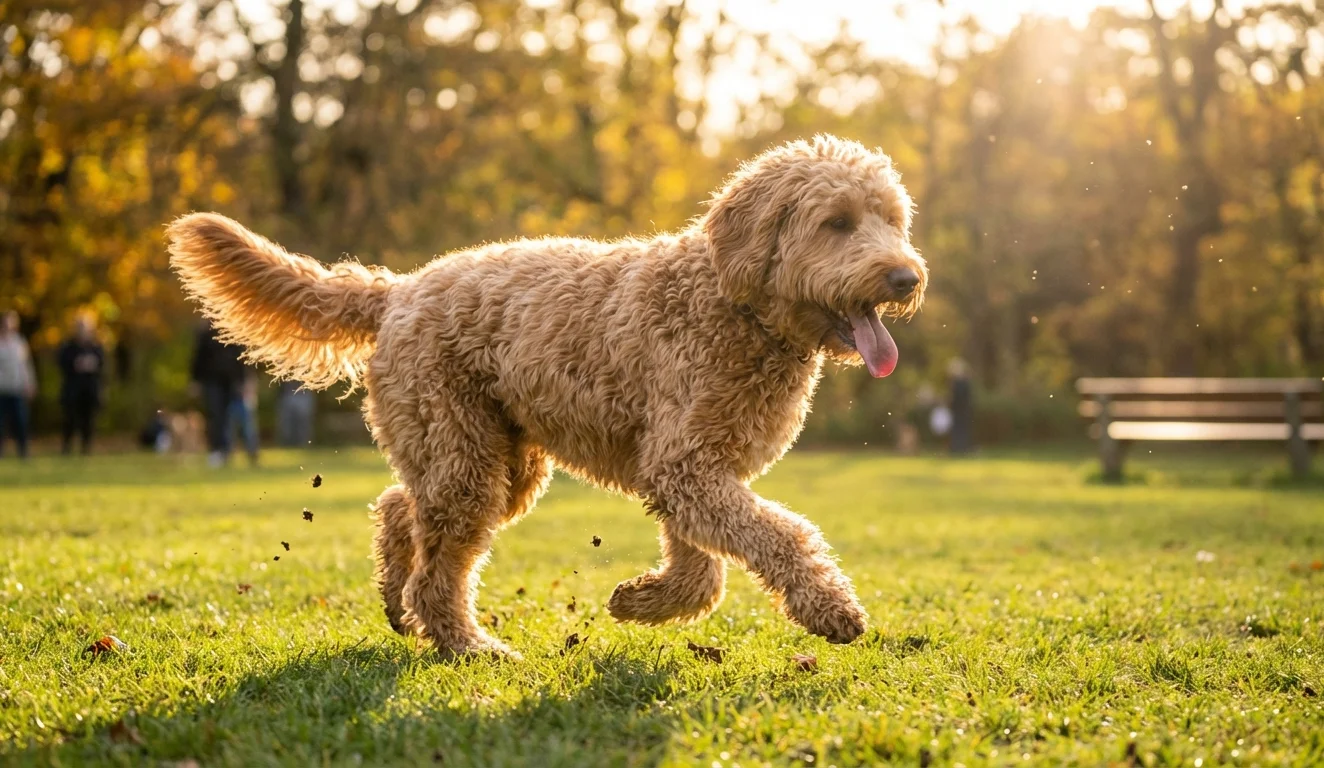
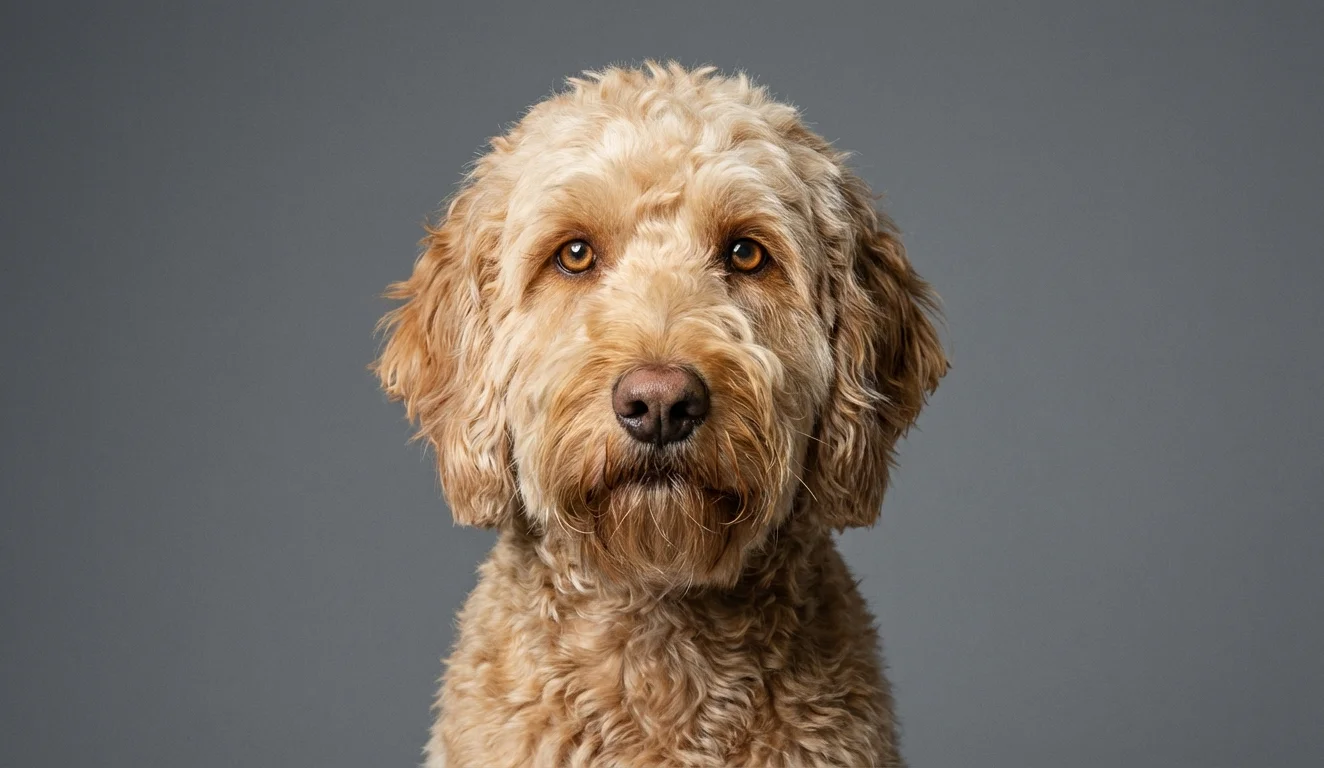
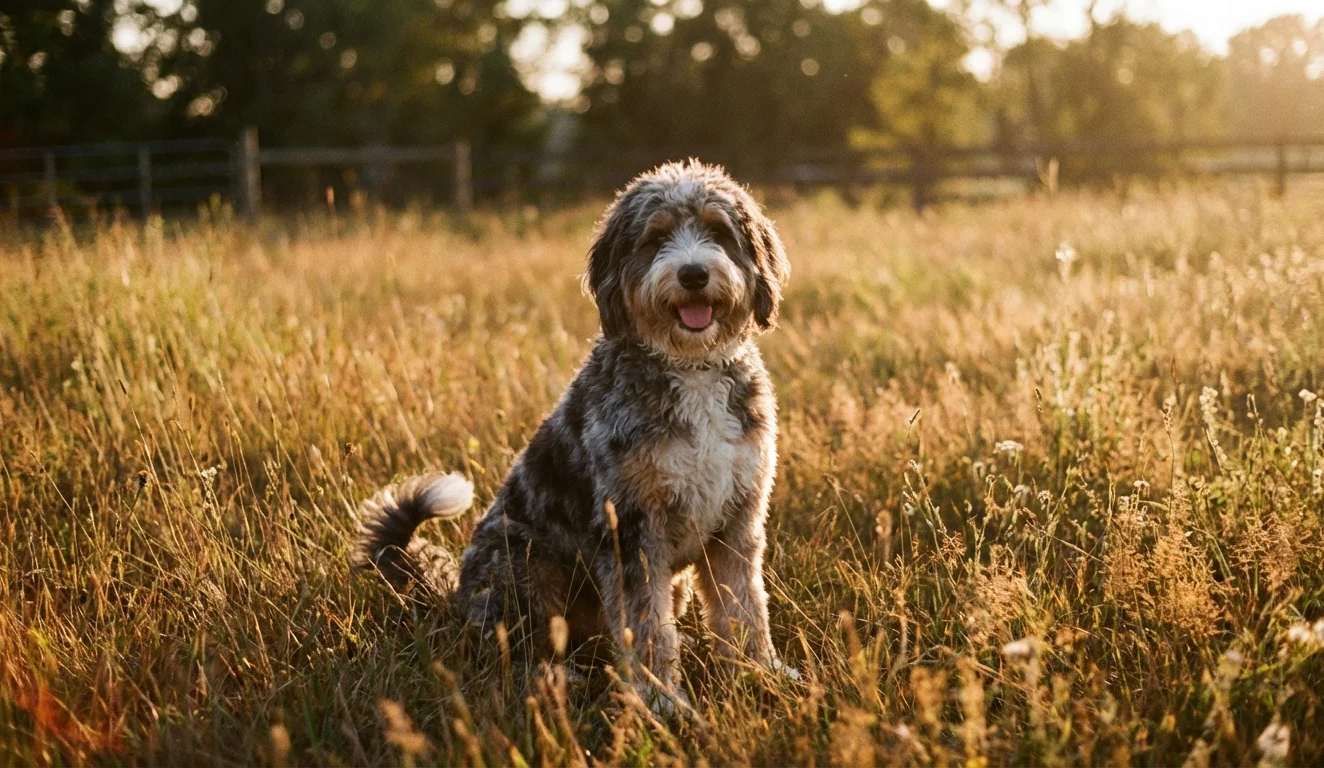
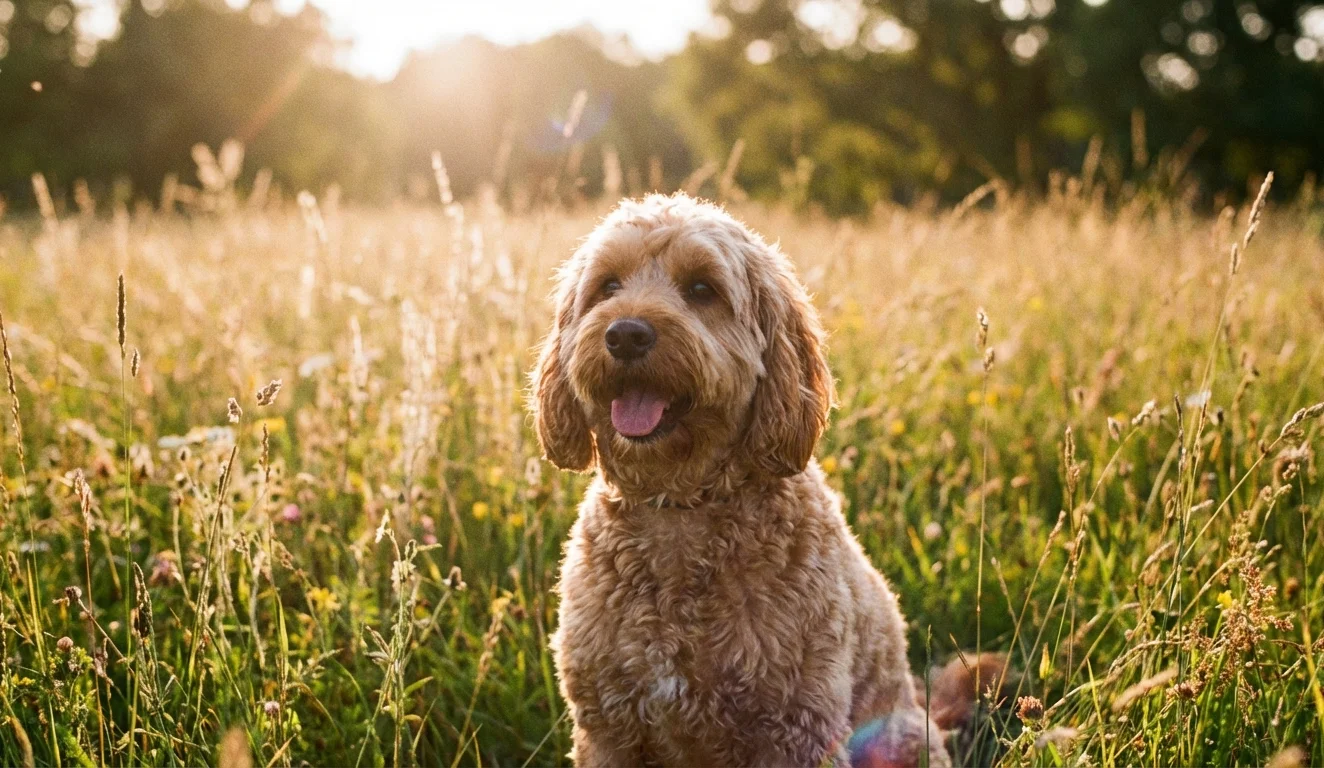
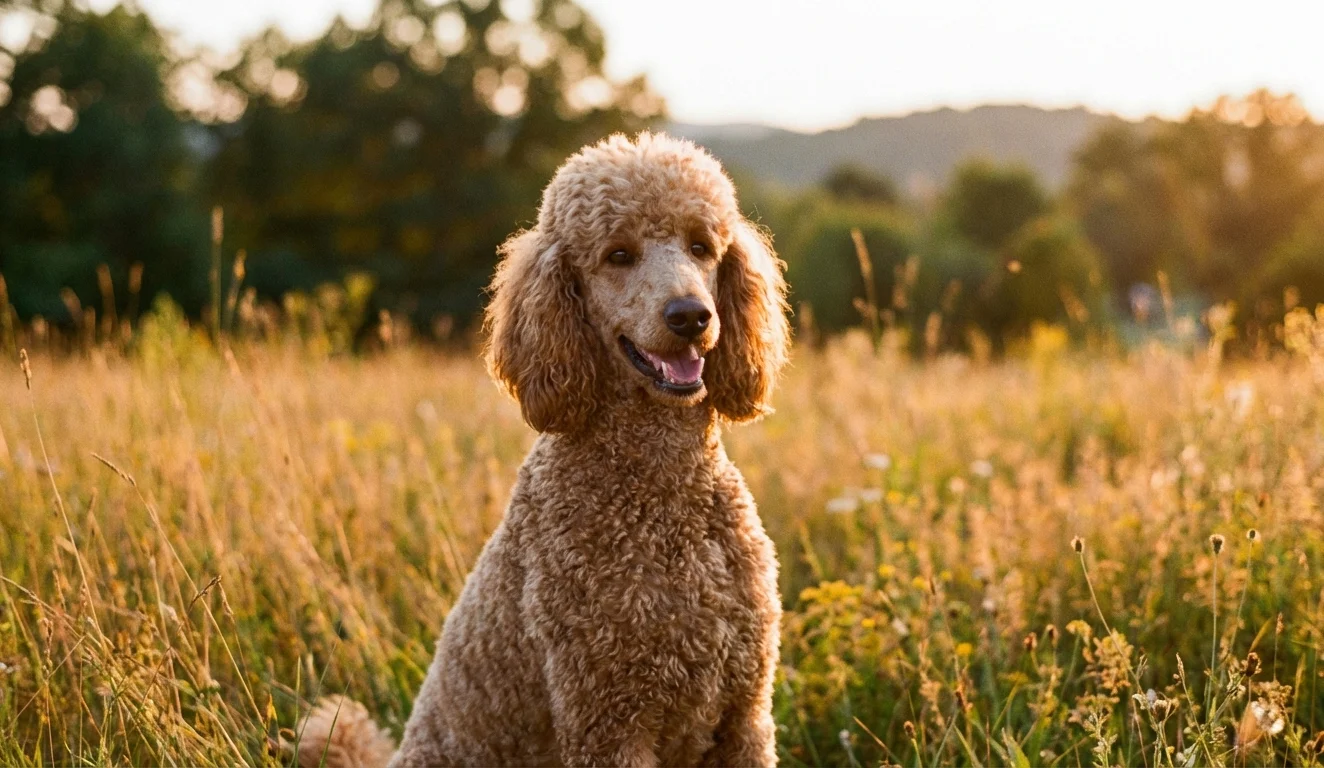
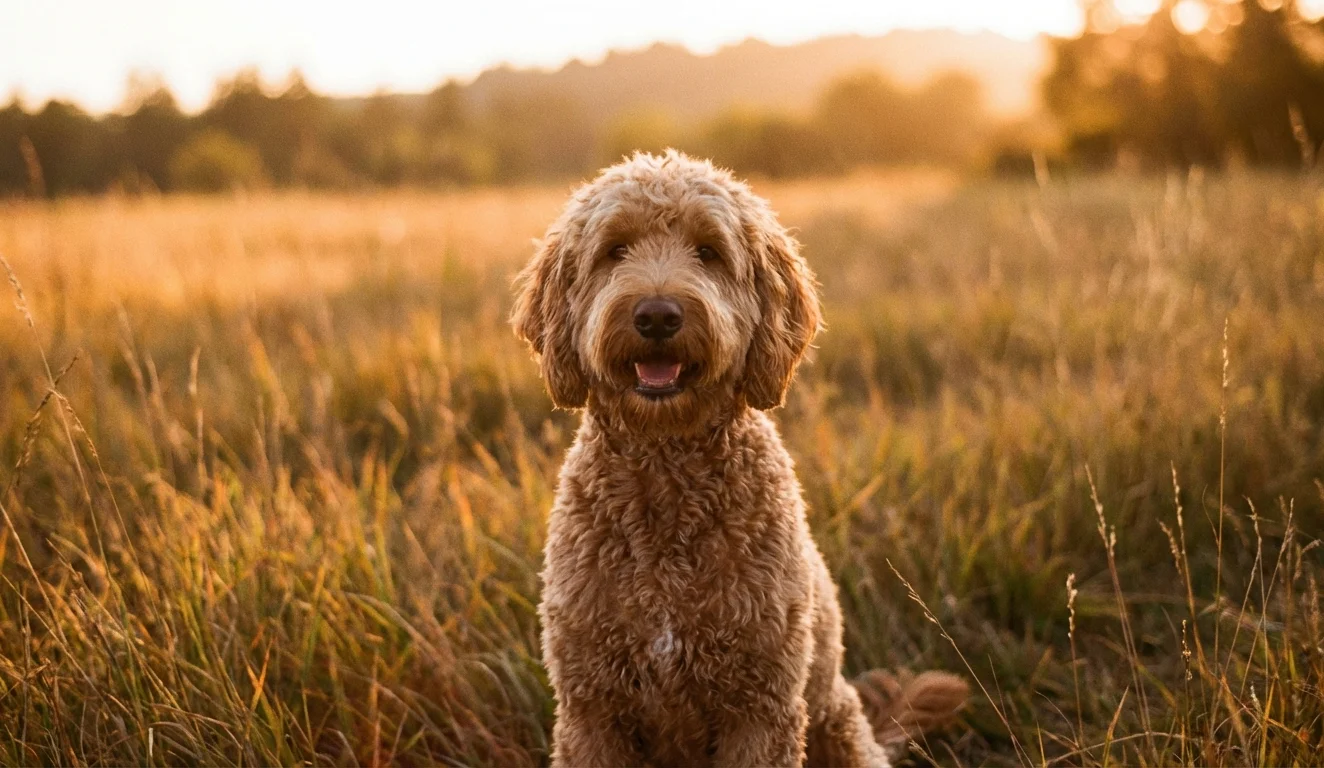
One Labradoodle can look wildly different from the next. Size, coat texture, and even face shape vary depending on the generation and which parent breed shows up more in the genetics.
Three Size Categories
- Standard Labradoodle: 50-65 pounds, 21-24 inches tall. The original size, bred from Standard Poodles. Best suited for active families with space.
- Medium Labradoodle: 30-45 pounds, 17-20 inches tall. Bred from Miniature Poodles crossed with Labradors. A popular middle ground for suburban living.
- Miniature Labradoodle: 15-25 pounds, 14-16 inches tall. Bred from Toy or small Miniature Poodles. More adaptable to apartments but still needs real exercise.
Three Coat Types
This is where Labradoodle ownership gets interesting, and where most of the grooming confusion lives.
- Wool coat: Tightly curled, similar to a Poodle. The lowest-shedding option and the closest thing to “allergy-friendly.” Wool-coated Labradoodles require the most grooming, professional cuts every 4-6 weeks.
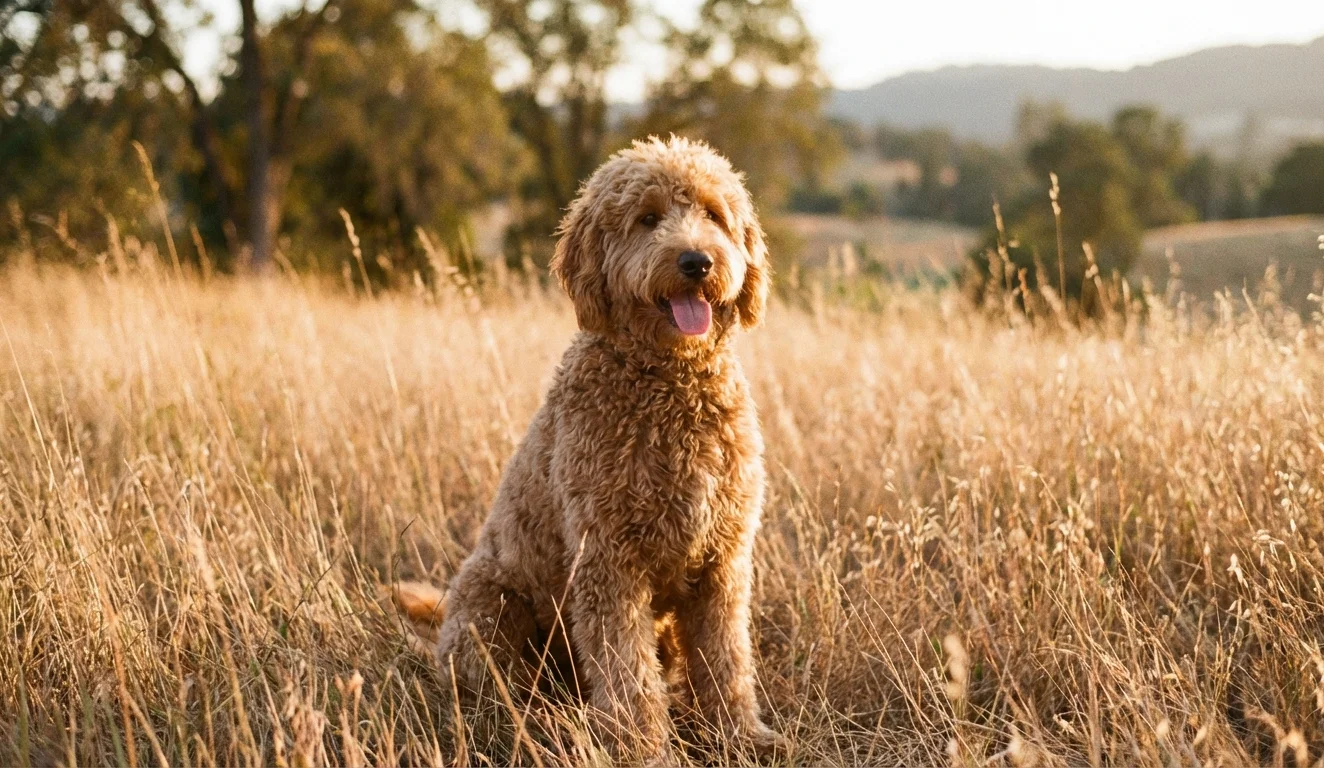
- Fleece coat: Soft, wavy, and flowing. The most popular Labradoodle coat type. Fleece sheds minimally and needs brushing 2-3 times per week to prevent matting.
- Hair coat: Straighter texture, more Labrador-like. Hair-coated Labradoodles shed the most and are least likely to be tolerated by allergy sufferers. But the hair coat requires the least grooming.
You can’t reliably predict coat type in an F1 (first-generation) Labradoodle puppy. Multi-generation Labradoodles bred specifically for wool or fleece coats are more predictable, but they also tend to cost more.
Labradoodle Temperament
Labradoodles consistently rank among the most people-oriented crossbreeds. The combination of Labrador friendliness and Poodle intelligence produces a dog that’s social, eager to please, and quick to learn.
Here’s what that actually looks like day-to-day:
- Intelligence: Poodles rank as the 2nd most intelligent dog breed and Labrador Retrievers rank 7th according to Dr. Stanley Coren’s The Intelligence of Dogs research. Labradoodles inherit that cognitive ability, which means they pick up commands fast, but they also get bored fast if under-stimulated.
- Social drive: Labradoodles bond strongly with their families and generally get along well with other dogs, cats, and children. The flip side of that social drive is that Labradoodles are prone to separation anxiety. A 2020 study published in Scientific Reports found that breeds with high sociability scores had correspondingly higher rates of separation-related distress.
- Energy and enthusiasm: Labradoodles are not calm dogs. They mellow out somewhat after age 2-3, but a Labradoodle under two years old is a high-energy commitment. Expect zoomies, counter-surfing, and an opinion about everything.
- Mouthiness: Thanks to the Labrador side, young Labradoodles are mouthy. They want to carry things, chew things, and put things in their mouth. This is manageable with proper redirection and chew toys, but it surprises owners who expected a more Poodle-like demeanor.
Labradoodles aren’t aggressive dogs, but they also aren’t great guard dogs. A Labradoodle will likely greet a burglar with a wagging tail and a tennis ball.
Exercise Needs
A Labradoodle needs a minimum of 60 minutes of daily exercise, and most do better with 90 minutes. Both parent breeds were developed as working dogs, Labradors for retrieving game and Poodles for waterfowl work, so the Labradoodle inherits real athletic ability and endurance.
Activities Labradoodles love:
- Swimming: Both Labradors and Poodles were bred for water work. Most Labradoodles take to swimming naturally and it’s excellent low-impact exercise, especially for Labradoodles with joint concerns.
- Fetch: Labradoodles have strong retrieving instincts. A good 20-minute fetch session covers a surprising amount of ground.
- Agility: Labradoodles excel at agility courses. Their intelligence and athleticism make them naturals, and the mental stimulation helps as much as the physical exercise.
- Hiking: Standard and medium Labradoodles are great trail companions with the stamina for multi-hour hikes.
What happens when a Labradoodle doesn’t get enough exercise? Destructive behavior. Labradoodles that are under-exercised chew furniture, dig up yards, bark excessively, and develop anxious behaviors. An exercised Labradoodle is a well-behaved Labradoodle, that’s not a cliche, it’s the honest math of this cross.
Mental stimulation matters just as much as physical activity. Puzzle feeders, training sessions, and nose work games keep a Labradoodle’s brain engaged. Fifteen minutes of trick training can tire out a Labradoodle as effectively as a 30-minute walk.
Grooming
Grooming is the area where many new Labradoodle owners get caught off guard. The low-shedding coat that attracted you to the breed comes with a maintenance cost.
Grooming by Coat Type
Wool coat (highest maintenance):
- Professional grooming every 4-6 weeks ($60-$100 per session)
- Daily brushing during humid months to prevent matting
- Regular ear cleaning (weekly), the curly hair traps moisture in the ear canal
- Expect to spend $720-$1,200 per year on grooming alone
Fleece coat (moderate maintenance):
- Professional grooming every 6-8 weeks ($50-$90 per session)
- Brushing 2-3 times per week
- Ear cleaning every 1-2 weeks
- Annual grooming cost: $450-$900
Hair coat (lowest maintenance):
- Professional grooming every 8-12 weeks ($40-$70 per session)
- Weekly brushing
- Regular shedding management (lint rollers become your best friend)
- Annual grooming cost: $200-$500
Grooming Tips
- Start grooming routines when your Labradoodle is a puppy. A Labradoodle that’s comfortable with brushing, nail trims, and ear cleaning at 12 weeks will be dramatically easier to manage as an adult.
- Invest in a good slicker brush and a metal greyhound comb. These two tools handle 90% of at-home Labradoodle coat maintenance.
- Check ears weekly. Labradoodles are prone to ear infections because their floppy ears and curly inner-ear hair trap moisture. The American Kennel Club recommends routine ear inspection for all Poodle-cross breeds.
Labradoodle Health Issues
Labradoodles are generally healthy dogs, but they’re susceptible to conditions inherited from both parent breeds. Responsible breeders test for these before breeding.
Common Health Conditions
Hip dysplasia: According to the Orthopedic Foundation for Animals (OFA), approximately 12% of Labrador Retrievers and 12.3% of Standard Poodles evaluated show evidence of hip dysplasia. Labradoodles carry risk from both sides. A reputable breeder should provide OFA or PennHIP clearances for both parents.
Elbow dysplasia: OFA data shows elbow dysplasia in roughly 11% of evaluated Labrador Retrievers. Labradoodles, particularly standard-sized Labradoodles, inherit this risk. Symptoms include forelimb lameness, especially after exercise.
Progressive Retinal Atrophy (PRA): PRA is an inherited eye condition that causes gradual vision loss and eventual blindness. Both Labradors and Poodles carry PRA genes. DNA testing can identify carriers before breeding. Ask any breeder for OptiGen or Embark test results showing PRA-clear status.
Exercise-Induced Collapse (EIC): EIC is a genetic condition primarily inherited from the Labrador side. Affected Labradoodles experience sudden muscle weakness and collapse during intense exercise, typically after 5-20 minutes of strenuous activity. A study published in Nature Genetics identified the DNM1 gene mutation responsible. DNA testing is available through Embark and Paw Print Genetics, and responsible breeders screen for EIC before producing litters.
Ear infections: Labradoodles with wool or fleece coats are especially prone to otitis externa (outer ear infections). A 2018 study in Veterinary Dermatology found that dogs with pendulous ears and hair growth in the ear canal had significantly higher rates of ear infections compared to erect-eared breeds. Preventive ear cleaning and keeping ear canals dry after swimming can reduce infection frequency.
Addison’s disease: Also called hypoadrenocorticism, Addison’s disease affects the adrenal glands and is more common in Standard Poodles than the general dog population. According to data from the Poodle Club of America, Standard Poodles have an elevated genetic predisposition for Addison’s disease. Symptoms include lethargy, vomiting, and poor appetite, and the condition is manageable with lifelong medication once diagnosed.
Health Testing Checklist for Breeders
Before purchasing a Labradoodle puppy, ask the breeder for:
- OFA or PennHIP hip evaluation (both parents)
- OFA elbow evaluation (both parents)
- PRA genetic test, clear status (both parents)
- EIC genetic test, clear status (both parents)
- Ophthalmologist exam (CERF or OFA Eye)
- Cardiac clearance
Any breeder who won’t provide these results, or doesn’t know what they are, is a red flag.
Training
Labradoodles are among the easiest crossbreeds to train, and that’s not just opinion, it’s the direct result of combining two of the top ten most trainable breeds in the world.
What makes Labradoodle training straightforward:
- High food motivation (inherited from the Labrador side)
- Desire to please their handler
- Quick to connect behavior with reward
- Responsive to positive reinforcement
Where Labradoodles shine beyond basic obedience:
- Therapy dog work: Labradoodles’ calm-under-pressure temperament and affinity for people make them excellent therapy dogs. Many Labradoodles are certified through organizations like Pet Partners and Alliance of Therapy Dogs.
- Service dog work: The original purpose of the Labradoodle cross. Labradoodles still serve as guide dogs, hearing dogs, and psychiatric service dogs through programs like Australian Cobberdog organizations and private trainers.
- Search and rescue: The Labradoodle’s strong nose (thanks to the Labrador parent) combined with Poodle athleticism makes some Labradoodles effective search-and-rescue candidates.
Training pitfalls to watch for:
- Labradoodles can develop a stubborn streak around adolescence (6-12 months). Stay consistent.
- High intelligence means a Labradoodle will test boundaries. If you let something slide once, a Labradoodle will remember.
- Socialization before 16 weeks is critical. Expose your Labradoodle puppy to different people, dogs, sounds, and environments early.
Cost
Let’s talk real numbers, because Labradoodle ownership isn’t cheap.
Purchase Price
- Reputable breeder: $1,500-$3,000 for a health-tested Labradoodle puppy. Multi-generation Australian Labradoodles from established breeding programs can run $3,000-$4,500.
- Adoption/rescue: $200-$500 through Labradoodle-specific rescues like the International Doodle Owners Group (IDOG) or Doodle Rescue Collective. Availability is limited, so expect a wait.
Ongoing Monthly Costs
| Expense | Monthly Cost |
|---|---|
| High-quality food | $60-$120 |
| Pet insurance | $40-$70 |
| Grooming (averaged) | $50-$100 |
| Preventive meds (flea/tick/heartworm) | $25-$50 |
| Toys and chews | $15-$30 |
| Total | $190-$370/month |
First-Year Costs
The first year with a Labradoodle puppy tends to be the most expensive. Between the purchase price, spay/neuter surgery ($300-$600), initial vaccinations ($150-$300), and supplies (crate, bed, leash, food bowls, roughly $200-$400), expect to spend $2,500-$5,000+ in year one before monthly costs even factor in.
After year one, the average annual cost of owning a Labradoodle settles to approximately $2,300-$4,400 depending on size, coat type, and insurance coverage.
Labradoodle vs Goldendoodle
This is one of the most-searched comparisons in the doodle world, and for good reason, the two crosses share a lot of overlap. But there are real differences.
| Trait | Labradoodle | Goldendoodle |
|---|---|---|
| Parent breeds | Labrador Retriever x Poodle | Golden Retriever x Poodle |
| Energy level | High (more intense) | High (slightly more mellow) |
| Trainability | Very high, responds well to structure | Very high, more eager to please |
| Coat shedding | Low to moderate | Low to moderate |
| Temperament | Friendly, active, slightly more independent | Friendly, affectionate, slightly more clingy |
| With strangers | Social but can be reserved initially | Social and immediately friendly |
| Athletic ability | Higher, more drive and stamina | Moderate, happy with less intensity |
| Size range | 15-65 lbs | 15-90 lbs |
| Common health issues | Hip/elbow dysplasia, PRA, EIC | Hip dysplasia, PRA, heart conditions |
| Price range | $1,500-$3,000 | $1,500-$3,500 |
Honestly, the differences are more subtle than the internet makes them. Labradoodles tend to be a bit more athletic and independent. Goldendoodles tend to be a bit more mellow and attached to you at all times. (Our Goldendoodle Winston is basically velcro with fur.) Both are great family dogs. Pick the one that matches your energy level.
If you want a running partner or agility competitor, a Labradoodle may be the better match. If you want a dog that’s content to lounge with you after a moderate walk, a Goldendoodle might edge out slightly.
Is a Labradoodle Right for You?
A Labradoodle is a great fit if you:
- Have 60-90 minutes daily for exercise (walks, fetch, swimming, training)
- Can commit to regular grooming (either at home or professional)
- Want a highly trainable, social dog
- Have a family environment, Labradoodles thrive with people around
- Are prepared for the financial commitment ($190-$370/month)
A Labradoodle might not be right if you:
- Work long hours and the dog would be home alone 8+ hours daily (separation anxiety risk is real)
- Want a low-maintenance coat with minimal grooming
- Prefer a calm, low-energy dog
- Have severe dog allergies and need a guaranteed hypoallergenic dog (no Labradoodle can guarantee that)
- Want a predictable, standardized breed with AKC recognition
A Labradoodle that gets enough exercise and training is one of the most enjoyable dogs you’ll ever live with. A bored, under-exercised Labradoodle will express its feelings through your furniture. It’s really that simple.
Related Breeds
If you’re considering this breed, you might also want to look at:
FAQ
How long do Labradoodles live?
Labradoodles have an average lifespan of 12-15 years. Miniature Labradoodles tend to live longer than standard-sized Labradoodles, which is consistent with the general pattern in dogs where smaller body size correlates with longer lifespan. Factors that most influence a Labradoodle’s longevity include genetics (health-tested parents), maintaining a healthy weight, regular veterinary care, and consistent daily exercise.
Are Labradoodles hypoallergenic?
No dog breed is truly hypoallergenic, including the Labradoodle. Labradoodles with wool or fleece coats produce less dander and shed less hair than many breeds, which reduces allergic reactions for some people. But the protein that triggers allergies (Can f 1) is found in dog saliva and skin, not just fur. A 2011 study published in the American Journal of Rhinology & Allergy found no significant difference in allergen levels in homes with so-called “hypoallergenic” dogs compared to other breeds. If you have dog allergies, spend time with a Labradoodle before committing to purchase one.
Do Labradoodles shed?
Labradoodle shedding depends entirely on coat type. Wool-coated Labradoodles shed very little and are the closest to non-shedding. Fleece-coated Labradoodles shed minimally, loose hair tends to get caught in the coat rather than falling on furniture, which is why regular brushing is required to prevent matting. Hair-coated Labradoodles shed moderately, similar to a Labrador Retriever. First-generation (F1) Labradoodles have the most unpredictable coats, while multi-generation Labradoodles bred for specific coat types offer more consistency.
How big do Labradoodles get?
Labradoodle adult size depends on the Poodle parent used in breeding. Standard Labradoodles weigh 50-65 pounds and stand 21-24 inches tall at the shoulder. Medium Labradoodles weigh 30-45 pounds and stand 17-20 inches tall. Miniature Labradoodles weigh 15-25 pounds and stand 14-16 inches tall. A Labradoodle puppy’s adult size can be estimated by doubling the weight at 16 weeks for miniatures and mediums, though standard Labradoodles may continue growing until 12-18 months of age.
How much exercise does a Labradoodle need?
Labradoodles need a minimum of 60 minutes of exercise per day, and most Labradoodles do best with 90 minutes that combines physical activity with mental stimulation. Both of the Labradoodle’s parent breeds, the Labrador Retriever and the Poodle, were developed as active working dogs, so the Labradoodle inherits genuine athletic stamina. Good exercise options for Labradoodles include swimming, fetch, agility training, and hiking. Labradoodle puppies under one year should follow the general guideline of 5 minutes of exercise per month of age, twice daily, to protect developing joints.