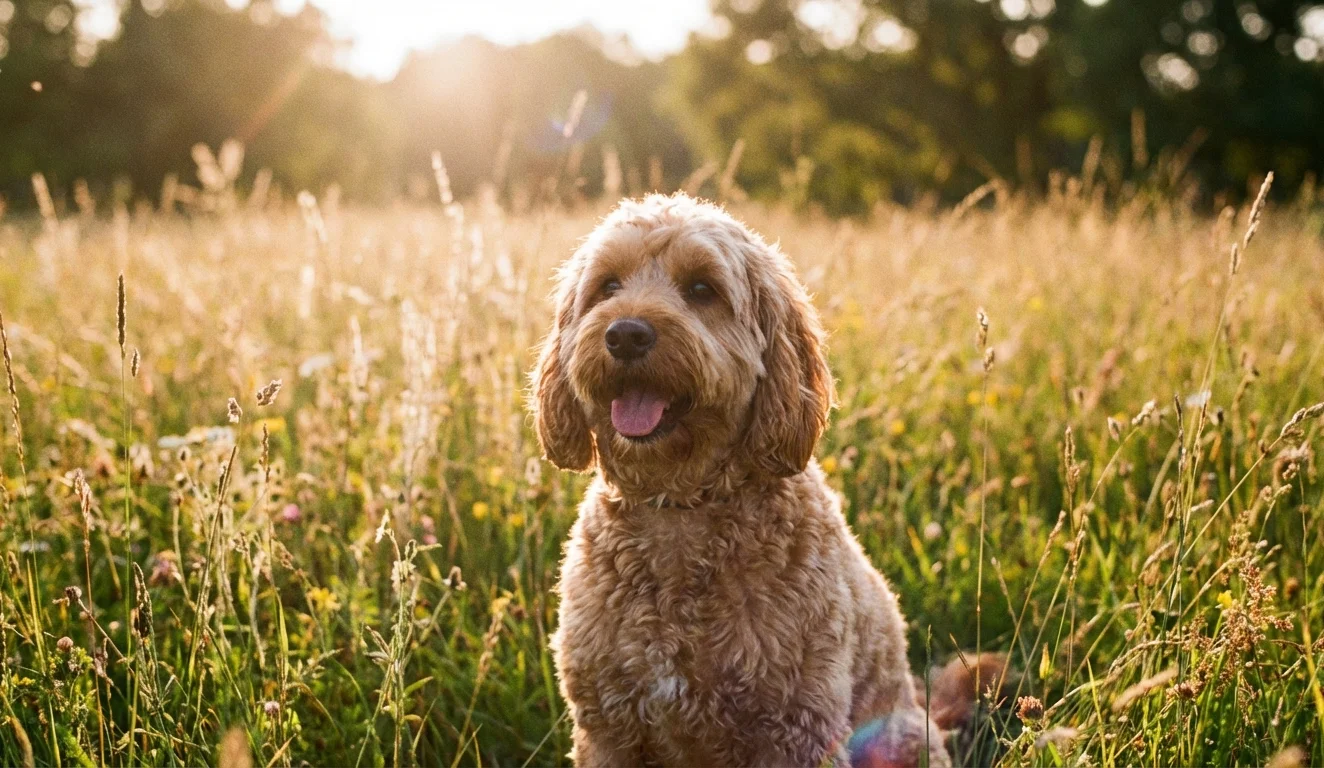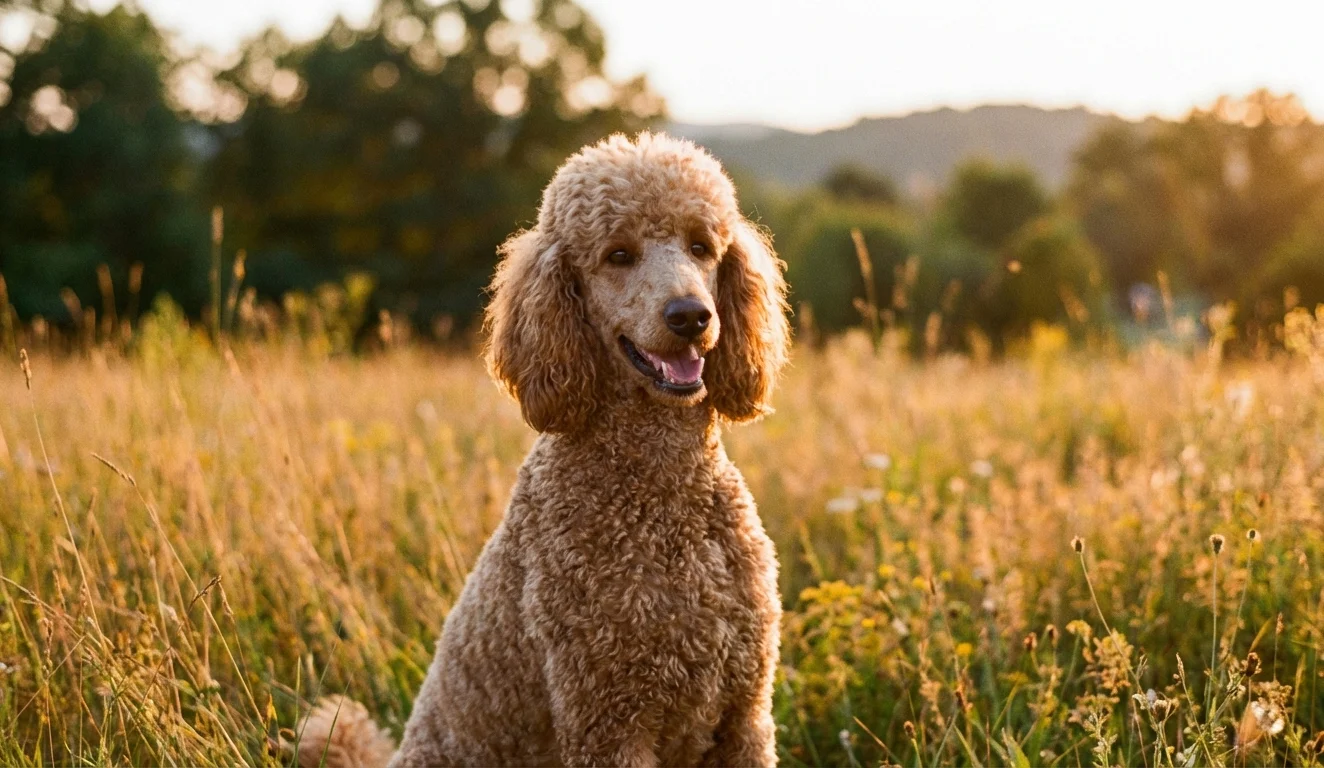
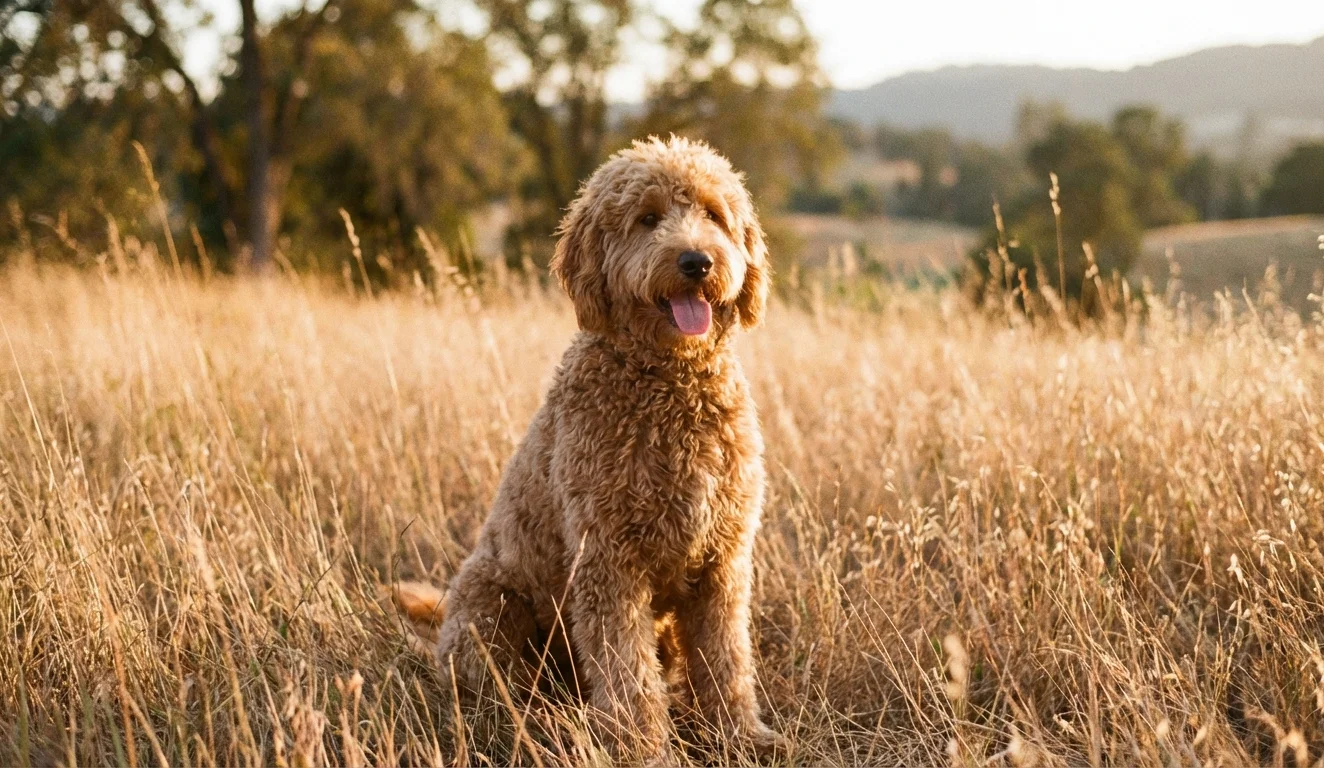
Goldendoodle Breed Guide: From Someone Who Actually Owns One (2026)
What it's actually like owning a Goldendoodle, the grooming bills, the separation anxiety, the 65 lbs of dog that thinks it's a lap dog, and why we'd do it again.
The Goldendoodle is what you get when you cross a Golden Retriever with a Poodle, friendly temperament from one side, that low-shedding coat from the other. Standards usually land somewhere between 50 and 90 pounds, they live 10-15 years, and they’re genuinely one of the easier dogs to train. On paper, it sounds perfect. In practice, it’s a little more complicated than that.
In Short: 45–90 lbs, 10–15 years. High energy. Low-shedding (often called hypoallergenic, though no dog truly is). Watch for Ear Infections. Great for families and first-time owners.
But “low-shedding” doesn’t mean “low-maintenance.” Our boy Winston is living proof that Goldendoodles can be the sweetest, goofiest companions on the planet, and also the reason your groomer knows you by name. If you’re thinking about bringing a Goldendoodle home, here’s what you actually need to know, no sugarcoating included.
Goldendoodle at a Glance
| Trait | Details |
|---|---|
| Size | Standard: 50-90 lbs / Medium: 30-45 lbs / Mini: 15-30 lbs |
| Height | Standard: 20-26 in / Medium: 16-20 in / Mini: 13-16 in |
| Lifespan | 10-15 years (smaller Goldendoodles trend toward the higher end) |
| Energy Level | Moderate to high |
| Shedding | Low to moderate (varies by coat type) |
| Good with Kids | Yes, one of the best family-friendly crosses |
| Good with Other Pets | Yes, generally excellent |
| Trainability | High, both parent breeds rank in the top 5 for intelligence |
| Price Range | $2,000-$5,000 from a reputable breeder |
History and Origin
The Goldendoodle was first intentionally bred in North America in the 1990s, following the success of the Labradoodle in Australia. The goal was straightforward: combine the Golden Retriever’s reliably gentle, people-loving personality with the Poodle’s intelligence and low-shedding coat.
Golden Retrievers have been one of the AKC’s top 3 most popular breeds for decades, the breed ranked #3 in AKC registration data for 2023. Poodles, despite the fancy haircut reputation, are working dogs that rank #2 in canine intelligence according to Dr. Stanley Coren’s The Intelligence of Dogs. The combination of these two breeds produced a dog that’s smart, affectionate, and more allergy-friendly than a purebred Golden.
Goldendoodles are considered a designer crossbreed, not a recognized AKC breed. This means there’s no breed standard, and the traits a Goldendoodle puppy inherits can vary, sometimes significantly, depending on the parents and generation. That variability is part of the appeal for some owners and a source of frustration for others.
Goldendoodle Generations Explained
You’ll see breeders use generation labels. Here’s what they mean:
- F1: First generation. One Golden Retriever parent + one Poodle parent. Most genetic diversity, but coat type is less predictable.
- F1B: F1 Goldendoodle bred back to a Poodle. Curlier, lower-shedding coats. The most popular choice for allergy-conscious buyers.
- F1BB: F1B bred back to a Poodle again. Very curly, very low shedding.
- F2: Two F1 Goldendoodle parents. Coat type is the least predictable in this generation.
- Multigen: Multiple generations of Goldendoodle-to-Goldendoodle or Goldendoodle-to-Poodle breeding. Most consistent traits.
If low shedding is your top priority, an F1B or F1BB Goldendoodle is your safest bet. F1 Goldendoodles can shed moderately, something many first-time buyers don’t expect.
Goldendoodle Size and Appearance
Goldendoodle size depends almost entirely on the Poodle parent. Breeders use Standard, Miniature, or Toy Poodles to produce different sizes.
Size Variants
Standard Goldendoodle: 50-90 pounds, 20-26 inches tall at the shoulder. The most common size. Standard Goldendoodles are sturdy, athletic dogs with big personalities to match their frames.
Medium Goldendoodle (sometimes called “Comfort”): 30-45 pounds, 16-20 inches tall. A newer category that’s gained popularity with people who want a Goldendoodle that fits apartment living a bit better.
Mini Goldendoodle: 15-30 pounds, 13-16 inches tall. Bred using a Miniature or Toy Poodle. Mini Goldendoodles are portable and adaptable, but they can be higher-strung than their standard-sized counterparts.
Coat Types
Goldendoodle coats come in three main varieties:
- Curly coat: Most Poodle-like. Tightest curls, lowest shedding, highest grooming demands. Common in F1B and F1BB Goldendoodles.
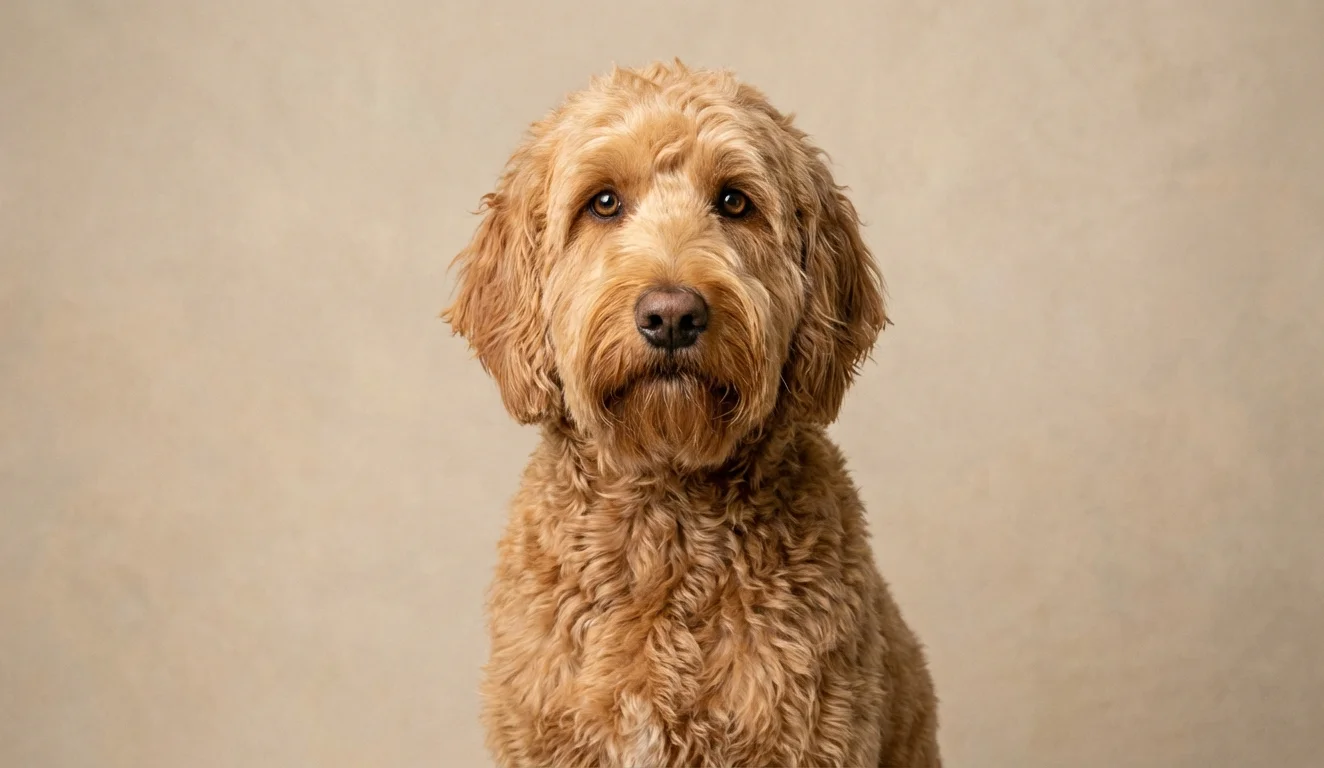
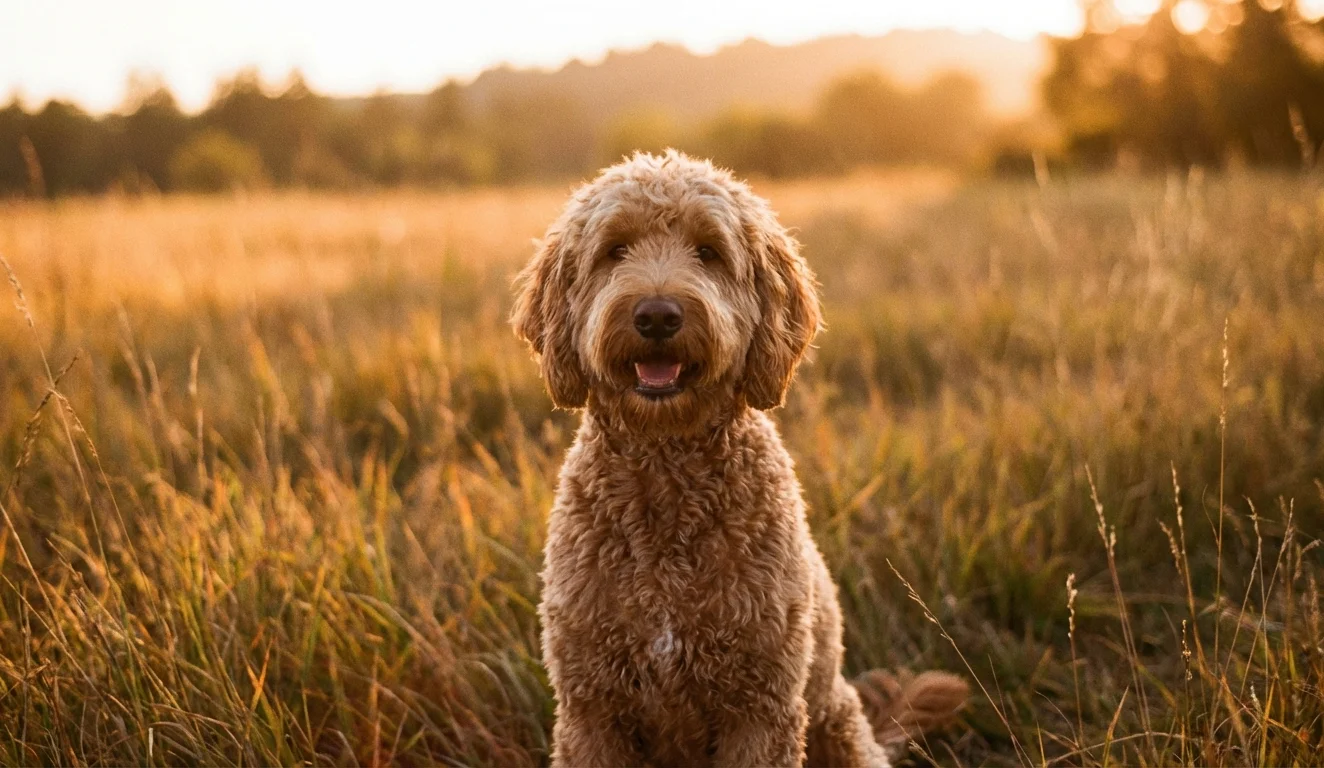
- Wavy coat (fleece coat): The “classic” Goldendoodle look. Soft, flowing waves. Moderate shedding. Most popular coat type.
- Straight coat (flat coat): Most Golden Retriever-like. Will shed more than curly or wavy coats. Less common, especially in later generations.
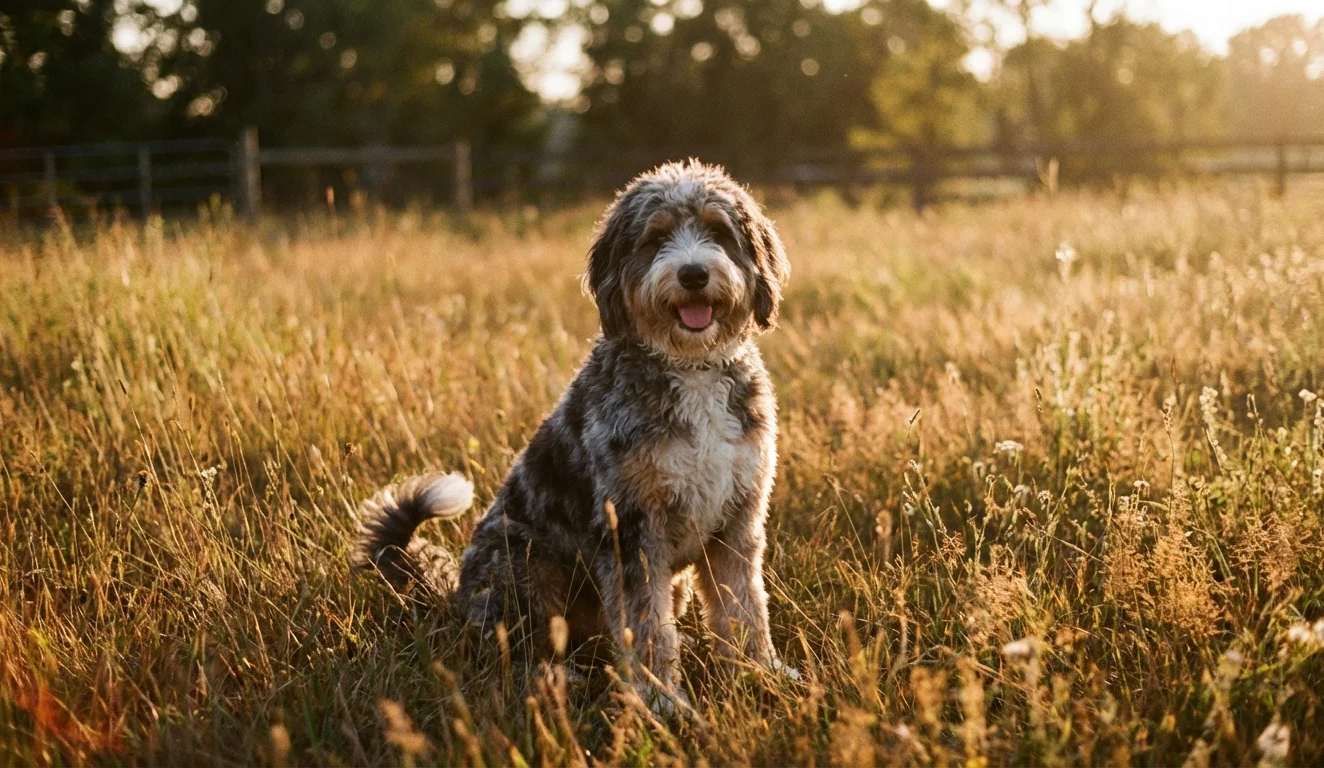
Goldendoodle colors include cream, apricot, red, chocolate, black, parti (two-tone), phantom (tan markings on a darker base), and merle. Cream and apricot are the most common, but breeders are increasingly producing red and parti Goldendoodles due to demand.
Goldendoodle Temperament and Personality
Goldendoodles consistently rank among the friendliest, most social dogs you’ll meet. Both parent breeds were developed to work closely with humans, the Golden Retriever as a hunting companion and the Poodle as a water retriever, so Goldendoodles come hardwired for human connection.
The Good Stuff
Goldendoodles are people dogs. They’ll follow you from room to room, greet strangers with full-body excitement, and generally act like everyone they meet is their new best friend. This makes Goldendoodles excellent family dogs and strong candidates for therapy and emotional support work.
Goldendoodles are smart. With the Poodle ranked #2 and the Golden Retriever ranked #4 in working intelligence (per Dr. Stanley Coren’s research), Goldendoodles pick up commands quickly and thrive on learning new things.
Goldendoodles are gentle. Goldendoodle aggression is rare. The breed’s typical temperament makes Goldendoodles safe around children and other animals, though early socialization still matters.
The Less-Fun Stuff
Separation anxiety is common in Goldendoodles. Because Goldendoodles bond so intensely, many struggle when left alone. A 2020 study in Journal of Veterinary Behavior found that breeds with high social-attachment scores show separation-related behaviors at roughly double the rate of more independent breeds. Goldendoodles fit that profile. Expect to crate-train, provide puzzle toys, or arrange for company during the workday.
Goldendoodles can be mouthy. That Golden Retriever retrieval instinct means Goldendoodle puppies (and some adults) will put everything in their mouths. Shoes, remote controls, throw pillows, nothing is sacred.
Goldendoodles are not guard dogs. If you want a dog that’ll bark at intruders, a Goldendoodle will more likely bring the intruder a toy and ask for belly rubs.
Exercise and Activity Needs
Goldendoodles need 60-90 minutes of exercise per day, depending on size and age. Standard Goldendoodles tend toward the higher end. Minis can often get by with 45-60 minutes.
Physical Exercise
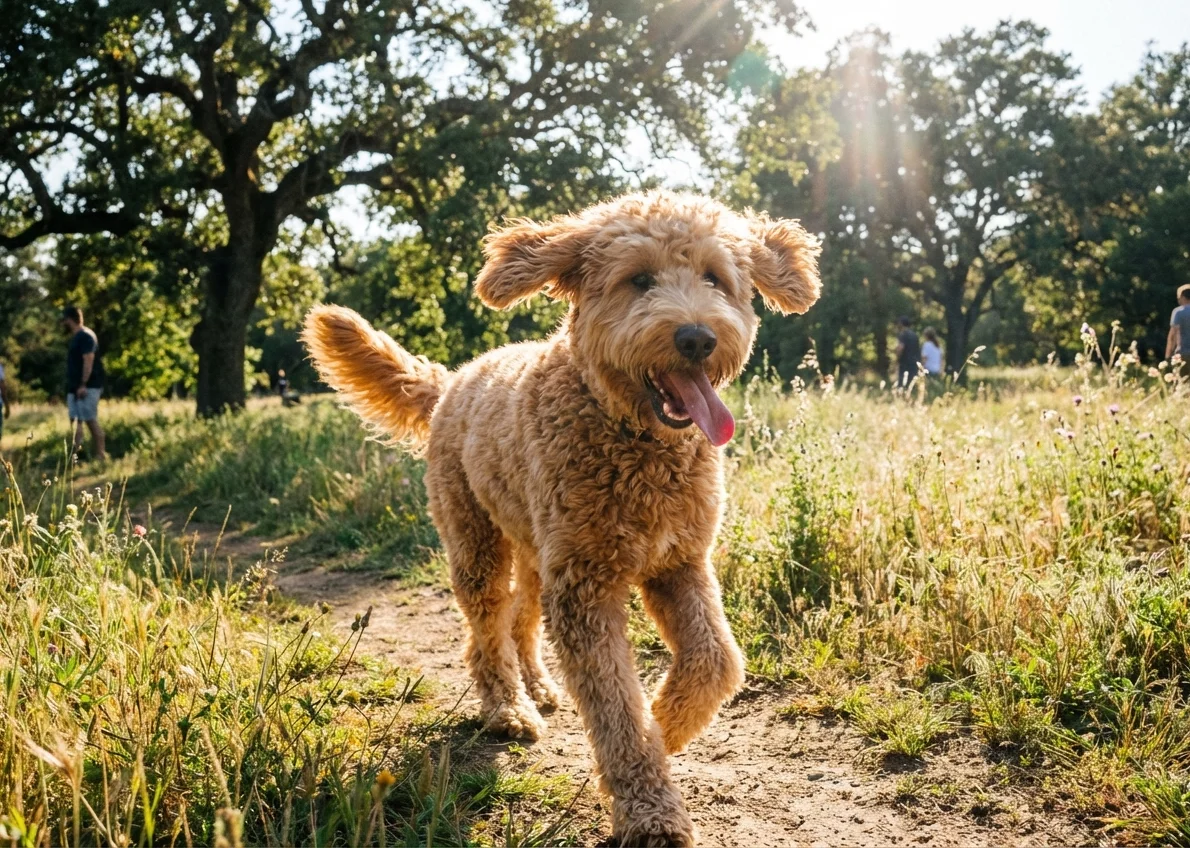
Swimming is probably their favorite, both parent breeds are water dogs, and most Goldendoodles take to it like they were born in a lake. Fetch is an obvious winner too (the Golden Retriever side really shows up here). We burn through a lot of Winston’s energy on hikes, and dog parks work great for the social ones.
Mental Stimulation
A tired Goldendoodle is a well-behaved Goldendoodle, but physical exercise alone isn’t enough. Goldendoodles need mental work too. Without it, expect chewing, digging, or finding creative ways to redecorate your living room.
Effective mental stimulation for Goldendoodles:
- Puzzle feeders and snuffle mats
- Training sessions (even 10-15 minutes of trick work counts)
- Hide-and-seek with treats or family members
- Nose work and scent games
- Rotating toys to keep things fresh
A Goldendoodle that gets both physical and mental exercise is a dramatically different dog than one that’s just been walked around the block.
Grooming Requirements
Here’s the part that surprises most new Goldendoodle owners: grooming a Goldendoodle is a real time and money commitment. That beautiful, low-shedding coat doesn’t maintain itself.
Brushing
- Curly-coated Goldendoodles need brushing every day, or every other day at a minimum. Skip it for a week, and you’re looking at mats that may need to be shaved out.
- Wavy-coated Goldendoodles can go 2-3 days between brushings, but 3-4 times per week is ideal.
- Straight-coated Goldendoodles are the easiest to maintain. Two to three times per week works well.
A slicker brush and a steel comb are your two most important tools. Brush down to the skin, not just the surface, surface brushing leaves mats hiding underneath.
Professional Grooming
Goldendoodles need professional grooming every 6-8 weeks. A full groom (bath, haircut, nail trim, ear cleaning, sanitary trim) typically costs $60-$100 for a standard Goldendoodle, and can run higher in major metro areas.
If you skip professional grooming appointments, mats build up and can cause skin irritation, restrict blood flow to the ears, and create painful pulling on the skin.
Ear Care
Goldendoodles are prone to ear infections because of the hair that grows inside their ear canals (inherited from the Poodle side). Weekly ear checks and cleaning reduce infection risk. Ask your groomer about ear plucking, opinions vary among vets, but keeping ear canals clear of excess hair helps with airflow.
Annual Grooming Cost
Plan for $500-$900 per year on professional grooming alone. Add in shampoo, brushes, ear cleaner, and the occasional emergency mat removal, and grooming costs for a Goldendoodle total roughly $600-$1,100 annually.
Goldendoodle Health Issues
Goldendoodles benefit from hybrid vigor, the general health advantage that comes from crossing two distinct purebred lines. But Goldendoodles are not immune to health problems, especially conditions common to both parent breeds.
Common Goldendoodle Health Conditions
Hip Dysplasia, Approximately 20.8% of Golden Retrievers evaluated by the Orthopedic Foundation for Animals (OFA) show signs of hip dysplasia, making it one of the breed’s most tracked conditions. Poodles have lower rates (around 12% for Standards), but Goldendoodles still carry significant risk. Ask for OFA hip certifications on both parents before purchasing a Goldendoodle puppy.
Elbow Dysplasia, OFA data shows about 11.4% of Golden Retrievers are affected. Symptoms include front-leg lameness, stiffness after rest, and reluctance to play.
Progressive Retinal Atrophy (PRA), A genetic eye disease that leads to blindness. Responsible breeders DNA-test Goldendoodle parents for PRA. The prcd-PRA mutation can be entirely avoided if at least one parent tests clear.
Von Willebrand Disease, A blood clotting disorder more common in Poodles. Von Willebrand Disease affects roughly 1-3% of Standard Poodles according to veterinary genetic databases. Breeders should test for this before breeding.
Patellar Luxation, The kneecap slides out of place. More common in Mini Goldendoodles than Standards. OFA data reports patellar luxation in approximately 6% of Miniature Poodles.
Ear Infections, Not genetic, but extremely common in Goldendoodles due to their floppy ears and ear canal hair. Roughly 20% of all dogs experience ear infections according to the American Kennel Club, and Goldendoodles are above that average.
Addison’s Disease (Hypoadrenocorticism), Standard Poodles have a higher-than-average prevalence of Addison’s Disease (estimated at 8.6% of Standard Poodles according to a study published in the Journal of Veterinary Internal Medicine). Goldendoodles inherit some of this risk.
Health Testing for Goldendoodle Breeders
A responsible Goldendoodle breeder should provide results for:
- OFA hip and elbow evaluations
- OFA or CERF eye exam (within the past year)
- DNA testing for PRA, von Willebrand, and DM (degenerative myelopathy)
- Cardiac evaluation
If a breeder can’t or won’t provide health testing documentation, walk away. The upfront cost of a health-tested Goldendoodle from a reputable breeder is far less than the veterinary bills from preventable genetic conditions.
Training a Goldendoodle
Goldendoodles are among the easiest dogs to train. Both parent breeds live to please their people, and Goldendoodles inherit that eagerness along with the Poodle’s quick-thinking problem-solving ability.
What Works
Positive reinforcement is the way to go with Goldendoodles. Goldendoodles are sensitive dogs, harsh corrections shut them down. Use treats, praise, and play as rewards. Most Goldendoodles are food-motivated enough that training sessions feel like a game to them.
Short, frequent sessions beat long ones. Aim for 3-4 sessions of 10-15 minutes rather than one 45-minute marathon. Goldendoodle puppies especially have limited attention spans.
Socialization Timeline
- 8-16 weeks: The critical socialization window. Expose your Goldendoodle puppy to different people, surfaces, sounds, animals, and environments. Positive early experiences during this period shape a Goldendoodle’s confidence for life.
- 16 weeks - 6 months: Continue socialization. Start basic obedience (sit, down, stay, come, leash walking). Puppy classes are excellent for Goldendoodles, they get training and social time simultaneously.
- 6-12 months: Adolescence hits. Your Goldendoodle will “forget” things they learned last month. Stay consistent and patient. This is normal, not defiance.
- 1-2 years: Goldendoodles mature mentally around 18-24 months. Advanced training, trick work, and canine good citizen certification are all realistic goals.
Common Training Challenges
- Jumping on people: Goldendoodles love everyone and show it enthusiastically. Train an alternative greeting behavior (sit for attention) early.
- Leash pulling: Goldendoodles are social and want to get to every person and dog they see. A front-clip harness helps while you work on loose-leash skills.
- Counter surfing: Goldendoodles are tall enough to reach counters and smart enough to know food is up there. Management (keep counters clear) plus “leave it” training is the combination that works.
Cost of Owning a Goldendoodle
Goldendoodles are not a budget breed. Between the purchase price and ongoing costs, you should go in with realistic expectations about what a Goldendoodle costs over its lifetime.
Purchase Price
- Reputable breeder: $2,000-$5,000 depending on location, generation, color, and health testing. Standard Goldendoodles tend to be on the lower end. Minis and specialty colors run higher.
- Adoption/rescue: $200-$500 through a Goldendoodle-specific rescue like IDOG Rescue or Delaware Valley Golden Retriever Rescue. Goldendoodles do end up in rescues, though puppies are rare.
First-Year Costs
| Expense | Estimated Cost |
|---|---|
| Spay/neuter | $300-$600 |
| Vaccinations and first-year vet visits | $400-$800 |
| Crate, bed, bowls, leash, collar | $200-$400 |
| Puppy training class | $150-$300 |
| Food (first year) | $500-$900 |
| Grooming (first year, starting around 4 months) | $300-$600 |
| Total first-year estimate | $1,850-$3,600 |
Ongoing Monthly Costs
Expect to spend $100-$225 per month on a Goldendoodle once the first-year expenses are behind you:
- Food: $50-$100/month (high-quality kibble or fresh food)
- Grooming: $60-$100 every 6-8 weeks (works out to ~$40-$65/month)
- Pet insurance: $30-$60/month (recommended given Goldendoodle health risks)
- Treats, toys, misc: $20-$40/month
Lifetime Cost
Over a 12-year lifespan, a standard Goldendoodle will cost an estimated $18,000-$35,000 including purchase price, routine care, grooming, food, and average veterinary expenses. Major health events (surgery for hip dysplasia, treatment for Addison’s Disease) can push this number significantly higher.
Is a Goldendoodle Right for You?
A Goldendoodle might be a great fit if you:
- Want a friendly, social dog that’s great with kids and other pets
- Have time for 60+ minutes of daily exercise
- Can commit to regular brushing and professional grooming every 6-8 weeks
- Work from home or can provide company during the day (or are willing to use daycare)
- Want a trainable dog that picks up commands quickly
- Don’t need a guard dog
A Goldendoodle might NOT be the right choice if you:
- Work long hours away from home with no one to keep the dog company
- Don’t want to deal with grooming costs and daily brushing
- Want a truly hypoallergenic dog (no dog is 100% hypoallergenic, Goldendoodles are lower-shedding, not non-shedding)
- Prefer a more independent, low-energy breed
- Are on a tight budget for pet care
- Want predictable, standardized breed traits (Goldendoodles vary more than purebreds)
So, Should You Get One?
Look, we’re biased, we have one. But Goldendoodles earned their popularity honestly. They’re absurdly friendly, smart enough to be trained by someone who has no idea what they’re doing (us), and genuinely fun to be around. The catch is that grooming is a part-time job, separation anxiety is real, and the costs add up faster than you’d expect. If you go in knowing all that, and you pick a breeder who health-tests their dogs, you’ll end up with a companion that gives back way more than you put in. Winston certainly has.
Related Breeds
If you’re considering this breed, you might also want to look at:
Frequently Asked Questions
Are Goldendoodles hypoallergenic?
If you think you’re getting a hypoallergenic dog, we need to talk. Goldendoodles are not truly hypoallergenic, no dog breed is. Goldendoodles produce less dander than heavy-shedding breeds like Golden Retrievers because of the Poodle influence on their coat. F1B and F1BB Goldendoodles with curly coats shed the least and are typically the best option for people with mild dog allergies. Anyone with severe allergies should spend time around a Goldendoodle before committing to owning one.
How long do Goldendoodles live?
Goldendoodles have an average lifespan of 10-15 years, with smaller Goldendoodles (Mini and Medium) tending to live longer than Standard Goldendoodles. Standard Goldendoodles typically live 10-12 years, while Mini Goldendoodles frequently reach 13-15 years. Factors that influence Goldendoodle longevity include genetics (health-tested parents matter), diet quality, exercise habits, and regular veterinary care including dental cleanings.
Do Goldendoodles bark a lot?
Goldendoodles are moderate barkers, they’re generally quieter than breeds like Beagles or Shelties, but Goldendoodles will bark to alert you to doorbells, visitors, or unusual sounds. Boredom and separation anxiety can increase barking in Goldendoodles significantly. Providing enough exercise, mental stimulation, and company during the day keeps most Goldendoodles at a reasonable noise level. Training a “quiet” command early helps manage barking long-term.
What’s the difference between a Goldendoodle and a Labradoodle?
Goldendoodles are a Golden Retriever-Poodle cross, while Labradoodles are a Labrador Retriever-Poodle cross. Goldendoodles tend to be slightly calmer and more affectionate than Labradoodles, while Labradoodles often have higher energy and a more independent streak. Both breeds share the Poodle’s low-shedding coat potential, but Goldendoodles generally have softer, wavier coats compared to the Labradoodle’s more consistently curly coat. Temperament differences are subtle, and individual dogs vary widely within both crosses.
How much exercise does a Goldendoodle need?
A standard Goldendoodle needs 60-90 minutes of exercise per day, including a mix of walks, active play, and mental stimulation activities like puzzle feeders or training sessions. Mini Goldendoodles can often thrive with 45-60 minutes. Goldendoodle puppies under 12 months should follow the general guideline of 5 minutes of structured exercise per month of age, twice daily, to protect developing joints. Under-exercised Goldendoodles commonly develop destructive behaviors like chewing, digging, and excessive barking.