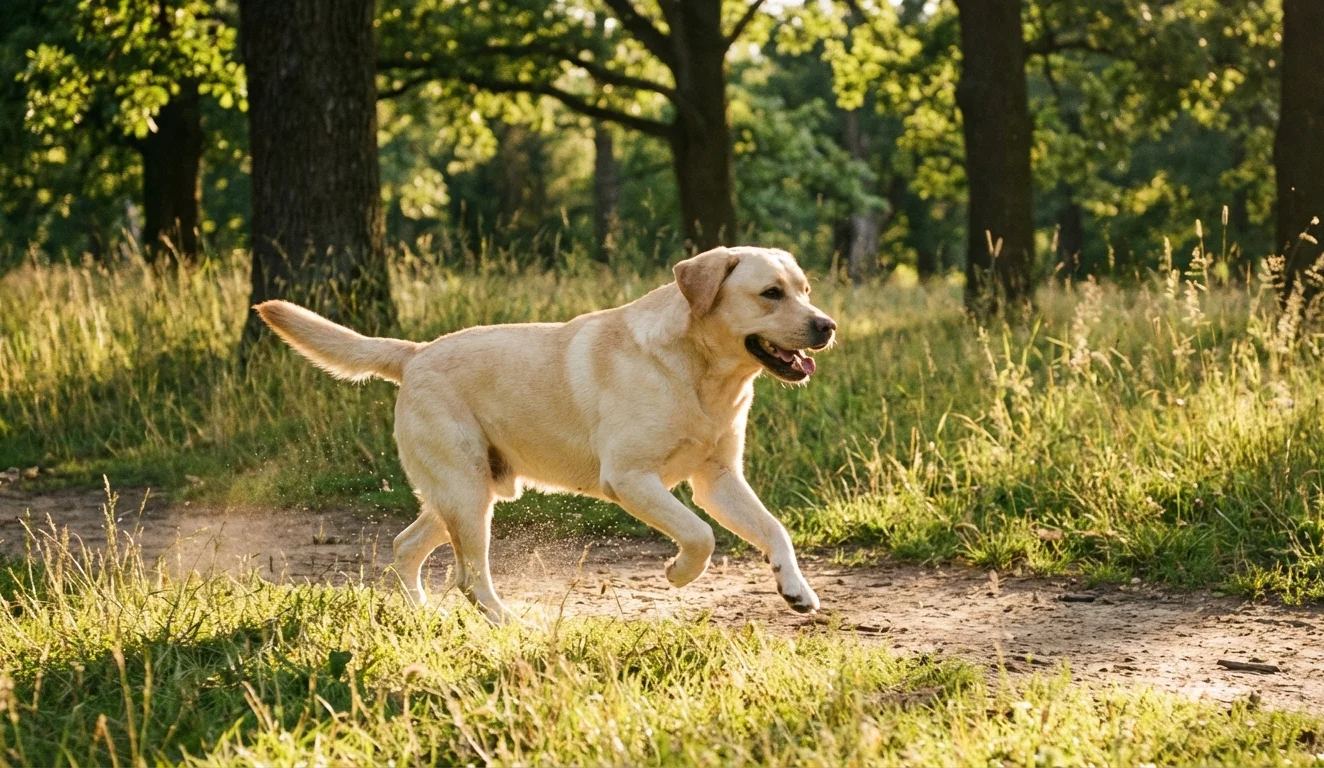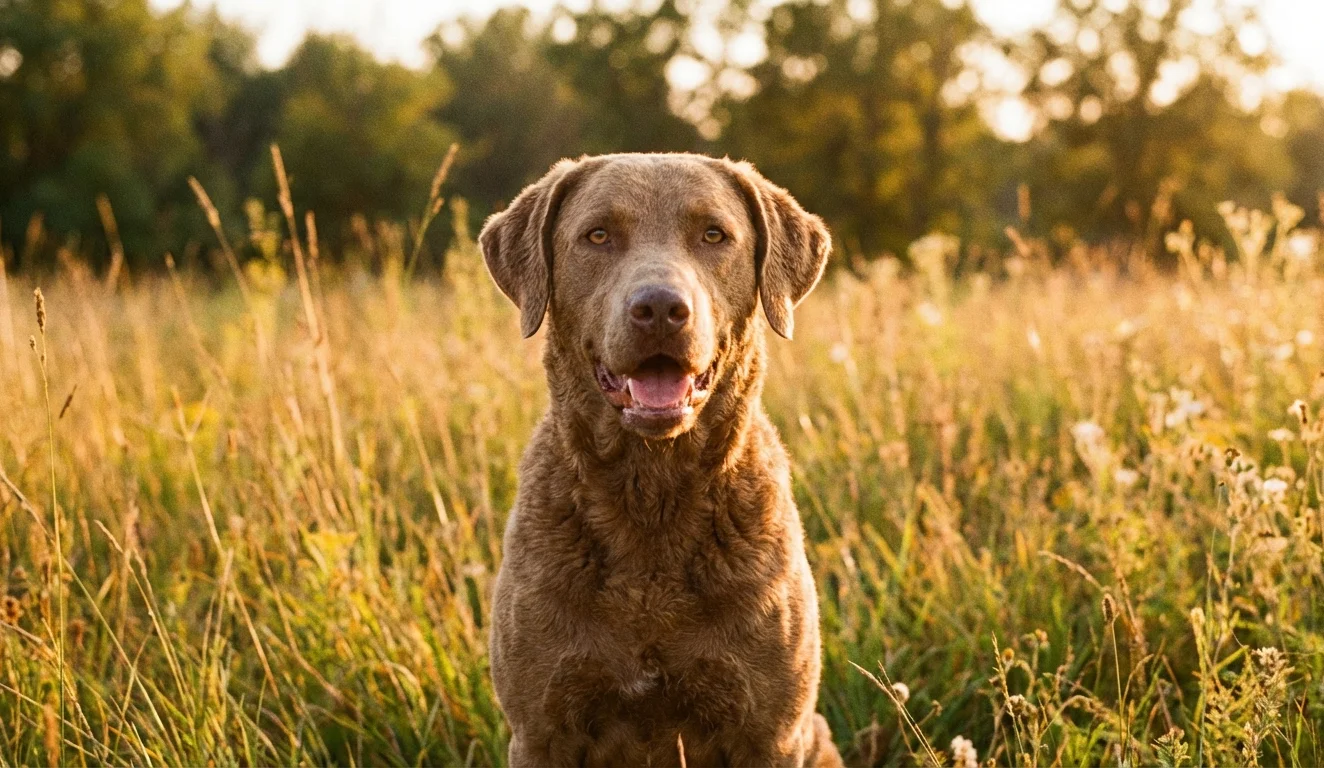

Labrador Retriever Breed Guide: America's Dog, For Better or Worse (2026)
Labrador Retrievers held the #1 spot for 31 years straight. Here's what makes them great, what makes them exhausting, and why they eat everything.
The Labrador Retriever was the #1 most popular breed in America for 31 consecutive years. Thirty-one. That’s not a fluke, that’s a dog that figured out exactly what people want and delivers it every single day. Labs weigh 55-80 pounds, live 11-13 years, and they’ll eat literally anything that isn’t nailed down (and some things that are).
In Short: 55–80 lbs, 11–13 years. High energy. Heavy shedder. Watch for Hip Dysplasia and Elbow Dysplasia. Great for families and first-time owners.
Labs work as service dogs, search-and-rescue dogs, family dogs, and the kind of dog that makes everyone at the park smile. They’re also the reason your shoes have teeth marks and your kitchen trash can needs a padlock. Here’s what you’re getting into.
Labrador Retriever at a Glance
| Trait | Details |
|---|---|
| Breed Group | Sporting (AKC) |
| Height | Males: 22.5-24.5 in / Females: 21.5-23.5 in |
| Weight | Males: 65-80 lbs / Females: 55-70 lbs |
| Life Expectancy | 11-13 years |
| Coat | Short, dense double coat |
| Colors | Black, Yellow, Chocolate |
| Temperament | Friendly, Active, Outgoing |
| Shedding | Heavy (year-round with seasonal blowouts) |
| Energy Level | High |
| Good With Kids | Yes |
| AKC Recognition | 1917 |
History of the Labrador Retriever
Despite the name, the Labrador Retriever didn’t come from Labrador. The breed originated in Newfoundland, Canada, where St. John’s water dogs worked alongside fishermen in the 16th and 17th centuries. These dogs hauled nets, retrieved escaped fish, and dove into the frigid North Atlantic without hesitation.
British sportsmen visiting Newfoundland in the early 19th century noticed the St. John’s dogs and brought them back to England. The Earl of Malmesbury and the Duke of Buccleuch refined the breed during the 1800s, selecting for retrieving ability, biddability, and that famously soft mouth. The Earl of Malmesbury is actually credited with first using the name “Labrador” to describe the breed.
The Labrador Retriever earned AKC recognition in 1917. By the mid-20th century, Labrador Retrievers had transitioned from primarily hunting companions to the all-around family dogs we know today, though plenty of Labs still spend their weekends in duck blinds.
Size and Appearance
Labrador Retrievers are medium-to-large, solidly built dogs. Male Labrador Retrievers typically stand 22.5-24.5 inches at the shoulder and weigh 65-80 pounds. Females are slightly smaller at 21.5-23.5 inches and 55-70 pounds.
English vs. American Type
You’ll hear people talk about “English Labs” and “American Labs.” These aren’t separate breeds, they’re informal types within the same breed standard.
- English (bench/show) type Labrador Retrievers tend to be stockier, with a wider head, thicker neck, and shorter legs. They’re generally calmer.
- American (field) type Labrador Retrievers are leaner and more athletic, with a narrower head and longer legs. They tend to have higher energy and stronger prey drive.
Both types are Labrador Retrievers. The difference comes down to whether the dog’s lineage was bred for the show ring or the field.
Coat and Color
Labrador Retrievers come in three recognized colors: black, yellow, and chocolate. Black is the most common. Yellow ranges from nearly white (fox red on the darker end) to a pale cream. Chocolate Labs carry a recessive gene, both parents must carry the chocolate gene to produce chocolate puppies.
The “silver Lab” you may see advertised is a diluted chocolate. The AKC registers silver Labs as chocolate, but the color remains controversial among breed purists.
The Labrador Retriever coat is short, straight, and remarkably dense. The breed carries a double coat, a soft, insulating undercoat beneath a water-resistant outer coat. This double coat made Labrador Retrievers ideal for cold-water retrieves, and it’s also why your couch will never be hair-free again.
Labrador Retriever Temperament
The AKC breed standard describes the Labrador Retriever temperament in three words: friendly, active, outgoing. That’s pretty accurate, but it undersells just how people-oriented Labrador Retrievers are.
Labrador Retrievers want to be near you. All the time. They’ll follow you from room to room, rest their head on your lap while you work, and greet you at the door like you’ve been gone for years (even if you just checked the mail).
Key Labrador Retriever temperament traits:
- Social and outgoing. Labrador Retrievers generally love everyone, strangers, kids, other dogs. They’re not great guard dogs for this reason. A Labrador Retriever will happily show a burglar where you keep the treats.
- Mouthy. Labrador Retrievers were bred to retrieve, and they express that instinct by carrying things in their mouths. Shoes, socks, remote controls, your hand, it’s all fair game. This is normal breed behavior, not aggression, but it needs to be channeled with appropriate chew toys.
- Food-motivated. Labrador Retrievers will eat anything. And then look for more. A 2016 study published in Cell Metabolism found that many Labrador Retrievers carry a mutation in the POMC gene that reduces their ability to feel full. This makes Labrador Retrievers highly trainable (treats work wonders) but also prone to obesity.
- Patient with children. Labrador Retrievers consistently rank among the best breeds for families with kids. They’re tolerant, playful, and sturdy enough to handle the unpredictability of toddlers. Supervision is still a good idea, that wagging tail can knock a small child off their feet.
Exercise Needs
Labrador Retrievers need 60-90 minutes of exercise per day. This isn’t a breed that’ll be happy with a casual stroll around the block. Labrador Retrievers are working dogs at heart, and they need physical activity that engages both their body and brain.
Best exercises for Labrador Retrievers:
- Swimming. Labrador Retrievers are natural swimmers. Their webbed feet, otter-like tail, and water-resistant coat make them built for it. If you have access to a lake, pond, or dog-friendly beach, your Labrador Retriever will be in heaven.
- Fetch and retrieving games. This taps into the Labrador Retriever’s core instinct. A ball launcher can save your arm on long sessions.
- Hiking and trail running. Labrador Retrievers are great trail companions with the stamina to match most humans.
- Structured activities. Dock diving, agility, and hunt tests give Labrador Retrievers a job to do, which they love.
A Labrador Retriever that doesn’t get enough exercise will find ways to entertain itself. And you probably won’t like those ways. Digging, chewing, counter-surfing, and general destruction are all signs of a bored Labrador Retriever.
Exercise needs do decrease as Labrador Retrievers age. A senior Lab (8+ years) may be content with 30-45 minutes of moderate activity, especially if joint issues are a factor.
Grooming
Labrador Retrievers are low-maintenance in some ways and absolutely not in others.
The good news: Labrador Retrievers don’t need haircuts, professional grooming, or fancy coat maintenance. A bath every 4-6 weeks and a nail trim every 2-3 weeks will keep a Labrador Retriever looking sharp.
The bad news: Labrador Retrievers shed. A lot. That dense double coat drops hair year-round, with two major coat blowouts each year, typically in spring and fall. During blowouts, you’ll find tumbleweeds of undercoat on every surface of your home.
Grooming schedule for Labrador Retrievers:
- Weekly brushing with a slicker brush or rubber curry comb during normal shedding
- Daily brushing during seasonal blowouts (lasting 2-3 weeks)
- Ear checks weekly, Labrador Retriever ear canals are prone to moisture buildup and infections, especially after swimming
- Teeth brushing 2-3 times per week
If you’re allergic to dog hair or can’t handle fur on your clothes, furniture, and food, a Labrador Retriever is not the breed for you. No amount of brushing eliminates the shedding, you can only manage it.
Labrador Retriever Health Issues
Labrador Retrievers are a generally healthy breed with a lifespan of 11-13 years. But like all purebreds, Labrador Retrievers are predisposed to certain genetic conditions.
Hip and Elbow Dysplasia
The OFA (Orthopedic Foundation for Animals) reports that approximately 12.8% of Labrador Retrievers evaluated have hip dysplasia, and about 11.2% show elbow dysplasia. These are joint conditions where the ball and socket don’t fit together properly, leading to pain, arthritis, and mobility issues.
Reputable Labrador Retriever breeders screen both parents with OFA hip and elbow evaluations before breeding. Always ask for these clearances.
Obesity
This is the #1 health concern for Labrador Retrievers, and it’s largely preventable. The Association for Pet Obesity Prevention estimates that 56% of dogs in the US are overweight or obese, and Labrador Retrievers are overrepresented in that statistic, thanks in part to the POMC gene mutation that affects satiety.
So if your Lab stares at you during dinner like it hasn’t eaten in three days, that’s not drama, that’s genetics.
An overweight Labrador Retriever is at increased risk for joint disease, diabetes, heart disease, and a shorter lifespan. A 2018 study by the University of Liverpool and Mars Petcare found that overweight Labrador Retrievers lived an average of 2.5 years less than Labrador Retrievers at a healthy weight.
Keep your Labrador Retriever lean. Measure food portions. Limit treats. Don’t free-feed.
Exercise-Induced Collapse (EIC)
About 30-40% of Labrador Retrievers carry at least one copy of the EIC gene, according to the University of Minnesota’s Veterinary Diagnostics Laboratory. Labrador Retrievers with two copies (homozygous) can experience sudden muscle weakness and collapse after 5-25 minutes of intense exercise. It’s not painful and dogs typically recover within 10-30 minutes, but it can be alarming. A DNA test can identify carriers.
Progressive Retinal Atrophy (PRA)
PRA causes gradual vision loss and eventual blindness in Labrador Retrievers. A DNA test (prcd-PRA) can identify carriers. Responsible breeders test for PRA before breeding.
Bloat (Gastric Dilatation-Volvulus)
Labrador Retrievers, like many deep-chested breeds, are at risk for bloat, a life-threatening condition where the stomach fills with gas and can twist on itself. Symptoms include a distended abdomen, unproductive retching, and restlessness. Bloat is a veterinary emergency that requires immediate surgery.
Training a Labrador Retriever
Labrador Retrievers are among the most trainable breeds in the world. Stanley Coren’s The Intelligence of Dogs ranks the Labrador Retriever as the 7th most intelligent breed, and that ranking doesn’t fully capture the Labrador Retriever’s eagerness to work with people.
Why Labrador Retrievers excel at training:
- They’re intensely food-motivated (use this to your advantage)
- They want to please their handler
- They have high frustration tolerance, they don’t give up easily
- They’re adaptable to different training styles
Labrador Retrievers dominate the service dog world. Approximately 70% of guide dogs in the US are Labrador Retrievers or Labrador Retriever mixes, according to Guide Dogs of America. Labrador Retrievers also excel in search and rescue, detection work (narcotics, explosives, medical conditions), and therapy settings.
Training tips for Labrador Retriever owners:
- Start early. Labrador Retriever puppies are sponges, they learn fast between 8-16 weeks.
- Use positive reinforcement. Labrador Retrievers respond incredibly well to food rewards and praise.
- Channel the mouthiness. Teach a reliable “drop it” command early. Provide appropriate chew outlets.
- Prioritize recall training. A Labrador Retriever with a reliable recall can enjoy off-leash time safely.
- Don’t skip socialization. Even though Labrador Retrievers are naturally social, early exposure to different people, dogs, sounds, and environments builds confidence.
Labrador Retriever Cost
Purchase Price
A Labrador Retriever puppy from a reputable breeder typically costs $800-$2,000. Labrador Retrievers from champion hunting or show lines can run $2,500-$4,000+.
Adopting a Labrador Retriever from a rescue or shelter is significantly less expensive, typically $150-$500. Labrador Retrievers are one of the most common breeds in shelters, roughly 25-30% of shelter dogs in the US are Labrador Retriever mixes, according to shelter intake data.
Monthly Costs
| Expense | Monthly Estimate |
|---|---|
| Food (high-quality kibble) | $40-$70 |
| Preventive vet care (averaged) | $15-$30 |
| Pet insurance | $30-$60 |
| Treats and chews | $10-$20 |
| Miscellaneous (toys, supplies) | $10-$20 |
| Total | $80-$150 |
Budget for unexpected vet expenses too. A hip dysplasia surgery can cost $3,500-$7,000 per hip. Pet insurance is worth considering for Labrador Retrievers given their predisposition to joint issues.
Labrador Retriever vs. Golden Retriever
These two breeds are constantly compared, and for good reason, they’re both friendly, family-oriented retrievers. But there are real differences.
| Trait | Labrador Retriever | Golden Retriever |
|---|---|---|
| Coat | Short, dense double coat | Long, flowing double coat with feathering |
| Grooming | Weekly brushing | Daily brushing recommended |
| Energy | High (often higher intensity) | High (often more mellow in approach) |
| Temperament | Outgoing, exuberant | Gentle, patient |
| Mouthiness | More mouthy | Less mouthy |
| Health Concern | Obesity, EIC | Cancer (~60% lifetime incidence) |
| Colors | Black, Yellow, Chocolate | Light to dark gold |
| Size | Slightly heavier (65-80 lbs male) | Slightly lighter (65-75 lbs male) |
| Lifespan | 11-13 years | 10-12 years |
The biggest practical difference? Grooming and energy style. Labrador Retrievers have a shorter coat that’s easier to maintain but sheds just as much. And Labrador Retrievers tend to be more boisterous, Golden Retrievers are typically a little calmer and more patient.
Both breeds are outstanding family dogs. You honestly can’t go wrong with either one.
Is a Labrador Retriever Right for You?
A Labrador Retriever is a great fit if you:
- Have an active lifestyle and can commit to 60-90 minutes of daily exercise
- Want a dog that’s great with kids and other pets
- Are looking for a trainable, eager-to-please companion
- Don’t mind dog hair on everything you own
- Have a yard (not required, but helpful)
- Can manage a food-obsessed dog without overfeeding
A Labrador Retriever might NOT be right if you:
- Work long hours and the dog would be home alone most of the day
- Can’t handle heavy shedding
- Want a low-energy, couch-potato dog
- Are looking for a guard dog (Labrador Retrievers love everyone too much)
- Live in a small apartment with no access to outdoor exercise areas
Labs are the ultimate ‘yes’ dog. Yes to walks, yes to swimming, yes to whatever you just dropped on the floor. They have this relentless enthusiasm for being alive that’s honestly kind of infectious. If you can keep them lean and keep them busy, a Lab will be the best dog you’ve ever had. Probably the hungriest too.
Related Breeds
If you’re considering this breed, you might also want to look at:
Frequently Asked Questions
How long do Labrador Retrievers live?
Labrador Retrievers have an average lifespan of 11-13 years. Chocolate Labrador Retrievers tend to have slightly shorter lifespans, a 2018 study from the University of Sydney found that chocolate Labs lived an average of 10.7 years compared to 12.1 years for black and yellow Labrador Retrievers. Keeping a Labrador Retriever at a healthy weight is the single biggest factor in longevity, with overweight Labs living up to 2.5 years less than lean Labrador Retrievers.
Are Labrador Retrievers good apartment dogs?
Labrador Retrievers can adapt to apartment living, but it takes commitment. A Labrador Retriever in an apartment needs at least 60-90 minutes of outdoor exercise daily, plus mental stimulation like puzzle feeders and training sessions. The bigger concern with Labrador Retrievers in apartments isn’t space, it’s noise. Labrador Retrievers can be vocal, and bored Labrador Retrievers may bark or become destructive, which won’t win you any points with neighbors.
Do Labrador Retrievers shed a lot?
Labrador Retrievers are heavy shedders year-round, with two intense shedding periods (called “blowouts”) in spring and fall that last 2-3 weeks each. During blowouts, Labrador Retrievers shed their entire undercoat, and daily brushing is the only way to manage it. Weekly brushing during normal periods helps, as does a good vacuum cleaner. No grooming routine will stop a Labrador Retriever from shedding, it’s a feature of the breed’s dense double coat.
What is the difference between English and American Labrador Retrievers?
English and American Labrador Retrievers are the same breed with different body types bred for different purposes. English-type Labrador Retrievers (also called bench or show Labs) are stockier with broader heads and calmer temperaments, these Labs were bred for the show ring. American-type Labrador Retrievers (also called field Labs) are leaner and more athletic with higher energy and stronger drive, these Labs were bred for hunting and field trials. Both types meet the AKC Labrador Retriever breed standard.
How much exercise does a Labrador Retriever need?
Adult Labrador Retrievers need 60-90 minutes of exercise per day, ideally split between physical activity and mental stimulation. Labrador Retriever puppies need shorter, more frequent exercise sessions, a good rule is 5 minutes per month of age, twice daily. Senior Labrador Retrievers (8+ years) may do well with 30-45 minutes of moderate exercise, adjusted for any joint issues. Swimming is one of the best exercises for Labrador Retrievers at any age because it provides a full-body workout without stressing joints.