Brittany Breed Guide: A Bird Dog Disguised as a Family Pet (2026)
The Brittany is a 30-40 pound French sporting dog with more stamina than most people. If you can keep up, they're incredible. If you can't, well.
The Brittany weighs 30-40 pounds, stands 17.5-20.5 inches tall, and lives 12-14 years. The AKC dropped “Spaniel” from the name in 1982 because, frankly, they don’t act like spaniels. They point. They range far afield. They work at a gallop rather than a trot. In the field, they behave more like a setter than a spaniel, and the name change reflected that.
In Short: 30–40 lbs, 12–14 years. Very high energy, needs serious daily exercise. Moderate shedding. Watch for Hip Dysplasia and Epilepsy. Great for families and first-time owners.
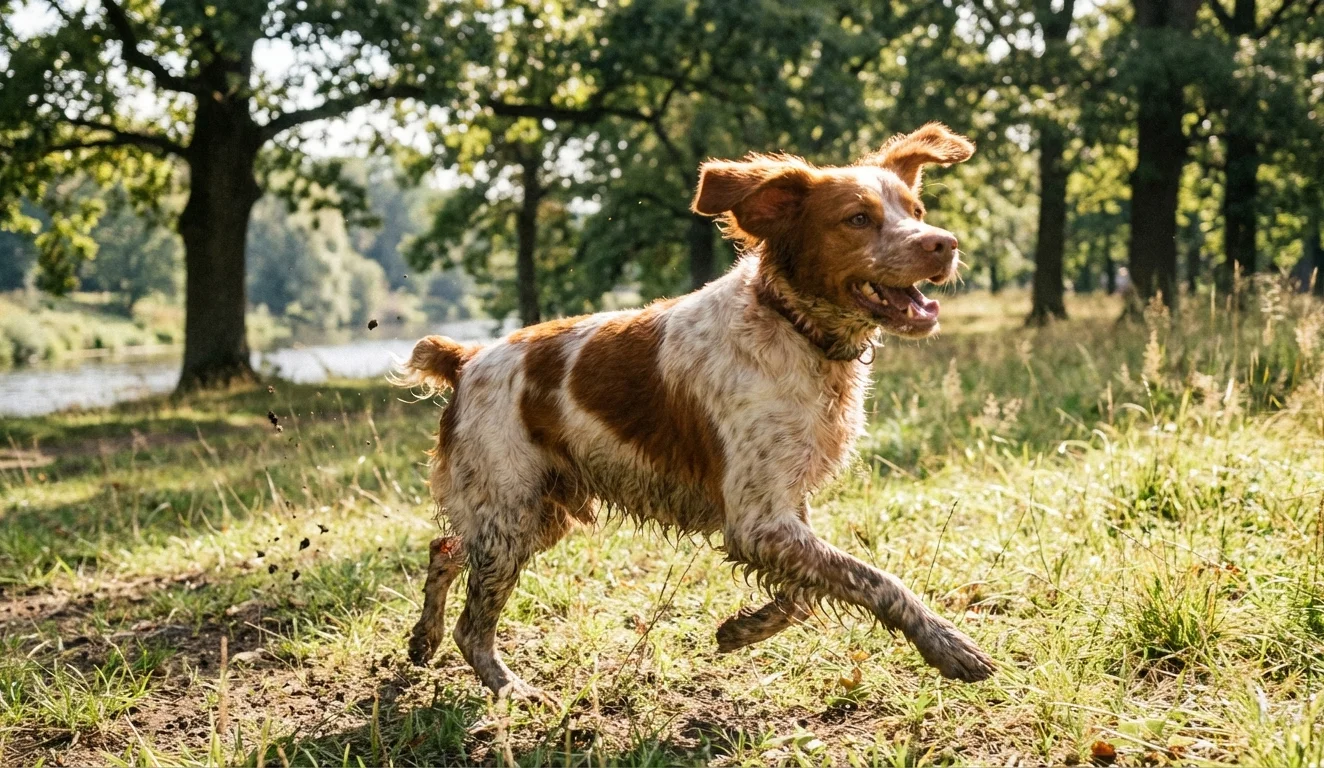
Here’s what we think about the Brittany: this is one of the best sporting breeds in the world, and one of the worst choices for anyone who thinks “moderate exercise” means a 20-minute walk. The Brittany needs to run. Not jog. Run. Every day. If you’re an active outdoors person, a hunter, or someone who genuinely exercises 60-90 minutes daily, this dog will become your best friend. If you’re not that person, the Brittany will make you miserable.
Brittany at a Glance
| Trait | Details |
|---|---|
| Breed Group | Sporting (AKC) |
| Height | 17.5-20.5 inches |
| Weight | 30-40 lbs |
| Life Expectancy | 12-14 years |
| Coat | Medium-length, dense, flat or wavy |
| Colors | Orange & White, Liver & White, Orange Roan, Liver Roan, Tricolor |
| Temperament | Bright, Fun-loving, Upbeat |
| Shedding | Moderate |
| Energy Level | Very High |
| Good With Kids | Yes |
| Apartment Friendly | No |
| Good With Cats | No (strong prey drive) |
History
The Brittany originated in the Brittany province of northwestern France, likely during the 17th century. Local hunters needed a versatile bird dog that could both point and retrieve, a dog tough enough to work the dense, thorny cover of the French countryside but compact enough to be practical for a farmer who couldn’t afford to keep a kennel of specialists.
Early Brittanys were probably crosses between local spaniels and English Setters brought to France by visiting hunters. The breed was first depicted in 17th-century paintings and tapestries showing small liver-and-white dogs working alongside French hunters. The first breed standard was written in 1907 by Arthur Enaud, a French breeder who formalized what Breton hunters had been selectively breeding for centuries.
The Brittany arrived in America in 1931 and earned AKC recognition in 1934. The breed gained a passionate following among American upland bird hunters who appreciated the Brittany’s combination of pointing instinct, retrieving ability, and manageable size. Today, the Brittany consistently ranks among the top pointing breeds in AKC field trials, they win more dual championships (both field and show titles on the same dog) than any other sporting breed. That statistic alone tells you something about the breed’s versatility.
Size and Appearance
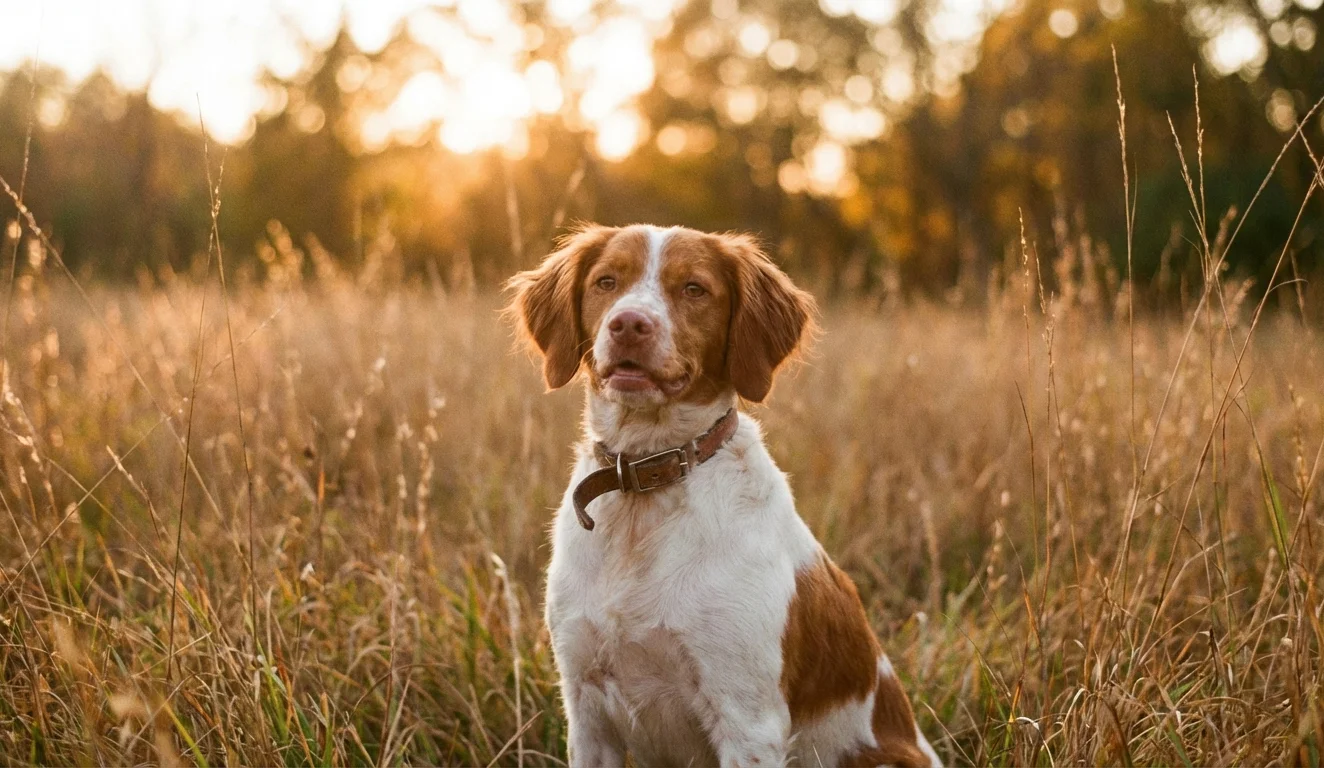
Brittanys are medium-sized, athletic dogs built for speed and endurance. Both males and females stand 17.5-20.5 inches and weigh 30-40 pounds. They’re leggy for their height, long-limbed and light-boned compared to stockier sporting breeds like the Springer Spaniel.
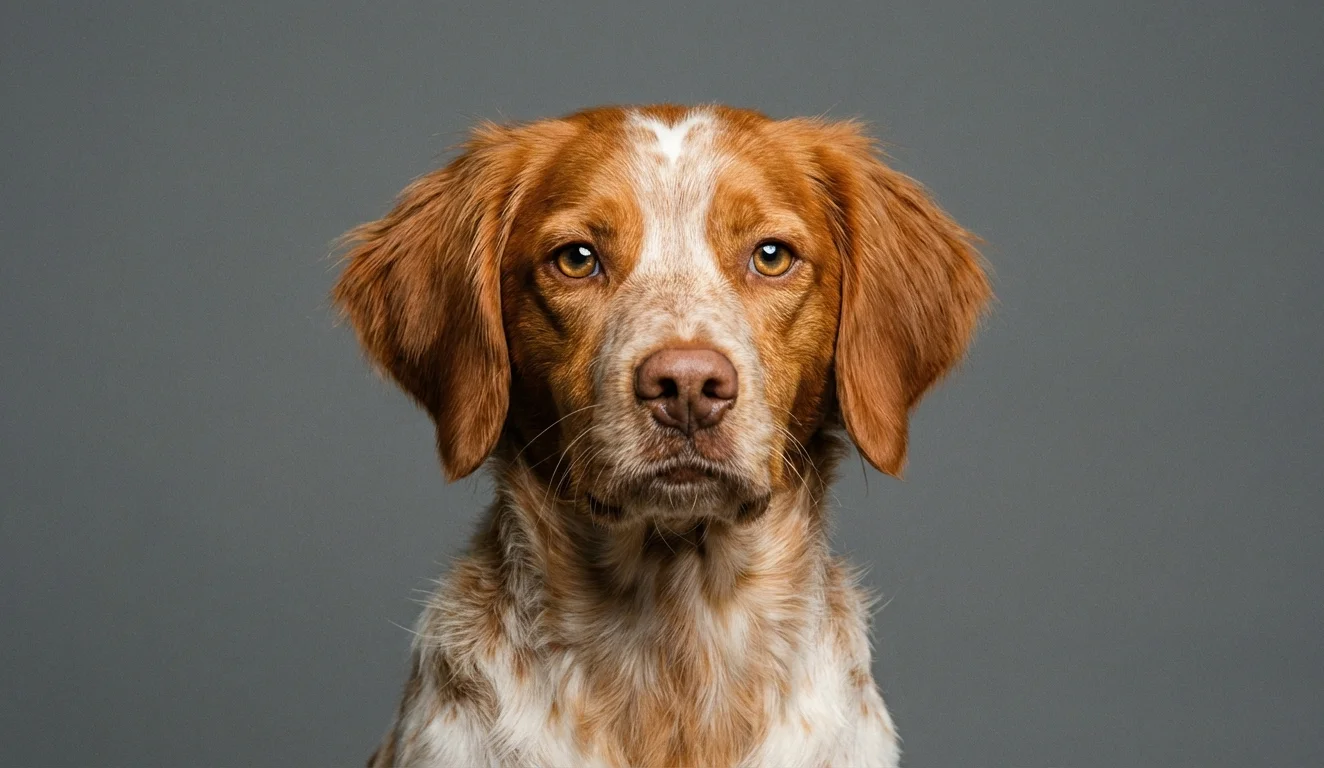
The Brittany has an alert, eager expression with a slightly rounded skull and a medium-length muzzle. Their eyes are usually amber or hazel, and they have that intent look that pointing breeds get when they catch a scent on the wind.
Coat and Color
The coat is medium-length, dense, and either flat or slightly wavy. There’s some feathering on the ears and legs but less than you’d see on a Setter or Springer. This is a practical working coat, enough to protect against thorns and cold water, but not so much that it collects burrs and debris.
Colors include orange and white, liver and white, orange roan, liver roan, and tricolor. Orange and white is the most common pattern and the one most people picture. Some Brittanys are born with naturally short tails (about 4 inches long), while others are docked in countries where docking is still practiced.
Brittany Temperament
The Brittany personality can be summed up in two words: intense and sweet. They’re sensitive, people-oriented dogs with an energy level that will either thrill you or break you depending on your lifestyle.
What living with a Brittany actually looks like:
- High energy is an understatement. We’ve owned and worked with a lot of sporting breeds. The Brittany operates at a higher RPM than most of them. A young Brittany that hasn’t been exercised is like a bottle of seltzer someone shook and left on the counter, sooner or later, something’s going to explode.
- Extremely people-bonded. Brittanys are soft dogs emotionally. They want to be near their people, they’re attuned to your mood, and they don’t handle harsh treatment well. A raised voice can send some Brittanys into a tailspin. They need a calm, patient owner.
- Prey drive is strong. Brittanys were bred to find birds, and that instinct doesn’t turn off in the backyard. Small animals, cats, rabbits, chickens, may trigger chase behavior. Some Brittanys learn to coexist with household cats, but we wouldn’t bet on it. The breed database lists them as not good with cats for a reason.
- Eager to please. Despite the energy, Brittanys genuinely want to make you happy. They’re cooperative, not defiant. The “bad behavior” you see in undertrained Brittanys is almost always a result of unmet energy needs, not a difficult temperament.
- Fun-loving in the truest sense. Brittanys play hard. They throw themselves into games of fetch with abandon, they’ll splash through puddles with zero hesitation, and they approach new experiences with the kind of enthusiasm that makes you remember why you wanted a dog in the first place.
Exercise Needs
Brittanys need 90 minutes of exercise per day. Minimum. And we mean real exercise, running, swimming, field work, not a leisurely stroll.
This is the single most important thing to know before getting a Brittany. We’ve talked to Brittany owners who gave up their dogs because they didn’t understand what “very high energy” actually meant in practice. It means that on the days you don’t feel like exercising, the cold days, the rainy days, the days you worked a 12-hour shift, your Brittany still needs to run.
Activities that work for Brittanys:
- Running off-leash in safe, enclosed areas (a fenced yard is almost required)
- Hiking long trails, Brittanys can cover miles without tiring
- Swimming
- Bird hunting or organized field trials
- Agility, flyball, or dock diving
- Bike-joring (running alongside a bicycle)
A Brittany that gets adequate exercise is a calm, sweet, wonderful house dog. They’ll curl up on the couch next to you without a care in the world. The transformation between “exercised Brittany” and “unexercised Brittany” is dramatic enough to feel like two different breeds.
Puppies shouldn’t be over-exercised (joints are still developing), but even Brittany puppies need multiple play sessions throughout the day. They don’t idle well. For the first year, focus on short, frequent play sessions and let them run on soft surfaces like grass to protect developing joints.
Grooming
One of the Brittany’s best features for active owners: the coat is low-maintenance relative to other sporting breeds.
Grooming routine:
- Brush once a week with a slicker brush to remove loose hair and prevent matting in the feathered areas
- Bathe as needed, typically every 4-6 weeks or after muddy outdoor adventures (which will be frequent)
- Check ears weekly for debris or moisture, those folded ears can trap things, though they’re less problematic than the longer-eared spaniels
- Trim nails every 2-3 weeks (active dogs on rough terrain may wear their nails down naturally)
- Brush teeth 2-3 times per week
Professional grooming isn’t really necessary for Brittanys. A home bath, brushing, and nail trim covers it. You might spend $40-$60 on the occasional professional grooming session if you prefer, but it’s not a requirement the way it is for a Poodle or a Cocker Spaniel.
Shedding is moderate. You’ll find hair on your furniture, but it won’t take over your house the way it does with a Lab or a German Shepherd.
After a day in the field, check your Brittany thoroughly for ticks, burrs, and foxtails, especially between the toes and around the ears. This is a dog that goes through dense cover at speed, and they’ll bring half the forest home with them if you’re not paying attention.
Brittany Health Issues
Brittanys are a generally healthy breed with a 12-14 year lifespan, solid for a medium-sized sporting dog.
Hip Dysplasia
The OFA evaluates Brittanys for hip dysplasia, and rates are moderate, about average for a breed of this size. Both parents should have OFA hip clearances. Severity ranges from mild (managed with weight control and joint supplements) to severe (requiring surgical intervention at $1,500-$6,000 per hip). Active, lean Brittanys tend to have fewer issues than overweight ones, which is another reason to keep your Brittany fit.
Epilepsy
Idiopathic epilepsy occurs at moderate rates in Brittanys. Seizures typically begin between 1-5 years of age. Most dogs with epilepsy can be managed with daily anticonvulsant medication (phenobarbital, potassium bromide, or newer drugs like levetiracetam). Medication costs run $500-$3,000 annually depending on the drug and monitoring needed. Dogs with well-controlled epilepsy can live normal, active lives.
Hypothyroidism
The thyroid gland doesn’t produce enough hormone, leading to weight gain, lethargy, skin problems, and coat changes. It’s diagnosed with a simple blood test and managed with daily thyroid hormone replacement medication. Treatment is inexpensive, $200-$600 per year for medication and monitoring. It’s very manageable once diagnosed, but it can be sneaky to catch because the symptoms develop gradually.
Canine Discoid Lupus Erythematosus
A rare autoimmune skin condition that primarily affects the nose, causing depigmentation, crusty sores, and inflammation. It’s more cosmetic than dangerous in most cases and is managed with topical or oral medications at $300-$1,500 depending on severity. Sun exposure worsens it, so affected dogs benefit from pet-safe sunscreen on the nose.
Training
Brittanys are highly trainable, among the most trainable of all sporting breeds. They’re eager, responsive, and genuinely interested in working with their handler. The breed’s dual championship record backs this up.
What makes training a Brittany different:
- Sensitivity requires a soft approach. Brittanys shut down under harsh corrections. Positive reinforcement isn’t just recommended, it’s basically required. Clicker training and treat rewards work exceptionally well.
- Channel the energy before expecting focus. Don’t try to train a Brittany that hasn’t been exercised. You’ll both be frustrated. A 15-minute run before a training session transforms their ability to concentrate.
- Recall is your top priority. Brittanys range far when off-leash, and a bird scent can pull them half a mile from you in seconds. Start recall training early, proof it in increasingly distracting environments, and honestly consider keeping your Brittany on a long line until recall is rock-solid.
- They mature slowly. Brittanys don’t fully settle mentally until age 2-3. The first year of training will test your patience, but the payoff is worth it.
Cost
Purchase Price
A Brittany puppy from a reputable breeder costs $800-$1,800. Puppies from proven field trial lines may push above $2,000. The breed isn’t as expensive as some sporting breeds because there’s a solid population of responsible breeders keeping supply reasonable.
Brittany rescue is available through organizations like the American Brittany Rescue. Adoption fees typically run $200-$500. Many rescue Brittanys are owner surrenders from people who underestimated the exercise needs, a sad but common pattern.
Monthly Costs
| Expense | Monthly Estimate |
|---|---|
| Food (high-performance, medium breed) | $40-$65 |
| Preventive vet care (averaged) | $15-$30 |
| Pet insurance | $30-$55 |
| Treats and chews | $10-$20 |
| Miscellaneous (toys, supplies) | $10-$20 |
| Total | $90-$175 |
First-Year Costs
Budget $2,500-$4,000 for the first year with a Brittany, including the purchase price. If you’re going the hunting route, add in the cost of a quality GPS collar ($200-$500) and bird-dog training, either a professional trainer ($500-$2,000 for a training program) or supplies for training yourself.
Is a Brittany Right for You?
A Brittany is a great fit if you:
- Are genuinely active, running, hiking, biking, or hunting regularly
- Have a securely fenced yard
- Want a mid-sized sporting dog that’s more portable than a Lab but just as talented
- Hunt upland birds or want to start
- Are experienced enough to handle a high-energy breed with patience rather than force
- Have the time for 90+ minutes of daily exercise
A Brittany might NOT be right if you:
- Have a sedentary lifestyle or limited time for exercise
- Live in a small apartment without nearby off-leash areas
- Have cats or other small pets
- Want a calm, laid-back house dog from day one
- Aren’t comfortable with off-leash management and recall training
- Travel frequently and can’t bring the dog
The Brittany is an extraordinary dog for the right owner and a genuinely poor choice for the wrong one. There’s not much middle ground. We’ve seen Brittanys in homes where they get 90 minutes of hard exercise daily, they’re calm, happy, gentle family dogs that everyone loves. And we’ve seen Brittanys in homes where they get a 30-minute walk, they’re neurotic, destructive, and miserable. The dog isn’t the variable. You are. Be honest with yourself about your activity level before bringing one home.
Related Breeds
If you’re considering this breed, you might also want to look at:
Frequently Asked Questions
Is a Brittany a Spaniel?
Technically, sort of. The AKC dropped “Spaniel” from the breed name in 1982 because the Brittany hunts more like a pointer or setter than a flushing spaniel. They range ahead of the hunter at a gallop and freeze on point when they find birds, rather than flushing them the way a Springer or Cocker does. In France, the breed is still called the Epagneul Breton (Breton Spaniel), and the UKC still uses “Brittany Spaniel.” It’s a naming debate that bird dog people care about a lot and most pet owners don’t.
Are Brittanys good with kids?
Yes. Brittanys are gentle, patient, and playful with children. They’re sturdy enough to handle rough play from kids without being so large that they accidentally knock toddlers over. The main concern is that an under-exercised Brittany can be too rambunctious for very small children, all that pent-up energy has to go somewhere. Make sure the dog is well-exercised before family time with little ones.
Can Brittanys live in apartments?
We wouldn’t recommend it. While technically any dog can live in any space if exercise needs are met, the Brittany’s energy level makes apartment living extremely challenging. They need significant daily exercise and ideally access to a yard or nearby open space. An apartment Brittany would require a truly dedicated owner who runs or hikes with the dog every single day, rain or shine. Most people find this unsustainable long-term.
How long can a Brittany be left alone?
Adult Brittanys can handle 4-6 hours alone, assuming they’ve been well-exercised beforehand. Longer than that and you’re likely to see destructive behavior, chewing, digging, excessive barking. Brittanys are people-oriented dogs, and extended isolation isn’t good for their mental health. If you work standard hours away from home, consider a dog walker midday or doggy daycare a few times per week.
Do Brittanys calm down with age?
Yes, but the timeline is longer than most people hope for. Most Brittanys start to mellow noticeably around age 3-4. By age 5-6, they’ve usually settled into a calmer routine, still active and enthusiastic, but without the relentless intensity of the puppy and adolescent years. Even so, a senior Brittany at 10 years old is more energetic than an average dog. They never become couch potatoes. They just become slightly less exhausting.