Lagotto Romagnolo Breed Guide: The Truffle-Hunting Water Dog (2026)
The Lagotto Romagnolo went from retrieving ducks in Italian marshes to sniffing out truffles worth $3,000 a pound. This curly-coated Italian has range.
The Lagotto Romagnolo (pronounced “la-GOT-oh ro-man-YO-lo”) stands 16-19 inches tall, weighs 24-35 pounds, and lives 15-17 years. That lifespan is outstanding for a dog this size, many Lagotti live well past their 15th birthday. The breed’s claim to fame is that it’s the world’s only dog specifically bred for truffle hunting, which is exactly the kind of niche job description that makes the dog world so interesting. A single truffle can be worth hundreds or thousands of dollars, and the Lagotto’s nose is the most reliable tool for finding them.
In Short: 24–35 lbs, 15–17 years. Moderate energy. Low shedding, curly, hypoallergenic-type coat. Watch for Hip Dysplasia and Benign Familial Juvenile Epilepsy. Best for active families wanting a smart, low-shedding companion with working instincts.
Before you get distracted by the truffle thing (and it is genuinely cool), here’s what you need to know about the Lagotto as a pet: it’s an excellent family dog. Smart, trainable, low-shedding, good with kids, moderate energy, long-lived. The breed checks an unusual number of boxes on most people’s wish lists. The catch? It’s still relatively rare, breeders are few, and puppies are expensive. But if you can find one, the Lagotto is one of the best-kept secrets in the sporting group.
Lagotto Romagnolo at a Glance
| Trait | Details |
|---|---|
| Breed Group | Sporting (AKC) |
| Height | Males: 17-19 in / Females: 16-18 in |
| Weight | Males: 28-35 lbs / Females: 24-31 lbs |
| Life Expectancy | 15-17 years |
| Coat | Dense, curly, woolly; water-resistant |
| Colors | Off-white, White with brown or orange patches, Brown roan, Solid brown, Solid orange |
| Temperament | Keen, Affectionate, Undemanding, Trainable |
| Shedding | Very Low |
| Energy Level | Moderate |
| Good With Kids | Yes |
| Good With Other Dogs | Yes |
| Apartment Friendly | Yes (with adequate exercise) |
| First-Time Owner Friendly | Yes |
History
The Lagotto Romagnolo is an ancient breed from the Romagna region of northeastern Italy, with a history that stretches back at least to the Italian Renaissance. The breed was originally a water retriever, “Lagotto” derives from “Lago,” meaning lake, used to retrieve waterfowl from the marshlands and lagoons of the Romagna sub-region, including the vast marshes of the Comacchio valleys along the Adriatic coast.
For centuries, the Lagotto worked the Italian wetlands alongside hunters. But in the late 19th century, large-scale drainage projects began transforming the Romagna marshes into farmland. As the wetlands disappeared, so did the Lagotto’s original job. Rather than fade into obscurity, the breed found a remarkable second career: truffle hunting. The Lagotto’s exceptional nose, combined with its biddable temperament and moderate size (small enough to work in dense undergrowth), made it the perfect truffle dog. By the early 20th century, the breed had largely transitioned from water work to truffle work in the hills and forests of northern Italy.
The breed came close to disappearing mid-century as crossbreeding diluted the purebred population. A dedicated group of Italian enthusiasts began a restoration project in the 1970s, tracking down purebred Lagotti in rural areas and establishing formal breeding programs. Italy’s national kennel club (ENCI) recognized the breed in 1991, the FCI followed in 2005, and the AKC admitted the Lagotto in 2015. The breed has been growing in popularity worldwide ever since, particularly among owners looking for smart, low-shedding family dogs.
Size and Appearance
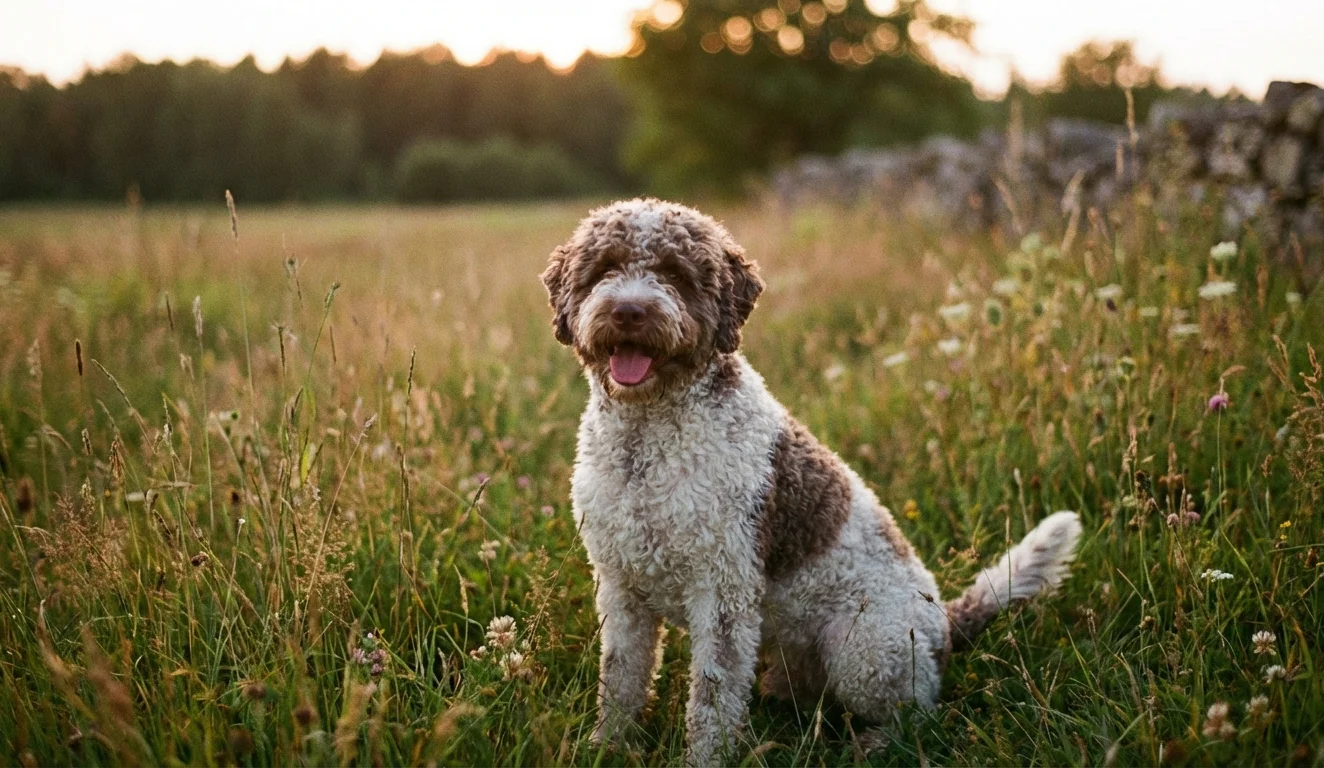
Lagotti are medium-sized, well-proportioned dogs with a distinctively curly coat that gives them a rustic, teddy-bear appearance. Males stand 17-19 inches and weigh 28-35 pounds. Females are 16-18 inches and 24-31 pounds. They’re muscular under the curls, these are working dogs, not decorative ones.
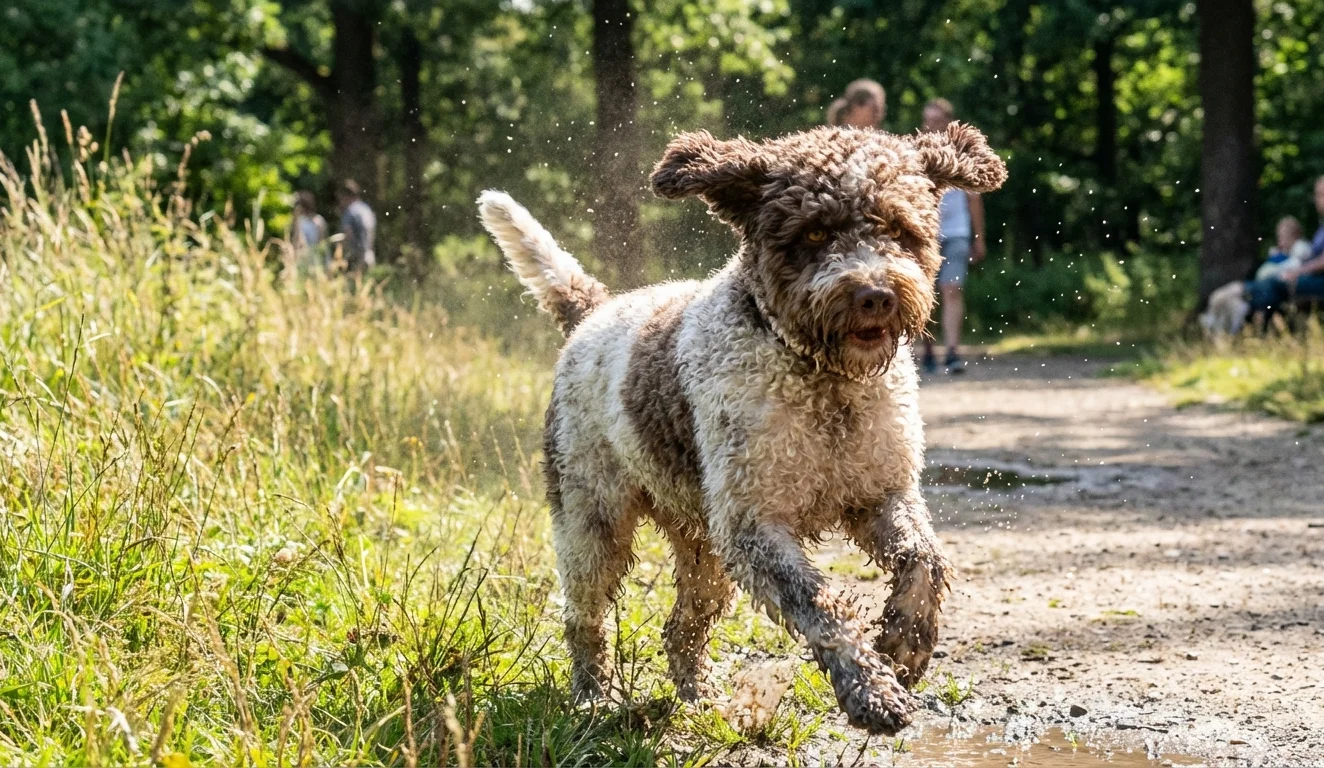
The coat is the breed’s most striking feature. It’s dense, curly, and woolly in texture, with a water-resistant quality that dates back to the breed’s water-retriever origins. The curls are tight and evenly distributed over the entire body, including the face, which is framed by a curly “beard” and eyebrows. The coat continues growing (rather than shedding in cycles), similar to Poodles, which is why Lagotti are often recommended for allergy-sensitive households.
Colors include off-white, white with brown or orange patches, brown roan, solid brown, and solid orange. Some puppies are born darker and lighten as they mature, a brown puppy might become a brown roan adult. The variability in color is charming and means no two Lagotti look exactly alike.
The eyes are large and round, ranging from dark yellow to dark brown depending on coat color. The expression is alert, engaged, and somehow conveys the dog’s keen intelligence. The ears are triangular, set just above the eye line, and covered in curly fur. The overall impression is of a natural, unsculpted working dog, not a salon-groomed show piece.
Lagotto Romagnolo Temperament
The Lagotto temperament hits a sweet spot that’s hard to find in the dog world: smart enough to be interesting, calm enough to live with comfortably, and affectionate without being needy.
What living with a Lagotto actually looks like:
- They’re nose-driven. The Lagotto’s sense of smell dominates its experience of the world. They’ll stop on walks to investigate scents, track trails through the yard, and can find hidden treats in your house with unsettling efficiency. This is a feature, not a bug, it’s what makes them extraordinary at scent work, nose games, and (obviously) truffle hunting.
- They’re affectionate but not overbearing. Lagotti love their families and want to be near them, but they’re not as clingy as some companion breeds. They’ll sit in the same room contentedly without needing to be in your lap. This balanced attachment makes them easier for working owners.
- They’re watchful without being aggressive. Lagotti will alert bark when someone comes to the door, but they’re not guard dogs. Once introduced, they’re friendly with visitors. They’re not typically reactive or suspicious.
- They dig. It’s in the breeding, truffle dogs dig for a living. Your Lagotto may enthusiastically excavate your garden, flower beds, or yard if not given appropriate outlets. Providing a designated digging area or engaging them in nose work redirects this instinct.
- They’re good with other animals. Lagotti generally get along well with other dogs and can live peacefully with cats. They don’t have the intense prey drive of many sporting breeds, which is a real advantage in multi-pet households.
Lagotti are excellent with children. They’re gentle, patient, and sturdy enough for play without being so large they accidentally bowl kids over. They’re one of the breeds we’d confidently recommend for families with young children.
Exercise Needs
Lagotti need 45-60 minutes of exercise per day, making them moderate-energy by sporting breed standards. They don’t have the relentless drive of a Lab or the frantic energy of a springer spaniel. They enjoy activity but also know how to relax.
Best exercise for Lagotti:
- Daily walks with plenty of sniffing time (let them use that nose, rushing them past scents is like dragging an art lover through a museum)
- Nose work and scent detection games, this is where Lagotti truly shine and it provides incredible mental stimulation
- Fetch and water play, the water-retriever heritage is still there, and many Lagotti love swimming
- Moderate hikes, they’re sturdy trail dogs that handle varied terrain well
- Agility and rally obedience
The mental component is just as important as the physical. A 30-minute nose work session can tire a Lagotto as effectively as an hour-long walk. Puzzle feeders, snuffle mats, and hide-and-seek games with treats tap into the breed’s scenting instincts and provide genuine enrichment.
Under-exercised Lagotti may become diggers, barkers, or general mischief-makers. But the threshold for “enough exercise” is lower than with many sporting breeds, which makes the Lagotto practical for owners who can’t commit to 90+ minutes daily.
Grooming
The Lagotto’s curly coat is low-shedding but not low-maintenance. It requires a different grooming approach than straight or double-coated breeds.
Grooming schedule:
- Brush 1-2 times per week with a slicker brush or wide-toothed comb, the goal is to prevent mats, not to brush the curls out
- Don’t over-brush: the curls should look natural and rustic, not fluffy. Over-brushing a Lagotto coat creates a poodle-like puff that’s not correct for the breed.
- Full body clip every 2-4 months: Lagotti need regular trimming because the coat continues growing. Most owners maintain a 1-2 inch length for practicality.
- Bath every 4-6 weeks: use a gentle shampoo that won’t strip the coat’s natural texture
- Ear care is important: the curly ear fur can trap moisture and debris, promoting ear infections. Check weekly and clean as needed.
- Nail trim every 2-3 weeks
The shedding advantage: Lagotti shed very little. The curly coat traps loose hair within the curls rather than releasing it onto your furniture and clothes. This is the breed’s biggest grooming selling point and makes it genuinely better for allergy-sensitive households (though “hypoallergenic” is a spectrum, not an absolute).
Professional grooming every 8-12 weeks ($50-$80) is recommended unless you’re comfortable clipping the coat yourself. Some Lagotto owners invest in a quality set of clippers ($100-$200) and learn to do it at home, it’s not difficult once you’ve seen it done a couple of times.
Lagotto Romagnolo Health Issues
Lagotti are a generally healthy breed with an impressive lifespan of 15-17 years. The breed’s restoration from a small founding population does concentrate some genetic conditions, but responsible breeding has reduced their impact significantly.
Hip Dysplasia
The OFA reports moderate prevalence in Lagotti. Responsible breeders screen through OFA or PennHIP evaluations. Treatment ranges from conservative management to surgical options at $1,500-$6,000.
Benign Familial Juvenile Epilepsy (BFJE)
This is the Lagotto-specific condition that prospective owners should know about. BFJE causes seizures in puppies typically between 5-9 weeks of age. The seizures involve trembling, ataxia, and stiffness, but, and this is the encouraging part, affected puppies almost always outgrow the condition completely by 8-13 weeks. A DNA test exists, and responsible breeders test for it. Puppies that carry the gene can be identified before symptoms appear. Treatment costs are minimal since the condition resolves on its own, but veterinary monitoring during the active phase costs $300-$800.
Storage Disease (Lagotto Storage Disease/LSD)
A neurological condition caused by a specific genetic mutation in the breed. It causes progressive cerebellar ataxia, loss of coordination, starting between 4 months and 4 years of age. A DNA test exists, and responsible breeders screen all breeding dogs. Affected dogs have no cure, but the condition is completely preventable through testing. This is why buying from a breeder who does full genetic health testing is so important.
Patellar Luxation
Documented at moderate rates in the breed. The kneecap slides out of position, causing intermittent lameness. Mild cases may need no treatment. Surgical correction costs $1,500-$3,000 per knee.
Ear Infections
Not a genetic condition per se, but the breed’s curly, dense ear fur makes Lagotti more prone to ear infections than breeds with open, erect ears. Regular ear cleaning and keeping the ear canal dry (especially after swimming) prevents most problems. Treatment for infections costs $100-$300 per episode.
Training
Lagotti are a pleasure to train. They’re intelligent, motivated, and enjoy the collaborative nature of training sessions. Unlike some smart breeds that use their intelligence to outsmart you, Lagotti generally apply their brains to the task at hand.
Training approach for Lagotti:
- Positive reinforcement is the way to go. Lagotti are food-motivated and respond to praise. They don’t need (and won’t benefit from) heavy-handed methods.
- Nose work should be part of your training program from the start. Teaching your Lagotto to find hidden treats, then progressing to specific scent targets, is deeply satisfying for the dog and impressive to watch.
- Socialization during 8-16 weeks matters. Lagotti are naturally friendly but can develop caution around new experiences if not properly socialized early.
- The digging instinct needs redirection, not punishment. Designate a digging spot, bury treats in it, and reward your Lagotto for using it. Fighting the instinct is futile, channeling it works.
- Housetraining is typically straightforward with this breed, they’re clean dogs that pick up routines quickly.
Lagotti excel at nose work competitions, agility, rally obedience, and dock diving. They’re also being increasingly used as professional scent detection dogs for things beyond truffles, including medical detection, search and rescue, and conservation work (detecting invasive species).
Cost
Purchase Price
A Lagotto Romagnolo puppy from a reputable breeder costs $2,500-$4,500. The breed’s rarity and growing demand keep prices high. Wait lists of 12-24 months are common, and some breeders require deposits ($500-$1,000) to hold a spot.
Be wary of “bargain” Lagotti. The breed’s popularity has attracted commercial breeding operations that skip health testing. Given the breed-specific conditions (particularly LSD and BFJE) that are preventable through genetic testing, buying from a breeder who cuts corners is genuinely risky.
Lagotto rescue is extremely rare. The Lagotto Romagnolo Club of America maintains a rescue contact, but available dogs are uncommon.
Monthly Costs
| Expense | Monthly Estimate |
|---|---|
| Food (high-quality kibble or fresh food) | $30-$50 |
| Preventive vet care (averaged) | $15-$25 |
| Pet insurance | $25-$40 |
| Grooming (professional, averaged) | $15-$25 |
| Treats and chews | $10-$15 |
| Miscellaneous (toys, supplies) | $10-$20 |
| Total | $105-$175 |
First-Year Costs
Budget $4,000-$6,500 for the first year, including purchase price, initial veterinary care, vaccinations, spay/neuter, grooming supplies or professional grooming, and training. The breed’s long lifespan (15-17 years) means lifetime costs are higher than average, plan accordingly.
Is a Lagotto Romagnolo Right for You?
A Lagotto is a great fit if you:
- Want a smart, low-shedding, medium-sized family dog
- Enjoy training and mental enrichment activities (especially nose work)
- Have children or other pets, Lagotti integrate well into multi-member households
- Can provide 45-60 minutes of daily exercise and mental stimulation
- Are willing to commit to regular coat maintenance
- Have the budget for a higher-priced breed and the patience for a wait list
A Lagotto is probably NOT right if you:
- Want a zero-maintenance coat, low-shedding doesn’t mean low-grooming
- Can’t tolerate digging (it’s manageable but persistent)
- Want an off-the-shelf breed you can find locally, Lagotti require research and patience to source responsibly
- Are looking for an intense athletic partner, Lagotti are moderate, not high-performance
- Have a strict budget, purchase price and grooming costs are higher than average
The Lagotto Romagnolo is a breed that rewards the people who seek it out. It’s not the most famous dog, and it won’t be the easiest to find, but the combination of intelligence, low shedding, moderate energy, long lifespan, and genuine versatility makes it one of the best family dogs most people haven’t heard of. If you’re willing to wait for the right breeder, you won’t regret it.
Related Breeds
If you’re considering this breed, you might also want to look at:
FAQ
Can I actually train my Lagotto to find truffles?
Yes, and it’s easier than you might think. Lagotti have an instinctive drive to search for underground targets. You can start by hiding truffle-scented oil (available online for $15-$30) in increasingly challenging locations and rewarding successful finds. Some owners progress to actual truffle hunting in suitable regions, the Pacific Northwest, parts of the Southeast, and northern California all have truffle-producing areas. Professional truffle-hunting training courses exist and typically cost $200-$500. Whether or not you actually hunt truffles, scent-detection training is one of the best mental enrichment activities you can give a Lagotto.
Are Lagotti Romagnoli hypoallergenic?
Lagotti are among the better breeds for allergy sufferers. Their curly coat sheds very little, and they produce less dander than heavy-shedding breeds. But the term “hypoallergenic” is misleading, all dogs produce some allergens through dander, saliva, and urine. If you have significant dog allergies, spend time with a Lagotto before committing. Many allergy sufferers report success with the breed, but individual reactions vary.
How are Lagotti different from Poodles?
Both breeds have curly, low-shedding coats, but they’re quite different dogs. Lagotti have a more rustic, natural coat texture (woolly rather than the Poodle’s finer curls), a sturdier build, and a more moderate energy level. Temperament-wise, Lagotti are calmer and less high-strung than Standard Poodles and don’t have the Poodle’s sometimes-intense bonding needs. Lagotti were bred for scent work. Poodles were bred for water retrieving and later as companions. The Lagotto’s nose-driven personality is its defining trait, while Poodles are more broadly athletic and performance-oriented.
Do Lagotti Romagnoli bark a lot?
Lagotti are moderate barkers. They’ll bark to alert you to visitors or unusual sounds, and some individuals vocalize during play or when excited. They’re not excessive barkers by nature, and the behavior responds well to training. The breed isn’t known for nuisance barking. If your Lagotto is barking excessively, it’s usually a sign of boredom or insufficient mental stimulation, more nose work is often the solution.
How long is the wait for a Lagotto puppy?
Expect 12-24 months from a reputable breeder in North America. The breed is still relatively uncommon, and responsible breeders have small litters (typically 4-6 puppies) and long waiting lists. Some breeders require applications that include vet references and home environment details. The wait is worth it, a well-bred Lagotto from health-tested parents is significantly more likely to be healthy and well-tempered than one from a breeder who prioritizes volume over quality.