Basset Hound Breed Guide: Low to the Ground, High on Charm (2026)
Basset Hounds look like a dog designed by committee, and somehow that's exactly what makes them perfect. Here's the real deal on living with one.
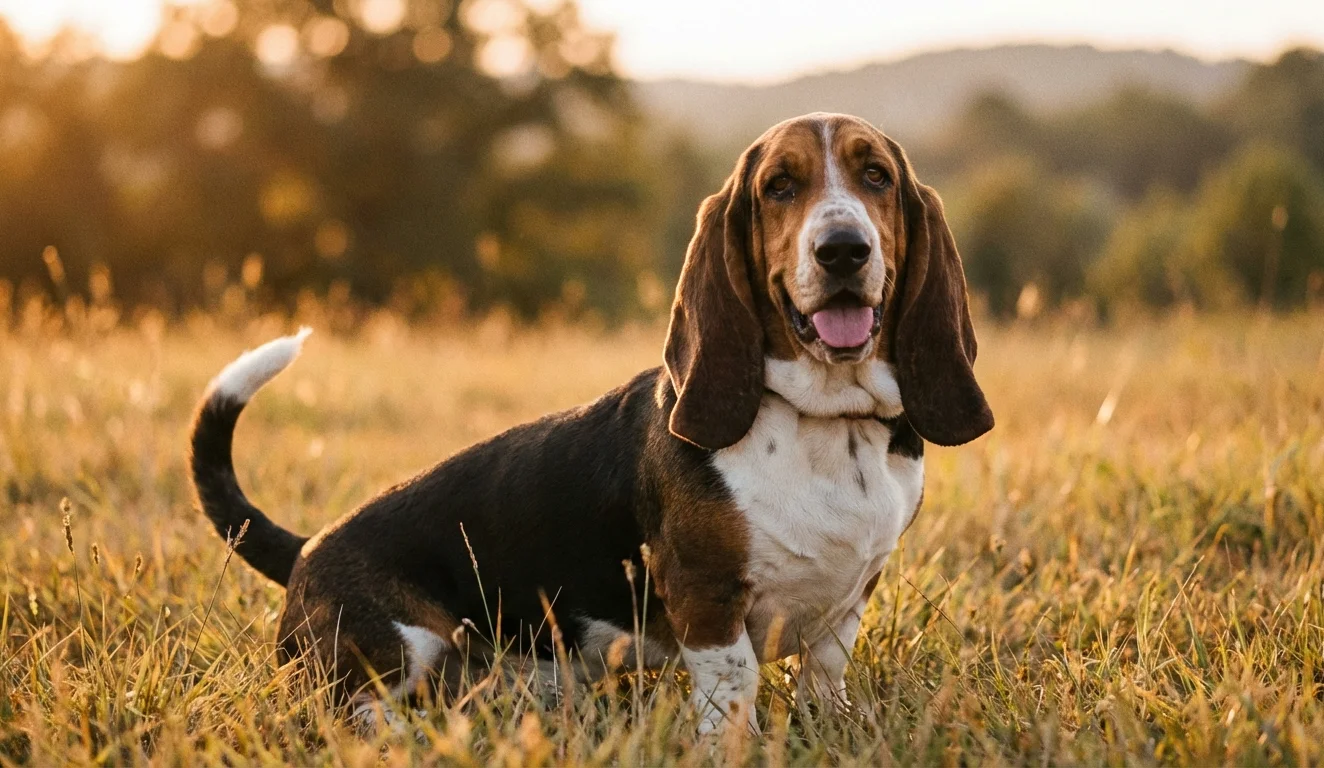
The Basset Hound stands just 11-15 inches tall but weighs 40-65 pounds. Read that again. This is a dog that’s barely a foot off the ground but can outweigh a lot of medium-sized breeds. Those long ears, droopy eyes, and short legs aren’t just adorable, they’re functional features that make the Basset one of the best tracking dogs on the planet. They live 12-13 years and carry the expression of someone who’s seen it all and is mildly disappointed.
In Short: 40–65 lbs, 12–13 years. Low energy. Moderate shedding. Watch for Ear Infections and Obesity. Great for families and first-time owners, apartment-friendly.
We think the Basset Hound is one of the funniest dogs alive, and we don’t mean that as an insult. Everything about them is slightly ridiculous, the shuffle-walk, the howl at 3 AM because a raccoon crossed the yard, the ability to look pathetically sad while they’re actually perfectly happy. But underneath that clown exterior is a genuinely sweet, stubborn, devoted dog. Just don’t expect one to come when you call it. A Basset will get there. Eventually. On its own schedule.
Basset Hound at a Glance
| Trait | Details |
|---|---|
| Breed Group | Hound (AKC) |
| Height | Males: 12-15 in / Females: 11-14 in |
| Weight | Males: 40-65 lbs / Females: 40-65 lbs |
| Life Expectancy | 12-13 years |
| Coat | Short, smooth, dense |
| Colors | Tricolor, red and white, lemon and white |
| Temperament | Patient, Low-key, Charming, Devoted |
| Shedding | Moderate |
| Energy Level | Low |
| Good With Kids | Yes |
| Good With Other Dogs | Yes |
| Good With Cats | Yes |
| AKC Recognition | 1885 |
History
The word “basset” comes from the French word bas, meaning “low.” That tells you everything about the breed’s origin story, French aristocrats in the 16th century wanted a scent hound with short legs that could be followed on foot rather than on horseback. The result was a slow, deliberate tracker with an extraordinary nose.
Friars at the Abbey of St. Hubert in Belgium are often credited with early Basset breeding, though the modern Basset Hound was refined in France and then England during the 1800s. The breed was created by crossing various short-legged French hounds, selecting for low stature, long ears that sweep scent from the ground toward the nose, and loose skin that traps scent particles. Every weird-looking feature on a Basset Hound is engineered for tracking.
The AKC recognized the Basset Hound in 1885. The breed hit pop culture fame in the 1960s when a Basset named “Cleo” starred in The People’s Choice TV show, and the Hush Puppies shoe brand adopted a Basset as its logo. Today, Bassets sit comfortably in the top 40 most popular breeds, not because they’re trendy, but because they’ve been quietly winning people over for centuries.
Size and Appearance
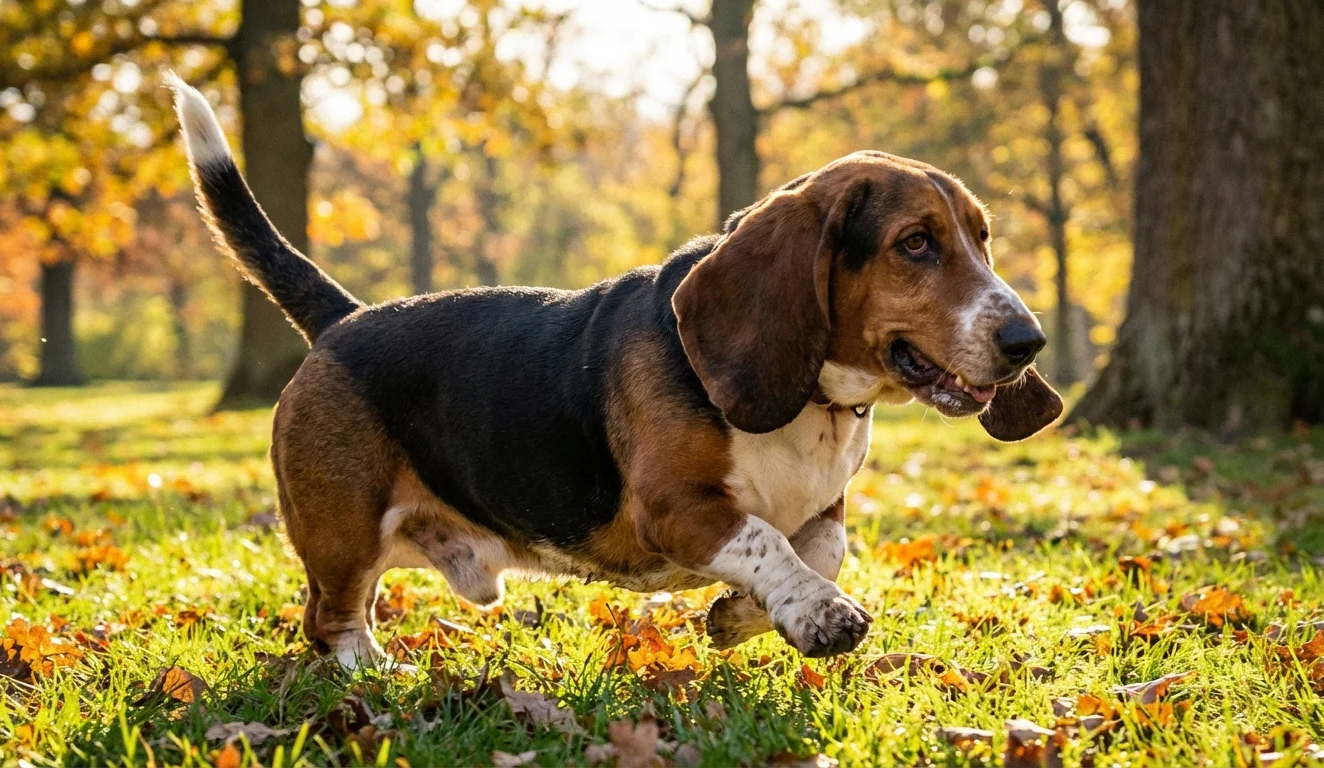
Basset Hounds are the definition of “built different.” Males and females are roughly the same size: 40-65 pounds and 11-15 inches at the shoulder. They’re heavy-boned dogs that carry significantly more weight than their height would suggest. Picking up a Basset for the first time is always a surprise, they’re heavier than they look.
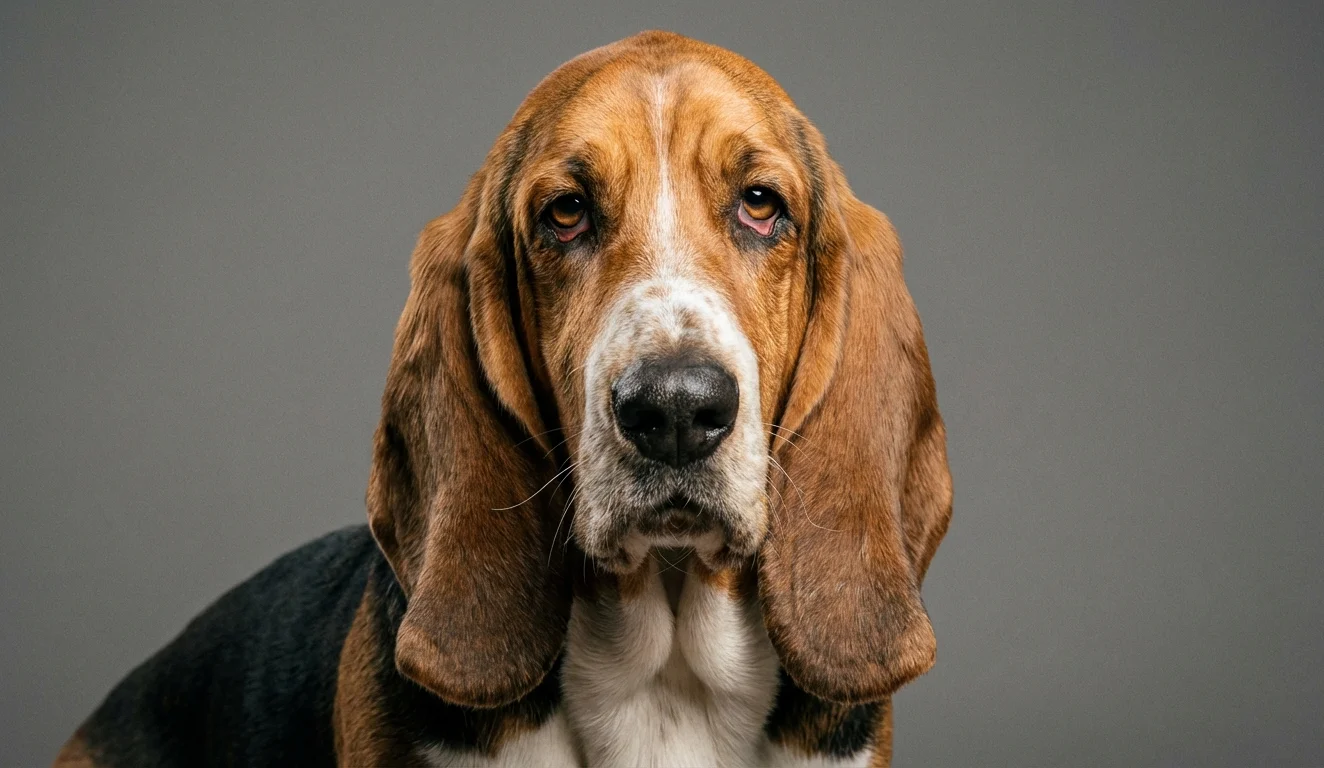
The breed’s most distinctive features are all functional. Those enormous ears, the longest of any breed, sweep along the ground and funnel scent toward the nose. The loose, wrinkled skin on the face traps scent particles. The short, crooked legs (caused by a form of dwarfism called achondroplasia) keep the dog’s powerful nose close to the ground.
The eyes deserve a special mention. Basset Hounds have deep-set, droopy eyes that give them a permanently melancholy expression. This look is misleading. Your Basset is probably not sad. It’s probably thinking about dinner, or the interesting smell on the other side of the fence, or how to get you to share your sandwich.
The tail is another notable feature, it’s long, carried upright like a flag when the dog is tracking, and has a white tip. That white tip isn’t an accident. It was selectively bred so hunters could spot their dogs in tall grass and brush. Form follows function with this breed, even the parts that look like coincidence.
Basset Hound Temperament
Basset Hounds are laid-back, gentle dogs with a stubborn streak that runs deeper than their bloodlines. They get along with almost everything, kids, other dogs, cats, strangers. A Basset’s default mode is “friendly but unhurried.”
What living with a Basset is really like:
- Patient and gentle. Bassets are remarkably tolerant, which makes them excellent family dogs. They can handle the chaos of a household with young kids without getting stressed or reactive.
- Stubborn in the most charming way possible. A Basset that catches an interesting scent will follow it with absolute conviction, regardless of what you want it to do. This isn’t defiance, it’s 400 years of breeding working exactly as intended.
- Vocal. Bassets don’t bark so much as they bay. It’s a deep, resonant howl that carries for remarkable distances. They’ll bay when they’re excited, when they’re lonely, when they hear a siren, or when dinner is 30 seconds late. Apartment dwellers and noise-sensitive neighbors, take note.
- Social and pack-oriented. Bassets were bred to hunt in packs, and they still prefer company. A Basset left alone for long hours will express its displeasure loudly and sometimes destructively. Getting a second dog (or getting two Bassets, if you’re brave) can help with separation anxiety.
Here’s our controversial Basset opinion: they’re better dogs than their reputation suggests. People dismiss them as lazy and dumb. They’re neither. They’re efficient, why run when you can walk?, and they’re independent thinkers bred to solve problems on their own. That looks like stubbornness from the outside, but it’s actually intelligence applied on the dog’s own terms.
Exercise Needs
Basset Hounds need about 30 minutes of exercise per day. That’s it. A couple of moderate walks will keep most Bassets happy and healthy.
The challenge isn’t motivating a Basset to exercise, it’s preventing them from becoming couch potatoes. Bassets are the most food-motivated breed we’ve encountered that isn’t a Labrador, and they gain weight easily. Regular daily walks aren’t optional. They’re the difference between a healthy Basset and an obese one.
Exercise tips for Basset Hounds:
- Keep walks at a moderate pace. Bassets aren’t joggers, those short legs and heavy bodies aren’t built for speed.
- Scent work is the best mental exercise for a Basset. Hide treats around the yard or try nose work classes. That incredible nose needs a job.
- Avoid stairs and jumping when possible. Those long backs and short legs are vulnerable to spinal strain.
- Swimming is a no-go for most Bassets. Their body proportions make them poor swimmers, and many will sink. If you have a pool, make sure your Basset can’t access it unsupervised.
A tired Basset is a happy Basset, but “tired” for a Basset means a 20-minute walk and a good sniff session, not a 5-mile run.
Grooming
Basset Hounds are low-maintenance dogs with one big caveat: they’re not exactly the best-smelling breed.
The short, smooth coat needs weekly brushing to remove loose hair and distribute skin oils. Bassets shed moderately, not as much as a Lab, but enough that you’ll notice hair on your furniture.
The real grooming work is in the details:
- Ears. Those gorgeous long ears trap moisture and restrict airflow, making Basset Hounds extremely prone to ear infections. Clean ears weekly. Check them after walks, especially in wet weather. If you smell something funky coming from the ears, get to the vet.
- Wrinkles. The facial folds need regular wiping to prevent bacterial and yeast buildup. A damp cloth daily or every other day does the trick.
- Drool. Bassets drool. Not Mastiff-level, but enough that you’ll want to keep a towel near the water bowl. And the couch. And your lap.
- Nails. Trim every 2-3 weeks. Bassets’ nails grow quickly and their low-to-the-ground build means overgrown nails cause problems faster than in taller breeds.
Basset Hounds have a distinctive “hound smell”, a natural oiliness to their skin and coat that some owners love and others can’t stand. Regular bathing (every 3-4 weeks) helps but won’t eliminate it completely. If you’re sensitive to dog odor, a Basset will test your limits.
Basset Hound Health Issues
Basset Hounds live 12-13 years and are generally hardy dogs, but their unique build creates some breed-specific health concerns.
Ear Infections
The #1 health issue for Basset Hounds, bar none. Those long, heavy ears that make them look so appealing also create a warm, moist environment where bacteria and yeast thrive. Most Basset owners deal with ear infections at some point, and many deal with them regularly. Prevention (weekly cleaning, keeping ears dry) is far cheaper than treatment, which runs $100-$500 per episode.
Obesity
Bassets love food with an intensity that borders on obsession. Combined with their low energy level, weight gain happens fast. An overweight Basset puts enormous strain on an already compromised skeletal structure, those short legs and long spine can’t handle extra pounds. Keep portions measured and treats limited. Your Basset will give you sad eyes. Stay strong.
Bloat (Gastric Dilatation-Volvulus)
Bassets have deep chests relative to their body size, which puts them at moderate risk for bloat. This is a life-threatening emergency where the stomach twists on itself. Symptoms include a swollen abdomen, unproductive retching, and distress. Surgery costs $2,000-$7,500. Feed smaller, more frequent meals and avoid vigorous exercise right after eating.
Hip Dysplasia
Moderate prevalence in the breed. The unusual skeletal structure of Basset Hounds means their joints are already under stress, and hip dysplasia adds to that burden. Treatment costs $1,500-$6,000. Keeping your Basset at a healthy weight is the single best thing you can do for their joints.
Glaucoma
Basset Hounds have a moderate predisposition to glaucoma, increased pressure in the eye that can lead to pain and blindness. It requires immediate treatment and ongoing management at $1,500-$4,000. If you notice your Basset squinting, rubbing at their eye, or if the eye looks cloudy or enlarged, get to the vet fast.
Training
Let’s be honest: Basset Hounds rank low on trainability scales, and that reputation is mostly earned. But “hard to train” doesn’t mean “impossible to train.” It means you need to adjust your expectations and your approach.
Bassets understand commands. They learn quickly what you want them to do. The disconnect happens at the execution stage, a Basset that smells something interesting on the ground has approximately zero interest in your recall command. That nose overrides everything else in their brain.
What works for training a Basset Hound:
- Food. Food is everything. High-value treats are your only real bargaining chip with this breed.
- Patience. You will repeat commands. You will wait. You will wonder if the dog even heard you. Keep going.
- Keep it short and positive. Five-minute sessions work better than fifteen-minute ones. End on a success.
- Never rely on off-leash obedience. A Basset that catches a scent will follow it across a busy street without a second thought. Always use a leash in unfenced areas.
House training takes longer with Bassets than most breeds. Six months to a year is normal. Crate training helps enormously. Punishing accidents makes everything worse, Bassets shut down under harsh correction.
The silver lining: Bassets respond well to routine. Once they understand that going outside leads to treats and praise, they get the program. It just takes them longer to reach that understanding than breeds that were bred to watch your face for cues. A Basset is watching the ground for cues. Different priorities.
Basset Hound Cost
Purchase Price
A Basset Hound puppy from a reputable breeder typically costs $800-$1,500. Show-quality puppies or dogs from field trial lines may cost more. Bassets are not as commonly found in shelters as Labs or Pit Bulls, but breed-specific rescues (like Basset Hound Rescue of Southern California or BROOD) typically charge $250-$450.
Monthly Costs
| Expense | Monthly Estimate |
|---|---|
| Food (high-quality kibble) | $35-$55 |
| Preventive vet care (averaged) | $15-$25 |
| Pet insurance | $30-$50 |
| Ear care supplies | $5-$15 |
| Treats and chews | $10-$15 |
| Miscellaneous (toys, supplies) | $10-$15 |
| Total | $80-$150 |
First-Year Costs
Budget $2,500-$4,000 for the first year with a Basset Hound. Factor in ear care costs as an ongoing line item, between cleaning supplies and the occasional vet visit for infections, ears are a Basset-specific budget category.
Is a Basset Hound Right for You?
A Basset Hound is a great fit if you:
- Want a gentle, patient family dog that’s good with kids and other pets
- Prefer a low-energy dog that doesn’t need hours of exercise
- Have a fenced yard (Bassets will follow a scent trail right out of your neighborhood)
- Can commit to ear care and weight management
- Appreciate a dog with character, even when that character includes selective hearing
A Basset Hound is probably NOT right if you:
- Need a dog with reliable off-leash obedience
- Are sensitive to dog odor or drool
- Live in an apartment where noise complaints are a concern (the baying carries)
- Want a dog that’s eager to please and quick to obey
- Can’t handle the patience required for slow house training
Basset Hounds are proof that a dog doesn’t have to be athletic or obedient to be wonderful. They’re funny, they’re loyal, they’re sweet with everyone, and they’ll track a scent trail with more determination than most dogs bring to anything. Just accept that your timeline doesn’t mean much to a Basset. They’ll get there when they get there.
Related Breeds
If you’re considering this breed, you might also want to look at:
Frequently Asked Questions
Are Basset Hounds lazy?
Not exactly. Bassets are low-energy dogs that conserve effort, there’s a difference. They were bred to track scent slowly and methodically for hours, not to sprint. A Basset on a scent trail is focused and driven, not lazy at all. At home, they prefer resting between activities, which looks like laziness but is really just efficiency. But Bassets need daily walks to prevent obesity, and they genuinely enjoy their outdoor time.
Do Basset Hounds smell bad?
Bassets do have a natural “hound odor” that’s stronger than most breeds. It comes from the oils in their skin that help repel water and dirt. Regular bathing every 3-4 weeks manages the smell, and keeping their ears clean prevents that secondary musty ear smell. Some Basset owners barely notice it after a while. Others never fully adjust. If dog smell bothers you, spend time around a Basset before deciding.
Can Basset Hounds be left alone?
Bassets don’t do well with long stretches alone. They’re pack dogs at heart and can develop separation anxiety that manifests as howling (your neighbors will let you know) and destructive behavior. Most Bassets can handle 4-6 hours alone once trained, but a full workday without a break is too long. Dog walkers, doggy daycare, or a second pet can help bridge the gap.
Are Basset Hounds good with other dogs?
Yes, generally. Bassets were bred to work in packs, so they tend to get along well with other dogs. They’re also typically good with cats, which is unusual for a hound breed. Their laid-back temperament means they rarely start conflicts. A second dog can actually be a great addition to a Basset household since it addresses their need for companionship when you’re away.
Why do Basset Hounds howl?
Howling (or baying) is deeply hardwired into the Basset Hound. They were bred to bay while tracking game so hunters could follow the sound and locate the dog. Modern Bassets bay when they’re excited, lonely, bored, or when they hear certain sounds like sirens. Training can reduce nuisance baying, but you won’t eliminate it. If you’ve never heard a Basset bay, look up a video before you commit. It’s… impressive.