
Beagle Breed Guide: A Nose With Legs and Zero Recall (2026)
Beagles are sweet, compact, and will follow a scent trail until they're in the next county. Here's what you need to know before getting one.
The Beagle is a small hound that weighs 20-30 pounds, stands 13-15 inches tall, and lives 10-15 years. That’s a wide lifespan range, which reflects the breed’s generally strong health, Beagles are tough little dogs with fewer structural issues than many popular breeds. They were bred to hunt rabbits in packs, which means they’re social, vocal, and hardwired to follow their nose wherever it leads. Emphasis on wherever.
In Short: 20–30 lbs, 10–15 years. High energy. Moderate shedding. Watch for Intervertebral Disc Disease and Epilepsy. Great for families and first-time owners, apartment-friendly.
We love Beagles, but we need to be honest about something: the Beagle’s nose runs the show. Not you. Not your training. The nose. When a Beagle catches a scent, a switch flips in their brain and you temporarily stop existing. This is the breed that makes experienced dog trainers look like beginners, and if you expect a dog that comes when called every time, you should probably keep scrolling. But if you want a cheerful, sturdy, endlessly optimistic companion who happens to be one of the best dogs ever designed for family life, stick around.
Beagle at a Glance
| Trait | Details |
|---|---|
| Breed Group | Hound (AKC) |
| Height | 13-15 in (both sexes) |
| Weight | 20-30 lbs (both sexes) |
| Life Expectancy | 10-15 years |
| Coat | Short, dense double coat |
| Colors | Tricolor, Lemon & White, Red & White, Chocolate Tricolor |
| Temperament | Amiable, Determined, Gentle, Excitable |
| Shedding | Moderate |
| Energy Level | High |
| Good With Kids | Yes |
| Barking Level | Very High (includes howling) |
History of the Beagle
Beagle-type dogs have been around since at least the Roman era, though the modern breed traces to England in the 1830s. Reverend Phillip Honeywood established a pack of Beagles in Essex that is generally credited as the foundation of the modern breed. These dogs were bred exclusively for hunting rabbits, a practice called beagling, and they were selected for stamina, scenting ability, and a loud voice that could carry across fields so hunters on foot could follow the pack.
The name itself is debated. Some historians link it to the French be’geule, meaning “open throat” or “loudmouth.” Others point to the Gaelic beag, meaning “small.” Both etymologies are fitting for a small dog that never stops talking.
Beagles arrived in America after the Civil War and gained AKC recognition in 1885. They quickly became popular as both hunting dogs and family pets. The breed got a cultural boost from Snoopy, who first appeared in Charles Schulz’s Peanuts comic strip in 1950, though Snoopy’s behavior is more cat-like than any real Beagle we’ve ever met. Today, Beagles consistently rank in the AKC’s top 10 most popular breeds, and they’re also the most commonly used breed in biomedical research, a fact that’s led to an active Beagle rescue community.
Size and Appearance
Beagles come in two size varieties recognized by the AKC: the 13-inch variety (under 13 inches at the shoulder) and the 15-inch variety (13-15 inches). Both varieties weigh 20-30 pounds, though the smaller variety tends toward the lower end. There’s minimal size difference between males and females.
Build
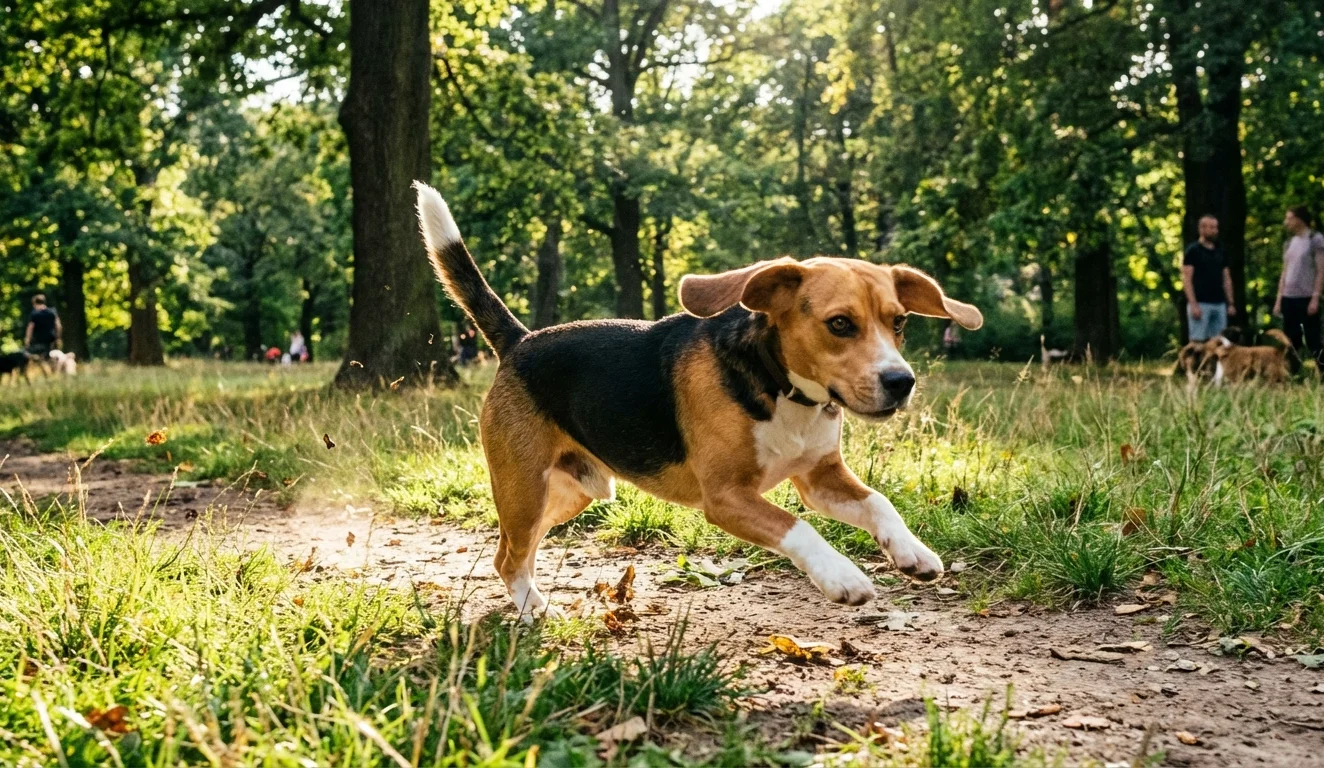
Beagles are built for endurance, not speed. They’re solid, compact dogs with a slightly domed skull, long floppy ears, and large brown or hazel eyes that can convince you to hand over your entire dinner. The body is muscular with a moderately long tail (called a “stern” in hound parlance) carried high, like a white flag waving above the grass so hunters can spot the dog.
Coat and Color
The Beagle coat is short, dense, and weatherproof, a double coat designed for hours of running through wet brush. The classic color pattern is tricolor: black, tan, and white. But Beagles also come in lemon and white (a very pale gold with white), red and white, and chocolate tricolor. The white-tipped tail is a breed hallmark, it helped hunters see the dog in tall grass.
Beagles shed more than you’d expect for a short-coated dog, particularly during spring and fall coat changes.
Beagle Temperament
Beagles are pack dogs, and it shows. They’re social, easygoing, and generally happy with everyone, people, dogs, kids, strangers. The AKC calls them “merry,” and that’s honestly the best word for it. A Beagle’s default state is upbeat.
What Beagles are really like to live with:
- The nose controls everything. A Beagle’s sense of smell is estimated to have around 220 million scent receptors, compared to about 5 million in humans. The USDA’s “Beagle Brigade” uses the breed at airports to detect prohibited agricultural products because their nose is that precise. At home, this translates to a dog that will track a dropped crumb across your entire house and can smell the neighbor grilling from three blocks away.
- They are LOUD. Beagles have three vocalizations: a bark, a bay (a prolonged howl-bark used during scent tracking), and a howl. They use all three frequently. If you live in an apartment or have noise-sensitive neighbors, this is a serious consideration. A bored or lonely Beagle can bay for hours.
- Pack-oriented means separation anxiety is common. Beagles were bred to work in groups and don’t handle isolation well. A Beagle left alone for eight hours with nothing to do will likely destroy things, bark incessantly, or both. Having a second dog helps significantly.
- Food motivation borders on obsession. Beagles will eat anything, anytime. They’re the breed most likely to get into the trash, counter-surf, or steal food off a plate when your back is turned for two seconds. It’s not bad behavior, it’s centuries of breeding for persistence. But you’ll need to manage it.
Here’s our honest take: Beagles are one of the best family dogs that exist. They’re the right size for kids, they’re incredibly tolerant, and they have an infectious enthusiasm for life. But they are absolutely not a “set it and forget it” breed. They need company, they need fencing, and they need an owner who can tolerate the howling with a sense of humor.
Exercise Needs
Beagles need about 60 minutes of exercise per day. Don’t let the small size fool you, these are high-energy dogs built for hours of sustained tracking. A quick walk around the block won’t cut it.
What works well for Beagles:
- Long walks with sniff time. Let your Beagle use their nose. A “sniffari” where the dog leads and investigates scents is more tiring for a Beagle than a fast-paced walk where they’re forced to heel the whole time.
- Scent work and nose games. Hide treats around the yard, use snuffle mats, or try formal AKC scent work. This is the exercise equivalent of a PhD program for Beagles.
- Fenced yard play. Emphasis on FENCED. A Beagle without a fence is a Beagle who will follow a rabbit trail to the next zip code. Beagles are one of the top escape artist breeds, they’ll dig under, squeeze through, or climb over inadequate fencing.
- Playdates with other dogs. Beagles are social and do well with dog friends.
Critical safety note: Never trust a Beagle off-leash in an unfenced area. Their recall, even with extensive training, is unreliable when scent is involved. This isn’t a training failure, it’s hardwired biology. A Beagle on a scent trail will run into traffic without a second thought. Always use a leash or a securely fenced area.
Grooming
Beagles are low-maintenance in the grooming department. That short, dense coat practically takes care of itself, mostly.
Grooming routine:
- Weekly brushing with a hound glove or bristle brush. This keeps shedding manageable and distributes natural oils.
- Bathing every 4-6 weeks. Beagles can develop a slightly “houndy” odor, it’s natural oil production from the coat, so regular bathing helps. Don’t over-bathe, though, or you’ll dry out the skin.
- Ear cleaning is especially important. Those long, floppy ears are adorable and also terrible for ventilation. Moisture gets trapped, creating a perfect environment for yeast and bacterial infections. Check and clean ears weekly.
- Nail trims every 2-3 weeks.
- Teeth brushing two to three times per week. Beagles aren’t especially prone to dental disease, but prevention is always cheaper than treatment.
No professional grooming required for coat maintenance. You can handle everything at home with basic supplies.
Beagle Health Issues
Beagles are one of the healthier popular breeds, with a life expectancy of 10-15 years. Their moderate size, balanced build, and lack of extreme physical features contribute to their overall robustness. But there are still conditions to be aware of.
Intervertebral Disc Disease (IVDD)
Beagles have a moderate prevalence of IVDD, a spinal condition where the cushioning discs between vertebrae degenerate, herniate, or bulge into the spinal cord. Symptoms range from back pain and reluctance to jump to, in severe cases, paralysis. Mild cases may respond to conservative treatment (rest and anti-inflammatories), but serious cases require surgery at $3,000-$8,000. Keeping your Beagle at a healthy weight and using ramps instead of letting them jump on and off furniture can reduce risk.
Epilepsy
Beagles have a higher-than-average incidence of idiopathic epilepsy, seizures with no identifiable structural cause. Onset is typically between 6 months and 3 years of age. Most epileptic Beagles can be well-managed with daily anticonvulsant medication (like phenobarbital or levetiracetam), costing $500-$3,000 annually depending on the drug and monitoring requirements. The condition isn’t curable but is treatable, and most epileptic Beagles live full, normal lives.
Hypothyroidism
An underactive thyroid is moderately common in Beagles, usually appearing in middle-aged dogs. Symptoms include weight gain, lethargy, cold intolerance, and skin/coat changes. Diagnosis requires a blood test, and treatment is straightforward, daily synthetic thyroid hormone, costing $200-$600 per year. Once properly medicated, dogs return to normal.
Cherry Eye
Cherry eye (prolapse of the third eyelid gland) occurs at moderate rates in Beagles. It’s more common in young dogs and appears as a pink or red mass in the inner corner of the eye. Surgical correction costs $500-$1,500 and is usually successful.
Obesity
Beagles are extremely food-motivated and highly prone to weight gain. An overweight Beagle is at increased risk for joint problems, IVDD, and diabetes. This is one of the most preventable health issues in the breed, measure food portions, don’t free-feed, and limit treats despite the heartbreaking puppy-dog eyes.
Training a Beagle
Training a Beagle is an exercise in managing expectations. They’re intelligent, they figure things out quickly, but they have their own priorities, and “pleasing the handler” ranks well below “following interesting smells” and “obtaining food.”
What works with Beagles:
- Food rewards. Always. Beagles are so food-driven that treats are basically the only currency that matters. Use small, high-value treats and make them earn it.
- Keep sessions short and fun. Ten minutes of engaging training is worth more than thirty minutes of frustrated repetition. If the Beagle checks out, you’ve lost them.
- Train recall early and often, but accept limitations. A solid recall in a distraction-free environment is achievable. A reliable recall when a squirrel just ran across the yard is… aspirational. Use a long training leash for recall practice in outdoor settings.
- Crate training is a smart investment. Beagles tend to chew when bored, and a crate provides a safe space when you can’t supervise. Introduce it positively and never use it as punishment.
Common mistakes:
- Expecting Labrador-level obedience. Beagles are hounds, not retrievers. They weren’t bred to hang on your every word, they were bred to make independent decisions in the field. Adjust your expectations accordingly.
- Punishing the howling. Beagles bay. It’s what they do. You can manage it (reduce boredom, don’t reward attention-seeking vocalizations), but you can’t eliminate it entirely. If the sound drives you crazy, this isn’t your breed.
Beagle Cost
Purchase Price
A Beagle puppy from a reputable breeder typically costs $800-$1,500. Field-bred Beagles from proven hunting lines may cost more. Show-quality Beagles from champion lines can reach $2,000+.
Beagle rescue is a particularly active community, partly because of organizations that rehome retired research Beagles. Adoption typically costs $200-$400. Former research Beagles make wonderful pets, they’re usually healthy, gentle, and incredibly grateful for a real home. Though some need extra patience as they learn what grass, stairs, and toys are for the first time.
Monthly Costs
| Expense | Monthly Estimate |
|---|---|
| Food (high-quality kibble) | $25-$40 |
| Preventive vet care (averaged) | $15-$25 |
| Pet insurance | $25-$45 |
| Treats and chews | $10-$15 |
| Miscellaneous (toys, supplies) | $10-$15 |
| Total | $80-$150 |
Beagles are one of the more affordable breeds to maintain. Their small size means lower food costs, grooming is minimal, and their generally good health keeps vet bills reasonable. The main unexpected expense tends to be emergency vet visits for dietary indiscretions, because Beagles will eat things they shouldn’t.
First-year costs including purchase, supplies, initial vet visits, and spay/neuter typically run $2,500-$4,500.
Is a Beagle Right for You?
A Beagle is a great fit if you:
- Have a family with kids, Beagles are outstanding family dogs
- Have a securely fenced yard (or can commit to leashed exercise only)
- Want a cheerful, sociable dog that gets along with almost everyone
- Can tolerate barking and howling, or live somewhere it won’t bother the neighbors
- Are home enough to prevent long periods of isolation
- Appreciate a dog with personality and an independent streak
A Beagle might NOT be right if you:
- Live in a noise-sensitive apartment building
- Want a dog with reliable off-leash recall
- Are gone from home for long stretches, Beagles do poorly alone
- Can’t secure your food, trash, and counters from a determined scavenger
- Want a quiet, low-energy companion
- Have cats (Beagles can coexist with cats, but the prey drive can be an issue with some individuals)
Beagles are one of those breeds that make you laugh every day. Something about the way they follow their nose, the total commitment to it, tail wagging, ears dragging on the ground, is just genuinely joyful to watch. They’re maddening sometimes. The howling at 6 AM because a squirrel exists, the unshakeable belief that whatever you’re eating should be shared. But when a Beagle curls up next to you on the couch with their head on your lap, you’ll forgive every stolen sandwich.
Related Breeds
If you’re considering this breed, you might also want to look at:
Frequently Asked Questions
Do Beagles bark a lot?
Yes. Beagles are among the most vocal breeds. They bark, they bay (a prolonged howl-bark unique to hound breeds), and they howl. These vocalizations were bred into them, a Beagle’s voice was their most valuable trait during rabbit hunts, as it allowed hunters to track the pack across fields. You can reduce excessive barking through adequate exercise, mental stimulation, and companionship, but you cannot train the vocalization instinct out of a Beagle. If noise is a dealbreaker, this breed is not for you.
Can Beagles be off-leash?
In a securely fenced area, yes. In an unfenced area, we’d strongly advise against it. Beagles have approximately 220 million scent receptors, and when they lock onto a scent trail, their focus shifts entirely to the nose. Even well-trained Beagles with solid recall in low-distraction environments will ignore commands when tracking a scent. This isn’t stubbornness, it’s a deeply embedded hunting instinct. The ASPCA identifies Beagles as one of the breeds most commonly reported lost, and scent tracking is the primary reason. Keep your Beagle on a leash or in a fenced area.
Are Beagles good apartment dogs?
Beagles can adapt to apartment living, but the noise is the main obstacle. Their baying and howling can carry through walls and floors, which doesn’t endear you to neighbors. If you’re set on a Beagle in an apartment, you’ll need to commit to plenty of outdoor exercise, mental enrichment to prevent boredom-related noise, and potentially working with a trainer on bark management. Having a second pet (another dog or even a cat) can also help reduce separation-related vocalization.
How long do Beagles live?
Beagles typically live 10-15 years, which is an excellent lifespan range. Their balanced build and lack of extreme physical features contribute to their longevity. The biggest factors in reaching the upper end of that range are maintaining a healthy weight (Beagles are extremely prone to obesity), regular exercise, dental care, and routine veterinary checkups. Many Beagles remain active and healthy well into their early teens.
Why does my Beagle eat everything?
Beagles are among the most food-motivated breeds, and there’s a biological basis for it. Like Labrador Retrievers, some Beagles may carry genetic variations that affect their satiety signals, making them feel perpetually hungry. Combined with their extraordinary sense of smell, this creates a dog that’s essentially a four-legged food detection system with no “off” switch. Management is key: use slow-feeder bowls, measure food portions precisely, keep trash cans secured, and never leave food within reach. Accept that your Beagle will always want more food, and don’t let the pleading eyes override your judgment on portions.