Dachshund Breed Guide: Small Dog, Enormous Attitude, Fragile Back (2026)
Dachshunds pack more personality per pound than almost any breed alive. They also come with a back problem you need to understand before buying.
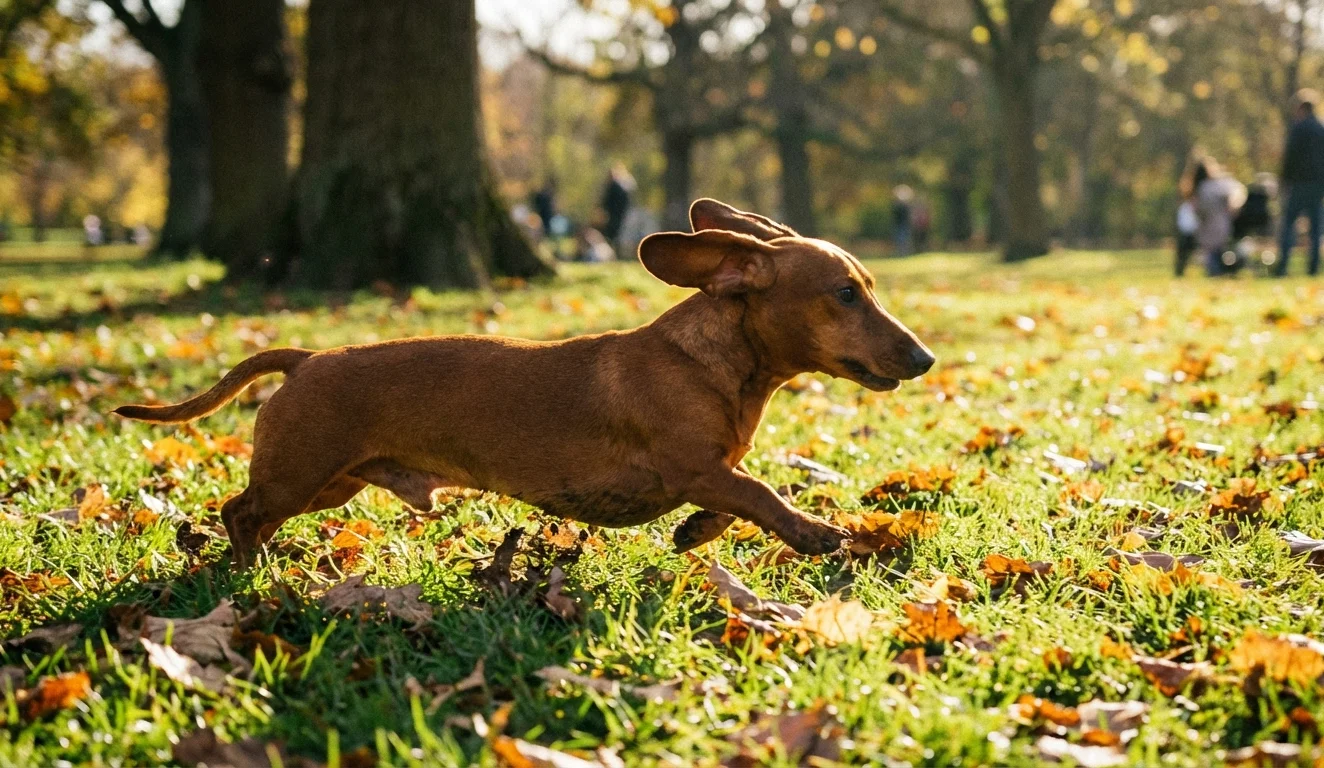
The Dachshund is a small hound that weighs 16-32 pounds (standard size), stands just 8-9 inches tall, and lives 12-16 years. That long body on those short legs isn’t an accident, Dachshunds were literally engineered to go underground after badgers, which means they needed a low profile and a fearless personality. The body shape that makes them look like a cartoon is actually a working design.
In Short: 16–32 lbs, 12–16 years. Moderate energy. Moderate shedding. Watch for Intervertebral Disc Disease and Obesity. Great for families and first-time owners, apartment-friendly.
Here’s what most breed guides won’t tell you about Dachshunds: they think they’re Rottweilers. Seriously. The confidence-to-size ratio in this breed is completely absurd. A Dachshund will bark at a Great Dane, challenge a vacuum cleaner to a fight, and then refuse to go outside because it’s raining. They’re stubborn in a way that isn’t frustrating so much as genuinely hilarious, once you accept that you don’t actually own a small dog, you own a very small dog with a very large opinion about everything. The catch? That iconic long back is a ticking time bomb for spinal problems, and that’s something every potential owner needs to understand going in.
Dachshund at a Glance
| Trait | Details |
|---|---|
| Breed Group | Hound (AKC) |
| Height | 8-9 in (standard) |
| Weight | 16-32 lbs (standard) / under 11 lbs (miniature) |
| Life Expectancy | 12-16 years |
| Coat | Smooth, Longhaired, or Wirehaired |
| Colors | Red, Black & Tan, Chocolate & Tan, Cream, Dapple, Brindle |
| Temperament | Clever, Stubborn, Devoted, Lively, Courageous |
| Shedding | Moderate |
| Energy Level | Moderate |
| Good With Kids | Yes (older kids best) |
| Apartment Friendly | Yes |
History of the Dachshund
The Dachshund originated in Germany at least 300 years ago, though some historians trace similar dogs back to the 15th century. The name translates directly: Dachs (badger) + Hund (dog). These dogs were bred to hunt badgers, tracking them by scent, crawling into underground burrows, and then either flushing the badger out or holding it at bay until the hunter could dig down. Badgers are not gentle animals. They’re aggressive, clawed, and can weigh 25-30 pounds. The fact that a Dachshund was expected to confront one underground, alone, in the dark, tells you everything about this breed’s courage.
German foresters developed different coat varieties for different terrain. Smooth-coated Dachshunds were the original type. Longhaired Dachshunds were likely created by crossing with spaniels for work in cold, wet brush. Wirehaired Dachshunds, the most recent variety, were developed with terrier crosses for work in thorny brambles.
Dachshunds were among the earliest AKC-registered breeds, recognized in 1885. The breed suffered a public image problem in America during both World Wars due to its German heritage, they were sometimes called “liberty hounds” to sound less German. That association faded, and Dachshunds have remained consistently popular in the US ever since. They typically rank in the AKC’s top 10 most popular breeds.
Size and Appearance
Dachshunds come in two sizes. Standard Dachshunds weigh 16-32 pounds and stand 8-9 inches tall. Miniature Dachshunds weigh under 11 pounds. In some European registries, there’s also a rabbit-size (Kaninchen) Dachshund, but the AKC doesn’t recognize it as a separate variety.
Build
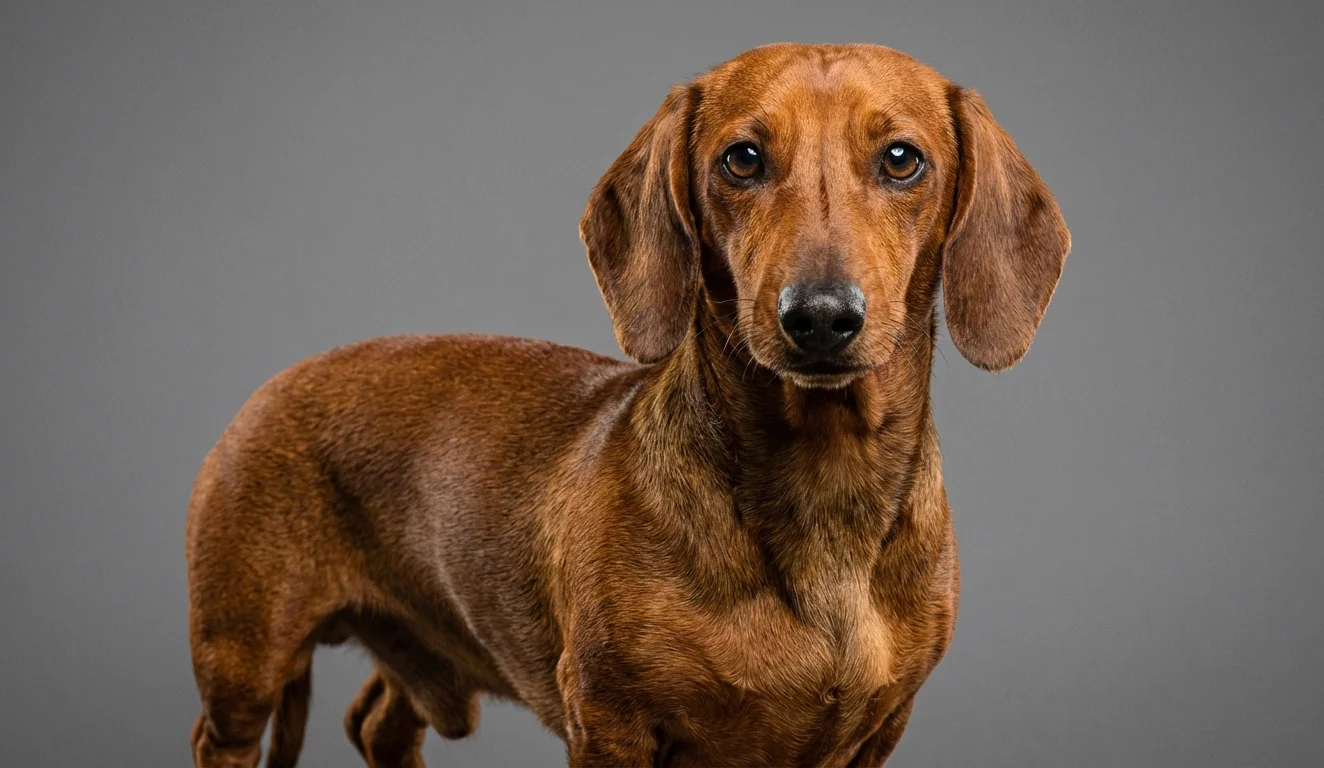
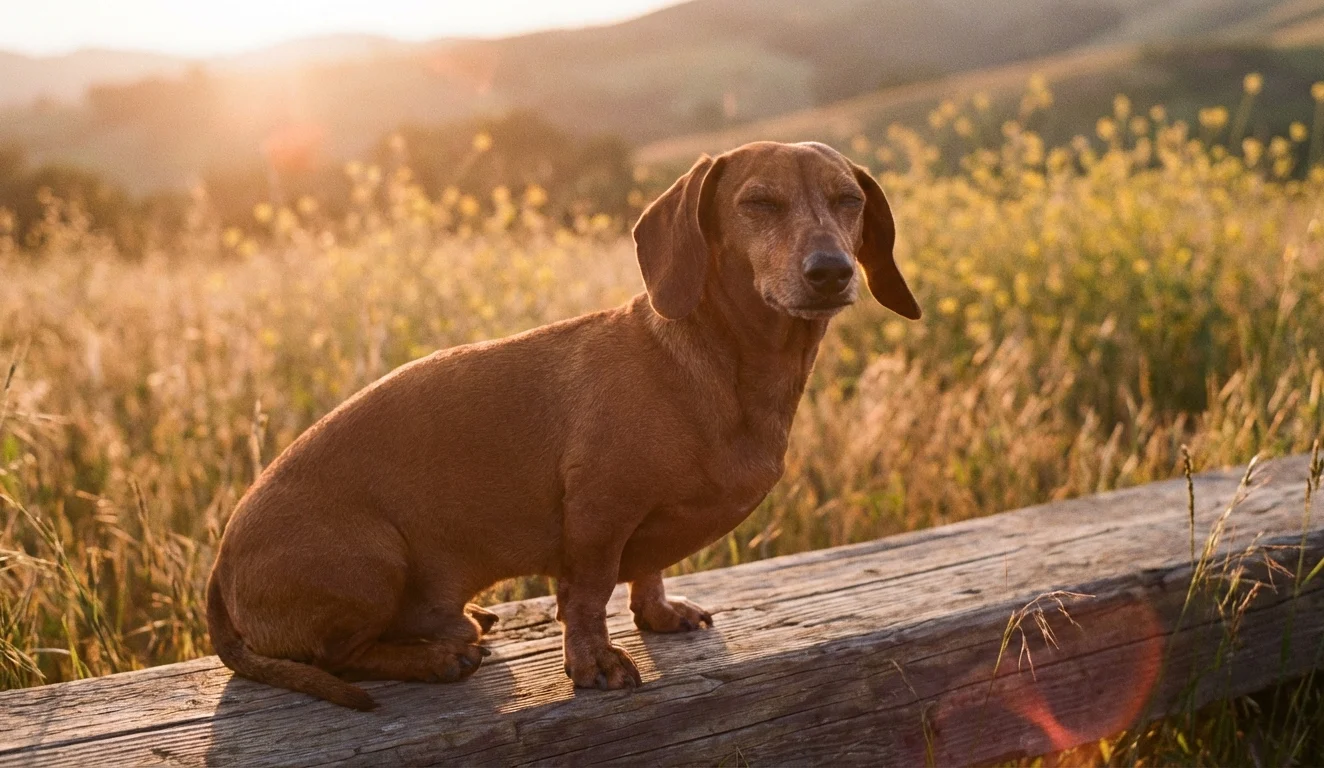
The Dachshund’s body is unmistakable, long, low, and muscular. The chest is deep (it has to be for lung capacity underground), the legs are short but strong, and the paddle-shaped front paws were designed for digging. Despite the unusual proportions, a well-bred Dachshund should move freely and carry itself with confidence. The tail extends the spine line in a slight curve.
Coat Varieties
This is one of the few breeds with three distinct coat types, and the personality differences between them are a running joke among Dachshund owners.
- Smooth coats are short and shiny, lying close to the body. These dogs tend to be the most stubborn and “typically Dachshund” in temperament.
- Longhaired coats are soft, slightly wavy, and feathered on the ears, chest, and legs. Longhaireds are generally considered the most mellow variety, the spaniel influence.
- Wirehaired coats are short, rough, and wiry with bushy eyebrows and a beard. Wirehaireds tend to be the most clownish and outgoing, the terrier influence showing through.
Color possibilities are extensive: red, black and tan, chocolate and tan, cream, dapple (a merle-like pattern), brindle, and more. Red is the most common.
Dachshund Temperament
Dachshunds are one of the most personality-dense breeds in existence. Every Dachshund owner will tell you the same thing: the personality is so much bigger than the dog.
What Dachshunds are really like:
- Fearless to a fault. A trait that served them well in badger dens doesn’t always translate well to modern life. Dachshunds will confront dogs five times their size without a second thought. They don’t seem to know they’re small, and this can get them into trouble.
- Loyal to one person (mostly). Dachshunds tend to pick a favorite human and bond intensely with them. They’re affectionate with the whole family but will often follow one person from room to room and resist being handled by anyone else.
- Barkers. Dachshunds have a deep, surprisingly loud bark for their size. They use it liberally, for doorbells, squirrels, neighbors walking by, suspicious leaves blowing across the yard. Their barking level is high, and they have zero volume control.
- Separation anxiety is common. Dachshunds don’t do well left alone for long periods. They’ll bark, chew, and occasionally punish you by having accidents in specific locations. They’re not being spiteful (dogs don’t do spite), but the anxiety is real and needs management.
Our honest take: Dachshunds are the most cat-like dogs we know. They decide when they want attention. They’ll ignore you when they’re not interested. They have strong opinions about where they sit, when they eat, and who gets to touch them. If you want an obedient, people-pleasing dog, a Dachshund will make you miserable. If you want a tiny roommate with a giant attitude, you’ve found your breed.
Exercise Needs
Dachshunds need about 30 minutes of exercise per day. That’s less than many breeds their weight, but it’s still important, both for physical health and for preventing the boredom that leads to problem behaviors.
Good exercise for Dachshunds:
- Moderate walks. Two 15-minute walks per day is a good baseline. Let them sniff, they’re hounds, and nose work is mentally tiring for them.
- Fetch and play in the yard. Short bursts of activity work well.
- Puzzle toys and scent games. Mental exercise matters. Hide treats in a snuffle mat or around the house and let that hound nose do its thing.
- Earthdog trials. If you want to tap into the breed’s original purpose, the AKC offers Earthdog tests where small dogs work through tunnels to find caged (and safe) rats. Dachshunds go absolutely bonkers for this.
Critical exercise restrictions:
- No jumping. This is the most important rule for Dachshund owners. Do not let your Dachshund jump on or off furniture, beds, or cars. That elongated spine with short legs is structurally vulnerable to disc injuries, and repeated jumping is one of the biggest risk factors. Use ramps or steps for any elevated surface.
- No stairs if you can help it. Frequent stair climbing adds stress to the spine. If you live in a multi-story home, consider carrying your Dachshund on stairs or installing ramps.
- Weight management is exercise. An overweight Dachshund puts dramatically more stress on the spine. Keeping them lean isn’t optional, it’s injury prevention.
Grooming
Grooming depends entirely on which coat variety you have.
Smooth Coat
- Weekly brushing with a soft bristle brush or hound glove. That’s it. Smooth Dachshunds are about as low-maintenance as dogs get.
- Bathing every 4-6 weeks.
Longhaired Coat
- Brushing two to three times per week with a pin brush to prevent tangles and mats, especially behind the ears and on the belly feathering.
- Bathing every 3-4 weeks.
- Occasional trimming around the ears and feet to keep things tidy.
Wirehaired Coat
- Hand-stripping two to three times per year to maintain the correct wiry texture. Many pet owners opt for clipping instead, which is easier but changes the coat texture to softer.
- Weekly brushing between stripping sessions.
- Beard and eyebrow maintenance: wipe the beard after meals unless you want food decorating it permanently.
All coat types need ear cleaning weekly (floppy ears trap moisture), nail trims every 2-3 weeks, and teeth brushing two to three times per week.
Dachshund Health Issues
Dachshunds live 12-16 years, a long, healthy lifespan for most individuals. But the breed has one major health vulnerability that dominates everything else.
Intervertebral Disc Disease (IVDD)
This is the Dachshund’s defining health issue. Studies estimate that 19-24% of Dachshunds will experience some degree of IVDD during their lifetime, making it one of the most affected breeds. The elongated spine combined with short, somewhat bowed legs creates disproportionate stress on the intervertebral discs. When a disc herniates, it presses on the spinal cord, causing pain, weakness, or in severe cases, paralysis of the hind legs.
Mild cases can sometimes be managed conservatively with strict crate rest (4-6 weeks) and anti-inflammatory medication. Severe cases, particularly those involving loss of deep pain sensation in the hind limbs, typically require emergency surgery at $3,000-$8,000. The success rate for surgery is good if performed quickly, but timing is critical.
Prevention matters more than treatment: keep your Dachshund lean, use ramps instead of letting them jump, support their back when picking them up (always support both the chest and the hindquarters), and consider pet insurance before any problems develop.
Obesity
Common in Dachshunds and directly connected to IVDD risk. Every extra pound on a Dachshund puts additional stress on that vulnerable spine. The breed is food-motivated and naturally stocky, which makes weight management an active effort rather than something that takes care of itself. You should be able to feel (but not prominently see) your Dachshund’s ribs. Treatment for obesity-related conditions costs $200-$1,000, but the real cost is the increased IVDD risk.
Progressive Retinal Atrophy (PRA)
PRA causes progressive vision loss and eventually blindness. It’s moderately prevalent in Dachshunds. A DNA test can identify carriers, and reputable breeders test for it. There’s no treatment, but dogs adapt well to vision loss when it’s gradual. Diagnosis and supportive care runs $2,000-$3,000.
Patellar Luxation
A condition where the kneecap slides out of position. Moderate prevalence in Dachshunds, particularly miniatures. Mild cases may not need treatment. Severe or recurring cases require surgery at $1,500-$3,000 per knee.
Cushing’s Disease
Dachshunds are predisposed to Cushing’s disease (hyperadrenocorticism), a condition where the adrenal glands produce too much cortisol. Symptoms include increased thirst, urination, appetite, pot-bellied appearance, and hair loss. It typically appears in middle-aged to older dogs. Treatment is lifelong medication costing $500-$3,000 per year.
Training a Dachshund
Training a Dachshund is… a negotiation. These are smart dogs who understand exactly what you want. Whether they decide to do it is another question.
Realistic training expectations:
- House training takes longer. Dachshunds are notoriously slow to housetrain. A 2019 study in Scientific Reports found that smaller breeds generally take longer to house-train, and Dachshunds are frequently cited as one of the hardest breeds for this specific skill. Patience, consistency, and frequent outdoor trips are essential. Expect the process to take 4-6 months, sometimes longer.
- Food is the only reliable motivator. Praise is nice, but a Dachshund will look at you like you’re delusional if you expect them to sit for a “good boy” alone. Use high-value treats.
- Keep sessions very short. Five minutes, maybe eight. Once a Dachshund decides the training session is over, it’s over.
- Socialization is critical. Unsocialized Dachshunds can become fearful or aggressive toward strangers and other dogs. Their small size makes this feel less dangerous, but a Dachshund bite still hurts and can be a serious liability.
Common mistakes:
- Carrying them everywhere. It’s tempting because they’re small, but a Dachshund that never walks on their own legs in new environments becomes anxious and reactive.
- Laughing off bad behavior because they’re small. A Dachshund that resource guards, snaps at visitors, or bites when handled isn’t cute, it’s a behavior problem that needs addressing, regardless of the dog’s size.
Dachshund Cost
Purchase Price
A Dachshund puppy from a reputable breeder typically costs $700-$2,000. Miniatures tend to be slightly more expensive than standards. Rare colors and patterns (dapple, piebald, English cream) often command premium prices, sometimes $2,500+. Be cautious with extreme pricing for “rare” colors, some of those patterns carry health risks when doubled up (like double dapple, which is associated with hearing and vision problems).
Rescue Dachshunds are available for $150-$400 through breed-specific rescues. Adults and seniors are easier to find than puppies.
Monthly Costs
| Expense | Monthly Estimate |
|---|---|
| Food (high-quality kibble) | $20-$35 |
| Preventive vet care (averaged) | $15-$25 |
| Pet insurance | $25-$45 |
| Treats and chews | $10-$15 |
| Miscellaneous (ramps, toys, supplies) | $10-$20 |
| Total | $70-$130 |
Dachshunds are affordable to maintain day-to-day. The financial wildcard is IVDD, a single surgical episode can cost $3,000-$8,000, and the breed’s lifetime IVDD risk is substantial. We’d strongly recommend pet insurance for Dachshunds, purchased when they’re young and before any back problems are documented.
First-year costs including purchase, supplies, initial vet visits, and spay/neuter typically run $2,000-$4,500.
Is a Dachshund Right for You?
A Dachshund is a great fit if you:
- Appreciate a dog with a big personality and an independent streak
- Live in an apartment or smaller home, Dachshunds adapt well to compact spaces
- Want a long-lived companion (12-16 years is a real commitment, and a welcome one)
- Can commit to preventing jumping and managing the back-injury risk
- Are patient with house-training, it takes longer with this breed
- Find stubbornness endearing rather than frustrating
A Dachshund might NOT be right if you:
- Have very young children, Dachshunds can be snappy when handled roughly, and toddlers can accidentally injure a Dachshund’s back
- Want an off-leash hiking partner (hound instincts plus short legs isn’t that combination)
- Need a quiet dog, Dachshunds bark at everything
- Have a home with lots of stairs and no willingness to install ramps
- Want a dog that’s eager to please and easy to train
- Are unwilling to monitor weight and restrict jumping long-term
A Dachshund will walk into your home and immediately take over. They’ll claim the warmest spot on the couch, decide which family member is their favorite, and bark at anything that moves outside the window. They’re absurd little dogs with an outsized sense of self-importance, and living with one is never boring. Just protect that back. Everything else is personality.
Related Breeds
If you’re considering this breed, you might also want to look at:
Frequently Asked Questions
How long do Dachshunds live?
Dachshunds are one of the longer-lived breeds, with a typical lifespan of 12-16 years. Many Dachshunds live well into their mid-teens, and some reach 17 or 18. Their longevity is one of the breed’s biggest selling points. The key factors for a long life are maintaining a healthy weight (obesity dramatically increases health risks), preventing back injuries through proper handling and ramp use, and regular veterinary care.
Are Dachshunds hard to house-train?
In a word, yes. Dachshunds are widely considered one of the more difficult breeds to house-train. Researchers have noted that smaller breeds generally take longer to reliably eliminate outdoors, and Dachshunds have an additional challenge: they really dislike going outside in cold or wet weather. Consistent scheduling, positive reinforcement, and extreme patience are required. Many Dachshund owners keep indoor potty options (like pee pads or an indoor grass patch) as a backup for bad weather days. Expect the process to take 4-6 months.
Do Dachshunds get along with cats?
It depends on the individual dog and how introductions are handled. Dachshunds were bred to hunt small animals, so some have a strong prey drive toward cats. Others, particularly those raised with cats from puppyhood, coexist peacefully. Longhaired Dachshunds, with their spaniel heritage, tend to be the most tolerant variety. If you’re introducing a Dachshund to an existing cat, do it gradually with supervised interactions, and make sure the cat has escape routes and high perches the Dachshund can’t reach (which, given their height, includes most things).
What is IVDD, and should I be worried about it?
Intervertebral Disc Disease (IVDD) is a spinal condition where the cushioning discs between vertebrae degenerate and can herniate into the spinal cord. Dachshunds are the breed most associated with IVDD, studies suggest 19-24% will experience it in their lifetime. The condition ranges from mild back pain to complete hind-leg paralysis. Should you be worried? You should be informed and proactive, not anxious. Prevent jumping from furniture, maintain a lean body weight, support the back when lifting, and get pet insurance early. Many Dachshunds never develop IVDD, and those that do often respond well to treatment when caught early.