Plott Hound Breed Guide: North Carolina's Toughest Dog You've Never Heard Of (2026)
The Plott Hound is a relentless, brindle-coated hunting machine from the mountains of North Carolina. It's the only AKC coonhound that isn't descended from English Foxhounds, and it has the attitude to prove it.
The Plott Hound weighs 40-60 pounds, stands 20-25 inches tall, and lives 12-14 years. They’re the official state dog of North Carolina, one of only six AKC-recognized coonhound breeds, and the only coonhound that doesn’t trace its lineage to English Foxhounds. The Plott came from German Hanoverian Schweisshunds, which gives it a distinctly different look and temperament from its Treeing Walker and Bluetick cousins. If you’ve hunted bear in the Appalachian Mountains, you’ve probably met a Plott Hound. If you haven’t, you’re looking at one of the most underappreciated hound breeds in America.
In Short: 40–60 lbs, 12–14 years. High energy. Low shedding. Watch for Bloat (GDV). Best for hunters, active outdoor families, and anyone who appreciates a hound with more grit per pound than just about any breed alive.
Consider this: Plott Hounds were bred to trail and bay at 400-pound black bears in the mountains of western North Carolina. Think about what kind of dog does that willingly. The answer is a dog with extraordinary courage, relentless determination, and a level of toughness that borders on reckless. As a companion dog, those qualities translate into an athletic, loyal, bold hound that needs a job and an owner who can match its intensity. This is not a suburban deck ornament. This is a working dog that happens to also be sweet with your kids.
Plott Hound at a Glance
| Trait | Details |
|---|---|
| Breed Group | Hound (AKC) |
| Height | Males: 20-25 in / Females: 20-23 in |
| Weight | Males: 50-60 lbs / Females: 40-55 lbs |
| Life Expectancy | 12-14 years |
| Coat | Short to medium, smooth and glossy |
| Colors | Any shade of brindle; also solid black, with or without black saddle |
| Temperament | Bold, Loyal, Alert, Intelligent |
| Shedding | Low |
| Energy Level | High |
| Good With Kids | Yes |
| Good With Other Dogs | Yes (pack-oriented) |
| Good With Cats | Risky (high prey drive) |
| AKC Recognition | 2006 |
History
The Plott Hound has one of the most specific origin stories of any American breed. In 1750, a young German immigrant named Johannes George Plott sailed from Germany to the New World with five Hanoverian Schweisshunds, large, powerful scent hounds used in Germany for boar hunting. Plott settled in the mountains of western North Carolina, where he and his descendants used these dogs to hunt bears and wild boar in the rugged Appalachian terrain.
For the next 200+ years, the Plott family and their neighbors bred these dogs in relative isolation, selecting strictly for hunting ability. They crossed them occasionally with other mountain curs and hounds, but the core German bloodline remained dominant. The breed stayed in the southern Appalachian mountains, known primarily to bear hunters in the region. While other coonhound breeds were being refined across the South from English Foxhound stock, the Plott Hound developed independently, which gives it a different look and hunting style from all other coonhounds.
North Carolina declared the Plott Hound its official state dog in 1989. The AKC recognized the breed in 2006. The Plott remains one of the least-known AKC hound breeds, it typically ranks around #150 in popularity. Most Plott Hounds are still owned by active hunters, though a small but growing number are finding homes as companion dogs with active families who can meet their needs.
Size and Appearance
Plott Hounds are medium-to-large dogs with an athletic, muscular build. Males weigh 50-60 pounds and stand 20-25 inches. Females are slightly smaller at 40-55 pounds and 20-23 inches. They’re lean and powerful, built for endurance in rough terrain, not bulk.
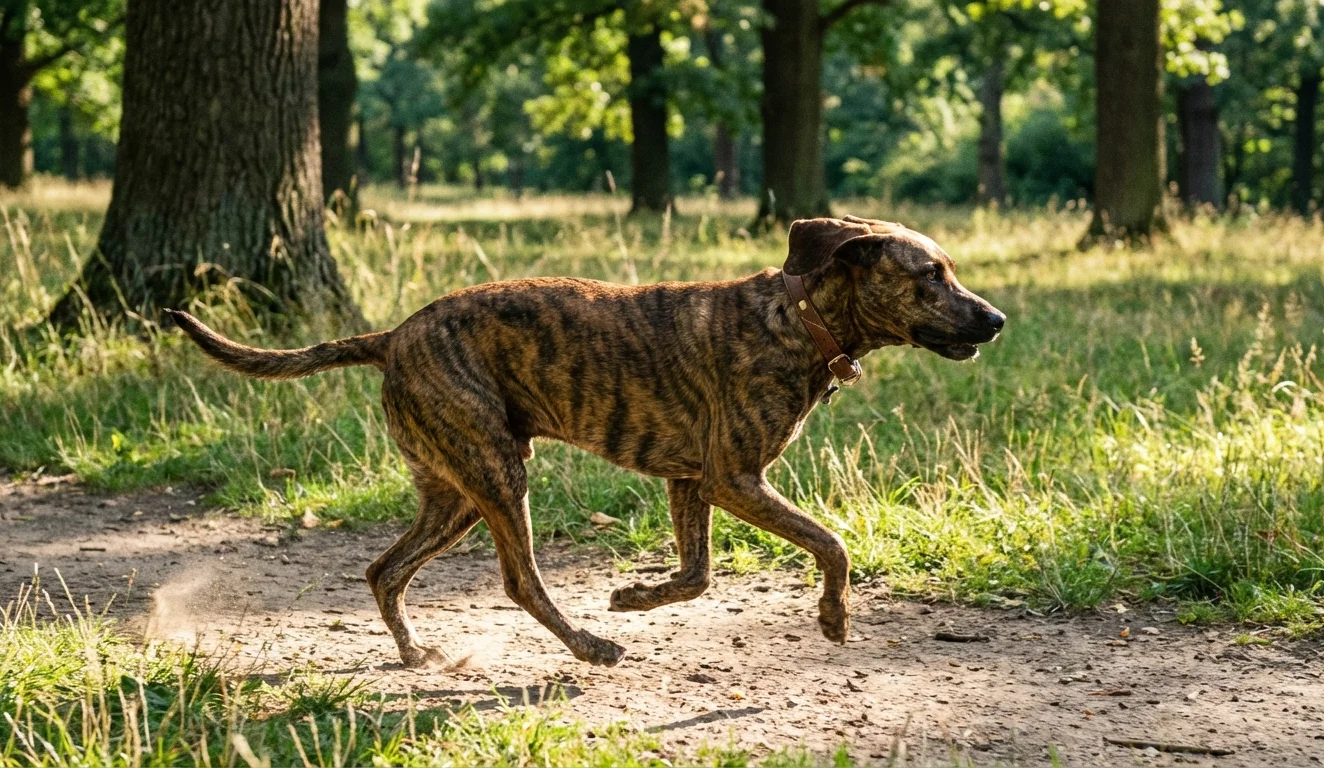
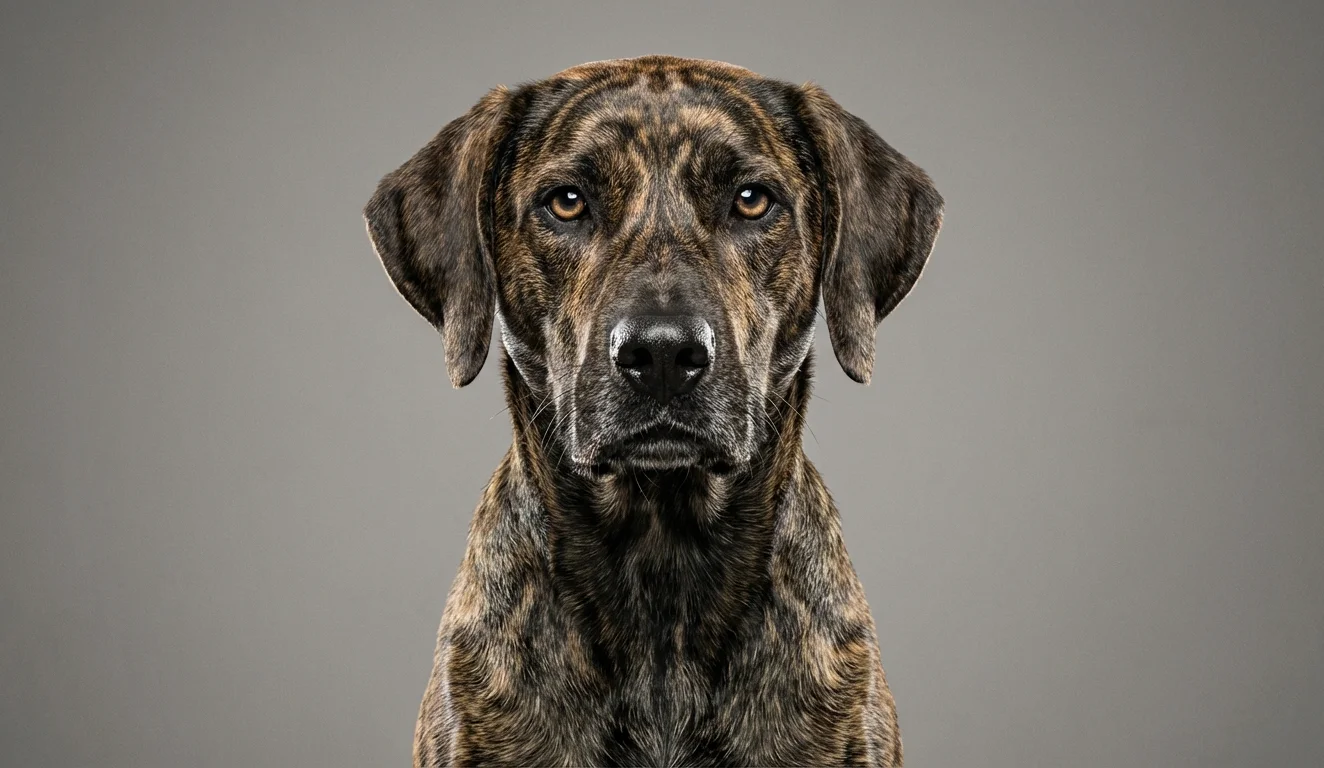
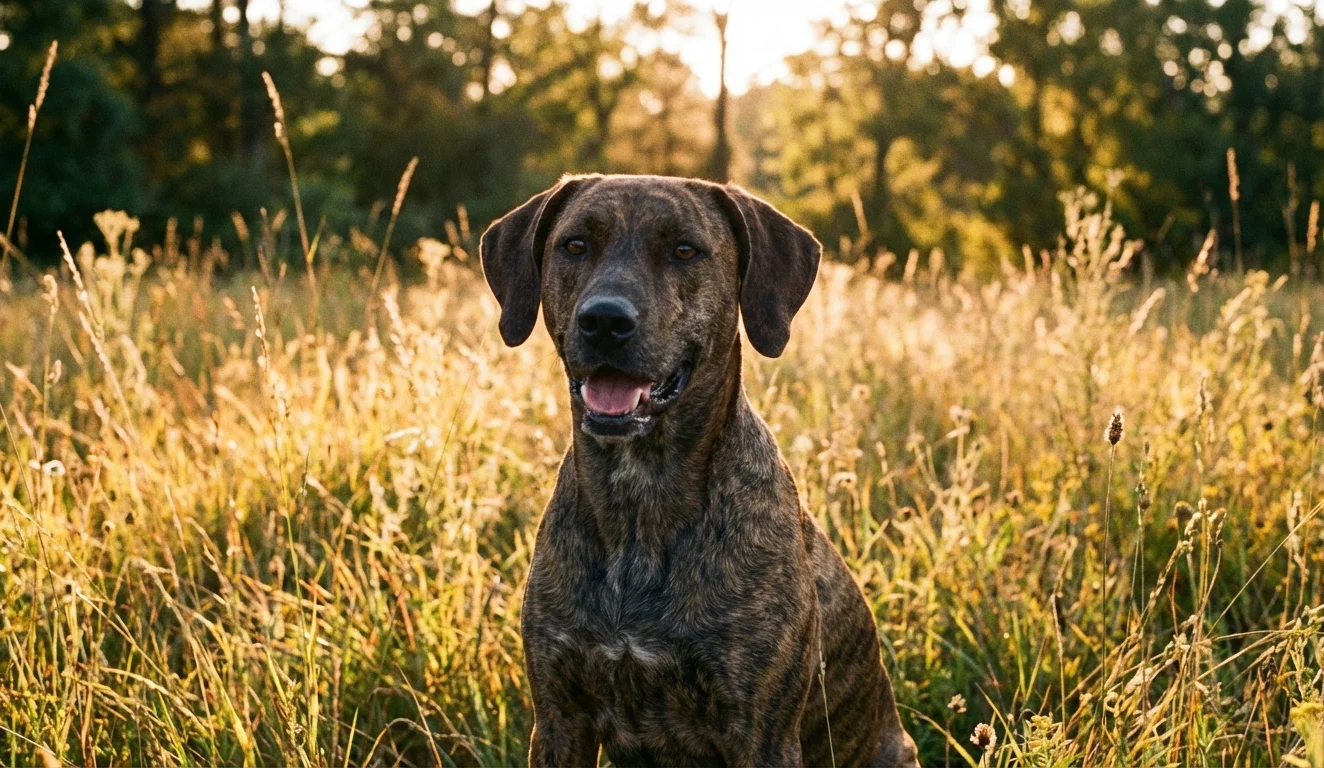
The most distinctive visual feature is the brindle coat, a pattern of dark stripes over a lighter base that can range from yellow brindle to dark chocolate brindle to reverse brindle (so dark the stripes are barely visible). The brindle pattern is almost universal in the breed and gives Plott Hounds a wild, striking appearance that stands out from the typical hound color palette of black-and-tan or blue tick. Solid black Plotts exist too, sometimes with brindle trim.
The coat is short to medium length, smooth, glossy, and close-fitting. It’s a utilitarian coat, enough protection for brush and brambles, not so much that it overheats the dog in summer. The ears are medium-length and hang in typical hound fashion. The tail is long and carried up when the dog is active. The overall silhouette is streamlined and purposeful, this is a dog that looks like it could run all day, because it can.
The eyes are hazel or brown and carry an expression that’s alert and determined. When a Plott Hound locks onto a scent trail, the focus is visible. The transformation from “normal dog on the couch” to “working hound on a mission” happens in about half a second.
Plott Hound Temperament
Plott Hounds have a temperament shaped by 250+ years of hunting dangerous game in rough mountains. That background produced a dog that’s brave, persistent, loyal, and a little intense.
What Plott Hound ownership really involves:
- Loyal and protective. Plotts bond strongly to their families and can be territorial about their home and people. They’re not aggressive toward visitors, but they’ll bark to alert you and will position themselves between you and anything unfamiliar. This is a natural guardian instinct, not trained behavior.
- Surprisingly affectionate at home. For a dog bred to fight bears, the Plott Hound can be remarkably sweet and gentle with its family. Many are cuddlers. They switch from “tough working dog” to “couch buddy” more easily than you’d expect.
- Good with kids. Plotts are patient with children and sturdy enough to handle rough play. They’re protective of kids in the family without being overbearing about it.
- Pack-oriented. Plotts were bred to hunt in packs, and they generally get along well with other dogs. They’re one of the more social hound breeds, though introductions with new dogs should still be managed carefully.
- They have a voice. Plott Hounds bay. Loudly. The hunting bay is a deep, melodious sound designed to carry across mountain valleys so hunters could locate their dogs. In a suburban neighborhood, that same bay will carry across every yard within earshot. If noise is a concern, you need to know this going in.
- Prey drive is extreme. Plotts were bred to trail game for miles and then confront it. Squirrels, raccoons, cats, rabbits, anything that runs triggers the chase. Off-leash Plotts in unfenced areas will follow a scent trail until they can’t hear you calling anymore, which happens fast.
Our honest assessment: the Plott Hound is a tremendous dog for the right person and a terrible choice for the wrong one. If you’re a hunter, an avid hiker, or someone who wants an active, loyal companion and can handle the noise and the prey drive, a Plott is an incredible partner. If you’re looking for a quiet suburban pet, keep looking.
Exercise Needs
Plott Hounds need 60-90 minutes of vigorous exercise daily. “Vigorous” is the key word, a leisurely stroll doesn’t count. These dogs were bred to trail game through mountains for hours. They have endurance that will outlast most humans.
Exercise that satisfies a Plott Hound:
- Hiking is the gold standard. Long trail hikes in varied terrain are exactly what a Plott Hound was built for. They’re surefooted, energetic, and absolutely in their element on a mountain trail. 6-10 mile hikes are well within their capability.
- Running and jogging. Plotts make excellent running companions for distance runners. They’ve got the stamina and the pace for it.
- Scent work and nose work. Anything that engages the Plott’s incredible nose is excellent mental and physical exercise. Hide treats, run scent trails in your yard, or try organized nose work classes.
- Coonhound field trials. If you hunt, this is the obvious outlet. Even if you don’t, coonhound events give the dog a chance to do what it was bred for.
- Swimming. Many Plotts enjoy water and are strong swimmers, which is a great low-impact exercise option.
- A large, securely fenced yard for daily running and play. The fence needs to be at least five feet, Plotts are athletic enough to clear shorter barriers when motivated.
An under-exercised Plott Hound will bay excessively, destroy things, dig craters in your yard, and generally make your life difficult. These are not symptoms of a bad dog. They’re symptoms of a working dog that isn’t working. Meet the exercise needs and the behavioral problems disappear.
Grooming
Plott Hound grooming is minimal. The short, smooth coat is one of the easiest to maintain in the hound group.
The routine:
- Brush weekly with a bristle brush or rubber curry. This takes about five minutes and removes loose hair and dirt.
- Bathe as needed, typically once a month or after particularly muddy adventures. The smooth coat doesn’t hold dirt or odor as much as rougher coats.
- Clean ears weekly. Plott Hounds have pendant ears that trap moisture and debris, making them moderately prone to ear infections. Dry ears thoroughly after swimming or bathing.
- Trim nails every 2-3 weeks.
- Dental care several times a week.
Shedding is low. Plotts shed a small amount year-round, but the short hair is barely noticeable. You won’t need a lint roller for your clothes, and your furniture stays mostly clean. This is one of the easiest breeds to groom, period.
The one maintenance item that surprises new Plott owners: drool. Plotts drool moderately, not at Bloodhound levels, but enough to notice after they drink water or when food is around. Keep a towel handy near the water bowl.
Plott Hound Health Issues
Plott Hounds are generally healthy dogs with fewer breed-specific issues than many purebreds. Their relatively large gene pool (they weren’t heavily line-bred like some breeds) has helped maintain genetic diversity.
Bloat (Gastric Dilatation-Volvulus)
The most serious health risk for Plott Hounds. Their deep chest makes them susceptible to bloat, a life-threatening emergency where the stomach fills with gas and may twist on itself. Symptoms include a distended abdomen, unproductive retching, restlessness, and distress. Without surgery, the mortality rate approaches 100%. Surgical correction costs $3,000-$8,000. Prevention strategies: feed two smaller meals instead of one large meal, avoid exercise for an hour after eating, and consider a prophylactic gastropexy during spay/neuter surgery ($400-$800), this tacks the stomach in place and dramatically reduces the risk.
Hip Dysplasia
Present in Plott Hounds at moderate rates. OFA evaluations are recommended for breeding dogs. Treatment ranges from conservative management (weight control, anti-inflammatories, physical therapy at $300-$800/year) to total hip replacement ($3,500-$7,000) for severe cases. Keeping your Plott at a lean body condition is the single best thing you can do for joint health.
Ear Infections
Common in all drop-eared hound breeds, including Plotts. The pendant ears restrict airflow and trap moisture. Weekly ear cleaning prevents most infections. When infections do occur, treatment runs $100-$300 per episode. Chronic ear infections may indicate underlying allergies.
Hunting Injuries
This isn’t a genetic condition, but it’s a practical health concern for Plotts that are actively hunted. Cuts from brush, puncture wounds from encounters with game, snake bites, and sprains from rough terrain are occupational hazards. Keeping a canine first aid kit and knowing your emergency vet’s location is standard practice for hunting Plott owners.
Training
Plott Hounds are intelligent and willing to work with their handlers, but they have the independent streak common to all hound breeds. Training requires patience, consistency, and an understanding that a hound’s brain works differently from a herding dog’s brain.
Effective training approach:
- Use high-value food rewards. Plotts are food-motivated and respond well to positive reinforcement with treats that are worth their attention. Dry kibble won’t cut it, use real meat, cheese, or liver treats.
- Be patient with recall. Like all scent hounds, Plotts prioritize their nose over your voice when a scent trail is hot. Recall training is a lifelong project, not a six-week class accomplishment. Use a long line in unfenced areas and practice recall in increasingly distracting environments.
- Start socialization early and make it broad. Expose Plott puppies to different people, dogs, environments, sounds, and surfaces between 8-16 weeks. The breed’s natural wariness toward strangers benefits from extensive positive socialization.
- Manage the baying. You won’t eliminate a Plott Hound’s voice, but you can teach “quiet” commands and reduce nuisance baying through exercise, enrichment, and consistent training. A tired Plott bays less than a bored one, that’s not a coincidence.
- Crate training is strongly recommended. A heavy-duty crate provides a safe space and prevents destruction when you can’t supervise.
House training is typically average for the breed, expect 4-6 months for full reliability with consistent crate training. Plotts are reasonably clean dogs and catch on to routines well.
For hunting training, Plotts have natural instincts that require less initial training than some breeds, they’ll trail scent naturally. The training focuses on developing that instinct, teaching tree manners, and building stamina. Most Plott owners start with short drag trails at 8-10 weeks and progress from there.
Plott Hound Cost
Purchase Price
A Plott Hound puppy from a reputable breeder costs $500-$1,500. Working hunting dogs from proven lines may command higher prices ($1,500-$2,500), especially dogs from championship field trial bloodlines. The Plott Hound is not an expensive breed by purebred standards, there’s no designer dog markup here. Rescue Plotts are available through hound rescue organizations and general shelters, typically for $150-$400. Plotts appear in Southern shelters more frequently than many purebreds, often surrendered by hunters who can’t keep them.
Monthly Costs
| Expense | Monthly Estimate |
|---|---|
| Food (high-quality kibble) | $35-$55 |
| Preventive vet care (averaged) | $15-$25 |
| Pet insurance | $30-$45 |
| Grooming supplies | $5-$10 |
| Treats and chews | $10-$15 |
| Miscellaneous (toys, supplies) | $10-$15 |
| Total | $105-$165 |
First-Year Costs
Budget $2,000-$4,500 for the first year, including purchase price. Plotts are relatively affordable to own, they eat a moderate amount, need minimal grooming, and are generally healthy. If you hunt with your Plott, factor in additional costs for hunting equipment, GPS tracking collars ($150-$400, highly recommended for a dog that follows scent trails into the woods), and potential hunting injury vet visits.
Is a Plott Hound Right for You?
A Plott Hound is a great fit if you:
- Hunt big game, small game, or just want a trail companion for long hikes
- Lead a very active outdoor lifestyle
- Have a large, securely fenced yard
- Don’t mind a vocal dog (and your neighbors don’t either)
- Want a loyal, protective family dog with genuine working ability
- Appreciate a breed with deep American history and authentic purpose
A Plott Hound is probably NOT right if you:
- Live in an apartment or dense neighborhood where barking is a problem
- Prefer a quiet, low-energy companion
- Have cats or other small pets (the prey drive is too strong)
- Can’t commit to 60-90 minutes of daily vigorous exercise
- Want a dog that’s instantly friendly with every person and dog it meets
- Need reliable off-leash obedience (scent hounds follow their nose first)
The Plott Hound is one of the most genuinely American dog breeds, with a lineage that stretches back to the Appalachian frontier. They’re tough, tenacious, loyal, and built for a purpose that still matters to the people who use them. As a companion breed, they’re demanding, no way around it. But if your lifestyle matches their needs, a Plott Hound will be the most devoted, hardworking, courageous dog you’ll ever own. Just warn the neighbors about the baying.
Related Breeds
If you’re considering this breed, you might also want to look at:
Frequently Asked Questions
Are Plott Hounds good family dogs?
Yes, with caveats. Plotts are affectionate, loyal, and good with children. They’re protective without being aggressive and they bond closely with their families. The caveats: they need significant exercise, they’re vocal, they have strong prey drive (problematic with small pets), and they need a securely fenced yard. A family that’s active and outdoorsy will find the Plott Hound fits naturally into their lifestyle.
How loud are Plott Hounds?
Loud. The Plott Hound’s bay is designed to carry across Appalachian mountain valleys. In a suburban setting, it carries across your entire neighborhood. They bay when they’re excited, when they detect interesting scents, when they’re left alone, and sometimes apparently for the pure joy of it. Training can reduce nuisance baying, and a well-exercised Plott is quieter than a bored one, but silence is never on the menu.
Can Plott Hounds live in an apartment?
We’d advise against it. Their exercise needs, tendency to bay, and overall activity level make apartment living extremely challenging. A Plott in an apartment would need multiple long outdoor excursions daily and you’d likely face noise complaints from neighbors. This breed does best with a house, a yard, and room to move.
Are Plott Hounds rare?
They’re uncommon but not rare. They rank around #150 in AKC popularity, which means most people have never seen one. They’re most concentrated in the southeastern U.S., particularly the Appalachian region where they were developed. Finding a reputable breeder outside the Southeast may require some searching, though the internet has made it easier to connect with breeders nationwide.
What’s the difference between a Plott Hound and other coonhounds?
The biggest difference is ancestry. All other AKC coonhound breeds (Treeing Walker, Bluetick, Black and Tan, Redbone, American English) descend from English Foxhounds. The Plott descends from German Hanoverian Schweisshunds, giving it a different look (the brindle coat is the visual giveaway) and a slightly different hunting style. Plotts tend to be more aggressive on the trail, they were bred for bear, not raccoons, and they’re generally more protective of their families than other coonhound breeds.