Basenji Breed Guide: The Barkless Dog That Will Outsmart You (2026)
The Basenji doesn't bark, cleans itself like a cat, and has been ignoring human commands for roughly 5,000 years. It might be the most interesting dog you'll ever own.
The Basenji weighs 22-24 pounds, stands 16-17 inches tall, and lives 13-14 years. They’re one of the oldest dog breeds on the planet, DNA studies place the Basenji as one of the basal breeds, genetically closer to wolves than most modern dogs. They’re famous for two things: they don’t bark (they yodel, which is arguably weirder), and they’re spectacularly independent. If most dogs were bred to serve humans, the Basenji was bred alongside humans, as a hunting partner that needed to think for itself. That distinction matters, and it explains almost everything about what it’s like to live with one.
In Short: 22–24 lbs, 13–14 years. High energy. Very low shedding. Watch for Fanconi Syndrome. Best for experienced dog owners who want an independent, cat-like dog and are prepared to be outsmarted regularly.
Let’s be upfront: the Basenji is not for everyone. It’s not even for most people. They’re independent to a degree that can feel like indifference, they’re escape artists on a professional level, and they’ll destroy your house if they’re bored. But Basenji owners, the people who get this breed, tend to be fiercely devoted. They’ll tell you the Basenji is the most fascinating, entertaining, challenging, rewarding dog they’ve ever owned. And they’re usually right about all four adjectives.
Basenji at a Glance
| Trait | Details |
|---|---|
| Breed Group | Hound (AKC) |
| Height | Males: 17 in / Females: 16 in |
| Weight | Males: 24 lbs / Females: 22 lbs |
| Life Expectancy | 13-14 years |
| Coat | Short, fine, tight |
| Colors | Red, black, tricolor, brindle (all with white feet, chest, and tail tip) |
| Temperament | Independent, Intelligent, Alert, Poised |
| Shedding | Very Low |
| Energy Level | High |
| Good With Kids | Older kids (not ideal for toddlers) |
| Good With Other Dogs | Selective |
| Good With Cats | Risky (high prey drive) |
| AKC Recognition | 1943 |
History
The Basenji is ancient. Cave paintings in Libya dating to approximately 6000 BCE show dogs that look remarkably like modern Basenjis. The breed developed in Central Africa, primarily in what is now the Congo, where they were (and still are) used by indigenous peoples to drive game into nets, track wounded prey, and control village rodent populations. They hunted in dense forest, which required a dog that could think independently, maneuver silently, and react to rapidly changing situations without waiting for commands.
The breed’s barklessness isn’t a defect, it’s likely an advantage in dense jungle hunting, where barking would alert prey. Basenjis aren’t mute, though. They produce a distinctive vocalization called a “yodel” or “baroo”, a sound that’s hard to describe until you’ve heard it. They also scream (which sounds alarming the first time), whine, and growl.
Attempts to bring Basenjis to England in the late 1800s and early 1900s mostly failed, the imported dogs died of distemper, for which they had no immunity. The first successful importation to England happened in 1936, and the first Basenjis arrived in the U.S. in 1941. The AKC recognized the breed in 1943. In the 1980s, new Basenjis were imported directly from the Congo to expand the gene pool and address the growing problem of Fanconi Syndrome, a genetic kidney disease that had become prevalent in Western Basenji lines. Those imports revitalized the breed’s genetic health.
Size and Appearance
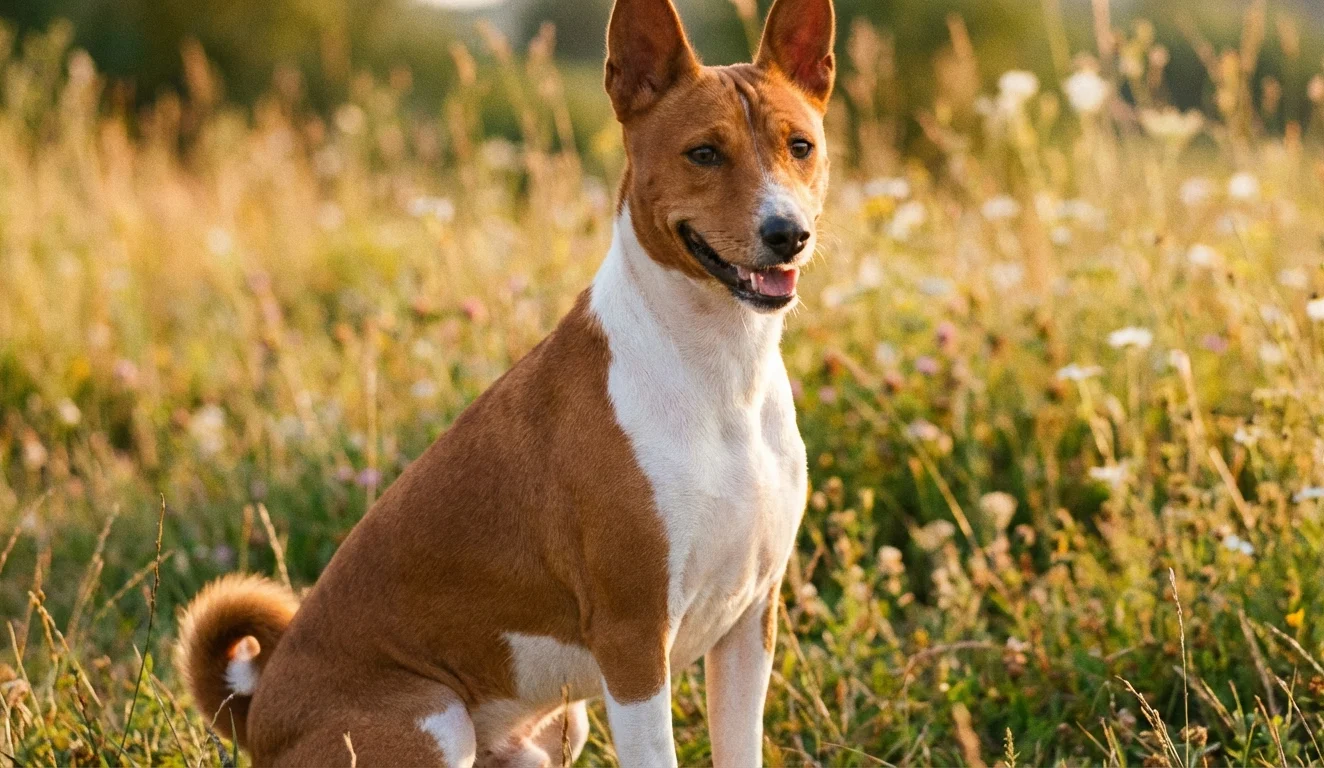
Basenjis are small-to-medium dogs with a build that screams “athlete.” Males stand about 17 inches and weigh 24 pounds. Females are 16 inches and 22 pounds. There’s very little size variation in the breed, Basenjis are remarkably consistent in their proportions.
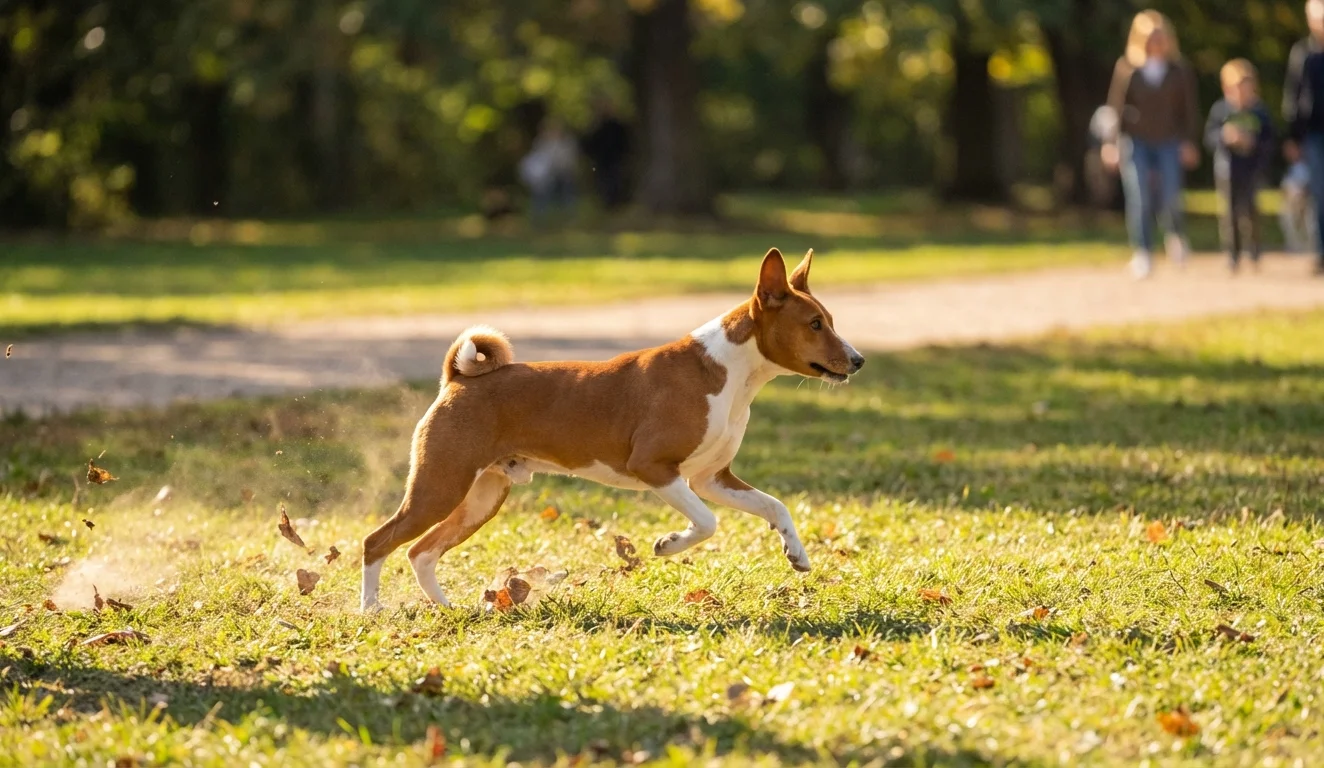
The overall impression is elegant, almost deer-like. They’re lightly built with long legs, a deep chest, a curled tail that sits tightly over one hip, and a graceful, ground-covering gait that’s unique among dog breeds. At a trot, the Basenji moves with a distinctive double-suspension gallop that looks effortless. Watching a Basenji run at full speed is watching a dog that was engineered for exactly this purpose.
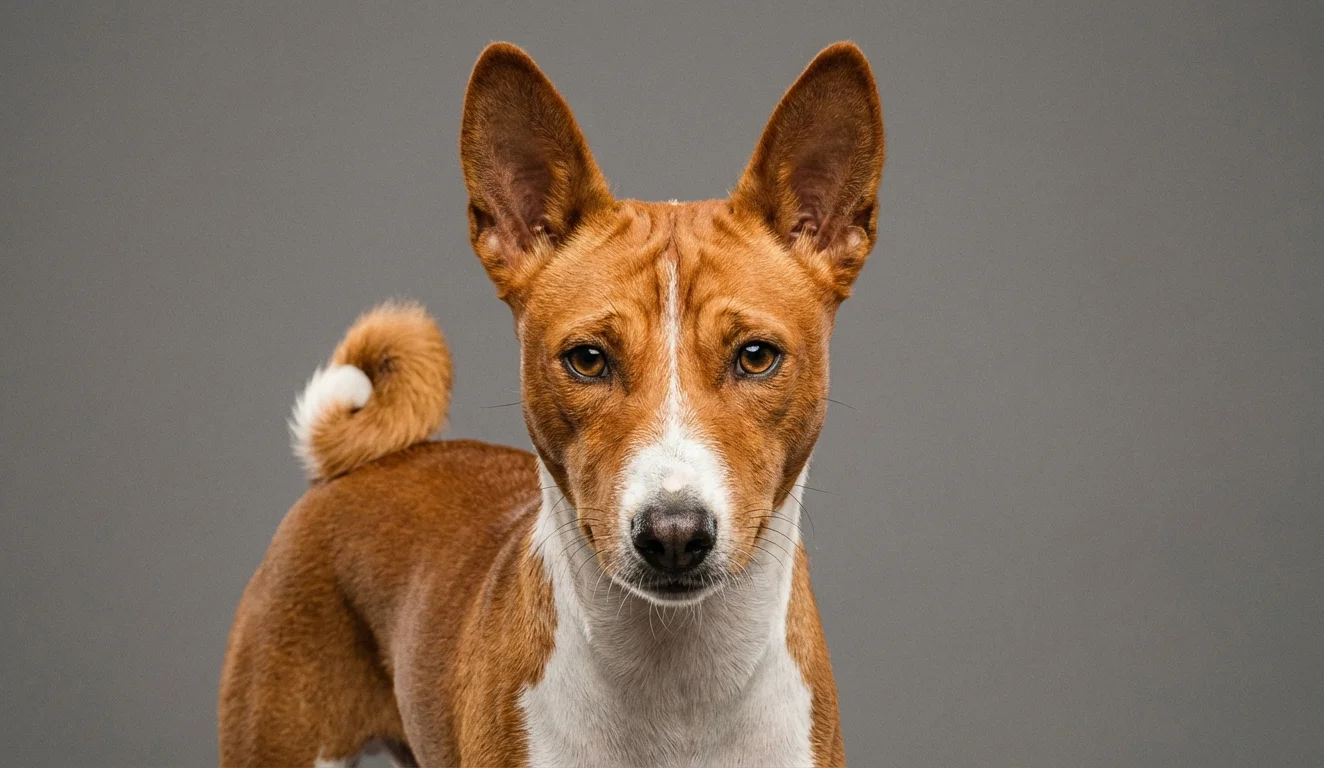
The head is finely chiseled with a flat skull, erect ears, and, the breed’s most distinctive facial feature, a pattern of wrinkles on the forehead. These wrinkles give the Basenji a perpetually concerned or quizzical expression, as if it’s constantly evaluating whether you’re worth listening to. (It usually decides you’re not.) The eyes are almond-shaped and dark, giving the face an almost fox-like quality.
The coat is short, fine, and tight, one of the easiest coats in dogdom. Colors are always red, black, tricolor (black and red), or brindle, with white on the feet, chest, and tail tip. The color pattern is consistent and striking.
Basenji Temperament
The Basenji temperament is unlike any other dog breed. Comparing them to cats is the cliché, but it’s a useful one. Basenjis groom themselves, they’re fastidiously clean, they’re affectionate on their own terms, and they have an independence that most dogs simply don’t possess.
The honest truth about living with a Basenji:
- Independent doesn’t begin to cover it. A Basenji hears your command, processes it, considers it, and then makes its own decision about whether to comply. This isn’t stubbornness in the traditional sense, it’s genuine independence. They weren’t bred to take orders. They were bred to make hunting decisions on their own in the Congo forest, and that cognitive independence hasn’t gone anywhere.
- Affectionate, but on a schedule. Basenjis bond closely to their people and can be genuinely cuddly and sweet, when they feel like it. They’re not the type to follow you around seeking constant attention. They’ll come to you when they want affection, accept it graciously, and then go back to whatever they were doing. If you need a dog that worships the ground you walk on, get a Golden Retriever.
- Escape artists of the highest order. Basenjis can climb chain-link fences, squeeze through improbable gaps, and open latches. A six-foot privacy fence is the minimum, and many Basenji owners add coyote rollers (spinning bars on top of the fence) to prevent climbing. If you leave a Basenji in a crate, make sure it’s airline-grade, they can break out of flimsy wire crates.
- Destructive when bored. A bored Basenji will dismantle your home with a surgeon’s precision. Baseboards, couch cushions, remote controls, shoes, nothing is safe. This isn’t a character flaw. It’s a highly intelligent dog telling you it needs more stimulation.
- Prey drive is extreme. Basenjis were hunting dogs for thousands of years, and that instinct is undiminished. Small animals, cats, rabbits, squirrels, even small dogs, can trigger the chase response. Off-leash reliability in an unfenced area is essentially zero.
Our take: owning a Basenji is like having a roommate who’s smarter than you, cleaner than you, and completely unimpressed by your authority. If that sounds infuriating, this isn’t your breed. If that sounds intriguing, welcome to the club. Basenji people are a specific type, and they wouldn’t have it any other way.
Exercise Needs
Basenjis need 60-90 minutes of exercise daily. They’re high-energy dogs with the athletic ability to back it up. A walk around the block is an insult to a Basenji.
Exercise that works for Basenjis:
- Lure coursing. This is the sport Basenjis were made for, chasing a mechanical lure across a field at speed. The breed excels at it, and it satisfies the prey drive in a safe, controlled way. The American Kennel Club and the American Sighthound Field Association both run events.
- Running in a securely fenced area. Emphasis on “secure”, see the section above about escape artistry. A dog park with standard fencing may not contain a motivated Basenji.
- Brisk walks and jogs. Basenjis are good running companions for moderate distances. They prefer a faster pace and will let you know (by pulling or sulking) if you’re too slow.
- Agility. Basenjis are fast, nimble, and athletic enough for agility courses, though their independent streak means they’ll occasionally improvise their own course mid-run.
- Mental enrichment is just as important as physical exercise. Puzzle feeders, hide-and-seek games, and novel experiences keep a Basenji’s sharp mind engaged.
Two important notes: first, Basenjis hate rain. Many Basenjis will refuse to go outside in wet weather, and you may find yourself standing at the door in a standoff with a dog that’s looking at you like you’ve lost your mind. Plan for indoor exercise on rainy days. Second, Basenjis are heat-tolerant (they’re African dogs, after all) but can struggle in extreme cold. Their thin coat offers almost no insulation.
Grooming
Basenji grooming is the easiest thing about the breed. They’re sometimes described as the “self-cleaning” dog, and it’s not much of an exaggeration.
The routine:
- Brush once a week with a soft bristle brush or grooming mitt. The coat is so short and fine that this takes about three minutes.
- Bathe rarely, every 2-3 months or when truly dirty. Basenjis groom themselves regularly, licking their coat clean like a cat. They have very little doggy odor.
- Trim nails every 2-3 weeks.
- Check and clean ears weekly. The erect ears don’t trap moisture like floppy ears, but they still need occasional attention.
- Dental care several times a week. Brush teeth or use dental chews.
That’s the entire grooming commitment. Basenjis shed very little, you’ll barely notice any hair on your furniture. They produce minimal dander, making them a better option for allergy sufferers than most breeds (though no breed is truly hypoallergenic).
The breed’s fastidiousness extends beyond the coat. Many Basenji owners report that their dogs avoid puddles, mud, and anything that might get them dirty. It’s a breed that takes personal hygiene seriously.
Basenji Health Issues
Basenjis have some specific genetic health concerns that every prospective owner must understand.
Fanconi Syndrome
This is the breed’s signature health issue, a kidney disorder where the renal tubules fail to properly reabsorb glucose, amino acids, and other substances, which then spill into the urine. It typically appears between ages 4-7. Symptoms include excessive thirst, excessive urination, weight loss, and muscle wasting. Left untreated, it’s fatal. With proper management (a specific protocol involving bicarbonate supplements and careful monitoring), affected dogs can live relatively normal lives. Monthly treatment costs run $50-$150. A DNA test is available that identifies carriers, affected dogs, and clear dogs. Any reputable Basenji breeder tests for Fanconi. Do not buy a Basenji puppy without seeing Fanconi test results for both parents.
Progressive Retinal Atrophy (PRA)
A genetic eye condition causing gradual blindness. DNA testing is available for the Basenji-specific form (bas-PRA1). Responsible breeders screen for this. There’s no treatment, but affected dogs adapt to vision loss if it’s gradual. Annual eye exams cost $200-$400.
Hypothyroidism
More common in Basenjis than the general dog population. Symptoms include weight gain, lethargy, and coat changes (though coat changes are harder to spot in a breed with such a short coat). Easily managed with daily thyroid medication at $20-$40/month after diagnosis via blood testing ($100-$200).
IPSID (Immunoproliferative Small Intestinal Disease)
A form of inflammatory bowel disease that affects Basenjis specifically. Symptoms include chronic diarrhea, weight loss, and poor appetite. It can range from mild (manageable with diet changes) to severe (requiring immunosuppressive drugs). Treatment costs range from $200-$1,500/year depending on severity.
Hip Dysplasia
Less common than in many breeds, but the OFA reports approximately 8% of Basenjis tested show some degree of dysplasia. Ask breeders for OFA hip evaluations. Treatment ranges from weight management ($200-$400/year) to surgery ($3,000-$6,000) for severe cases.
Training
Training a Basenji is an exercise in humility. These are exceptionally intelligent dogs that understand exactly what you want. They just don’t always agree that it’s worth doing.
Training strategies that actually work with Basenjis:
- Make it worth their while. Basenjis are motivated by food and by novelty. High-value treats (real meat, cheese) get much better results than generic kibble rewards. Boring, repetitive drills will cause a Basenji to mentally check out.
- Keep sessions short, 3-5 minutes. Yes, that short. A Basenji’s enthusiasm for obedience training has a very limited window. End on a success and quit while you’re ahead.
- Never use physical corrections or intimidation. Basenjis don’t respond to punishment, they respond by becoming more defiant or by shutting down entirely. The bond between a Basenji and its owner is built on mutual respect, and harsh training destroys it.
- Accept that off-leash recall may never be reliable. You can work on it, and some Basenjis develop a decent recall in low-distraction environments. But trusting a Basenji off-leash near a road is gambling with its life. Long lines (20-30 foot leashes) give freedom while maintaining control.
- Manage the environment rather than relying on training alone. Basenji-proof your house. Use baby gates. Crate when unsupervised. Secure the yard. Preventing problems is easier than correcting them.
House training is usually straightforward, Basenjis are naturally clean dogs and prefer not to soil their living space. Most are reliable by 4-5 months with consistent crate training and a regular schedule.
The honest truth about Basenji training: you’re not going to get perfect obedience. What you can get is a dog that understands the house rules, responds to you in calm environments, and is well-socialized enough to be a pleasant companion. Adjust your expectations accordingly, and you’ll enjoy the relationship much more.
Basenji Cost
Purchase Price
A Basenji puppy from a reputable breeder costs $1,500-$2,500. The breed is not common, and good breeders are particular about who they sell to, expect an interview process. Breeders who do full health testing (Fanconi DNA test, PRA DNA test, hips, eyes, thyroid) are the only ones worth considering. Fanconi testing alone makes health screening non-negotiable with this breed. Rescue Basenjis are available through the Basenji Club of America rescue program, typically for $250-$500. Be aware that rescue Basenjis may come with behavioral challenges that require an experienced handler.
Monthly Costs
| Expense | Monthly Estimate |
|---|---|
| Food (high-quality kibble) | $25-$40 |
| Preventive vet care (averaged) | $15-$25 |
| Pet insurance | $30-$45 |
| Grooming supplies | $5-$10 |
| Treats and chews | $10-$15 |
| Miscellaneous (toys, supplies, replacement items for destroyed objects) | $15-$25 |
| Total | $100-$160 |
First-Year Costs
Budget $3,500-$5,500 for the first year, including purchase price. The “miscellaneous” category deserves a footnote: young Basenjis are destructive, and you should budget for replacing some household items during the first year or two. A heavy-duty crate ($80-$150) is not optional, it’s the first thing you should buy.
Is a Basenji Right for You?
A Basenji is a great fit if you:
- Have experience with independent, challenging breeds
- Want a clean, quiet (no barking) dog for apartment or close-quarter living
- Are active and can provide daily exercise and mental enrichment
- Have a securely fenced yard or can commit to leash walks and controlled off-leash time
- Appreciate a dog with personality and intelligence, even when it’s directed against you
- Think the idea of a cat-like dog sounds appealing rather than annoying
A Basenji is probably NOT right if you:
- Are a first-time dog owner (start with something more forgiving)
- Have cats, rabbits, or other small animals
- Want a dog with reliable off-leash obedience
- Leave the dog alone for long hours (destruction will follow)
- Want a dog that’s eager to please and responsive to commands
- Have a yard with fencing shorter than six feet
- Expect the “barkless” label to mean “quiet” (yodeling, screaming, and whining fill the gap)
The Basenji has survived essentially unchanged for thousands of years. That’s not an accident, it’s a testament to how well the design works. These dogs are intelligent, athletic, beautiful, and utterly their own creatures. They’ll make you laugh, they’ll make you pull your hair out, and they’ll do both in the same afternoon. If you have the experience, the patience, and the sense of humor for it, the Basenji is one of the most rewarding breeds in existence.
Related Breeds
If you’re considering this breed, you might also want to look at:
Frequently Asked Questions
Do Basenjis really not bark?
They don’t produce a typical dog bark, no. The shape of their larynx is different from most breeds, which prevents the standard barking sound. But “barkless” is misleading, Basenjis make a yodeling sound (the “baroo”), they scream (which sounds eerily human and can be alarming the first time you hear it), they whine, and they growl. They’re not silent dogs. They’re differently vocal dogs.
Are Basenjis good apartment dogs?
Surprisingly, yes, if their exercise needs are met. They’re quiet (no barking), clean, and compact. The challenge is providing enough exercise and mental stimulation in an apartment setting. A Basenji that gets 60-90 minutes of daily activity is calm and clean indoors. One that doesn’t will destroy the apartment. The other challenge is the yodeling, which while not as loud as barking, can still carry through apartment walls.
Can Basenjis live with cats?
This is risky. Basenjis have a strong prey drive, and cats trigger that instinct. Some Basenjis raised with cats from puppyhood learn to coexist, but many don’t, and the consequences of misjudging can be tragic. If you have cats, a Basenji is a gamble. If you’re determined to try, extensive socialization and careful management are non-negotiable, and you should always have a separation plan.
Why are Basenjis so hard to train?
They’re not hard to train because they’re unintelligent, they’re actually one of the smarter breeds. The difficulty comes from their independent nature. Basenjis were bred to make decisions in the field without waiting for human direction. That self-reliance translates to a dog that evaluates commands rather than reflexively obeying them. They’re asking “why should I?” rather than “what do you want?” Different approach, not less intelligence.
Do Basenjis like water?
Most Basenjis dislike water, rain, and getting wet. This is consistent with their fastidious nature, they prefer to stay clean and dry. Some Basenjis will tolerate water, but don’t expect a water-loving breed. Rainy day walks can become a battle of wills. Many Basenji owners keep an indoor exercise plan for wet weather because the alternative is standing at the door watching their dog refuse to step outside.