Samoyed Breed Guide: The Smiling Shedding Machine You Can't Stay Mad At (2026)
The Samoyed is a 35-65 pound cloud of white fur with a permanent smile and enough shedding to insulate a house. They're as friendly as they look.
The Samoyed is a medium-to-large working breed that weighs 35-65 pounds, stands 19-23.5 inches tall, and lives 12-14 years. They were originally bred by the Samoyede people of Siberia to herd reindeer, pull sleds, and, this part matters, sleep in the tents with their families for warmth. That dual purpose as both working dog and family companion is written into their DNA. They’re one of the few working breeds that genuinely wants to be with you all the time.
In Short: 35–65 lbs, 12–14 years. High energy. Extreme shedder, you’ll find white fur in places you didn’t know existed. Watch for Hip Dysplasia and Progressive Retinal Atrophy. Best for active families who don’t mind fur on everything.
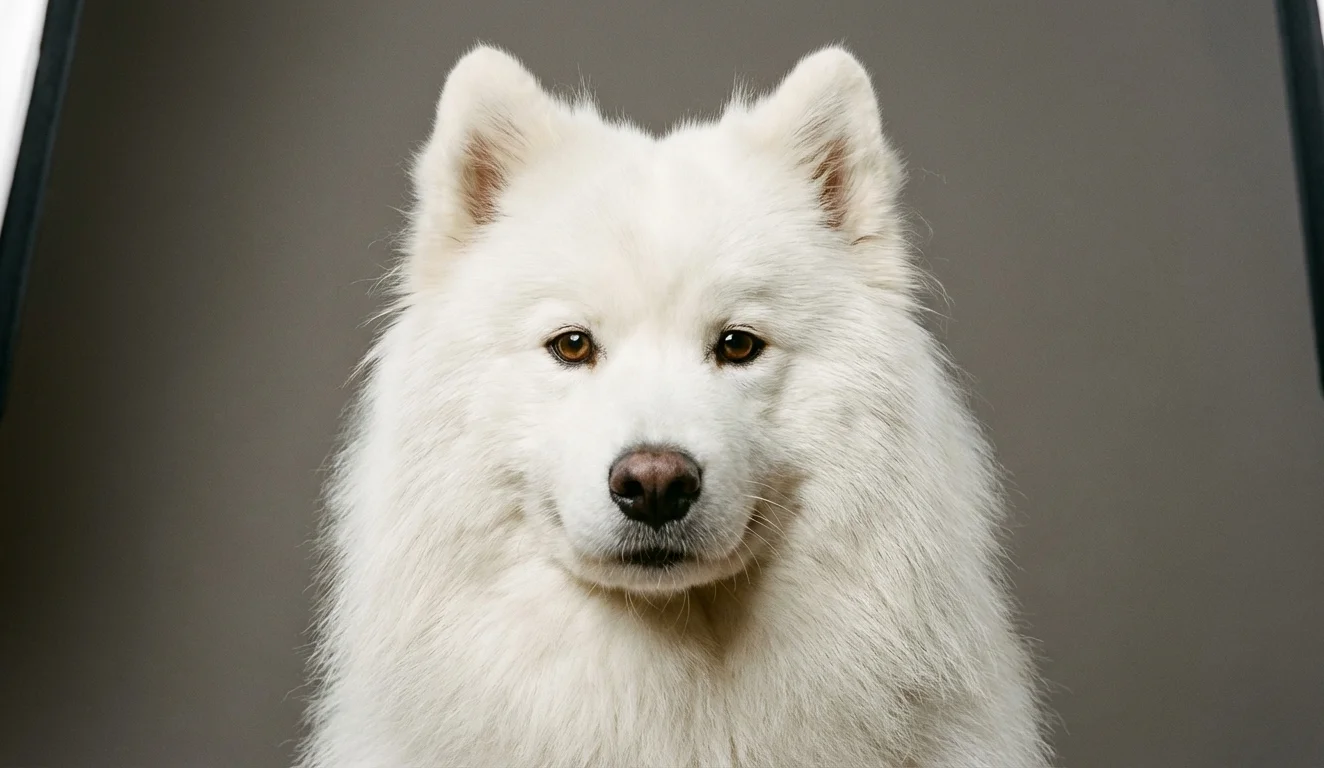
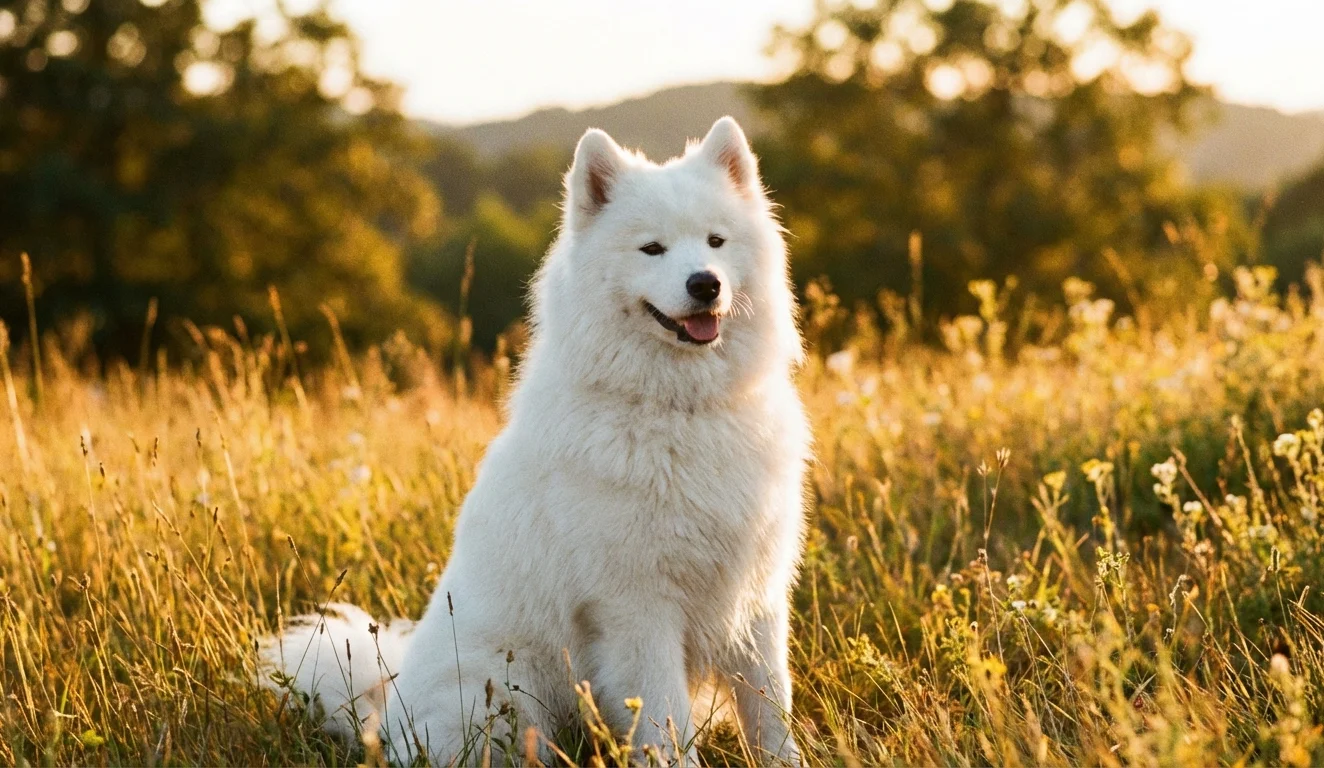
The first thing everyone notices about the Samoyed is the smile. Samoyeds have upturned mouth corners that create a permanent grin, and it’s not just cosmetic, this feature was actually bred into them to prevent drooling, which would cause dangerous icicle formation on the face in Arctic temperatures. So the Samoyed smile is functional. It’s also impossibly charming. These dogs look happy because their face is literally built that way, and their personality matches. Sammies are joyful, social, enthusiastic dogs who greet every day like it’s the best one yet.
Samoyed at a Glance
| Trait | Details |
|---|---|
| Breed Group | Working (AKC) |
| Height | Males: 21-23.5 in / Females: 19-21 in |
| Weight | Males: 45-65 lbs / Females: 35-50 lbs |
| Life Expectancy | 12-14 years |
| Coat | Dense, double coat, profuse and white |
| Colors | White, Biscuit, Cream, White & Biscuit |
| Temperament | Friendly, Gentle, Adaptable |
| Shedding | Extreme |
| Energy Level | High |
| Good With Kids | Yes |
| AKC Recognition | 1906 |
History
The Samoyed takes its name from the Samoyede (now called Nenets) people, a semi-nomadic tribe of Siberia who have been breeding these dogs for over 3,000 years. The relationship between the Nenets and their dogs was closer than most working dog partnerships, these weren’t just livestock guardians kept at a distance. Samoyeds herded reindeer during the day and slept inside the family tents at night, providing warmth in temperatures that routinely dropped to -60 degrees Fahrenheit.
European explorers first encountered the breed in the late 1800s. British zoologist Ernest Kilburn-Scott brought several Samoyeds to England in 1889, and one of his dogs, Antarctic Buck, became the foundation stud for the Western Samoyed breed. The dogs gained fame through polar expeditions, Samoyeds were used by Fridtjof Nansen’s 1893 North Pole expedition, Carsten Borchgrevink’s 1899 Antarctic expedition, and others. Their endurance, coat insulation, and willingness to work in the harshest conditions on Earth made them invaluable.
The AKC recognized the breed in 1906. Today’s show Samoyeds are slightly stockier than their working ancestors, but the temperament remains remarkably consistent. They’re still friendly, still hardworking when given a job, and still prefer to sleep as close to their people as physically possible.
Size and Appearance
Samoyeds are a medium-to-large breed with significant size variation between males and females. Males stand 21-23.5 inches at the shoulder and weigh 45-65 pounds. Females are 19-21 inches and 35-50 pounds. They’re solidly built under all that fur, a Samoyed in good condition has a muscular, balanced frame that suggests athleticism rather than bulk.
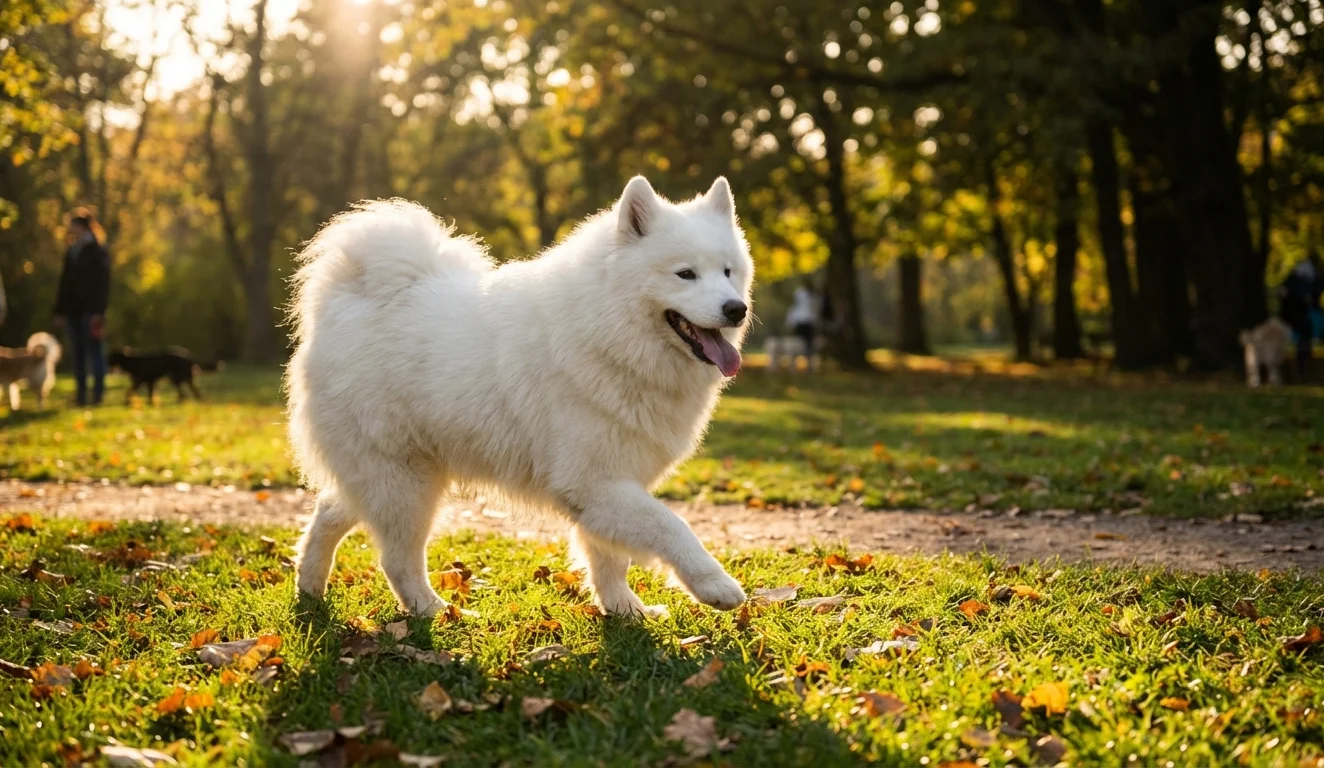
The coat is the defining feature. Samoyeds have a dense, straight outer coat of long guard hairs over a thick, soft undercoat that’s so insulating it can be spun into yarn (Samoyed fiber knitting is a real hobby, and the resulting garments are reportedly warmer than wool). The coat stands off the body, giving the dog a fluffy, almost luminous appearance, especially in sunlight, where the white fur seems to glow.
The face has that famous smile: dark, almond-shaped eyes set above upturned mouth corners, with a black nose and lips that contrast dramatically against the white fur. The ears are triangular, erect, and set high on the head. In cold weather, a Samoyed curls its fluffy tail over its face while sleeping, a natural heat conservation behavior that also happens to be ridiculously photogenic.
Samoyed Temperament
The AKC describes the Samoyed as “adaptable, friendly, and gentle.” Samoyed owners would add: vocal, attention-seeking, and pathologically unable to be alone.
Sammies are people dogs in the most literal sense. Their 3,000-year history of sleeping in human tents means they have essentially no tolerance for isolation. A Samoyed left alone for hours will let you, and your neighbors, know about it through barking, howling, and creative destruction. This isn’t a defect. It’s a feature. If you want a dog that’s content to hang out in the backyard by itself, look elsewhere.
What life with a Samoyed involves:
- The “Sammy spin.” When excited (which is often), Samoyeds do a full-body spin that starts at the tail and rotates the entire dog. It happens when you come home, when you pick up the leash, and when you open the treat bag. It never gets old.
- Talking. Lots of talking. Samoyeds are vocal dogs. They bark, they howl, they “woo-woo” at you in a conversational tone that genuinely sounds like they’re trying to communicate something specific. They have opinions and they will share them.
- Digging is instinctive. In Siberia, Samoyeds dug into snow to create sheltered sleeping spots. In your yard, they’ll dig into your garden, your lawn, and the base of your fence. Providing a designated digging area can redirect this behavior.
- They’re gentle with everyone. Samoyeds lack the protective/guarding instinct of many working breeds. They’ll bark to alert you that someone’s at the door, but they’ll also greet the intruder with a wagging tail and a smile. Worst guard dogs on the planet. Best therapy dogs you could ask for.
Exercise Needs
Samoyeds need 60-90 minutes of exercise per day. These are high-energy dogs that were bred to work all day in demanding conditions, and they need an outlet for that drive. An under-exercised Samoyed is a loud, destructive Samoyed.
Good exercises for Samoyeds:
- Long walks and jogs. Sammies make good jogging partners in cool weather. They have natural endurance and enjoy covering distance at a steady pace.
- Hiking. Cool-weather hikes are where Samoyeds really come alive. They’re surefooted, energetic, and the cold doesn’t faze them in the slightest.
- Mushing and carting. This breed was literally built for pulling, and many Samoyed owners get into recreational mushing or skijoring (where the dog pulls you on cross-country skis). It’s outstanding exercise and taps into the breed’s deepest instincts.
- Agility. Samoyeds are surprisingly agile and can do well in agility courses, though their independent streak means competition-level precision can be hit or miss.
- Fetch and play. Sammies enjoy games, though they may decide after three throws that they’d rather keep the ball than bring it back.
Heat management is non-negotiable. Samoyeds were designed for Arctic conditions. That incredible coat that protects them at -60 degrees works against them in warm weather. Exercise should happen early morning or late evening in summer. Watch for signs of overheating: excessive panting, drooling, stumbling, or lying down and refusing to move. Have water available at all times.
Grooming
The Samoyed coat is magnificent and it is relentless. You need to accept this reality before getting one: you will spend a meaningful portion of your life managing Samoyed fur.
Brush at least 3 times per week with a pin brush and an undercoat rake. This prevents matting, which can form quickly in the dense undercoat, especially behind the ears, under the legs, and in the “pantaloons” on the rear legs. During the twice-yearly blowout (spring and fall), you’ll need to brush daily for 2-3 weeks. The amount of undercoat that comes out during a blowout is genuinely hard to believe until you’ve lived it, multiple garbage bags worth of fur from a single dog.
Baths every 4-6 weeks with a high-quality dog shampoo. Blow-drying after the bath is important to prevent moisture from sitting against the skin under that dense undercoat. Many Samoyed owners invest in a professional-grade high-velocity dryer, it cuts drying time significantly and helps blast out loose undercoat.
Trim nails every 2-3 weeks. Clean ears weekly. The white coat shows tear staining around the eyes, which can be managed with daily wiping using a damp cloth.
Do not shave your Samoyed. The double coat regulates temperature in both cold and hot weather. Shaving removes sun protection, disrupts the coat’s insulating properties, and often grows back with a different texture. There are no circumstances under which shaving a Samoyed is a good idea.
Samoyed Health Issues
Samoyeds are a generally healthy breed with a respectable lifespan of 12-14 years. Their relative genetic diversity (compared to more heavily manipulated breeds) works in their favor. But they do have some known predispositions.
Hip Dysplasia
The OFA reports that Samoyeds have a moderate incidence of hip dysplasia. The condition causes abnormal development of the hip joint, leading to pain and arthritis. Treatment ranges from conservative management (weight control, anti-inflammatories, physical therapy) at $500-$2,000 annually to surgical intervention (total hip replacement) at $3,500-$7,000 per hip. Ask breeders for OFA hip evaluations on both parents.
Progressive Retinal Atrophy (PRA)
Samoyeds have a known genetic predisposition to PRA, which causes progressive vision loss and eventual blindness. The XL-PRA variant is specific to the breed. A DNA test is available and responsible breeders test for it. Treatment options are limited, there’s no cure, but identifying carriers prevents the gene from spreading. Testing costs $50-$150.
Samoyed Hereditary Glomerulopathy
This is a breed-specific kidney disease caused by a genetic defect in type IV collagen. It’s X-linked, meaning males are more severely affected (often developing kidney failure by 15 months). Females are carriers who develop milder symptoms later in life. DNA testing is available and should be part of any breeding program. Management of affected dogs runs $2,000-$5,000 annually for specialized diet and monitoring, but the prognosis for severely affected males is poor.
Hypothyroidism
Samoyeds have a higher-than-average rate of hypothyroidism, where the thyroid gland underproduces hormones. Symptoms include weight gain, lethargy, cold intolerance, and coat changes. It’s easily managed with daily thyroid medication at a cost of $200-$500 per year. The OFA recommends thyroid screening for breeding Samoyeds.
Training
Samoyeds are intelligent and eager to interact with you, which gives you a head start. But they were bred to think independently (herding reindeer across Siberian tundra requires initiative), and that independence shows up in training as a tendency to freelance.
What works with Samoyeds:
- Make it fun. Samoyeds learn fast when they’re enjoying themselves and shut down when they’re bored. Use variety, keep sessions to 10-15 minutes, and always end on a high note.
- Positive reinforcement. Harsh corrections make Samoyeds anxious and uncooperative. They respond to enthusiasm, treats, and genuine praise. Think more cheerleader, less drill sergeant.
- Channel the energy. A tired Samoyed is a trainable Samoyed. Trying to teach a Sammy who hasn’t burned off energy is an exercise in frustration for both of you.
- Socialize early and often. Samoyeds are naturally friendly, but that friendliness needs shaping. An unsocialized Samoyed can become either fearful or overly exuberant, and a 60-pound dog jumping on every stranger gets old fast.
The biggest training challenge is recall. Samoyeds are prey-driven enough that a squirrel or rabbit can override their desire to return to you. Keep them on-leash in unfenced areas. The second biggest challenge is barking, you can train a “quiet” command, but expect it to be a lifelong negotiation rather than a solved problem.
Cost
Purchase Price
Samoyed puppies from reputable breeders cost $2,000-$4,000, making them one of the more expensive breeds. Show-quality puppies from champion lines can exceed $5,000. The high price reflects the breed’s relative rarity and the cost of proper health testing.
Samoyed rescue organizations exist but have long waitlists because the breed is in demand. Adoption fees are typically $300-$600. Be patient, a rescue Samoyed is absolutely worth the wait.
Monthly Costs
| Expense | Monthly Estimate |
|---|---|
| Food (high-quality, medium/large breed) | $50-$80 |
| Preventive vet care (averaged) | $20-$40 |
| Pet insurance | $40-$65 |
| Grooming supplies/professional grooming | $20-$60 |
| Treats and chews | $15-$25 |
| Miscellaneous (toys, supplies) | $10-$25 |
| Total | $155-$295 |
Note the grooming line item, many Samoyed owners use professional groomers for blowout season at $75-$150 per session.
First-Year Costs
Budget $4,500-$8,000 for your first year with a Samoyed. The high purchase price, combined with grooming tools (high-velocity dryer, quality brushes), initial vet costs, and supplies adds up quickly.
Is a Samoyed Right for You?
A Samoyed is a great fit if you:
- Are active and can provide 60-90 minutes of daily exercise
- Are home frequently (this breed hates being alone)
- Love grooming or at least don’t mind spending hours per week brushing
- Want a friendly, non-aggressive dog that’s great with kids and other pets
- Live in a cooler climate or have strong air conditioning
- Can tolerate a vocal dog that barks and “talks” regularly
A Samoyed is probably NOT right if you:
- Work long hours away from home (separation anxiety is a serious issue with this breed)
- Live in a hot climate without excellent cooling
- Want a low-maintenance coat
- Need a quiet dog (apartment living with thin walls is risky)
- Have a beautifully landscaped yard you’d like to keep intact (digging is a given)
- Are allergic to dog hair in your food, clothes, and lungs (joke, sort of)
The Samoyed tax is real: fur everywhere, constant grooming, vocal opinions about everything. But Samoyed owners will tell you it’s worth every brushstroke. There’s something about living with a dog that smiles at you, spins when you come home, and genuinely wants to be your closest companion that makes the fur tumbleweeds feel like a small price to pay.
Related Breeds
If you’re considering this breed, you might also want to look at:
FAQ
Are Samoyeds hypoallergenic?
Despite what some breeders claim, Samoyeds are not hypoallergenic. They shed profusely. But they do produce less of the Can f 1 protein (the primary dog allergen) than many breeds, and their coat tends to hold dander close to the body rather than dispersing it into the air. Some allergy sufferers tolerate Samoyeds better than other breeds, but “better” isn’t “symptom-free.” Spend time with a Samoyed before committing.
How much do Samoyeds shed?
An extraordinary amount. During normal periods, expect moderate daily shedding. During the twice-yearly blowout, expect to brush out grocery bags full of undercoat. Samoyed fur gets everywhere, your clothes, your food, your car, surfaces you didn’t even know your dog had access to. A good vacuum and a lint roller subscription are non-negotiable Samoyed accessories.
Can Samoyeds live in warm climates?
They can, but it requires planning. Samoyeds in Texas or Florida exist, they just need air-conditioned homes, early morning and late evening exercise, constant water access, and owners who are vigilant about heat-related distress. Never exercise a Samoyed in temperatures above 80 degrees, and never shave the coat (it actually helps insulate against heat).
Do Samoyeds get along with cats?
Most Samoyeds coexist well with cats, especially if introduced during puppyhood. Their herding instinct is lower-intensity than breeds like Border Collies, and they lack the strong prey drive of northern breeds like Siberian Huskies. Even so, every dog is an individual, a proper introduction with supervision is always the right approach.