Standard Schnauzer Breed Guide: The Original Schnauzer That Started It All (2026)
The Standard Schnauzer is the original schnauzer, a smart, spirited, medium-sized dog with a legendary beard and an opinion about everything.
The Standard Schnauzer is a medium-sized working dog that weighs 30-50 pounds, stands 17.5-19.5 inches tall, and lives 13-16 years. They’re the original schnauzer, the one the Miniature and Giant were bred from, and in many ways, they’re the best-kept secret of the schnauzer family. Everyone knows the Mini. Breed enthusiasts know the Giant. But the Standard? It flies under the radar, which is ironic for a dog with this much personality.
In Short: 30–50 lbs, 13–16 years. High energy. Low shedding but needs professional grooming every 6-8 weeks. Watch for Hip Dysplasia and eye conditions. Best for active families who want a versatile, medium-sized dog with brains and attitude.
The Standard Schnauzer is what happens when you take a farm dog, a guard dog, and a comedian and put them in a 40-pound package with a magnificent beard. They’re athletic, they’re smart (sometimes too smart), and they have a work ethic that’ll make you feel lazy by comparison. They’re also one of the healthiest purebred breeds out there, with a lifespan that makes most medium-to-large breeds jealous. If you’ve been looking for a dog that’s big enough to be a real partner but small enough to not take up the entire couch, the Standard Schnauzer deserves a hard look.
Standard Schnauzer at a Glance
| Trait | Details |
|---|---|
| Breed Group | Working (AKC) |
| Height | Males: 18.5-19.5 in / Females: 17.5-18.5 in |
| Weight | Males: 35-50 lbs / Females: 30-45 lbs |
| Life Expectancy | 13-16 years |
| Coat | Dense, wiry double coat |
| Colors | Solid Black, Salt and Pepper |
| Temperament | Spirited, Reliable, Fearless, Intelligent |
| Shedding | Low (when properly groomed) |
| Energy Level | High |
| Good With Kids | Yes, playful and sturdy enough for active families |
| AKC Recognition | 1904 |
History
The Standard Schnauzer is a genuinely old breed, with roots tracing back to at least the 15th century in Germany. They appear in paintings by Albrecht Durer from 1492 and Lucas Cranach the Elder from the early 1500s, bearded, sturdy dogs that look remarkably like today’s Standards. Their original name was “Wire-Haired Pinscher,” and they worked as all-purpose farm dogs: ratters, herders, guard dogs, and companions.
In rural Germany, Standards earned their keep by guarding farmers’ carts at market, protecting livestock, and keeping barns free of vermin. Their versatility was their greatest asset, they could switch from catching rats in the morning to guarding the family at night without missing a beat. The breed’s intelligence and adaptability made them indispensable on German farms for centuries.
The AKC recognized the Standard Schnauzer in 1904, making it one of the earliest-recognized breeds in the working group. During World War I, Standard Schnauzers served as dispatch carriers and guard dogs. Despite their long history and versatility, they’ve never become a particularly popular breed in the United States, the AKC ranks them around 90th. Standard Schnauzer enthusiasts tend to like it that way. The breed hasn’t suffered the health problems that come from overbreeding for popularity, and the temperament has stayed remarkably consistent.
Size and Appearance
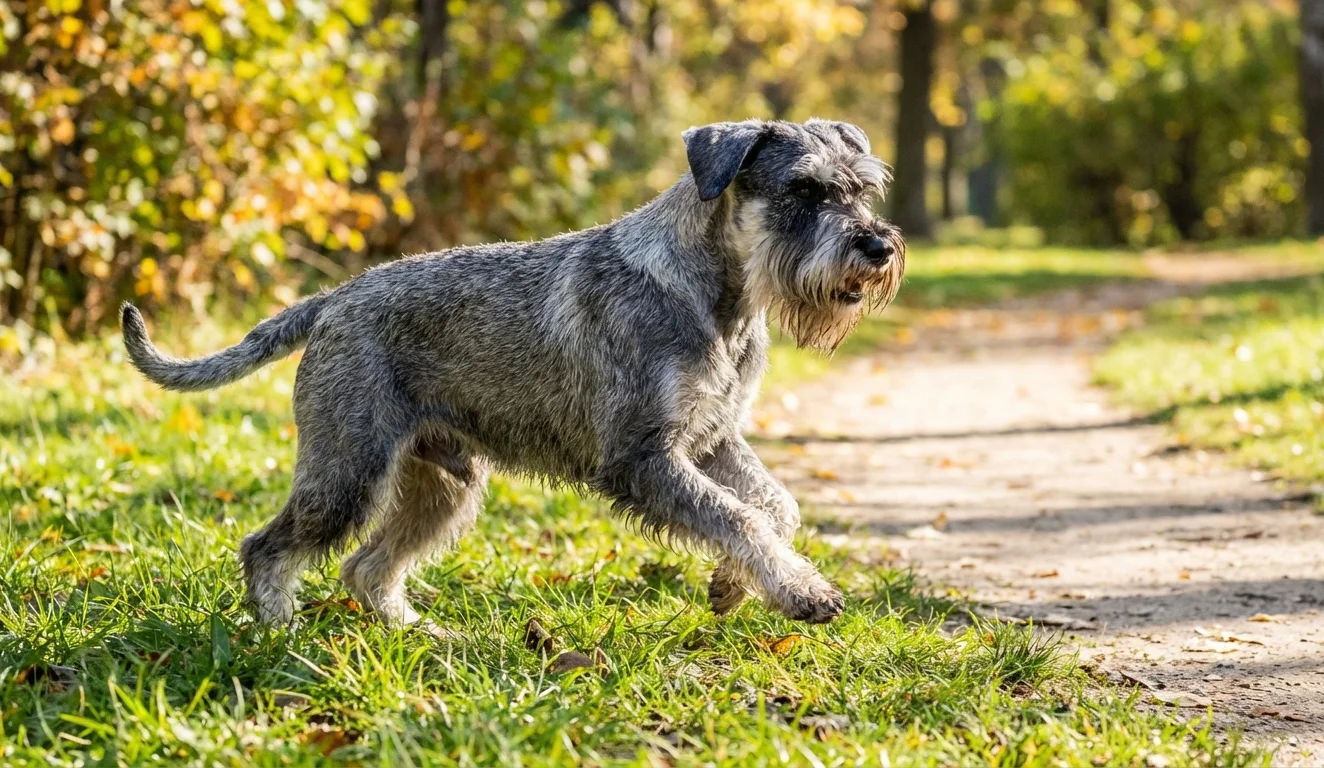
Standard Schnauzers are medium-sized dogs that look bigger than their measurements suggest, thanks to their square build and confident posture. Males stand 18.5-19.5 inches and weigh 35-50 pounds. Females are 17.5-18.5 inches and 30-45 pounds. They’re solidly built without being heavy, athletic and balanced, with a body that’s roughly as long as it is tall.
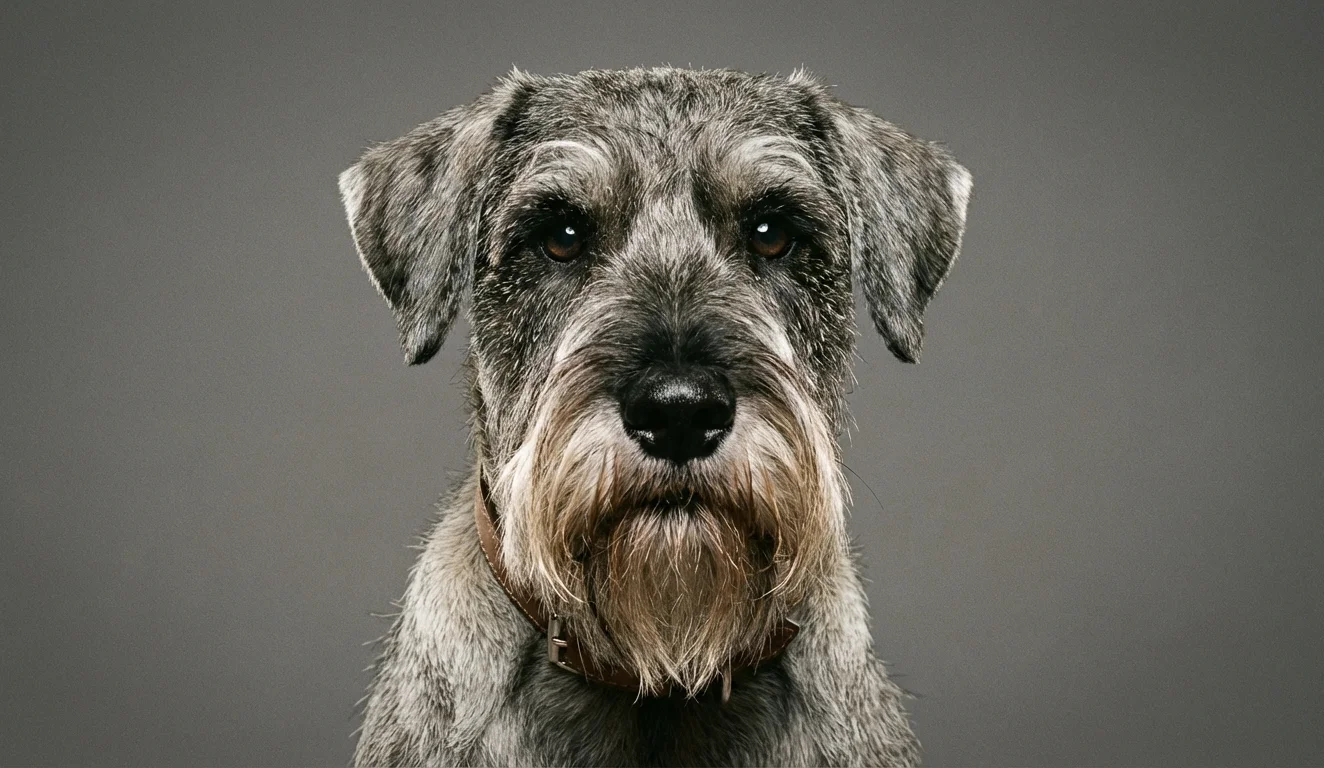
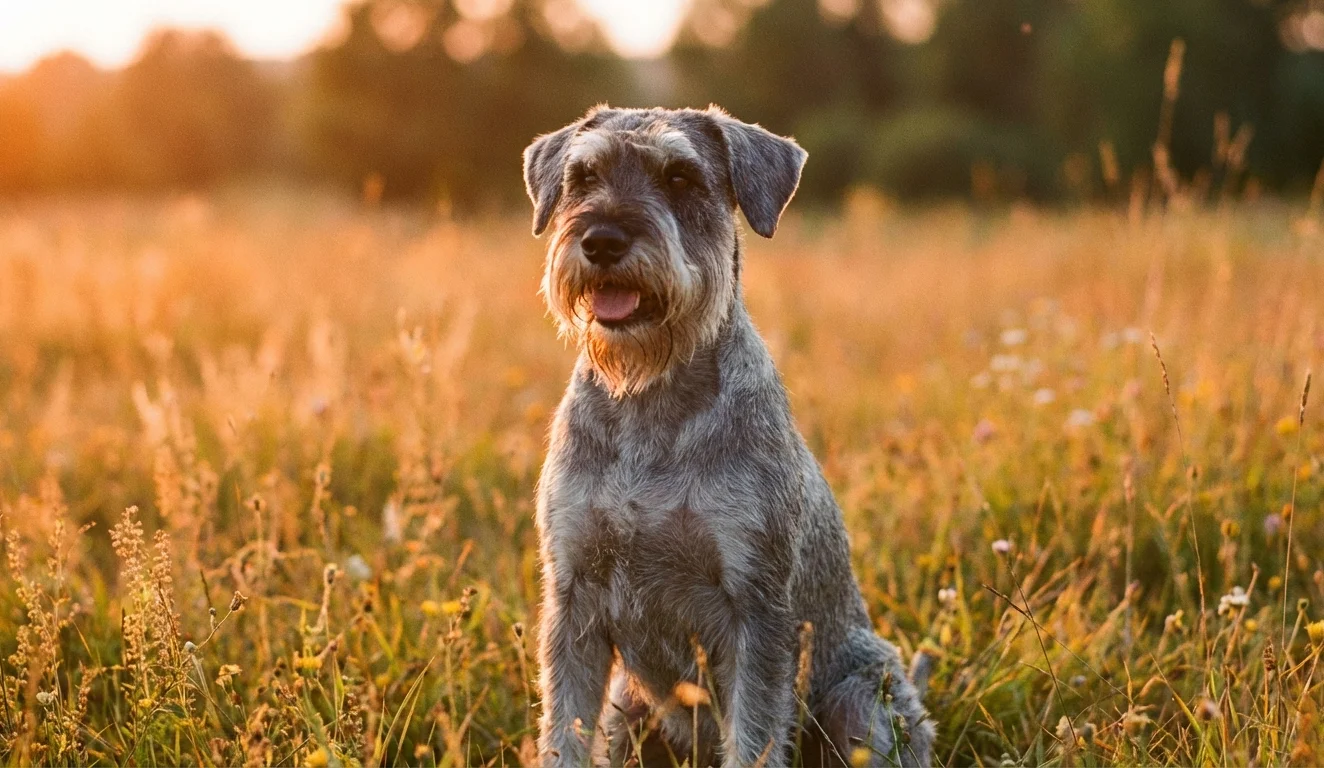
The breed’s hallmark features are the wiry beard, bushy eyebrows, and leg furnishings that give every Standard Schnauzer the look of a distinguished professor who also happens to run marathons. The head is rectangular with a strong muzzle, dark oval eyes, and high-set ears (cropped or natural). The expression is alert and keen, Standards always look like they’re thinking about something.
Their coat is dense and wiry with a soft undercoat. Colors are solid black or salt-and-pepper (a banded pattern where individual hairs are alternating light and dark). The wiry texture repels dirt surprisingly well, and when properly maintained, the coat sheds very little. Standard Schnauzers look clean and put-together even after a romp in the woods, which is more than you can say for most breeds.
Standard Schnauzer Temperament
The AKC calls the Standard Schnauzer “spirited, reliable, and fearless.” We’d refine that to: spirited enough to keep you entertained, reliable enough to trust with your family, and fearless enough to occasionally get themselves (and you) into interesting situations.
What you need to know about Standard Schnauzer temperament:
- Intelligence is off the charts. Stanley Coren’s The Intelligence of Dogs ranks the Standard Schnauzer 22nd out of 138 breeds. In practice, they learn commands quickly, figure out door handles, and open cabinets you thought were childproofed. Their brains are a gift and a curse.
- They’re protective without being aggressive. Standards are natural watchdogs, alert, territorial, and vocal about strangers. But they’re not guard dogs in the way a Rottweiler or German Shepherd is. They’ll alert you, assess the situation, and usually stand their ground rather than attack.
- Playful into old age. Standard Schnauzers retain their puppy-like playfulness well into their senior years. A 10-year-old Standard will still want to play fetch, roughhouse, and steal your socks.
- Independent streak is real. They’re more biddable than the Giant Schnauzer but more independent than a retriever. Standards will follow your commands, once they’ve decided you’ve earned their respect and the command is reasonable.
- They pick a person. Standards bond with the whole family but often choose a primary person. That person will have a 40-pound shadow for the next 14 years.
Exercise Needs
Standard Schnauzers need 60-90 minutes of exercise per day. They’re high-energy dogs that were bred to work all day on a farm, and apartment-couch-potato life doesn’t suit them. Still, they’re more adaptable than some working breeds, they can live in apartments as long as you’re committed to daily exercise.
Good exercises for Standard Schnauzers:
- Brisk walks and runs. Two 30-40 minute walks at a pace that actually gets their heart rate up. Standards are good running partners and can handle 3-5 mile runs once fully grown.
- Agility. This is the Standard Schnauzer’s sport. They’re fast, they’re athletic, they love the problem-solving aspect, and their size is perfect for agility equipment. Many Standard Schnauzers compete at high levels.
- Fetch and interactive play. They’ll play fetch until your arm gives out. Tennis balls, frisbees, and chuck-it launchers are all good options.
- Barn hunt and nose work. These tap into the breed’s historical ratting instincts. Watching a Standard Schnauzer work a scent trail is watching centuries of breeding come to life.
- Training as exercise. A 20-minute obedience session or trick-training session engages their brain hard enough to count as meaningful exercise.
Mental stimulation is as important as physical exercise for this breed. Puzzle feeders, food-dispensing toys, and hide-and-seek games keep their brains occupied. A Standard Schnauzer that’s physically tired but mentally bored will still find ways to cause trouble.
Grooming
Standard Schnauzers share the same grooming requirements as their Giant cousins: low shedding, but high maintenance.
Brush 2-3 times per week to prevent matting in the beard, leg furnishings, and undercarriage. The beard needs daily wiping after meals and water, there’s no elegant way to say this: the beard is a food magnet. Standard Schnauzer owners keep towels in strategic locations throughout the house.
Professional grooming every 6-8 weeks is the norm. Hand-stripping (pulling dead coat by hand) costs $80-$150 per session and takes 2-3 hours, but it preserves the wiry texture and color. Clipping is faster and costs $50-$80 but gradually softens the coat. Most pet owners clip. Show owners hand-strip.
Baths every 4-6 weeks, nail trims every 2-3 weeks, and regular ear and dental care round out the routine. The Standard’s smaller size makes grooming somewhat more manageable than the Giant’s, fewer square inches of beard to manage.
Standard Schnauzer Health Issues
Standard Schnauzers are one of the healthiest purebred breeds. Their 13-16 year lifespan is excellent for a dog their size, and serious genetic health problems are relatively uncommon. Even so, responsible owners should be aware of a few conditions.
Hip Dysplasia
The OFA reports a low-to-moderate incidence of hip dysplasia in Standard Schnauzers, significantly lower than many breeds of similar size. When it does occur, treatment ranges from $500 for conservative management (weight control, joint supplements, physical therapy) to $5,000-$7,000 for total hip replacement. Reputable breeders should provide OFA or PennHIP clearances.
Eye Conditions
Standard Schnauzers can be prone to several eye conditions, including cataracts and progressive retinal atrophy (PRA). The Standard Schnauzer Club of America recommends annual eye exams by a board-certified veterinary ophthalmologist. Cataract surgery runs $2,500-$4,000 per eye. DNA testing for PRA is available and should be part of any breeding program.
Dilated Cardiomyopathy (DCM)
DCM, where the heart muscle weakens and enlarges, has been reported in the breed at low frequency. Symptoms include exercise intolerance, coughing, and lethargy. Early detection through echocardiograms is important, annual cardiac screening is recommended by breed clubs. Treatment typically involves lifelong medication costing $500-$1,500 annually. Severe cases can run $3,000-$8,000 with hospitalization.
Protein-Losing Nephropathy (PLN)
This kidney condition, where protein leaks into the urine, has been identified in some Standard Schnauzer lines. It can lead to kidney failure if not caught early. Regular urinalysis can detect early signs. Management involves dietary changes and medication, costing $500-$2,000 annually depending on severity. A genetic marker test is being developed for the breed.
Training
Standard Schnauzers are a pleasure to train, most of the time. They’re quick learners with good focus, and they genuinely enjoy working with their handler. The “most of the time” caveat comes from their independent streak: Standards occasionally decide they know better, and convincing them otherwise requires patience and humor.
What works with Standard Schnauzers:
- Positive reinforcement with clear expectations. Standards respond well to treats, praise, and play rewards. They also need consistent boundaries, this is a breed that will push limits to see what they can get away with.
- Keep it interesting. Repetitive drills bore Standard Schnauzers fast. Vary your training exercises, introduce new commands regularly, and use different locations to keep them engaged.
- Start early. Puppy socialization between 8-16 weeks is important for any breed, but Standards’ natural wariness of strangers makes it especially valuable. Expose them to many different people, dogs, and environments while they’re young.
- Channel their intelligence. Standards excel in obedience, agility, rally, barn hunt, and tracking. Giving them a structured activity to master satisfies their need for mental challenges.
Standard Schnauzers can be a good fit for experienced first-time owners who are committed to training. They’re not as overwhelming as the Giant Schnauzer, but they’re more demanding than breeds like Labradors or Golden Retrievers. If you’ve done your homework and you’re willing to invest in training, a Standard can be a great first “real” dog.
Cost
Purchase Price
A Standard Schnauzer puppy from a reputable breeder costs $2,000-$3,000. The breed’s relative rarity means waitlists are common, expect to wait 6-12 months for a well-bred puppy. Be cautious of breeders offering Standard Schnauzers significantly below this price range, as it may indicate cut corners on health testing.
Adoption through breed-specific rescues costs $300-$500, though Standard Schnauzers appear in rescue infrequently compared to more popular breeds.
Monthly Costs
| Expense | Monthly Estimate |
|---|---|
| Food (high-quality, medium breed) | $40-$60 |
| Professional grooming (averaged) | $40-$75 |
| Preventive vet care (averaged) | $15-$30 |
| Pet insurance | $30-$55 |
| Treats and chews | $10-$20 |
| Miscellaneous (toys, supplies) | $10-$20 |
| Total | $145-$260 |
First-Year Costs
Budget $4,000-$6,500 for the first year, including purchase price, initial veterinary care, vaccinations, spay/neuter, supplies, grooming, and training classes. Ongoing annual costs settle to $2,500-$4,000 after the first year, with grooming being the most significant recurring expense.
Is a Standard Schnauzer Right for You?
A Standard Schnauzer is a great fit if you:
- Want a versatile, medium-sized dog that’s athletic and intelligent
- Are active and can provide 60-90 minutes of daily exercise
- Enjoy training and want a dog that can participate in dog sports
- Can commit to professional grooming every 6-8 weeks
- Want a natural watchdog with a protective (but not aggressive) nature
- Have older children who can match the breed’s energy and playfulness
- Value a long-lived, healthy breed with fewer genetic issues than most
A Standard Schnauzer is probably NOT right if you:
- Want a low-energy dog that’s content with a short daily walk
- Prefer a dog that’s immediately friendly with every stranger
- Don’t want to deal with beard maintenance (it’s a whole thing)
- Want a dog that’s eager to please without any negotiation
- Leave your dog alone for 8+ hours a day regularly
- Are looking for your very first dog and have no experience with independent breeds
The Standard Schnauzer is the Goldilocks of the schnauzer family, not too big, not too small, with just enough independence to be interesting but not so much that they’re unmanageable. They’re healthy, they’re long-lived, they’re athletic, and they’re funny. The breed’s relative obscurity means you’ll spend a lot of time explaining that no, it’s not a Giant Schnauzer puppy, and no, it’s not a big Mini Schnauzer, it’s the original. And honestly, you’ll enjoy every one of those conversations.
Related Breeds
If you’re considering this breed, you might also want to look at:
FAQ
What’s the difference between a Standard Schnauzer and a Miniature Schnauzer?
Size is the most obvious difference, Standards are 17.5-19.5 inches and 30-50 pounds, while Minis are 12-14 inches and 11-20 pounds. But temperament differs too. Standards are working dogs with higher exercise needs, stronger guarding instincts, and more intensity. Minis were bred primarily as companion dogs and are generally more adaptable to low-activity lifestyles. Standards also tend to be healthier, with fewer breed-specific health concerns than Miniatures (who are prone to pancreatitis and bladder stones).
Do Standard Schnauzers shed?
Very little, when properly groomed. Their wiry double coat holds onto dead hair rather than dropping it on your furniture. Regular brushing and professional grooming (either hand-stripping or clipping every 6-8 weeks) keeps shedding minimal. They’re often recommended for allergy sufferers, though no dog is truly hypoallergenic. If you skip grooming, the dead coat will eventually mat and shed in clumps, so the low-shedding benefit depends on your commitment to maintenance.
Are Standard Schnauzers good apartment dogs?
They can be, with caveats. Standards are medium-sized, low-shedding, and don’t bark excessively (they will bark to alert, but they’re not yappy). Those qualities work in an apartment. The challenge is meeting their exercise needs, 60-90 minutes daily of real activity, not just a walk around the block. If you’re a runner, hiker, or have access to a dog park or training facility, a Standard can thrive in an apartment. If you’re sedentary, this isn’t the breed for any living situation.
How long do Standard Schnauzers live?
Standard Schnauzers have an impressive lifespan of 13-16 years, which is excellent for a dog in the 30-50 pound range. Many live to 14-15 years with good care. Their longevity is one of the breed’s biggest selling points and reflects the relatively small genetic health burden compared to more popular breeds. Keeping your Standard at a healthy weight, providing regular exercise, and staying current on veterinary care will maximize their years.
Are Standard Schnauzers good with other dogs?
Generally yes, with proper socialization. Standards are more dog-social than Giant Schnauzers, though some individuals (especially intact males) can be pushy or dominant with same-sex dogs. Early socialization with a variety of dogs helps, and most well-socialized Standards do fine at dog parks and with canine housemates. They’re not typically dog-aggressive, but they won’t back down from a challenge either, they have a terrier-like confidence that can escalate a tense interaction.