Siberian Husky Breed Guide: Beautiful, Dramatic, and Plotting an Escape Right Now (2026)
The Siberian Husky is a stunning, vocal, independent sled dog that will test every fence you own and look gorgeous doing it.
The Siberian Husky weighs 35-60 pounds, stands 20-23.5 inches at the shoulder, and lives 12-14 years. Those numbers make it sound like a medium-sized, long-lived, manageable dog. And technically, it is all of those things. But numbers can’t capture what it’s actually like to live with a Husky, the talking back, the escape attempts, the fur tumbleweeds the size of a small cat, the 3 AM howling sessions, and the absolute refusal to come when called at the dog park.
In Short: 35–60 lbs, 12–14 years. Very high energy, needs serious daily exercise. Heavy shedder, expect fur everywhere. Watch for Cataracts. Good with kids, but better for experienced owners.
We need to be blunt: the Siberian Husky is one of the most returned breeds at shelters, and we think it’s because people buy them for their looks without understanding what they’re getting into. A Husky is not a wolf-looking Golden Retriever. A Husky is a working sled dog that was bred to run 100+ miles a day in subzero temperatures and make independent decisions about how to survive. If you want a dog that listens to you, there are about 200 better options. If you want a dog that’s athletic, hilarious, impossibly beautiful, and will keep you on your toes every single day, keep reading.
Siberian Husky at a Glance
| Trait | Details |
|---|---|
| Breed Group | Working (AKC) |
| Height | Males: 21-23.5 in / Females: 20-22 in |
| Weight | Males: 45-60 lbs / Females: 35-50 lbs |
| Life Expectancy | 12-14 years |
| Coat | Medium-length, dense double coat |
| Colors | Black & White, Gray & White, Red & White, Sable & White, All White, Agouti |
| Temperament | Loyal, Outgoing, Mischievous |
| Shedding | Very High |
| Energy Level | Very High |
| Good With Kids | Yes |
| First-Time Owner Friendly | No |
History
The Siberian Husky was developed by the Chukchi people of northeastern Siberia over thousands of years. The Chukchi are an indigenous group who lived along the Arctic coast and relied on sled dogs for survival, literally. Their dogs transported supplies across frozen terrain, helped hunt sea mammals, and slept with family members to provide warmth during winters where temperatures dropped to -60F.
The Chukchi bred selectively for endurance, efficiency, and a willingness to work in a team. These weren’t sprint dogs, they were long-distance haulers bred to cover vast distances on minimal food. The Chukchi also valued friendly temperament because the dogs lived inside the family dwelling with women and children. Aggressive dogs were culled. This is why, despite looking like wolves, Siberian Huskies are one of the friendliest breeds toward humans.
The breed came to Alaska in 1908 when a Russian fur trader named William Goosak entered a team of smaller Siberian sled dogs in the All-Alaska Sweepstakes, a 408-mile race. The Alaskan mushers, used to larger Malamute-type dogs, laughed at the smaller Siberians. They stopped laughing when the team finished third. In 1910, a team of Siberian Huskies won the race, and the breed’s reputation was made.
The most famous Husky moment came in 1925, during the Great Race of Mercy, a relay of sled dog teams that carried diphtheria antitoxin serum 674 miles across Alaska to the ice-bound town of Nome. Balto, the lead dog of the final team, became a national hero. There’s a statue of him in Central Park that still gets visitors every day.
Size and Appearance
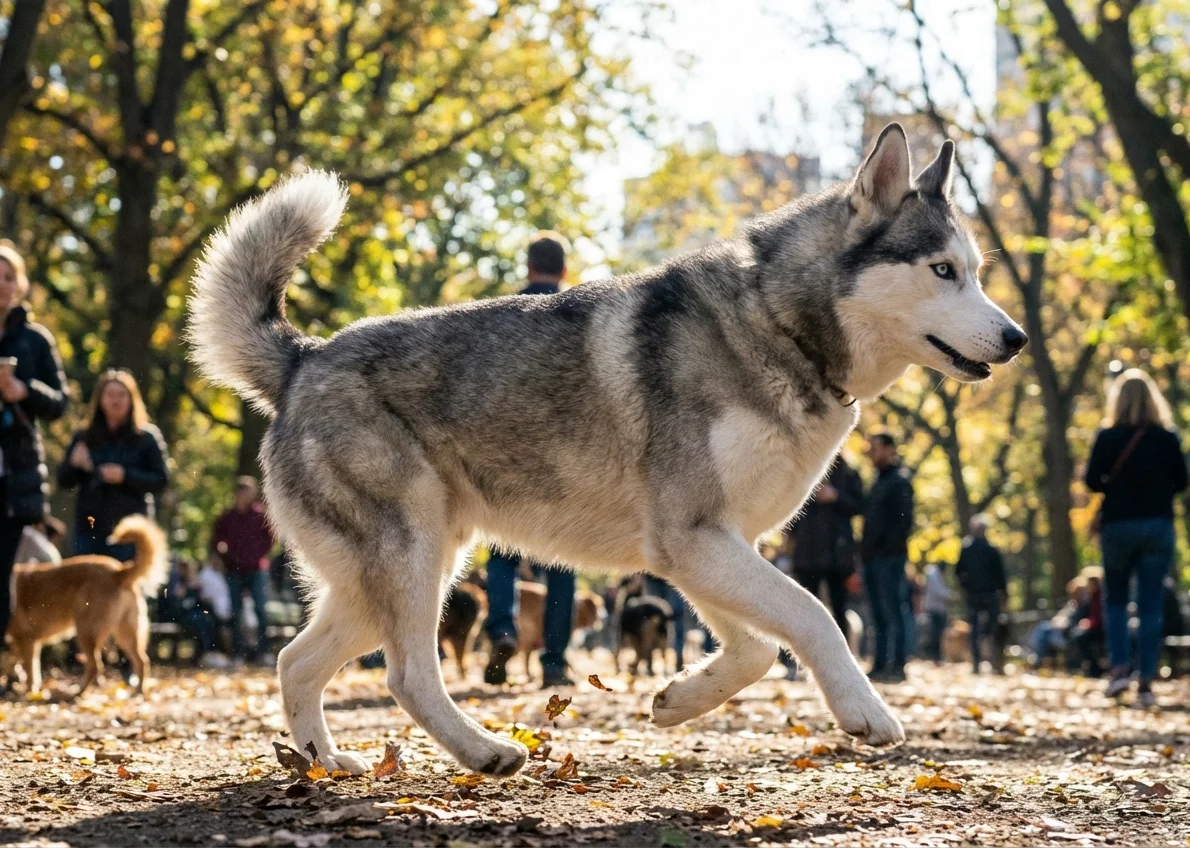
Siberian Huskies are medium-sized, smaller than most people expect. Males stand 21-23.5 inches and weigh 45-60 pounds. Females are 20-22 inches and 35-50 pounds. They’re compact and athletic, built for endurance rather than power. A well-conditioned Husky has a lean, muscular body with a deep chest and a smooth, effortless gait.
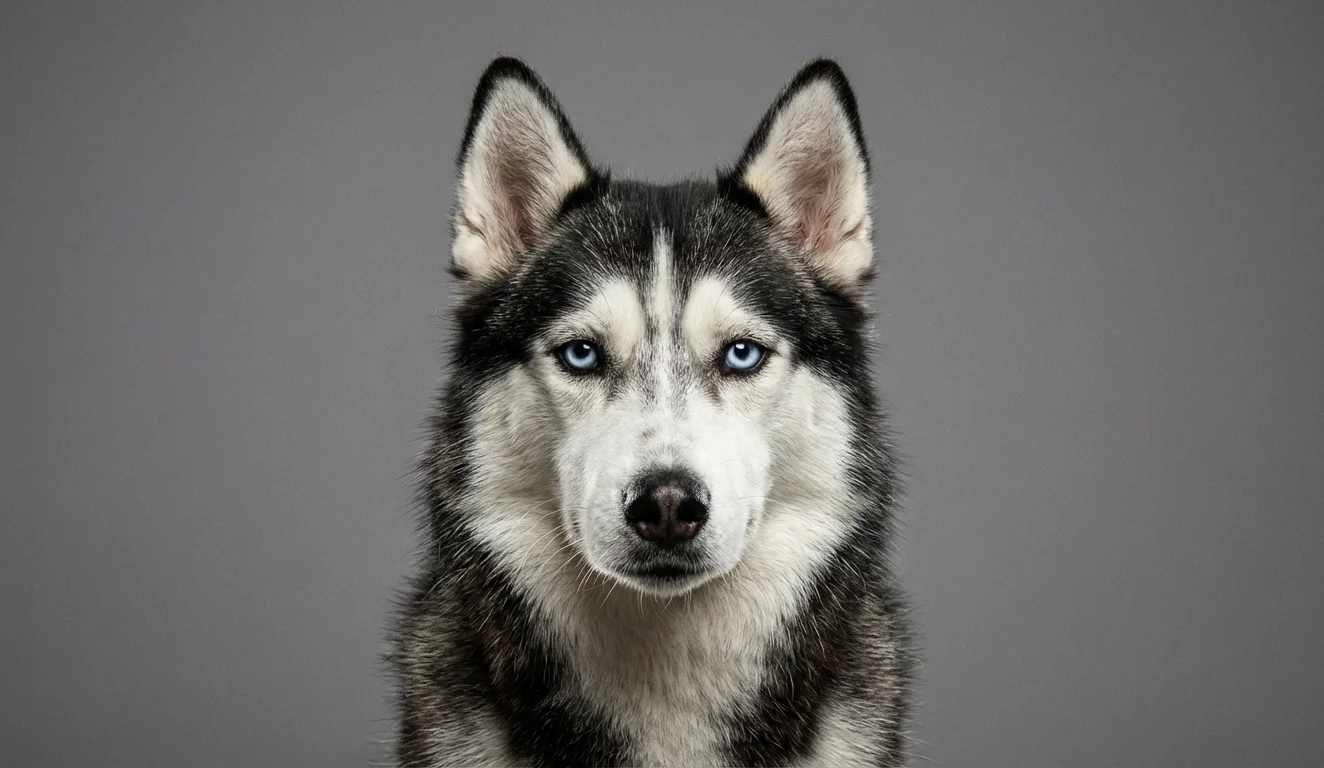
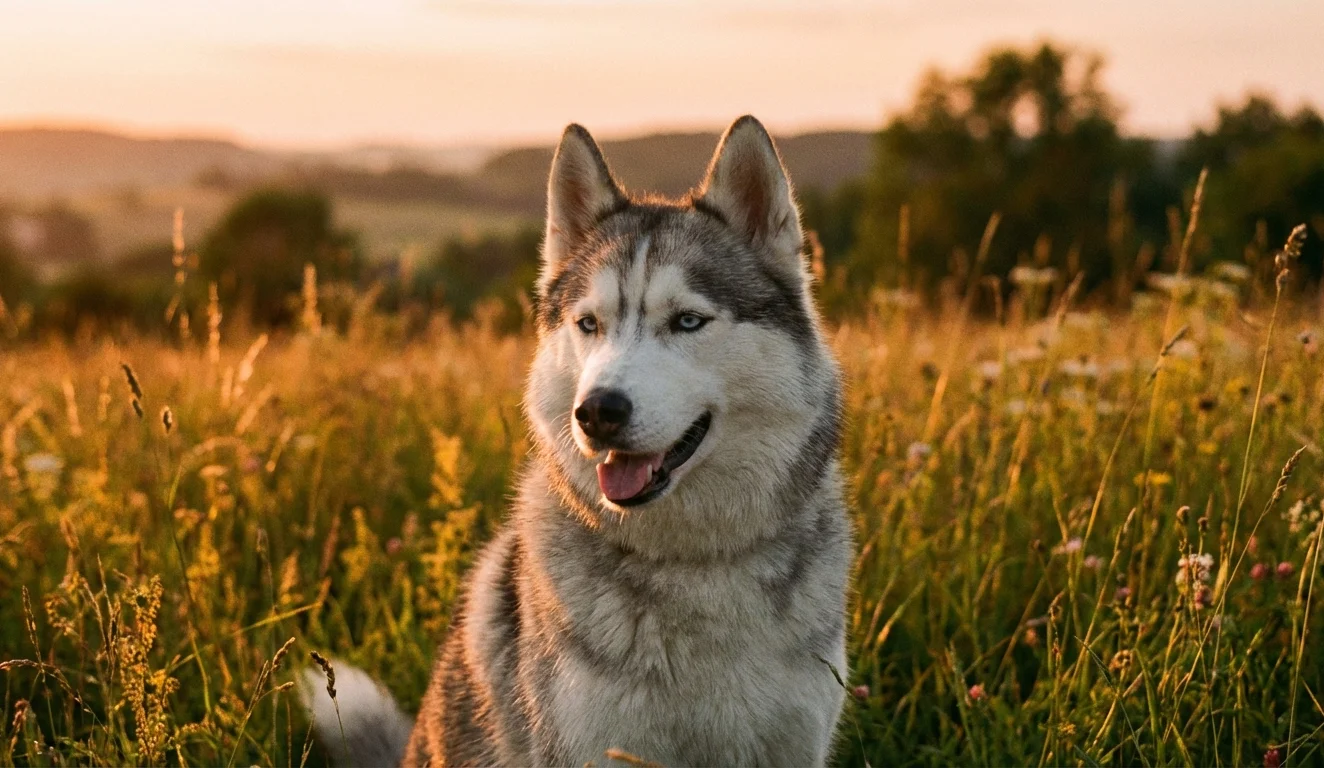
The eyes are the breed’s most striking feature. Huskies can have brown eyes, blue eyes, or one of each (called heterochromia). Some have “parti-colored” eyes, a single eye with both blue and brown. The blue eyes aren’t linked to any health problems in Huskies (unlike some other breeds), and they occur naturally in about 40% of the breed.
Coat and Color
The coat is a medium-length, dense double coat that’s designed for insulation. The undercoat is soft and thick. The outer coat is straight and slightly longer. This combination keeps them warm in Arctic conditions and also makes them the most prolific shedders you’ll ever encounter (more on that in the grooming section).
Common color patterns include black and white, gray and white, red and white, sable and white, all white, and agouti (a wild-type pattern with banded hairs). The classic look, black and white with blue eyes, is what most people picture, but Huskies come in a wider range of colors than many realize.
Never shave a Husky. The double coat insulates against both cold AND heat. Shaving removes that insulation and can cause sunburn, overheating, and permanent coat damage. We see this mistake constantly and it needs to stop.
Siberian Husky Temperament
The Siberian Husky temperament is unlike almost any other breed. They’re friendly, outgoing, and genuinely love people, but they’re not eager to please in the way a Lab or Golden is. A Husky knows what you want. A Husky has considered your request. A Husky has decided to do something else.
The real personality of a Husky:
- Independent thinkers. This is the defining Husky trait. The breed was developed to make decisions while running at speed in whiteout conditions. A Husky that blindly followed commands in that environment would run the team off a cliff. That independent streak served them well in Siberia. In your living room, it means they’ll look you in the eye, hear your command, and decide it doesn’t apply to them.
- Escape artists. Huskies are legendary for this. They climb fences, dig under fences, open gates, open doors, and find weak points in containment that you didn’t know existed. A 6-foot fence is a suggestion. A locked gate is a puzzle to solve. Many Husky owners install coyote rollers on their fences (rolling bars at the top that prevent climbing) because standard fencing isn’t enough.
- Vocal. Huskies don’t bark much in the traditional sense. Instead, they howl, talk, grumble, whine, yodel, and make a range of sounds that owners describe as “arguing.” They will talk back to you during training sessions. They will howl at sirens at 3 AM. They will vocalize their displeasure about bath time, vet visits, and being told “no.”
- Friendly with everyone. Huskies are terrible guard dogs. They’ll greet a burglar, show them around, and probably try to leave with them. Their friendliness toward humans is deeply bred, remember, aggressive dogs were culled by the Chukchi.
- High prey drive. Huskies typically aren’t safe around cats, rabbits, chickens, or other small animals. This isn’t universal, but the prey drive is strong enough in most Huskies that we’d caution against assuming your Husky will be the exception.
Exercise Needs
Siberian Huskies need 90 minutes of exercise per day, minimum. This is a very high-energy breed that was literally built to run all day. Ninety minutes is the floor, not the ceiling.
Good exercise for Huskies:
- Running. If you’re a runner, a Husky is one of the best running partners you can get. They can easily handle 5-10 mile runs in cool weather and seem to prefer a brisk pace.
- Bikejoring or canicross. Organized pulling sports channel the breed’s natural instinct. Huskies love pulling, it’s what they were bred to do.
- Long hikes. Huskies are excellent trail dogs with the stamina to go all day, as long as it’s not too hot.
- Off-leash play in a secure area. Emphasis on “secure.” A Husky off-leash in an unfenced area will run. They won’t come back when called. They won’t feel bad about it. You will be posting “lost dog” flyers. Invest in a long line if you want to give them running freedom without a fully fenced area.
What happens when a Husky doesn’t get enough exercise: destruction on a scale that’s hard to overstate. We’re talking chewed-through drywall, excavated yards, shredded furniture, and escape attempts that would impress a prison movie director. A bored Husky is a creative Husky, and their creativity is always expensive.
Heat warning: Huskies were built for Arctic conditions. They overheat much faster than most breeds in warm climates. If you live somewhere that regularly hits 85F+, you need to exercise them in the early morning or after sunset, provide cooling mats, and ensure they always have access to shade and water. Some people in hot climates shouldn’t get Huskies at all, we think that’s fair to say.
Grooming
Siberian Huskies shed. And shed. And shed some more.
The double coat “blows” twice a year, usually in spring and fall, in a process where the entire undercoat comes out in clumps over 2-3 weeks. During a coat blow, you’ll have enough fur to build a second dog. That’s not hyperbole. Husky owners joke about it because the alternative is crying.
Grooming routine:
- Brush 2-3 times per week during normal periods, using an undercoat rake and a slicker brush
- Daily brushing during coat blows (spring and fall), sometimes twice daily to keep up
- Bath every 6-8 weeks: Huskies are actually fairly clean dogs and don’t have a strong doggy odor. Their coat repels dirt well.
- Nail trims every 2-3 weeks
- No haircuts. Huskies should never be clipped or shaved. The double coat regulates their body temperature in both hot and cold weather.
Professional grooming isn’t typically necessary for Huskies, their coat doesn’t mat the way a Poodle or Doodle coat does. A good deshedding session at a groomer during coat blow ($50-$80) can speed up the process, though.
If dog hair on your clothes, furniture, food, and in your coffee is a dealbreaker, a Husky is not for you. Lint rollers will become your most-purchased household item.
Siberian Husky Health Issues
Here’s the good news: Siberian Huskies are one of the healthier purebred dogs. The breed was developed under extreme natural selection, weak or unhealthy dogs didn’t survive in Siberia. Their lifespan of 12-14 years is excellent for a medium-sized breed.
Cataracts
Cataracts are the most common health issue in Siberian Huskies. The Siberian Husky Club of America has identified juvenile cataracts as a significant breed concern, with the condition appearing in dogs as young as 3 months old. The CERF (Canine Eye Registry Foundation) database shows Huskies with one of the higher cataract rates among breeds. Treatment is surgical removal of the affected lens ($2,000-$4,000 per eye), and reputable breeders should have annual eye exams (CAER evaluations) on breeding stock.
Progressive Retinal Atrophy (PRA)
PRA causes gradual vision loss and eventual blindness. It’s genetic and untreatable, though it’s not painful. A DNA test can identify carriers. Expect costs of $2,000-$3,000 for diagnosis and management. Always ask breeders for PRA test results on the parents.
Hip Dysplasia
The OFA reports a moderate incidence of hip dysplasia in Siberian Huskies, lower than many large breeds, but still present. The combination of high activity levels and joint abnormalities can cause pain and mobility issues. Treatment costs $1,500-$6,000 depending on severity.
Corneal Dystrophy
This condition causes a hazy or crystalline opacity in one or both eyes. It’s usually not painful and doesn’t always affect vision significantly. It’s moderately common in the breed. Treatment costs range from $500-$2,000, and some cases require only monitoring.
Hypothyroidism
The thyroid gland produces insufficient hormones, leading to weight gain, lethargy, skin issues, and coat changes. It’s manageable with daily medication ($200-$600 per year) and regular blood work. Hypothyroidism is treatable and most dogs return to normal with medication.
Training
We’ll be straight with you: training a Siberian Husky is a humbling experience. This isn’t a breed that’s going to make you feel like a dog-training genius.
Huskies are intelligent. They understand commands perfectly well. The issue is motivation, they don’t see the point of performing a command just because you asked. A Lab thinks, “My person wants me to sit! I will sit! I love sitting!” A Husky thinks, “You want me to sit. Why? What’s in it for me? Actually, never mind, I’m going to go investigate that squirrel.”
What actually works with Husky training:
- High-value rewards. Normal treats won’t cut it. You need something the Husky genuinely wants, real meat, cheese, or whatever makes their eyes light up.
- Short sessions. Huskies get bored with repetition fast. Five minutes of focused training beats twenty minutes of increasingly frustrated attempts.
- Accept “good enough.” A Husky that comes when called 80% of the time in a fenced yard is a well-trained Husky. Expecting 100% reliability off-leash is unrealistic for this breed. We’re not saying lower your standards, we’re saying calibrate your expectations to the breed.
- Crate training is strongly recommended. A crate-trained Husky is a safer Husky. It prevents destruction when you’re not home and gives them a space that’s genuinely theirs.
- Never trust a Husky off-leash in an unfenced area. This isn’t a training failure, it’s a breed characteristic. Even well-trained Huskies will bolt if something interesting enough catches their attention. The recall instinct is just not as strong as the running instinct.
Cost
Purchase Price
A Siberian Husky puppy from a reputable breeder costs $800-$2,500. Working sled lines and show-quality dogs may cost more. Because Huskies are frequently surrendered, rescue adoption is a solid option, expect $200-$500 from a rescue organization.
Monthly Costs
| Expense | Monthly Estimate |
|---|---|
| Food (high-protein, active formula) | $40-$70 |
| Preventive vet care (averaged) | $15-$30 |
| Pet insurance | $30-$50 |
| Treats and chews | $10-$20 |
| Miscellaneous (toys, supplies, fence repairs) | $15-$30 |
| Total | $100-$200 |
First-year costs beyond purchase price typically run $2,500-$4,000, including a sturdy crate, vaccinations, spay/neuter, puppy classes, and the inevitable replacement of at least one item your Husky will destroy during adolescence. Budget for fence improvements too, many new Husky owners end up adding fence height, dig guards, or coyote rollers after their first escape.
Is a Siberian Husky Right for You?
A Siberian Husky could be a great fit if you:
- Are an active person who runs, hikes, bikes, or spends significant time outdoors
- Have experience with independent or stubborn breeds
- Have a securely fenced yard (6 feet minimum, with dig guards)
- Live in a cooler climate or can manage heat precautions in warm weather
- Think dog hair covering everything is a minor inconvenience rather than a dealbreaker
- Have a sense of humor about a dog that will argue with you
- Want a dog that’s friendly with people, including kids
- Can commit to 90+ minutes of daily exercise
A Siberian Husky is probably not right if you:
- Are a first-time dog owner
- Want a dog that comes when called off-leash
- Have cats or small animals in the home
- Work long hours and can’t provide enough exercise and stimulation
- Live in an apartment or a home without a securely fenced yard
- Live in a hot climate and can’t manage the heat issue year-round
- Want a quiet dog (your neighbors will have opinions about a howling Husky)
- Expect a dog that’s eager to follow commands
The Siberian Husky is the most beautiful headache you’ll ever have. They’re the kind of dog that makes you pull your hair out on Monday and post an adoring photo of them on Tuesday. Every Husky owner has a story about something their dog destroyed, escaped from, or argued about. And every Husky owner will also tell you they wouldn’t trade their dog for any other breed. That says everything about what it’s like to live with one.
Related Breeds
If you’re considering this breed, you might also want to look at:
Frequently Asked Questions
Can Siberian Huskies live in warm climates?
They can, but it requires significant management. Huskies in warm climates need air conditioning, exercise restricted to cool hours (early morning, after sunset), constant access to shade and fresh water, and owners who watch closely for heat stress. Their double coat actually provides some insulation from heat, which is why shaving is counterproductive. But there’s a limit, a Husky in Phoenix, Arizona, will never be as comfortable as a Husky in Minnesota. If you live somewhere hot, honestly assess whether you can provide the accommodations this breed needs before committing.
Do Siberian Huskies get along with cats?
The general answer is no. Huskies have a strong prey drive that was bred into them over thousands of years, and most Huskies will chase cats. Some Huskies raised with cats from puppyhood learn to coexist with their household cats, but many Husky owners report that their dog is fine with “their” cat but will still chase unfamiliar cats. We’d recommend not getting a Husky if you have cats, or at minimum, having a plan to keep them completely separated if the introduction doesn’t go well.
How much do Siberian Huskies shed?
A lot. More than you’re imagining right now. Huskies have a dense double coat that sheds year-round, with two massive “coat blows” per year where the entire undercoat comes out over 2-3 weeks. During coat blows, you’ll be vacuuming daily and still finding fur in your food. Outside of coat blow season, shedding is moderate but constant. Regular brushing (2-3 times weekly, daily during blows) is the only management strategy. No grooming routine stops the shedding, it just controls it.
Why do Siberian Huskies howl so much?
Howling is hardwired into the breed. Huskies are descended from wolves more recently than many breeds, and they retain a strong vocalization instinct. They howl to communicate over distance (as they did on the trail), in response to high-pitched sounds like sirens, when they’re excited or frustrated, and sometimes apparently just because they feel like it. Some Huskies are quieter than others, but as a breed, they’re vocal. Many Husky owners find the “talking” endearing, it really does sound like the dog is trying to have a conversation. Your neighbors may feel differently.
Are Siberian Huskies good family dogs?
Huskies are excellent with children, gentle, patient, and playful. The Chukchi people specifically bred for friendliness toward humans, including children, and that trait runs deep. The challenges of Huskies as family dogs aren’t about temperament but about management: the exercise requirements, the shedding, the escape tendencies, and the prey drive around small pets. If your family is active, has a secure yard, and doesn’t have cats or small animals, a Husky can be a fantastic family dog. But everyone in the household needs to be on board with the exercise commitment, because a Husky that doesn’t get enough activity will make life difficult for the whole family.