Australian Cattle Dog Breed Guide: Built for Work, Not Your Couch (2026)
The Australian Cattle Dog is a 35-50 lb herding machine with stamina that puts most dogs to shame. Here's what it's really like living with one.
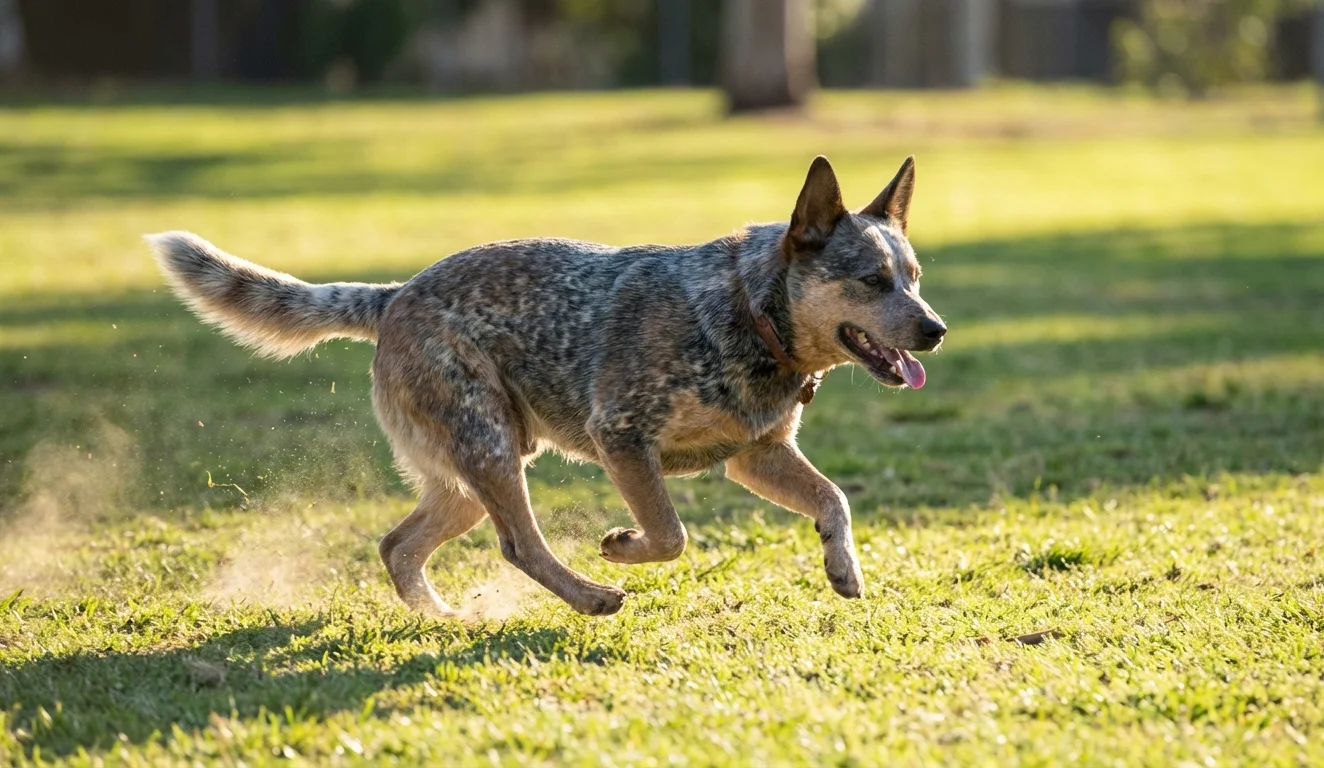
The Australian Cattle Dog, also called a Blue Heeler, Red Heeler, or Queensland Heeler depending on who you ask, is a medium-sized herding breed that weighs 35-50 pounds and stands 17-20 inches tall. They live 12-16 years, which is on the longer end for a dog this active. And “active” might be an understatement. These dogs were bred to drive cattle across the Australian outback for miles in punishing heat. They don’t turn that off just because you live in a suburb.
In Short: 35–50 lbs, 12–16 years. Very high energy, needs serious daily exercise. Heavy shedder. Watch for Hip Dysplasia and Progressive Retinal Atrophy. Good with kids, but better for experienced owners.
We’d go as far as saying this: if you’re not prepared to give an Australian Cattle Dog a job, don’t get one. This is a breed that will reorganize your life around its energy level whether you planned for it or not. That sounds dramatic, but every ACD owner we’ve talked to says the same thing. Brilliant dog. Unmatched loyalty. But the moment they get bored, your furniture pays the price.
Australian Cattle Dog at a Glance
| Trait | Details |
|---|---|
| Size | 35-50 lbs (male and female) |
| Height | Male: 18-20 in / Female: 17-19 in |
| Lifespan | 12-16 years |
| Energy Level | Very high, one of the highest-energy breeds out there |
| Shedding | High, especially during seasonal coat blows |
| Good with Kids | Yes, but may try to herd them |
| Good with Other Dogs | Not always, can be selective |
| Trainability | Very high, they learn fast, for better or worse |
| Price Range | $800-$2,000 from a reputable breeder |
History
The Australian Cattle Dog’s origin story is one of the more interesting ones in the dog world. In the early 1800s, British settlers in Australia needed dogs that could manage half-wild cattle on unfenced land in extreme heat. The herding dogs they’d brought from England couldn’t hack it, they’d overheat, give up, or bark too much and scatter the herd.
So breeders started crossing. Smithfield sheepdogs were bred with native Dingoes, which gave the dogs heat tolerance and quieter working style. Later crosses with Dalmatians, Kelpies, and Bull Terriers added loyalty to handlers, improved herding instinct, and increased endurance. The result was a tough, compact dog that could nip at the heels of stubborn cattle all day without breaking down. The “Heeler” nickname comes directly from that nipping behavior.
The AKC recognized the breed in 1980. Today they’re still used as working dogs on ranches, but they’ve also found their way into agility competitions, search and rescue, and the homes of very active families. One famous ACD named Bluey holds the Guinness World Record for the oldest dog ever, living to 29 years and 5 months. That’s exceptional, but the breed’s longevity in general is impressive.
Size and Appearance
Australian Cattle Dogs are compact and muscular. Males stand 18-20 inches at the shoulder, females 17-19 inches, and both sexes weigh between 35 and 50 pounds. They’re built low to the ground relative to their weight, stocky without being bulky.
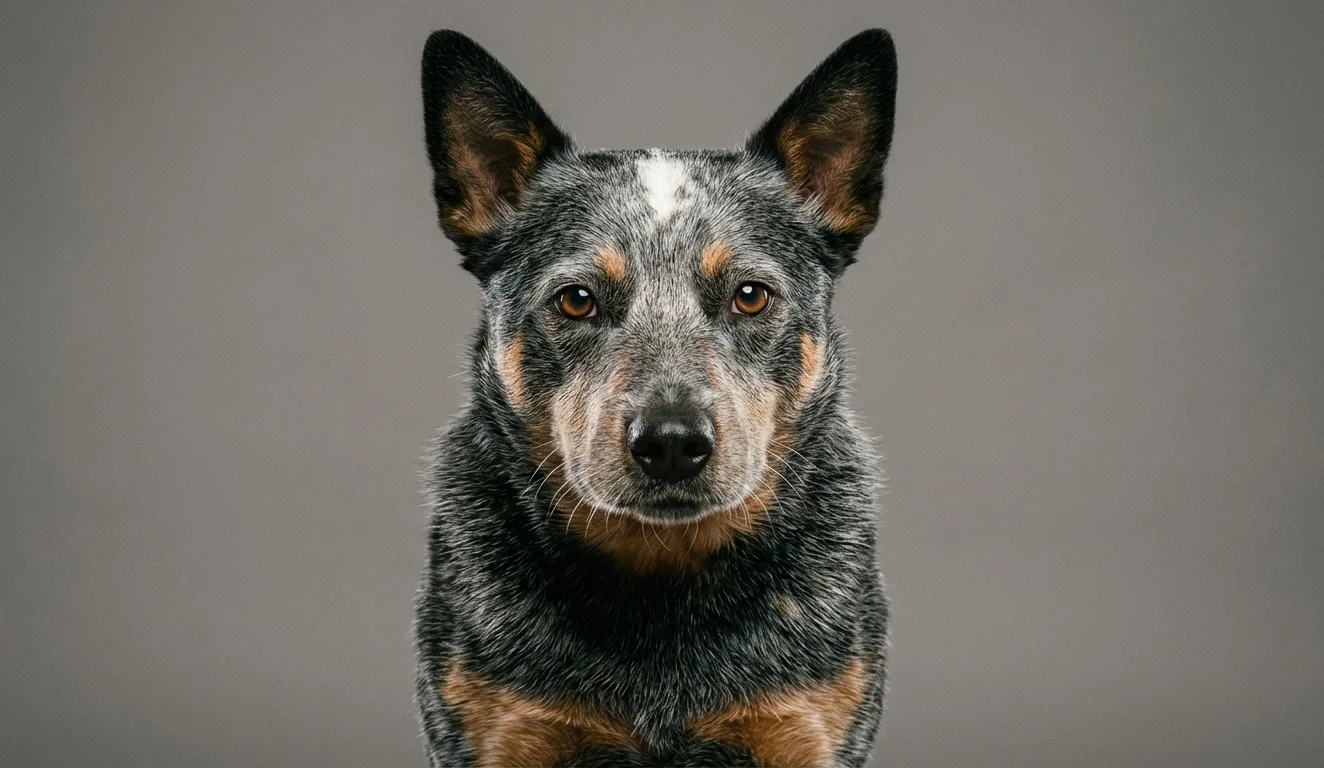
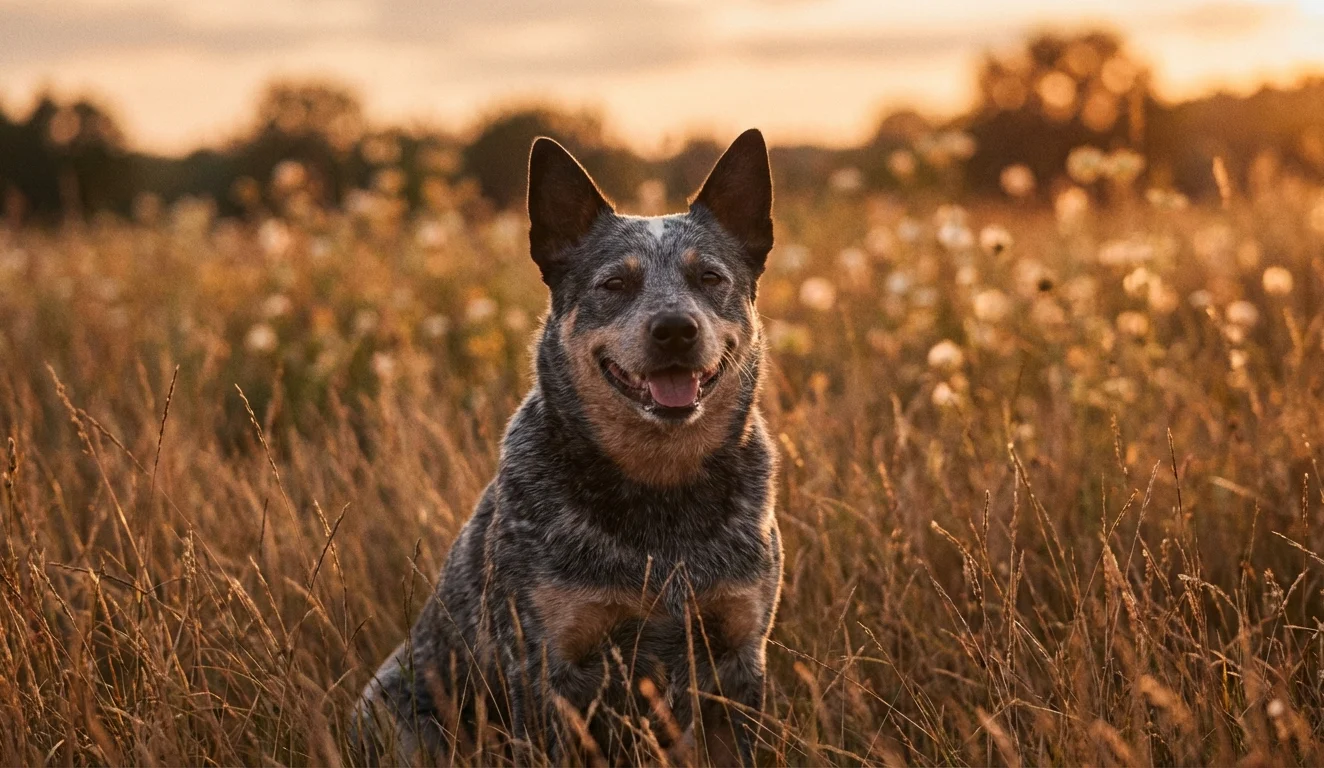
The coat is short, dense, and weather-resistant with a thick undercoat. It’s designed for the Australian outback, so it handles rain, heat, and cold reasonably well. Coat color is where things get interesting. Blue Heelers have a blue or blue-mottled pattern, sometimes with black or tan markings on the legs and face. Red Heelers are red speckled, and some have darker red patches. Puppies are actually born white (a Dalmatian trait that stuck around) and develop their color patterns over the first few weeks.
Their ears are naturally erect and pointed, always alert, always listening. The expression is intense. You’ll notice it the first time an ACD locks onto something. There’s a sharpness behind those eyes that you don’t see in most breeds.
Australian Cattle Dog Temperament
The ACD temperament is a package deal, and you should understand the full picture before bringing one home.
Loyalty that borders on obsession. ACDs bond deeply with one person in the household. They’ll tolerate and be friendly with everyone else, but their person is their person. This isn’t the breed that runs up to strangers at the dog park for attention. They’re more likely to be sitting at your feet, watching the room like a security guard.
They are smart in ways that will test you. With a trainability rating that lands near the top of the herding group, ACDs learn commands quickly. But they’re also problem-solvers who figure out how to open gates, unzip backpacks, and get into cabinets you thought were childproof. Intelligence in this breed isn’t passive, it demands engagement.
Herding instinct is always on. This means nipping at ankles of running children, chasing cats, trying to corral other dogs at the park, and body-blocking you in the hallway to move you where they think you should go. It’s not aggression. It’s their DNA doing what it was designed to do. But it needs management, especially around small kids.
Wariness of strangers is normal. ACDs were bred to guard livestock and property in addition to herding. That cautious temperament extends to unfamiliar people and dogs. Early socialization matters more with this breed than with many others.
Exercise Needs
This is where the Australian Cattle Dog separates itself from most breeds. They need 90+ minutes of hard exercise per day, and we mean hard. A leisurely walk around the neighborhood doesn’t come close to cutting it.
What actually works:
- Running or biking alongside you (ACDs make excellent running partners once they’re physically mature)
- Fetch sessions with a ball launcher, long, intense ones
- Hiking on trails with varied terrain
- Agility courses and herding trials
- Swimming, if they take to it (not all do)
Mental exercise is equally important. Puzzle feeders, nose work, obedience training, and trick work can all burn mental energy. An ACD that gets physical exercise but no mental challenge will still find ways to entertain itself, and you won’t like those ways.
We’d honestly recommend this breed for people who already have an active outdoor lifestyle and want a dog to match. If you’re hoping the dog will motivate you to start running, maybe pick a breed that’s more forgiving on the days you’d rather stay home.
Grooming
The good news: Australian Cattle Dogs have a low-maintenance coat compared to long-haired or curly-coated breeds. Weekly brushing with a bristle brush or deshedding tool keeps things manageable most of the year.
The bad news: they shed. A lot. Twice a year, spring and fall, they blow their undercoat, and for about 2-3 weeks, hair will be everywhere. During those periods, daily brushing with a Furminator or similar deshedding tool is your best defense. You’ll still find hair on every surface in your house, but it helps.
Baths are only needed every 6-8 weeks unless they roll in something unfortunate, which they will. Nail trims every 2-3 weeks, teeth brushing a couple of times per week, and regular ear checks round out the routine.
Professional grooming isn’t typically necessary for ACDs. This is a wash-and-wear breed for the most part, one of the few genuine advantages of having a short-coated working dog. Budget maybe $100-$200 per year on grooming supplies rather than regular salon visits.
Australian Cattle Dog Health Issues
ACDs are generally healthy dogs with a long lifespan, but like all breeds, they have conditions to watch for. That 12-16 year lifespan means you’ll have a longer relationship with your vet than with many medium-sized breeds.
Hip Dysplasia, Moderate prevalence in the breed. The hip joint doesn’t develop properly, leading to arthritis and pain over time. OFA evaluations on both parents before breeding is the standard recommendation. Treatment can run $1,500-$6,000 depending on severity and whether surgery is needed.
Progressive Retinal Atrophy (PRA), A degenerative eye disease that leads to blindness. DNA testing can identify carriers, and responsible breeders test before breeding. There’s no cure, but dogs adapt well to gradual vision loss. Testing and management costs around $2,000-$3,000.
Deafness, This is the big one for ACDs. Congenital deafness has moderate prevalence in the breed, linked to the same genes that produce the white coat pattern in puppies. BAER (Brainstem Auditory Evoked Response) testing can identify deafness in puppies as young as 5 weeks. Testing costs $100-$500, and many deaf dogs live full, happy lives with owners who use hand signals for training.
Elbow Dysplasia, Similar to hip dysplasia but affecting the front legs. Moderate prevalence, with treatment costs of $1,500-$4,000. Lameness in the front legs, especially after exercise, is the most common symptom.
Osteochondritis Dissecans (OCD), A joint condition where cartilage separates from the bone. It’s more common in rapidly growing young dogs. Treatment is often surgical, running $2,000-$5,000.
Health Testing Checklist
Before buying an ACD puppy, confirm the breeder has completed:
- OFA hip and elbow evaluations
- BAER hearing test
- PRA genetic testing
- Annual eye exam (CERF or OFA)
Training
Australian Cattle Dogs are a trainer’s dream, if the trainer keeps up. They learn new commands in remarkably few repetitions and have the focus to work through complex sequences. The flip side: they get bored with repetition faster than most breeds, so you need to keep sessions varied and challenging.
Positive reinforcement works well, but ACDs aren’t as soft as breeds like Golden Retrievers. They can handle firmer (not harsh) guidance, and they respect consistency above all else. Inconsistent rules confuse them, and a confused ACD becomes an ACD who makes up its own rules.
Start early. The herding instinct, nipping, and wariness of strangers all need to be managed from puppyhood. Puppy socialization classes between 8-16 weeks are not optional with this breed, they’re essential.
Channel the work drive. ACDs that don’t have a job to do become destructive. If you’re not herding cattle, give them something else: agility, flyball, advanced obedience, nosework, even learning to pick up their own toys. They need to feel useful.
One thing that catches new ACD owners off guard: these dogs will test boundaries repeatedly during adolescence (6-18 months). They’re not being defiant, they’re checking whether the rules still apply. Stay consistent, and they’ll settle into one of the most reliably obedient dogs you’ve ever owned.
Cost
Australian Cattle Dogs are moderately priced compared to many popular breeds, and their working-dog coat keeps grooming costs low. The real cost driver is activity, these dogs need gear, space, and possibly competitive sport entry fees to stay happy.
Purchase Price
- Reputable breeder: $800-$2,000, depending on lineage, health testing, and whether the parents have working or competition titles.
- Adoption/rescue: $150-$400 through ACD-specific rescues like the Australian Cattle Dog Rescue Association. ACDs end up in rescue more often than you’d think, usually because owners underestimated the energy requirements.
First-Year Costs
| Expense | Estimated Cost |
|---|---|
| Spay/neuter | $250-$500 |
| Vaccinations and first-year vet visits | $300-$700 |
| Crate, bed, bowls, leash, collar | $200-$350 |
| Puppy training class | $150-$300 |
| Food (first year) | $400-$700 |
| Grooming supplies | $50-$100 |
| Total first-year estimate | $1,350-$2,650 |
Ongoing Monthly Costs
Expect $90-$175 per month once the first year is done:
- Food: $40-$80/month (high-quality kibble appropriate for active dogs)
- Pet insurance: $25-$50/month
- Treats, toys, chews: $15-$30/month
- Miscellaneous (vet, supplies): $10-$15/month
Is an Australian Cattle Dog Right for You?
An ACD might be a great fit if you:
- Lead a genuinely active lifestyle, running, hiking, biking, or ranch work
- Want a dog that bonds deeply with you specifically
- Have experience training dogs (or are willing to invest heavily in training classes)
- Have a yard or acreage where the dog can move
- Want a long-lived breed that’s generally healthy
- Are looking for a dog to compete with in agility, herding, or obedience
An ACD is probably NOT the right choice if you:
- Work long hours and the dog would be home alone most of the day
- Live in an apartment without access to extensive outdoor exercise
- Have very young children (the herding nip is a real issue)
- Want a social butterfly dog that loves every stranger
- Prefer low-energy breeds or a couch companion
- Aren’t prepared to be outsmarted by your dog on a regular basis
Related Breeds
If you’re considering this breed, you might also want to look at:
FAQ
Are Australian Cattle Dogs aggressive?
ACDs are not inherently aggressive, but they can be standoffish with strangers and selective about which dogs they tolerate. The nipping behavior that comes from herding instinct can look like aggression to people unfamiliar with the breed, but it’s a working trait, not a temperament issue. Proper socialization starting in puppyhood makes an enormous difference. Without it, an ACD’s natural wariness can escalate into reactivity, especially on-leash.
How much exercise does an Australian Cattle Dog really need?
The honest answer is more than most people expect. Plan on at least 90 minutes per day of vigorous activity, not leisurely walking, but running, fetching, hiking, or structured play. ACDs that are under-exercised become anxious, destructive, and vocal. If you have a yard, that helps, but it’s not a substitute for active engagement. A bored ACD standing in a backyard is just a bored ACD with more space to destroy things.
Are Australian Cattle Dogs good family dogs?
They can be excellent family dogs for the right family. ACDs are loyal, protective, and generally good with older children who understand dog boundaries. The caution is around toddlers and very small kids, the herding nip can scare or hurt a child who’s running around. We’d recommend ACDs for families with kids over about 8 years old, or families willing to put serious effort into training out the nipping behavior early.
Do Blue Heelers shed a lot?
Yes. Despite their short coat, ACDs are heavy shedders, they have a dense double coat that sheds consistently year-round and then blows out massively twice a year during seasonal changes. If dog hair bothers you, this isn’t the breed. A good deshedding tool and a quality vacuum are non-negotiable for ACD owners. The upside is that the coat requires minimal professional grooming beyond what you can do at home.
What’s the difference between a Blue Heeler and a Red Heeler?
Nothing beyond coat color. Blue Heelers have a blue, blue-mottled, or blue-speckled coat pattern, while Red Heelers have a red-speckled pattern. They’re the same breed with the same temperament, size, and health profile. The color difference comes down to genetics inherited from the breed’s Dalmatian ancestry. Some breeders claim personality differences between the two colors, but there’s no scientific basis for that.