Border Collie Breed Guide: The Smartest Dog Who Won't Let You Forget It (2026)
Border Collies are the workaholics of the dog world. Here's what living with the smartest breed actually looks like, and why it's not for everyone.
The Border Collie is widely considered the most intelligent dog breed on the planet. That’s not just breed-enthusiast hype, Stanley Coren’s research ranked them #1, and anyone who’s lived with one will tell you the ranking is earned. They weigh 27-55 pounds, stand 18-22 inches tall, and live 12-15 years. But the stat that matters most is their exercise requirement: 90 minutes a day, minimum. Miss that number consistently and your Border Collie will redecorate your house in ways you didn’t ask for.
In Short: 27–55 lbs, 12–15 years. Very high energy, needs serious daily exercise. Heavy shedder. Watch for Hip Dysplasia and Epilepsy. Good with kids, but better for experienced owners.
Here’s our honest take on this breed: a Border Collie is not a pet in the traditional sense. It’s more like a highly motivated coworker who moved into your house and now needs a project at all times. We’d recommend them to active, experienced dog owners who genuinely enjoy training. For everyone else? There are easier breeds that will love you just as much without herding your kids into the kitchen corner.
Border Collie at a Glance
| Trait | Details |
|---|---|
| Breed Group | Herding (AKC) |
| Height | Males: 19-22 in / Females: 18-21 in |
| Weight | Males: 30-55 lbs / Females: 27-45 lbs |
| Life Expectancy | 12-15 years |
| Coat | Medium-length, dense double coat |
| Colors | Black & White, Blue Merle, Red & White, Tricolor, Sable |
| Temperament | Intelligent, Energetic, Tenacious, Responsive |
| Shedding | High |
| Energy Level | Very High |
| Good With Kids | Yes (with supervision) |
| Good With Cats | No |
| First-Time Owner Friendly | No |
History
The Border Collie’s story starts in the borderlands between Scotland and England, hence the name. For centuries, shepherds in the British Isles needed dogs that could manage flocks across rough, hilly terrain without constant direction. The dogs that could think independently, read sheep behavior, and work tirelessly won out. That selective pressure produced something remarkable.
The modern Border Collie traces much of its lineage to a single dog: Old Hemp, born in 1893 in Northumberland. Old Hemp was quiet, didn’t use excessive force with sheep, and had an intense stare (called “eye”) that could move a flock without physical contact. He sired over 200 puppies and fundamentally shaped the breed. Nearly every Border Collie alive today carries his bloodline.
The AKC didn’t formally recognize the Border Collie until 1995, making it a relatively late addition. Many Border Collie enthusiasts actually fought against AKC recognition, worried that breeding for show appearance would dilute the breed’s working ability. That tension between working lines and show lines still exists today.
Size and Appearance
Border Collies are medium-sized dogs with an athletic, lean build. Males typically stand 19-22 inches at the shoulder and weigh 30-55 pounds. Females are slightly smaller at 18-21 inches and 27-45 pounds. There’s a fair amount of variation in size because the breed has historically been selected for working ability rather than a strict physical standard.
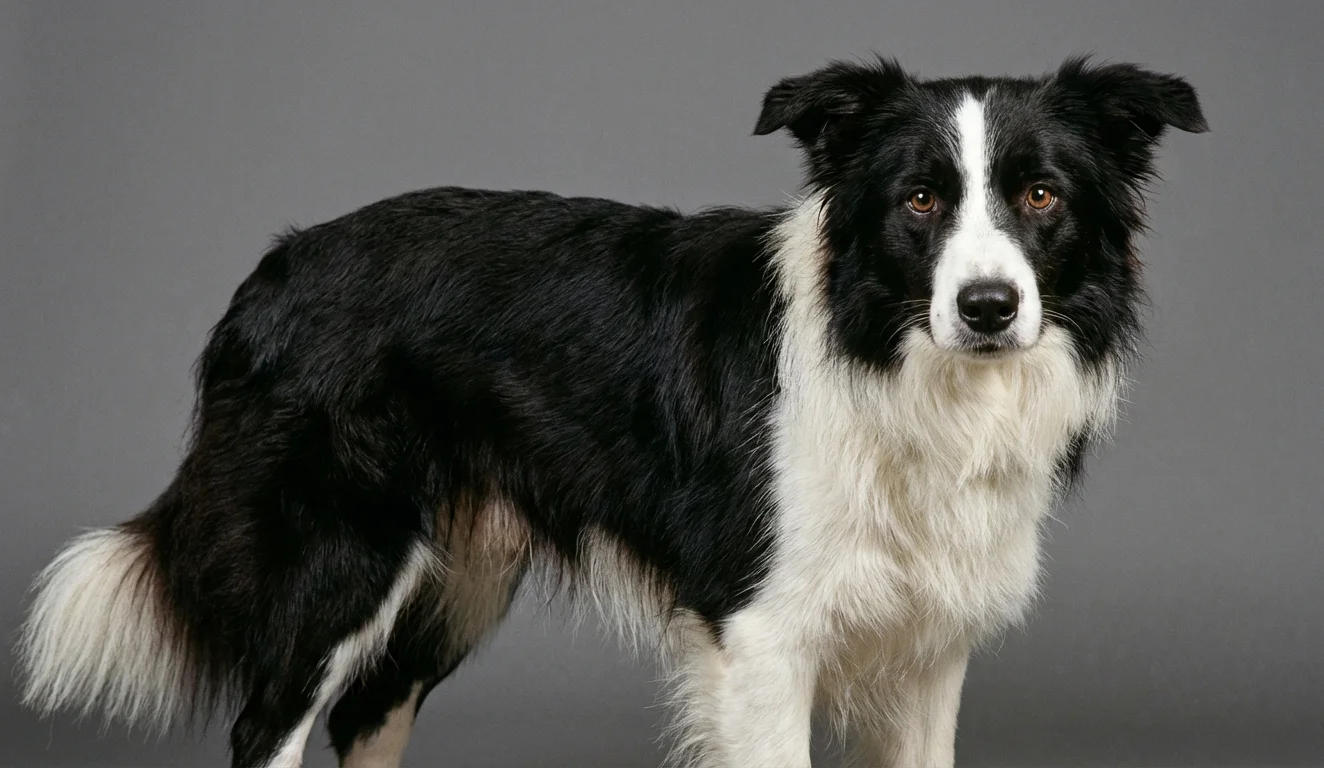
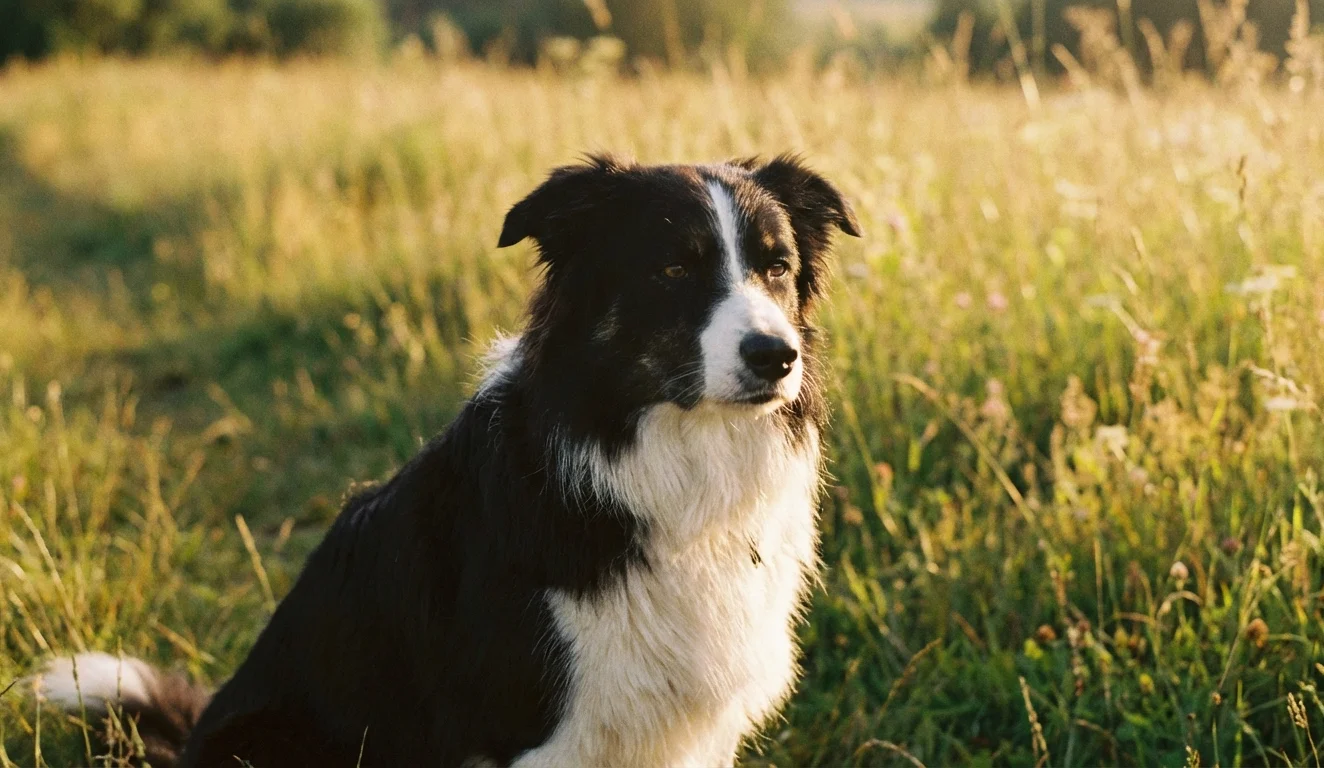
The most recognizable Border Collie is black and white, but the breed comes in a wide range of colors including blue merle, red and white, tricolor, and sable. You’ll also see two coat types: rough (medium to long, with feathering) and smooth (shorter, coarser). Both have a dense double coat built for working outside in lousy weather.
What you’ll notice first about a Border Collie is the eyes. They have this intense, focused gaze, the same “eye” that Old Hemp used to move sheep. It’s striking. And if your Border Collie is staring at you like that, it probably wants something.
One thing that surprises people: there’s a big range in Border Collie appearance depending on whether the dog comes from working lines or show lines. Working Border Collies tend to be lighter, scrappier, and less uniform in appearance, breeders care about how they work, not how they look. Show-line Border Collies are more consistent in build and tend to have fuller, more photogenic coats. Both are Border Collies. The working dogs generally have higher drive.
Border Collie Temperament
“Intelligent” is the word everyone uses for Border Collies, and it’s accurate but incomplete. Border Collie intelligence isn’t like Golden Retriever intelligence (eager to please) or Poodle intelligence (quick to learn tricks). It’s more like problem-solving intelligence. Border Collies observe, analyze, and figure things out, sometimes faster than you’d like.
What Border Collie temperament actually looks like day to day:
- They need mental stimulation as much as physical exercise. A tired body with a bored brain is still a destructive Border Collie.
- They’re sensitive to movement. Kids running, cats darting, joggers passing, a Border Collie’s herding instinct can kick in, and that means nipping at heels. It’s not aggression. It’s genetics.
- They bond deeply with their person but can be reserved with strangers. Not unfriendly, just uninterested.
- They notice everything. Changes in routine, new objects in the house, your mood. Living with a Border Collie sometimes feels like living with someone who’s always paying closer attention than you are.
We think the biggest misconception about Border Collies is that intelligence makes them easy. It doesn’t. A smart dog that’s bored or under-stimulated will outsmart you in ways that aren’t fun, opening doors, escaping yards, dismantling things you didn’t think were dismantlable.
Exercise Needs
Border Collies need a minimum of 90 minutes of exercise per day, and honestly, most thrive with more. This is a breed that was built to run 50+ miles a day across Scottish hillsides. A walk around the block doesn’t register.
What actually works for Border Collie exercise:
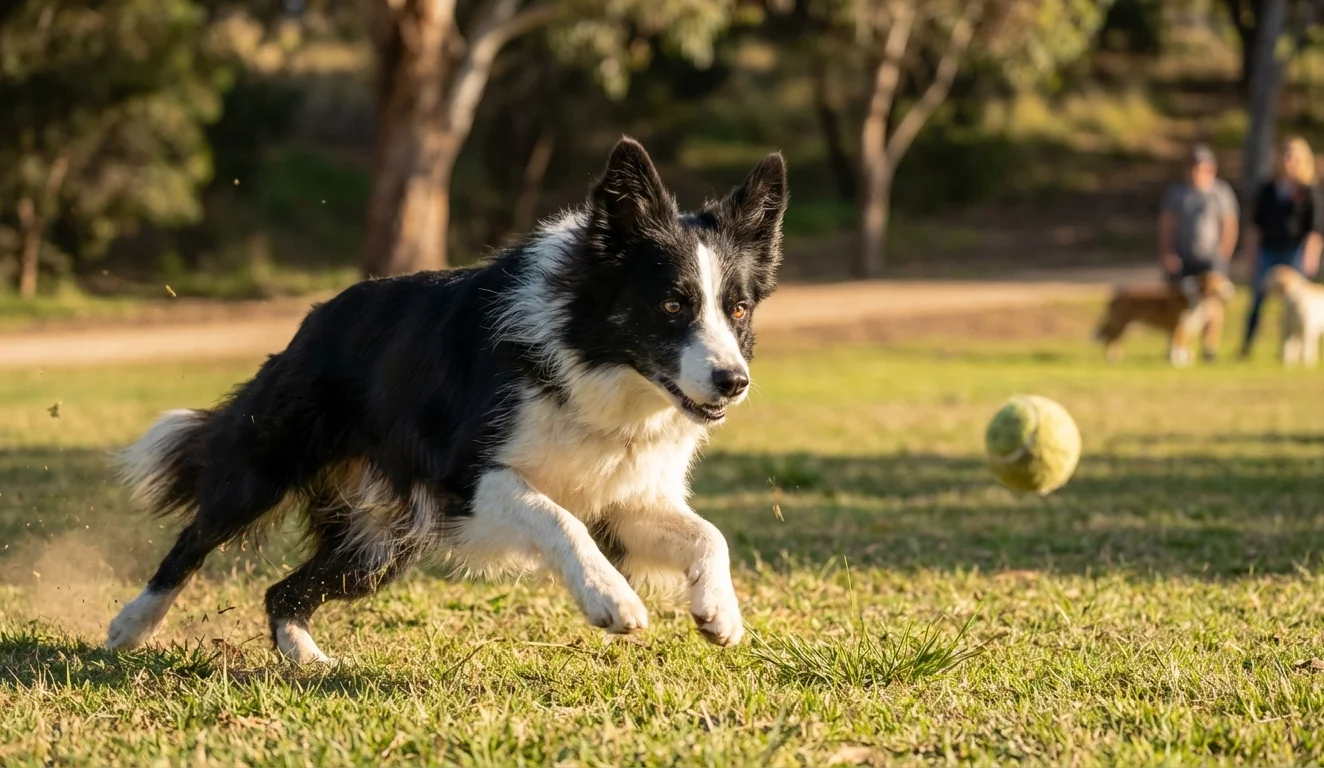
- Fetch with purpose. Border Collies don’t just chase a ball, they track it, anticipate its trajectory, and bring it back with almost mechanical precision. A ball launcher in a big field is your best friend.
- Agility. This is the Border Collie’s sport. They dominate agility competitions at every level because the combination of speed, intelligence, and handler responsiveness is exactly what the sport demands.
- Hiking and running. They’re outstanding trail dogs with bottomless stamina.
- Herding trials. If you have access to herding lessons, your Border Collie will light up in a way you haven’t seen before. It’s what they were born to do.
Mental exercise matters just as much. Puzzle toys, trick training, nose work, anything that makes your Border Collie think will help burn off that restless energy. We’d actually argue that 30 minutes of focused training is worth more than an hour of mindless running for this breed.
Grooming
Border Collie grooming is moderate, more than a short-coated breed but far less than something like a Poodle or Old English Sheepdog. The rough-coated variety needs brushing 2-3 times per week to prevent matting, especially behind the ears and around the legs where the feathering is thickest. Smooth-coated Border Collies need less, maybe once or twice a week.
Shedding is heavy. Border Collies have a dense double coat and they blow it out twice a year, usually in spring and fall. During those periods, daily brushing is the only thing standing between you and a house covered in undercoat fluff.
Basic grooming schedule:
- Brush 2-3 times per week (daily during seasonal blowouts)
- Bathe every 6-8 weeks or when dirty
- Nail trim every 2-3 weeks
- Ear check weekly
- Teeth brushing 2-3 times per week
One thing worth noting: Border Collies that spend a lot of time outdoors tend to pick up burrs, mud, and debris in their coat. If your Border Collie is a working dog or a hiking companion, you’ll be doing impromptu grooming sessions more often than the schedule suggests.
Border Collie Health Issues
Border Collies are a generally healthy breed with a lifespan of 12-15 years, above average for a medium-sized dog. But there are several genetic conditions to know about.
Hip Dysplasia
Hip dysplasia affects Border Collies at a moderate rate. The joint doesn’t develop properly, leading to arthritis and pain over time. Treatment can range from weight management and anti-inflammatories to surgical intervention costing $1,500-$6,000. Reputable breeders screen both parents with OFA evaluations.
Epilepsy
Idiopathic epilepsy is one of the more common neurological conditions in Border Collies. Seizures typically appear between ages 1-5. The condition is manageable with medication in most cases, though it requires lifelong treatment. Expect to spend $500-$3,000 on diagnostics and ongoing medication.
Collie Eye Anomaly (CEA)
CEA is a genetic eye condition that affects the development of the choroid, the blood vessel layer beneath the retina. It ranges from mild (no vision impact) to severe (retinal detachment). A DNA test can identify carriers, and responsible breeders test for it. Treatment costs run $500-$2,000 depending on severity.
Progressive Retinal Atrophy (PRA)
PRA causes gradual vision loss leading to blindness. There’s no cure, but DNA testing can identify carriers. Treatment and management costs range from $2,000-$3,000.
Trapped Neutrophil Syndrome (TNS)
This is a rare but serious genetic condition where the immune system can’t properly release white blood cells. It’s fatal without treatment and typically appears in puppies. A DNA test exists and any responsible Border Collie breeder should be testing for it. Testing and treatment: $500-$2,000.
Training
Training a Border Collie is both the easiest and hardest thing you’ll do as a dog owner. Easy because they learn incredibly fast, a Border Collie can pick up a new command in fewer than 5 repetitions. Hard because that same intelligence means they also learn things you didn’t intend to teach them.
Border Collies need training that challenges them. Basic obedience is a starting point, not an end goal. Once they’ve mastered sit, stay, and come (which won’t take long), you need to keep building. Advanced obedience, trick training, sport-specific skills, a Border Collie that isn’t learning something new will get bored, and a bored Border Collie is a creative Border Collie. That’s not a compliment.
Training priorities for Border Collie owners:
- Start socialization early. Border Collies can become anxious or reactive without proper exposure to different environments and people during puppyhood.
- Address herding behavior immediately. If your Border Collie is nipping at heels or trying to herd children, redirect that impulse into appropriate activities.
- Teach an “off switch.” Border Collies can struggle to relax. Teaching a settle command, where they learn to lie down calmly on a mat, is genuinely life-changing for both of you.
- Keep sessions short and varied. Border Collies get bored with repetition faster than almost any breed.
- Consider working with a trainer experienced in herding breeds. A generalist trainer may not understand how to channel the Border Collie’s drive effectively.
One thing we hear from Border Collie owners constantly: “I didn’t realize how much training this dog would need.” It’s not that Border Collies are difficult to train, they’re the opposite. It’s that they need ongoing training throughout their life. You don’t train a Border Collie and then stop. You train a Border Collie and then train some more. And then some more. For years.
Cost
Purchase Price
A Border Collie puppy from a reputable breeder typically costs $800-$2,000. Working-line Border Collies from proven herding stock can cost more, sometimes $2,500+. Show-line puppies from champion bloodlines may also run higher.
Rescue Border Collies are available through breed-specific rescues for $200-$500, and they’re more common than you might think. Border Collies end up in rescue because people underestimate the exercise and mental stimulation requirements, don’t be one of those people.
Monthly Costs
| Expense | Monthly Estimate |
|---|---|
| Food (high-quality kibble) | $35-$60 |
| Preventive vet care (averaged) | $15-$30 |
| Pet insurance | $30-$55 |
| Treats and chews | $10-$20 |
| Miscellaneous (toys, supplies) | $15-$25 |
| Total | $90-$175 |
First-Year Costs
Budget $2,500-$4,500 for the first year when you factor in the purchase price, initial vet visits, vaccinations, spay/neuter, supplies, and training classes. Training is not optional with this breed, plan for at least a basic obedience course, and ideally something more advanced.
Also factor in puzzle toys, which you’ll replace regularly. A Border Collie will solve most puzzle feeders in minutes, then look at you like it’s disappointed in the difficulty level.
Is a Border Collie Right for You?
A Border Collie is a great fit if you:
- You’re an active person who runs, hikes, or bikes regularly and wants a dog who can keep up (and then some)
- You have experience with dogs and understand that intelligence doesn’t mean low-maintenance
- You’re interested in dog sports like agility, herding, flyball, or disc
- You have time for daily training sessions beyond just walks
- You have a yard or live near open space where your dog can really run
A Border Collie is probably NOT right if you:
- You work long hours and can’t provide 90+ minutes of daily exercise and mental stimulation
- This is your first dog, we know that’s a hard thing to hear, but Border Collies amplify mistakes
- You have very young children (the herding instinct plus toddler chaos is a tough combination)
- You want a chill, low-key companion for apartment living
- You’re looking for a dog that’s happy to entertain itself while you binge TV on the couch
Border Collies are extraordinary dogs. Truly. But they’re extraordinary in the way that a Formula 1 car is extraordinary, incredible when handled by the right person, a disaster in the wrong hands. If you match their energy and give them a job, you’ll have the most loyal, capable partner you could ask for.
Related Breeds
If you’re considering this breed, you might also want to look at:
FAQ
Are Border Collies good family dogs?
Border Collies can be good family dogs, but they do best with older children who understand how to interact with dogs. The herding instinct is real, Border Collies may try to chase and nip at running kids, which isn’t aggression but can be scary for small children. Families with active lifestyles who include the dog in outdoor activities tend to have the best experience.
How much exercise does a Border Collie need?
A minimum of 90 minutes per day, split between physical exercise and mental stimulation. Many Border Collies thrive with even more. This isn’t a breed where you can skip a day without consequences, an under-exercised Border Collie will find destructive ways to burn energy. If 90 minutes of daily exercise sounds like a lot, a Border Collie probably isn’t the right breed for you.
Do Border Collies bark a lot?
Border Collies have a moderate barking level compared to other herding breeds, but they’re not quiet dogs. They bark to alert, to communicate during play, and sometimes out of frustration or boredom. A Border Collie that barks excessively is usually telling you it needs more stimulation. Addressing the root cause, more exercise, more training, more mental engagement, is far more effective than trying to suppress the barking itself.
Are Border Collies easy to train?
Border Collies are the fastest learners of any breed, but “easy to train” depends on your experience level. They pick up commands almost immediately, which sounds great until you realize they also pick up bad habits just as fast. They need a handler who is consistent, clear, and keeps things interesting. Repetitive training bores them. If you’re willing to put in the effort, training a Border Collie is deeply rewarding. If you’re looking for a dog that’s forgiving of training mistakes, look elsewhere.
Can Border Collies live in apartments?
Technically yes, but we wouldn’t recommend it for most people. Border Collies need significant daily exercise and mental stimulation, and apartment living makes that harder to provide consistently. If you’re a runner or cyclist who can commit to long daily outings and supplement with indoor training, it can work. But a Border Collie stuck in a small space without enough activity will become anxious and destructive. A house with a yard is a much better starting point for this breed.