German Shepherd Breed Guide: The Working Dog That Expects You to Keep Up (2026)
German Shepherds are brilliant, loyal, and intense. They're also not for everyone. Here's what living with one actually looks like.
The German Shepherd is the world’s premier working dog, and it acts like it. This is a breed that ranks #4 in AKC registrations, weighs 50 to 90 pounds, lives 7 to 10 years, and will absolutely run your household if you let it. German Shepherds work as police K-9s, military dogs, search-and-rescue partners, and service dogs. They’re also the reason some people’s entire personality becomes “German Shepherd owner.”
In Short: 50–90 lbs, 7–10 years. High energy. Heavy shedder, expect fur everywhere. Watch for Hip Dysplasia and Elbow Dysplasia. Good with kids, but better for experienced owners.
We’re not going to oversell you on this breed. German Shepherds are incredible dogs in the right hands. In the wrong hands, they’re an 80-pound liability with a bite force that makes your homeowner’s insurance company nervous. Here’s what you actually need to know.
German Shepherd at a Glance
| Trait | Details |
|---|---|
| Breed Group | Herding (AKC) |
| Size | Males: 24-26 inches, 65-90 lbs; Females: 22-24 inches, 50-70 lbs |
| Lifespan | 7-10 years |
| Coat | Medium-length double coat, heavy shedding |
| Temperament | Confident, courageous, loyal, protective, intelligent |
| Exercise Needs | High, 90+ minutes per day |
| Grooming | Moderate to high (daily brushing recommended) |
| Good With Kids | Yes, when raised with them |
| Good With Other Dogs | Variable, socialization dependent |
| AKC Popularity Rank | #4 |
History of the German Shepherd
The German Shepherd is one of the few breeds whose origin story starts with a single person. In 1899, a German cavalry officer named Captain Max von Stephanitz attended a dog show in Karlsruhe, Germany, where he spotted a working sheepdog that embodied his vision of the perfect herding dog: intelligent, athletic, and obedient.
Von Stephanitz purchased the dog, named him Horand von Grafrath, and founded the Verein fur Deutsche Schaferhunde (Society for the German Shepherd Dog). He spent the next 35 years standardizing the breed, famously declaring: “Utility is the true criterion of beauty.”
As Germany industrialized and demand for herding dogs declined, von Stephanitz pivoted. He marketed the German Shepherd to military and police organizations, and the breed’s intelligence and trainability made the transition seamless. During World War I, German Shepherds served as messenger dogs, supply carriers, sentries, and Red Cross dogs. Allied soldiers were so impressed that they brought German Shepherds home after the war, kickstarting the breed’s popularity in the United States and Britain.
The AKC recognized the German Shepherd in 1908. By the mid-20th century, the breed had become the most widely used working dog in military and police forces worldwide, a position the German Shepherd still holds today.
Size and Appearance
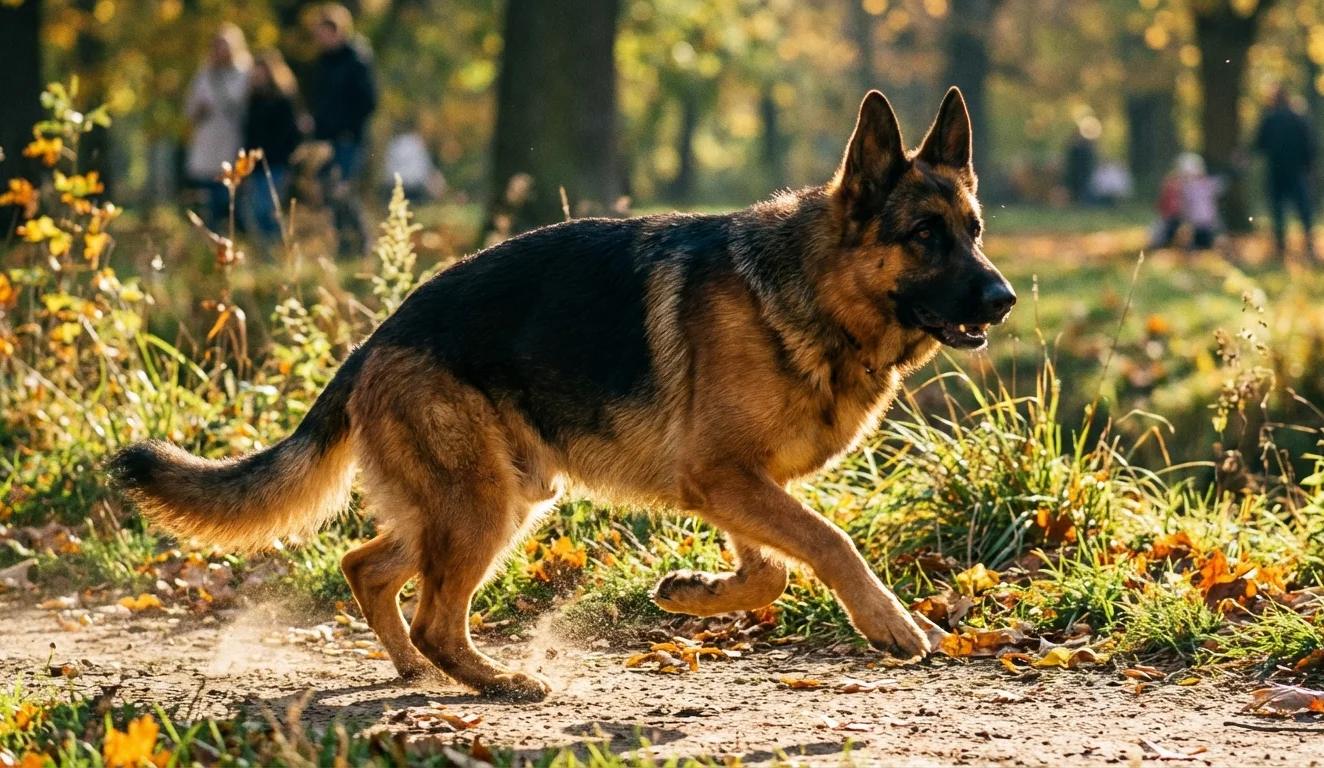
German Shepherds are a large, athletic breed built for sustained physical work. There’s a noticeable size difference between males and females.
Size standards:
- Males: 24-26 inches tall at the shoulder, 65-90 pounds
- Females: 22-24 inches tall at the shoulder, 50-70 pounds
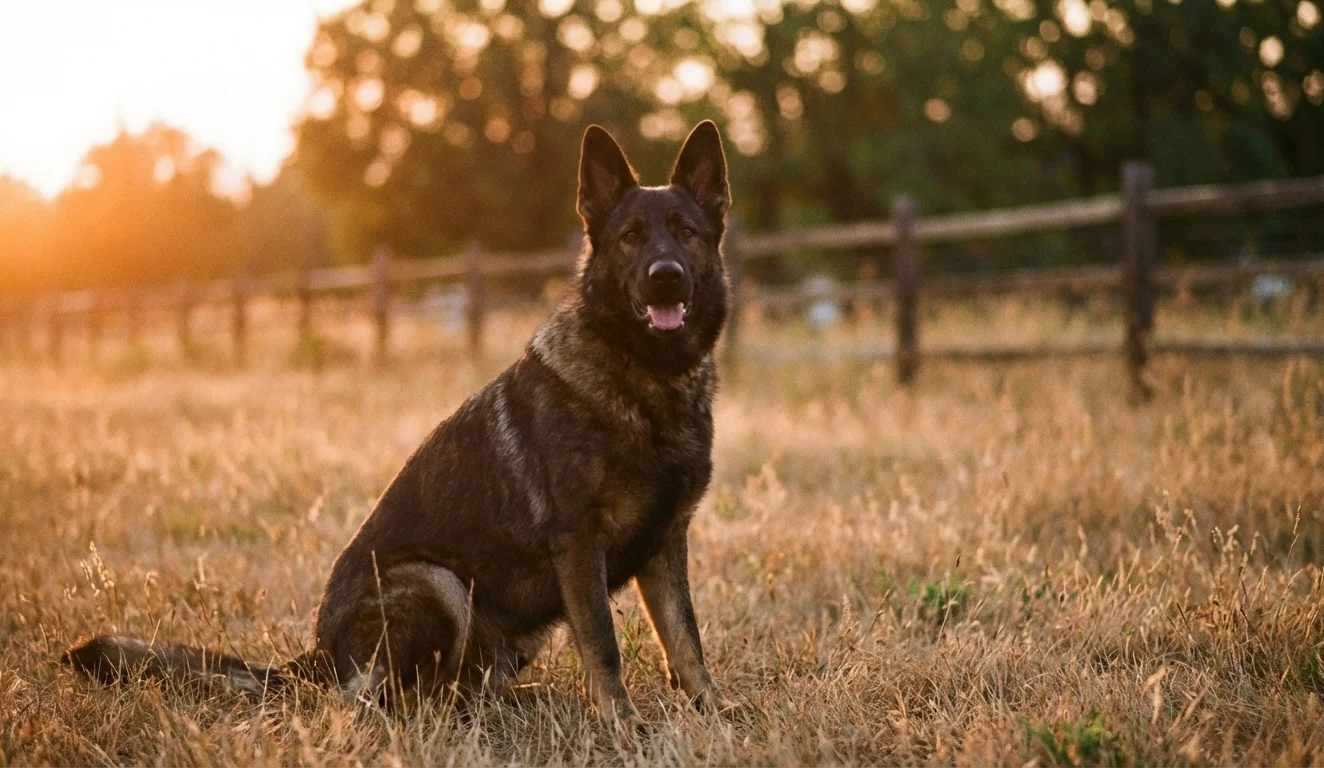
- Build: Strong, muscular, slightly longer than tall
Physical features:
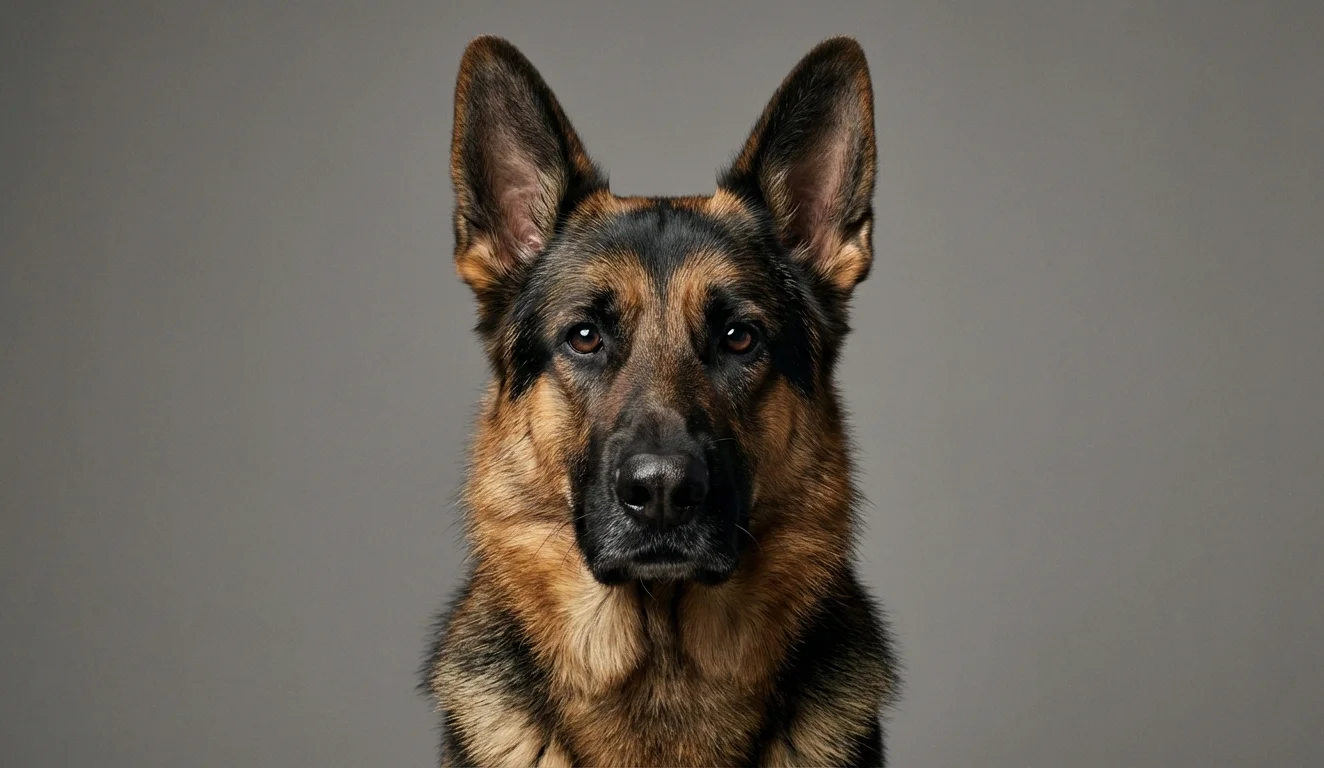
- Erect, pointed ears (ears may flop during puppyhood and stand up by 6-7 months)
- Long muzzle with strong jaw
- Deep chest, sloped topline (the back angles downward toward the hindquarters)
- Bushy tail that reaches the hock
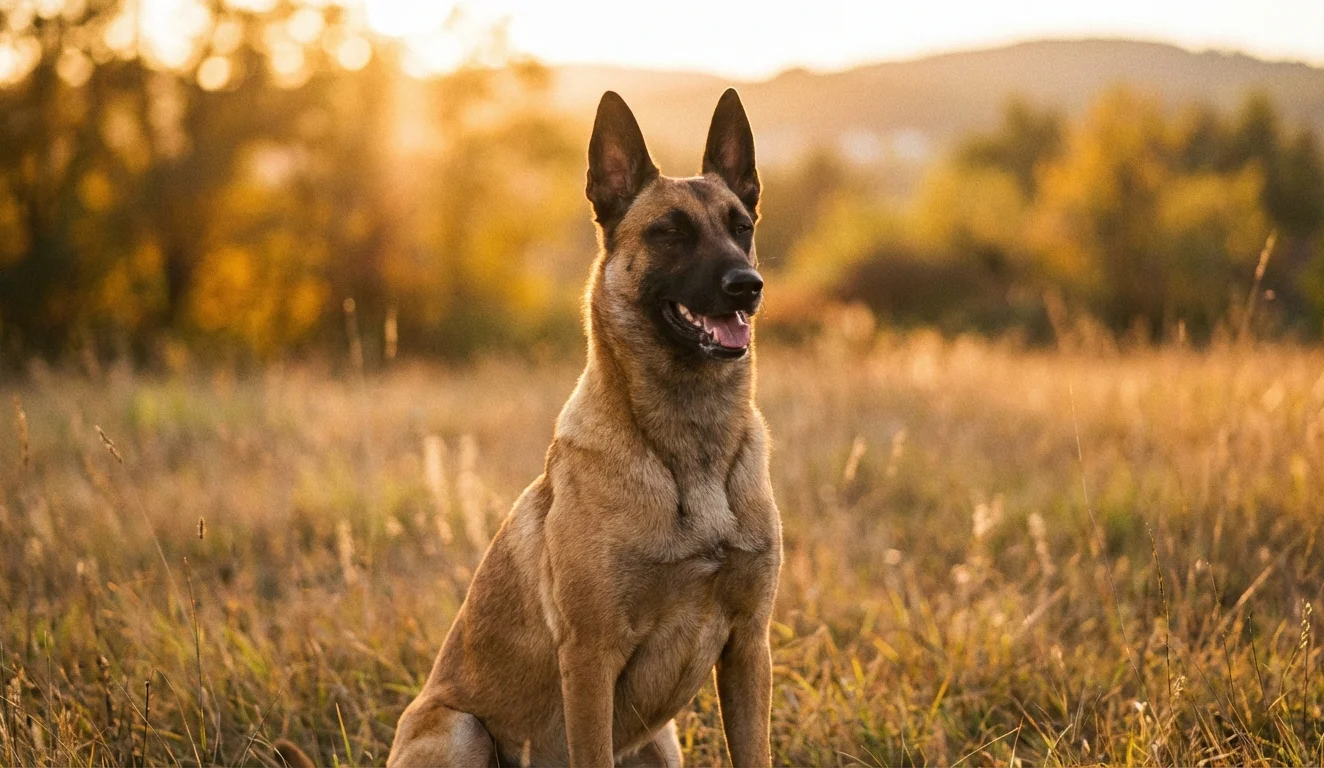
- Dense, medium-length double coat
Common German Shepherd colors:
- Black and tan (the classic “saddle” pattern, most common)
- Sable (individual hairs banded with multiple colors)
- All black
- Black and red (show lines often feature richer red tones)
- White (not AKC show-eligible but recognized as a separate breed by UKC: the White Shepherd)
- Bi-color (mostly black with tan only on legs and face)
A quick note on the German Shepherd’s topline: there’s an ongoing debate in the breed world about exaggerated rear angulation (the extreme sloped back seen in some show-line German Shepherds). Working-line German Shepherds typically have a straighter back and more moderate angulation, which many veterinarians and working dog handlers consider healthier.
German Shepherd Temperament
The German Shepherd temperament is what sets this breed apart from other large dogs. German Shepherds aren’t just strong, they’re remarkably perceptive, emotionally attuned, and capable of complex decision-making.
Core temperament traits:
- Confident. A well-bred German Shepherd carries itself with calm self-assurance. German Shepherds don’t pick fights, but they don’t back down either.
- Courageous. There’s a reason German Shepherds dominate police and military work. The breed has a natural willingness to confront threats when needed.
- Loyal. German Shepherds bond deeply with their family. This breed wants to be near you, involved in what you’re doing, and aware of what’s happening around the house.
- Aloof with strangers. German Shepherds are not golden retrievers. A German Shepherd will typically observe unfamiliar people before warming up. This isn’t aggression, it’s discernment. But it does mean socialization is non-negotiable.
- Protective. German Shepherds have a strong natural guarding instinct. Without proper training and socialization, protectiveness can tip into territorial reactivity. With training, a German Shepherd’s protective nature is measured and appropriate.
- Intelligent. Stanley Coren’s The Intelligence of Dogs ranks the German Shepherd as the 3rd most intelligent breed out of 138 evaluated. German Shepherds can learn a new command in fewer than 5 repetitions and obey a known command on the first ask 95% of the time.
What this means for owners: German Shepherds are not passive pets. A German Shepherd that’s bored, under-stimulated, or untrained will find ways to entertain itself, and you probably won’t like what it comes up with. This is a breed that needs a job, whether that’s formal obedience, agility, nose work, or even just structured daily tasks at home.
Exercise Needs
German Shepherds are working dogs, and their exercise requirements reflect it. Skipping exercise with a German Shepherd isn’t like skipping exercise with a Bulldog, under-exercised German Shepherds become destructive, anxious, and vocal.
Daily exercise guidelines for German Shepherds:
- 90+ minutes per day of physical activity
- At least one long walk or hike (45-60 minutes)
- One session of vigorous activity: fetch, tug, running, or off-leash play
- Mental stimulation: training sessions, puzzle feeders, nose work, or structured games
Activities German Shepherds excel at:
- Obedience and rally
- Schutzhund/IPO (protection sport)
- Tracking and nose work
- Agility
- Hiking and trail running
- Swimming (most German Shepherds are natural swimmers)
- Herding trials
Mental stimulation is just as important as physical exercise for German Shepherds. A tired body isn’t enough, German Shepherds need their brains worked, too. Training sessions, scent games, and problem-solving toys prevent the boredom-driven behaviors (barking, chewing, digging) that German Shepherd owners frequently report.
Young German Shepherds (under 18 months) need exercise moderated to protect their developing joints. Avoid repetitive high-impact activities like extended jogging on pavement until a German Shepherd’s growth plates have closed, which typically happens between 12 and 18 months.
Grooming
If you get a German Shepherd, you’re getting hair. Everywhere. Accept this now.
Coat care:
- German Shepherds have a dense double coat that sheds year-round
- Daily brushing is recommended to manage shedding and keep the coat healthy
- Use an undercoat rake or deshedding tool weekly to remove loose undercoat
- Bathe your German Shepherd every 6-8 weeks or as needed, over-bathing strips the coat’s natural oils
Seasonal blowouts:
- Twice a year (spring and fall), German Shepherds “blow” their undercoat. During these periods, the shedding is dramatic, clumps of fur come out in handfuls for 2-3 weeks. Daily brushing during blowouts is a survival strategy, not a suggestion.
Other grooming needs:
- Nail trimming every 2-3 weeks (active German Shepherds may wear nails down naturally on pavement)
- Ear cleaning every 1-2 weeks, German Shepherds’ upright ears get good airflow, so ear infections are less common than in floppy-eared breeds
- Dental care: brush teeth several times a week or use dental chews
Professional grooming is optional for German Shepherds. Most German Shepherd owners handle grooming at home with a good undercoat rake, a slicker brush, and a vacuum cleaner that earns its keep.
German Shepherd Health Issues
German Shepherds are a generally healthy breed, but their popularity has led to some widespread genetic health problems, particularly in poorly bred lines. Knowing what to watch for helps you choose a good breeder and catch issues early.
Hip Dysplasia
Hip dysplasia is the German Shepherd’s most well-known health concern. According to the Orthopedic Foundation for Animals (OFA), approximately 20.5% of German Shepherds evaluated receive a dysplastic hip rating. Hip dysplasia occurs when the hip joint doesn’t develop properly, leading to arthritis, pain, and mobility loss. Responsible breeders have both parent dogs OFA-certified or PennHIP-evaluated before breeding.
Treatment ranges from weight management and anti-inflammatories for mild cases to total hip replacement ($5,000-$7,000 per hip) for severe cases.
Elbow Dysplasia
Elbow dysplasia is another joint condition common in German Shepherds. OFA data shows approximately 19% of German Shepherds evaluated have some degree of elbow dysplasia. Symptoms include front-leg lameness, especially after exercise. Like hip dysplasia, elbow dysplasia is screened for by responsible breeders.
Degenerative Myelopathy (DM)
Degenerative myelopathy is a progressive spinal cord disease that’s particularly prevalent in German Shepherds. DM typically appears in German Shepherds between 8 and 14 years old, starting with hind-end weakness and progressing to paralysis over 6 to 12 months. There’s no cure and no effective treatment.
A genetic test identifies whether a German Shepherd carries the DM mutation. According to OFA genetic testing data, roughly 20% of German Shepherds are at-risk (homozygous) for DM. Responsible breeders test for the SOD1 gene mutation and avoid breeding two carriers together.
Gastric Dilatation-Volvulus (Bloat/GDV)
Bloat is a life-threatening emergency where the stomach fills with gas and can twist on itself, cutting off blood supply. German Shepherds are among the breeds at highest risk due to their deep, narrow chest. A study published in the Journal of the American Veterinary Medical Association found that large, deep-chested breeds like German Shepherds have a lifetime bloat risk of approximately 24%.
Symptoms come on fast: unproductive retching, swollen abdomen, restlessness, drooling. GDV requires emergency surgery within hours, without treatment, it’s fatal. Many German Shepherd owners discuss prophylactic gastropexy (a surgical stomach-tacking procedure) with their vet, which can be done during spay/neuter surgery and reduces GDV risk by over 90%.
Exocrine Pancreatic Insufficiency (EPI)
German Shepherds are the breed most commonly affected by exocrine pancreatic insufficiency, a condition where the pancreas doesn’t produce enough digestive enzymes. Symptoms include chronic diarrhea, weight loss despite a normal appetite, and poor coat quality. EPI is manageable with enzyme supplements added to every meal, but it’s a lifelong condition.
Other Conditions to Watch For
- Allergies and skin conditions (particularly food allergies)
- Perianal fistulas
- Hemangiosarcoma (cancer)
- Panosteitis (“growing pains” in young German Shepherds)
- Osteoarthritis (especially in senior German Shepherds)
Training a German Shepherd
German Shepherds are among the most trainable breeds on the planet. That intelligence cuts both ways, though, a German Shepherd doesn’t just learn the behaviors you teach. A German Shepherd learns your patterns, your weak spots, and exactly how far it can push.
What makes German Shepherd training unique:
- Speed of learning. German Shepherds can learn a new behavior in as few as 5 repetitions. This means training progresses quickly, but it also means a German Shepherd picks up bad habits just as fast.
- Drive and focus. German Shepherds have intense focus when engaged. Training sessions with a German Shepherd can feel more like a conversation than a command-and-comply exercise.
- Need for structure. German Shepherds thrive with clear rules, consistent expectations, and a handler they respect. This isn’t about dominance, it’s about clarity. A German Shepherd that doesn’t understand the rules will make up its own.
- Handler sensitivity. German Shepherds are more emotionally attuned than many people expect. Harsh corrections, yelling, or frustration during training damage the bond and can create a fearful or reactive German Shepherd. Firm, fair, and consistent gets the best results.
Training priorities for German Shepherds:
- Early socialization (8-16 weeks). Expose your German Shepherd puppy to different people, environments, surfaces, sounds, and other animals during this critical window. German Shepherds that miss this socialization period are significantly more likely to become fearful or reactive adults.
- Impulse control. Teach “wait,” “leave it,” and “settle” early. A 90-pound German Shepherd with no impulse control is a liability.
- Leash manners. German Shepherds are strong. Loose-leash walking training should start the day you bring your German Shepherd puppy home.
- Recall. A solid recall command is a safety requirement for a breed this powerful and fast.
Ongoing training matters with German Shepherds. This isn’t a breed where you can do 8 weeks of puppy class and call it done. German Shepherds benefit from continued training throughout their lives, it keeps their minds sharp and strengthens your relationship.
German Shepherd Cost
German Shepherds are moderately expensive to purchase and own. They’re not as costly upfront as some breeds, but their size, exercise needs, and health predispositions add up.
Purchase Price
- Pet-quality from a reputable breeder: $1,500-$3,000
- Working lines (Schutzhund/IPO-titled parents): $2,500-$5,000+
- Show lines (champion bloodlines): $3,000-$8,000+
- Rescue/adoption: $200-$500 through German Shepherd rescue organizations
Reputable German Shepherd breeders invest in OFA hip and elbow certifications, DM genetic testing, cardiac evaluation, and temperament testing. These health clearances cost breeders $500-$1,000+ per breeding dog, but they dramatically reduce the risk of expensive health problems down the road.
Monthly Costs
| Category | Estimated Monthly Cost |
|---|---|
| Food (large breed formula) | $60-$100 |
| Pet insurance | $40-$80 |
| Routine vet care (amortized) | $30-$50 |
| Treats, toys, chews | $20-$40 |
| Total | $150-$270/month |
German Shepherds eat more than small or medium breeds, budget for 3-4 cups of quality kibble per day for an active adult German Shepherd, or the equivalent in raw or fresh food.
Potential Big-Ticket Expenses
- Hip or elbow dysplasia surgery: $3,500-$7,000 per joint
- Bloat/GDV emergency surgery: $3,000-$7,500
- ACL repair: $3,000-$5,000
- Prophylactic gastropexy: $400-$1,500 (often combined with spay/neuter)
Pet insurance is worth serious consideration for German Shepherds. Get coverage while your German Shepherd is young, premiums are lower and pre-existing conditions won’t be excluded.
German Shepherd for First-Time Dog Owners?
We’ll be straight with you: the German Shepherd is not typically recommended as a first-time owner’s breed. That doesn’t mean it’s impossible, but you should understand why experienced handlers gravitate toward this breed and what you’re signing up for.
Why German Shepherds are challenging for first-time owners:
- Strength. An adult German Shepherd can weigh 90 pounds and is powerful enough to pull you off your feet. Without leash training, walks become a battle.
- Drive. German Shepherds have high prey drive, high play drive, and high work drive. If you don’t channel that energy, the German Shepherd will channel it for you, usually into your furniture, shoes, or garden.
- Reactivity risk. Under-socialized German Shepherds can become reactive toward other dogs or strangers. Managing reactivity requires skill and patience that first-time owners often don’t have yet.
- Shedding and maintenance. The grooming commitment is real. If you’ve never owned a heavy-shedding breed, the volume of German Shepherd hair may shock you.
- Training demands. German Shepherds need consistent, ongoing training. A German Shepherd that senses inconsistency will test limits relentlessly.
If you’re a first-time owner set on a German Shepherd:
- Commit to a professional training program from day one (group classes at minimum, private training is better)
- Enroll in puppy socialization classes before your German Shepherd is 16 weeks old
- Budget for the exercise time, 90+ minutes every single day, not just when it’s convenient
- Consider an adult German Shepherd from a rescue rather than a puppy, adults have established temperaments, so you know what you’re getting
- Find a mentor, breed clubs, online communities, and experienced German Shepherd owners can be invaluable
Is a German Shepherd Right for You?
A German Shepherd might be a great fit if you:
- Lead an active lifestyle (running, hiking, outdoor activities)
- Have experience with dogs, especially working or herding breeds
- Have a house with a yard (not required, but makes life easier)
- Can commit 90+ minutes daily to exercise and training
- Want a loyal, protective family dog
- Are interested in dog sports or working activities
- Can handle significant shedding
A German Shepherd probably isn’t right for you if:
- You work long hours and the dog would be home alone most of the day
- You live in a small apartment with no outdoor access
- You want a low-energy, low-maintenance dog
- You don’t have time for daily exercise and mental stimulation
- You’re uncomfortable with a dog that has protective instincts
- You can’t commit to ongoing training
- Heavy shedding is a dealbreaker
Related Breeds
If you’re considering this breed, you might also want to look at:
Frequently Asked Questions About German Shepherds
How long do German Shepherds live?
German Shepherds live an average of 7 to 10 years, according to AKC breed data. A 2024 study in Scientific Reports found the median lifespan for German Shepherds in the UK was 10.3 years. German Shepherds from health-tested lines with OFA-certified hips, DM-clear genetics, and responsible breeding practices tend to live toward the higher end of the range. Keeping a German Shepherd at a healthy weight, providing daily exercise, and staying current on veterinary care are the most impactful things owners can do to support longevity.
Are German Shepherds aggressive?
German Shepherds are not inherently aggressive, but the breed has strong protective instincts that require proper management through training and socialization. A well-socialized, well-trained German Shepherd is confident and discerning, capable of assessing situations without overreacting. Aggression problems in German Shepherds almost always stem from poor breeding (selecting for nervous temperaments), inadequate socialization during the 8-to-16-week critical window, or owners who encourage guarding behavior without understanding how to control it. Responsible German Shepherd ownership means investing in socialization and training from the start.
Do German Shepherds shed a lot?
German Shepherds are among the heaviest shedding breeds. German Shepherds have a dense double coat that sheds consistently year-round, with two major “coat blows” per year in spring and fall when the undercoat comes out in large clumps over 2 to 3 weeks. Daily brushing with an undercoat rake significantly reduces loose hair in the home, but German Shepherd owners should expect to find hair on clothing, furniture, and floors regardless. A quality vacuum cleaner and lint roller are non-negotiable German Shepherd ownership accessories.
How much exercise does a German Shepherd need?
German Shepherds need a minimum of 90 minutes of exercise per day, split between physical activity and mental stimulation. Physical exercise for a German Shepherd should include at least one long walk or hike (45-60 minutes) plus a session of vigorous play or training. Mental stimulation, puzzle feeders, scent work, obedience training, or learning new skills, is just as important as physical exercise for German Shepherds, because the breed’s intelligence demands engagement. A German Shepherd that gets only physical exercise but no mental challenges will still show signs of boredom and frustration.
Are German Shepherds good family dogs?
German Shepherds can be outstanding family dogs when raised with children and properly socialized. The breed’s loyalty, protectiveness, and trainability make German Shepherds naturally attentive to family members, including kids. German Shepherds raised with children from puppyhood typically form strong bonds and are gentle and patient with their family’s kids. Supervision is still recommended with young children because of the German Shepherd’s size and energy level, an excited 80-pound German Shepherd can accidentally knock over a toddler. Socialization is key: German Shepherds should be exposed to children of different ages early and taught calm, appropriate behavior around kids.