Belgian Malinois Breed Guide: A Working Dog That Means It (2026)
The Belgian Malinois protects presidents and takes down bad guys for a living. Here's why most pet owners should probably admire this breed from a distance.
The Belgian Malinois is a medium-to-large herding dog that weighs 40-80 pounds, stands 22-26 inches tall, and lives 14-16 years. That lifespan is unusually long for a dog this size, and it means you’re committing to well over a decade of intensity. Because intense is the word. The Malinois is the breed the U.S. Secret Service uses to protect the White House. It’s the breed Navy SEALs brought on the Osama bin Laden raid. There’s a reason every elite military and law enforcement unit in the world has shifted toward the Malinois, this dog works harder than any other breed alive.
In Short: 40–80 lbs, 14–16 years. Very high energy, needs serious daily exercise. Heavy shedder. Watch for Hip Dysplasia and Elbow Dysplasia. Good with kids, but better for experienced owners.
We need to be direct about something: the Belgian Malinois is a terrible choice for most pet homes. That’s not breed shaming, it’s honesty. The Malinois was bred to work all day, every day, with a skilled handler giving constant direction. Without that structure, the breed’s drive and intensity become destructive. We’ve seen too many Malinois end up in rescue because someone watched a YouTube video of a military dog and thought it looked cool. If you’re reading this profile because you want a pet that also happens to be impressive, please keep reading before you make a decision you’ll regret.
Belgian Malinois at a Glance
| Trait | Details |
|---|---|
| Breed Group | Herding (AKC) |
| Height | Males: 24-26 in / Females: 22-24 in |
| Weight | Males: 60-80 lbs / Females: 40-60 lbs |
| Life Expectancy | 14-16 years |
| Coat | Short, dense double coat |
| Colors | Fawn, Fawn Sable, Mahogany, Red, Red Sable |
| Temperament | Confident, Hardworking, Protective, Alert |
| Shedding | High |
| Energy Level | Very High |
| Good With Kids | Conditional |
| Good With Other Dogs | No |
| First-Time Owner Friendly | No |
History
The Belgian Malinois is one of four varieties of Belgian Shepherd, all developed in Belgium in the late 1800s. The Malinois specifically takes its name from the city of Malines (Mechelen in Dutch), where local breeders developed a shorter-coated, intensely driven herding dog.
Professor Adolphe Reul of the Belgian School of Veterinary Sciences played a key role in categorizing the four Belgian Shepherd varieties in 1891. The Malinois was distinguished by its short fawn coat with black mask and overlay. From the beginning, Malinois breeders prioritized working ability over appearance, a philosophy that continues to define the breed today. While other Belgian Shepherd varieties have split into show and working lines, the vast majority of Malinois are still bred for work.
The breed earned AKC recognition as part of the Belgian Sheepdog group in 1911, then was reclassified as a separate breed in 1959. But the Malinois’s real rise to prominence came in the 2000s, when military and police forces around the world began favoring it over the German Shepherd for tactical work. The Malinois is lighter, faster, has fewer hip problems, and has a drive level that borders on obsessive. That last quality is exactly what professional handlers want, and exactly what makes the breed so challenging for pet owners.
Size and Appearance
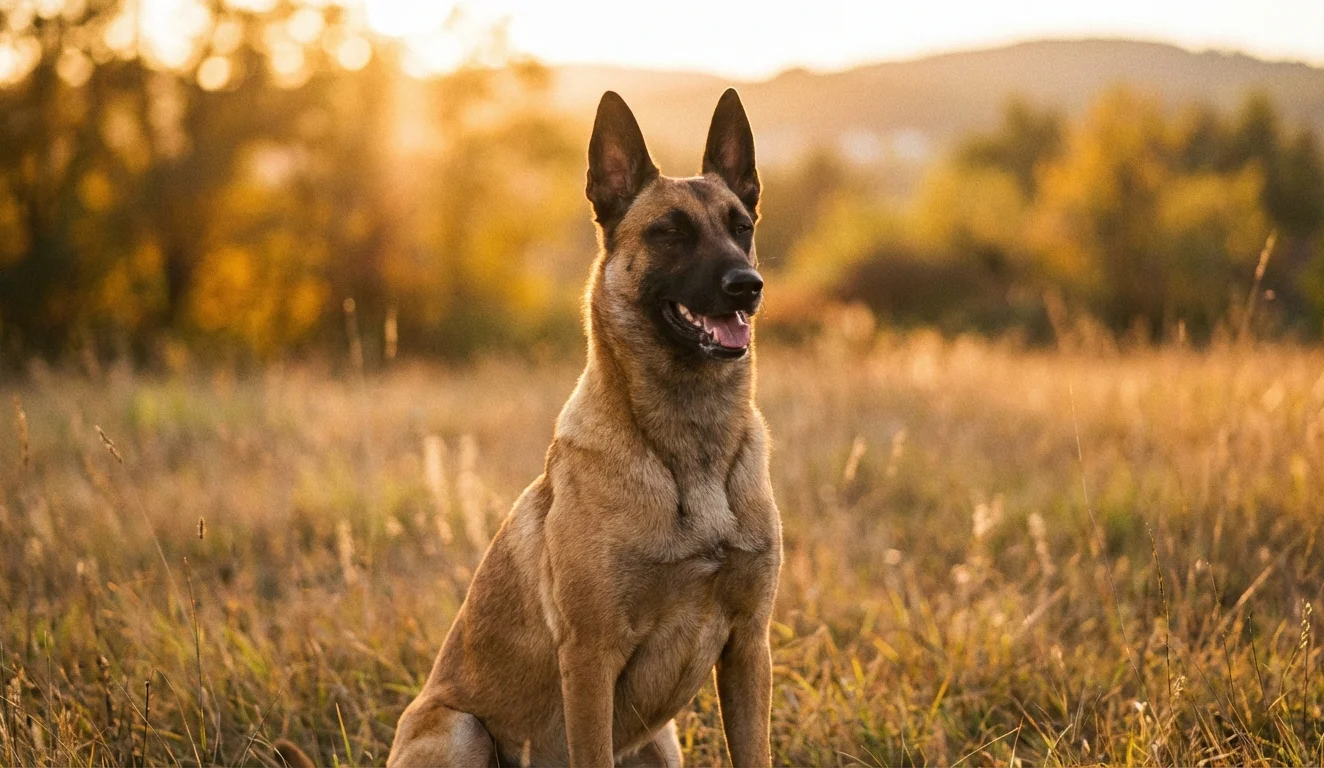
Belgian Malinois are well-proportioned, athletic dogs. Males stand 24-26 inches at the shoulder and weigh 60-80 pounds. Females are noticeably smaller at 22-24 inches and 40-60 pounds. They’re leaner and lighter than German Shepherds, which they’re frequently mistaken for.
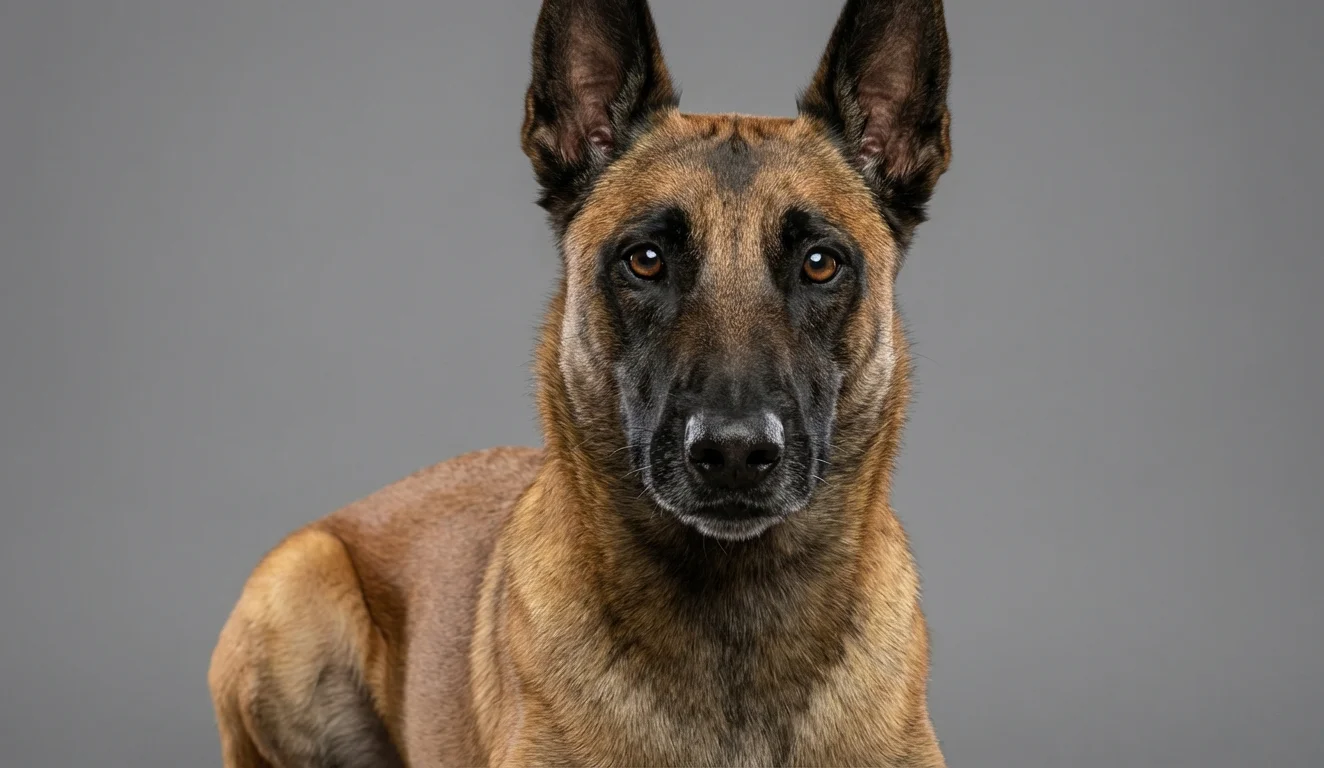
The coat is short, straight, and dense with a thick undercoat. Colors range from fawn to mahogany, always with a black mask and black ear tips. Some dogs have heavy black overlay throughout the coat (called “sabling”), which gives them a darker appearance.
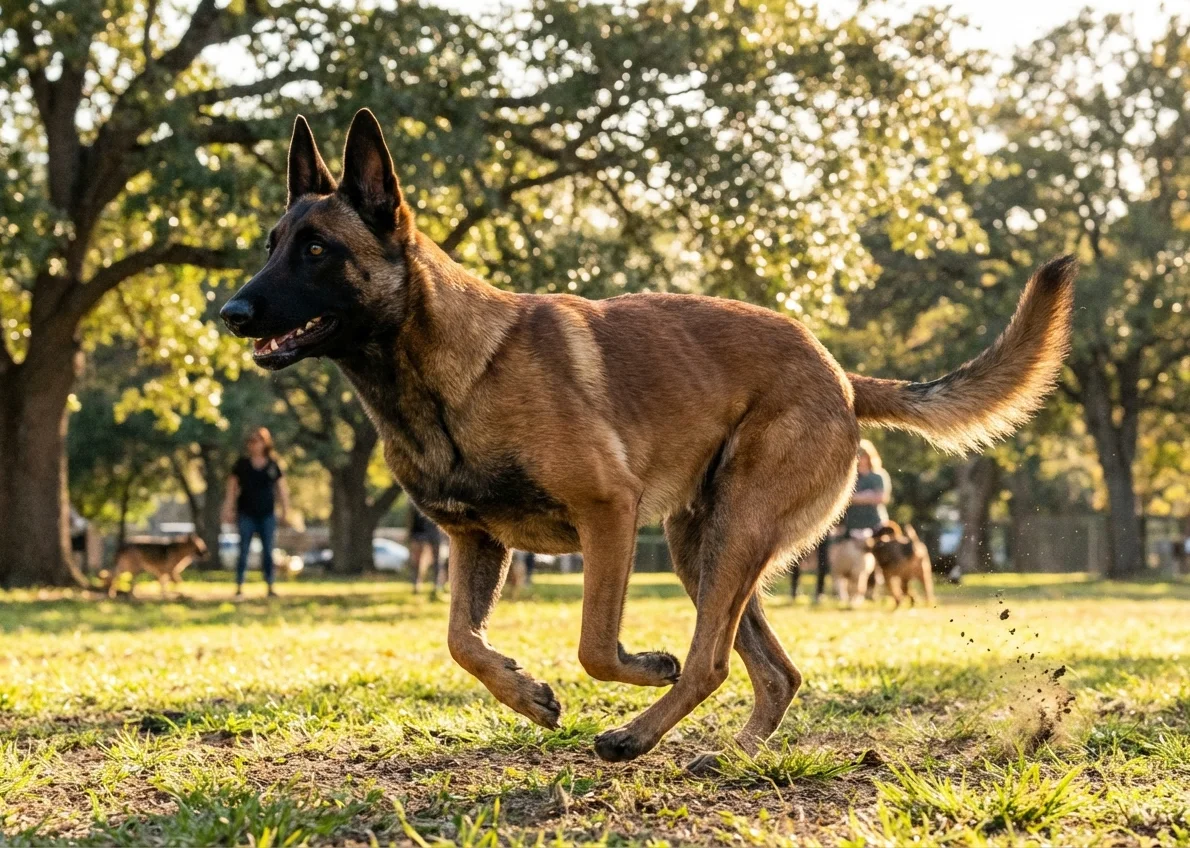
What strikes you about a Malinois in person is the alertness. Their posture is upright, ears forward, eyes scanning. They look like they’re always on duty. Because in their mind, they are.
People often confuse the Belgian Malinois with the German Shepherd, and at a glance, the resemblance is real, similar coloring, similar silhouette. But side by side, the differences are obvious. The Malinois is lighter, leaner, and more square in proportion. The head is more refined. The movement is faster and more agile, with less of the German Shepherd’s sloping rear. Think of the Malinois as a German Shepherd that traded bulk for speed.
Belgian Malinois Temperament
The Belgian Malinois temperament is built around drive. Not energy, drive. There’s a difference. Plenty of dogs are energetic. The Malinois has an almost compulsive need to work, chase, bite, and problem-solve. Professional handlers talk about “ball drive” and “prey drive” and “fight drive”, the Malinois has all of them cranked to maximum.
What the Malinois temperament looks like in daily life:
- They are always watching, always alert. A Malinois at rest is still processing its environment, cataloging sounds, tracking movement. It’s exhausting to witness and even more exhausting to manage.
- They bond intensely with their primary handler and can be suspicious of strangers. This isn’t shyness, it’s assessment. A well-socialized Malinois will tolerate strangers. It probably won’t be excited to see them.
- They have a high bite threshold but also a high bite drive. This sounds contradictory, but it means they don’t bite out of fear, they bite because biting is rewarding to them. This is exactly what protection work requires and exactly why the breed needs expert handling.
- They don’t typically do well with other dogs, especially dogs of the same sex. The Malinois is not a dog park breed.
We want to be clear about this: the Belgian Malinois is the closest thing to a working machine in the dog world. That’s not a warm, fuzzy description because it’s not a warm, fuzzy temperament. They can be affectionate with their person, yes. But affection is secondary to their need to do something.
Exercise Needs
Belgian Malinois need a minimum of 90 minutes of intense exercise per day, and that’s the floor, not the ceiling. We’d honestly say 2 hours is more realistic for most Malinois, especially those under age 5.
Exercise that actually satisfies a Malinois:
- Structured work. Protection sport (IPO/Schutzhund), detection training, tracking, the Malinois needs tasks with rules and objectives. Free play alone won’t cut it.
- Intense fetch and tug. A flirt pole is one of the best tools for burning Malinois energy quickly. Twenty minutes of flirt pole work can accomplish what an hour of walking doesn’t.
- Running and biking. A Malinois can pace a bicycle for miles without showing fatigue. They’re built for sustained effort.
- Obedience drills at high speed. Combine physical exercise with obedience commands, heel work at different paces, rapid position changes, recall at full sprint. The Malinois loves working under pressure.
A walk doesn’t count as exercise for this breed. Not even a long one. A Malinois that only gets walks will be a behavioral disaster, anxious, reactive, destructive, and potentially aggressive. If you can’t provide structured, high-intensity exercise daily, do not get a Belgian Malinois.
Grooming
Despite the high-energy temperament, grooming a Belgian Malinois is straightforward (there’s a small mercy). The short double coat needs weekly brushing most of the year. During the twice-annual shedding blowouts, typically spring and fall, you’ll need to brush daily to manage the undercoat explosion.
Grooming schedule:
- Weekly brushing with a slicker brush or deshedding tool
- Daily brushing during coat blowouts (2-3 weeks, twice a year)
- Bathe every 6-8 weeks or as needed
- Nail trim every 2-3 weeks (active dogs may wear nails down naturally)
- Ear check weekly
- Teeth brushing 2-3 times per week
Malinois shed heavily. It’s not as extreme as something like a Husky or a German Shepherd, but you’ll still find hair everywhere. The tradeoff is that the coat doesn’t require professional grooming, trimming, or any special maintenance.
Belgian Malinois Health Issues
The Belgian Malinois is one of the healthier large-breed dogs, partly because working-line breeders have historically selected for function over appearance. The 14-16 year lifespan reflects that genetic health. But no breed is bulletproof.
Hip Dysplasia
Hip dysplasia occurs at a moderate rate in Belgian Malinois, though less frequently than in German Shepherds. The condition involves malformation of the hip joint, leading to pain and limited mobility. Treatment ranges from conservative management to surgery costing $1,500-$6,000. OFA screening of breeding stock is standard practice.
Elbow Dysplasia
Elbow dysplasia is another joint condition that affects the breed at moderate rates. It involves abnormal development of the elbow joint, causing lameness and arthritis. Treatment costs range from $1,500-$4,000. As with hip dysplasia, screening is available and reputable breeders test for it.
Progressive Retinal Atrophy (PRA)
PRA causes progressive vision loss in affected Malinois, eventually leading to blindness. DNA testing can identify carriers, and responsible breeders screen for it. Management costs run $2,000-$3,000.
Cataracts
Cataracts develop at a moderate rate in the breed. The lens of the eye becomes cloudy, progressively impairing vision. Surgical correction is possible and costs $2,000-$4,000 per eye.
Epilepsy
Idiopathic epilepsy occurs in Belgian Malinois at a moderate rate. Seizures typically begin between ages 1-5 and require lifelong medication. Budget $500-$3,000 for diagnosis and ongoing treatment.
Training
Here’s where things get complicated. The Belgian Malinois is incredibly trainable, one of the most trainable breeds alive. Their responsiveness to commands, their speed of learning, and their work ethic are genuinely remarkable. Professional handlers love working with Malinois because the dog gives everything it has on every repetition.
But trainable doesn’t mean easy. The Malinois needs a handler who understands drive, timing, and structure. This is not a breed where you muddle through with YouTube videos and a bag of treats. Sloppy training with a Malinois creates a dog that’s dangerous, and that’s not hyperbole.
What Malinois training requires:
- A professional trainer experienced with working breeds. Not a group puppy class, a trainer who understands prey drive, bite work, and high-drive dogs. This is an investment, not optional.
- Consistency that borders on military precision. A Malinois exploits inconsistency the way water finds cracks in a dam.
- Early socialization that is extensive and ongoing. An under-socialized Malinois will become reactive and suspicious, which in a dog this capable is a serious liability.
- Clear boundaries established from day one. This dog will test limits. Every single day.
- Mental stimulation through structured problem-solving. Scent work, obedience patterns, object discrimination, the Malinois brain needs challenges.
The Malinois is not a breed that gets better if you “love it enough.” Love matters, but skills matter more. If you don’t have experience training high-drive dogs, get that experience before you get a Malinois.
One more thing worth mentioning: the Malinois matures slowly in terms of impulse control, despite learning commands quickly. Most handlers report that reliable, calm behavior doesn’t fully develop until age 3-4. That means you’re looking at years of managing a brilliant, powerful dog that hasn’t quite learned to regulate itself. Plan accordingly.
Cost
Purchase Price
A Belgian Malinois puppy from a reputable breeder costs $1,500-$3,500. Working-line Malinois from proven parents with titles in protection sports or detection work can cost significantly more, $5,000-$10,000+ is not unusual for elite bloodlines.
Adoption through Malinois-specific rescues typically runs $300-$600. Be aware that rescue Malinois often come with behavioral challenges from previous homes that couldn’t handle the breed’s intensity. An experienced owner and professional evaluation are essential.
Monthly Costs
| Expense | Monthly Estimate |
|---|---|
| Food (high-quality, high-protein kibble) | $45-$75 |
| Preventive vet care (averaged) | $15-$30 |
| Pet insurance | $35-$60 |
| Treats and chews | $10-$20 |
| Miscellaneous (toys, supplies, equipment) | $15-$30 |
| Total | $100-$200 |
First-Year Costs
The first year with a Belgian Malinois is expensive, expect $4,000-$7,000+ when you include purchase price, veterinary care, supplies, and training. Training is the big variable. Professional training with a working-breed specialist can run $1,500-$5,000+ in the first year alone, and we’d consider that mandatory, not optional. Skipping professional training with a Malinois isn’t saving money, it’s creating a problem that will cost more to fix later.
Is a Belgian Malinois Right for You?
A Belgian Malinois might be right if you:
- You have significant experience with working-breed dogs, this should not be your first dog, and ideally not your second or third either
- You’re actively involved in a dog sport like Schutzhund/IPO, French Ring, or detection work
- You can commit 2+ hours daily to structured exercise and training
- You have access to a professional trainer experienced with high-drive herding breeds
- You want a working partner, not just a companion
A Belgian Malinois is almost certainly NOT right if you:
- This would be your first dog
- You want a family pet that’s good with kids and friendly with visitors, the Malinois can coexist with families, but it’s not wired for casual socializing
- Your main exercise plan is walks and backyard play
- You don’t have experience reading dog body language and managing arousal levels
- You were inspired by a military dog video and want one that “looks tough”
We’d estimate that maybe 5% of dog owners are actually equipped for a Belgian Malinois. That’s not gatekeeping, it’s math. The breed’s needs are extreme, the consequences of unmet needs are severe, and the alternatives for people who want an active, trainable dog (German Shepherd, Dutch Shepherd, even a well-bred Lab) are much more forgiving. If you’re in that 5%, a Malinois will give you everything it has. If you’re not sure you’re in that 5%, you’re probably not.
Related Breeds
If you’re considering this breed, you might also want to look at:
FAQ
Are Belgian Malinois aggressive?
Belgian Malinois are not inherently aggressive, but they do have strong protective instincts and high drive that can look like aggression without proper training and socialization. A well-trained, well-socialized Malinois is confident and discerning, it can assess situations without reacting inappropriately. An untrained or poorly socialized Malinois, however, can become reactive and genuinely dangerous. The breed’s bite force and athleticism mean that behavioral problems carry real consequences.
What’s the difference between a Belgian Malinois and a German Shepherd?
Both are herding breeds used extensively in police and military work, but they differ meaningfully. The Malinois is lighter (40-80 lbs vs. 50-90 lbs), has higher drive, and moves faster. German Shepherds tend to be calmer in the home, more tolerant of inconsistency in handling, and generally more adaptable as family dogs. The Malinois has a longer lifespan (14-16 years vs. 7-10 years) and fewer structural health problems, particularly regarding hips and backs. If the German Shepherd is a reliable pickup truck, the Malinois is a race car, faster and more capable, but much harder to drive.
Can a Belgian Malinois be a family dog?
Technically yes, but with major caveats. A Malinois in a family home needs an experienced owner who provides extensive daily exercise and training. The dog must be thoroughly socialized with children from puppyhood, and interactions with kids should always be supervised. The Malinois’s intensity and mouthiness (they use their mouths a lot during play) can overwhelm young children. Families with teenagers who participate in the dog’s training and exercise tend to do better than families with toddlers.
How much exercise does a Belgian Malinois need?
A minimum of 90 minutes of vigorous, structured activity daily, though many Malinois need closer to 2 hours. This isn’t just physical exercise. It must include mental stimulation through training, problem-solving, or sport-specific work. A Malinois that only gets walks or backyard time will develop serious behavioral issues. If 2 hours of daily dog work sounds like too much, this isn’t your breed.
Why are Belgian Malinois so popular now?
The breed’s visibility has exploded thanks to social media and military/police coverage. The dog that participated in the 2011 bin Laden raid generated enormous public interest. Social media accounts showing Malinois performing impressive feats have driven demand further. Unfortunately, this popularity has led to more Malinois ending up in homes that aren’t prepared for them, and breed-specific rescues report rising surrender numbers. Popularity and suitability aren’t the same thing.