Australian Shepherd Breed Guide: Not Australian, Not for the Faint of Heart (2026)
Australian Shepherds are brilliant, intense working dogs that need a job or they'll invent one. Here's the honest breakdown.
The Australian Shepherd weighs 40-65 pounds, stands 18-23 inches at the shoulder, and lives 12-15 years. Those numbers describe a medium-sized dog. What they don’t capture is the intensity. Aussies are wired differently than most breeds, they have a drive to work, to problem-solve, and to be doing something productive at all times. We’ve met a lot of smart dog breeds. The Aussie is one of the few where “smart” can actually become a problem.
In Short: 40–65 lbs, 12–15 years. Very high energy, needs serious daily exercise. Heavy shedder. Watch for Hip Dysplasia and Multidrug Sensitivity (MDR1 Gene). Good with kids, but better for experienced owners.
Here’s our honest take: the Australian Shepherd is one of the most frequently surrendered breeds at rescues, and it’s almost never because of a defect in the dog. It’s because people underestimate how much work this breed requires. An Aussie in a home that gives it a job and enough stimulation is a spectacular dog. An Aussie left in a backyard with nothing to do will destroy things, develop neurotic behaviors, and generally make everyone miserable, including itself.
Australian Shepherd at a Glance
| Trait | Details |
|---|---|
| Breed Group | Herding (AKC) |
| Height | Males: 20-23 in / Females: 18-21 in |
| Weight | Males: 50-65 lbs / Females: 40-55 lbs |
| Life Expectancy | 12-15 years |
| Coat | Medium-length, wavy double coat |
| Colors | Blue Merle, Red Merle, Black, Red, Tricolor |
| Temperament | Intelligent, Active, Loyal |
| Shedding | Heavy (year-round with seasonal blowouts) |
| Energy Level | Very High |
| Good With Kids | Yes |
| First-Time Owner Friendly | No |
History of the Australian Shepherd
Despite the name, the Australian Shepherd didn’t originate in Australia. The breed was developed in the western United States during the 19th century, primarily by Basque shepherds who had emigrated through Australia. The “Australian” tag likely stuck because of that connection to Basque herders who came through the land down under, not because the breed was developed there.
The Aussie’s real development happened on American ranches. These dogs were bred to handle the rough, open terrain of the western states, working cattle and sheep over huge expanses of land. Ranchers prized the breed for its stamina, intelligence, and the ability to make independent decisions in the field, a working Aussie might be hundreds of yards from its handler, making real-time choices about how to move livestock.
The AKC recognized the Australian Shepherd in 1993, which makes it a relatively recent addition to the AKC registry. The breed had been a fixture on working ranches for well over a century before that. Aussies gained mainstream popularity in the 2000s and 2010s, largely through dog sports and social media. That popularity surge has been a mixed blessing, more people fell in love with the breed, but many weren’t prepared for what they were getting into.
Size and Appearance
Australian Shepherds are medium-sized, athletic dogs built for endurance. Males stand 20-23 inches at the shoulder and weigh 50-65 pounds. Females are noticeably smaller at 18-21 inches and 40-55 pounds.
Build
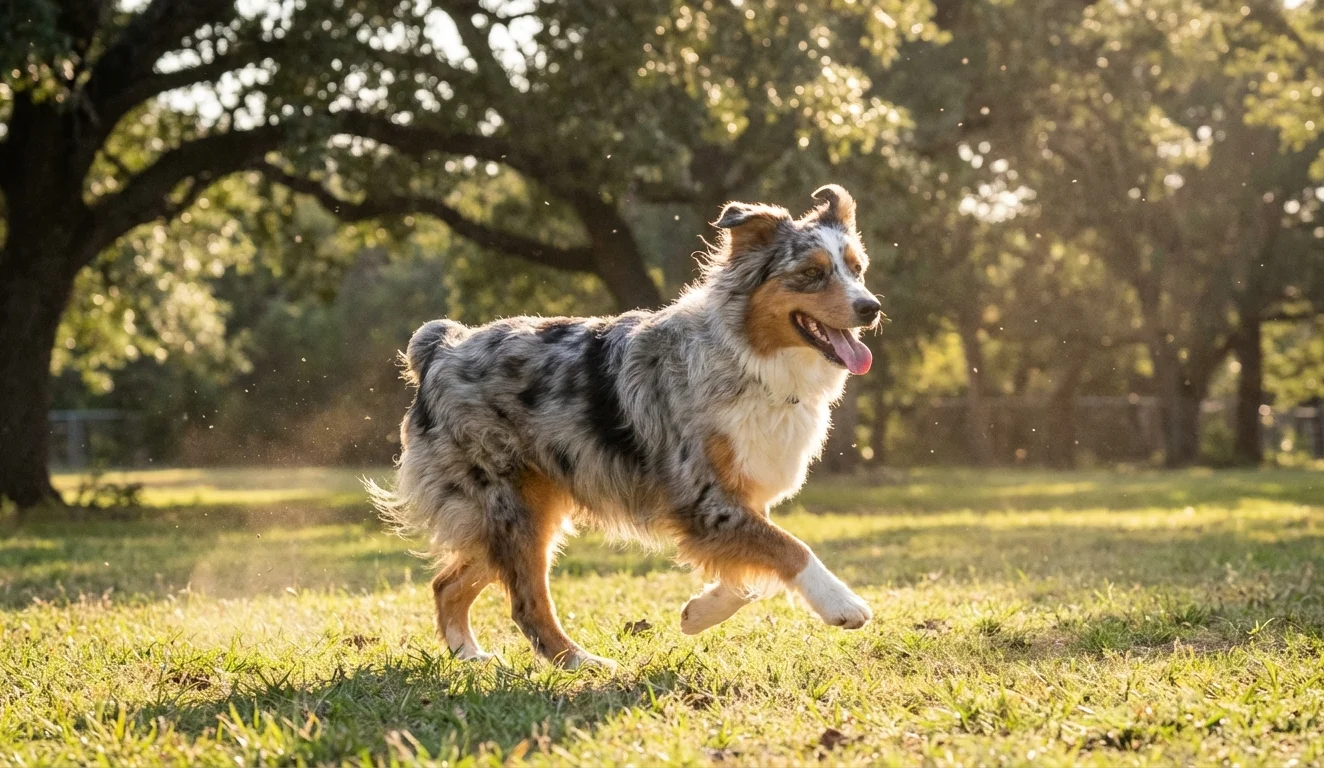
The Aussie has a balanced, slightly longer-than-tall frame with moderate bone. They’re muscular but not bulky, think marathon runner, not bodybuilder. Everything about the Aussie’s build is designed for agility and sustained activity. You’ll notice it in the way they move: fluid, quick, always ready to change direction.
Coat and Colors
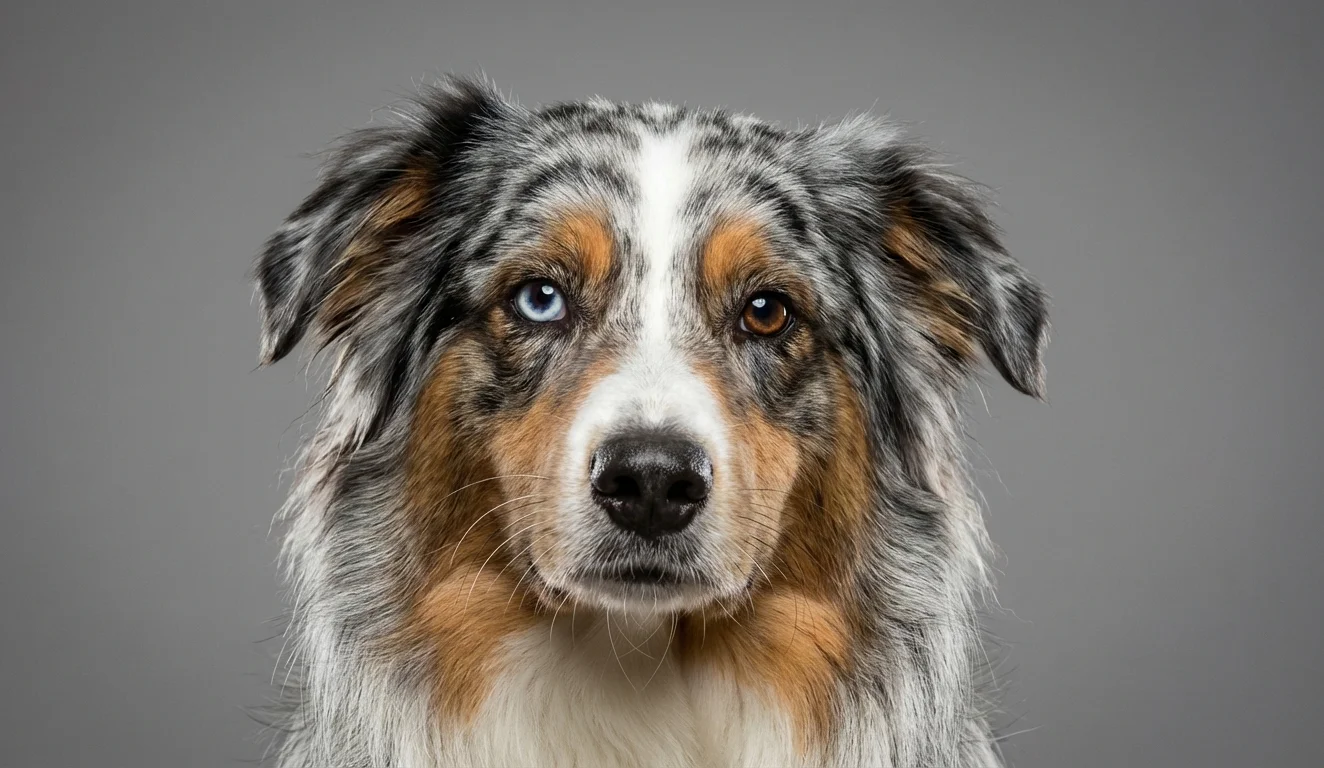
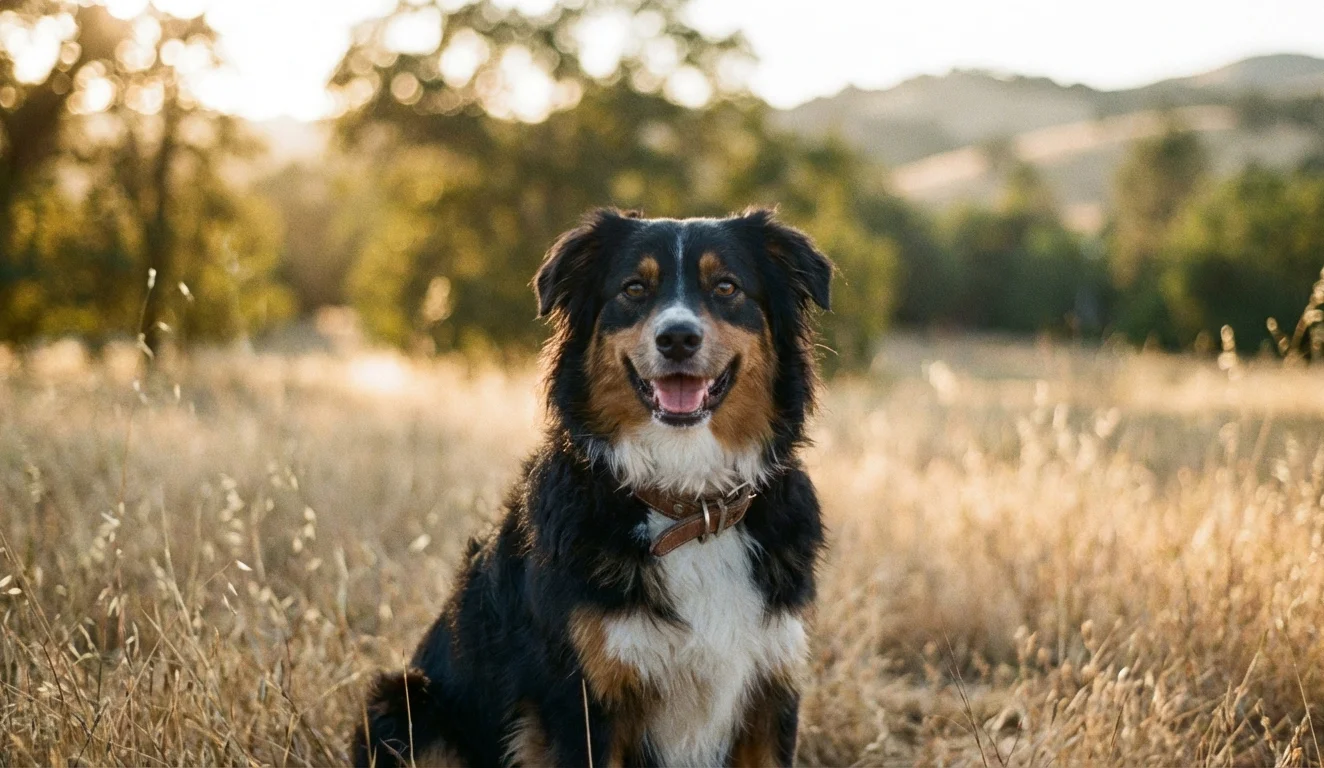
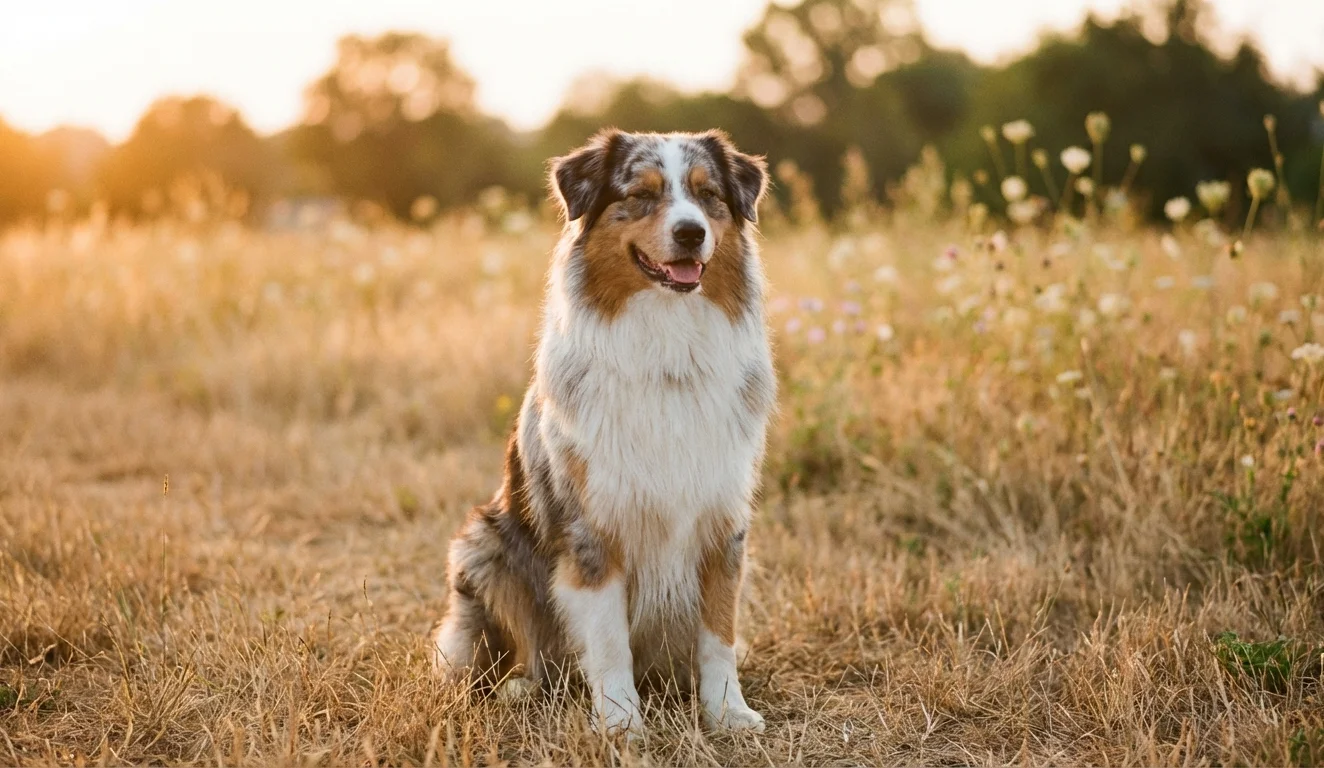
This is where Aussies really stand out. The breed comes in four base colors, blue merle, red merle, black, and red, with or without white markings and tan (copper) points. The merle patterns are particularly striking, creating a marbled effect that means no two merle Aussies look exactly alike.
The coat is medium-length, wavy to slightly curly, and double-layered. Males usually carry a heavier mane and frill around the neck.
A critical note on merle breeding: two merle dogs should never be bred together. Double-merle (homozygous merle) puppies have a high probability of being deaf, blind, or both. Any breeder crossing two merles is either uninformed or irresponsible. Walk away.
Eyes
Aussies can have brown eyes, blue eyes, amber eyes, or even one of each (heterochromia). Some individuals have split eyes, two colors within a single eye. The eye color variety adds to the breed’s visual appeal, but it has zero bearing on the dog’s health or temperament.
Australian Shepherd Temperament
The Australian Shepherd is intensely loyal, whip-smart, and has an energy reservoir that seems almost infinite. The AKC standard describes the temperament as “good-natured, seldom quarrelsome.” That’s accurate as far as it goes, but it misses the nuance.
What Aussie ownership actually feels like:
- They’re velcro dogs. Aussies bond hard to their people and want to be involved in everything you do. Leaving them alone for 8-10 hours while you work isn’t just unpleasant for them, it often leads to destructive behavior and anxiety.
- They herd everything. Kids, cats, other dogs, strangers at the park. An Aussie without livestock will find something to herd. This manifests as circling, body-blocking, and sometimes nipping at heels. Early training helps, but the instinct doesn’t disappear.
- They’re watchful. Aussies are naturally protective without being aggressive. They notice everything, changes in routine, new people, odd sounds. Some owners love this alertness. Others find it exhausting.
- They need mental work. Physical exercise alone isn’t enough. An Aussie that gets a two-hour hike but no mental stimulation can still be restless and destructive. Puzzle toys, training sessions, and dog sports are not optional extras, they’re requirements.
Aussies are not recommended for first-time dog owners. We don’t say that to be gatekeepers. We say it because the learning curve with this breed is steep, and the consequences of getting it wrong are tough for both the dog and the owner.
Exercise Needs
Australian Shepherds need 90 minutes of exercise per day at minimum. And not just a leisurely walk around the block. Aussies need exercise that engages their brain and their body simultaneously.
What works for Aussies:
- Trail running and hiking with varied terrain, Aussies thrive when they have new things to smell and see
- Agility training, the breed absolutely dominates in agility competition, and there’s good reason for that
- Herding trials, if you have access to herding facilities, this is the gold standard for Aussie enrichment
- Fetch with variations (hide the ball, change the throwing pattern)
- Frisbee, Aussies are natural disc dogs
What doesn’t work:
- Same route every day with no variation
- Backyard time alone (they won’t self-exercise meaningfully)
- Treadmill or indoor-only exercise as a substitute for outdoor engagement
An under-exercised Aussie doesn’t just get hyper. It gets neurotic. You’ll see obsessive behaviors, spinning, pacing, shadow chasing, along with destructive chewing and digging. Some develop compulsive behaviors that require veterinary behaviorist intervention. We’ve heard from more than a few Aussie owners who didn’t take the exercise requirements seriously and ended up with a dog they couldn’t manage.
Grooming
The Australian Shepherd’s coat is gorgeous. Maintaining it takes real commitment.
Grooming routine:
- Brush 2-3 times per week with an undercoat rake or slicker brush
- Daily brushing during spring and fall blowouts
- Bath every 6-8 weeks or as needed
- Check and clean ears weekly: the semi-floppy ears can trap moisture
- Trim the hair between paw pads monthly to prevent matting and debris collection
- Nail trims every 2-3 weeks
Never shave an Australian Shepherd. This is one of those things people do with good intentions that actually causes harm. The double coat insulates against both cold and heat. Shaving it disrupts the natural temperature regulation and the coat often doesn’t grow back the same way. If your Aussie is overheating, provide shade and water, don’t reach for the clippers.
Professional grooming every 8-12 weeks runs about $60-$100 for a full coat maintenance session. Many Aussie owners handle most grooming at home and go professional only for seasonal blowout treatments.
Australian Shepherd Health Issues
Australian Shepherds live 12-15 years and are a generally healthy breed. But there are several genetic conditions you need to know about before buying or adopting.
MDR1 Gene (Multidrug Sensitivity)
This is the most important health concern specific to Australian Shepherds. An estimated 50% of Aussies carry at least one copy of the MDR1 gene mutation, which causes dangerous sensitivity to common medications including ivermectin (a common heartworm preventive ingredient), loperamide (Imodium), and several chemotherapy drugs.
A dog with two copies of the mutation (homozygous) can have severe, sometimes fatal, reactions to these medications. Testing costs just $50-$200 and every Aussie owner should do it. Tell your vet your dog is an Aussie before any medication is prescribed. This is not optional.
Hip Dysplasia
The OFA reports that hip dysplasia is common in Australian Shepherds. The condition causes abnormal hip joint development, leading to arthritis and lameness over time. Reputable breeders screen both parents with OFA hip evaluations. Treatment ranges from management with supplements and medication ($200-$500/year) to surgical intervention ($1,500-$6,000).
Epilepsy
Idiopathic epilepsy is moderately prevalent in the breed and typically appears between 1-5 years of age. Affected dogs experience seizures that range from mild absence episodes to full grand mal seizures. Most epileptic Aussies can be managed with daily medication (phenobarbital, potassium bromide, or newer anticonvulsants), though treatment is lifelong. Costs for ongoing management run $500-$3,000 depending on medication needs and monitoring.
Eye Conditions
Cataracts and Progressive Retinal Atrophy (PRA) both occur at moderate rates in the breed. The Australian Shepherd Health & Genetics Institute recommends annual eye exams by a veterinary ophthalmologist, and the CERF (now OFA Eye) registry tracks results. Cataract surgery costs $2,000-$4,000 per eye. PRA has no surgical treatment and leads to eventual blindness.
Training an Australian Shepherd
Australian Shepherds are among the most trainable breeds alive. Stanley Coren’s The Intelligence of Dogs doesn’t just rank them highly, the Aussie is the kind of dog that can learn a new command in fewer than five repetitions. Their working heritage means they’re hardwired to listen to direction and respond.
But trainability and being easy to live with are different things.
Training realities for Aussie owners:
- Aussies learn bad habits just as fast as good ones. If you’re inconsistent, they’ll exploit the inconsistency.
- They need early socialization more than most breeds. Aussies that aren’t well-socialized can become reactive or fearful, especially around strangers.
- Use positive reinforcement with variety. Aussies get bored doing the same drill over and over.
- Impulse control is a major training focus, teach them to wait, to settle, and to handle frustration.
- Give them a job. Trick training, agility foundation work, or even simple daily tasks around the house satisfy their need to be useful.
The biggest training mistake with Aussies is assuming their intelligence means they’ll self-regulate. They won’t. A smart dog without direction is a creative troublemaker.
Australian Shepherd Cost
Purchase Price
An Australian Shepherd puppy from a reputable breeder runs $800-$2,000. Working-line Aussies from proven herding stock or dogs with extensive health testing can cost more. Blue merle Aussies sometimes carry a premium due to demand, though color alone shouldn’t drive price, health testing should.
Rescue Aussies are available through breed-specific organizations. Adoption fees typically range from $200-$500. Because of the breed’s high exercise demands, Aussies end up in rescue more often than their quality deserves.
Monthly Costs
| Expense | Monthly Estimate |
|---|---|
| Food (high-quality, active-dog formula) | $50-$80 |
| Preventive vet care (averaged) | $15-$30 |
| Pet insurance | $30-$55 |
| Treats and chews | $10-$20 |
| Miscellaneous (toys, supplies) | $10-$25 |
| Total | $100-$200 |
First-Year Costs
Expect $2,500-$4,500 for the first year including purchase, initial vet visits, supplies, and training classes. MDR1 testing ($50-$200) is a first-week priority. Dog sport classes ($100-$200 per session series) are a worthwhile investment for this breed, they’re not an indulgence, they’re a sanity saver.
Is an Australian Shepherd Right for You?
An Aussie is a great fit if you:
- Live an active lifestyle and can provide 90+ minutes of daily exercise with variety
- Want a dog that can participate in hiking, running, or dog sports
- Have experience with dogs (or are willing to commit heavily to training)
- Work from home or can bring your dog to work, Aussies struggle with long periods alone
- Enjoy training and are willing to give the dog ongoing mental challenges
An Aussie is probably NOT right if you:
- Work long hours away from home
- Want a low-maintenance, easygoing companion
- Are a first-time dog owner looking for a forgiving breed
- Can’t commit to regular grooming and heavy shedding management
- Live in a small space with no yard and limited access to parks or trails
We genuinely love this breed. But we’d rather talk someone out of an Aussie than see another one surrendered to a rescue because the owners didn’t know what they were signing up for. If you’re the right match, an Australian Shepherd will be the most engaged, loyal, and capable dog you’ve ever known. Just don’t expect them to be content with a sedentary life. They weren’t built for it, and they’ll make sure you know.
Related Breeds
If you’re considering this breed, you might also want to look at:
Frequently Asked Questions
Why is the breed called “Australian” if it’s from America?
The name is misleading, and even breed historians debate the exact origin of the term. The most accepted theory is that Basque shepherds who emigrated to the American West in the 19th century came through Australia, bringing dogs with them. American ranchers associated these herding dogs with Australia, and the name stuck. The breed as we know it was developed entirely in the United States, primarily in the western ranching states of California, Colorado, and the Pacific Northwest.
Are Australian Shepherds good family dogs?
Aussies can be wonderful family dogs, but with caveats. They’re loyal, protective, and generally good with children. The herding instinct is the main thing to watch, Aussies may try to herd running kids by circling and nipping at their heels. Early training redirects most of this behavior. The bigger question is whether your family’s lifestyle can support an Aussie’s needs. A family with active outdoor hobbies and someone home during the day is a much better fit than a busy family where the dog is home alone for extended periods.
Do Australian Shepherds have a lot of health problems?
Aussies are a generally healthy breed with a good lifespan of 12-15 years. The most critical health issue is the MDR1 gene mutation affecting drug sensitivity, about half the breed carries it, and a simple DNA test can identify it. Beyond that, hip dysplasia, epilepsy, and eye conditions (cataracts, PRA) are the main concerns. A reputable breeder who does OFA hip evaluations, eye exams, and MDR1 testing significantly reduces your risk. We’d recommend budgeting for pet insurance given the potential costs of these conditions.
How much exercise does an Australian Shepherd really need?
At least 90 minutes per day, and that’s not a generous estimate. Some Aussies, particularly those from working lines, can go well beyond that. The exercise also needs to be varied and mentally engaging. A monotonous daily walk on the same route won’t cut it. Aussies need a mix of physical activity (running, hiking, fetch) and mental challenges (training, puzzle toys, dog sports). If you can’t meet this consistently, the behavioral fallout is predictable: destructiveness, anxiety, and compulsive behaviors.
Can Australian Shepherds live in apartments?
It’s possible but very difficult to do well. An apartment Aussie needs an owner who is committed to multiple outdoor exercise sessions per day, regular access to off-leash areas, and continuous mental enrichment. Most Aussie owners and breed experts would strongly recommend a home with a fenced yard. The breed is classified as not apartment-friendly for good reason, it’s not about the physical space, it’s about the energy level and the ease of meeting exercise needs. If you’re set on an apartment, consider a Miniature American Shepherd as a slightly more manageable alternative.