Old English Sheepdog Breed Guide: More Hair Than You're Ready For (2026)
The Old English Sheepdog is a 60-100 pound ball of shaggy fur with a clown's personality underneath. Here's what ownership really demands.
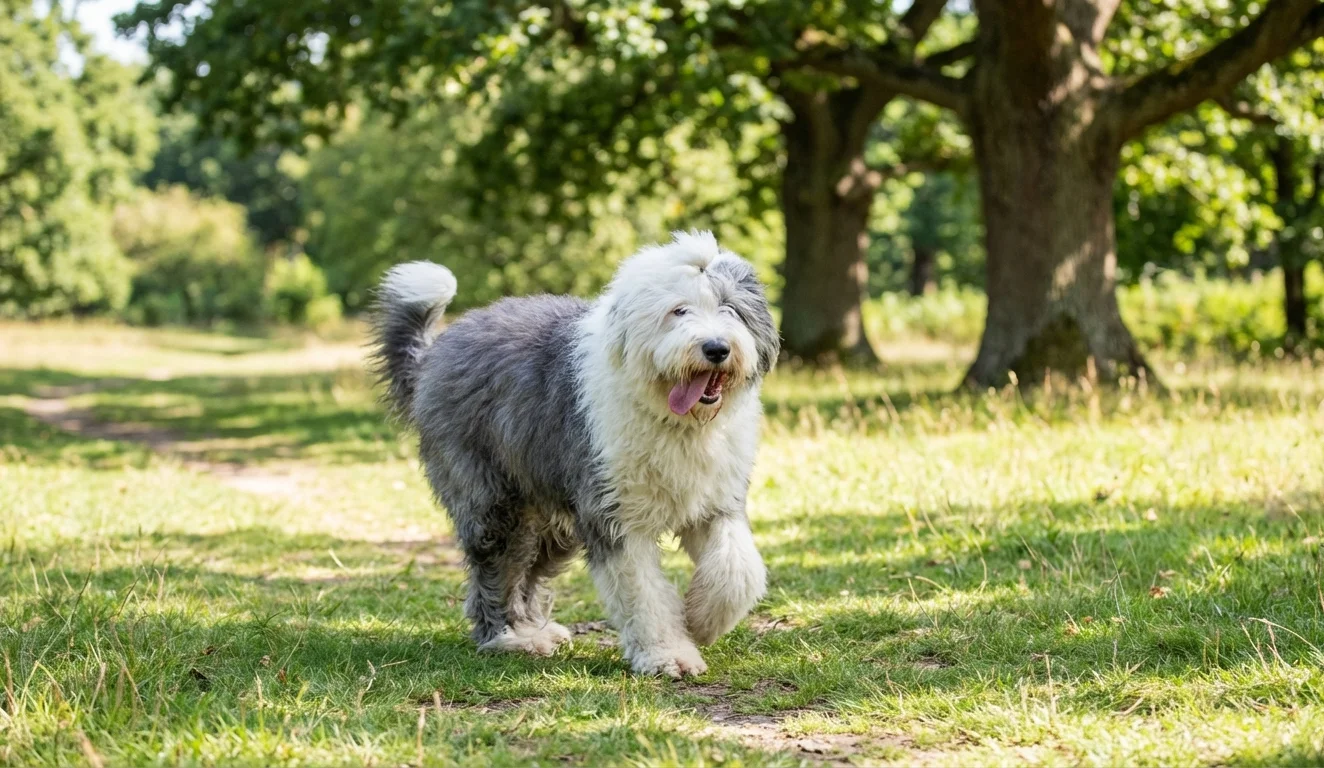
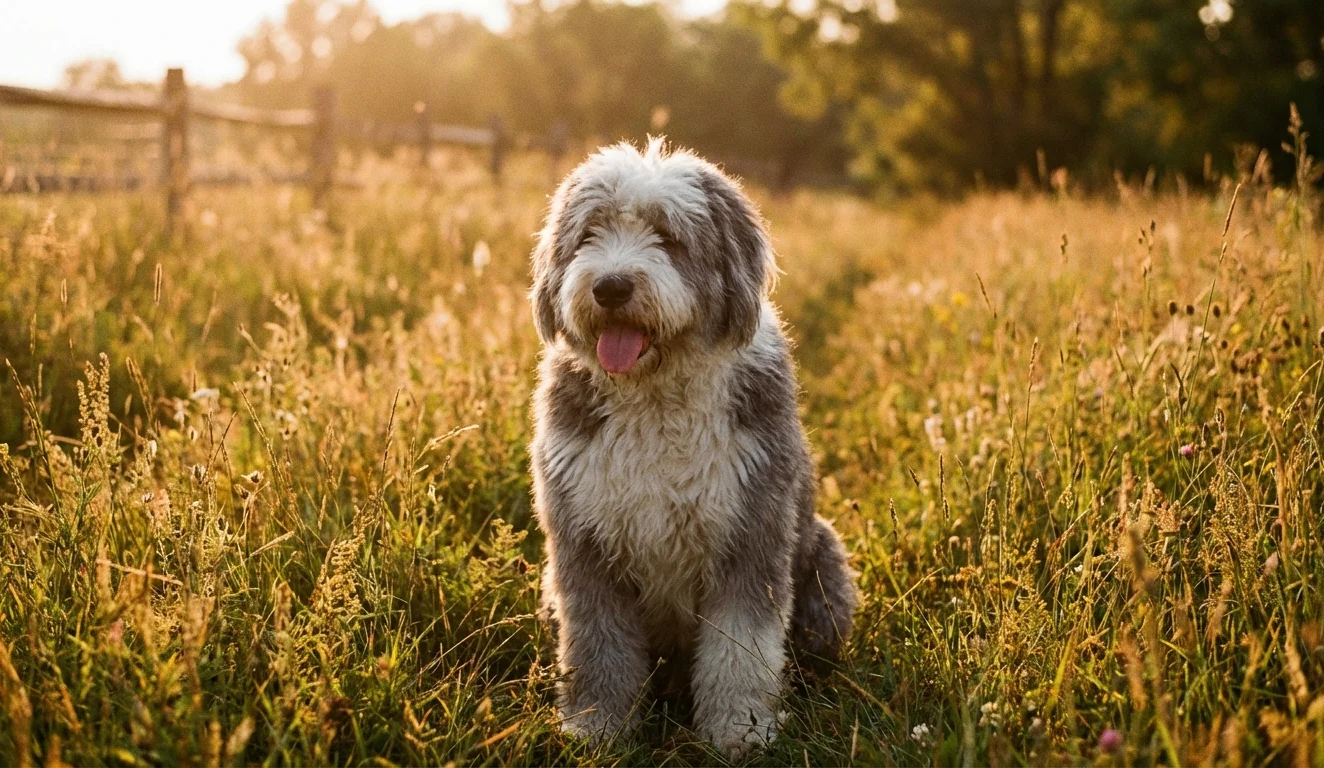
The Old English Sheepdog stands 21-24 inches tall, weighs 60-100 pounds, and lives 10-12 years. You’ll recognize them immediately, they’re the big shaggy dogs that look like they’re peering out from behind a curtain of fur. What you might not realize until you live with one is just how much personality is hiding under all that coat. OES dogs are goofy, affectionate, surprisingly agile, and absolutely committed to being part of every single thing you do.
In Short: 60–100 lbs, 10–12 years. Moderate-to-high energy. Heavy shedder. Watch for Hip Dysplasia and Autoimmune Thyroiditis. Good with kids, but better for experienced owners.
Here’s our honest take on this breed: Old English Sheepdogs are wonderful dogs trapped inside a grooming nightmare. That gorgeous shaggy coat isn’t just for show, it mats, it tangles, it collects every leaf and twig within a half-mile radius, and it requires a level of daily maintenance that most people underestimate by a wide margin. We think the OES is one of the best family dogs in terms of temperament. We also think the grooming commitment is the reason this breed has been declining in popularity for years. If you’re considering an OES, read the grooming section of this guide carefully before falling in love. (The OES is also one of the parent breeds of the Sheepadoodle, a cross with the Standard Poodle that’s gained popularity partly because of the lower-maintenance coat.)
Old English Sheepdog at a Glance
| Trait | Details |
|---|---|
| Breed Group | Herding (AKC) |
| Height | Males: 22-24 in / Females: 21-22 in |
| Weight | Males: 60-100 lbs / Females: 60-85 lbs |
| Life Expectancy | 10-12 years |
| Coat | Long, shaggy double coat with dense undercoat |
| Colors | Blue and White, Grey and White, Grizzle and White, Blue Merle and White |
| Temperament | Adaptable, Gentle, Intelligent, Bubbly, Sociable |
| Shedding | High |
| Energy Level | Moderate-High |
| Good With Kids | Yes |
| Good With Other Dogs | Yes |
| Apartment Friendly | No |
| First-Time Owner Friendly | No |
History
Despite the name, the Old English Sheepdog isn’t particularly old by breed standards, and its exact origins are debated. Most breed historians believe the OES was developed in southwestern England during the early 19th century from crosses of various British and European herding breeds, possibly the Bearded Collie, the Russian Owtchar, and the Briard, among others.
What’s well documented is the breed’s working role. OES dogs were drovers’ dogs, used to drive cattle and sheep from rural farms to urban markets. Farmers who used working dogs for driving livestock were exempt from a dog tax in England, and many OES dogs had their tails docked to prove their working status. This is where the breed’s nickname “Bobtail” comes from, though natural bobtails do occur in the breed as well. The docking tradition persisted long after the tax exemption ended, though it’s now banned in many countries.
The OES gained fame in America through advertising. In the 1960s and 1970s, the breed became the mascot for Dulux paint in the UK and appeared in various American media, driving a surge in popularity. That surge, unfortunately, brought a wave of irresponsible breeding and puppy-mill production. By the 2000s, the breed’s popularity had dropped sharply, the Kennel Club in the UK listed the OES as a “vulnerable native breed” in 2012, with fewer than 300 registrations per year. Breed enthusiasts have been working to rebuild the population with an emphasis on health and temperament.
Size and Appearance
Old English Sheepdogs are large, square-bodied dogs. Males stand 22-24 inches at the shoulder and weigh 60-100 pounds. Females are slightly smaller at 21-22 inches and 60-85 pounds. That weight range is wide because coat, and there’s a lot of it, adds several pounds to the number on the scale.
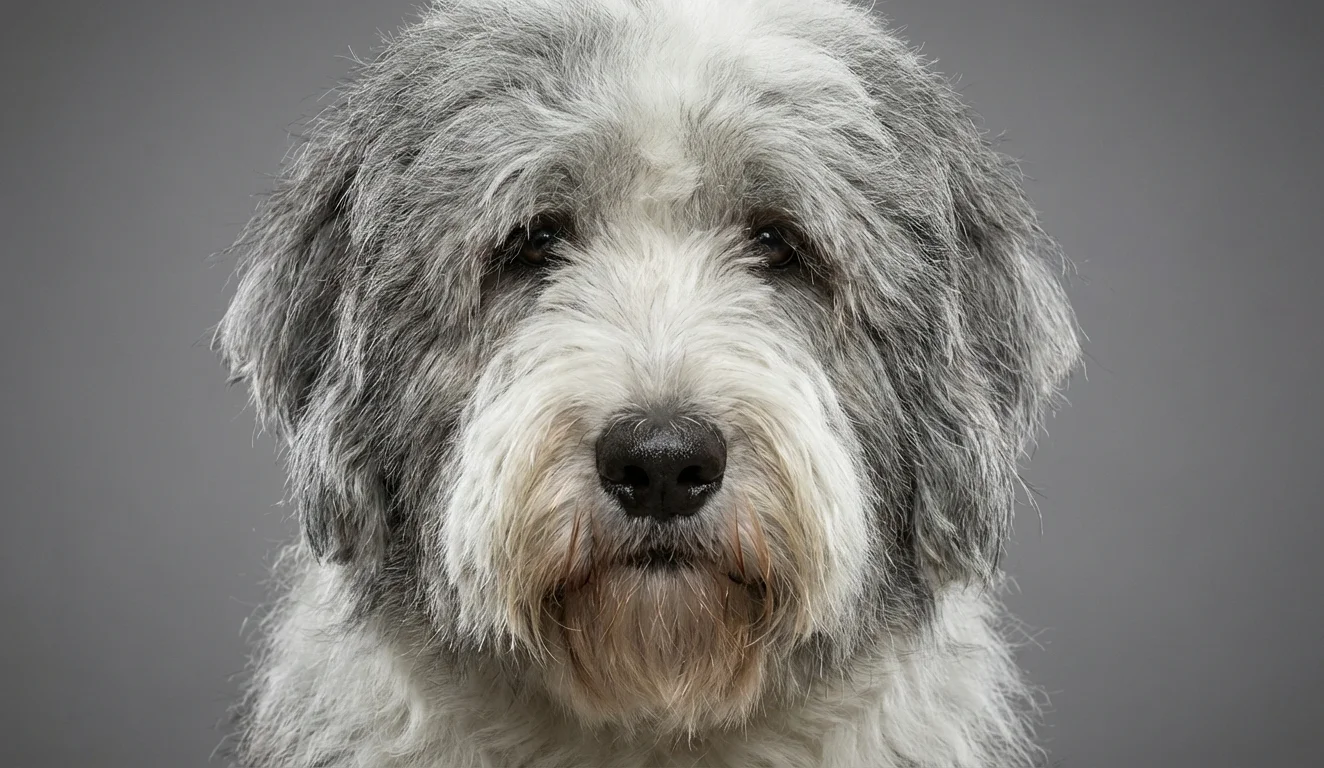
The defining feature is obviously the coat. It’s long, shaggy, and covers the entire body including the face and eyes. The outer coat is coarse and slightly wavy (never curly), with a dense, waterproof undercoat beneath it. Colors are always some variation of grey, blue, or grizzle with white markings, typically a white head, chest, and front legs with darker coloring over the body and hindquarters.
Underneath all that fur is a surprisingly athletic dog. The OES has a distinctive rolling, bear-like gait that looks lazy but covers ground efficiently. They’re more agile than their shaggy appearance suggests, an OES at full speed is genuinely impressive to watch, even if they look like a mop being chased by the wind.
Old English Sheepdog Temperament
The OES temperament is where this breed truly shines. These are happy, gentle, social dogs with a playful streak that lasts well into adulthood. Breed enthusiasts often describe the OES personality as “clownish,” and that’s apt, they’ll make you laugh daily.
What makes the OES personality special:
- Genuinely gentle with children. The OES has an old reputation as a “nanny dog” (a title also claimed by other breeds, often with dubious historical backing). What’s real is that OES dogs tend to be remarkably patient and protective with kids. They’ll often position themselves near children, herd them gently away from perceived dangers, and tolerate the kind of rough handling that would irritate many other breeds.
- Herding instinct is alive and well. Your OES will try to herd your kids, your other pets, and your dinner guests. This manifests as nudging, circling, and body-blocking. It’s endearing until the dog hip-checks your toddler into the couch. Training helps redirect this instinct, but it never fully goes away.
- Adaptable and easygoing. Despite being a herding breed, OES dogs are less intense than Border Collies or Australian Shepherds. They’re happy to relax when nothing’s happening and perk up when activity starts.
- Vocal. OES dogs have a deep, distinctive bark, and they use it freely. They’ll alert you to visitors, strange noises, and the existence of squirrels. Barking level is moderate-to-high.
Our opinion: the OES has one of the best temperaments in the dog world for families with school-age kids. They’re patient without being pushover dogs, playful without being manic, and protective without being aggressive. If the grooming commitment were cut in half, this would be one of the most popular family dogs in America. The coat is what keeps most people away, and honestly, we get it.
Exercise Needs
Old English Sheepdogs need about 60 minutes of exercise per day. They’re a herding breed with moderate-to-high energy, but they’re not as relentlessly driven as a Border Collie or an Aussie. A good long walk, a play session in the yard, and some mental stimulation will keep most OES dogs content.
Good exercise options for OES dogs:
- Long walks or moderate hikes. OES dogs have good stamina but aren’t built for speed. They’re walk-with-you dogs, not sprint-ahead dogs.
- Yard play. A fenced yard is almost essential for an OES. They love romping around, and they’re surprisingly quick in short bursts.
- Herding activities. If you have access to herding trials or instinct tests, many OES dogs take to them naturally. It’s a great mental and physical outlet.
- Swimming is hit or miss. Some OES dogs love water. Others want nothing to do with it. That heavy coat becomes incredibly waterlogged, which makes swimming harder and drying off a major production.
One exercise consideration specific to OES dogs: heat sensitivity. That thick double coat means Old English Sheepdogs overheat faster than short-coated breeds. During summer, exercise in the early morning or evening, provide constant access to water, and watch for signs of overheating (excessive panting, drooling, lethargy). Some owners give their OES a shorter “summer cut” to help with heat management, which is perfectly fine as long as you keep some coat length to protect against sunburn.
Grooming
This is the section that matters most. If you’re considering an Old English Sheepdog, you need to understand what the coat requires. Not in theory. In practice, in your house, every single day.
The OES grooming reality:
- Daily brushing is mandatory. Not “ideally daily”, actually every day, or at minimum every other day. An OES coat that goes unbrushed for even a few days will start matting, and mats in this coat type are serious. They pull on the skin, trap moisture, and can cause skin infections underneath.
- Professional grooming every 6-8 weeks: expect to pay $80-$150+ per session. This is a large, heavily coated dog, and most groomers charge accordingly. Some groomers refuse to take OES dogs that aren’t being maintained between appointments because the dematting work is so labor-intensive.
- Brushing sessions take 30-60 minutes. This isn’t a quick once-over. You need to work through the coat layer by layer, surface, mid-coat, undercoat, with a slicker brush and a steel comb. Every section. Every time.
- Ear cleaning weekly: the ear flaps trap moisture and debris under all that fur
- Eye area maintenance: the hair over the eyes needs to be trimmed or tied back regularly so the dog can see (and so you can check for eye irritation)
- Teeth brushing 2-3 times per week
The shave-down option. Many OES owners choose to keep their dog in a short clip year-round. We think that’s a totally valid choice. A clipped OES is still an OES, the personality doesn’t change with the coat length. And a dog in a practical clip who gets brushed occasionally is healthier and happier than a dog in full coat that’s matted to the skin because the owner couldn’t keep up.
We’ll be blunt: if daily grooming sounds like too much, this is not your breed. We’ve seen too many OES dogs surrendered to rescue because owners fell in love with the look and couldn’t handle the maintenance. Go in with open eyes.
Old English Sheepdog Health Issues
Old English Sheepdogs have a moderate lifespan of 10-12 years. They’re generally sturdy dogs, but the breed does carry some genetic health risks.
Hip Dysplasia
A moderately common condition in OES where the hip joint doesn’t develop properly, leading to arthritis and pain. The OFA recommends hip evaluations for all breeding OES dogs. Treatment for severe cases typically involves surgery, costing $1,500-$6,000 per hip. Keeping your OES at a healthy weight is one of the most effective ways to manage mild dysplasia.
Autoimmune Thyroiditis
This is the most common cause of hypothyroidism in dogs, and OES have a moderate predisposition. The immune system attacks the thyroid gland, gradually reducing hormone production. Symptoms include weight gain, lethargy, coat changes, and cold intolerance. Once diagnosed, it’s managed with daily thyroid hormone supplementation, costing $200-$1,000 over the dog’s life.
Progressive Retinal Atrophy (PRA)
PRA causes gradual, irreversible vision loss. It’s inherited, and a DNA test can identify carriers. Responsible breeders test for PRA before breeding. Dogs that lose vision adapt surprisingly well in familiar environments, but the diagnosis is still significant. Diagnostic and management costs run $2,000-$3,000.
Cerebellar Abiotrophy
This is a rare but serious neurological condition where the cerebellum (the part of the brain that controls coordination) degenerates over time. Affected dogs develop progressive ataxia, loss of coordination and balance. There’s no cure. It’s uncommon, but the severity makes it worth mentioning. Diagnostic costs range from $1,000-$5,000.
Bloat (Gastric Dilatation-Volvulus)
Like many deep-chested large breeds, the OES is at moderate risk for bloat, a life-threatening emergency where the stomach fills with gas and can twist on itself. Signs include a distended abdomen, unproductive retching, restlessness, and visible discomfort. This is not a wait-and-see situation. Bloat requires emergency surgery, costing $3,000-$7,500. Preventive measures include feeding two smaller meals instead of one large meal, using slow-feeder bowls, and avoiding vigorous exercise immediately after eating.
Training
Old English Sheepdogs are moderately to highly trainable. They’re intelligent dogs that want to please, but they also have an independent streak that sets them apart from hyper-biddable breeds like Border Collies. An OES will learn what you’re asking, they just might decide to put their own spin on it sometimes.
Training tips for OES owners:
- Start early. OES puppies grow fast, and a 90-pound dog that jumps on people is a very different problem than a 15-pound puppy doing the same thing. Establish manners while they’re still small enough to manage easily.
- Be consistent but patient. The OES responds best to firm, fair, positive training. They’re sensitive enough that harsh corrections will shut them down, but they need clear boundaries to understand what’s expected.
- Work on leash manners. An OES pulling on a leash is a genuine physical challenge for most handlers. Front-clip harnesses help, but training a reliable loose-leash walk is worth the investment.
- Channel the herding instinct. If your OES is nipping at heels or herding the kids, redirect that energy into fetch, tug, or actual herding activities rather than just correcting the behavior.
- Socialize extensively. OES dogs are naturally social, but early exposure to different people, environments, and situations builds confidence and prevents shyness.
The OES is not the hardest breed to train, but they’re also not an autopilot breed. They think for themselves, and that’s part of their charm. Embrace it and work with it rather than against it.
Cost
Purchase Price
An Old English Sheepdog puppy from a reputable breeder costs $1,200-$3,000. This is a less common breed, so you may need to get on a waiting list. Be wary of heavily discounted OES puppies, health testing in this breed is critical, and responsible breeders invest significantly in hip evaluations, thyroid tests, eye exams, and cardiac screenings.
OES-specific rescues exist, including the Old English Sheepdog Rescue Network. Adoption fees are typically $200-$500. Rescued OES dogs are often adults who were surrendered because the grooming was too much for their previous owners, which means you get a dog that’s already past the puppy phase but may need some coat rehabilitation.
Monthly Costs
| Expense | Monthly Estimate |
|---|---|
| Food (high-quality large breed formula) | $50-$80 |
| Professional grooming (averaged monthly) | $80-$150 |
| Preventive vet care (averaged) | $15-$30 |
| Pet insurance | $35-$65 |
| Treats and chews | $10-$20 |
| Miscellaneous (toys, supplies) | $15-$25 |
| Total | $205-$370 |
First-Year Costs
Budget $4,000-$7,500 for the first year. The purchase price and grooming are the two biggest numbers. Professional grooming alone runs $960-$1,800 per year if you’re going every 6-8 weeks. Add grooming tools for home use (a quality slicker brush, steel comb, detangling spray, and a good dog dryer will run $100-$200 collectively), and you can see why the OES is one of the more expensive breeds to maintain.
Is an Old English Sheepdog Right for You?
An OES is a great fit if you:
- Have a house with a fenced yard (this breed needs space)
- Can commit to 30-60 minutes of daily grooming or are willing to keep the coat clipped short
- Want a gentle, family-oriented dog that’s great with kids
- Have some dog ownership experience (not ideal for absolute beginners)
- Don’t mind a vocal dog with a deep bark
- Want a breed with genuine personality and a sense of humor
An OES is probably NOT right if you:
- Live in a small apartment, they need room to move
- Can’t afford or don’t want to deal with extensive grooming
- Live in a very hot climate without air conditioning (the coat makes heat management difficult)
- Want a low-shedding dog
- Prefer a quiet breed
- Travel frequently and need a dog that’s easy to board (many boarding facilities charge extra for heavy-coated breeds)
The Old English Sheepdog is a breed that rewards commitment. Commit to the grooming and you get a coat that’s honestly stunning. Commit to the exercise and you get a dog that’s content and well-behaved. Commit to the relationship and you get a companion with a personality that will make you laugh every day. The OES asks more of its owners than most breeds do, but the owners who follow through on that commitment almost universally say it’s worth it. Just buy a good vacuum. And then buy a backup.
Related Breeds
If you’re considering this breed, you might also want to look at:
Frequently Asked Questions
How long do Old English Sheepdogs live?
Old English Sheepdogs have a lifespan of 10-12 years, which is typical for a large breed. Some OES dogs live to 13 or 14 with excellent care. The biggest factors in longevity are maintaining a healthy weight, staying current on preventive veterinary care, and buying from a breeder who tests for hip dysplasia, thyroid disease, and eye conditions.
Do Old English Sheepdogs shed?
Yes, heavily. Despite the long coat that might suggest the hair stays put, OES dogs shed significantly, especially during seasonal coat blowouts in spring and fall. The shedding is somewhat managed by daily brushing (the hair ends up in the brush instead of on your furniture), but you’ll still find fur everywhere. People sometimes confuse the OES with low-shedding breeds because of the coat texture, but this is absolutely not a hypoallergenic dog.
Can you shave an Old English Sheepdog?
You can keep an OES in a short clip, and many owners do. A “puppy cut” (coat trimmed to 1-2 inches all over) is a popular low-maintenance option that looks neat and reduces grooming time dramatically. Shaving to the skin is not recommended, the coat provides insulation against both heat and cold, and a completely shaved OES is vulnerable to sunburn. A short clip is different from a full shave, and most groomers can help you find a practical length that works for your lifestyle.
Are Old English Sheepdogs good with cats?
OES dogs are generally good with cats, especially when raised together. Their herding instinct may cause them to try to herd the cat, which some cats tolerate better than others. Introductions should be gradual and supervised. Most OES dogs coexist peacefully with cats once the novelty wears off, though the cat might not appreciate being gently nudged toward the living room when the dog decides everyone should be in the same place.
What is a Sheepadoodle?
A Sheepadoodle is a cross between an Old English Sheepdog and a Standard Poodle. The mix combines the OES’s gentle temperament with the Poodle’s low-shedding coat, which is a big part of why it’s gained popularity. Sheepadoodles are typically large dogs (50-80 pounds) with wavy or curly coats that shed less than a purebred OES. We have a full Sheepadoodle profile on the site if you’re interested in comparing the two. The key tradeoff: Sheepadoodles are less predictable in appearance and temperament than purebred OES dogs, because mixed-breed outcomes vary.