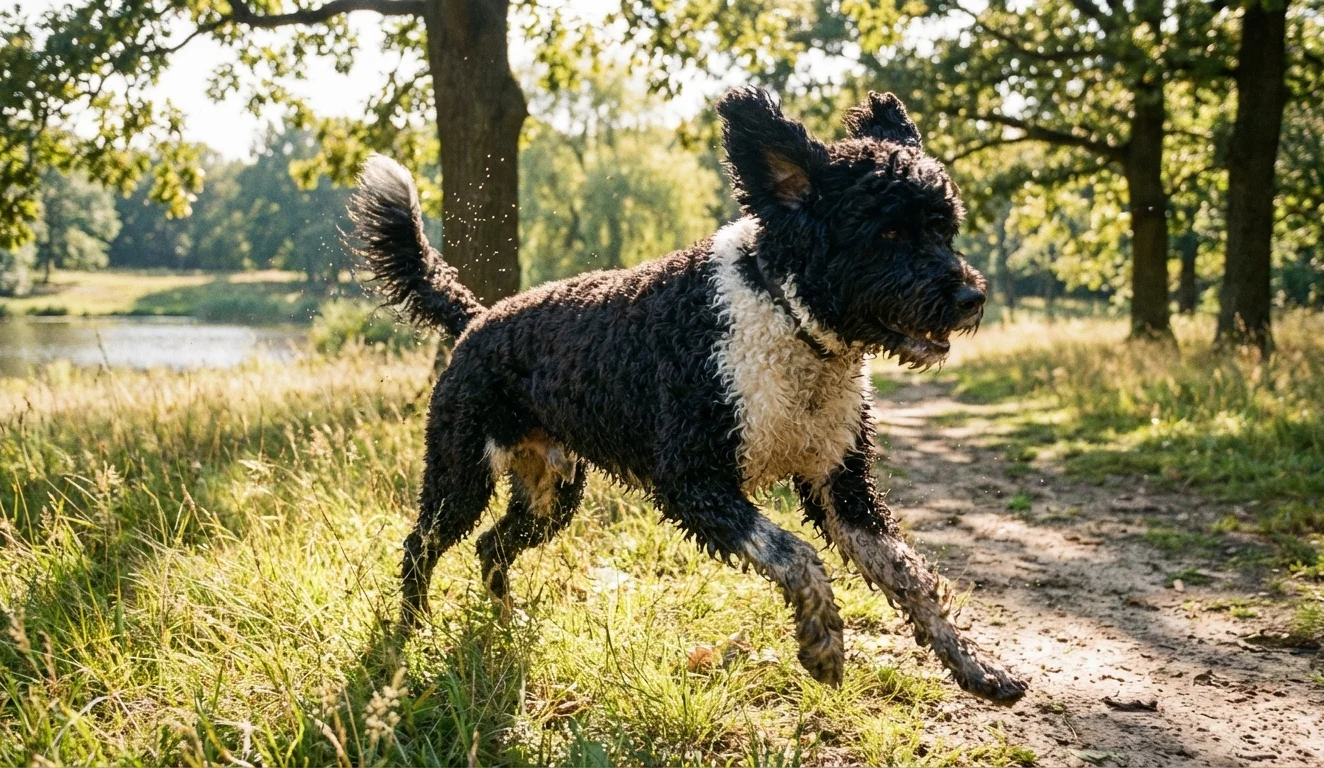

Portuguese Water Dog Breed Guide: The Athletic Water Dog That Outsmarted a President (2026)
Portuguese Water Dogs are athletic, curly-coated working dogs that need more exercise than most people expect. Here's the real story behind the hype.
The Portuguese Water Dog is a medium-sized working breed that weighs 35-60 pounds, stands 17-23 inches tall, and lives 11-13 years. They were bred to work alongside fishermen on the coast of Portugal, herding fish into nets, retrieving lost tackle, and swimming between boats to deliver messages. Yes, really. These dogs were basically the FedEx of the Portuguese fishing industry.
In Short: 35–60 lbs, 11–13 years. High energy. Low-shedding (often called hypoallergenic, though no dog truly is). Watch for Hip Dysplasia and Progressive Retinal Atrophy. Great for families and first-time owners.
Here’s what we think gets lost in every Portuguese Water Dog conversation: the Obama effect. Bo and Sunny made this breed a household name around 2009, and suddenly everyone wanted one. The breed went from obscure to trendy practically overnight, and a lot of families got a dog they weren’t quite prepared for. Portuguese Water Dogs are wonderful, but they’re working dogs with real energy needs and a brain that demands stimulation. They’re not the laid-back family pet that some people expected after seeing cute White House photo ops.
Portuguese Water Dog at a Glance
| Trait | Details |
|---|---|
| Breed Group | Working (AKC) |
| Height | Males: 20-23 in / Females: 17-21 in |
| Weight | Males: 42-60 lbs / Females: 35-50 lbs |
| Life Expectancy | 11-13 years |
| Coat | Curly or wavy, single coat |
| Colors | Black, White, Brown, Black & White, Brown & White |
| Temperament | Affectionate, Adventurous, Athletic |
| Shedding | Low (often called hypoallergenic) |
| Energy Level | High |
| Good With Kids | Yes |
| AKC Recognition | 1983 |
History
The Portuguese Water Dog, called Cao de Agua (dog of water) in Portugal, has been working along the Algarve coast since at least the Middle Ages. Fishermen relied on these dogs as genuine working partners. They’d dive underwater to herd fish into nets, retrieve broken tackle from the ocean floor, and swim long distances between boats carrying messages in waterproof pouches. The breed’s webbed feet, muscular build, and waterproof coat made them perfectly suited for a life at sea.
By the 1930s, modernization of the Portuguese fishing fleet nearly killed the breed. When fishermen no longer needed dogs to do the work that engines and electronics could handle, Portuguese Water Dog numbers crashed. A wealthy Portuguese businessman named Vasco Bensaude is largely credited with saving the breed from extinction by establishing a breeding program in the 1930s and 1940s.
The breed arrived in the United States in the 1960s but remained obscure for decades. The AKC recognized the Portuguese Water Dog in 1983. Then came 2009, when the Obama family chose a Portuguese Water Dog named Bo, selected partly because of the breed’s low-shedding coat and Malia Obama’s allergies. The breed’s popularity surged, and it’s held steady since.
Size and Appearance
Portuguese Water Dogs are medium-sized with a sturdy, athletic build. Males stand 20-23 inches at the shoulder and weigh 42-60 pounds. Females are noticeably smaller, at 17-21 inches and 35-50 pounds. They’re compact but muscular, built for swimming and endurance, not bulk.
The coat is one of the breed’s defining features and comes in two varieties: curly (tight, cylindrical curls) and wavy (longer, looser waves with a slight sheen). Both are single-coated, which means they lack the fluffy undercoat that causes heavy shedding in breeds like Labs and Huskies. The trade-off is that Portuguese Water Dog hair grows continuously, much like human hair, and needs regular trimming.
You’ll see Portuguese Water Dogs in two traditional clips: the lion clip (rear half shaved, with a full mane in front) and the retriever clip (evenly trimmed to about one inch all over). The lion clip was originally functional, it reduced drag in the water while keeping the chest and vital organs warm. Most pet owners go with the retriever clip because, honestly, the lion clip looks a little ridiculous on a dog that’s not actively working a fishing boat.
Portuguese Water Dog Temperament
Portuguese Water Dogs are smart, athletic, and genuinely affectionate with their families. The AKC breed standard uses words like “spirited yet obedient,” and that’s a pretty fair description. These dogs want to be with you, want to work for you, and want to know what the plan is.
Key temperament traits:
- Velcro dogs. Portuguese Water Dogs stick close to their people. They’ll follow you from room to room, lean against your legs while you cook, and position themselves wherever you happen to be sitting. If you want a dog that’s happy hanging out in another room, this isn’t it.
- Mouthy when young. Portuguese Water Dog puppies explore the world with their mouths. They’re not aggressive biters, they’re just doing what retrieving breeds do. But expect a lot of nipping, grabbing, and carrying things during the first year. Redirect early and often.
- Clownish. Portuguese Water Dogs have a goofy streak that catches some owners off guard. They’ll steal socks and parade around the house. They’ll bring you “gifts” from the backyard. They have a sense of humor, and it shows.
- Sensitive to your mood. This breed picks up on emotional cues quickly. If you’re stressed, your Portuguese Water Dog will notice and may become anxious too. Harsh training methods tend to backfire with this breed, they shut down.
One thing we hear a lot: “My Portuguese Water Dog has more energy than I expected.” We hear it because it’s true. These are working dogs.
Exercise Needs
Portuguese Water Dogs need about 60 minutes of vigorous exercise per day. The emphasis is on “vigorous.” A slow neighborhood walk won’t cut it. These dogs were bred to swim for hours in open ocean, so their stamina is no joke.
Best activities for Portuguese Water Dogs:
- Swimming. Obvious, right? Portuguese Water Dogs are built for water. If you have access to a pool, lake, or beach, your dog will thank you. Many Portuguese Water Dogs will voluntarily jump into any body of water they can find, including puddles.
- Fetch and retrieval games. Their retrieving instinct is strong. A good game of fetch on land or water burns energy efficiently.
- Agility. Portuguese Water Dogs excel at agility courses. They’re nimble, fast, and they love the problem-solving element.
- Long hikes. Their endurance makes them great hiking companions, though you’ll want to watch for heat, that curly coat can trap warmth.
A Portuguese Water Dog that doesn’t get enough exercise will find creative ways to burn energy indoors. Counter-surfing, shoe-stealing, and general household chaos are all on the menu. Mental stimulation matters just as much as physical exercise, puzzle feeders and training sessions help tire their brains.
Grooming
Here’s where the “hypoallergenic” conversation gets real. Portuguese Water Dogs are low-shedding, which is genuinely helpful for people with mild allergies. But no dog is truly hypoallergenic, all dogs produce dander and saliva proteins that trigger allergies. If you have severe allergies, spend time around a Portuguese Water Dog before committing.
The low-shedding coat comes with a significant catch: it requires real grooming maintenance. Portuguese Water Dog hair grows continuously, much like human hair, and mats easily if neglected. Skip brushing for a week and you’ll be dealing with tangles that may need to be cut out.
Grooming schedule:
- Brushing every other day at minimum. Daily during humid weather or after swimming, when the coat tangles more easily.
- Professional grooming every 6-8 weeks for a trim. Budget $60-$100 per session depending on your area.
- Ear checks after swimming. Water gets trapped in those floppy ears, creating a warm, moist environment that bacteria love. Dry your Portuguese Water Dog’s ears thoroughly after every swim.
- Teeth brushing 2-3 times per week.
The grooming costs add up. Between regular professional grooming and the tools you’ll need for home maintenance, expect to spend more on coat care than you would with most breeds.
If you’re the type of person who enjoys the grooming process, the routine of brushing, the bond it builds, you’ll probably find it meditative rather than tedious. If you see it as a chore, this breed will test your patience.
Portuguese Water Dog Health Issues
Portuguese Water Dogs are a relatively healthy breed, but their small gene pool (the breed nearly went extinct, remember) means certain genetic conditions appear with notable frequency.
Hip Dysplasia
Hip dysplasia has moderate prevalence in Portuguese Water Dogs. It’s a joint condition where the hip socket doesn’t develop properly, causing pain and mobility issues over time. Treatment ranges from $1,500-$6,000 depending on severity. Ask any breeder for OFA hip clearances.
Progressive Retinal Atrophy (PRA)
PRA causes progressive vision loss and eventual blindness. It appears with moderate frequency in the breed. DNA testing can identify carriers, and responsible breeders test before producing litters. Treatment costs run $2,000-$3,000.
Juvenile Dilated Cardiomyopathy (JDCM)
This is a rare but devastating heart condition that affects Portuguese Water Dog puppies, typically between 5 weeks and 7 months of age. It’s caused by a recessive gene, and affected puppies usually die suddenly. A DNA test exists, and no responsible breeder should be producing puppies without testing both parents. Treatment costs range from $3,000-$10,000, but outcomes are often poor.
Addison’s Disease
Addison’s disease (hypoadrenocorticism) has moderate prevalence in Portuguese Water Dogs. The adrenal glands don’t produce enough hormones, leading to lethargy, vomiting, and potentially life-threatening adrenal crises. Once diagnosed, it’s manageable with lifelong medication, but the initial workup and stabilization costs $1,000-$5,000.
GM1 Storage Disease
GM1 is a rare genetic storage disease that causes progressive neurological deterioration. It’s fatal, but a DNA test identifies carriers. Any reputable Portuguese Water Dog breeder will test for this. The breed community has been proactive about screening, which has dramatically reduced incidence.
Training
Portuguese Water Dogs are among the most trainable breeds. Their intelligence is paired with an unusual willingness to cooperate, they actually want to get it right, which makes training sessions feel more like a partnership than a battle of wills. We’d put them in the top tier of trainability alongside Labs, Poodles, and Border Collies, but with a temperament that’s easier to live with day-to-day than any of those breeds.
Training strengths:
- Quick learners. Portuguese Water Dogs pick up new commands fast. Most will learn a basic command in 5-15 repetitions.
- Food and praise motivated. They respond well to positive reinforcement. Treats work, but many Portuguese Water Dogs are equally motivated by verbal praise and play.
- Good recall. Unlike many independent breeds, Portuguese Water Dogs generally come when called, a huge advantage for off-leash activities.
Things to watch for:
- Boredom with repetition. Once a Portuguese Water Dog has learned a command, drilling it repeatedly will make them lose interest. Keep training varied and progressive.
- Sensitive to tone. Yelling or harsh corrections don’t work. These dogs take negative feedback to heart. Firm but kind is the sweet spot.
- Puppy energy is intense. Portuguese Water Dog puppies can be a lot. Start structured training early (8 weeks) and be patient through the mouthy, bouncy adolescent phase.
Socialization is important but comes naturally for most Portuguese Water Dogs. They’re typically friendly with people and other dogs, though early exposure to different environments helps build confidence.
Cost
Purchase Price
A Portuguese Water Dog puppy from a reputable breeder costs $2,000-$3,500. This breed is expensive for a reason, responsible breeders invest heavily in health testing (JDCM, GM1, PRA, hips) and the breed’s small population means litters are limited. Be wary of breeders charging significantly less, health testing is expensive and cutting corners on it is a red flag.
Adoption is possible but rare. Portuguese Water Dog breed-specific rescues exist, with adoption fees typically running $400-$800. Wait times can be long, this isn’t a breed that floods shelters.
Monthly Costs
| Expense | Monthly Estimate |
|---|---|
| Food (high-quality kibble) | $40-$60 |
| Professional grooming | $35-$50 (averaged monthly) |
| Preventive vet care (averaged) | $15-$30 |
| Pet insurance | $30-$55 |
| Treats and chews | $10-$20 |
| Miscellaneous (toys, supplies) | $10-$20 |
| Total | $100-$200 |
First-Year Costs
Expect to spend $4,500-$7,500 in your first year with a Portuguese Water Dog. The purchase price is the biggest chunk, but grooming costs start immediately and add up fast. Don’t forget about the grooming tools you’ll need at home, a quality slicker brush, detangling spray, and comb will run another $50-$80.
Is a Portuguese Water Dog Right for You?
A Portuguese Water Dog is a great fit if you:
- Lead an active lifestyle and can provide 60+ minutes of daily exercise
- Have access to water for swimming (or are willing to find it)
- Don’t mind regular grooming appointments and daily brushing
- Want a smart, trainable dog that bonds closely with the family
- Have mild pet allergies and need a low-shedding breed
- Are home frequently, this breed does poorly when left alone for long stretches
A Portuguese Water Dog might NOT be right if you:
- Want a low-maintenance coat (this breed is the opposite of that)
- Work long hours away from home
- Are looking for a calm, sedentary companion
- Aren’t prepared for the financial commitment of regular professional grooming
- Have severe dog allergies (low-shedding doesn’t mean allergy-free)
The Portuguese Water Dog is a genuinely special breed. They’re funny, athletic, devoted, and far more interesting than their “presidential dog” reputation suggests. Just go in with your eyes open about the exercise needs and grooming demands. If you can meet those, you’ll have one of the most engaging dogs around.
Related Breeds
If you’re considering this breed, you might also want to look at:
FAQ
Are Portuguese Water Dogs really hypoallergenic?
They’re low-shedding, which reduces the amount of dander released into the air compared to heavy shedders like Labs or Huskies. But truly hypoallergenic? No. All dogs produce allergens through dander, saliva, and urine. Many people with mild allergies do well with Portuguese Water Dogs, but if your allergies are severe, spend several hours around the breed before buying. Reactions vary from person to person.
How much grooming does a Portuguese Water Dog need?
More than most people expect. Plan on brushing every other day to prevent mats, with professional grooming every 6-8 weeks. Between grooming appointments, you’ll spend 10-15 minutes per session on coat maintenance. Skipping brushing for a week will result in mats that may need to be shaved out. Annual grooming costs typically run $500-$800.
Do Portuguese Water Dogs bark a lot?
They’re moderate barkers. Portuguese Water Dogs will alert you to visitors and unusual sounds, and some individuals are more vocal than others. They’re not as quiet as an Akita or Basenji, but they’re not in the same league as a Beagle or Shelti either. Boredom and separation anxiety can increase barking, a well-exercised Portuguese Water Dog with adequate companionship is usually reasonable.
Can Portuguese Water Dogs be left alone?
Not for long periods. Portuguese Water Dogs are prone to separation anxiety and don’t do well with 8+ hours alone. If both adults in the household work full-time, consider doggy daycare, a dog walker, or coming home at lunch. A Portuguese Water Dog left alone all day will likely become destructive, vocal, or anxious.
How are Portuguese Water Dogs with kids?
They’re generally excellent with children. They’re patient, playful, and sturdy enough to handle the energy of active kids. The biggest concern with young children is the breed’s mouthy puppy phase, Portuguese Water Dog puppies nip, and while it’s not aggression, it can scare a small child. Supervision during the first year is smart until the dog matures past that stage.