Vizsla Breed Guide: The Velcro Dog That Runs Like the Wind (2026)
The Vizsla is a Hungarian sporting dog that will follow you everywhere and outrun you doing it. Beautiful, sensitive, and absolutely relentless about exercise.
The Vizsla is a medium-sized Hungarian sporting dog that weighs 44-60 pounds, stands 21-24 inches tall, and lives 12-14 years. Those numbers are respectable but unremarkable, what makes the Vizsla remarkable is the way it bonds with its owner. This is the breed that earned the nickname “Velcro dog” because it will physically press itself against you at every opportunity. Sitting on the couch? The Vizsla is on top of you. Walking to the kitchen? Right behind you. Bathroom? They’re waiting at the door. Probably whining.
In Short: 44–60 lbs, 12–14 years. Very high energy, needs serious daily exercise. Moderate shedding. Watch for Hip Dysplasia and Epilepsy. Good with kids, but better for experienced owners.
We think the Vizsla is one of the most underrated breeds out there. People who’ve never owned one don’t quite get it, and people who have owned one usually won’t get anything else. But this is not a low-maintenance dog. Vizslas need 90 minutes of hard exercise every day and they fall apart emotionally if left alone for long periods. If your schedule has you out of the house 10 hours a day, this is the wrong breed. Full stop.
Vizsla at a Glance
| Trait | Details |
|---|---|
| Breed Group | Sporting (AKC) |
| Height | Males: 22-24 in / Females: 21-23 in |
| Weight | Males: 55-60 lbs / Females: 44-55 lbs |
| Life Expectancy | 12-14 years |
| Coat | Short, smooth, dense |
| Colors | Golden Rust, Golden, Russet Gold |
| Temperament | Gentle, Affectionate, Energetic, Sensitive |
| Shedding | Moderate |
| Energy Level | Very High |
| Good With Kids | Yes |
| Good With Cats | No |
| First-Time Owner Friendly | No |
History
The Vizsla’s roots run deep, possibly deeper than almost any sporting breed. Historical records and artwork suggest that Magyar warriors who settled the Carpathian Basin over a thousand years ago kept dogs resembling today’s Vizsla. Stone etchings from the 10th century show a Magyar hunter with a falcon on one arm and a dog at his side that looks unmistakably like a Vizsla.
For centuries, the Vizsla was the hunting companion of Hungarian nobility. The breed was carefully guarded and breeding was restricted to the aristocracy, which kept bloodlines tight. This exclusivity nearly became the breed’s undoing. By the end of World War II, the Vizsla was almost extinct. The Soviet occupation of Hungary threatened the remaining dogs, and dedicated breeders smuggled Vizslas out of the country to preserve the breed, some hidden in diplomatic pouches, others spirited across borders by refugees.
The breed reached the United States in the 1950s and earned AKC recognition in 1960. Today the Vizsla is steadily growing in popularity, though it remains far less common than Labs or Golden Retrievers. That’s probably for the best, this is a breed that does better with owners who sought it out specifically rather than people who stumbled into it.
Size and Appearance
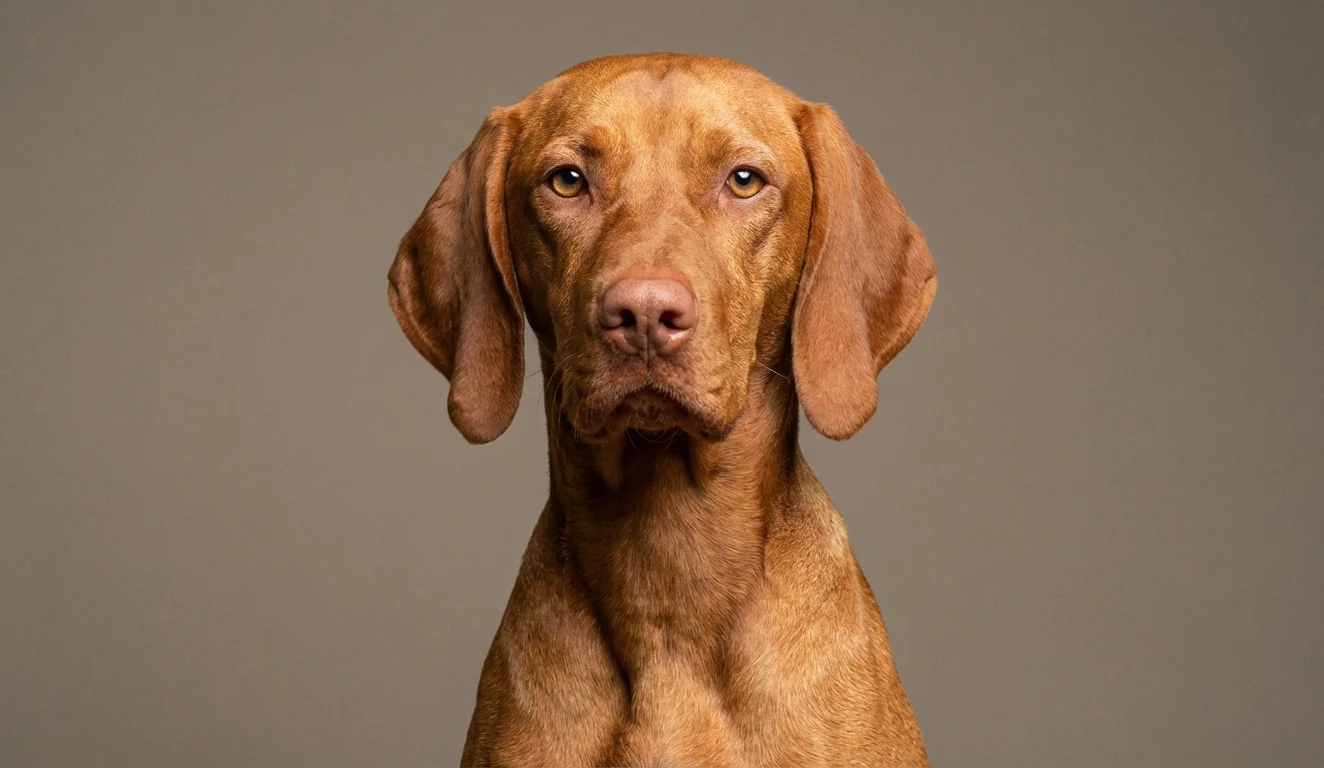
Vizslas are lean, muscular dogs built for speed and endurance. Males stand 22-24 inches at the shoulder and weigh 55-60 pounds. Females are slightly smaller at 21-23 inches and 44-55 pounds. There’s not a lot of size variation in this breed, Vizslas are pretty consistently medium-sized.
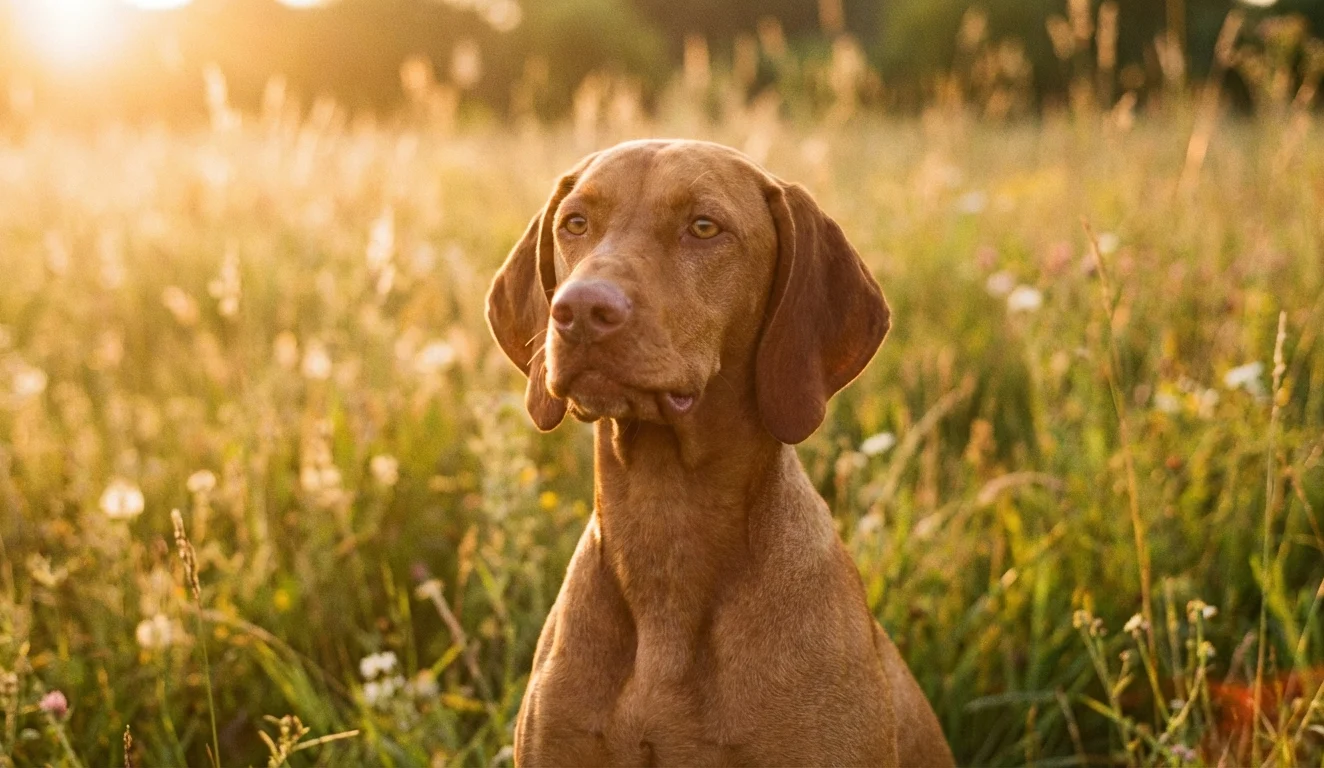
The coat is one of the Vizsla’s most distinctive features. It’s short, smooth, and close-fitting with no undercoat. The color is always some shade of golden rust, from a lighter golden to a deeper russet. The nose, eye rims, and lip pigment should blend with the coat color rather than being black, which gives the Vizsla a uniquely warm, monochromatic look. They’re genuinely gorgeous dogs.
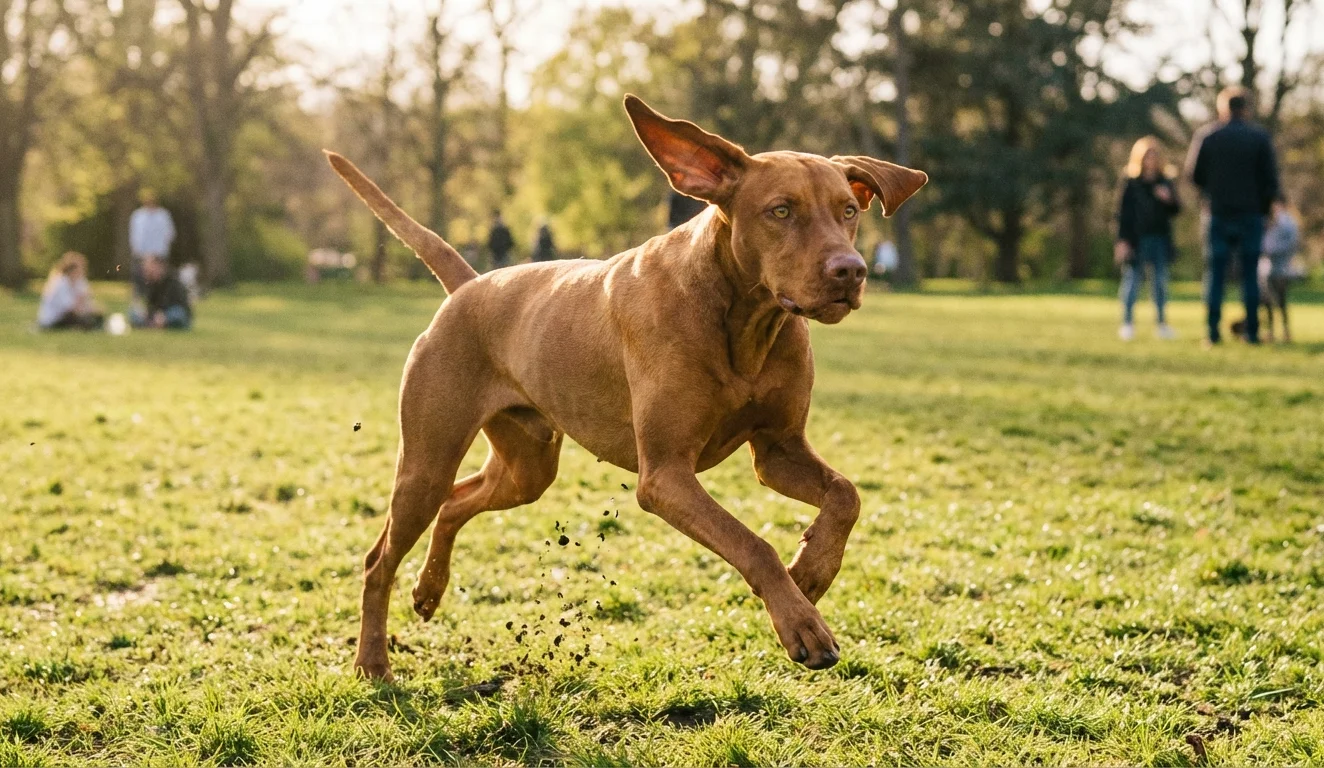
The Vizsla’s build is athletic without being bulky. Long legs, a tucked-up belly, a deep chest. Everything about their body says “I was designed to cover ground quickly.” And they do.
Vizsla Temperament
The Vizsla temperament is defined by two things: affection and intensity. This breed feels everything deeply. They love hard, they play hard, and they take separation hard.
What living with a Vizsla’s temperament actually looks like:
- They don’t just want to be in the same room as you, they want to be touching you. This isn’t an exaggeration. Vizsla owners joke about never going to the bathroom alone again, but it’s barely a joke.
- They’re remarkably sensitive to tone of voice and body language. Raise your voice in frustration (even not at them) and a Vizsla may shut down for an hour. Harsh corrections don’t work with this breed.
- They’re quiet dogs. Unlike many sporting breeds, Vizslas have a low barking level. They’re not silent, but they’re not yappers.
- They have strong prey drive. Squirrels, rabbits, birds, a Vizsla will chase them with genuine intensity. This is a hunting dog, and the instinct is very much alive.
Here’s our honest observation: Vizslas are emotionally demanding in a way that catches people off guard. We don’t mean demanding as in bratty. We mean they need emotional engagement from their person the way other breeds need food and water. Ignore a Vizsla’s need for connection and you’ll end up with a dog that’s anxious, destructive, or both.
Exercise Needs
Vizslas need 90 minutes of vigorous exercise per day. Not a leisurely stroll, actual running, sprinting, swimming, or sustained athletic activity. This breed was developed to hunt all day across Hungarian farmland, and that stamina hasn’t gone anywhere.
What works best for Vizsla exercise:
- Running. If you’re a runner, a Vizsla is your perfect training partner. They can handle distance and pace that would gas out most breeds. We’ve heard of Vizslas happily running 10+ miles with their owners.
- Off-leash hiking. Vizslas have excellent recall (when trained) and thrive on trail runs where they can range ahead and loop back. A 30-foot long line works too if you’re still building that recall.
- Swimming. Many Vizslas love water, which makes sense given their sporting heritage. Lakes and rivers are ideal.
- Field work and hunt training. Even if you don’t hunt, pointing and retrieving drills tap into the Vizsla’s deepest instincts. Watching a Vizsla lock into a point is something else.
Young Vizslas (under age 3) are especially intense. The energy level does mellow somewhat with maturity, but “mellow Vizsla” is relative, even a calm adult Vizsla is more active than most breeds at their peak.
A note about puppies: Vizsla puppies shouldn’t do sustained, high-impact exercise until their growth plates close (around 12-18 months). That means no long runs on pavement with a puppy. Stick to free play, short walks, and swimming until the bones have finished developing. The urge to exhaust a Vizsla puppy is strong, they have so much energy, but protect those joints early and you’ll have a healthier dog later.
Grooming
This is one of the easiest breeds to groom. Period.
The Vizsla’s short, smooth coat has no undercoat, which means shedding is moderate and there are no seasonal blowouts to deal with. A weekly brushing with a rubber curry mitt or bristle brush is really all you need. The coat doesn’t mat, doesn’t tangle, and doesn’t hold odor the way longer coats do.
After a day of hiking, a Vizsla air-dries in minutes. Try that with a Golden Retriever.
Grooming basics:
- Weekly brush with a rubber grooming mitt
- Bathe only when truly dirty (every 6-8 weeks or so)
- Nail trim every 2-3 weeks
- Ear check weekly, those long, pendulous ears can trap moisture
- Teeth brushing 2-3 times per week
The tradeoff for that easy-care coat is zero cold weather protection. Vizslas get cold. If you live somewhere with real winters, plan on a dog coat or jacket for outdoor time below 40 degrees. They’ll look silly. They won’t care.
One grooming note that’s specific to Vizslas: their nails tend to be light-colored, which actually makes nail trimming easier because you can see the quick (the blood vessel inside the nail). Small advantage, but it’s nice. Also, because the coat is so thin and short, Vizslas are prone to skin irritation from harsh shampoos. Use a mild, dog-specific formula and don’t over-bathe.
Vizsla Health Issues
Vizslas are a generally healthy breed with a lifespan of 12-14 years. The gene pool is smaller than more popular breeds, though, which concentrates some health risks.
Hip Dysplasia
Hip dysplasia affects Vizslas at a moderate rate. The condition involves improper formation of the hip joint, leading to pain and arthritis. Screening through OFA evaluations is standard among responsible breeders. Treatment ranges from conservative management to surgical intervention at $1,500-$6,000.
Epilepsy
Idiopathic epilepsy occurs in Vizslas at a moderate rate, typically presenting between ages 1-5. Seizures are usually manageable with medication, but the condition requires lifelong treatment and monitoring. Budget $500-$3,000 for diagnosis and ongoing care.
Progressive Retinal Atrophy (PRA)
PRA causes gradual vision loss in Vizslas, eventually leading to blindness. A DNA test can identify carriers. There’s no cure, but affected dogs adapt well, especially in familiar environments. Costs run $2,000-$3,000 for diagnosis and management.
Lymphoma
This is the one that scares Vizsla owners most. Lymphoma (cancer of the lymphatic system) occurs at a moderate rate in the breed and is severe when it strikes. Treatment typically involves chemotherapy, with costs ranging from $5,000-$12,000. Some Vizslas respond well to treatment and achieve remission. Others don’t. Pet insurance is worth serious consideration with this breed because of this risk alone.
Sebaceous Adenitis
A rare but notable skin condition where the sebaceous glands become inflamed and eventually destroyed. It causes hair loss, scaling, and skin infections. Treatment is ongoing and costs $500-$2,000 depending on severity. It’s manageable but not curable.
Training
Vizslas are highly trainable, eager to work, quick to learn, and deeply motivated by their relationship with their handler. They ranked in the top tier of working intelligence in Coren’s studies, and in practice they pick up new skills quickly.
But there’s a catch. Vizslas are sensitive. You cannot use heavy-handed correction with this breed without damaging the trust that makes them trainable in the first place. Yelling, leash pops, or intimidation will create a fearful dog, not an obedient one.
Training approach that works for Vizslas:
- Positive reinforcement is non-negotiable. Food rewards, praise, and play. Keep it upbeat.
- Short, engaging sessions beat long, repetitive ones. Vizslas will check out mentally if the training gets boring.
- Socialization needs to start early and be ongoing. Vizslas can develop anxiety if their world is too small during puppyhood.
- Separation training is critical. Start building tolerance for alone time from day one. Crate training, gradual departures, independence exercises, invest the time early or pay for it later with separation anxiety.
- Channel the prey drive constructively. Retrieving drills, flirt poles, and structured games satisfy that hunting instinct in a way that doesn’t involve your Vizsla chasing the neighbor’s cat.
Cost
Purchase Price
A Vizsla puppy from a reputable breeder typically costs $1,000-$2,500. Field-line Vizslas from titled hunting parents may cost more. Show-quality puppies from champion bloodlines can push past $3,000.
Vizsla rescue is an option, with breed-specific rescues charging $300-$500 for adoption. Rescue Vizslas often end up available because owners underestimated the exercise and attachment needs.
Monthly Costs
| Expense | Monthly Estimate |
|---|---|
| Food (high-quality kibble) | $35-$60 |
| Preventive vet care (averaged) | $15-$30 |
| Pet insurance | $30-$55 |
| Treats and chews | $10-$20 |
| Miscellaneous (toys, supplies) | $10-$25 |
| Total | $90-$175 |
First-Year Costs
Expect to spend $2,800-$5,000 in the first year, including purchase price, initial veterinary care, vaccinations, spay/neuter, supplies, and training. Pet insurance is especially worth budgeting for given the breed’s lymphoma risk, a single cancer diagnosis can cost more than a decade of premiums.
Is a Vizsla Right for You?
A Vizsla is a great fit if you:
- You’re active and can genuinely commit to 90 minutes of vigorous daily exercise
- You work from home or have a flexible schedule that doesn’t leave the dog alone for long stretches
- You want a dog that’s deeply bonded to you, not just friendly, but truly attached
- You prefer positive training methods and have patience for a sensitive personality
- You enjoy running, hiking, or hunting and want a canine partner for those activities
A Vizsla is probably NOT right if you:
- You’re away from home more than 6-8 hours regularly, separation anxiety is a real issue with this breed
- You want a dog that’s independent and doesn’t need constant companionship
- You’re looking for a calm, laid-back house dog
- You have small animals (cats, rabbits) and can’t manage the prey drive
- You prefer a hands-off approach to training
If you can match the Vizsla’s energy and meet its emotional needs, you’ll have a companion unlike anything else. They’re the kind of dog that makes you feel genuinely chosen, like they decided you were their person and nothing in the world is going to change that. It’s a big commitment. But Vizsla people will tell you it’s worth every minute.
Related Breeds
If you’re considering this breed, you might also want to look at:
FAQ
Are Vizslas good with children?
Vizslas are generally good with children and often form strong bonds with kids in the family. They’re gentle by nature and patient with supervised play. The main concern is their energy level, a young Vizsla can be rambunctious enough to accidentally knock over a small child during play. Older kids who can participate in exercise and training tend to be the best match.
Do Vizslas have separation anxiety?
Vizslas are more prone to separation anxiety than most breeds. This is a direct result of the intense bonding instinct that defines the breed. Without proper training and gradual desensitization to alone time, many Vizslas will become distressed when left alone, barking, howling, destructive chewing, and house soiling are all common symptoms. Starting separation training in puppyhood is the single most important thing you can do to prevent this.
How much do Vizslas shed?
Vizslas shed moderately year-round. The lack of an undercoat means you won’t deal with the seasonal blowouts that double-coated breeds go through, which is a real advantage. A weekly brushing keeps loose hair manageable. You’ll find some hair on furniture and clothes, but it’s nothing compared to breeds like Labs or German Shepherds.
Can Vizslas live in apartments?
It’s possible but not ideal. Vizslas need significant daily exercise, and apartment living makes it harder to provide that consistently. If you live in an apartment near parks or trails and can commit to long daily exercise sessions, a Vizsla can adapt. But the breed does better with access to a yard where it can move freely. The bigger concern in apartments is the separation anxiety, thin walls and a distressed Vizsla are a bad combination for neighborly relations.
What’s the difference between a Vizsla and a Weimaraner?
Both are sleek European sporting breeds, but there are meaningful differences. Vizslas are smaller (44-60 lbs vs. 55-90 lbs), have a golden rust coat instead of the Weimaraner’s silver-gray, and tend to be more sensitive and affectionate. Weimaraners are more independent and can be stubborn in ways that Vizslas generally aren’t. Both breeds need enormous amounts of exercise, but the Vizsla’s emotional needs are more intense. If you want a devoted shadow, get a Vizsla. If you want an athletic dog with a bit more independence, look at the Weimaraner.