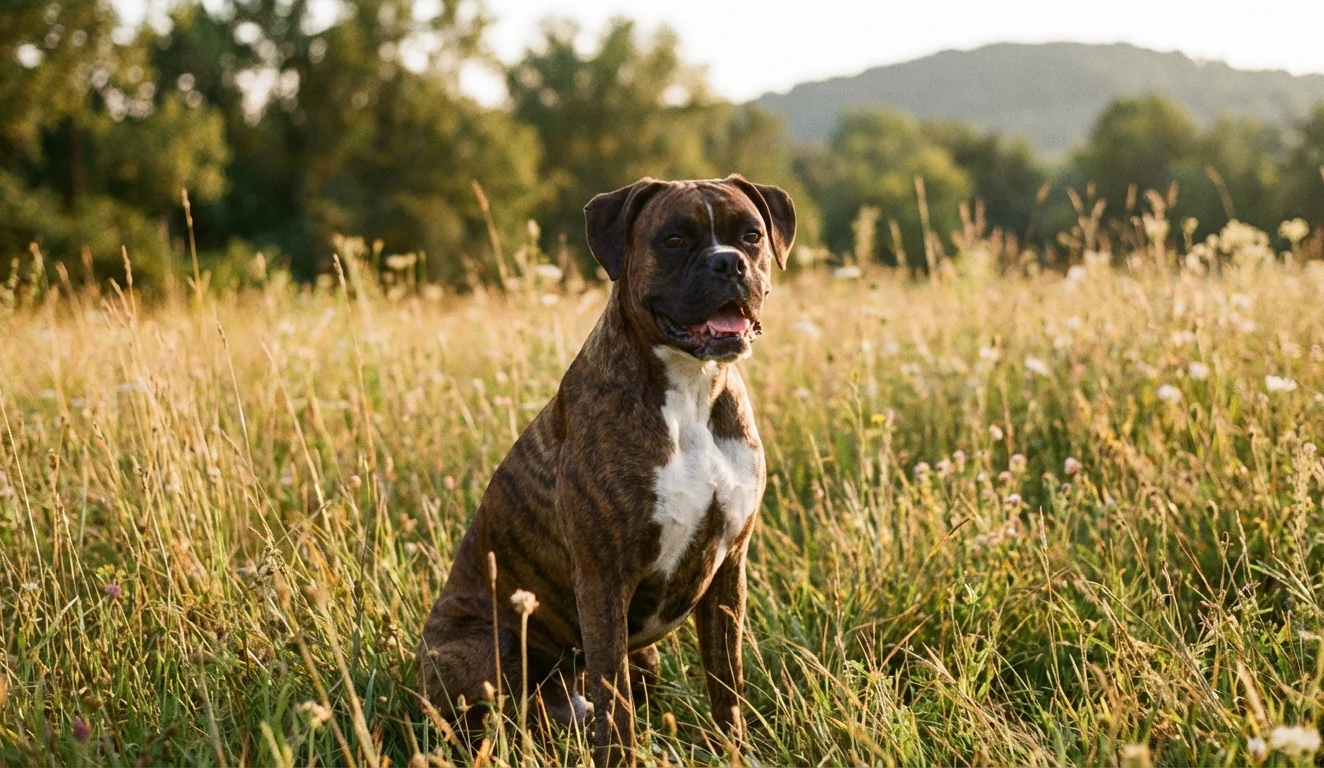
Boxer Breed Guide: The Perpetual Puppy That Never Quite Grows Up (2026)
Boxers are goofy, loyal, and emotionally intense dogs that stay puppy-like well past the point where other breeds calm down. Here's what to expect.
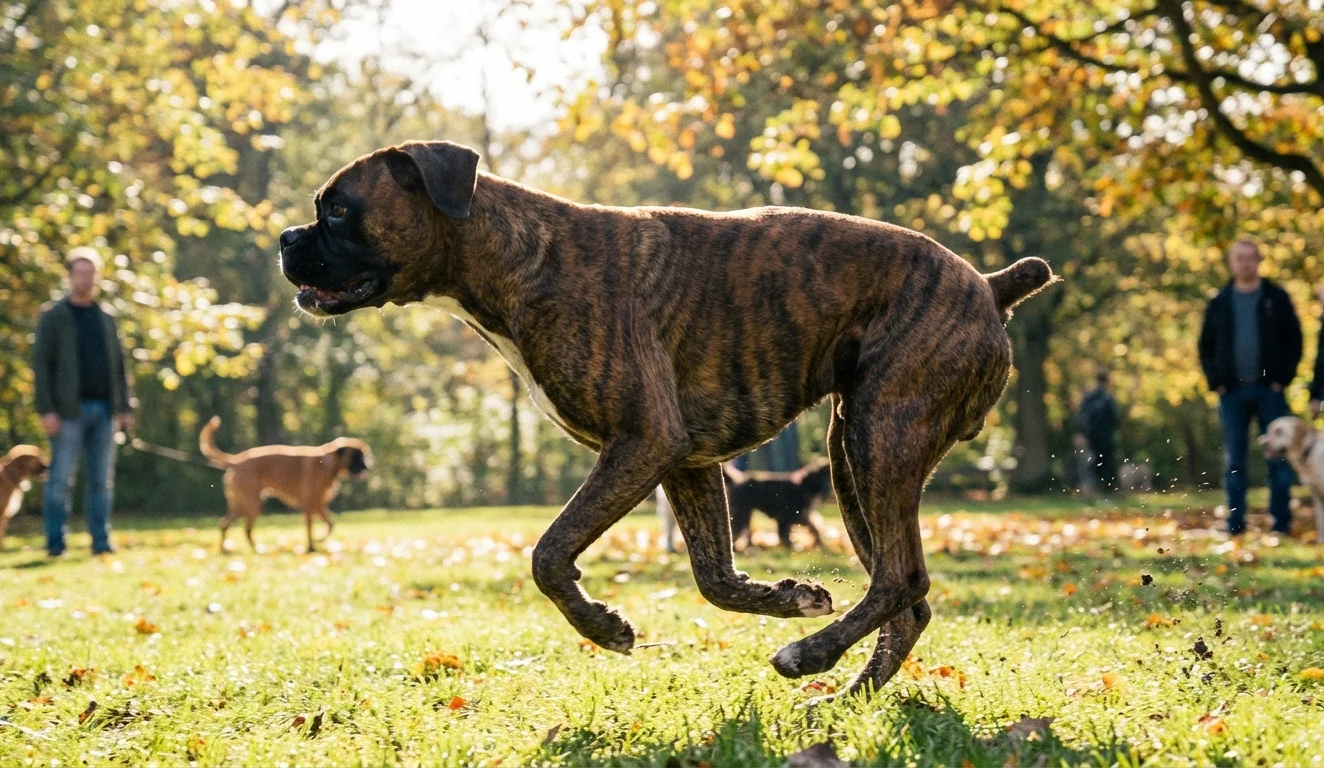
The Boxer weighs 50-80 pounds, stands 21.5-25 inches tall, and lives 10-12 years. Those are perfectly reasonable numbers for a medium-to-large dog. What the numbers don’t warn you about is the energy. A Boxer at age 6 acts roughly like a Labrador puppy, bouncy, mouthy, obsessed with play, and physically incapable of being calm when something exciting is happening. Some Boxer owners describe the first few years as living with a 70-pound toddler who can jump onto the kitchen counter.
In Short: 50–80 lbs, 10–12 years. High energy. Moderate shedding. Watch for Cancer (Mast Cell Tumors/Lymphoma). Great for families and first-time owners.
We love Boxers. We should be upfront about that. But loving a breed means being honest about it, and the honest truth about Boxers is this: they’re wonderful family dogs with a cancer rate that will break your heart. More on that later. First, the fun stuff, because Boxers are genuinely one of the most fun breeds to live with.
Boxer at a Glance
| Trait | Details |
|---|---|
| Breed Group | Working (AKC) |
| Height | Males: 23-25 in / Females: 21.5-23.5 in |
| Weight | Males: 65-80 lbs / Females: 50-65 lbs |
| Life Expectancy | 10-12 years |
| Coat | Short, smooth, tight-fitting |
| Colors | Fawn, Brindle, White |
| Temperament | Fun-loving, Bright, Loyal |
| Shedding | Moderate |
| Energy Level | High |
| Good With Kids | Excellent |
| First-Time Owner Friendly | Yes (with exercise commitment) |
History of the Boxer
The Boxer descends from the old German Bullenbeisser (“bull biter”), a now-extinct breed used for hunting large game, boar, bear, and deer, across Europe since the Middle Ages. These were powerful, athletic dogs bred to grab and hold prey until the hunter arrived. The Bullenbeisser was eventually crossed with smaller English Bulldogs in the late 19th century, and the modern Boxer emerged from that combination.
The breed was refined in Munich, Germany, in the 1890s. A dog named Flocki is generally considered the first registered Boxer, entered in the German studbook in 1904. The name “Boxer” may come from the breed’s tendency to use its front paws during play, though the exact origin of the name is debated.
Boxers came to the United States after World War I, brought home by returning soldiers who had encountered the breed in Europe. The AKC had recognized the breed in 1904, but Boxers didn’t hit mainstream American popularity until the 1940s and 1950s. The breed has remained in the AKC’s top 15 most popular breeds for decades, consistently beloved by families who want an active, loyal companion.
Size and Appearance
Boxers are medium-to-large dogs with a distinctive square-jawed profile. Males stand 23-25 inches at the shoulder and weigh 65-80 pounds. Females are smaller at 21.5-23.5 inches and 50-65 pounds, though the size overlap between males and females is significant.
Build
The Boxer has a compact, muscular build with a broad chest, strong hindquarters, and that unmistakable pushed-in face. The breed is brachycephalic, the skull is shorter than average, though the Boxer is less extreme than breeds like the English Bulldog or Pug. Still, the shortened muzzle means Boxers are sensitive to heat and can have breathing difficulties during intense exercise in warm weather.
A well-built Boxer looks athletic. Think of a compact, muscular sprinter rather than a bulky powerlifter. They move with surprising grace for a breed that can seem clumsy in the living room.
Coat and Colors
The Boxer coat is short, smooth, and fits tight to the body. Standard colors are fawn (ranging from light tan to deep mahogany) and brindle (fawn with black striping). Both colors typically include white markings on the chest, face, and paws.
White Boxers make up roughly 20-25% of all Boxer puppies born. They’re not albino, they simply have extensive white markings that cover most or all of the body. White Boxers cannot be shown in AKC conformation events and historically were euthanized at birth, a practice that has thankfully declined. White Boxers are prone to deafness (about 18% of white Boxers are deaf in one or both ears, according to breed studies) and sunburn, but are otherwise healthy, normal dogs. We think breeding specifically for white is irresponsible, but there’s no reason to reject a white Boxer puppy if one appears in a litter.
Boxer Temperament
If we had to describe the Boxer temperament in one sentence, it would be this: imagine a dog that’s simultaneously a bodyguard and a class clown. That’s a Boxer.
Day-to-day life with a Boxer:
- They’re hilariously goofy. Boxers do this thing called the “kidney bean”, they curl their body into a semicircle and wiggle with their entire torso when they’re excited. They also box with their front paws (hence the name, possibly), make bizarre vocalizations that aren’t quite barks, and have facial expressions that seem almost human. You will laugh at your Boxer daily.
- They’re intensely people-oriented. Boxers need to be with their family. They don’t do well as outdoor-only dogs or in situations where they’re separated from their people for long stretches. Separation anxiety is common in the breed, they’ll destroy things, bark obsessively, or develop stress behaviors when left alone too long.
- They’re patient with kids. Boxers are one of the best family breeds. Their patience with children is remarkable, they’ll tolerate being climbed on, hugged, and generally manhandled by kids with a composure that defies their otherwise hyper personality. The breed genuinely seems to understand that small humans require gentleness.
- They mature slowly. Most dogs calm down around 2-3 years of age. Boxers… don’t. Many Boxer owners report that their dogs are still acting like puppies at 4 or 5 years old. The extended puppyhood is endearing if you’re prepared for it and maddening if you’re not.
Boxers can be wary of strangers but aren’t typically aggressive. They’ll bark to alert you and position themselves between you and an unfamiliar person. With proper socialization, they warm up to new people once they’ve assessed the situation.
They get along well with other dogs, better than many working breeds, though they can be too enthusiastic in their play style for more reserved breeds. The breed is not generally recommended with cats, as their prey drive and boisterous energy can be problematic.
Exercise Needs
Boxers need 60 minutes of exercise per day, and that’s for an adult. Younger Boxers (under 3) may need more.
Good exercise for Boxers:
- Structured play sessions, Boxers love interactive games with their people more than solo activities
- Running or jogging (but not in hot weather, their brachycephalic anatomy means they overheat quickly)
- Agility courses, Boxers are surprisingly nimble and love the mental challenge
- Tug-of-war, this taps into the breed’s natural play style
- Fetch, though some Boxers are notoriously bad at the “return” part
Critical heat warning: Because of their short muzzles, Boxers are at real risk of heatstroke during exercise in warm temperatures. On days above 80F, exercise your Boxer early in the morning or late in the evening. Carry water. Watch for excessive panting, glazed eyes, or stumbling, these are early signs of overheating.
A Boxer that doesn’t get enough exercise becomes a wrecking ball. They’ll jump on people, chew furniture, race through the house at full speed (the “Boxer zoomies” are legendary), and generally create chaos. The destruction isn’t malicious, it’s an athletic dog with too much unspent energy doing the only thing it can think to do.
Grooming
Boxers are wonderfully low-maintenance in the grooming department.
Grooming routine:
- Weekly brushing with a rubber curry brush or grooming mitt, this is more about removing loose hair and stimulating circulation than detangling
- Bath every 4-6 weeks or when dirty. Boxers are reasonably clean dogs.
- Wipe facial wrinkles regularly: moisture and debris can collect in the facial folds and cause irritation or infection
- Nail trims every 2-3 weeks
- Teeth brushing 2-3 times per week: dental health matters for all breeds
- Clean ears weekly
Total grooming cost per year is minimal. Most Boxer owners handle all grooming at home. No professional grooming required.
Boxers shed moderately. The short hair is manageable, though it has a tendency to embed in fabric furniture in a way that’s annoying to remove. A lint roller will become your constant companion.
Boxer Health Issues
This section is longer than we’d like it to be. Boxers are predisposed to several serious health conditions, and cancer is the elephant in the room.
Cancer (Mast Cell Tumors and Lymphoma)
Boxers have one of the highest cancer rates of any dog breed. Studies suggest that cancer accounts for approximately 38-44% of Boxer deaths, with mast cell tumors and lymphoma being the most common types. This is significantly higher than the average across all breeds.
Mast cell tumors appear as lumps on or under the skin and can range from benign to highly aggressive. Any new lump on a Boxer should be aspirated by a vet immediately, don’t take a wait-and-see approach. Lymphoma affects the lymphatic system and presents as swollen lymph nodes, lethargy, and loss of appetite.
Treatment costs range from $5,000-$15,000 depending on the type, stage, and treatment approach (surgery, chemotherapy, or both). Early detection significantly improves outcomes for mast cell tumors.
We wish we could soften this section. But if you’re considering a Boxer, you need to go in with your eyes open about the cancer risk. It doesn’t mean your Boxer will get cancer. It means the odds are higher than you’d like.
Boxer Cardiomyopathy (ARVC)
Arrhythmogenic Right Ventricular Cardiomyopathy is a heart condition specific to Boxers. It causes irregular heart rhythms that can lead to fainting episodes or, in severe cases, sudden death. The condition is moderately prevalent in the breed. Treatment involves anti-arrhythmic medication and regular cardiac monitoring, costing $3,000-$10,000 over the course of management.
Aortic Stenosis
A congenital heart defect where the aortic valve is narrowed, forcing the heart to work harder to pump blood. Moderate prevalence in Boxers. Mild cases may need no treatment. Severe cases can cause exercise intolerance, fainting, and heart failure. Treatment costs $2,000-$8,000. Breeders should screen for this with cardiac auscultation and echocardiography.
Hip Dysplasia
Moderate prevalence. OFA screening of breeding stock is recommended. Treatment ranges from conservative management to surgical intervention ($1,500-$6,000).
Degenerative Myelopathy (DM)
A progressive spinal cord disease that causes gradual hind-limb weakness and paralysis, typically appearing in older Boxers (8+ years). There’s no cure, and progression is inevitable, but physical therapy and mobility aids can maintain quality of life. A DNA test (SOD1 gene) can identify at-risk dogs. Treatment costs $500-$2,000 for ongoing supportive care.
Training a Boxer
Boxers are highly trainable and eager to please, once you get their attention. The challenge isn’t intelligence. It’s focus. A young Boxer’s brain is constantly being pulled in multiple directions by interesting smells, sounds, moving objects, and the sheer excitement of being alive.
Training tips for Boxer owners:
- Start early and be patient. Boxer puppies are adorable tornadoes with short attention spans. Keep sessions to 5-10 minutes for puppies.
- Use food rewards generously. Boxers are food-motivated and respond well to treat-based positive reinforcement.
- Teach “settle” and “place” commands early. Given the breed’s slow maturation, impulse control training is arguably more valuable than tricks.
- Jumping is the #1 behavioral issue with Boxers. A 70-pound Boxer that jumps on every person who walks through the door is not a minor annoyance, it’s a safety issue. Work on this relentlessly from puppyhood.
- Socialize extensively. Boxers that aren’t well-socialized with other dogs and new people can become reactive, which is a serious problem in a breed this strong.
Boxers respond terribly to harsh corrections. They’ll become confused, anxious, or shut down entirely. Keep training positive, consistent, and fun. The breed wants to work with you, they just need help channeling their enthusiasm into something productive.
Boxer Cost
Purchase Price
A Boxer puppy from a reputable breeder costs $800-$2,000. Show-quality Boxers from champion lines with extensive health testing run $2,500-$4,000+. Given the breed’s health profile, choosing a breeder who screens for cardiac conditions and does OFA hip evaluations is worth the higher price.
Boxer rescues are active across the country, and the breed is well-represented in shelters. Adoption fees run $200-$500.
Monthly Costs
| Expense | Monthly Estimate |
|---|---|
| Food (high-quality kibble) | $50-$80 |
| Preventive vet care (averaged) | $15-$30 |
| Pet insurance | $35-$60 |
| Treats and chews | $10-$20 |
| Miscellaneous (toys, supplies) | $10-$25 |
| Total | $100-$200 |
First-Year Costs
Budget $2,800-$4,500 for the first year including purchase, initial vet care, supplies, and training. Pet insurance is something we’d strongly recommend for Boxers given the cancer prevalence and heart conditions. Get a policy early, pre-existing conditions won’t be covered.
Long-term, plan for cancer screening and cardiac monitoring as part of regular veterinary care. Annual wellness exams with a vet who knows the breed’s vulnerabilities are not a luxury.
Is a Boxer Right for You?
A Boxer is a great fit if you:
- Want an affectionate, playful dog that’s outstanding with children
- Have an active lifestyle and can provide 60 minutes of daily exercise
- Want a dog that’s entertaining, expressive, and emotionally connected to its family
- Are comfortable with a breed that matures slowly and stays puppy-like for years
- Can handle moderate shedding and some drool
- Are prepared for the financial reality of potential cancer and heart condition treatment
A Boxer is probably NOT right if you:
- Live in a very hot climate without reliable air conditioning, Boxers are heat-sensitive
- Work long hours and would leave the dog alone most of the day
- Want a calm, low-energy companion
- Aren’t emotionally prepared for a breed with a high cancer rate
- Have cats and limited space to separate them during the adjustment period
- Are bothered by jumping, mouthing, and general bounciness during the extended puppy phase
Boxers give you their whole heart. There’s no holding back with this breed, they love with an intensity that’s almost overwhelming. If you bring one home, you’re getting a dog that will make you laugh daily, protect your kids like they’re royalty, and greet you every single day like you just returned from war. The cancer risk is the dark cloud hanging over an otherwise spectacular breed. If you’re willing to accept that uncertainty, you’ll have one of the most joyful dogs on the planet.
Related Breeds
If you’re considering this breed, you might also want to look at:
Frequently Asked Questions
Why do Boxers act like puppies for so long?
Boxers are genuinely one of the slowest-maturing breeds. While most medium-to-large breeds reach behavioral maturity around age 2-3, many Boxer owners report that their dogs don’t fully calm down until age 4-5, and some never quite lose the puppy energy entirely. This extended juvenility is partly genetic, the breed was selected for playfulness and enthusiasm, and partly because Boxers are highly social dogs that use play as their primary way of interacting with the world. It’s one of those traits that makes Boxers both wonderful and exhausting.
Are Boxers aggressive?
Boxers are not an aggressive breed. They were historically used as guard dogs and working dogs, and they can be protective of their families, but protectiveness and aggression are different things. The American Temperament Test Society reports that Boxers pass temperament testing at high rates. A well-bred, well-socialized Boxer is friendly, playful, and patient. Problems arise with Boxers that are poorly socialized, mistreated, or from irresponsible breeding programs that don’t select for stable temperament.
How bad is the cancer risk in Boxers?
We won’t minimize this. Cancer is the leading cause of death in Boxers, accounting for roughly 38-44% of deaths in breed health surveys. Mast cell tumors are the most common cancer type, followed by lymphoma. The risk is significantly higher than the average across all breeds. Regular veterinary check-ups, prompt investigation of any lumps or bumps, and awareness of symptoms (unexplained weight loss, lethargy, swollen lymph nodes) are your best tools for early detection. Pet insurance purchased before any diagnosis can help manage the financial impact of treatment.
Do Boxers drool a lot?
More than some breeds, less than others. Boxers are moderate droolers, you’ll notice it most after drinking water (they’re messy drinkers), during exercise, and when they’re anticipating food. It’s not Saint Bernard-level drool, but if you’re someone who can’t handle any slobber, know that Boxers will leave wet marks on your pants and occasionally shake drool across the room. Keeping a towel near the water bowl becomes standard operating procedure.
Can Boxers tolerate cold weather?
Not particularly well. Their short, single-layer coat provides minimal insulation, and their lean, athletic build doesn’t retain heat the way breeds with heavier body mass and thicker coats do. In temperatures below 40F, most Boxers benefit from a coat or jacket during walks. In snowy conditions, consider dog boots to protect their paw pads. They should never be left outside in cold weather for extended periods. If you live in a cold climate, a Boxer can still work, but you’ll need to manage outdoor time and invest in cold-weather gear.