Rottweiler Breed Guide: Misunderstood, Loyal, and Not for Beginners (2026)
Rottweilers are confident, calm, and deeply bonded to their families. They're also 100+ pounds of dog that requires experienced handling.
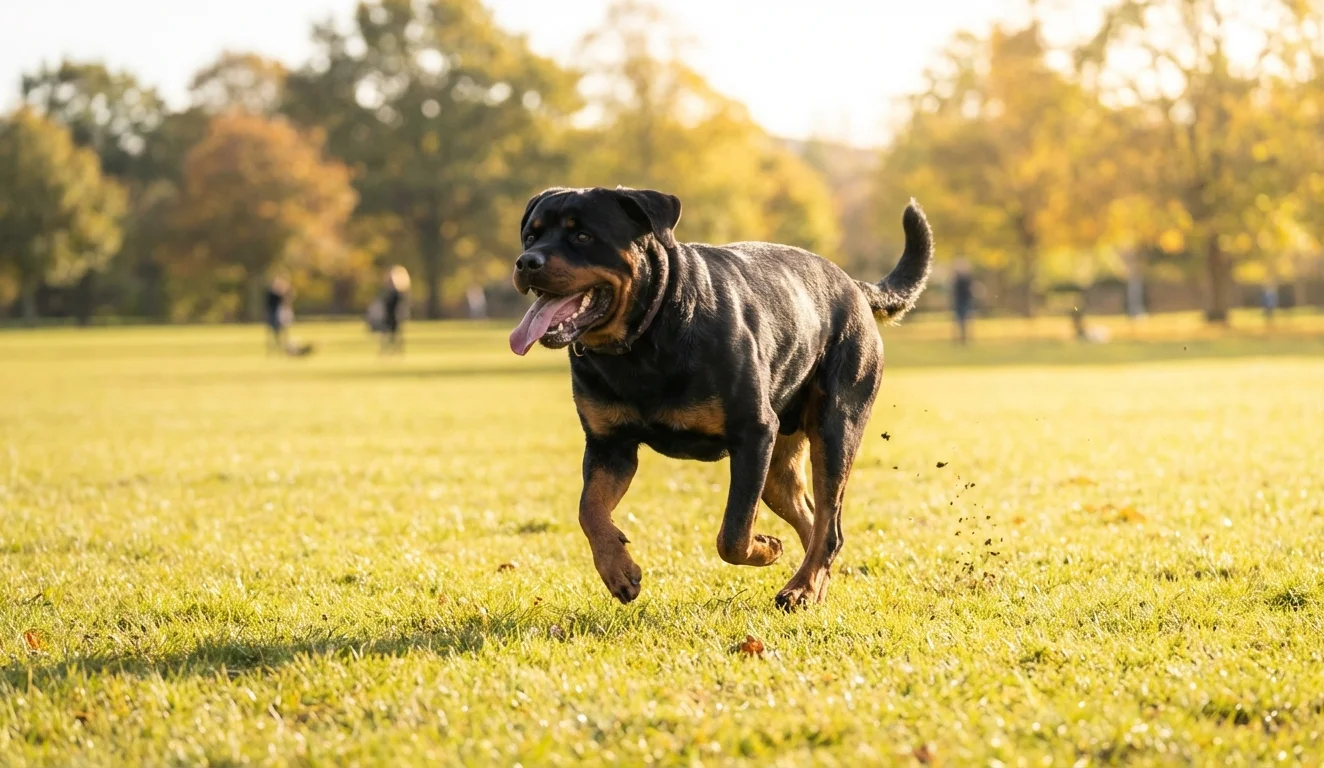
The Rottweiler is a large, powerful dog that weighs 80-135 pounds, stands 22-27 inches tall, and lives 9-10 years. Those numbers already tell you something, this is a big dog with a relatively short lifespan. Rottweilers are Working Group dogs through and through, originally bred to drive cattle and pull carts for Roman butchers. That heritage shows in everything about them: the confident posture, the watchful eyes, the way they position themselves between their family and anything unfamiliar.
In Short: 80–135 lbs, 9–10 years. Moderate-to-high energy. Moderate shedding. Watch for Hip Dysplasia and Elbow Dysplasia. Good with kids, but better for experienced owners.
No breed gets more unfair press than the Rottweiler. We’d go so far as to say the gap between the Rottweiler’s reputation and the Rottweiler’s actual personality is wider than for any other breed. In the hands of a knowledgeable owner who provides structure and socialization, a Rottweiler is one of the most calm, loyal, and affectionate dogs you’ll ever meet. In the hands of someone who chains them in a yard and never socializes them, well, that’s how reputations get built. The dog isn’t the variable here. The owner is.
Rottweiler at a Glance
| Trait | Details |
|---|---|
| Breed Group | Working (AKC) |
| Height | Males: 24-27 in / Females: 22-25 in |
| Weight | Males: 95-135 lbs / Females: 80-100 lbs |
| Life Expectancy | 9-10 years |
| Coat | Short, dense double coat |
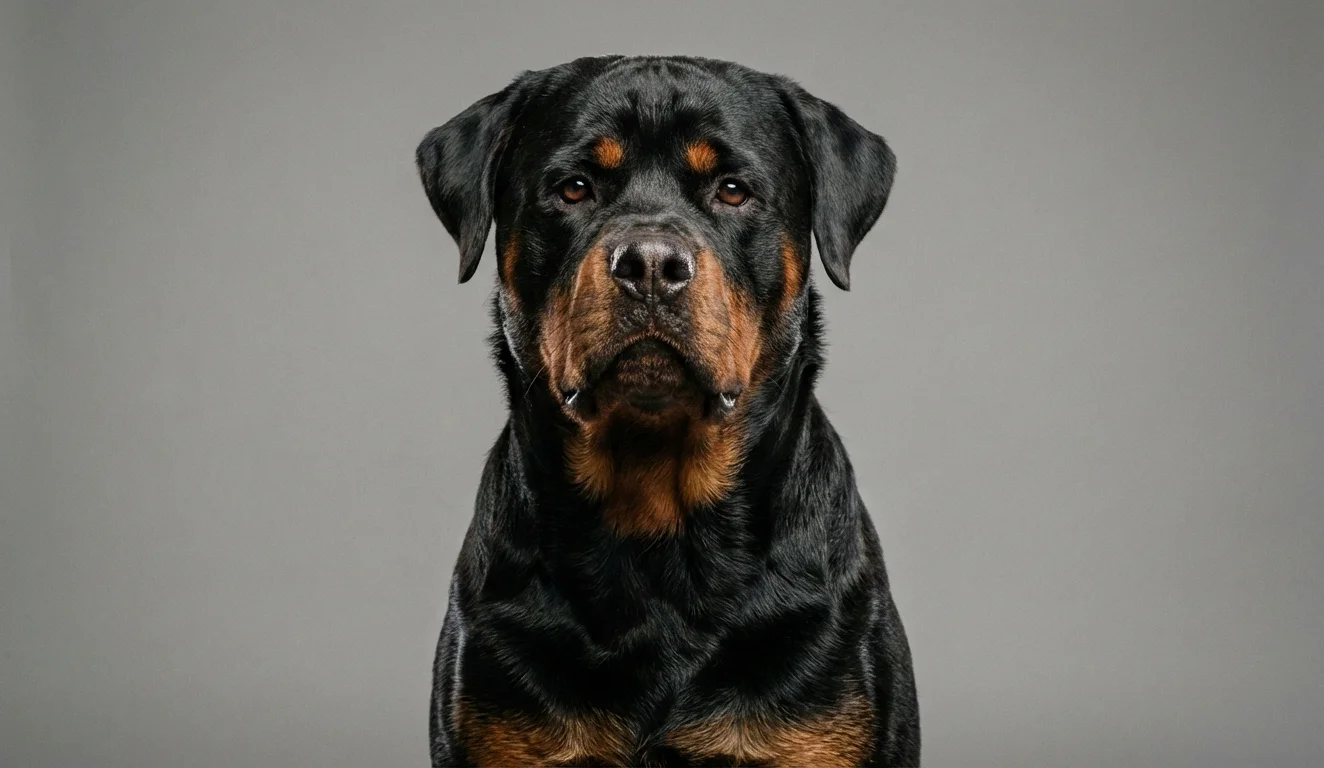
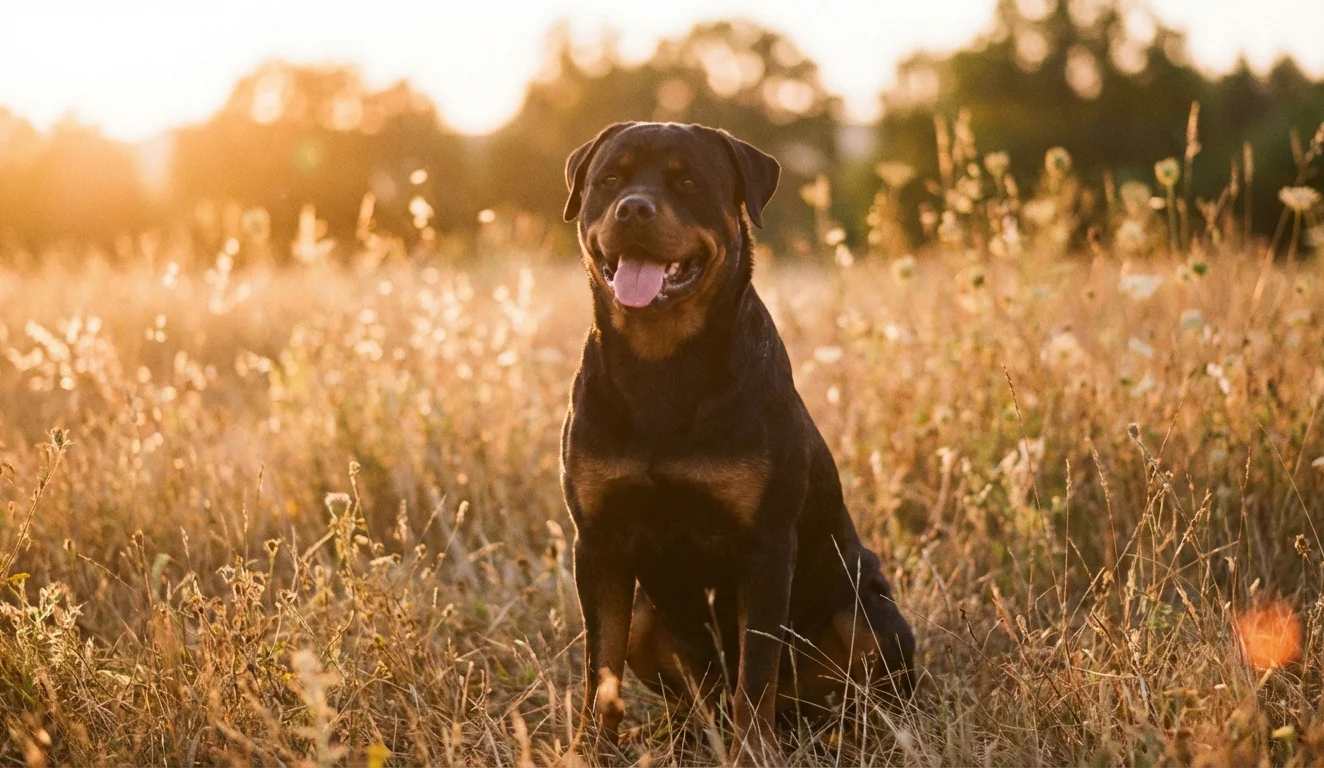
| Colors | Black and Tan, Black and Mahogany, Black and Rust |
| Temperament | Loyal, Confident, Courageous, Calm |
| Shedding | Moderate (heavier seasonally) |
| Energy Level | Moderate-High |
| Good With Kids | Yes (with proper socialization) |
| First-Time Owner Friendly | No |
History of the Rottweiler
The Rottweiler’s story starts with the Roman Empire. As Roman legions marched through Europe, they brought drover dogs to herd and guard the cattle that fed the army. When the Romans settled in what is now southern Germany, those dogs bred with local dogs, eventually developing into the breed we know today. The name comes from Rottweil, a town in Baden-Wurttemberg that became a major cattle trading hub in the Middle Ages.
For centuries, Rottweilers were the working dog of German butchers. They drove cattle to market, guarded the butcher’s money pouch (tied around the dog’s neck for safekeeping), and pulled carts of meat. The German name Rottweiler Metzgerhund, “Rottweil butcher’s dog”, tells you exactly what their job was. When railroads replaced cattle drives in the mid-1800s, the Rottweiler nearly went extinct. The breed just didn’t have a job anymore.
The early 20th century brought a revival. Rottweilers proved themselves as police dogs, military dogs, and personal protection dogs during both World Wars. The AKC registered the first Rottweiler in 1931. The breed’s popularity surged in the 1990s, unfortunately, that surge brought irresponsible breeding and contributed to the aggression reputation the breed still fights against today. Responsible breeding programs have worked hard to restore the Rottweiler’s original temperament: confident without being aggressive, protective without being dangerous.
Size and Appearance
Rottweilers are big dogs, and the size difference between males and females is substantial. Male Rottweilers stand 24-27 inches at the shoulder and weigh 95-135 pounds. Females are 22-25 inches and 80-100 pounds. A well-built male Rottweiler is an imposing animal, broad chest, heavy bone, muscular hindquarters. They’re built like they could pull a cart, because that’s literally what they were designed to do.
Build
The ideal Rottweiler is compact and powerful, slightly longer than tall. The head is broad with a defined stop (the angle between the skull and muzzle). The muzzle should be strong but not overly short, Rottweilers aren’t a brachycephalic breed despite their broad head. The body is deep-chested with a level topline. You should see muscle definition without fat covering.
Coat and Color
Rottweilers come in one basic color pattern: black with clearly defined markings in tan, mahogany, or rust. The markings appear above the eyes, on the cheeks, on the muzzle, chest, legs, and under the tail. That’s it. If someone is selling you a “rare blue Rottweiler” or an all-red one, walk away, those aren’t standard colors and often come from breeders prioritizing novelty over health.
The coat is short, straight, and dense with an undercoat on the neck and thighs. It’s a low-maintenance coat that lies flat against the body. Rottweilers shed moderately year-round with heavier shedding during seasonal changes.
Rottweiler Temperament
The AKC describes the Rottweiler temperament as “a calm, confident, and courageous dog with a self-assured aloofness that does not lend itself to immediate and indiscriminate friendships.” That’s a polite way of saying Rottweilers are selective about who they trust. And honestly, we appreciate that about them.
What Rottweilers are actually like day-to-day:
- Deeply bonded to family. Rottweilers attach to their people with an intensity that surprises first-time owners. A Rottweiler will follow you around the house, lean against your legs (the famous “Rottie lean”), and genuinely sulk when you leave. Behind closed doors, many Rottweilers are 100-pound lap dogs.
- Natural guardians. You don’t train a Rottweiler to protect, it’s instinctive. They position themselves between family members and perceived threats, and they’re always scanning the environment. This is a feature, but it requires management through socialization so the dog learns to distinguish real threats from the mail carrier.
- Calm when they should be. Well-bred, well-socialized Rottweilers have an off switch. They can go from alert patrol mode to sleeping on the couch in minutes. This calm confidence is one of the breed’s best traits.
- Not great with strange dogs. Rottweilers can be dog-selective, especially same-sex pairings. Dog parks with unfamiliar dogs can be risky. This isn’t aggression, it’s a low tolerance for rudeness from other dogs combined with enough size and power to escalate situations quickly.
The temperament difference between a well-socialized Rottweiler and a poorly socialized one is enormous. We cannot overstate this. Socialization isn’t optional with this breed. It’s the whole ballgame.
Exercise Needs
Rottweilers need about 60 minutes of exercise per day. They’re not the highest-energy breed in the Working Group, but they’re solidly active and need consistent physical outlets.
Good exercise options for Rottweilers:
- Structured walks. Rottweilers are excellent walking companions. They have a natural heel and don’t tend to pull as much as some other large breeds (assuming basic leash training).
- Pulling and carting. This taps into the breed’s history. Weight-pull competitions and carting activities are excellent outlets.
- Obedience and rally. Rottweilers thrive with a job, and competitive obedience gives them one.
- Swimming. Many Rottweilers enjoy water, and swimming is easy on their joints.
Avoid high-impact exercise (especially jumping) for Rottweiler puppies under 18 months. Large breeds with rapid growth are susceptible to joint damage if they’re pushed too hard too young. For adults, the main concern is overheating, that dark coat absorbs heat, and Rottweilers can overheat faster than you’d expect.
A Rottweiler without enough exercise becomes restless. And a restless 120-pound dog with strong jaws will find its own entertainment. That usually involves your furniture.
Grooming
Rottweilers are genuinely easy to groom. That short, dense coat doesn’t mat, doesn’t need trimming, and doesn’t require professional grooming.
Basic grooming schedule:
- Weekly brushing with a rubber curry brush or bristle brush. Bump to two or three times per week during seasonal shedding.
- Bathing every 6-8 weeks or as needed. Rottweilers don’t have a strong doggy odor compared to some breeds.
- Nail trims every 2-3 weeks. Rottweilers are heavy, and overgrown nails can cause gait issues.
- Teeth brushing two to three times per week.
- Ear checks weekly, their pendant ears can trap moisture.
The shedding is moderate. Rottweilers won’t cover your house in fur the way a Husky or Lab will, but you’ll find black hairs on lighter-colored clothing and furniture. A lint roller becomes part of your daily routine.
Rottweiler Health Issues
Rottweilers have a relatively short lifespan of 9-10 years, which is on the lower end for their size category. The breed is predisposed to several serious conditions.
Hip and Elbow Dysplasia
The OFA reports that approximately 20% of Rottweilers evaluated have hip dysplasia, and elbow dysplasia rates are similarly elevated. Both conditions involve malformed joints that cause pain, lameness, and arthritis over time. Hip replacement surgery costs $1,500-$6,000 per hip. Elbow surgery runs $1,500-$4,000. Reputable breeders will have OFA evaluations for both parents, always ask to see the certificates.
Osteosarcoma (Bone Cancer)
This is one of the most devastating conditions in the breed. Rottweilers have a significantly higher incidence of osteosarcoma than most breeds. The cancer typically appears in the leg bones, causing sudden lameness and pain. Treatment usually involves amputation followed by chemotherapy, costing $5,000-$10,000, and even with treatment, the prognosis is guarded. The average survival time after diagnosis is approximately 12-18 months with treatment.
This is a hard truth about Rottweiler ownership, and we wish we had better news.
Aortic Stenosis
A congenital heart defect where the aortic valve is narrowed, making the heart work harder to pump blood. Moderate prevalence in Rottweilers. Mild cases may not need treatment, but severe cases can cause fainting, exercise intolerance, and sudden death. Diagnosis involves a cardiac ultrasound. Treatment costs range from $2,000-$8,000 depending on severity. Ask breeders for cardiac clearances from a board-certified cardiologist.
Cruciate Ligament Rupture
Similar to an ACL tear in humans, cruciate ligament rupture is common in large breeds and Rottweilers are no exception. The injury usually requires surgical repair, TPLO surgery is the gold standard and costs $2,000-$5,000 per knee. Dogs that rupture one cruciate have a 40-60% chance of rupturing the other within a year or two.
Training a Rottweiler
Rottweilers are highly trainable, Stanley Coren ranks them 9th in working intelligence. They’re eager to work with their handler and have excellent focus once they understand what’s expected. But training a Rottweiler is different from training a Golden Retriever or a Labrador.
Key training principles for Rottweilers:
- Establish leadership early. This isn’t about dominance theory or alpha rolling, that approach will backfire. It’s about being consistent, fair, and clear. A Rottweiler needs to understand that you make the decisions, but you make them fairly.
- Socialization is the priority from day one. Between 8-16 weeks, your Rottweiler puppy should meet as many different people, dogs, and environments as safely possible. This window shapes their entire adult temperament.
- Use positive reinforcement with structure. Rottweilers respond well to rewards-based training, but they also need clear boundaries. They’re not the type to tolerate wishy-washy handling.
- Never use physical punishment. A Rottweiler that’s been physically corrected will either shut down or push back. Neither outcome is what you want from a 100-pound dog.
Common mistakes:
- Skipping puppy classes because “he’s friendly now.” An 8-week-old Rottweiler puppy is always friendly. The question is whether they’ll be friendly at 80 pounds without socialization. Often, the answer is no.
- Encouraging guarding behavior. That cute growl when someone approaches the food bowl at 12 weeks becomes a serious problem at 12 months. Nip resource guarding early.
Rottweilers excel in obedience, tracking, herding, and protection sports like Schutzhund/IPO. If you want a training partner for something beyond basic manners, this breed won’t disappoint you.
Rottweiler Cost
Purchase Price
A Rottweiler puppy from a reputable breeder costs $1,000-$2,500. Working-line dogs from imported European bloodlines can run $3,000-$5,000. The price reflects health testing, a responsible Rottweiler breeder will have OFA hips, OFA elbows, cardiac clearances, and eye certifications for both parents.
Rescue Rottweilers are available for $200-$500. Breed-specific rescues like the Rottweiler Rescue Foundation often have adults and adolescents available, and these dogs frequently come with some basic training.
Monthly Costs
| Expense | Monthly Estimate |
|---|---|
| Food (high-quality, large breed) | $60-$90 |
| Preventive vet care (averaged) | $20-$40 |
| Pet insurance | $40-$70 |
| Treats and chews | $15-$25 |
| Miscellaneous (toys, supplies) | $15-$25 |
| Total | $120-$250 |
Rottweilers eat a lot. Budget for high-quality food, large breed formulas with appropriate protein and calcium levels matter for joint health. The pet insurance premium is higher than average because of the breed’s health predispositions, but given the potential for $5,000-$10,000 cancer or orthopedic bills, it’s worth carrying.
First-year costs including purchase, supplies, initial vet visits, training classes, and spay/neuter typically run $3,500-$6,500.
Is a Rottweiler Right for You?
A Rottweiler is a great fit if you:
- Have experience with large, strong-willed breeds
- Can commit to thorough socialization from puppyhood
- Want a loyal dog that will be deeply bonded to your family
- Have a home with a yard (apartments are doable but harder)
- Are willing to invest in training, ideally formal obedience classes
- Can handle the responsibility of a powerful breed in a society that often fears them
A Rottweiler might NOT be right if you:
- Are a first-time dog owner (start with something more forgiving)
- Don’t have time for daily exercise and ongoing training
- Rent in an area with breed restrictions, many apartment complexes and some municipalities restrict Rottweilers
- Want a dog-park dog who loves all other dogs
- Can’t emotionally handle the breed’s shorter lifespan and cancer risk
- Travel frequently and need to board your dog, kenneling can be stressful for this deeply bonded breed
Rottweilers are not a breed for everyone. They’re a breed for someone, someone who wants a devoted, intelligent, capable dog and is willing to put in the work to raise one properly. If that’s you, there are few dogs on earth that will reward your effort the way a Rottweiler will. They love hard, and they’ll make you feel like the most important person alive every single day you share with them.
Related Breeds
If you’re considering this breed, you might also want to look at:
Frequently Asked Questions
Are Rottweilers aggressive?
Well-bred, well-socialized Rottweilers are not inherently aggressive. They’re confident, alert, and protective, which is different from aggressive. The American Kennel Club breed standard describes the ideal Rottweiler temperament as “calm, confident, and courageous.” Problems arise when Rottweilers are poorly bred (selecting for aggression), inadequately socialized (no exposure to different people and situations during the critical puppy period), or raised in abusive or neglectful conditions. The American Temperament Test Society’s data shows Rottweilers passing at approximately 84%, which is higher than many breeds considered “friendly.”
How much exercise does a Rottweiler need?
Adult Rottweilers need about 60 minutes of exercise per day. This can be split between walks, play sessions, and training activities. Rottweilers aren’t typically as hyperactive as sporting breeds, they tend to have a more measured energy level that builds up without an outlet rather than bouncing off the walls constantly. Puppies under 18 months should avoid high-impact activities like long runs or repeated jumping to protect developing joints. Senior Rottweilers may do well with 30-40 minutes of moderate activity.
Do Rottweilers get along with other dogs?
Rottweilers can get along with other dogs, but they tend to be more selective than breeds like Labs or Golden Retrievers. Same-sex pairings are more likely to cause friction. Early socialization with a variety of dogs during puppyhood is the biggest factor in how a Rottweiler relates to other dogs as an adult. Many Rottweiler owners successfully keep multiple dogs, but careful introductions and understanding of canine body language are important. Off-leash dog parks with unfamiliar dogs can be risky, not because the Rottweiler starts conflicts, but because they won’t tolerate rude behavior from other dogs.
How long do Rottweilers live?
Rottweilers have a lifespan of 9-10 years, which is on the shorter end for their size. Cancer, particularly osteosarcoma, is a leading cause of death in the breed. A long-running study by the Rottweiler Health Foundation has been tracking health data to improve breeding decisions and longevity. The best things you can do for your Rottweiler’s lifespan are: buy from health-tested parents, maintain a lean body weight, provide regular veterinary checkups, and address any health issues early.
Are Rottweilers good family dogs?
Rottweilers can be excellent family dogs when raised properly. They’re patient with children, deeply loyal to their family unit, and their calm demeanor makes them stable household companions. The key qualifiers: the dog should be well-bred (temperament is partly genetic), thoroughly socialized from puppyhood, and trained with clear boundaries. Young children should always be supervised with any large breed, including Rottweilers. The breed’s size and strength mean accidental knockdowns can happen during play, even without any aggressive intent.