Giant Schnauzer Breed Guide: 85 Pounds of Opinonated Velcro Dog (2026)
The Giant Schnauzer is a powerful, intelligent working dog that needs a job, a firm leader, and regular trips to the groomer. Here's what daily life actually looks like.
The Giant Schnauzer is a large, powerful working dog that weighs 55-85 pounds, stands 23.5-27.5 inches tall, and lives 12-15 years. Developed in the Bavarian Alps to drive cattle and guard breweries, the Giant Schnauzer is the biggest of the three schnauzer breeds, and the most demanding. If the Miniature Schnauzer is a sports car and the Standard is a sedan, the Giant is a semi-truck with a personality.
In Short: 55–85 lbs, 12–15 years. High energy, needs 60-90 minutes daily. Minimal shedding but requires professional grooming every 6-8 weeks. Watch for Hip Dysplasia. Best for experienced, active owners who want a loyal working partner.
This is not a “big version of a Mini Schnauzer.” That’s a common misconception that leads to return trips to the breeder. Giant Schnauzers are intense, driven dogs with strong guarding instincts and a work ethic that puts most people to shame. They bond fiercely with their family, they’re suspicious of strangers until properly introduced, and they’ll test your leadership on a near-daily basis. In the right hands, they’re magnificent. In the wrong hands, they’re a 75-pound problem with a beard.
Giant Schnauzer at a Glance
| Trait | Details |
|---|---|
| Breed Group | Working (AKC) |
| Height | Males: 25.5-27.5 in / Females: 23.5-25.5 in |
| Weight | Males: 60-85 lbs / Females: 55-75 lbs |
| Life Expectancy | 12-15 years |
| Coat | Dense, wiry double coat |
| Colors | Solid Black, Salt and Pepper |
| Temperament | Loyal, Alert, Trainable, Powerful |
| Shedding | Low (when properly groomed) |
| Energy Level | High |
| Good With Kids | Yes, with older children and proper socialization |
| AKC Recognition | 1930 |
History
The Giant Schnauzer was developed in the mid-1800s in the Bavarian Alps of Germany, where cattle farmers needed a larger, more powerful version of the Standard Schnauzer to drive livestock to market. Breeders crossed Standard Schnauzers with larger breeds, likely including the Great Dane, Bouvier des Flandres, and possibly the Rottweiler, to produce a bigger dog that retained the schnauzer’s intelligence and protective nature.
By the early 1900s, the breed had transitioned from cattle driving to guarding breweries, stockyards, and butcher shops in Bavarian cities. Their intelligence, trainability, and natural suspicion of strangers made them ideal for the work. During World War I and World War II, Giant Schnauzers served as military dogs in the German army, performing tasks like messenger duty and guard work.
The breed came to the United States in the 1930s but remained relatively uncommon. It’s still a rare breed today, the AKC ranks them around 80th in popularity. That’s partly because this isn’t a casual pet breed. The people who own Giant Schnauzers tend to be dedicated enthusiasts who understand what the breed requires and are willing to provide it.
Size and Appearance
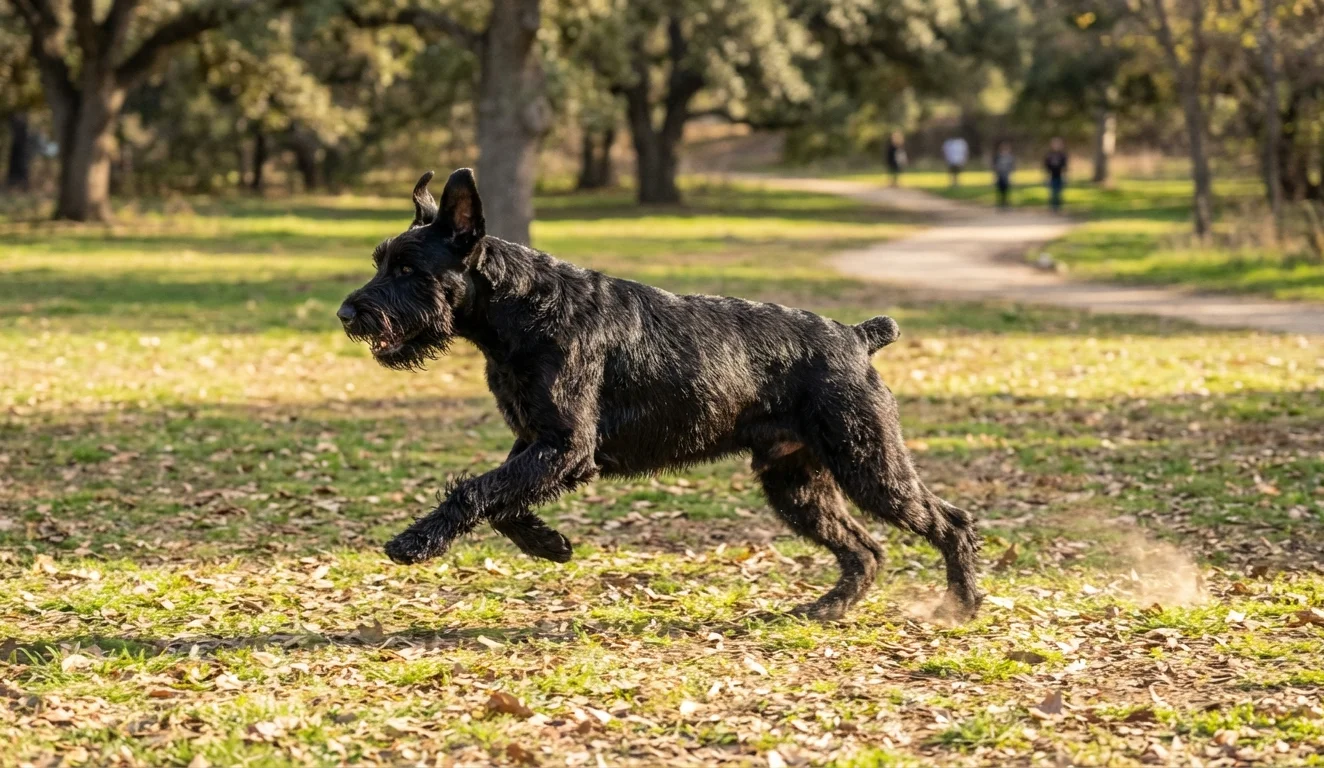
Giant Schnauzers are imposing dogs. Males stand 25.5-27.5 inches and weigh 60-85 pounds. Females are 23.5-25.5 inches and 55-75 pounds. They’re athletic and muscular without being bulky, think powerful and agile rather than heavy and lumbering.
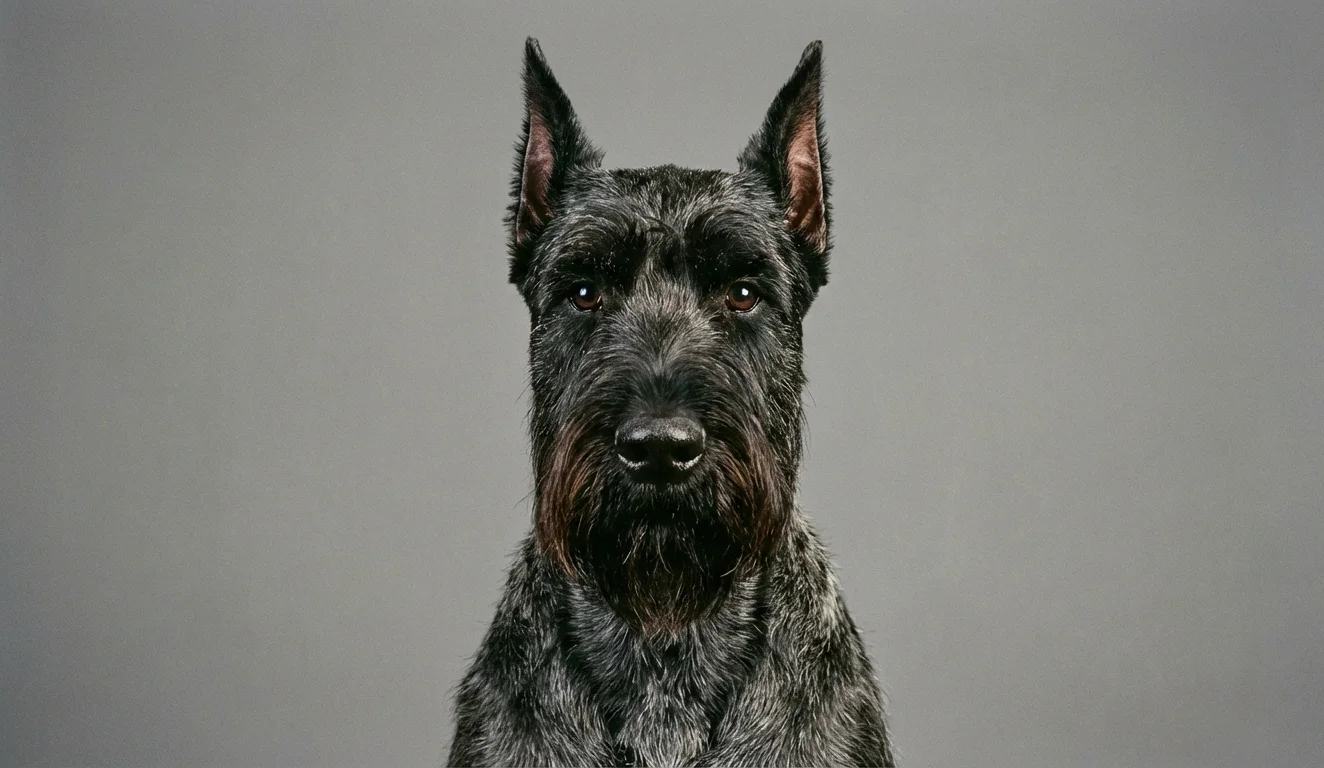
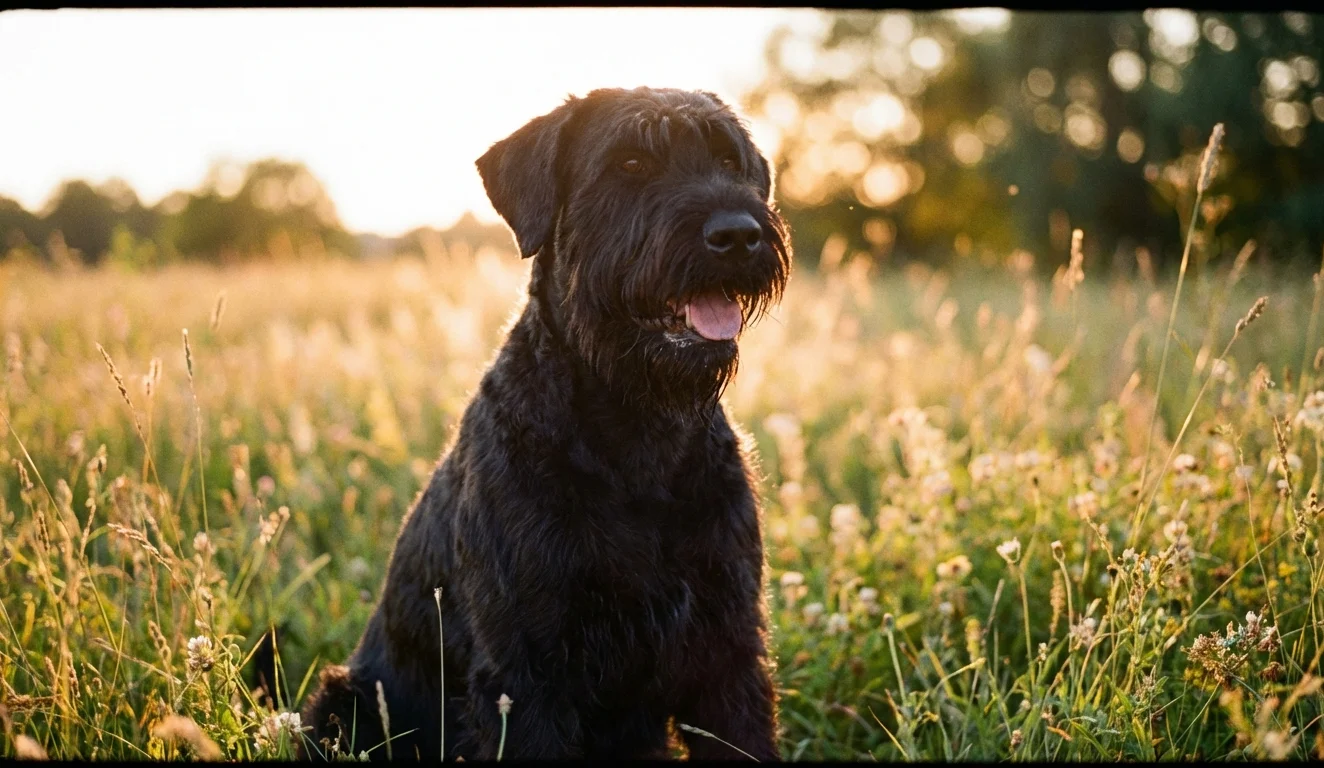
The breed’s most distinctive feature is its furnishings: the bushy eyebrows, the prominent beard, and the leg hair that gives them an almost professorial look. Their head is rectangular and strong, with a flat forehead and dark, oval eyes that radiate intelligence. Ears are set high and can be cropped (V-shaped erect) or natural (V-shaped fold). The tail is traditionally docked, though this practice is declining.
Their coat is dense and wiry, harsh to the touch with a soft, dense undercoat. Colors are limited to solid black and salt-and-pepper. The wiry texture means they don’t shed much, which earns them a reputation as hypoallergenic (they’re not truly hypoallergenic, no dog is, but they produce less airborne dander than heavy-shedding breeds). The trade-off is that the coat requires professional grooming or hand-stripping to maintain its texture and appearance.
Giant Schnauzer Temperament
The AKC describes the Giant Schnauzer as “loyal, alert, and trainable.” That’s accurate as far as it goes. Here’s the unfiltered version: Giant Schnauzers are intensely loyal dogs that want to be involved in everything you do, will guard your property without being asked, and have strong opinions about how things should be run.
What you need to know about Giant Schnauzer temperament:
- Velcro dog status is real. Giant Schnauzers bond deeply with their family and do not do well left alone for long periods. They want to be in the same room as you, preferably touching you. This can be endearing or suffocating depending on your personality.
- Guarding instinct is strong. They’re naturally territorial and suspicious of strangers. This makes them excellent watchdogs but requires early, thorough socialization to prevent over-guarding. An unsocialized Giant Schnauzer that sees every visitor as a threat is a serious management challenge.
- They’re mouthy. Giant Schnauzers use their mouths, herding you toward the door, carrying objects around, nudging you for attention. This isn’t aggression. It’s how they communicate. But it needs to be managed so it doesn’t escalate.
- Same-sex aggression is common. Like many working breeds, Giant Schnauzers can be aggressive toward dogs of the same sex. Multi-dog households need careful management, especially with two males.
- They’re funny. For all their intensity, Giant Schnauzers have a playful, goofy streak that shows up at unexpected moments. They’re the dog that will steal your socks, prance around with them, and dare you to catch them.
Exercise Needs
Giant Schnauzers need 60-90 minutes of vigorous exercise per day. This isn’t a breed you can satisfy with a leisurely neighborhood stroll. They need to move, and they need to think while they’re moving.
Good exercises for Giant Schnauzers:
- Running and jogging. Giants make excellent running partners once they’re past 18 months old. They have the stamina and drive to match most human runners and actually seem to enjoy the repetition of a long run.
- Hiking. Their athleticism and endurance make them outstanding trail dogs. They handle varied terrain well and stay engaged the entire time.
- Structured play. Fetch, tug, and flirt pole work all burn energy effectively. Giant Schnauzers play with intensity, they don’t do anything halfway.
- Dog sports. This is where Giants really come alive. Schutzhund (IPO), agility, obedience, herding trials, and tracking all channel their intelligence and drive. If you want a Giant Schnauzer that’s happy and well-adjusted, give them a sport.
- Mental exercise. Puzzle feeders, scent work, and training sessions count toward the daily exercise budget. A 20-minute training session will tire out a Giant’s brain as effectively as a 40-minute walk tires their body.
A Giant Schnauzer that doesn’t get enough exercise will find its own entertainment, and you won’t like the results. They’re creative destructors, not the “chew a shoe” type, more the “reorganize the contents of your kitchen cabinets” type.
Grooming
Giant Schnauzers have high grooming requirements compared to most breeds. That low-shedding coat comes with a price tag in time and money.
The coat needs brushing 2-3 times per week to prevent matting, especially in the beard, leg furnishings, and undercarriage. The beard in particular requires daily attention, it collects food, water, and anything else it touches. Giant Schnauzer owners learn quickly to keep a towel by the water bowl.
Professional grooming every 6-8 weeks is standard. You have two options: hand-stripping (pulling dead hair by hand to maintain the wiry texture) or clipping. Hand-stripping is traditional and preserves the coat’s texture and color, but it takes 3-4 hours and costs $100-$200 per session. Clipping is faster and cheaper ($60-$100) but softens the coat over time and can change the color. Show dogs are always hand-stripped. Pet owners typically clip.
Baths every 4-6 weeks, nail trims every 2-3 weeks, and regular ear checks complete the routine. Budget significant time and money for grooming, this is one of the breed’s biggest ongoing costs.
Giant Schnauzer Health Issues
Giant Schnauzers are a relatively healthy breed for their size, with a good lifespan of 12-15 years. But several genetic conditions affect the breed.
Hip Dysplasia
The OFA reports a notable incidence of hip dysplasia in Giant Schnauzers. It’s the most common orthopedic issue in the breed, causing pain, lameness, and arthritis. Mild cases can be managed with weight control, joint supplements, and physical therapy ($500-$2,000 annually). Severe cases may require total hip replacement at $5,000-$7,000 per hip. Both parents should have OFA hip clearances.
Osteochondritis Dissecans (OCD)
OCD is a developmental condition where cartilage in the joints (usually the shoulder) doesn’t form properly, creating loose flaps that cause pain and lameness. It typically appears between 4-8 months of age. Surgical removal of the cartilage flaps costs $2,000-$4,000 and usually resolves the issue. Feeding an appropriate large-breed puppy diet and avoiding over-exercise during growth helps reduce risk.
Hypothyroidism
Giant Schnauzers have a moderate predisposition to hypothyroidism, where the thyroid gland underperforms. Symptoms include weight gain, lethargy, skin issues, and coat changes. It’s easily managed with daily thyroid medication, costing $200-$500 annually. Breeders should have thyroid clearances on breeding stock.
Bloat (Gastric Dilatation-Volvulus)
As a deep-chested breed, Giant Schnauzers are at risk for bloat. The stomach fills with gas and can twist, cutting off blood supply, it’s a life-threatening emergency. Signs include a distended abdomen, unproductive retching, and pacing. Emergency surgery costs $2,500-$7,500. Many owners opt for preventive gastropexy during spay/neuter surgery ($400-$800 additional).
Autoimmune Conditions
Giant Schnauzers can be prone to autoimmune disorders including autoimmune hemolytic anemia (AIHA) and autoimmune thyroiditis. These conditions, where the immune system attacks the body’s own cells, can be serious and require ongoing veterinary management. Treatment costs for AIHA range from $1,000-$5,000 depending on severity and response to medication.
Training
Giant Schnauzers are highly trainable dogs that actually enjoy the training process. They’re smart, they want to work, and they have the focus to handle complex tasks. The challenge isn’t their ability to learn, it’s their tendency to test whether you’re still in charge.
What works with Giant Schnauzers:
- Clear leadership. Giants need to know who’s making the decisions, and it needs to be you. This doesn’t mean being harsh, it means being consistent, confident, and not letting them push boundaries.
- Variety in training. Giants get bored with repetitive drills. Keep sessions interesting by mixing commands, changing locations, and introducing new challenges regularly.
- Positive reinforcement with structure. Reward-based training works well, but Giants also need firm boundaries. They respect a handler who’s fair but not permissive.
- Early, extensive socialization. Between 8 and 16 weeks, expose your Giant to as many different people, animals, environments, and situations as possible. An undersocialized Giant Schnauzer with guarding instincts and 75 pounds of muscle is a liability.
- Ongoing training. This isn’t a “take one puppy class and you’re done” breed. Giants benefit from continued training throughout their lives. Obedience classes, sport training, or regular at-home sessions keep their minds engaged and their behavior sharp.
Giant Schnauzers are not recommended for first-time dog owners. They need someone who understands working breed dynamics and can provide the leadership, exercise, and mental stimulation these dogs require.
Cost
Purchase Price
A Giant Schnauzer puppy from a reputable breeder costs $2,000-$3,500. Breeders who do hip, elbow, thyroid, and eye clearances will be on the higher end. Show-quality puppies from champion lines can exceed $4,000.
Adoption through breed-specific rescues costs $300-$600 and is worth exploring, though Giant Schnauzers appear in rescue less frequently than more common breeds.
Monthly Costs
| Expense | Monthly Estimate |
|---|---|
| Food (high-quality, large breed) | $60-$90 |
| Professional grooming (averaged) | $50-$100 |
| Preventive vet care (averaged) | $20-$40 |
| Pet insurance | $40-$65 |
| Treats and chews | $15-$25 |
| Miscellaneous (toys, supplies) | $10-$25 |
| Total | $195-$345 |
First-Year Costs
Budget $4,500-$8,000 for the first year. The combination of purchase price, initial vet care, quality food, professional grooming, and training classes makes Giant Schnauzers one of the more expensive breeds to own. The grooming costs alone can add $600-$1,200 per year.
Is a Giant Schnauzer Right for You?
A Giant Schnauzer is a great fit if you:
- Have experience with large, working breeds and understand their needs
- Are active and can provide 60-90 minutes of vigorous daily exercise
- Want a loyal, intelligent dog that can participate in sport or work
- Have the budget for professional grooming every 6-8 weeks
- Want a natural watchdog with a strong protective instinct
- Enjoy training and are willing to invest in ongoing education for your dog
A Giant Schnauzer is probably NOT right if you:
- Are a first-time dog owner
- Work long hours and the dog would be alone for extended periods
- Want a low-maintenance, easy-going companion
- Don’t have the budget or time for regular professional grooming
- Have very young children (Giants can be too intense and physical for toddlers)
- Want a dog-park dog that gets along with every dog it meets
The Giant Schnauzer is a magnificent breed for the right owner, athletic, intelligent, fiercely loyal, and endlessly entertaining. But they’re a significant commitment in terms of time, money, training, and energy. If you’re up for the challenge, you’ll have a partner that makes every other dog you’ve owned feel like a warm-up act.
Related Breeds
If you’re considering this breed, you might also want to look at:
FAQ
Are Giant Schnauzers hypoallergenic?
No dog is truly hypoallergenic, but Giant Schnauzers are a better option for allergy sufferers than many breeds. Their wiry coat sheds minimally when properly maintained through regular grooming or hand-stripping. They produce less airborne dander than heavy-shedding breeds like German Shepherds or Labradors. If you have dog allergies, spend time around a Giant Schnauzer before committing, reactions vary by individual.
How big do Giant Schnauzers get?
Males typically reach 25.5-27.5 inches at the shoulder and 60-85 pounds. Females are slightly smaller at 23.5-25.5 inches and 55-75 pounds. They reach their full height by around 12 months but continue filling out until about 2 years old. Despite the name “Giant,” they’re actually a large breed rather than a giant breed, smaller than breeds like Great Danes or Mastiffs.
Can Giant Schnauzers be left alone?
Not for long periods. Giant Schnauzers are Velcro dogs that bond intensely with their owners and can develop separation anxiety if left alone for more than 4-5 hours regularly. Destructive behavior, excessive barking, and house-soiling are common symptoms. If you work full-time, consider doggy daycare, a dog walker, or staggering schedules with a partner so the dog isn’t alone all day.
What’s the difference between a Giant Schnauzer and a Standard Schnauzer?
Size is the obvious difference, Giants are 10+ inches taller and 30-40 pounds heavier than Standards. But the breeds also differ in intensity. Giant Schnauzers have stronger guarding instincts, higher exercise needs, and a more dominant temperament. Standards are still spirited and protective, but they’re more manageable for average dog owners. Giants are a working breed. Standards are more of a versatile companion. Both share the signature schnauzer look and intelligence.
Do Giant Schnauzers bark a lot?
They’re vocal but not excessive. Giant Schnauzers will bark to alert you to visitors, unusual sounds, or anything they deem suspicious, which, depending on the dog, can be a lot of things. They’re not nuisance barkers like some small breeds, but they’re not silent either. Proper training and socialization help them distinguish between genuine threats and the mail carrier. The bigger noise issue is actually the groaning, grumbling, and “talking” that Giants do when they want your attention.