Greyhound Breed Guide: The 45-MPH Couch Potato You Didn't See Coming (2026)
Greyhounds are the fastest dog breed on earth at 45 mph, but what surprises most people is how much they'd rather nap than run.
The Greyhound is the fastest dog breed in the world, capable of reaching 45 mph in just six strides. Males stand 28-30 inches at the shoulder and weigh 65-70 pounds. Females are 27-28 inches and 60-65 pounds. They live 10-13 years. And here’s the part that surprises everyone who meets one for the first time: they’re lazy. Not moderate-energy. Not “calm for a big dog.” Genuinely, profoundly, aggressively lazy. A Greyhound’s ideal day involves approximately three minutes of sprinting and 23 hours and 57 minutes of sleeping on your couch.
In Short: 60–70 lbs, 10–13 years. Low energy (seriously). Low shedding. Watch for Osteosarcoma and Bloat. Best for people who want a quiet, graceful, low-maintenance companion, including apartment dwellers.
The Greyhound is one of the best-kept secrets in the dog world. Most people picture them running in circles at a track, and that mental image is so dominant that it overshadows everything else about the breed. But retired racing Greyhounds, and all Greyhounds, really, are among the calmest, gentlest, most apartment-friendly dogs you can own. They don’t bark much. They don’t need hours of exercise. They don’t demand constant attention. They just want a soft bed, a warm spot, and someone to lean against while they doze through another afternoon.
Greyhound at a Glance
| Trait | Details |
|---|---|
| Breed Group | Hound (AKC) |
| Height | Males: 28-30 in / Females: 27-28 in |
| Weight | Males: 65-70 lbs / Females: 60-65 lbs |
| Life Expectancy | 10-13 years |
| Coat | Short, smooth, fine |
| Colors | Black, White, Red, Blue, Fawn, Brindle (and combinations) |
| Temperament | Gentle, Noble, Independent |
| Shedding | Low |
| Energy Level | Low |
| Good With Kids | Yes (gentle but can be timid) |
| AKC Recognition | 1885 |
History
Greyhounds are ancient. We’re not talking colonial-era ancient, we’re talking 5,000-years-old ancient. Images of Greyhound-type dogs appear in Egyptian tomb carvings from around 2900 BC. The Pharaohs kept them. Alexander the Great reportedly owned them. The breed is mentioned in the Bible (Proverbs 30:29-31, King James Version) and was the only dog breed mentioned by name in many early English law texts.
In medieval England, owning a Greyhound was restricted to nobility under the Forest Laws. Killing a Greyhound was punishable by death, the same sentence as killing a person. The breed was used for coursing (chasing game by sight across open ground) for centuries, and that pursuit became a formalized sport by the 1500s.
Modern Greyhound racing began in 1919, when Owen Patrick Smith invented the mechanical lure. By the mid-20th century, Greyhound racing was a major industry in the US, UK, and Australia. As of 2026, racing has been banned or ceased in most US states (Florida, the last major racing state, shut down its tracks after a 2018 voter referendum). This shift has created a large population of retired racing Greyhounds needing homes, and the adoption movement has introduced thousands of people to just how wonderful these dogs are as pets.
Size and Appearance
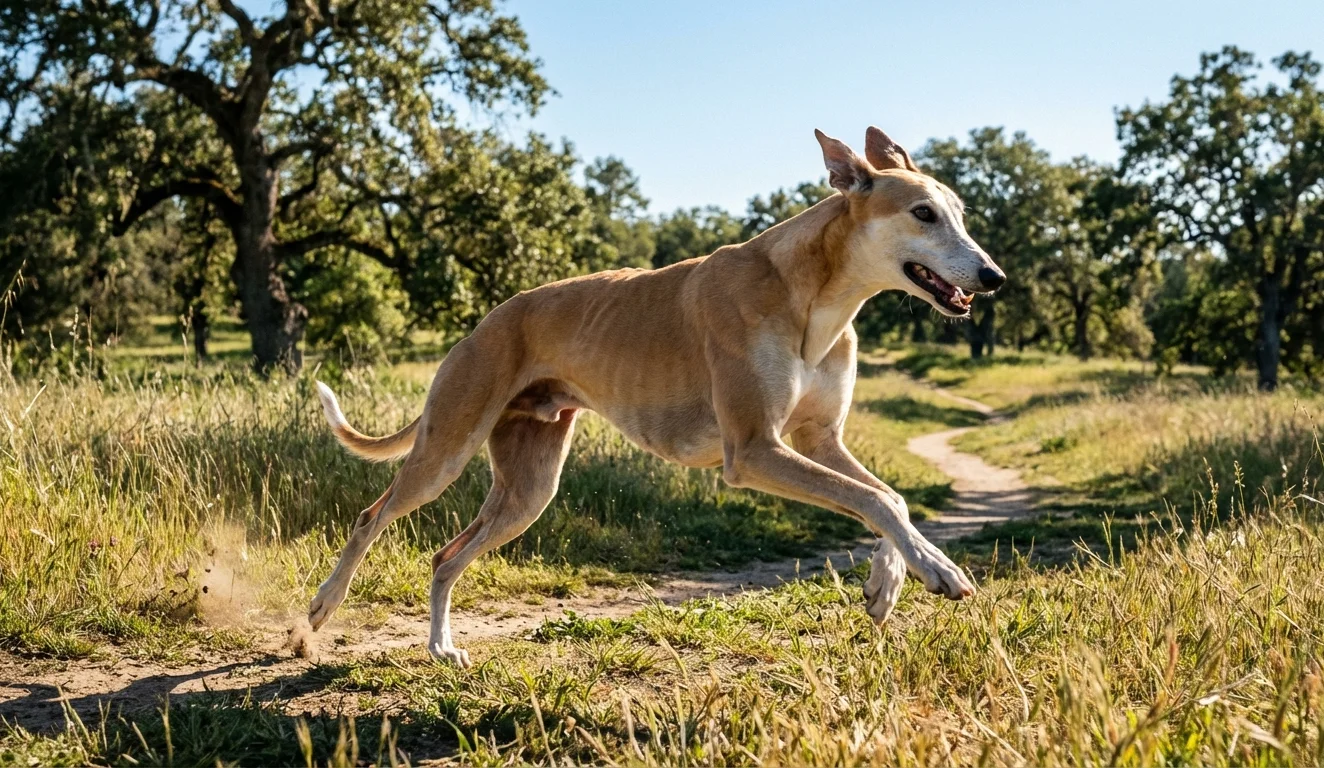
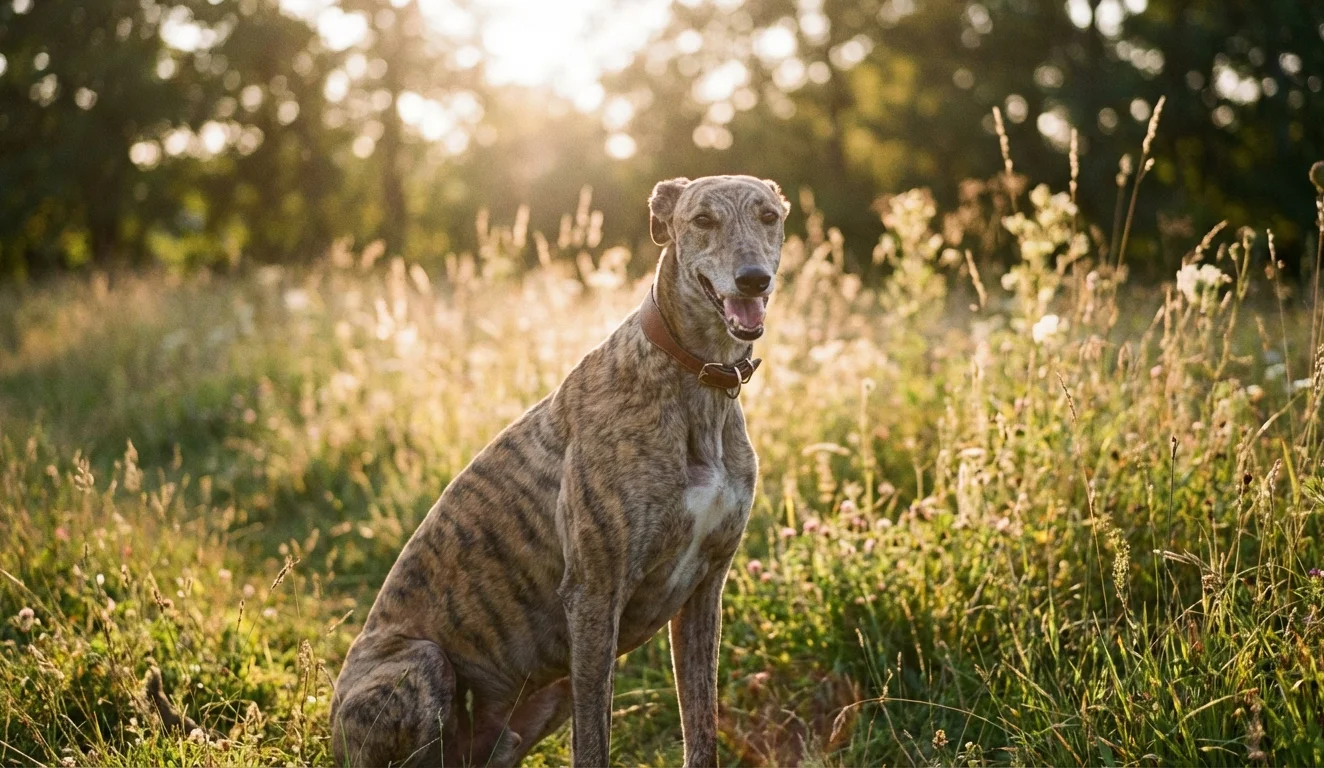
Greyhounds are built for one thing: speed. Every part of their body reflects that purpose. They have a deep chest that houses oversized lungs and heart (a Greyhound’s heart can be up to 1.75% of body weight, compared to 0.75% in most breeds). Long, powerful legs. A flexible spine that allows a “double suspension gallop”, a running gait where all four feet leave the ground twice per stride. A narrow, aerodynamic head. Minimal body fat.
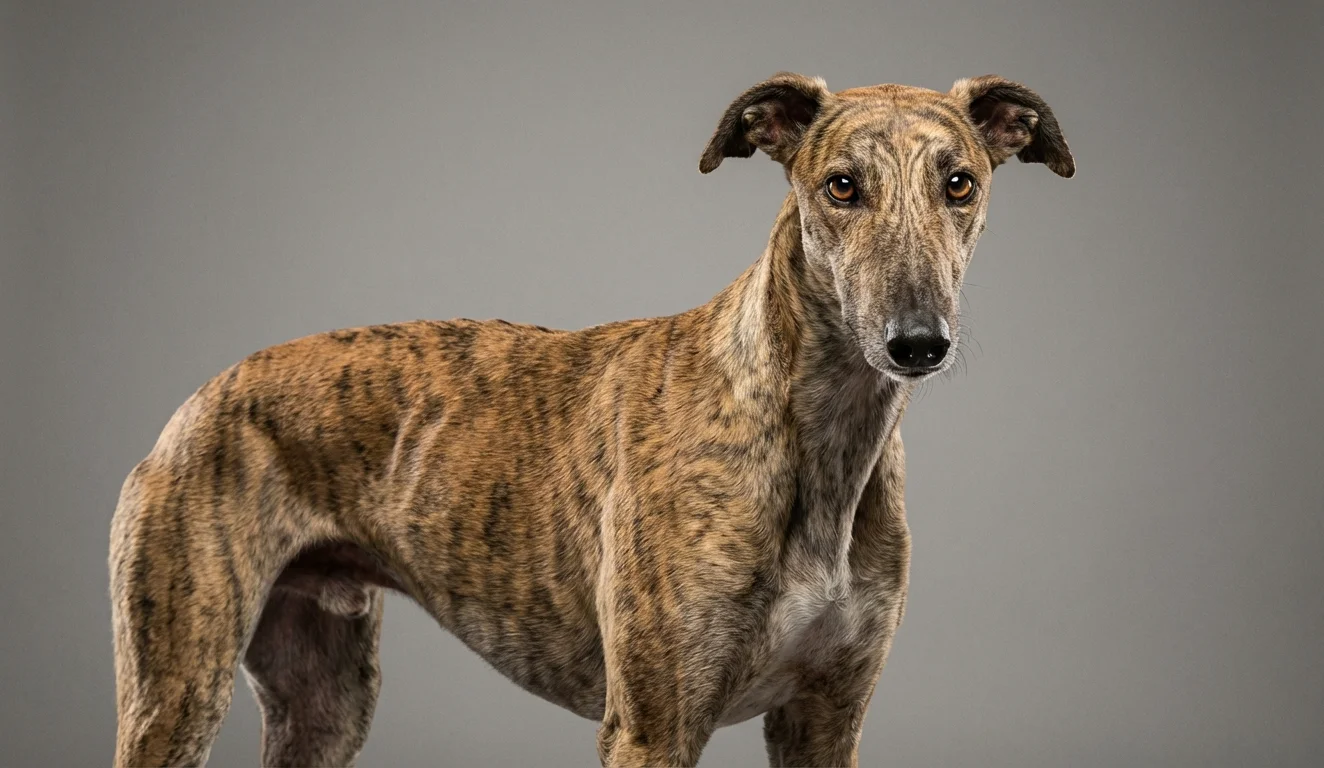
The result is a dog that looks like a living sculpture. Greyhounds are lean, you should be able to see the last two or three ribs on a healthy Greyhound, and the hip bones and spine are visible. This alarms people who aren’t familiar with the breed (and occasionally triggers well-meaning strangers to inform you that your dog is starving). It’s normal. A Greyhound carrying extra weight is unhealthy. A Greyhound with visible ribs is not.
The coat is short, fine, and smooth, almost like velvet. It comes in nearly every color and pattern imaginable: solid black, solid white, fawn, red, blue (steel gray), brindle, and various combinations with patches and ticking.
Greyhound Temperament
Greyhounds are often described as “cat-like,” and it’s an accurate comparison. They’re independent without being aloof, affectionate without being clingy (usually), and content to spend long stretches doing absolutely nothing. They’re introverts in a dog world full of extroverts.
What living with a Greyhound is actually like:
- They sleep. A lot. Greyhounds sleep 16-18 hours per day. This isn’t a sign of illness, it’s their baseline. They’re sprinters, not endurance athletes, and their natural rhythm alternates between short bursts of activity and long periods of rest.
- They’re surprisingly sensitive. Greyhounds startle easily. Loud noises, sudden movements, and new environments can make them nervous. Many retired racers have never seen stairs, hardwood floors, glass doors, or mirrors, and they need patient introduction to everyday household objects.
- “Roaching” is a thing. When a Greyhound feels comfortable and safe, it will lie on its back with all four legs in the air. Greyhound people call this “roaching” because it resembles a dead cockroach. It’s a sign of trust and contentment.
- They have a prey drive. Greyhounds are sighthounds with thousands of years of chase instinct. Small animals, cats, rabbits, small dogs, can trigger pursuit behavior. Some Greyhounds coexist fine with cats. Others can’t. Each dog needs individual assessment.
- They’re quiet. Greyhounds rarely bark. When they do vocalize, it’s often a yodel-like “roo” or a quiet whine rather than a sharp bark. This makes them excellent apartment dogs.
Exercise Needs
Here’s where the Greyhound breaks everyone’s expectations. Despite being the fastest dog on earth, they need only about 30-40 minutes of exercise per day. Two moderate walks and maybe a short sprint in a fenced yard is plenty for most adults.
The sprint is the key word. Greyhounds are built for anaerobic bursts, not sustained aerobic exercise. They can hit 45 mph in seconds, but they tire quickly. A typical Greyhound will sprint for 1-2 minutes, then be done for the day. They’re not running partners for 5K training. They’re 100-meter dash athletes who retire to the couch between events.
Off-leash exercise should only happen in fully fenced areas. A Greyhound in full chase cannot hear you calling. They can’t hear much of anything when prey drive kicks in, and they’ll cover ground so fast that they can be a mile away before you realize what happened. Fences need to be at least 5 feet tall (6 feet is better), and you should check for gaps at the bottom.
Retired racing Greyhounds may need time to adjust to leash walking, many have never done it. They learned to run straight lines on a track, not walk at a human pace on a sidewalk. Patience and positive reinforcement work. Forcing the issue doesn’t.
Grooming
Greyhounds are one of the lowest-maintenance breeds in terms of grooming. The short, fine coat is practically self-cleaning.
- Weekly brushing with a rubber curry comb or hound mitt, this takes about 5 minutes
- Bath every 8-12 weeks (or when they roll in something, which they will)
- Nail trims every 2-3 weeks: Greyhounds have long, sensitive toes and thick nails. Many dislike nail trims, so start slow
- Dental care is important: Greyhounds are prone to dental issues. Brush teeth 3-4 times weekly. Many retired racers have compromised dental health from their racing diet and may need professional dental cleaning
- Skin care: The thin coat and low body fat mean Greyhounds get cold easily. They need a coat in winter and may benefit from a fleece indoors if your house runs cool. They also sunburn, so limit sun exposure on hot days
The minimal shedding is a legitimate selling point. Greyhounds produce less dander than most breeds, and while they’re not hypoallergenic, many people with mild dog allergies find them tolerable.
Greyhound Health Issues
Greyhounds are generally healthy dogs with a respectable lifespan of 10-13 years. But they have some breed-specific vulnerabilities and some unique physiological quirks that every owner (and vet) should know.
Osteosarcoma (Bone Cancer)
Greyhounds have one of the highest osteosarcoma rates among all breeds. A study published in Veterinary Pathology found that bone cancer is the leading cause of death in the breed, accounting for approximately 20% of Greyhound deaths. It typically affects the long bones of the legs in dogs over age 7. Treatment involves amputation and chemotherapy ($5,000-$10,000). Greyhounds actually adapt to three-legged life relatively well due to their lean build, but prognosis remains guarded, median survival with treatment is 10-14 months.
Bloat (Gastric Dilatation-Volvulus)
Deep-chested breeds are at elevated bloat risk, and Greyhounds are no exception. The stomach fills with gas, potentially twists, and becomes life-threatening. Emergency surgery costs $2,500-$7,000. Feed smaller, more frequent meals. Don’t exercise within an hour of feeding. Discuss prophylactic gastropexy with your vet.
Greyhound-Specific Anesthesia Sensitivity
This isn’t a disease, but it’s medically critical: Greyhounds metabolize anesthesia differently than other breeds. They have low body fat (which affects how drugs distribute) and a liver enzyme profile that processes certain drugs more slowly. Barbiturate-based anesthetics can be dangerous or even fatal in Greyhounds. Make sure your vet is experienced with sighthound anesthesia. This is not optional, it’s a safety issue. Any vet who isn’t aware of Greyhound anesthesia protocols should not be putting your dog under.
Corns (Foot Pad Keratomas)
This is surprisingly common in Greyhounds and relatively rare in other breeds. Hard, painful growths develop in the digital pads, causing lameness. Treatment ranges from $200-$1,000 depending on the approach (hulling, surgical excision, boots). They tend to recur.
Hypothyroidism
Greyhounds have naturally lower thyroid levels than other breeds, a normal Greyhound T4 value would be flagged as hypothyroid in most other dogs. This means misdiagnosis is common. A vet unfamiliar with Greyhound-specific reference ranges may put your dog on unnecessary thyroid medication. The Michigan State University Veterinary Diagnostic Laboratory maintains Greyhound-specific reference ranges for blood work.
Training
Greyhounds are intelligent but not particularly motivated by obedience for its own sake. They learn quickly when something interests them and ignore you completely when it doesn’t. (This is the “cat-like” thing again.)
Positive reinforcement with food rewards works best. Many Greyhounds are extremely food-motivated, which gives you a training lever. Harsh corrections will cause a Greyhound to shut down and stop trying. They don’t bounce back from negative experiences the way a more resilient breed might.
Housetraining retired racing Greyhounds is usually straightforward, they were kept on a schedule at the track and are accustomed to not eliminating in their living space. Some need an adjustment period with a new routine, but most get it within days to weeks.
Recall (coming when called) is the Greyhound’s weakest obedience area. When prey drive activates, training goes out the window. Many experienced Greyhound owners simply accept that reliable off-leash recall is not achievable with this breed and manage accordingly, leash or enclosed space, every time, no exceptions.
Cost
Purchase Price
A Greyhound puppy from a show breeder costs $1,500-$2,500. But most people don’t buy Greyhound puppies, they adopt retired racers. Adoption fees through Greyhound rescue organizations range from $200-$500, which typically includes spay/neuter, vaccinations, dental work, and a full health screening. This is one of the best deals in the dog world.
Monthly Costs
| Expense | Monthly Estimate |
|---|---|
| Food (large breed formula) | $50-$80 |
| Preventive vet care (averaged) | $15-$40 |
| Pet insurance | $30-$60 |
| Treats and chews | $10-$20 |
| Miscellaneous (coats, beds, supplies) | $10-$25 |
| Total | $115-$225 |
First-Year Costs
For an adopted retired racer (the most common path to Greyhound ownership), first-year costs beyond the adoption fee typically run $1,500-$3,500. This includes a large dog bed (Greyhounds need orthopedic foam, their bony joints don’t do well on hard surfaces), a winter coat or two, a properly fitted martingale collar (standard collars slip over their narrow heads), initial vet visit, and dental work if the rescue didn’t cover it.
Is a Greyhound Right for You?
A Greyhound could be a great fit if you:
- Want a calm, quiet, low-energy dog that’s content with moderate exercise
- Live in an apartment or small space (they’re one of the best large breeds for apartment life)
- Want a dog that’s gentle with kids and other dogs
- Prefer minimal grooming and low shedding
- Are willing to adopt a retired racer and give it the retirement it deserves
- Appreciate a dog with an independent streak who doesn’t need constant interaction
A Greyhound is probably not right if you:
- Want an off-leash hiking companion (the prey drive makes this risky)
- Have small pets (cats, rabbits) and can’t do a careful, supervised introduction
- Want a dog that’s eager to please and loves obedience training
- Need a guard dog or watchdog
- Live somewhere very cold and don’t want to deal with coats, sweaters, and a dog that refuses to go outside in January
- Want a high-energy exercise partner for running or cycling
The Greyhound adoption community is one of the best in the dog world. Organizations like the National Greyhound Adoption Program, Greyhound Pets of America, and dozens of regional groups have placed thousands of retired racers in homes. These dogs spent their careers running for someone else’s profit, adoption gives them a life that’s actually about them. And what they do with that life is mostly sleep on your nicest furniture, which, honestly, seems like a pretty fair deal.
Related Breeds
If you’re considering this breed, you might also want to look at:
Frequently Asked Questions
How fast can a Greyhound run?
Greyhounds can reach 45 mph, making them the fastest dog breed and one of the fastest land animals in the world. They accelerate faster than most horses and can reach top speed in about six strides. For context, Usain Bolt’s record human sprint speed was 27.8 mph, a Greyhound would pass him like he was standing still. Despite this speed, Greyhounds are sprinters, not distance runners. They can maintain top speed for about 250-300 meters before they start to slow.
Are retired racing Greyhounds good pets?
Yes, and many experienced dog owners consider them among the best. Retired racers are typically 2-5 years old, already crate-trained, accustomed to handling and routine, and ready to transition to pet life. They do need an adjustment period, many have never been in a house, seen stairs, or walked on a leash, but they adapt quickly. The main considerations are prey drive assessment (some can’t live with cats or small dogs) and understanding that these are sensitive, quiet dogs that thrive on routine and gentle handling.
Do Greyhounds need a lot of space?
No. This is one of the biggest misconceptions about the breed. Greyhounds are large dogs (60-70 lbs) but have very low indoor energy. They curl up surprisingly small and spend most of their time sleeping. Many Greyhound rescues specifically recommend them for apartment living. What they do need is access to a fenced area for occasional sprints, but that can be a fenced dog park or rented sniff spot rather than a personal yard.
Why do Greyhounds wear muzzles?
At the track, Greyhounds wear muzzles to prevent injuries during racing (dogs running at 40+ mph in close proximity can accidentally bite each other). Some adopted Greyhounds continue wearing muzzles during the transition period while their prey drive is being assessed. A muzzled Greyhound isn’t dangerous, it’s a safety protocol that responsible adopters and rescues use until they know the individual dog’s behavior around small animals.
Are Greyhounds hypoallergenic?
No dog breed is truly hypoallergenic. But Greyhounds produce less dander and shed less than most breeds of comparable size. Their short, fine coat and relatively clean skin mean that many people with mild dog allergies tolerate Greyhounds better than double-coated or heavy-shedding breeds. If allergies are a concern, spend extended time with a Greyhound before committing.