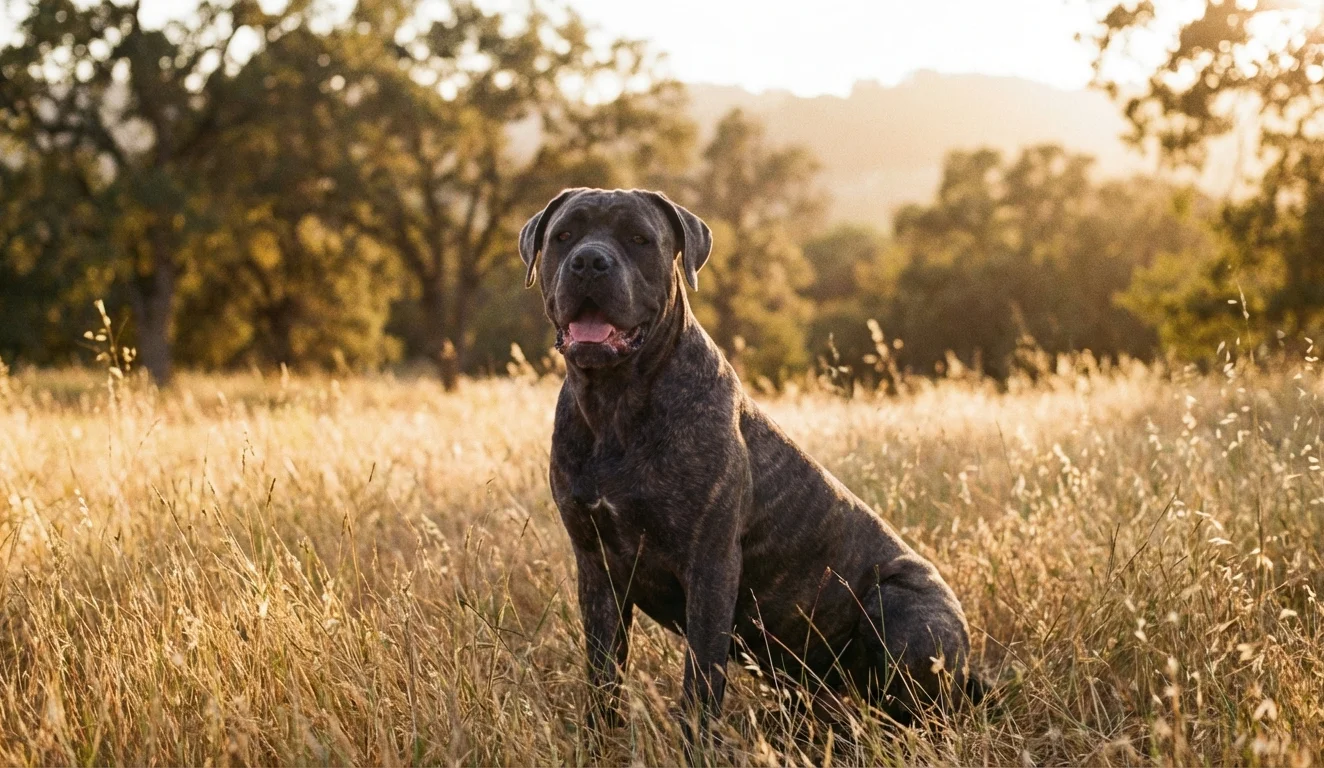
Rhodesian Ridgeback Breed Guide: The Dog That Hunted Lions and Still Won't Listen (2026)
Rhodesian Ridgebacks are 85-pound athletes with the independence of a cat and the loyalty of a shadow. Here's what living with one is actually like.
The Rhodesian Ridgeback is a large, muscular hound that weighs 70-90 pounds and lives 10-12 years. That distinctive ridge of hair running backward along the spine isn’t just a cool party trick, it’s the breed’s defining feature and a genetic marker that traces back centuries to southern Africa. These dogs were bred to track lions. Not fight them, despite what the nickname suggests, but hold them at bay until hunters arrived. That takes a particular kind of nerve.
In Short: 70–90 lbs, 10–12 years. Moderate-to-high energy. Moderate shedding. Watch for Hip Dysplasia. Good with kids, but better for experienced owners.
And that nerve is still very much present in every Ridgeback living in a suburban house today. We think this is one of the most misunderstood breeds out there. People see the athletic build and assume “big active dog, should be easy.” It’s not. The Ridgeback is smart, independent, and has a stubborn streak that’ll test even experienced dog owners. If you want a dog that hangs on your every word, get a Lab. If you want a dog that considers your request and decides whether it’s worth the effort, well, welcome to Ridgeback ownership.
Rhodesian Ridgeback at a Glance
| Trait | Details |
|---|---|
| Breed Group | Hound (AKC) |
| Height | Males: 25-27 in / Females: 24-26 in |
| Weight | Males: 85-90 lbs / Females: 70-75 lbs |
| Life Expectancy | 10-12 years |
| Coat | Short, dense, sleek |
| Colors | Light wheaten to red wheaten |
| Temperament | Dignified, Even Tempered, Loyal |
| Shedding | Moderate |
| Energy Level | Moderate-High |
| Good With Kids | Yes |
| Good With Other Dogs | Can be selective |
| AKC Recognition | 1955 |
History
The Rhodesian Ridgeback’s origins start with the Khoikhoi people of southern Africa, who kept ridged hunting dogs long before European colonists arrived. When Dutch, German, and British settlers came to South Africa in the 16th and 17th centuries, they brought their own breeds, Great Danes, Mastiffs, Bloodhounds, Greyhounds, and crossed them with the indigenous ridged dogs. The result was a versatile hunting dog tough enough to handle the African bush.
In the 1870s, big game hunter Cornelius van Rooyen in Rhodesia (now Zimbabwe) refined the breed specifically for lion hunting. His dogs would track lions in packs, corner them, and keep them occupied through sheer agility and courage while the hunters closed in. The dogs never attacked the lions directly. They were too smart for that.
The breed standard was drafted in 1922 in Bulawayo, Rhodesia, based heavily on the Dalmatian standard. The original standard outlined a dog that could track game, guard the homestead, and handle the harsh African climate, traits that remain core to the breed today.
The AKC recognized the Rhodesian Ridgeback in 1955, and since then, the breed has transitioned from African bush hunter to American family dog, though that prey drive and independence haven’t gone anywhere. Today they sit in the top 40 most popular AKC breeds, popular with active owners who want something different from the usual Labrador-Golden crowd.
Size and Appearance
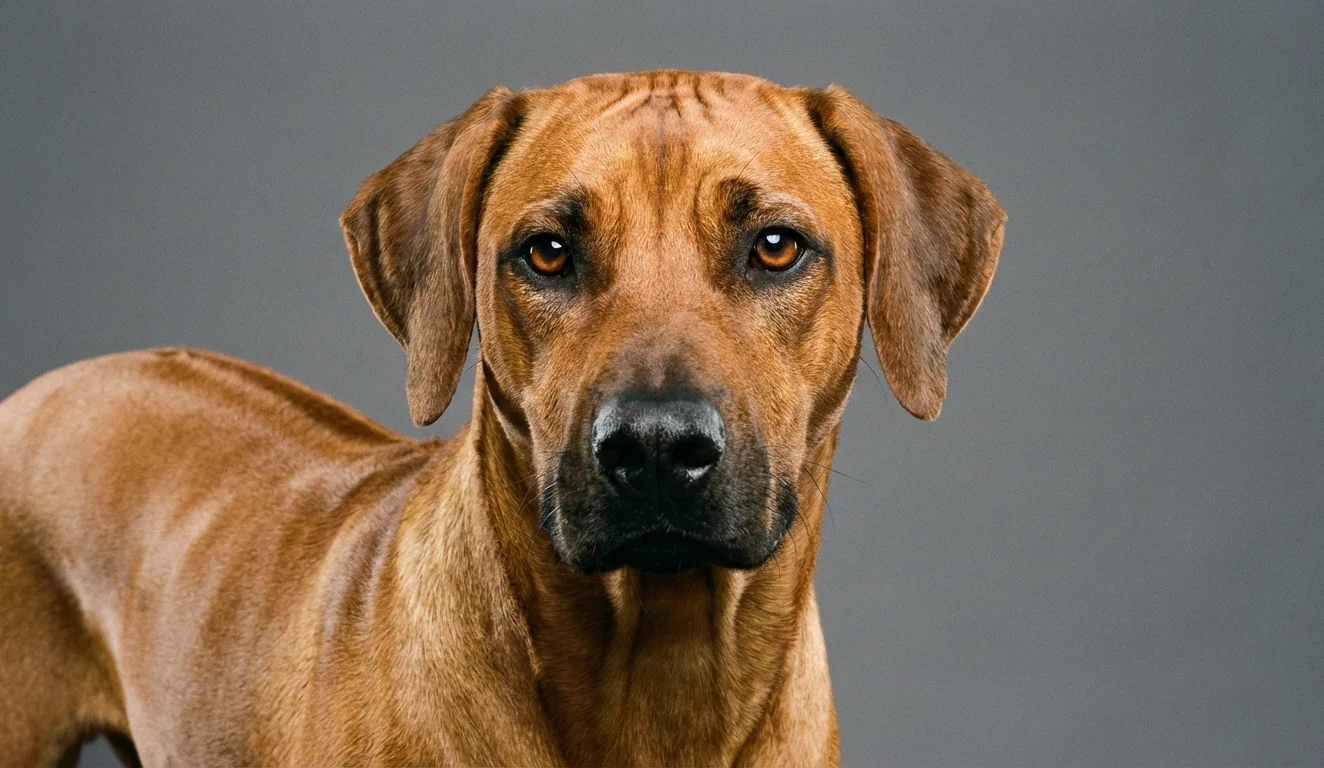
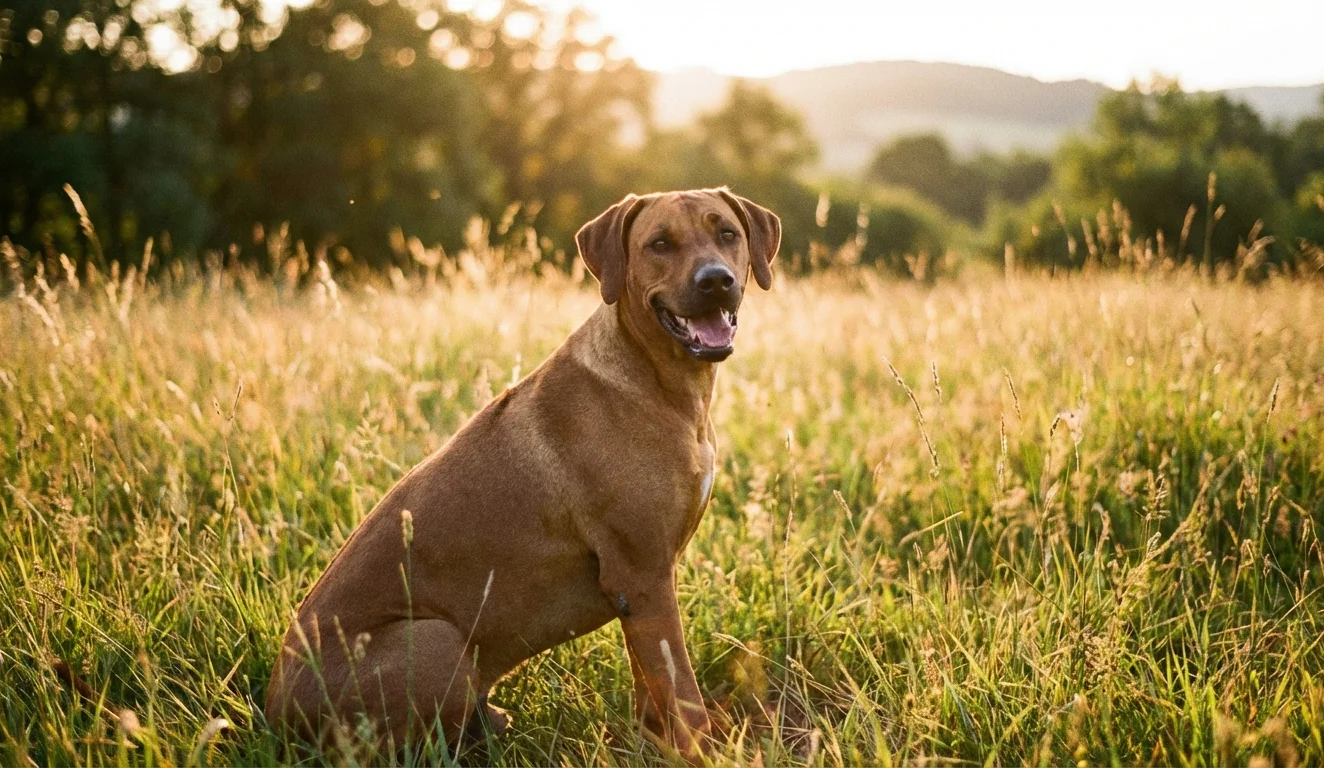
Rhodesian Ridgebacks are big dogs built like athletes. Males stand 25-27 inches at the shoulder and weigh 85-90 pounds. Females are slightly smaller at 24-26 inches and 70-75 pounds. They’re all muscle without being bulky, think middle linebacker, not offensive lineman.
The ridge is the star of the show. It’s a strip of hair growing in the opposite direction from the rest of the coat, running from just behind the shoulders to the hip bones. A correct ridge has two identical crowns (whorls) at the top. Ridgebacks without ridges are born occasionally, they’re still purebred Ridgebacks, just not show-eligible.
The coat is short and glossy, ranging from light wheaten to deep red wheaten. It requires minimal grooming but offers almost no protection from cold weather. A Ridgeback in a Minnesota winter is going to need a coat, and yes, watching an 85-pound lion dog wear a puffer jacket is exactly as funny as it sounds.
One thing that surprises people: Ridgebacks are beautiful dogs. Like, genuinely striking. That sleek coat, the muscular build, the intelligent expression, they turn heads at the park in a way that most breeds don’t. They look like they were designed by someone who actually knows what a dog should look like.
Rhodesian Ridgeback Temperament
The Ridgeback temperament is a contradiction that makes perfect sense once you live with one. They’re dignified but goofy. Aloof with strangers but Velcro dogs with their family. Independent thinkers but deeply loyal.
What to expect from a Ridgeback’s personality:
- Loyal to a fault. Ridgebacks pick their people and that’s it. They’re not the dog that loves everyone at the park. They’re polite, maybe. Enthusiastic? Rarely.
- Quiet. Unlike most hounds, Ridgebacks have a low barking level. When a Ridgeback barks, you pay attention, it usually means something.
- Strong prey drive. Squirrels, rabbits, neighborhood cats, anything small that runs will trigger the chase instinct. Off-leash Ridgebacks in unfenced areas are risky. We’d say a secure fence is non-negotiable with this breed.
- Not great with other dogs by default. Some Ridgebacks are fine with other dogs, especially with early socialization. But same-sex aggression is common in the breed, and they can be dominant. This isn’t the dog you bring to the dog park and just hope for the best.
One thing we hear a lot: “My Ridgeback is so stubborn.” That’s not really stubbornness. It’s a dog that was bred to make independent decisions while tracking dangerous prey across the African savannah. Your Ridgeback isn’t ignoring you out of spite, it’s evaluating whether your command makes sense.
Ridgebacks are also surprisingly mischievous. That dignified exterior hides a playful streak that catches new owners off guard. A Ridgeback that steals a shoe and prances around the house with it, just out of reach, knows exactly what it’s doing. They have a dry sense of humor, if a dog can have such a thing.
Exercise Needs
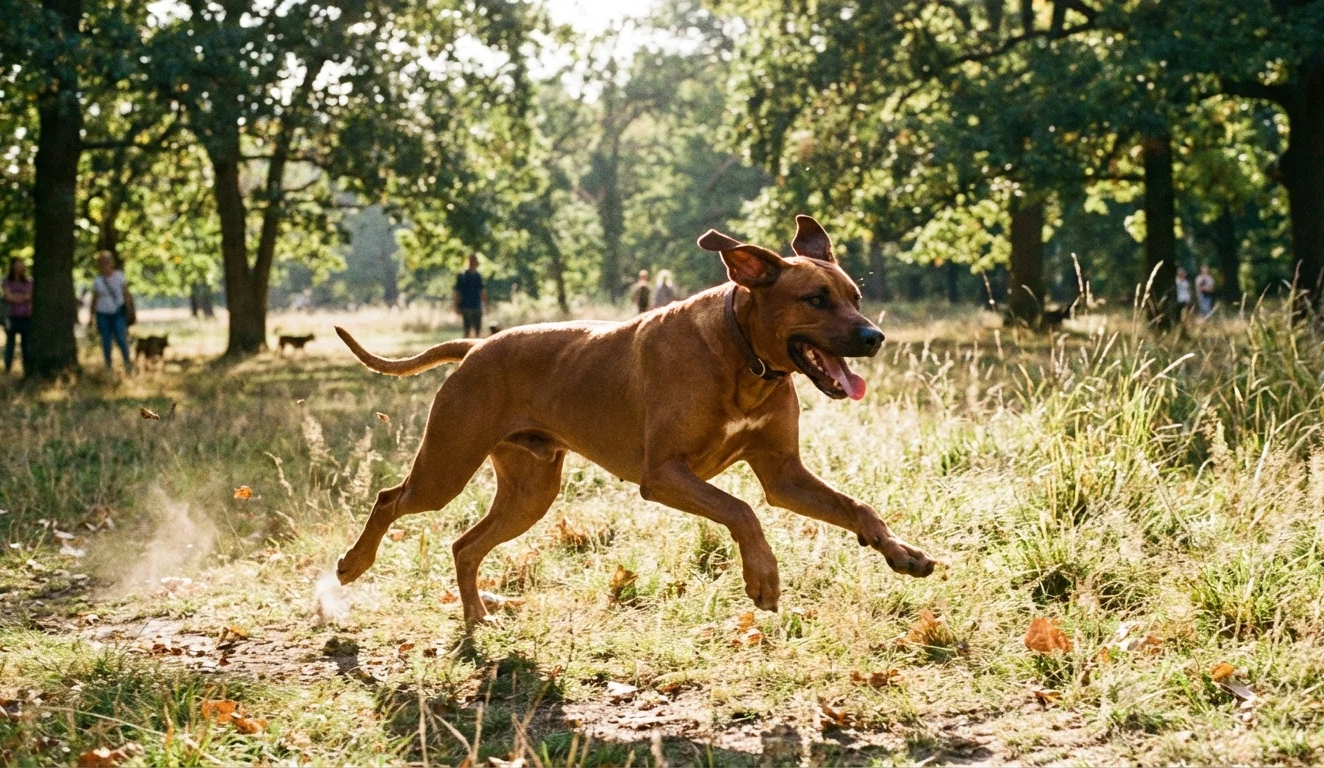
Ridgebacks need about 60 minutes of exercise per day, but the type of exercise matters more than the duration. These dogs were built for endurance, not hyperactivity. A long jog, a hike, or a good off-leash run in a fenced area will satisfy a Ridgeback far more than frantic fetch sessions.
Young Ridgebacks (under 2 years) will have more energy and may need closer to 90 minutes. After that, they mellow into surprisingly chill house dogs. A well-exercised adult Ridgeback is happy to spend the rest of the day draped across your couch like a 90-pound throw blanket.
Don’t confuse their calm indoor demeanor for low energy, though. Skip the exercise and you’ll get a bored Ridgeback. Bored Ridgebacks remodel your furniture.
Good exercise options for Ridgebacks:
- Running or jogging (once fully grown, protect those joints while they’re developing)
- Lure coursing, taps into their prey drive in a controlled way
- Hiking on trails with good recall (or a long line)
- Structured play in a securely fenced yard
Grooming
This is where Ridgeback ownership gets easy. That short coat needs almost nothing.
A weekly brush with a rubber curry comb or bristle brush removes loose hair and keeps the coat shiny. Bath them every 6-8 weeks or when they roll in something regrettable. Trim nails every 2-3 weeks. Check and clean ears weekly. That’s it.
Ridgebacks do shed, more than people expect from a short-coated breed. It’s not dramatic like a Husky blowout, but you’ll find short wheaten hairs on your dark clothing, furniture, and somehow inside your coffee mug. A lint roller becomes a permanent accessory.
Skin care: Ridgebacks can be prone to skin irritation, particularly along the ridge where the hair growth pattern changes direction. Check the ridge line regularly for bumps, redness, or signs of dermoid sinus (especially in younger dogs). Their thin coat means they’re also more susceptible to sunburn on the belly and nose, something to keep in mind if your Ridgeback likes to sunbathe, which most of them do.
Rhodesian Ridgeback Health Issues
Rhodesian Ridgebacks are a relatively healthy breed with a 10-12 year lifespan, but there are several conditions to be aware of.
Hip and Elbow Dysplasia
Hip dysplasia is common in Ridgebacks, it’s a joint condition where the hip socket doesn’t form correctly, leading to arthritis and pain over time. Treatment can cost $1,500-$6,000 depending on severity. Elbow dysplasia is also seen at moderate rates, with treatment running $1,500-$4,000. Reputable breeders test both parents through OFA evaluations.
Dermoid Sinus
This one is specific to ridged breeds. A dermoid sinus is a tube-like defect in the skin along the back, running from the surface down toward the spinal cord. It’s present at birth and can become infected if left untreated. Responsible breeders check puppies at birth by palpating the spine. Surgery costs $1,000-$5,000 depending on the location and depth.
Hypothyroidism
Moderate prevalence in the breed. Symptoms include weight gain, lethargy, coat changes, and sometimes skin issues. The good news: once diagnosed through a simple blood test, it’s manageable with daily thyroid medication. Annual treatment costs run $200-$600, and most dogs respond well within a few weeks of starting treatment.
Bloat (Gastric Dilatation-Volvulus)
Like many deep-chested breeds, Ridgebacks are at moderate risk for bloat, a life-threatening emergency where the stomach fills with gas and can twist on itself. Symptoms include a distended abdomen, unproductive retching, and restlessness. This requires immediate veterinary surgery ($2,000-$7,500). Talk to your vet about preventive gastropexy, which can be done during spay/neuter surgery.
Training
Training a Rhodesian Ridgeback requires patience, consistency, and a willingness to negotiate. This isn’t a Golden Retriever eager to please you. Ridgebacks are smart, they rank in the moderate trainability range, but they need a reason to cooperate.
What works with Ridgebacks:
- Positive reinforcement with high-value treats. Kibble won’t cut it. Break out the chicken.
- Short, varied training sessions. Ridgebacks get bored with repetition faster than most breeds.
- Firm boundaries set early. A 12-pound Ridgeback puppy jumping on you is cute. An 85-pound adult doing it is a safety hazard.
- Early socialization is critical. Expose them to different people, dogs, environments, and situations between 8-16 weeks. This window matters enormously with this breed.
What doesn’t work: harsh corrections, yelling, or physical punishment. A Ridgeback that doesn’t trust you will shut down completely. They don’t forget.
First-time dog owners can succeed with a Ridgeback, but we’d strongly recommend professional training classes. This breed benefits from an owner who’s done some homework.
One more thing about Ridgeback training: adolescence (roughly 6-18 months) is the hardest stretch. That’s when the independence really kicks in, and a previously cooperative puppy may start testing every boundary you’ve set. Stay consistent through this phase. Most Ridgebacks mature into well-behaved adults by age 2-3 if the groundwork was laid properly during puppyhood.
Rhodesian Ridgeback Cost
Purchase Price
A Rhodesian Ridgeback puppy from a reputable breeder typically costs $1,500-$2,500. Show-quality puppies or dogs from champion lines can exceed $3,000. Breeders who test for hip dysplasia, elbow dysplasia, and dermoid sinus (and who can show you the results) are worth the premium.
Rescuing a Ridgeback is an option too, organizations like the Rhodesian Ridgeback Rescue and Ridgeback-specific breed rescues typically charge $300-$600.
Monthly Costs
| Expense | Monthly Estimate |
|---|---|
| Food (high-quality kibble) | $50-$80 |
| Preventive vet care (averaged) | $15-$30 |
| Pet insurance | $35-$65 |
| Treats and chews | $10-$20 |
| Miscellaneous (toys, supplies) | $10-$30 |
| Total | $100-$225 |
First-Year Costs
The first year is always the most expensive. Between the purchase price, initial vet visits, spay/neuter, vaccinations, supplies, and training classes, budget around $3,500-$5,500 for your first year with a Ridgeback. Professional training is essentially a required line item for this breed, group classes run $150-$300 for a 6-8 week course, and private sessions with a trainer experienced in independent breeds can run $75-$150 per hour.
Is a Rhodesian Ridgeback Right for You?
A Ridgeback is a great fit if you:
- Have experience with dogs (or are willing to invest heavily in training)
- Want a loyal, quiet companion that’s bonded tightly to your family
- Live in a home with a securely fenced yard
- Lead an active lifestyle, running, hiking, or other outdoor activities
- Appreciate a dog with a mind of its own
A Ridgeback is probably NOT right if you:
- Want a social butterfly that loves every person and dog it meets
- Have small animals (cats, rabbits) and no experience managing prey drive
- Need a dog that reliably obeys commands the first time, every time
- Live in a cold climate without indoor accommodations (they hate the cold)
- Want a low-commitment dog that’s easy from day one
Ridgebacks are not for everyone, and that’s not a marketing line, we genuinely mean it. But the people who click with this breed tend to never want another type of dog again. There’s something about living with an animal that respects you but doesn’t worship you. It feels more like a partnership than ownership.
If you’re on the fence, try to spend time with a Ridgeback before buying one. Contact your local Rhodesian Ridgeback club, attend a meet-the-breed event, or connect with a breeder who allows puppy visits. The breed’s personality is hard to capture in writing, you need to experience that calm confidence in person to know if it’s for you.
Related Breeds
If you’re considering this breed, you might also want to look at:
Frequently Asked Questions
What is the ridge on a Rhodesian Ridgeback?
The ridge is a strip of hair that grows in the opposite direction from the rest of the coat, running along the dog’s back from the shoulders to the hips. It should have two symmetrical crowns (whorls) at the top. The ridge is a genetic trait, some Ridgeback puppies are born without it, which makes them pet-quality rather than show-quality, but they’re still purebred Rhodesian Ridgebacks.
Are Rhodesian Ridgebacks aggressive?
Rhodesian Ridgebacks are not inherently aggressive toward people. They’re naturally aloof with strangers and protective of their family, which can read as intimidating. Same-sex dog aggression is a documented tendency in the breed, and their prey drive is high, small animals that run will be chased. Early socialization significantly reduces the likelihood of behavioral issues, but this breed does require an owner who understands and manages those instincts. A well-socialized Ridgeback raised in a stable home is typically a calm, composed dog, not reactive, not anxious, and certainly not dangerous. The “lion dog” reputation makes some people expect a fierce, volatile animal. That’s not what this breed is.
Can Rhodesian Ridgebacks live in apartments?
We wouldn’t recommend it. Ridgebacks are large, athletic dogs that do best with a yard and space to move. They’re not hyperactive indoors, so apartment living isn’t impossible if you’re committed to daily exercise, but the breed’s size, prey drive, and need for mental stimulation make a house with a fenced yard the better setup. An 85-pound dog pacing around a one-bedroom apartment because it hasn’t burned off enough energy is not a great situation for anyone involved.
Do Rhodesian Ridgebacks get along with cats?
Generally, no. The Ridgeback’s prey drive is strong enough that cats, especially outdoor cats that run, can trigger a chase response. Some Ridgebacks raised with cats from puppyhood learn to coexist peacefully, but we’d never call this a cat-friendly breed. If you have cats, extreme caution and very careful introductions are a must.
How much exercise does a Rhodesian Ridgeback need?
Adult Ridgebacks need about 60 minutes of exercise daily. They prefer endurance activities, long walks, jogs, hikes, over short bursts of intense play. Young Ridgebacks under 2 may need more. Well-exercised Ridgebacks are calm and relaxed indoors. Under-exercised Ridgebacks will find destructive ways to burn off energy. Protect growing joints in puppies by avoiding high-impact activities until they’re at least 18 months old.
The best part about exercising a Ridgeback is that they actually make great running partners once fully grown. That athletic build and endurance background means a Ridgeback can comfortably handle 3-5 mile runs at a steady pace. Just avoid running in extreme heat, their short coat provides minimal insulation from the sun, and they’ll overheat faster than their stoic demeanor might suggest.