Bloodhound Breed Guide: The Nose Knows, But the Dog Won't Listen (2026)
Bloodhounds have the best nose in the dog world and the worst recall. Here's what it's like to live with a 110-pound dog that follows scent, not commands.
The Bloodhound has approximately 300 million scent receptors. Humans have about 5 million. That single fact explains almost everything about this breed, the obsessive tracking, the selective deafness when a scent trail gets interesting, and the reason your Bloodhound’s nose is always glued to the ground instead of looking at you. These dogs weigh 80-110 pounds, stand 23-27 inches at the shoulder, and live 10-12 years. They are, without question, the greatest tracking dogs ever bred.
In Short: 80–110 lbs, 10–12 years. Moderate energy. Moderate shedding. Watch for Bloat (Gastric Dilatation-Volvulus) and Hip Dysplasia. Good with kids, but better for experienced owners.
We need to say something that potential Bloodhound owners don’t hear often enough: this is one of the hardest breeds to own. Not because they’re aggressive or unhealthy (though they have their health concerns), but because a Bloodhound’s entire existence revolves around following scent, and that priority overrides almost everything else, including you. They’re gentle, affectionate, wonderful dogs. They’re also 100+ pounds of single-minded determination attached to the most powerful nose on the planet. If the idea of a dog that loves you deeply but fundamentally does not care about your recall command appeals to you, read on.
Bloodhound at a Glance
| Trait | Details |
|---|---|
| Breed Group | Hound (AKC) |
| Height | Males: 25-27 in / Females: 23-25 in |
| Weight | Males: 90-110 lbs / Females: 80-100 lbs |
| Life Expectancy | 10-12 years |
| Coat | Short, dense, loose skin |
| Colors | Black and tan, liver and tan, red |
| Temperament | Friendly, Independent, Inquisitive, Gentle |
| Shedding | Moderate |
| Energy Level | Moderate |
| Good With Kids | Yes |
| Good With Other Dogs | Yes |
| Good With Cats | Yes |
| AKC Recognition | 1885 |
History
The Bloodhound is ancient. We’re talking medieval ancient, records of scent hounds matching the Bloodhound’s description date back to at least the 7th century. The breed was refined by monks at the Abbey of Saint-Hubert in Belgium, the same abbey connected to the Basset Hound, which is why Bloodhounds are still called St. Hubert Hounds in French-speaking countries.
The name “Bloodhound” has nothing to do with tracking blood. It comes from “blooded hound”, meaning a hound of pure blood, of aristocratic breeding. These dogs were the prized possessions of medieval European royalty and clergy. William the Conqueror is said to have brought Bloodhounds to England in 1066. The breed was maintained almost exclusively by nobility for centuries.
By the 19th century, Bloodhounds had found their most famous role: law enforcement. Their ability to follow a trail days or even weeks old, across miles of terrain and through every conceivable distraction, made them invaluable for tracking missing persons and fugitives. Bloodhound evidence was first accepted in a U.S. court in 1902, and their trailing results are still admissible in many jurisdictions. No other animal’s “testimony” carries that kind of legal weight. The AKC recognized the breed in 1885.
Size and Appearance
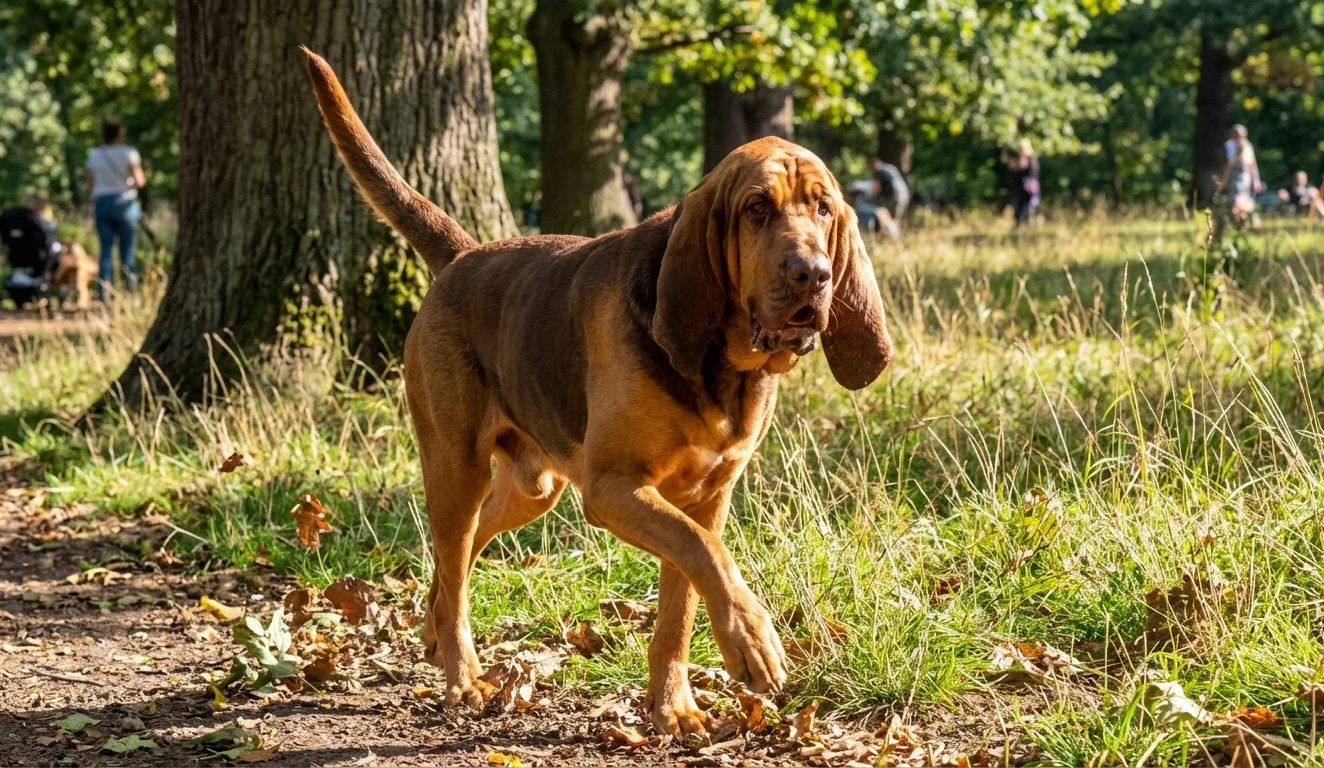
Bloodhounds are large, powerful dogs with a look that’s entirely their own. Males stand 25-27 inches and weigh 90-110 pounds. Females are 23-25 inches and 80-100 pounds. They’re solidly built dogs with long legs, a deep chest, and a back that’s strong enough to handle hours of sustained tracking.
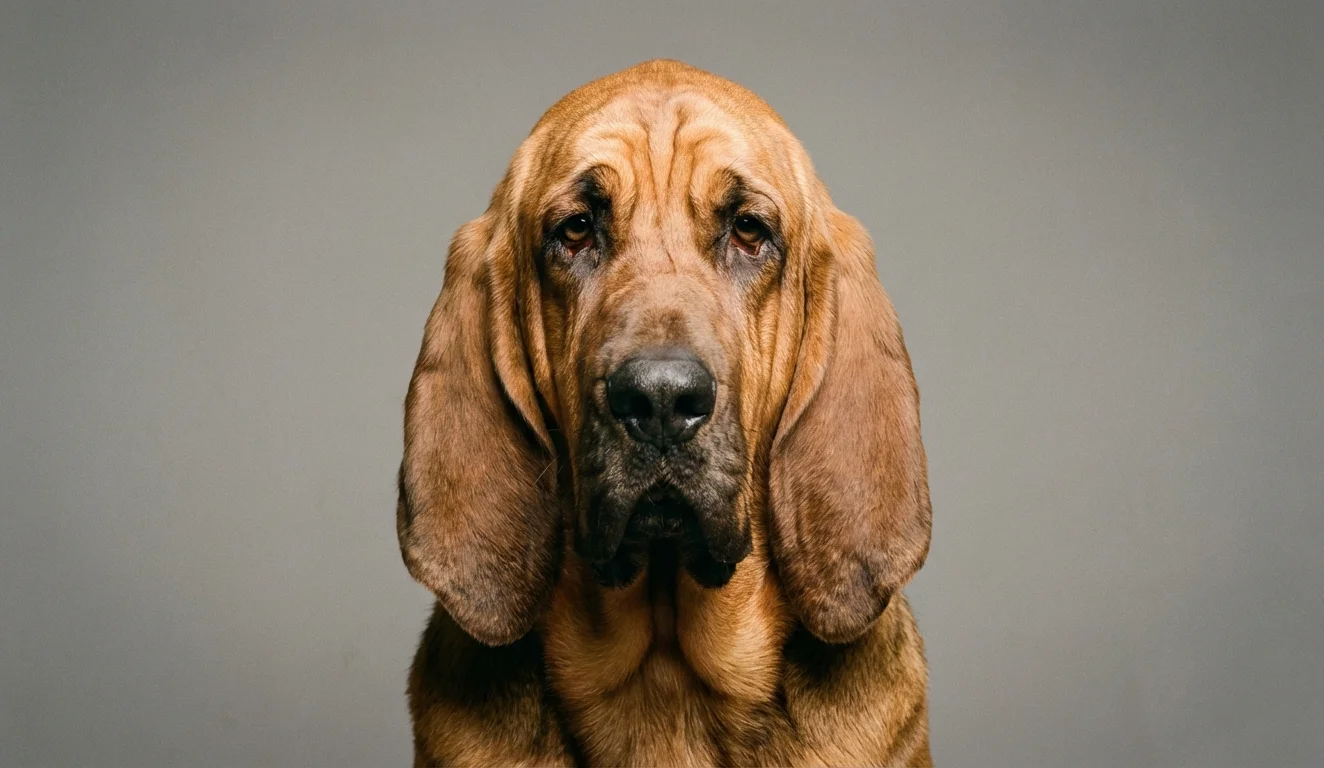
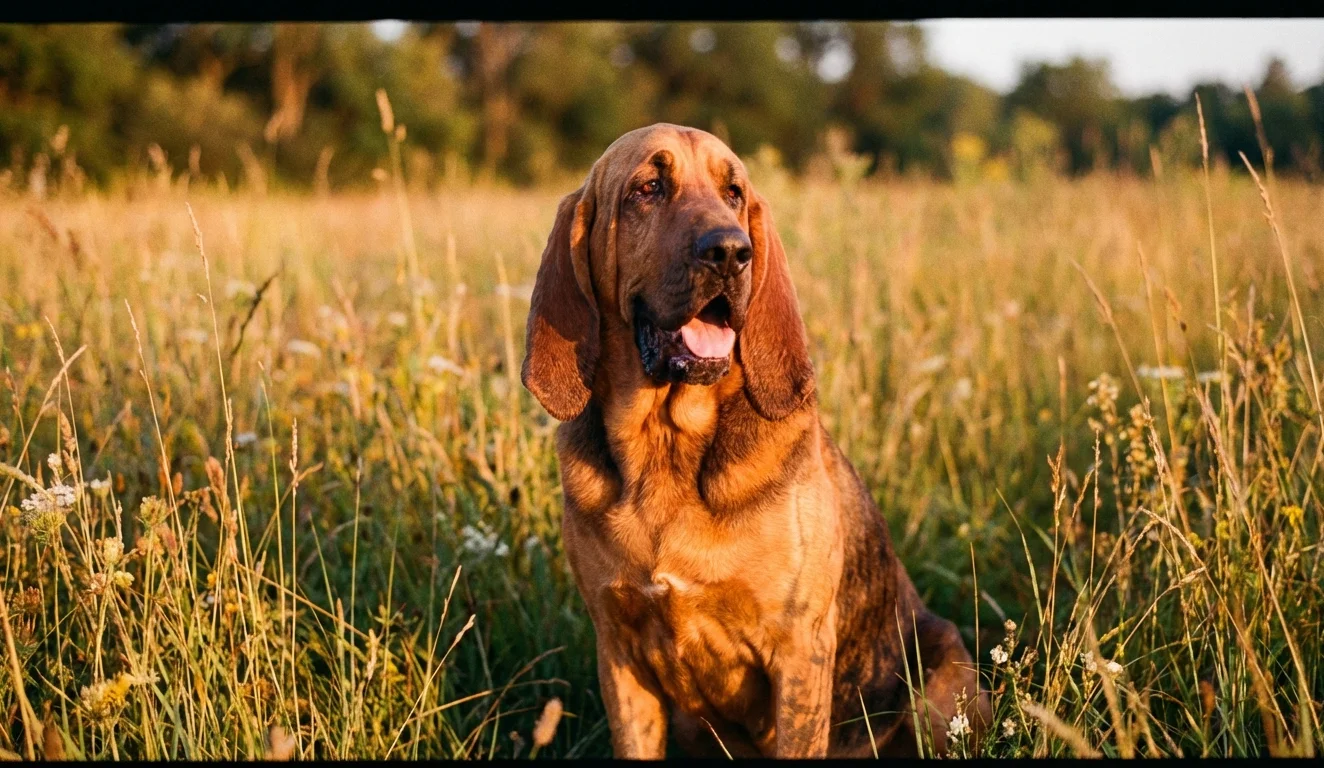
The face is the Bloodhound’s most recognizable feature. Deep wrinkles fold across the forehead and cheeks, and the skin on the face hangs loose in heavy folds. Those enormous, pendulous ears, among the longest of any breed, aren’t just decorative. Like the Basset Hound’s, they sweep scent from the ground up toward the nose. The loose facial skin traps scent particles around the nasal area.
The eyes are deep-set and soulful, with a droopy lower lid that gives the Bloodhound its classic “sad” expression. Combined with the wrinkles and the long ears, Bloodhounds look perpetually world-weary, like a detective who’s been on the force too long. It’s an appearance that has endeared the breed to millions and landed them in countless movies and cartoons.
The coat is short, thin, and loose, fitting the body like a suit a few sizes too big. Colors are black and tan, liver and tan, or red. The loose skin serves the breed’s tracking function by allowing the Bloodhound to push through dense brush without getting caught or injured.
Bloodhound Temperament
For a dog that looks so serious, Bloodhounds are remarkably goofy. They’re affectionate, gentle, and surprisingly clownish at home. The intense, focused tracker you see on a scent trail becomes a big, floppy, couch-sprawling goofball the moment the leash comes off indoors.
What Bloodhound owners deal with daily:
- Affectionate to the point of absurdity. Bloodhounds lean on people. They drape themselves across laps. They shove their wrinkled faces into yours for attention. They’re 100-pound dogs that think they’re lap dogs, and they’ll climb onto you to prove it.
- Independent, especially when tracking. This is the key temperament trait that makes or breaks the ownership experience. A Bloodhound that picks up a scent trail is a Bloodhound that has stopped caring about anything else. Commands, treats, your existence, all secondary to the nose. This isn’t a flaw. It’s exactly what the breed was designed to do. But it means off-leash reliability is basically nonexistent.
- Vocal. Bloodhounds bay, howl, and grumble. The baying is deep and carries far. They bay when they’re excited, when they’re tracking, when they want attention, and sometimes seemingly at random. If you live in a neighborhood where noise complaints are possible, take this seriously.
- Patient with children. Bloodhounds are tolerant, gentle dogs that do well with kids. Their size can be an issue with small children, not because of aggression, but because a wagging Bloodhound tail is like a whip and an excited Bloodhound doesn’t always know where its body ends.
Exercise Needs
Bloodhounds need about 60 minutes of exercise per day. Their energy level is moderate, they’re not hyperactive, but they need consistent daily activity to stay healthy and mentally balanced.
Walking is the simplest exercise, but the most satisfying exercise for a Bloodhound involves their nose. Scent work, tracking training, and trailing activities give this breed what it truly craves, a problem to solve with that incredible nose.
Exercise approaches that work for Bloodhounds:
- Long walks on leash, always leash. Always. A Bloodhound that catches a scent will follow it into traffic without a backward glance.
- Tracking and trailing activities, many kennel clubs offer tracking titles and workshops. This is the single best activity for a Bloodhound.
- Scent games in the yard, hide treats, toys, or articles and let them find them. A Bloodhound doing nose work is a content Bloodhound.
- A securely fenced yard for off-leash time. “Securely” means at least 6 feet tall and dig-proof at the base. Bloodhounds are more resourceful escape artists than most people realize.
Avoid high-impact exercise, especially with young dogs. Like many large breeds, Bloodhounds are susceptible to joint issues, and their heavy frame needs protection during the growth phase. No forced running until they’re at least 18 months old.
Grooming
Bloodhound grooming is straightforward in terms of the coat. The real work is in maintaining everything else.
The short coat needs weekly brushing with a bristle brush or rubber curry comb. They shed moderately, you’ll see hair on furniture and clothes, but it’s manageable compared to breeds with double coats. Bath time happens every 3-4 weeks or as needed, though bathing a 100-pound Bloodhound is its own adventure.
The parts that require real attention:
- Wrinkles. The deep facial folds trap moisture, dirt, food, and drool. If you don’t clean them regularly, daily is ideal, they develop bacterial or yeast infections that smell terrible and cause discomfort. A damp cloth and gentle drying does the job. Some owners use a small amount of cornstarch to keep the folds dry.
- Ears. Those magnificent long ears need daily inspection and weekly cleaning. They drag on the ground, they fall into food and water bowls, and they create a warm, moist environment perfect for infection. Ear infections are one of the most common health issues in Bloodhounds, and prevention is far better than treatment.
- Drool. Bloodhounds drool extensively. After drinking, after eating, when they’re excited, when they’re relaxed, when they exist, the drool is constant. Keep towels everywhere. Wipe the jowls regularly to prevent skin irritation from saliva buildup. Accept that your walls, furniture, and occasionally ceiling will have drool marks.
- Nails. Every 2-3 weeks, like most breeds.
Bloodhound Health Issues
Bloodhounds have a lifespan of 10-12 years, which is decent for a large breed. But several health issues are prevalent enough that every prospective owner should know about them.
Bloat (Gastric Dilatation-Volvulus)
This is the health concern that Bloodhound owners fear most. Bloat is common in the breed, more so than in many other large breeds. The deep chest and loose body structure make Bloodhounds particularly susceptible. The stomach fills with gas and can twist on itself (volvulus), cutting off blood supply. It’s a life-threatening emergency that requires immediate surgery costing $2,000-$7,500.
Preventive measures include feeding smaller meals two to three times daily rather than one large meal, avoiding exercise right after eating, and using slow-feeder bowls. Discuss preventive gastropexy with your vet, it can be performed during spay/neuter surgery and significantly reduces the risk of torsion.
Hip and Elbow Dysplasia
Both are common in Bloodhounds. Hip dysplasia treatment costs $1,500-$6,000 depending on severity. Elbow dysplasia runs $1,500-$4,000. Both conditions cause pain, lameness, and arthritis over time. Reputable breeders test both parents through OFA or PennHIP evaluations. Keeping your Bloodhound at a healthy weight reduces the strain on already vulnerable joints.
Ear Infections
Common enough to deserve their own section. Those beautiful long ears are an infection waiting to happen. The ear canal gets minimal airflow, moisture gets trapped, and bacteria thrive. Treatment per episode runs $100-$500. Prevention, weekly cleaning and keeping ears dry, is your best investment.
Cherry Eye
A moderate prevalence condition where the gland of the third eyelid prolapses, creating a red, swollen mass in the corner of the eye. It looks alarming but isn’t usually painful. Surgical correction costs $500-$1,500 and is typically successful. Left untreated, it can lead to dry eye and chronic irritation.
Short Lifespan Context
While 10-12 years is the stated range, some studies put the median Bloodhound lifespan closer to 8-10 years when accounting for bloat fatalities and cancer. This isn’t meant to scare you, it’s meant to set realistic expectations. Good breeding, preventive healthcare, and weight management give your Bloodhound the best shot at reaching the upper end of that range.
Training
Here’s the unvarnished truth: Bloodhounds are rated low on trainability scales, and living with one will teach you why. They’re not unintelligent, far from it. They’re just profoundly uninterested in doing things that don’t involve their nose.
A Bloodhound understands “sit.” A Bloodhound understands “come.” A Bloodhound will perform these commands beautifully in your kitchen when treats are involved. Take that same dog outside where the squirrel crossed the yard 45 minutes ago, and those commands cease to exist.
Realistic training expectations for Bloodhound owners:
- Basic obedience is achievable, but expect it to take longer than with most breeds. Repetition, patience, and really good treats are your tools.
- Off-leash recall will never be reliable. Accept this. Plan around it. A Bloodhound should always be on a leash or in a securely fenced area.
- Leash manners are essential because when a 110-pound dog decides to follow a scent trail, it can pull an adult off their feet. Start leash training early and consider a no-pull harness.
- House training takes time. Bloodhounds mature slowly. Four to six months for house training is typical, and accidents happen.
What actually motivates a Bloodhound in training: nose work. If you frame training as a tracking exercise, finding a hidden treat, following a scent trail to earn a reward, Bloodhounds engage completely. The trick is making training about what they want to do rather than fighting their nature.
Professional training classes are strongly recommended for first-time Bloodhound owners. A trainer experienced with hound breeds will save you months of frustration.
Bloodhound Cost
Purchase Price
A Bloodhound puppy from a reputable breeder costs $1,000-$2,000. Working Bloodhounds from proven trailing lines may cost more. The breeder should provide health clearances for hips, elbows, cardiac, and eyes.
Bloodhound rescue is less common than for some breeds, but organizations like the American Bloodhound Club Rescue typically charge $300-$600.
Monthly Costs
| Expense | Monthly Estimate |
|---|---|
| Food (high-quality large breed) | $60-$90 |
| Preventive vet care (averaged) | $20-$35 |
| Pet insurance | $40-$70 |
| Ear care and wrinkle supplies | $10-$20 |
| Treats and chews | $10-$20 |
| Miscellaneous (toys, supplies, drool towels) | $10-$25 |
| Total | $120-$250 |
First-Year Costs
Budget $3,500-$5,500 for the first year. The bloat risk alone makes pet insurance worth serious consideration, a single emergency surgery can cost more than a year of premiums. Factor in sturdy leashes, a heavy-duty crate, and cleaning supplies for the drool management that becomes a permanent part of your life.
Is a Bloodhound Right for You?
A Bloodhound is a great fit if you:
- Have dog experience and patience for a breed that marches to its own drummer
- Want a gentle, affectionate family dog that’s great with kids and other pets
- Have a securely fenced yard, not optional with this breed
- Are interested in tracking, trailing, or scent work activities
- Can handle drool, wrinkle care, ear maintenance, and baying at 6 AM
A Bloodhound is probably NOT right if you:
- Want a dog with reliable off-leash obedience
- Are a first-time dog owner without access to experienced trainers
- Live in an apartment or townhouse where noise is a concern
- Can’t commit to the daily maintenance that wrinkles and ears require
- Want a clean, low-drool household
Bloodhounds are magnificent, absurd dogs. They can track a person across 130 miles of terrain days after the trail was laid, but they can’t figure out that the couch is not a bed. They have noses that law enforcement agencies depend on, but they’ll also eat your shoes, drool on your walls, and howl at the moon because it looked at them wrong. We think they’re one of the most remarkable breeds humans have ever created. We also think most people shouldn’t own one. If you’re in that small group that can handle the mess, the stubbornness, and the noise, you’ll be rewarded with one of the most loving, devoted dogs you’ll ever meet.
Related Breeds
If you’re considering this breed, you might also want to look at:
Frequently Asked Questions
How far can a Bloodhound track a scent?
Bloodhounds have followed scent trails up to 130 miles long and tracked scents that are over 300 hours (12+ days) old. Their nose contains approximately 300 million scent receptors, about 40 times more than a human, and the wrinkled skin and long ears work together to funnel scent toward the nose. No other breed comes close to the Bloodhound’s tracking ability, which is why their trailing results are admissible as evidence in court.
Do Bloodhounds make good family dogs?
Bloodhounds are gentle, patient, and affectionate family dogs. They’re great with children and typically get along well with other dogs and even cats. The main family-related challenges are their size (they can accidentally knock over small children), their drool (it gets on everything), and their baying (it’s loud). Families who accept these trade-offs often find Bloodhounds to be wonderful companions. They’re not the right fit for families who want a tidy, quiet household.
Why do Bloodhounds drool so much?
It comes down to anatomy. Bloodhounds have loose, heavy jowls and pendulous lips that don’t contain saliva effectively. The loose facial skin that makes them exceptional trackers (it traps scent particles) also means there’s nothing keeping the drool in. They drool more when they’re eating, drinking, exercising, hot, or excited, which covers most of the day. There’s no medical fix for this, and no training solution. Drool management is simply part of Bloodhound ownership.
Are Bloodhounds hard to train?
Yes, compared to most breeds. Bloodhounds are intelligent but independent, they learn commands but don’t always choose to follow them, especially when competing with their tracking instinct. Positive reinforcement, patience, and nose-based training activities produce the best results. Harsh methods fail completely with this breed. Off-leash reliability is generally not achievable. Professional training classes with a hound-experienced instructor are strongly recommended, particularly for first-time Bloodhound owners.
How long do Bloodhounds live?
The official lifespan range is 10-12 years, though some studies suggest the average is closer to 8-10 years. Bloat, cancer, and cardiac issues are the primary causes of premature death. Preventive care, including discussing gastropexy with your vet, maintaining a healthy weight, and scheduling regular checkups, gives your Bloodhound the best chance at a long life. When choosing a breeder, ask about the longevity in their lines. A breeder whose dogs consistently live past 10 is doing something right.