Italian Greyhound Breed Guide: A Greyhound Shrunk in the Wash (2026)
Italian Greyhounds pack all the elegance and speed of a full-size Greyhound into a 7-14 pound package that will burrow under your blankets and never come out.
The Italian Greyhound (IG) stands 13-15 inches at the shoulder and weighs 7-14 pounds. They live 14-15 years. If you’ve ever looked at a Greyhound and thought “I love everything about this dog except the part where it weighs 70 pounds,” the Italian Greyhound is your answer. Same elegant silhouette. Same aerodynamic head. Same tendency to sleep in positions that look physically impossible. Just miniaturized, and with about 300% more personality crammed into that tiny frame.
In Short: 7–14 lbs, 14–15 years. Moderate energy. Minimal shedding. Watch for Leg Fractures and Dental Disease. Best for adults or families with older kids who want an affectionate, low-shedding companion that thinks it’s a much larger dog.
Let’s be honest up front: Italian Greyhounds are not for everyone. They’re fragile. Their legs break if they jump wrong. They’re notoriously difficult to housetrain. They despise cold weather with every fiber of their being and will stare at you in betrayal if you suggest they go outside in January. But the people who love IGs love them with an intensity that borders on religious devotion, because there’s nothing else quite like sharing your life with a miniature sighthound that vibrates with joy every time you walk through the door and then immediately demands to be carried to the couch.
Italian Greyhound at a Glance
| Trait | Details |
|---|---|
| Breed Group | Toy (AKC) |
| Height | 13-15 in |
| Weight | 7-14 lbs |
| Life Expectancy | 14-15 years |
| Coat | Short, smooth, fine |
| Colors | Black, Blue, Fawn, Red, Cream, Seal, Sable (with or without white markings) |
| Temperament | Affectionate, Playful, Alert |
| Shedding | Minimal |
| Energy Level | Moderate |
| Good With Kids | Older children only |
| AKC Recognition | 1886 |
History
The Italian Greyhound is genuinely ancient. Miniature greyhound-type dogs appear in art from the Mediterranean region dating back over 2,000 years. Skeletal remains of small sighthounds have been found in archaeological sites in Turkey and Greece from around the 6th century BC. The breed as we know it was refined in Renaissance Italy, hence the name, where it became a favorite of nobility and royalty.
The Italian Greyhound’s list of royal owners reads like a European history textbook: Catherine the Great of Russia kept dozens of them (she reportedly dressed them in jeweled collars). Frederick the Great of Prussia was so devoted to his IGs that he wanted to be buried with them, and was, eventually, in 1991 when his remains were moved to his final resting place alongside the graves of his dogs. Queen Victoria owned IGs. So did Mary Queen of Scots, who allegedly had her Italian Greyhound hidden under her skirts when she was executed in 1587.
The AKC recognized the breed in 1886. The breed nearly vanished in England after both World Wars, but American breeders maintained strong lines and helped rebuild the population. Today, the Italian Greyhound consistently ranks in the top half of AKC registrations and has a dedicated, passionate following.
Size and Appearance
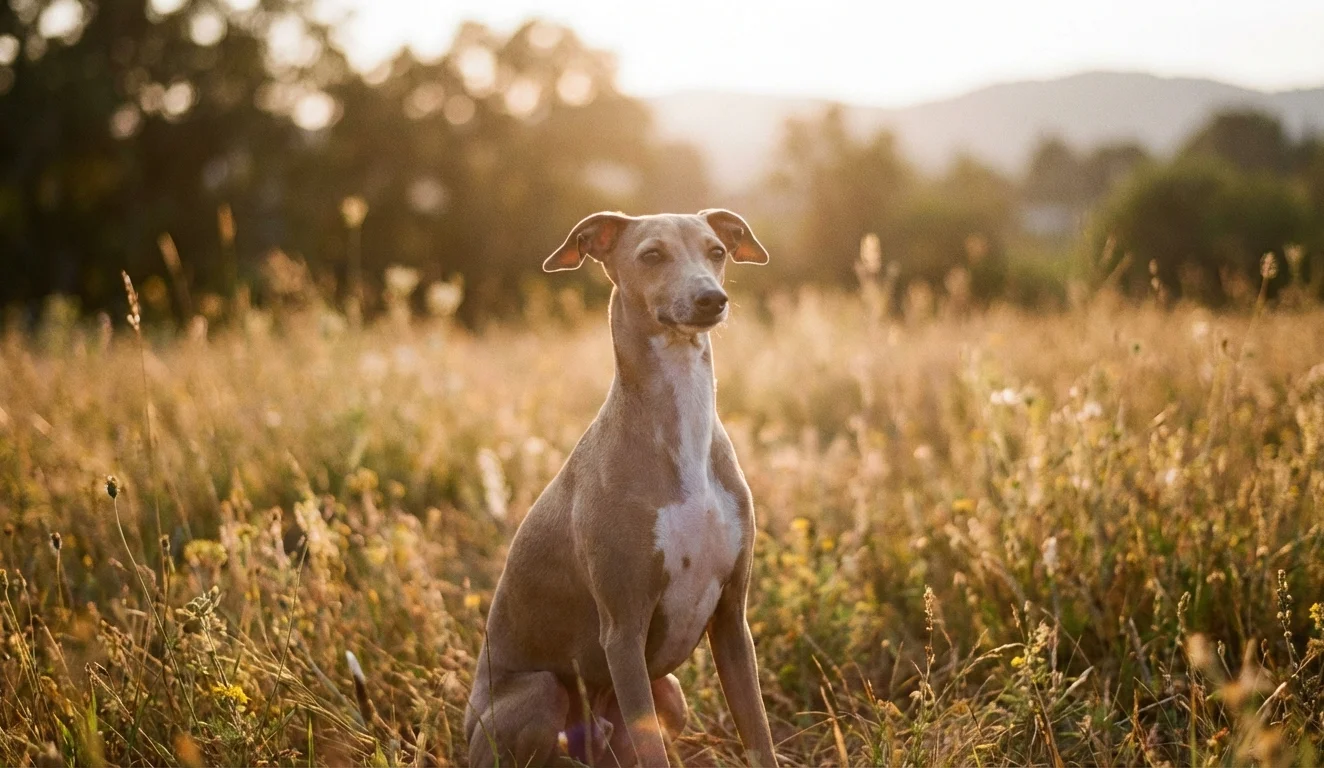
Italian Greyhounds are the smallest of the sighthound family. At 13-15 inches tall and 7-14 pounds, they’re about the same height as a Miniature Pinscher but with the long, lean proportions of their larger cousins. Everything about them looks delicate, because it is.
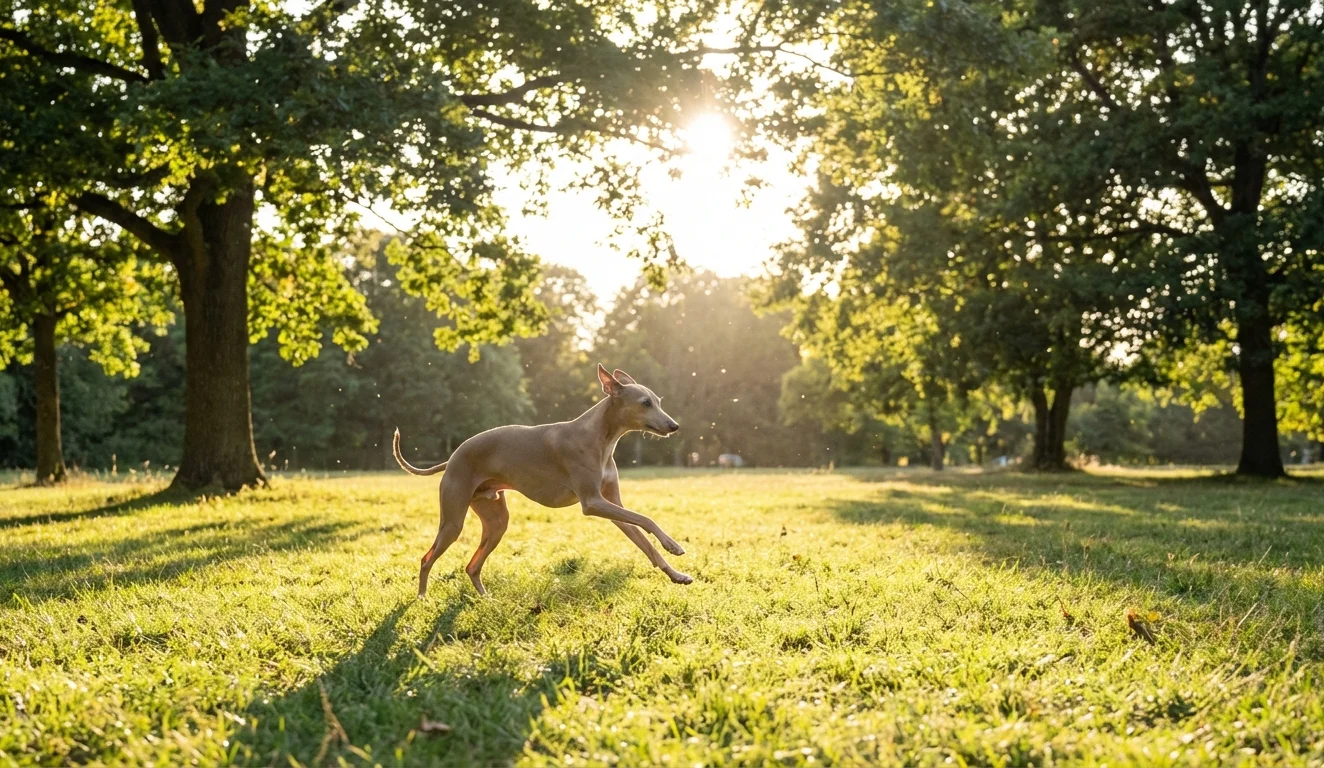
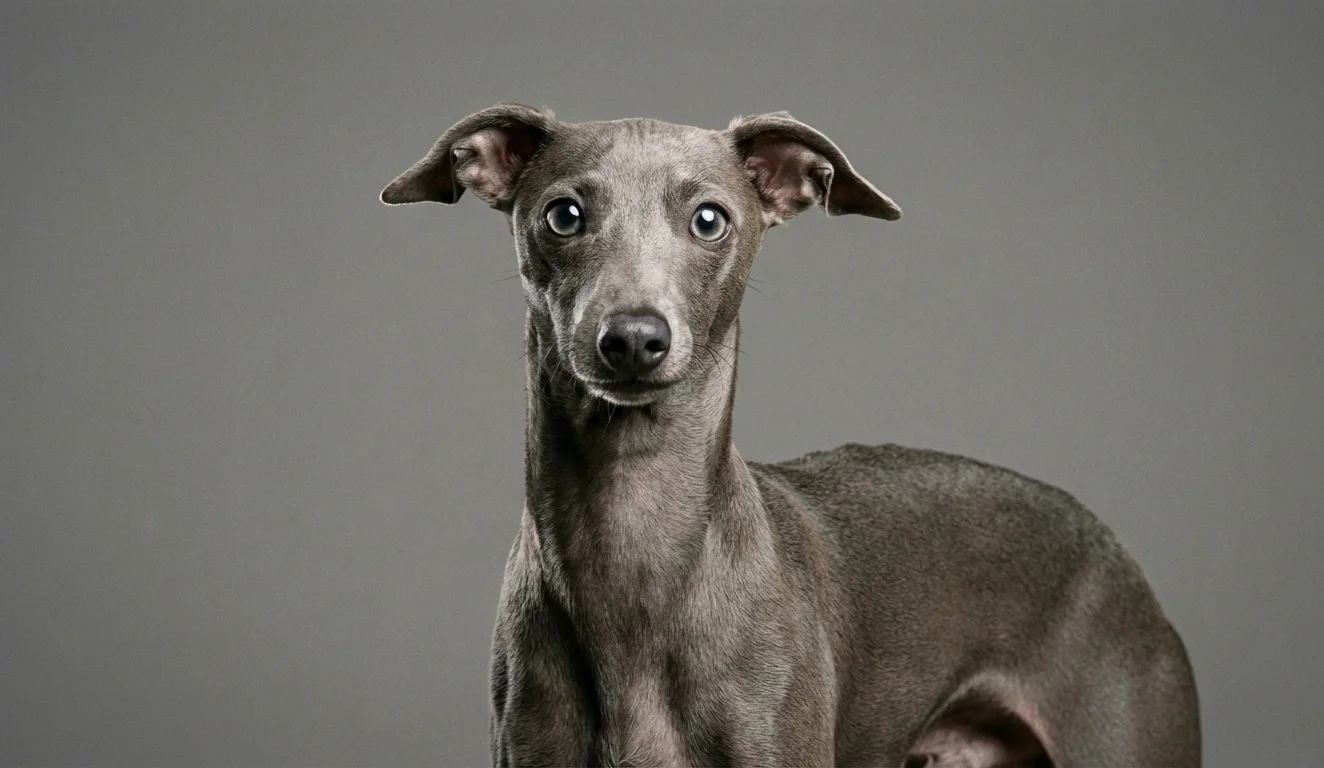
The body is slender and fine-boned, with a deep chest, tucked-up abdomen, and long, thin legs. The head is narrow and long, with a fine muzzle, large dark eyes, and rose-shaped ears that fold back along the neck. In motion, they have the same double-suspension gallop as Greyhounds and Whippets, just in miniature, and they’re surprisingly fast, reaching speeds of 25 mph.
The coat is short, glossy, and almost paper-thin. You can see veins through it. This means IGs have essentially zero protection against cold, rain, or rough terrain. A winter coat isn’t a fashion statement for this breed, it’s medical equipment.
Italian Greyhound Temperament
IGs are affectionate to the point of absurdity. They want to be touching you at all times. On your lap, in your sweater, under your blankets, inside your jacket. If they could climb inside your ribcage and live there, they would consider it.
What living with an Italian Greyhound is actually like:
- They’re velcro dogs. IGs bond tightly to their people and want constant physical contact. Separation anxiety is extremely common in the breed. If you work outside the home for long hours, an IG is going to struggle unless you have a second dog or a pet sitter.
- They’re playful and goofy. Despite their elegant appearance, IGs are clowns. They do “zoomies” around the house at startling speed, bounce off furniture, play-bow with dramatic flair, and engage in elaborate games with toys. The dignified Renaissance lapdog persona is marketing, these dogs are silly.
- They’re alert barkers. IGs will notify you of every delivery person, squirrel, leaf, and suspicious shadow. They’re not aggressive, but they are vocal. Training can moderate this, but you probably won’t eliminate it.
- They’re timid with strangers. Most IGs are reserved around new people and need warm-up time. Forced interactions with strangers can create fear-based issues. Let the dog approach on its own terms.
- They burrow. Italian Greyhounds are tunneling specialists. They’ll disappear into blankets, cushions, laundry piles, and any other soft material they can find. Check before you sit down.
Exercise Needs
Italian Greyhounds need about 30-45 minutes of exercise per day. This can be walks, play sessions in a fenced yard, or indoor zoomie time (which they’ll initiate whether you want them to or not).
Despite their size, IGs benefit from short sprinting sessions in a safely enclosed area. They’re sighthounds, they want to run. But “safely enclosed” is the operative phrase. IGs can fit through surprisingly small gaps in fences, and their prey drive means they’ll chase rabbits, squirrels, and blowing leaves with single-minded intensity. A standard 4-foot fence isn’t enough. 5-6 feet is recommended, with no gaps at the base.
Leash walks work well, but use a harness rather than a collar. IG necks are delicate, and a collar can damage the trachea if the dog lunges. A martingale collar is acceptable if properly fitted, but a Y-front harness distributes pressure more safely.
In cold weather, reduce outdoor time and use a fleece-lined coat. IGs will refuse to go outside in rain or snow, and they’re not being dramatic, they genuinely can’t thermoregulate well with so little body fat and such thin coats. Pee pad training as a bad-weather backup is common in the IG community and isn’t a failure. It’s practical.
Grooming
Italian Greyhounds are about as low-maintenance as it gets in the grooming department.
- Weekly wipe-down with a damp cloth or grooming mitt, the thin coat barely sheds and doesn’t trap dirt
- Bath every 6-8 weeks (they fit in your kitchen sink, which makes this refreshingly easy compared to larger breeds)
- Nail trims every 2-3 weeks: their fine nails grow quickly
- Dental care 4-5 times per week: this is not optional (see health section)
- No professional grooming needed unless you want it
Shedding is minimal. The thin single coat produces very little loose hair, and there’s no undercoat to blow seasonally. IG owners report less dog hair on furniture and clothing than with almost any other breed.
Italian Greyhound Health Issues
Italian Greyhounds are generally long-lived dogs (14-15 years is common), but they have some specific vulnerabilities that prospective owners should understand.
Leg Fractures
This is the big one. Italian Greyhounds have fine, delicate bones, and leg fractures, particularly of the radius and ulna (foreleg), are disturbingly common. The Italian Greyhound Club of America has identified fractures as the breed’s most significant health concern. A jump from a couch, a rough play session, or a bad landing can snap a leg. Puppies and young adults (under 2) are most vulnerable because their bones haven’t fully mineralized. Fracture repair costs $2,000-$5,000 depending on severity and approach (surgical pinning or casting). Prevention means limiting jumping from heights, not allowing IGs to leap off beds or furniture, and supervising play with larger dogs.
Dental Disease
Italian Greyhounds have some of the worst dental health of any breed. Their small jaws crowd the teeth, creating pockets where bacteria thrive. Without rigorous dental care, most IGs will develop periodontal disease by middle age. A 2019 study in the Journal of Veterinary Dentistry found that toy breeds in general, and sighthound toy breeds specifically, had the highest rates of tooth loss. Professional dental cleanings ($300-$800 per session) may be needed annually or even more frequently. Extractions, when needed, add $500-$2,000. Daily brushing is the single best preventive measure.
Progressive Retinal Atrophy (PRA)
PRA is a genetic eye condition that causes progressive vision loss and eventual blindness. It’s been identified in the Italian Greyhound population, and responsible breeders screen for it. There’s no treatment, but blind IGs can live full, happy lives in familiar environments. Genetic testing of breeding stock helps reduce incidence. Ask your breeder about PRA testing status.
Hypothyroidism
Like their larger Greyhound cousins, Italian Greyhounds have naturally lower thyroid levels than most breeds. True hypothyroidism does occur, with symptoms including weight gain, coat thinning, and lethargy. Treatment is inexpensive ($20-$40/month for levothyroxine) but requires accurate diagnosis using sighthound-appropriate reference ranges.
Color Dilution Alopecia
IGs in blue (dilute) colors are susceptible to color dilution alopecia, a condition where the hair in dilute-colored areas becomes thin, brittle, and eventually falls out. It’s not life-threatening, but it’s permanent and can lead to skin infections. Treatment costs $200-$500 annually for ongoing skin care.
Training
Italian Greyhounds are intelligent dogs that learn quickly when motivated. The challenge isn’t intelligence, it’s motivation. An IG decides whether a given command is worth complying with, and the calculus doesn’t always go in your favor.
Housetraining is the breed’s Achilles’ heel. IGs are notoriously difficult to housetrain, and experienced breeders will tell you this upfront. The combination of small bladder, cold-weather aversion (they won’t go outside in bad weather), and general stubbornness means that accidents can continue well into adulthood if you don’t stay vigilant. Consistent schedules, crate training, and positive reinforcement are the proven approach. Many IG owners use indoor potty stations (pee pads or artificial grass trays) as a permanent supplement, not a training failure.
Socialization is important. IGs are naturally reserved, and without positive exposure to various people, places, and situations, they can become fearful. A fearful IG may react with trembling, hiding, or stress-related aggression. Start socialization early and keep it positive, never force the dog into situations that scare it.
Cost
Purchase Price
An Italian Greyhound puppy from a reputable breeder costs $1,400-$2,500. Show-quality puppies from champion lines can reach $3,000+. Given the breed’s fracture risk and dental issues, buying from a health-testing breeder who screens for PRA and other genetic conditions is worth the investment.
Monthly Costs
| Expense | Monthly Estimate |
|---|---|
| Food (toy breed formula) | $20-$40 |
| Preventive vet care (averaged) | $15-$35 |
| Pet insurance | $25-$50 |
| Dental care supplies | $10-$20 |
| Treats and chews | $10-$15 |
| Miscellaneous (coats, sweaters, blankets) | $10-$20 |
| Total | $90-$180 |
First-Year Costs
Beyond the purchase price, first-year costs run $1,500-$3,000. This includes vaccinations, spay/neuter, a crate, multiple coats and sweaters (you’ll need at least 3-4 depending on your climate), an orthopedic bed, dental supplies, initial vet visit, and microchipping. Pet insurance is recommended, a single leg fracture can cost $2,000-$5,000, and they’re more likely to happen in the first two years.
Is an Italian Greyhound Right for You?
An Italian Greyhound could be a great fit if you:
- Want a small, affectionate, low-shedding companion dog
- Spend a lot of time at home (or can bring your dog with you, IGs are portable)
- Have patience for housetraining challenges
- Appreciate a dog with personality and independence
- Live in a moderate-to-warm climate (or are willing to outfit your dog in winter gear)
- Don’t have very young children (IGs are too fragile for toddler handling)
An Italian Greyhound is probably not right if you:
- Have small children who might handle the dog roughly (a toddler can break an IG’s leg)
- Want a dog that’s easy to housetrain
- Live in a very cold climate and don’t want to deal with a dog that refuses to go outside five months of the year
- Want a dog that greets strangers enthusiastically
- Need a dog that’s comfortable being left alone for long workdays
- Want an off-leash dog for hiking or outdoor adventures (prey drive plus fragile bones equals no)
Italian Greyhound people are a specific type. They’re the ones with fleece-lined snoods in their coat pockets and pee pad stations tucked discreetly in the bathroom. They carry their dogs into restaurants and tuck them into carrier bags at the airport. They’ve learned to check every blanket pile before sitting down. And they wouldn’t trade their weird, fragile, stubborn, impossibly affectionate little sighthound for any other breed on earth. There’s something about an IG that gets under your skin, possibly because it’s already under your blankets.
Related Breeds
If you’re considering this breed, you might also want to look at:
Frequently Asked Questions
Are Italian Greyhounds good apartment dogs?
Excellent apartment dogs. They’re small, quiet (relative to many toy breeds, though they do alert-bark), and their exercise needs are modest. The main apartment consideration is housetraining, having a balcony potty area or indoor pad station makes life much easier. They don’t need a yard, but they do need a safe enclosed space for occasional sprints.
Do Italian Greyhounds get along with cats?
It varies by individual. Italian Greyhounds are sighthounds with prey drive, and some will chase cats. Others coexist peacefully, especially if raised together. The IG’s small size means the power dynamic with cats is more equal than with larger sighthounds, many cats are bigger than IGs, which tends to temper the chase instinct. Slow introductions and supervision are necessary.
How cold is too cold for an Italian Greyhound?
Most IGs start showing discomfort below 45-50 degrees Fahrenheit. Below freezing, they need a well-insulated coat and booties, and outdoor time should be brief. Many IG owners find that their dogs flatly refuse to go outside when it’s raining, snowing, or below about 40 degrees. This isn’t stubbornness you can train away, they literally can’t maintain body temperature effectively due to their thin coat, minimal body fat, and high surface-area-to-volume ratio. Indoor potty options are a practical necessity in cold climates.
Why are Italian Greyhounds so hard to housetrain?
Several factors converge: small bladders (they physically can’t hold it as long as larger breeds), sensitivity to cold and wet conditions (they won’t go outside in bad weather), and a sighthound independence streak that makes them less eager to comply with your preferred bathroom schedule. The Italian Greyhound Club of America acknowledges housetraining as the breed’s most common owner complaint. Success requires consistency, patience, frequent outdoor trips, and realistic expectations. Many long-time IG owners use indoor potty stations as a permanent solution, not a temporary crutch.
How fragile are Italian Greyhounds really?
The fracture risk is real and not overstated. The Italian Greyhound Health Foundation reports that leg fractures are the number one health concern in the breed, particularly in dogs under 2 years old. The radius and ulna in the foreleg are especially vulnerable. Common fracture scenarios include jumping from furniture, rough play with larger dogs, and slipping on hard floors. This doesn’t mean IGs are made of glass, adults with fully mineralized bones are sturdier than puppies, but it does mean you need to manage their environment. No jumping from heights. No unsupervised play with big dogs. Area rugs on hard floors. It becomes second nature quickly.