Brussels Griffon Breed Guide: The 9-Pound Dog With a 90-Pound Personality (2026)
Brussels Griffons have the face of a tiny, judgmental old man and the personality of someone who firmly believes they're running the household. They're right.
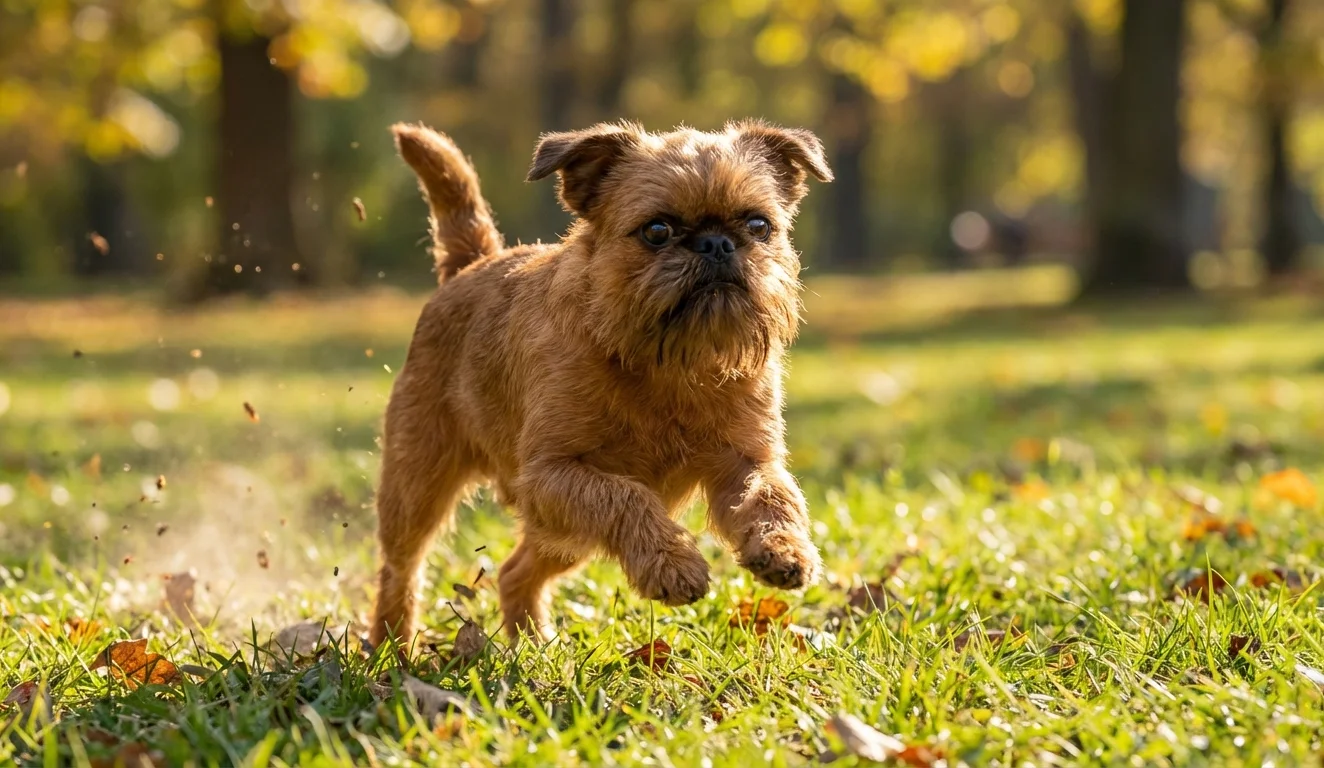
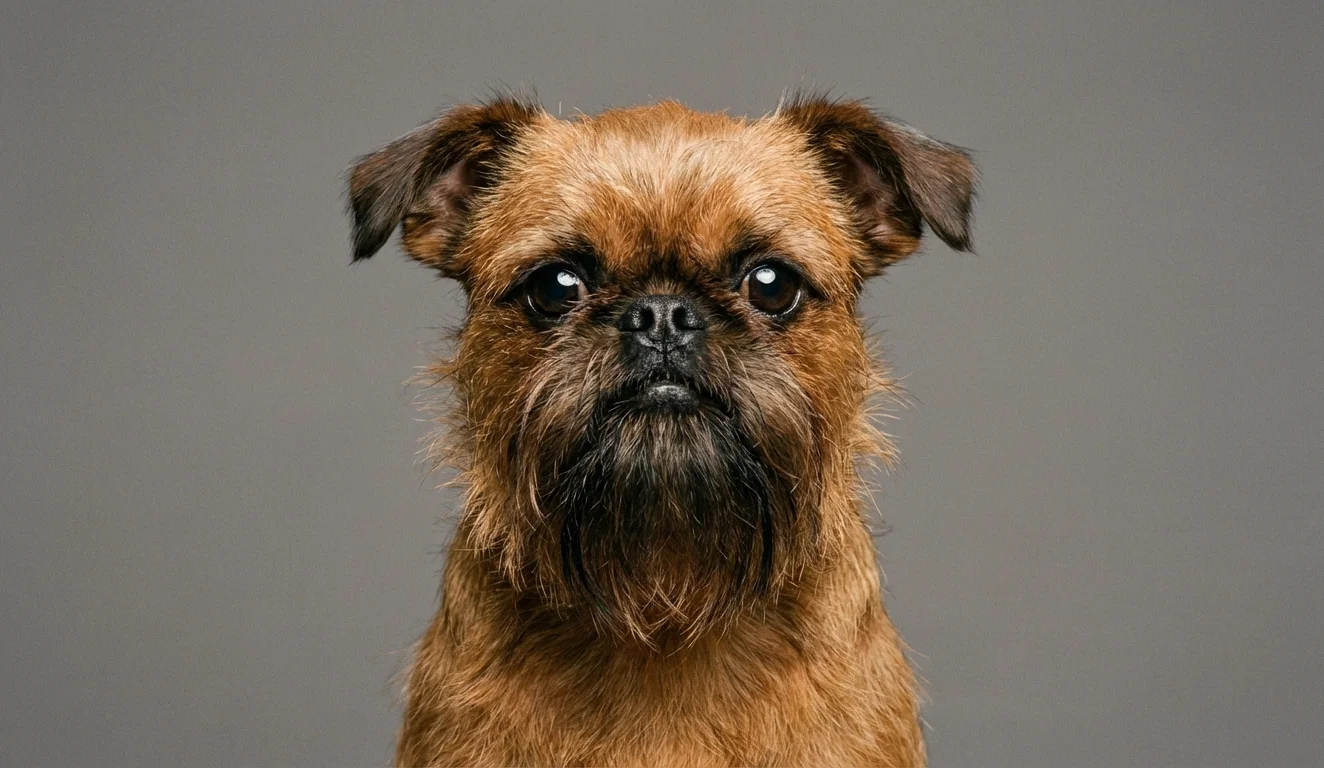
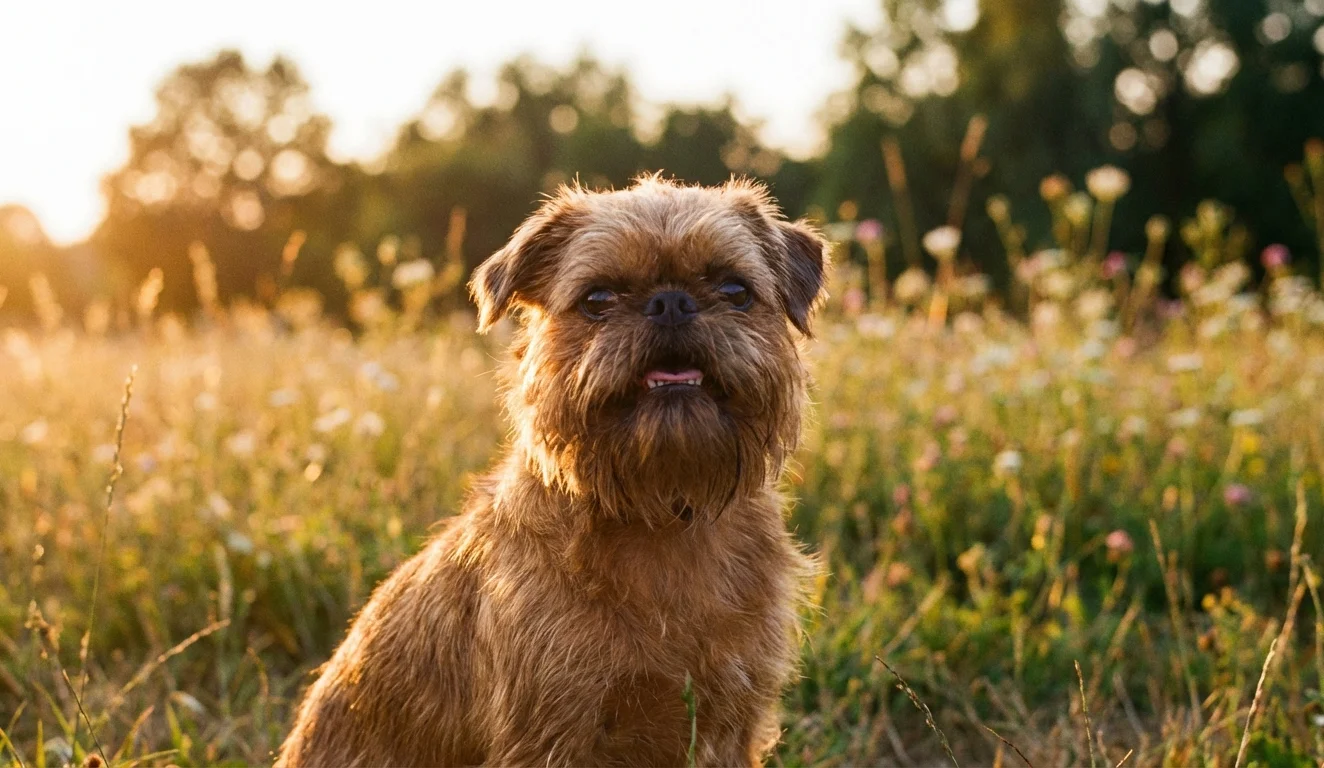
The Brussels Griffon stands 7-10 inches at the shoulder and weighs 8-10 pounds. They live 12-15 years. If you’ve ever seen a Brussels Griffon and thought, “That dog looks like a tiny, disapproving Victorian gentleman,” you’re not alone, it’s the single most common first impression the breed makes. The pushed-in face, the prominent chin, the huge dark eyes, and the wiry beard combine to create an expression that says, “I’ve seen everything, I’m not impressed, and I’d like to speak with your manager.” Then the dog climbs into your lap, demands to be held, and you realize the disapproving face is just the packaging. Inside is one of the most affectionate, emotionally intense dogs in the toy group.
In Short: 8–10 lbs, 12–15 years. Moderate energy. Low shedding (rough coat) or moderate shedding (smooth coat). Watch for Eye Injuries and Patellar Luxation. Best for adults or families with older children who want a velcro companion with enormous personality and don’t mind a dog that needs to be in physical contact at all times.
The Brussels Griffon got a massive visibility boost from the 1997 movie As Good As It Gets, where Jack Nicholson’s character reluctantly falls in love with a Griffon named Verdell. The movie perfectly captured the breed’s dynamic: they’re pushy, demanding, impossibly cute, and they will break down every emotional wall you’ve built until you’re carrying a 9-pound dog everywhere you go and talking to it like a person. Brussels Griffon owners are a specific type, the kind who rearrange their lives around a dog that weighs less than a bowling ball.
Brussels Griffon at a Glance
| Trait | Details |
|---|---|
| Breed Group | Toy (AKC) |
| Height | 7-10 in |
| Weight | 8-10 lbs |
| Life Expectancy | 12-15 years |
| Coat | Rough (wiry, dense) or Smooth (short, glossy) |
| Colors | Red, Belge (black and reddish brown), Black and Tan, Black |
| Temperament | Alert, Curious, Loyal |
| Shedding | Low (rough coat) / Moderate (smooth coat) |
| Energy Level | Moderate |
| Good With Kids | Best with older, gentle children |
| AKC Recognition | 1910 |
History
The Brussels Griffon originated in Brussels, Belgium (surprise), where it started as a much less glamorous dog than its current toy status suggests. In the early 1800s, Griffon-type dogs were kept by coachmen in Brussels as stable ratters, small, tough dogs that lived in the horse stables and kept the rat population under control. These early Griffons were larger and scruffier than the modern breed.
During the 19th century, Belgian breeders crossed the stable ratters with imported toy breeds, likely including Pugs, King Charles Spaniels, and Yorkshire Terriers. The crosses reduced the dog’s size, refined its appearance, and introduced the flat face. (The smooth-coated variety, sometimes called the Brabancon, likely got its coat type from the Pug crosses.) Queen Marie Henriette of Belgium became a devoted fan of the breed in the 1870s, and royal patronage boosted the Griffon from stable ratter to fashionable companion.
The AKC recognized the breed in 1910. World Wars I and II nearly destroyed the European population, Belgium was devastated, and luxury dog breeding wasn’t a priority during occupation. English and American breeders preserved the breed through both wars. Today, the Brussels Griffon ranks around 95th in AKC registrations. It’s a niche breed with a cult following, the kind of dog that most people have never met, but everyone who has one can’t stop talking about.
Size and Appearance
Brussels Griffons are tiny, thickset, and square-proportioned. Despite weighing only 8-10 pounds, they have a sturdy, cobby build, these aren’t fragile, wispy toy dogs. The body is compact with a broad chest, level back, and a tail carried high (traditionally docked in the US, though natural tails are increasingly common).
There are two coat types. The rough coat is dense, wiry, and stands slightly off the body, giving the dog a scruffy, unkempt look that’s completely intentional. The signature beard and mustache create the “old man face” that defines the breed’s appeal. The smooth coat (Brabancon) is short, tight, and glossy, no beard, no mustache, just a clean-faced version that looks surprisingly different from its rough-coated sibling. Both types come in the same colors: red (the most common), belge (a mix of black and reddish-brown), black and tan, and solid black.
The head is large relative to the body, it’s one of the breed’s defining features. The skull is round, the forehead is domed, and the eyes are large, round, dark, and set wide apart. The face is flat (brachycephalic), with an upturned lower jaw that gives many Griffons a distinctive underbite. The expression, depending on the angle and the lighting, ranges from “mildly concerned professor” to “tiny dog who has had enough of your nonsense.”
Brussels Griffon Temperament
Brussels Griffons have approximately ten times more personality than their size should allow. They’re intense, expressive, emotionally demanding, and absolutely convinced they’re the most important being in any room.
What living with a Brussels Griffon is actually like:
- They’re velcro dogs on steroids. If you thought Labs were clingy, you haven’t met a Griffon. They want to be on you, next to you, or, ideally, carried by you at all times. Separation anxiety is extremely common in the breed. A Griffon left alone for too long will bark, howl, and potentially develop destructive behaviors. This is a breed for people who are home a lot or can bring their dog with them.
- They’re expressive. Brussels Griffons have an almost human range of facial expressions. They look worried, confused, delighted, offended, and smug, sometimes all within 30 seconds. Owners learn to read these expressions quickly and find themselves having full conversations with a 9-pound dog. This is normal. This is what Griffons do to people.
- They’re bossy. Griffons have opinions about everything, when you eat, where you sit, who gets to be on the bed, which side of you is theirs. They communicate these opinions through barking, pawing, and a persistent stare that would be intimidating if it came from a bigger dog.
- They’re selective about their social circle. Griffons bond intensely with their primary person (or household) and are often reserved or suspicious with strangers. They warm up, but it takes time. Forced introductions to unfamiliar people can produce stress or snapping.
- They’re surprisingly playful. Despite the dignified face, Griffons are clowns. They play with toys, initiate games, do the “Griffon zoomie” (a low-to-the-ground sprint that’s faster than you’d expect), and generally keep their household entertained with antics.
Exercise Needs
Brussels Griffons need about 25-35 minutes of exercise per day. A couple of short walks and some indoor play keeps them happy. They’re moderately active for a toy breed, not as sedate as a Pekingese, not as wired as a Yorkshire Terrier.
Mental stimulation is just as important as physical exercise. Puzzle toys, short training sessions, and interactive games engage the Griffon’s clever, curious mind. A bored Griffon becomes a destructive or excessively barky Griffon.
Like all brachycephalic breeds, Brussels Griffons are heat-sensitive. The flat face means less efficient cooling through panting. Keep summer exercise to cool parts of the day, ensure constant access to water, and watch for signs of overheating (heavy panting, drooling, lethargy). Air conditioning isn’t a luxury for this breed in warm climates, it’s a health requirement.
The Griffon’s small size makes it perfectly suited to apartment living. Their exercise needs can be fully met without a yard. Just be aware that barking can be an issue in close-quarter living, Griffons alert to sounds and they’re not quiet about it.
Grooming
Grooming needs depend entirely on coat type.
Rough coat:
- Hand-stripping every 3-4 months (or clippering, which changes the coat texture but is easier). Hand-stripping involves pulling dead hair from the coat to maintain the proper wiry texture. Many pet owners opt for clippering instead, which is faster but produces a softer coat. Budget $60-$100 per professional grooming session
- Weekly brushing with a slicker brush to remove debris and prevent matting in the beard and leg furnishings
- Beard cleaning after meals: the wiry facial hair traps food. A quick wipe after eating prevents bacterial buildup
- Minimal shedding: the rough coat holds dead hair until it’s stripped or clipped
Smooth coat:
- Weekly brushing with a rubber curry mitt
- Bath every 6-8 weeks
- Moderate shedding: more than the rough coat, but manageable
- No professional grooming required unless you want it
Both coat types:
- Nail trims every 2-3 weeks
- Dental care 4-5 times per week: toy breeds with crowded mouths need diligent dental care
- Eye cleaning daily: the large, prominent eyes produce some discharge. Wipe gently with a damp cloth
- Ear cleaning weekly
Brussels Griffon Health Issues
Brussels Griffons are moderately healthy for a toy breed, with lifespans of 12-15 years. Their brachycephalic structure and small gene pool create some specific vulnerabilities.
Eye Injuries and Conditions
Those large, prominent, slightly protruding Griffon eyes are the breed’s most vulnerable feature. Corneal ulcers and scratches are common, they can happen from rough play, pawing at the face, or contact with vegetation during walks. Proptosis (the eye displacing from the socket) is a risk, though less common than in Pekingese due to the Griffon’s slightly less extreme facial structure. Treatment for corneal injuries ranges from $100-$500 for simple ulcers to $1,500-$3,000 for surgical cases. Dry eye (KCS) also occurs in the breed. Annual eye exams are recommended.
Patellar Luxation
OFA data shows Brussels Griffons among toy breeds with elevated patellar luxation rates. Mild cases (Grade 1-2) may need only weight management and monitoring. Severe cases (Grade 3-4) require surgical correction ($1,500-$3,000 per knee). All breeding Griffons should have patella evaluations.
Syringomyelia and Chiari-like Malformation
This neurological condition, more commonly associated with Cavalier King Charles Spaniels, has been identified in Brussels Griffons as well. The skull may be too small for the brain, causing the cerebellum to herniate into the spinal canal. This can lead to fluid-filled cavities (syrinxes) in the spinal cord, causing pain, scratching at the air near the ears, and neurological symptoms. Diagnosis requires MRI ($1,500-$3,000), and treatment ranges from pain management medications ($50-$150/month) to surgery ($5,000-$10,000). Research is ongoing, and responsible breeders are beginning to screen for this condition.
Reproductive Difficulties
Brussels Griffons have one of the highest rates of difficult births (dystocia) among all breeds, the large head and narrow pelvis make natural whelping risky. Cesarean sections are common, with some breeders reporting C-section rates above 60%. This is relevant primarily to breeders, but it explains why Brussels Griffon litters are small (2-3 puppies typically) and puppies are expensive. It also contributes to the breed’s relative scarcity.
Training
Brussels Griffons are smart, they learn commands quickly and retain them well. The challenge is the same one you face with most toy breeds: they’re used to getting their way through sheer force of cuteness, and they don’t see why they should stop now.
Positive reinforcement works beautifully. Griffons are food-motivated and respond well to treat-based training. They’re also emotionally sensitive, harsh corrections produce a wounded expression that will make you feel terrible and a dog that becomes stubborn rather than compliant. Keep it positive, keep it fun, keep the treats flowing.
Short sessions (5-8 minutes) are ideal. Griffons engage enthusiastically but lose focus if drilled on the same exercise repeatedly. Mix up commands, incorporate play, and end on a success.
Housetraining is a common challenge with Brussels Griffons. Small bladder, sensitivity to cold and wet weather, and a certain “I’ll go when I feel like it” attitude combine to make the process slower than with many breeds. Consistent scheduling, crate training (use a small crate, they’re tiny, and a too-large crate undermines the denning instinct), and patience are the formula. Many Griffon owners maintain an indoor potty station as a permanent backup for bad weather days.
Socialization is important to prevent the breed’s natural reserve with strangers from becoming fearfulness or snappiness. Start early, go slowly, and make all new experiences positive. Puppy kindergarten classes are an excellent investment, the controlled environment lets your Griffon meet other dogs and people at its own pace.
Cost
Purchase Price
A Brussels Griffon puppy from a reputable breeder costs $2,000-$4,000. The high price reflects the breed’s reproductive difficulties (frequent C-sections), small litter sizes, and relative rarity. Show-quality puppies from champion lines can exceed $5,000. Wait lists of 6-12 months are common with reputable breeders.
Rescue Griffons are occasionally available through the National Brussels Griffon Rescue for $250-$500, but they’re not common.
Monthly Costs
| Expense | Monthly Estimate |
|---|---|
| Food (toy breed, high-quality) | $20-$35 |
| Preventive vet care (averaged) | $15-$35 |
| Pet insurance | $25-$50 |
| Professional grooming (rough coat, averaged) | $20-$35 |
| Treats and chews | $10-$15 |
| Miscellaneous (toys, supplies) | $10-$15 |
| Total | $100-$185 |
First-Year Costs
Beyond the purchase price, first-year costs run $1,800-$3,200. This includes vaccinations, spay/neuter, a small crate, grooming tools, initial vet exams, microchipping, and an initial eye examination. If you opt for pet insurance (recommended given the eye and orthopedic risks), factor in $300-$600 for the first year’s premiums.
Is a Brussels Griffon Right for You?
A Brussels Griffon could be a great fit if you:
- Want a small dog with massive personality
- Are home frequently (work from home, retired, or can bring your dog with you)
- Want a deeply bonded, emotionally engaged companion
- Live in an apartment or small home
- Enjoy a dog that’s entertaining, expressive, and slightly demanding
- Can handle some barking (training helps, but some is inevitable)
- Have older children who understand how to handle small dogs gently
A Brussels Griffon is probably not right if you:
- Are away from home for long hours daily (separation anxiety is almost guaranteed)
- Have toddlers or very young children (Griffons are small and can be injured by rough handling. They may also snap if pushed)
- Want a quiet, easygoing dog that blends into the background
- Want a dog for outdoor adventures or serious exercise
- Prefer an emotionally independent dog that doesn’t need constant attention
- Are on a tight budget (purchase price and potential health costs are significant)
- Want a dog that loves everyone immediately
The Brussels Griffon is not for people who want a quiet, unobtrusive pet. It’s for people who want a relationship, a small, intense, endlessly entertaining relationship with a dog that has more personality per pound than any other breed on earth. They’ll take over your lap, your schedule, and your heart, roughly in that order. The disapproving face is just the cover. Inside is a dog so devoted, so emotionally present, and so ridiculously charming that most Griffon owners can’t imagine life without one. Or, eventually, without two.
Related Breeds
If you’re considering this breed, you might also want to look at:
Frequently Asked Questions
Are Brussels Griffons good apartment dogs?
Very good apartment dogs. They’re tiny, moderately active, and don’t need a yard. The main apartment concern is barking, Griffons alert to sounds, and in an apartment building with shared hallways, there are a lot of sounds. Training a “quiet” command and providing mental stimulation to reduce boredom barking are important. Many apartment-dwelling Griffon owners report success with white noise machines to mask hallway sounds.
Do Brussels Griffons get along with other dogs?
Generally, yes, if socialized properly. Griffons can be assertive with other dogs despite their size (they don’t know they’re small), which can create tension with larger, less tolerant dogs. Same-size playmates are ideal. Many Griffons do well with a second Griffon for company, which has the added benefit of reducing separation anxiety. Dog park visits should be supervised carefully, a Griffon that mouths off to the wrong dog is at a significant physical disadvantage.
Are Brussels Griffons hard to find?
Yes. The breed’s reproductive difficulties (high C-section rates) and small litter sizes (2-3 puppies typically) mean breeders produce few puppies per year. Wait lists of 6-12 months with reputable breeders are standard. Avoid the temptation to buy from unvetted online sellers or pet stores, the premium for a well-bred Griffon from health-tested parents is worth the wait.
Can Brussels Griffons be left alone?
Not well, and not for long. Separation anxiety is one of the breed’s most common behavioral issues. Most Griffons become distressed when left alone for more than 4-5 hours. Solutions include having a second pet for company, hiring a dog walker or pet sitter for midday visits, using doggy daycare, or (the increasingly popular option) bringing the dog with you. Their small size makes them highly portable, many Griffon owners use carriers to bring their dogs to offices, restaurants, and stores.
Why are Brussels Griffons so expensive?
Three factors: reproductive difficulty, small litters, and limited breeders. Over 60% of Brussels Griffon births require C-sections ($1,500-$3,000 per surgery), and litters average just 2-3 puppies. The breeding costs per puppy are higher than most breeds. Combine that with a small number of reputable breeders and consistent demand, and prices remain in the $2,000-$4,000 range. The price reflects real costs, not artificial scarcity.