Shih Tzu Breed Guide: The Ancient Lap Dog Who Still Runs the House (2026)
Shih Tzus were bred for Chinese royalty and they have never forgotten it. Here's what it's actually like to live with one.
The Shih Tzu weighs 9-16 pounds, stands 9-10.5 inches tall, and lives 10-18 years. That lifespan range is not a typo, healthy Shih Tzus routinely live well into their mid-teens, and some push past 18. They’re small, sturdy, and built almost entirely for the purpose of being adored. Which they know. They absolutely know.
In Short: 9–16 lbs, 10–18 years. Moderate energy. Low-shedding (often called hypoallergenic, though no dog truly is). Watch for Brachycephalic Obstructive Airway Syndrome. Great for families and first-time owners, apartment-friendly.
Here’s our honest take on this breed: the Shih Tzu is the best apartment dog most people overlook. Everybody chases French Bulldogs and Cavaliers, meanwhile the Shih Tzu has been sitting there for a thousand years, perfectly sized for city living, with fewer breathing problems than a Frenchie and fewer cardiac issues than a Cavalier. They’re low-shedding, affectionate without being neurotic about it, and their grooming needs are the only real downside, which is manageable if you keep the coat trimmed short. We think more people should consider this breed.
Shih Tzu at a Glance
| Trait | Details |
|---|---|
| Breed Group | Toy (AKC) |
| Height | 9-10.5 in (both sexes) |
| Weight | 9-16 lbs (both sexes) |
| Life Expectancy | 10-18 years |
| Coat | Long, silky, double coat, flowing |
| Colors | Black, White, Gold, Brindle, Red, Silver, Blue, Liver (and combinations) |
| Temperament | Affectionate, Happy, Outgoing |
| Shedding | Low |
| Energy Level | Moderate |
| Good With Kids | Yes |
| First-Time Owner Friendly | Yes |
History
The Shih Tzu is one of the oldest dog breeds in existence. DNA analysis places the Shih Tzu among the 14 most ancient dog breeds, with roots going back thousands of years in China and Tibet. The breed likely originated from crosses between the Lhasa Apso and the Pekingese, both Tibetan breeds, though the exact timeline is debated.
What’s not debated is the Shih Tzu’s status in Chinese imperial culture. During the Ming Dynasty (1368-1644) and especially under the Qing Dynasty, Shih Tzus lived in the imperial palace. The name translates roughly to “lion dog”, a reference to the Buddhist guardian lion, not because anyone was confusing a 12-pound lapdog with an actual lion. Empress Dowager Cixi, one of China’s most powerful rulers, maintained an extensive Shih Tzu breeding program in the late 1800s. Palace eunuchs competed to breed the most beautiful specimens, and the dogs rarely left the Forbidden City.
The breed nearly vanished after the Chinese Revolution. Only 14 dogs, seven males and seven females, formed the foundation of every modern Shih Tzu alive today. All of them. Every Shih Tzu you’ve ever seen traces back to those 14 dogs. They were brought to England and Europe in the 1930s, and the AKC recognized the breed in 1969.
Size and Appearance
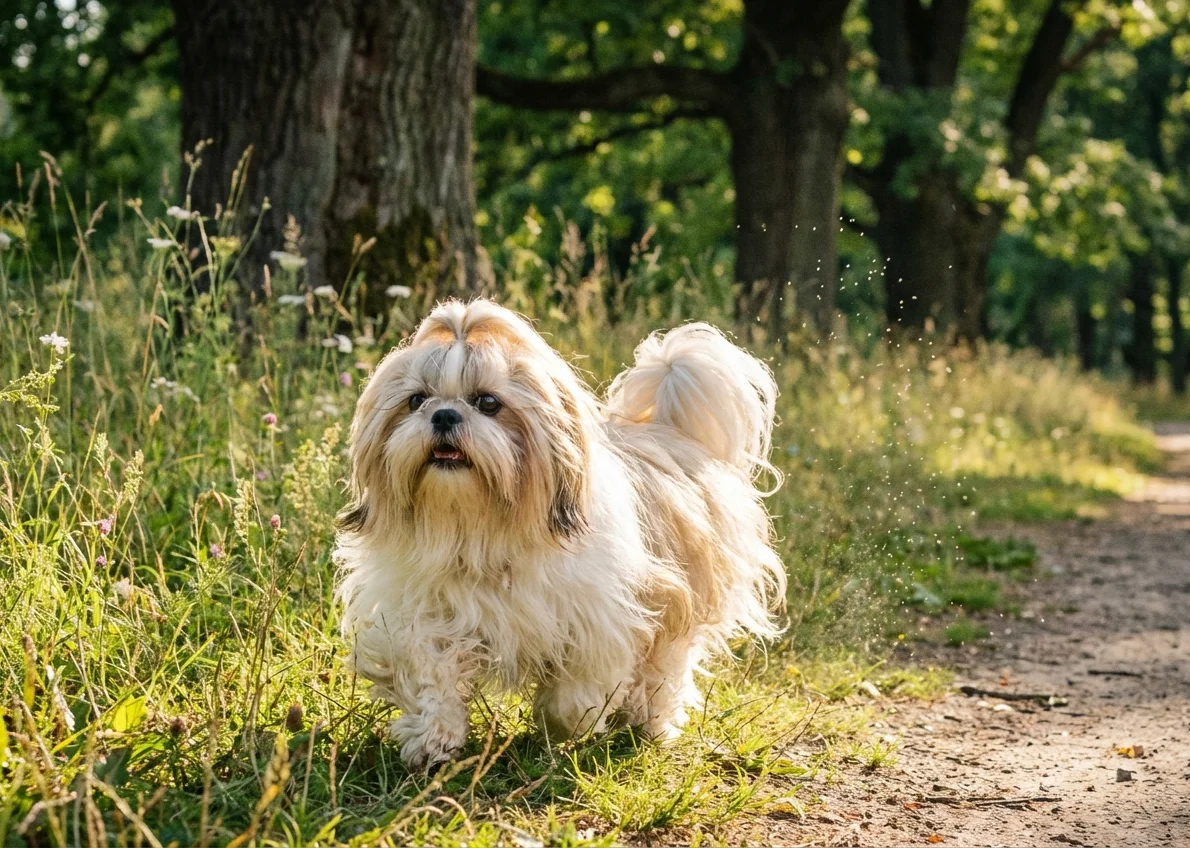
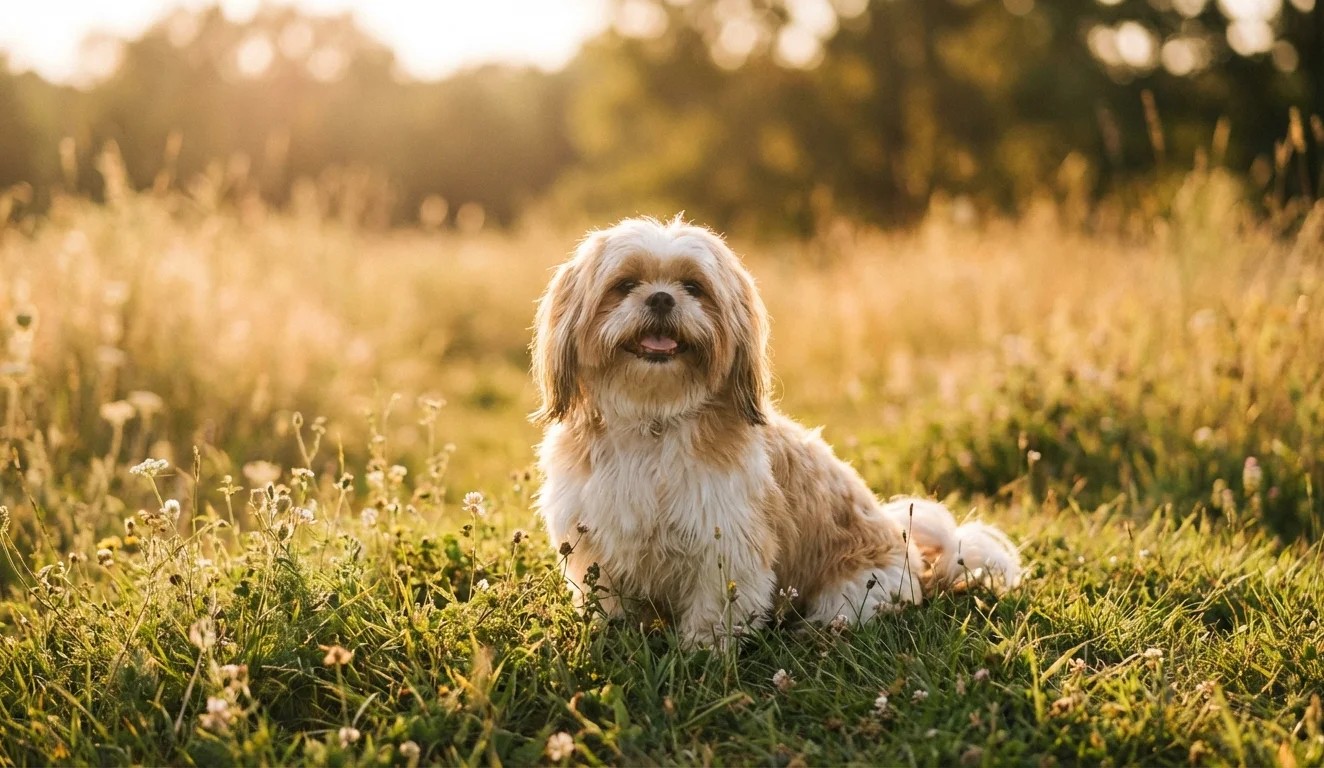
Shih Tzus are compact and surprisingly solid for a toy breed. They stand 9-10.5 inches at the shoulder and weigh 9-16 pounds, with the breed standard preferring 9-10.5 pounds. They’re slightly longer than they are tall, which gives them a low, sturdy profile.
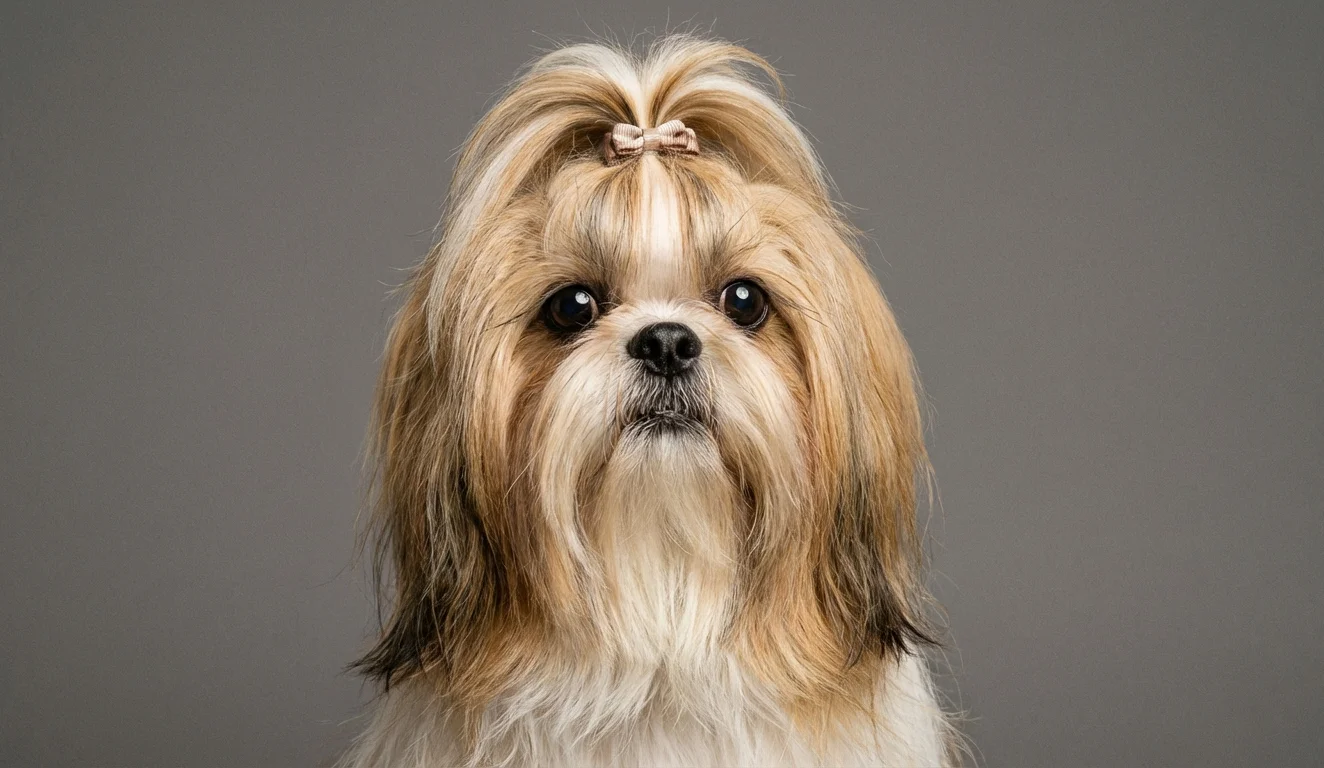
The face is what defines the breed. Shih Tzus are brachycephalic (flat-faced) with large, round, dark eyes that sit wide apart. They have a short muzzle, an undershot bite, and a distinctive underbite that gives some Shih Tzus a slightly goofy expression. The nose is usually black, but liver-colored dogs will have a liver nose.
Coat and Color
The Shih Tzu coat is the breed’s most high-maintenance feature. In its full, show-ring length, the coat is long, flowing, and silky, it grows continuously (like human hair) and can reach the floor if left untrimmed. Most pet owners keep their Shih Tzu in a “puppy cut” or “teddy bear cut” that’s 1-2 inches long, which is far more practical and still looks great.
Shih Tzus come in nearly every color and color combination. Black, white, gold, red, silver, blue, liver, brindle, plus various combinations. The breed standard allows all colors and patterns. A white blaze on the forehead and a white tip on the tail are considered highly desirable in show dogs.
Shih Tzu Temperament
The Shih Tzu was bred to be a companion. Not a hunter, not a herder, not a guard dog. A companion. And they’re spectacularly good at it.
Shih Tzus are people-oriented in a way that’s less needy than some toy breeds. They want to be near you, but they’re not typically anxious about it. A Shih Tzu will follow you around the house, settle on your lap when you sit down, and generally position themselves wherever you are. But they’re not the kind of dog that falls apart when you leave for work. Most Shih Tzus handle alone time better than breeds like the Cavalier or Havanese.
What Shih Tzus are actually like day-to-day:
- Adaptable. Shih Tzus adjust to their owner’s energy level. Active owners get a dog that’s happy to go on walks and play. Couch-potato owners get a dog that’s happy to nap next to them all afternoon. This adaptability is one of the breed’s biggest strengths.
- Stubborn about certain things. Shih Tzus know what they want. If a Shih Tzu doesn’t want to walk in a particular direction, doesn’t want to come inside, or doesn’t feel like performing a command, you’ll know. They’re not defiant in a hostile way. They just… don’t move. It’s more funny than frustrating, most of the time.
- Social with everyone. Shih Tzus are generally friendly with strangers, children, other dogs, and cats. They’re one of the more universally social toy breeds.
- Surprisingly sturdy. Unlike some tiny breeds that feel fragile, Shih Tzus are compact and well-built. They can handle gentle play with children and aren’t as prone to injury from normal household activity as some toy breeds.
Our honest observation: Shih Tzus have a quiet confidence that bigger breeds don’t always possess. They walk into a room full of dogs three times their size and act like they own the place. This isn’t anxiety-driven small-dog bravado, it’s genuine self-assurance. They were palace dogs for centuries. They carry themselves like it.
Exercise Needs
Shih Tzus need about 30 minutes of exercise per day. That’s it. A couple of short walks and some playtime will keep a Shih Tzu physically and mentally content.
This is one of the breed’s best features for apartment dwellers, older owners, or anyone who doesn’t want a dog that requires an hour-plus of daily activity. A Shih Tzu is perfectly happy with:
- Two 10-15 minute walks per day
- Indoor play sessions (fetch down a hallway, tug-of-war, interactive toys)
- Puzzle feeders and snuffle mats for mental stimulation
Heat sensitivity is a real concern. Because Shih Tzus are brachycephalic, they can’t cool themselves efficiently through panting. They overheat faster than longer-muzzled breeds. Keep summer walks to early morning or evening, and watch for signs of heat stress: excessive panting, stumbling, bright red gums, or collapse. Air conditioning isn’t a luxury for this breed, it’s a necessity in warm climates.
A Shih Tzu that doesn’t get enough exercise might gain weight (they’re prone to it) or develop minor behavioral issues like barking or attention-seeking. But they won’t destroy your apartment. The worst-case scenario with a bored Shih Tzu is usually some extra barking and maybe a chewed-up shoe.
Grooming
Here’s where the Shih Tzu demands your time and money. That gorgeous coat doesn’t maintain itself.
If you keep the coat long (show length):
- Daily brushing is non-negotiable. The silky coat tangles and mats quickly, especially behind the ears, under the legs, and around the collar area. A pin brush and a good metal comb are your primary tools.
- Professional grooming every 4-6 weeks for bathing, trimming, and maintenance. Budget $50-$80 per session.
- Topknot maintenance. A long-coated Shih Tzu needs their head hair tied up to keep it out of their eyes. You’ll be doing tiny ponytails on your dog. It’s ridiculous and adorable.
If you keep a short “puppy cut” (what we’d recommend for most pet owners):
- Brushing 2-3 times per week to prevent matting
- Professional grooming every 6-8 weeks for a trim. Budget $40-$60 per session.
- Far less daily maintenance, and the dog is more comfortable in warm weather
Additional grooming needs:
- Face cleaning daily. The flat face means tear staining is common, those reddish-brown streaks under the eyes. Wiping the face with a damp cloth daily helps prevent buildup.
- Ear checks weekly. Shih Tzu ears grow hair inside the canal, which can trap moisture and lead to infections. Some groomers pluck the ear hair. Others trim it. Discuss the best approach with your vet.
- Teeth brushing 2-3 times weekly. Small breeds are prone to dental disease, and Shih Tzus are no exception.
The grooming costs add up. Plan for $500-$900 per year in professional grooming alone. It’s the trade-off for a breed that barely sheds.
Shih Tzu Health Issues
Shih Tzus are generally healthy dogs with an impressive lifespan of 10-18 years. But the breed does have some predispositions worth knowing about.
Brachycephalic Obstructive Airway Syndrome (BOAS)
All flat-faced breeds deal with this to some degree. The shortened skull compresses the airway structures, elongated soft palate, narrowed nostrils (stenotic nares), and a smaller trachea. Shih Tzus are less severely affected than Bulldogs or Pugs on average, but they still snore, snort, and wheeze more than longer-muzzled breeds. In moderate to severe cases, surgery can widen the nostrils and shorten the soft palate ($2,000-$5,000). If your Shih Tzu sounds like they’re struggling to breathe during normal activity, talk to your vet, not all snoring is just “how the breed sounds.”
Patellar Luxation
This condition occurs when the kneecap slides out of its normal groove, causing intermittent lameness. You might see your Shih Tzu skip a step or hold up a back leg for a few strides before it pops back into place. The OFA reports that toy breeds have some of the highest rates of patellar luxation. Mild cases (Grade 1-2) can be managed with weight control and joint supplements. Severe cases (Grade 3-4) need surgery, which runs $1,500-$3,000 per knee.
Eye Problems
Those big, beautiful, protruding eyes are vulnerable. Shih Tzus are prone to keratoconjunctivitis sicca (dry eye), where the tear glands don’t produce enough moisture. Left untreated, it leads to corneal damage and pain. Treatment is lifelong eye drops ($200-$1,000 per year). Progressive retinal atrophy (PRA) is also a concern, it’s a genetic condition that causes gradual vision loss and eventual blindness. Reputable breeders test for PRA.
Hip Dysplasia
Less common than in large breeds, but Shih Tzus do have a moderate incidence of hip dysplasia. The OFA evaluates Shih Tzus with a notable percentage of abnormal hips. Treatment ranges from $1,500-$6,000 depending on severity.
Training
Shih Tzus are moderately trainable. They’re intelligent enough to learn quickly, but whether they choose to perform on command is another question entirely.
The breed has a well-deserved reputation for stubbornness. This isn’t a lack of intelligence, it’s a lack of interest in performing tricks on demand. Shih Tzus were bred to sit in laps, not to fetch ducks. They’ll learn “sit” and “come” readily enough, but you might need to convince them that performing the command is worth their time. Food rewards help significantly.
Training tips for Shih Tzu owners:
- Keep sessions short. Five to ten minutes is plenty. Shih Tzus lose interest in repetitive drills faster than working breeds.
- Be patient with housetraining. This is the #1 training challenge with the breed. Shih Tzus are notoriously slow to housetrain, many owners report it taking 4-8 months for reliable indoor cleanliness. Consistency, a strict schedule, and positive reinforcement when they go in the right spot are your best tools. Some owners find that bell training (hanging a bell on the door) works well with this breed.
- Don’t rely on punishment. Shih Tzus shut down when corrected harshly. They’ll stop trying if they associate training with negative experiences. Patience gets results. Frustration doesn’t.
- Socialization is still important. Even though Shih Tzus are naturally social, early exposure to different environments, people, and sounds builds confidence and prevents fear-based behaviors.
Cost
Purchase Price
A Shih Tzu puppy from a reputable breeder costs $1,000-$2,500. Show-quality Shih Tzus from champion lines may cost $2,500-$4,000. The breed is popular enough that rescue organizations exist specifically for Shih Tzus, adoption fees are typically $200-$500.
Monthly Costs
| Expense | Monthly Estimate |
|---|---|
| Food (small breed formula) | $20-$40 |
| Professional grooming (averaged) | $40-$70 |
| Preventive vet care (averaged) | $15-$25 |
| Pet insurance | $25-$50 |
| Treats and chews | $10-$15 |
| Miscellaneous (toys, supplies) | $10-$20 |
| Total | $80-$175 |
Grooming is the big line item. If you learn to groom at home (which is doable with a good pair of clippers, some YouTube tutorials, and a patient dog), you can cut that cost significantly. First-year costs beyond purchase price typically run $2,000-$3,500, including vaccinations, spay/neuter, supplies, and grooming equipment or appointments.
Is a Shih Tzu Right for You?
A Shih Tzu could be a great fit if you:
- Live in an apartment or small home, this is one of the best apartment breeds
- Want a low-exercise dog that’s happy with short walks
- Are a first-time dog owner looking for a manageable breed
- Want a dog that’s good with children, other dogs, and cats
- Have family members with mild allergies (Shih Tzus are low-shedding, though no dog is truly hypoallergenic)
- Are retired or work from home and want a companion that’ll hang out with you all day
- Don’t mind regular grooming appointments
A Shih Tzu is probably not right if you:
- Want a dog that’ll go running, hiking, or swimming with you
- Live in a very hot climate without air conditioning
- Don’t want to deal with regular grooming costs and maintenance
- Want a dog that’s instantly obedient and easy to housetrain
- Are looking for a guard dog (a Shih Tzu will alert-bark at strangers, but that’s about the extent of their security capabilities)
- Travel frequently without your dog, while they handle alone time better than some breeds, they still thrive on companionship
The Shih Tzu has been a companion dog for over a thousand years, and they’ve gotten extremely good at the job. They’re not going to win any agility competitions or impress you with complex tricks. But they’ll sit next to you while you watch TV, greet you at the door like seeing you is the best part of their day, and live long enough for you to really build a life together. For a lot of people, that’s exactly what they need from a dog.
Related Breeds
If you’re considering this breed, you might also want to look at:
Frequently Asked Questions
Are Shih Tzus hypoallergenic?
Shih Tzus are often called hypoallergenic because they shed very little. Their coat grows continuously, like human hair, rather than going through heavy shed cycles. But “hypoallergenic” is misleading, all dogs produce allergens in their dander, saliva, and urine. Shih Tzus produce less airborne dander than heavy-shedding breeds because the hair doesn’t fly off and carry dander around your home. Many people with mild dog allergies do well with Shih Tzus, but if your allergies are severe, spend time with the breed before committing.
How long do Shih Tzus live?
Shih Tzus are one of the longest-lived breeds, with a typical lifespan of 10-18 years. Many reach 14-16 years with good care. The keys to longevity are maintaining a healthy weight (obesity shortens lifespan in all small breeds), regular dental care (dental disease can affect organ health), and keeping up with vet checkups. The wide range in lifespan (10-18 years) reflects how much individual health, genetics, and care quality matter.
Are Shih Tzus hard to housetrain?
Yes, honestly. Shih Tzus are among the more challenging breeds to housetrain, and most experienced owners will confirm this. Small breeds in general take longer, their tiny bladders need more frequent trips outside, and accidents are easy to miss in a large house. Crate training, a consistent schedule (out first thing in the morning, after meals, after naps, before bed), and enthusiastic praise for going outside are the proven approach. Most Shih Tzus become reliably housetrained between 6-12 months of age. Some owners use indoor potty pads as a permanent solution, especially in apartments.
Do Shih Tzus bark a lot?
Shih Tzus are moderate barkers. They’ll alert-bark at the doorbell, at strangers passing by the window, and at unusual sounds. They’re not typically excessive barkers the way some toy breeds (Chihuahuas, Yorkies) can be. But a bored or attention-seeking Shih Tzu will bark more than a stimulated one. Training a “quiet” command early and ensuring your Shih Tzu gets enough mental stimulation keeps barking at a manageable level.
Can Shih Tzus be left alone during the workday?
Adult Shih Tzus (over 1 year) can typically handle 6-8 hours alone, though less is better. They’re more independent than some toy breeds and don’t usually develop severe separation anxiety. But they’re still companion dogs at heart, and a Shih Tzu left alone for 10+ hours daily will become unhappy. If you work full-time away from home, consider a midday dog walker, a doggy daycare arrangement, or getting two Shih Tzus so they have company. Puppies under 6 months shouldn’t be left alone for more than 2-3 hours.