Pug Breed Guide: 18 Pounds of Snoring, Snorting Devotion (2026)
The Pug is a 14-18 pound comedian in a wrinkly package. They live to make you laugh and will follow you to every room, including the bathroom.
The Pug is a small, sturdy toy breed that weighs 14-18 pounds, stands 10-13 inches tall, and lives 13-15 years. They were bred to be companions for Chinese emperors, and honestly, they’ve never forgotten that job title. This is a dog whose entire purpose in life is to be near you, on you, or, if they could manage it, inside you.
In Short: 14–18 lbs, 13–15 years. Low energy. Moderate shedder (more than you’d expect for their size). Watch for Brachycephalic Obstructive Airway Syndrome (BOAS). Best for apartment dwellers and families who want a velcro dog.
Pugs are one of the most popular small breeds in the world, and it’s not hard to see why. They’re funny without trying to be. They’re affectionate without being neurotic about it. They get along with basically everyone, kids, strangers, other dogs, the mail carrier. But we need to talk about the elephant in the room (or the flat-faced dog in the room): Pugs have real health challenges. That squished face that makes them so endearing also makes it harder for them to breathe, regulate their body temperature, and in some cases, live comfortably. If you’re considering a Pug, you need to go in with your eyes open about what that means for your wallet and your heart.
Pug at a Glance
| Trait | Details |
|---|---|
| Breed Group | Toy (AKC) |
| Height | 10-13 in |
| Weight | 14-18 lbs |
| Life Expectancy | 13-15 years |
| Coat | Short, smooth, double coat |
| Colors | Fawn, Black |
| Temperament | Charming, Mischievous, Loving |
| Shedding | Heavy (surprisingly so) |
| Energy Level | Low |
| Good With Kids | Yes |
| AKC Recognition | 1885 |
History
The Pug’s history stretches back at least 2,000 years to ancient China, where they were prized companions of the Chinese imperial court. These weren’t just any pet, Pugs lived in lavish quarters, sometimes guarded by soldiers, and were treated with a level of reverence that would make a modern Pug owner nod knowingly. The breed likely descended from dogs similar to the Pekingese, though smaller and smoother-coated.
Dutch traders brought Pugs to Europe in the 16th century, and the breed became wildly popular with European royalty. A Pug reportedly saved the life of William, Prince of Orange, in 1572 by alerting him to approaching Spanish troops, earning the breed the title of the official dog of the House of Orange. Napoleon’s wife Josephine used her Pug, Fortune, to carry concealed messages to her family while she was imprisoned at Les Carmes. The dog bit Napoleon on their wedding night. (Not a great start, but Napoleon eventually came around.)
Queen Victoria was a devoted Pug enthusiast who bred them herself and is credited with helping to establish breeding standards. The AKC recognized the Pug in 1885, and the breed has stayed consistently popular ever since, currently ranking in the top 35 most popular breeds in the US.
Size and Appearance
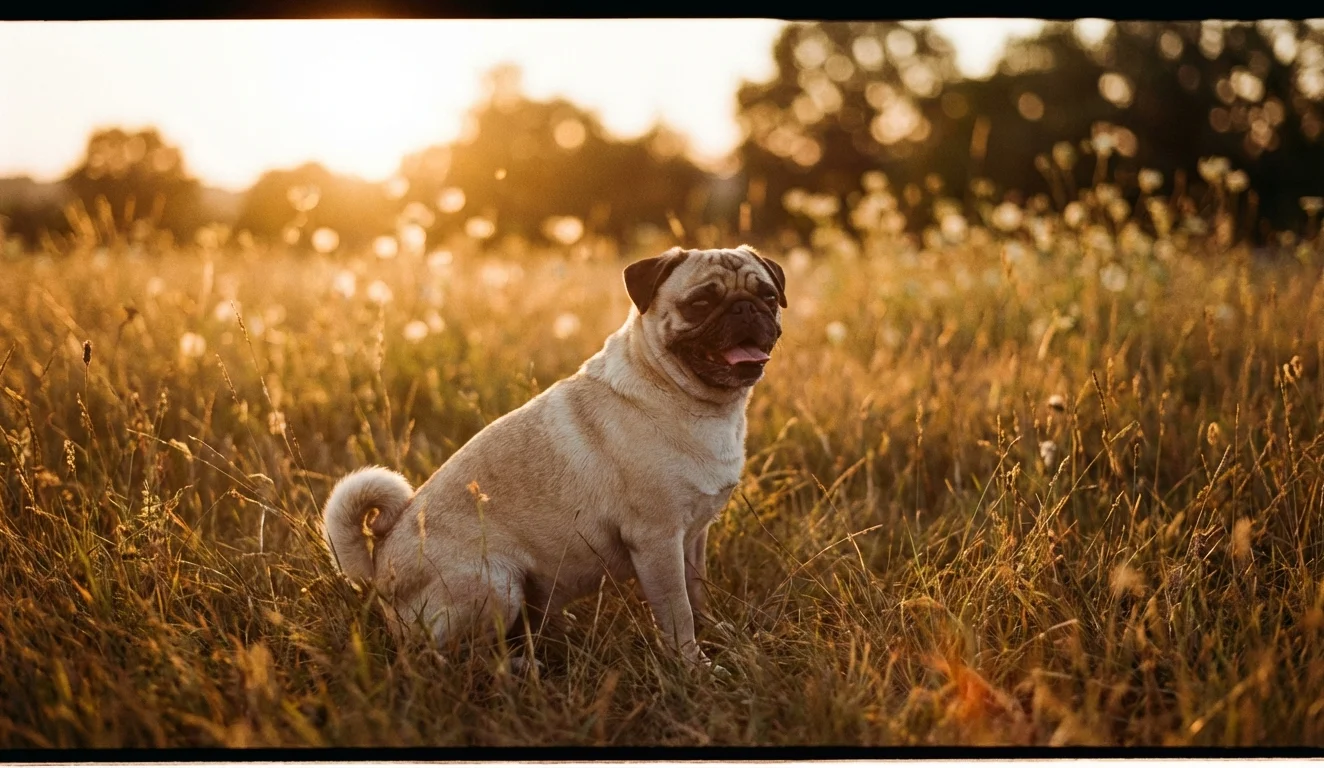
Pugs are compact, muscular little dogs that carry a surprising amount of weight for their frame. They stand 10-13 inches at the shoulder and weigh 14-18 pounds, though many pet Pugs carry a few extra pounds beyond that (more on that problem later). The AKC standard describes the ideal Pug body as “square and cobby”, meaning their length from chest to rear roughly equals their height.
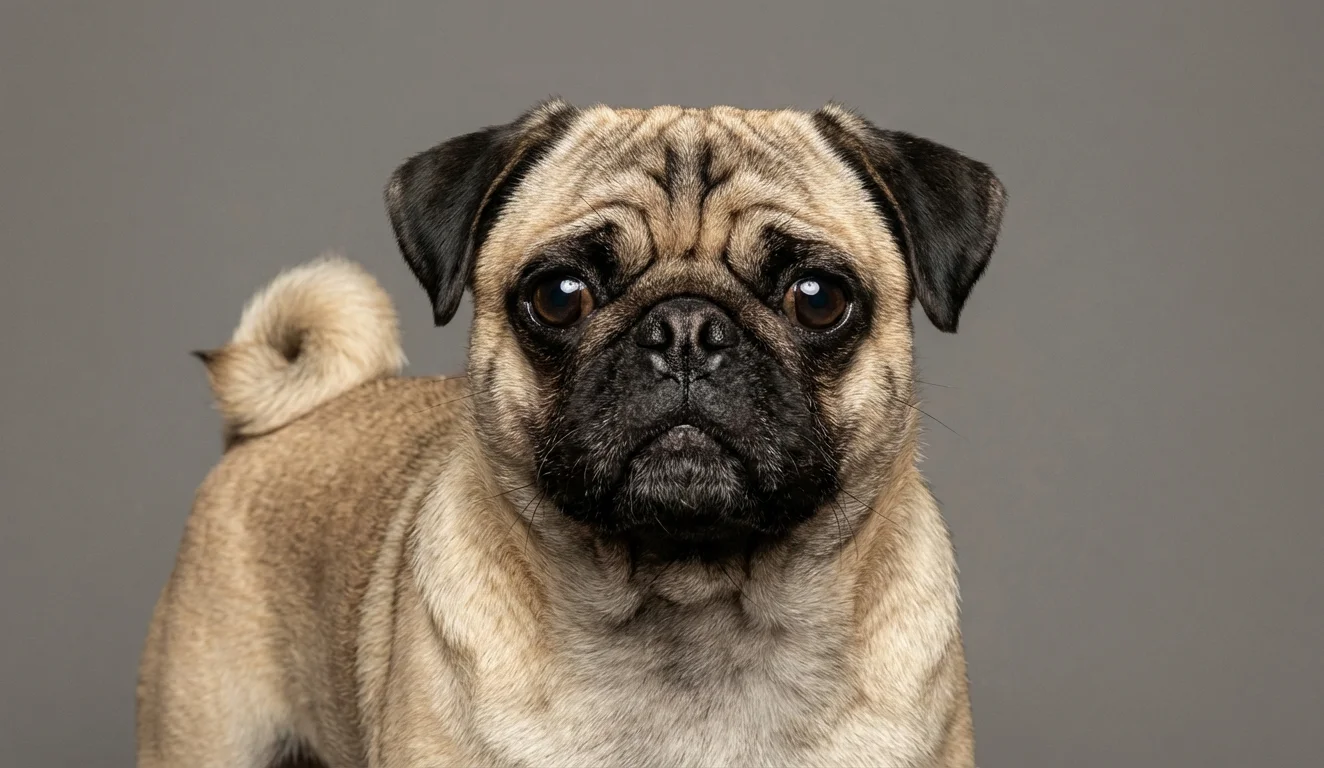
The face is, of course, the defining feature. Pugs have a flat, wrinkled face with large, round, dark eyes that project an almost human range of expressions. Their forehead wrinkles form deep folds, particularly the large roll above the nose called the “nose rope”, that give them a perpetually concerned look. The ears are small and soft, and come in two styles: “rose” (small, folded back) and “button” (folded forward with the ear tip lying close to the skull). Button ears are preferred in the show ring.
The tail curls tightly over the hip in a distinctive spiral. A double curl is considered ideal by breed standards. Pugs come in two colors: fawn (ranging from silver-fawn to apricot-fawn, always with a black mask) and solid black. Fawn Pugs are more common, but black Pugs have a dedicated following.
Pug Temperament
The AKC describes the Pug as “even-tempered, charming, mischievous, and loving.” That’s accurate, but it undersells the comedy. Pugs are genuinely funny dogs. They make ridiculous noises. They sleep in absurd positions. They’ll stare at you with those enormous eyes until you give them whatever they want, and then they’ll fall asleep on your lap making sounds like a small chainsaw.
What living with a Pug is really like:
- They’re shadow dogs. Pugs want to be wherever you are, always. They’ll follow you from room to room without hesitation. This is endearing until you trip over them for the third time before breakfast.
- They’re surprisingly stubborn. Don’t let the goofy personality fool you. Pugs know what they want, and they’re remarkably persistent about getting it. This stubbornness shows up most during training, a Pug will look at you, understand exactly what you’re asking, and then do something else entirely.
- They’re social butterflies. Pugs love everyone. Strangers, kids, other dogs, cats, a Pug has never met someone who isn’t a potential new best friend. This makes them terrible guard dogs but excellent family pets.
- They snore. A lot. This isn’t a quirk, it’s a constant. Pugs snore when they sleep, snort when they’re awake, and make a symphony of breathing sounds throughout the day. If you’re a light sleeper, the Pug might need their own bedroom.
One underrated Pug trait: they’re perceptive. Pugs are sensitive to the emotional state of their owners in a way that goes beyond most toy breeds. They seem to know when you need cheering up, and they’ll work at it until you smile.
Exercise Needs
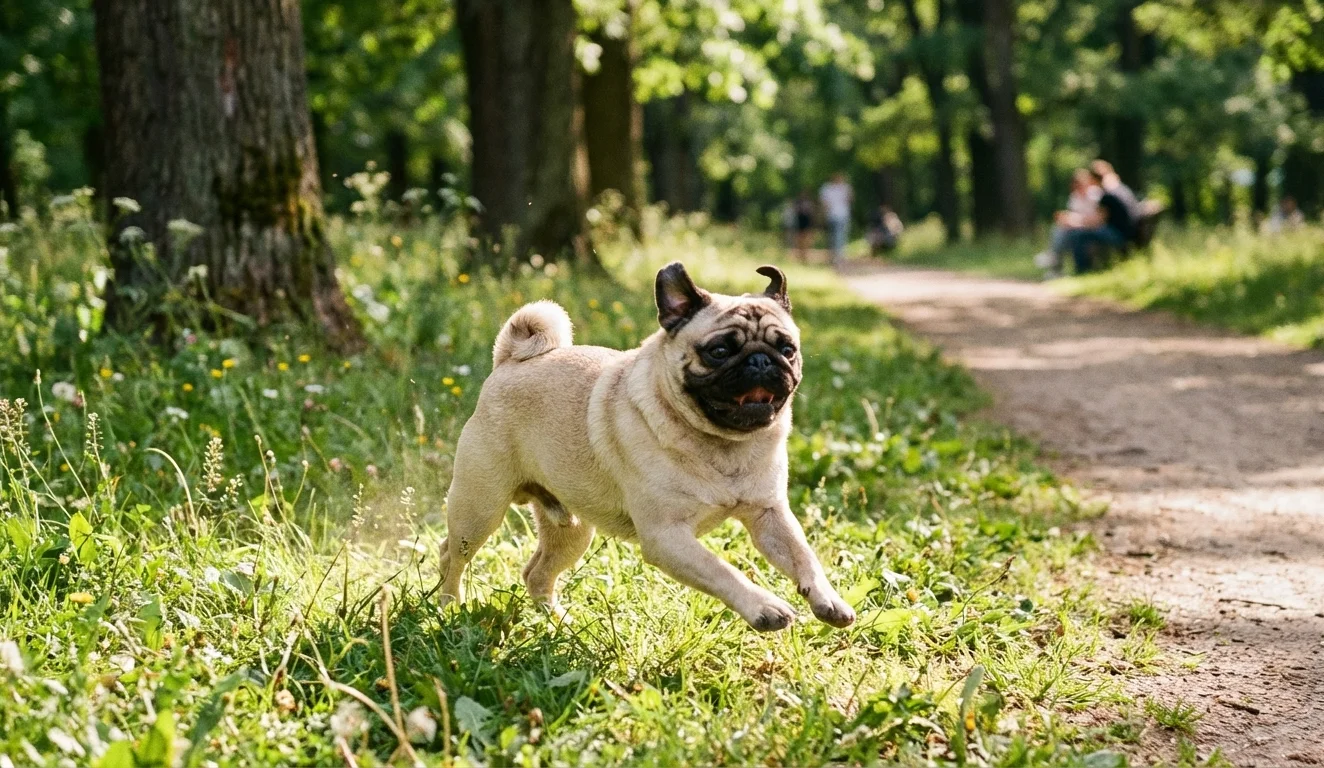
Pugs need about 30 minutes of exercise per day. That’s it. Short walks, a bit of indoor play, maybe some time puttering around the backyard. Pugs are not athletes, they know they’re not athletes, and they have no interest in becoming athletes.
Good exercises for Pugs:
- Short walks. Two 15-minute walks per day at a moderate pace. Don’t push for speed, Pugs set their own pace, and it’s leisurely.
- Indoor play. Fetch in the hallway, tug-of-war with a rope toy, or puzzle feeders that make them work for treats. Pugs enjoy mental stimulation as long as it doesn’t require too much cardiovascular effort.
- Socialization outings. Pugs love going places and meeting people. A trip to a pet-friendly store counts as both exercise and enrichment.
The heat warning is serious. Pugs are brachycephalic (flat-faced), which means their airways are compromised. They cannot cool themselves efficiently through panting the way long-snouted breeds can. Temperatures above 75 degrees require caution, and anything above 85 degrees is genuinely dangerous. Heatstroke in Pugs can happen in minutes, not hours. Walk early in the morning or late in the evening during summer, and always carry water.
The other exercise concern is weight. Pugs love food with the intensity of a religion, and they gain weight easily. An overweight Pug isn’t just a chubby dog, the extra pounds compress already-compromised airways, stress joints, and can shorten an already modest lifespan. Keep your Pug lean. It’s one of the most impactful things you can do for their health.
Grooming
Pugs have a short double coat that sheds far more than their size would suggest. Some Pug owners describe the shedding as “a second dog’s worth of hair every week.” You’ll want to brush 2-3 times per week with a rubber curry brush or a bristle brush to keep the loose hair manageable.
Bathing every 3-4 weeks keeps their coat clean, but the real grooming priority is facial fold care. Those adorable wrinkles trap moisture, food particles, and bacteria. You need to wipe between the folds, especially the nose rope, every day or two with a damp cloth or unscented baby wipe, then dry thoroughly. Neglected wrinkles lead to skin fold dermatitis, which is painful and smelly.
Other grooming basics: trim nails every 2-3 weeks, clean ears weekly (Pugs’ folded ears can trap moisture), and brush teeth regularly. Pugs are prone to dental crowding because of their shortened jaw, so dental care matters more with this breed than most.
Pug Health Issues
Let’s be direct: Pugs have more health challenges than the average breed. Their brachycephalic structure is the root of several issues, and responsible ownership means budgeting for veterinary care. The breed’s average lifespan of 13-15 years is respectable for a purebred, but quality of life depends heavily on how these conditions are managed.
Brachycephalic Obstructive Airway Syndrome (BOAS)
This is the big one. BOAS encompasses several airway abnormalities caused by the Pug’s flat face: stenotic nares (narrow nostrils), an elongated soft palate, and sometimes a hypoplastic trachea. Symptoms include loud breathing, snoring, exercise intolerance, and in severe cases, episodes of choking or collapse. Studies published in Canine Genetics and Epidemiology suggest that over 50% of Pugs show some degree of BOAS. Surgical correction, which may include widening the nostrils and shortening the soft palate, runs $2,000-$5,000. Not every Pug needs surgery, but many benefit from it.
Pug Dog Encephalitis (PDE)
PDE is an inflammatory brain disease unique to Pugs. It typically affects young Pugs (usually under 3 years old) and causes seizures, circling, blindness, and behavioral changes. There’s currently no cure, and the prognosis is poor. A genetic marker has been identified, and DNA testing costs about $50-$150. Ask breeders if they screen for the PDE susceptibility gene. Treatment for managing symptoms runs $1,500-$4,000 but is often palliative.
Eye Problems
Those large, prominent eyes are beautiful but vulnerable. Pugs are prone to corneal ulcers, dry eye (keratoconjunctivitis sicca), pigmentary keratitis, and proptosis (where the eye can actually pop out of the socket during trauma, yes, really). The OFA recommends annual eye exams for breeding Pugs. Treatment varies widely: corneal ulcer repair runs $300-$1,500, while emergency proptosis surgery costs $1,000-$3,000.
Patellar Luxation
The OFA reports that Pugs have a notable prevalence of patellar luxation, where the kneecap slides out of its normal position. Mild cases may only need monitoring, but severe cases require surgical correction at $1,500-$3,000 per knee.
Obesity
This deserves its own section because it’s so common and so preventable. Studies suggest that over 60% of pet Pugs are overweight. Obesity worsens every other health condition on this list, it makes breathing harder, puts more stress on joints, and increases anesthesia risk. A Pug at a healthy weight should have a visible waist when viewed from above. If your Pug looks like a furry barrel, they need less food and more walks.
Training
Training a Pug requires patience and a sense of humor. They’re intelligent enough to learn quickly, but they have a streak of stubbornness that can make sessions feel like negotiations. A Pug will master “sit” in two repetitions and then spend the next ten minutes pretending they’ve never heard the word before.
What works with Pugs:
- Food rewards. Pugs are extremely food-motivated, which is your strongest training tool. Use small, low-calorie treats to avoid the obesity problem, but use that love of food to your advantage.
- Positive reinforcement only. Pugs are sensitive and will shut down if they feel scolded. Keep the tone upbeat and reward what you want to see more of.
- Short sessions. Five to ten minutes is ideal. Pugs lose interest quickly, and pushing past that point just frustrates both of you.
- Consistency. Pugs will find every loophole in your rules. If you let them on the couch once, that’s the new normal. Set boundaries early and stick to them.
Housebreaking is the biggest training challenge with Pugs. They’re notoriously slow to housetrain compared to many breeds. Crate training helps, and you’ll want to set a consistent schedule. Expect the process to take 4-6 months, don’t lose patience.
Cost
Purchase Price
A Pug puppy from a reputable breeder costs $1,200-$2,500. Breeders who health-test for PDE, patellar luxation, and eye conditions tend to be on the higher end, but that testing is worth every dollar. Avoid breeders selling Pugs for under $800, there are a lot of poorly bred Pugs from puppy mills on the market.
Adoption through Pug-specific rescues typically costs $250-$500. There are several excellent Pug rescue organizations nationwide, and adult Pugs adjust to new homes remarkably well.
Monthly Costs
| Expense | Monthly Estimate |
|---|---|
| Food (high-quality, toy breed) | $25-$45 |
| Preventive vet care (averaged) | $20-$40 |
| Pet insurance | $40-$75 |
| Treats and chews | $10-$20 |
| Miscellaneous (toys, supplies) | $10-$20 |
| Total | $105-$200 |
Pet insurance is particularly important for Pugs given their health predispositions. Expect premiums on the higher end because insurers know the breed’s medical history.
First-Year Costs
Budget $3,000-$5,500 for your first year with a Pug. This includes the purchase price, initial vet visits, vaccinations, spay/neuter, supplies, and the inevitable emergency vet trip when they eat something they shouldn’t.
Is a Pug Right for You?
A Pug is a great fit if you:
- Live in an apartment or small home (they’re perfectly sized for smaller spaces)
- Want a dog that’s genuinely good with kids, strangers, and other pets
- Prefer low-energy walks over intense outdoor adventures
- Work from home or have someone present during the day (Pugs don’t love being alone)
- Can commit to daily facial fold cleaning and regular vet check-ups
- Have a budget for potential health expenses
A Pug is probably NOT right if you:
- Want a running partner or hiking companion
- Live in a hot climate without reliable air conditioning
- Can’t tolerate constant snoring and breathing sounds
- Are uncomfortable with the breed’s known health challenges
- Want a dog that housetains quickly
- Expect low shedding from a small dog (surprise, Pugs shed like huskies)
Pugs have been making people happy for 2,000 years. Their health challenges are real, and we won’t sugarcoat them. But a well-bred Pug from a responsible breeder, kept at a healthy weight, and given proper veterinary care can live a long, happy, ridiculous life. They’ll make you laugh every single day. That’s worth something.
Related Breeds
If you’re considering this breed, you might also want to look at:
FAQ
Do Pugs really snore that much?
Yes. Almost all Pugs snore, and many snore loudly enough to wake you up from across the room. This is a direct consequence of their brachycephalic (flat-faced) anatomy, the shortened airway creates turbulence during breathing, especially when relaxed. Some owners find it endearing. Others invest in earplugs. If the snoring is accompanied by choking or gasping episodes, consult your vet about BOAS evaluation.
Are Pugs good apartment dogs?
Pugs are one of the best apartment breeds available. They’re small, relatively quiet (barking isn’t their thing, weird breathing noises are), and need minimal outdoor exercise. Their biggest need is companionship, not space. Just make sure your apartment has reliable climate control, because Pugs are heat-sensitive.
How much do Pugs shed?
More than you’d believe for a dog their size. Pugs have a dense double coat that sheds year-round, with heavier shedding in spring and fall. Fawn Pugs tend to shed more than black Pugs (fawn Pugs have a thicker double coat). Regular brushing helps, but you’ll still find Pug hair on everything you own.
Can Pugs be left alone during the workday?
Pugs are companion dogs to their core, and they don’t do well with long periods of isolation. Four to six hours is generally the maximum before separation anxiety kicks in. If you work full-time outside the home, consider doggy daycare, a dog walker, or getting two Pugs (they do great in pairs). A lonely Pug can become destructive, vocal, and depressed.
What’s the best way to find a healthy Pug breeder?
Look for breeders who test for PDE (the genetic marker), perform OFA patella evaluations, get annual CERF/OFA eye exams, and, ideally, have their dogs assessed for BOAS severity by a veterinary specialist. The Pug Dog Club of America maintains a breeder referral list. Walk away from any breeder who can’t or won’t provide health clearances. The difference between a well-bred Pug and a poorly bred one is often the difference between a manageable pet and years of expensive veterinary emergencies.