Pekingese Breed Guide: The Imperial Lapdog That Never Got the Demotion Memo (2026)
The Pekingese was bred for Chinese emperors and has never once considered updating its resume. Under 14 pounds of pure, unapologetic royalty.
The Pekingese stands 6-9 inches at the shoulder and weighs up to 14 pounds. They live 12-14 years. Somewhere around 2,000 years ago, Chinese imperial breeding programs set out to create the perfect lapdog, a miniature lion with a flat face, a luxurious mane, and the temperament of a monarch who tolerates the staff. They succeeded beyond their wildest ambitions. The Pekingese doesn’t know it’s small. It doesn’t know the Chinese Empire fell. It certainly doesn’t know it’s a pet and not a deity. And nothing you do will convince it otherwise.
In Short: Up to 14 lbs, 12–14 years. Low energy. Heavy grooming needs. Watch for Brachycephalic Obstructive Airway Syndrome (BOAS) and Intervertebral Disc Disease. Best for adults or retirees who want a low-exercise, high-personality companion that demands respect and gives affection on a royal schedule.
The Pekingese is the most opinionated dog under 14 pounds. They’ve got the independence of a Chow Chow, the alertness of a Lhasa Apso, and the self-regard of a breed that was literally worshipped. If you want a small dog that bounces around the house, greets every stranger with tail wags, and performs tricks on command, the Pekingese will stare at you with an expression that suggests you’ve deeply misunderstood the arrangement. If you want a small dog with the dignity and presence of something three times its size, you’ve come to the right place.
Pekingese at a Glance
| Trait | Details |
|---|---|
| Breed Group | Toy (AKC) |
| Height | 6-9 in |
| Weight | Up to 14 lbs |
| Life Expectancy | 12-14 years |
| Coat | Long, thick double coat with heavy mane |
| Colors | All colors and markings, gold, red, sable, cream, black, white, parti, biscuit |
| Temperament | Regal, Confident, Affectionate (selectively) |
| Shedding | Moderate to heavy |
| Energy Level | Low |
| Good With Kids | Best with older, gentle children |
| AKC Recognition | 1906 |
History
The Pekingese is one of the oldest and most historically significant toy breeds. It was developed in ancient China, likely originating over 2,000 years ago, as a companion for Chinese emperors and the imperial court. The breed’s Chinese name, “lion dog,” reflects the legend that the Pekingese was created by the Buddha himself, who shrank a lion down to dog size. (The Pekingese, for its part, seems to believe this origin story completely.)
For centuries, the Pekingese was strictly a palace dog. Theft of a Pekingese from the imperial court was punishable by death. The dogs were pampered beyond comprehension, carried in the sleeves of courtiers’ robes (earning the nickname “sleeve dogs”), attended by personal servants, and fed from the emperor’s table. Commoners were forbidden from owning them. The breed was essentially unknown outside China.
That changed in 1860, during the Second Opium War, when British and French forces stormed the Summer Palace in Beijing. As the imperial family fled, five Pekingese were left behind, reportedly found guarding the body of a princess who had taken her own life rather than be captured. British soldiers took the dogs back to England, and one was presented to Queen Victoria. That dog, named “Looty” (which tells you something about the era’s lack of subtlety), sparked Western interest in the breed. The AKC recognized the Pekingese in 1906. The breed has since won Best in Show at Westminster four times, more than almost any other breed.
Size and Appearance
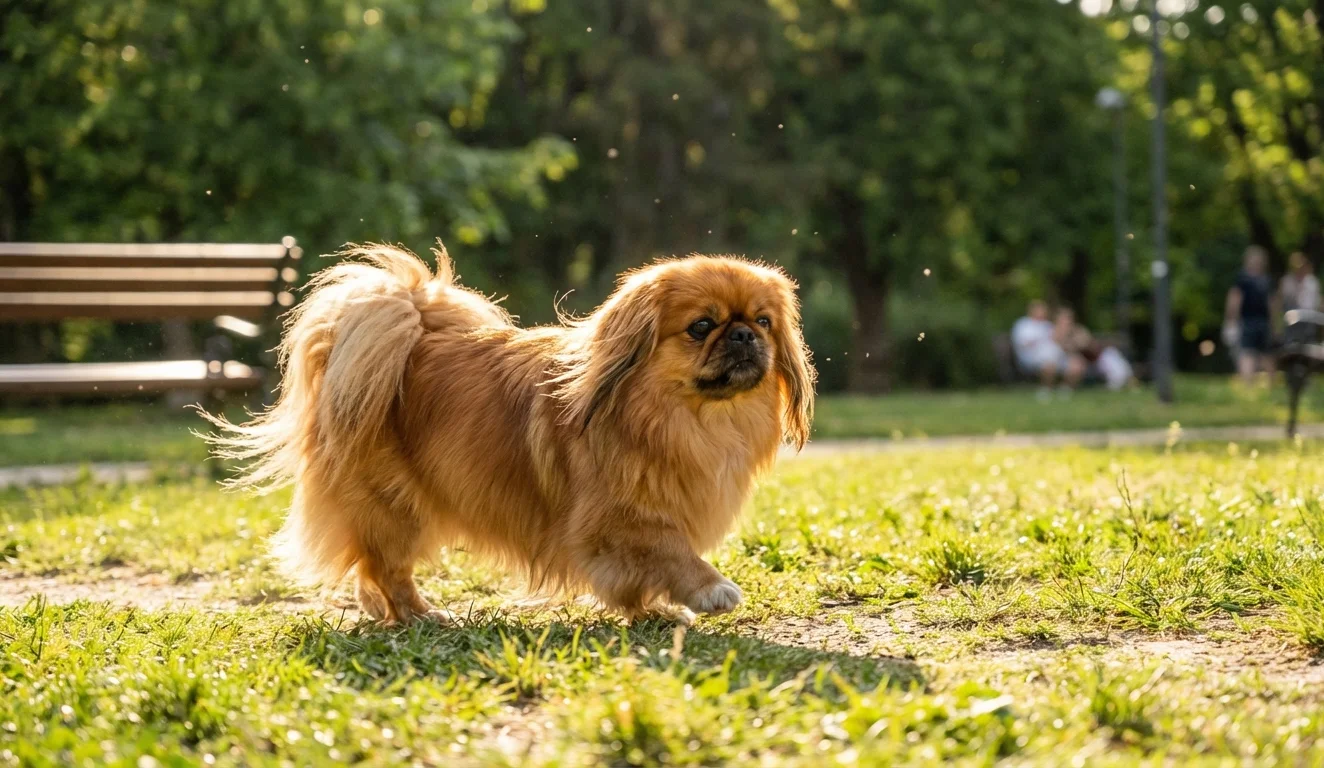
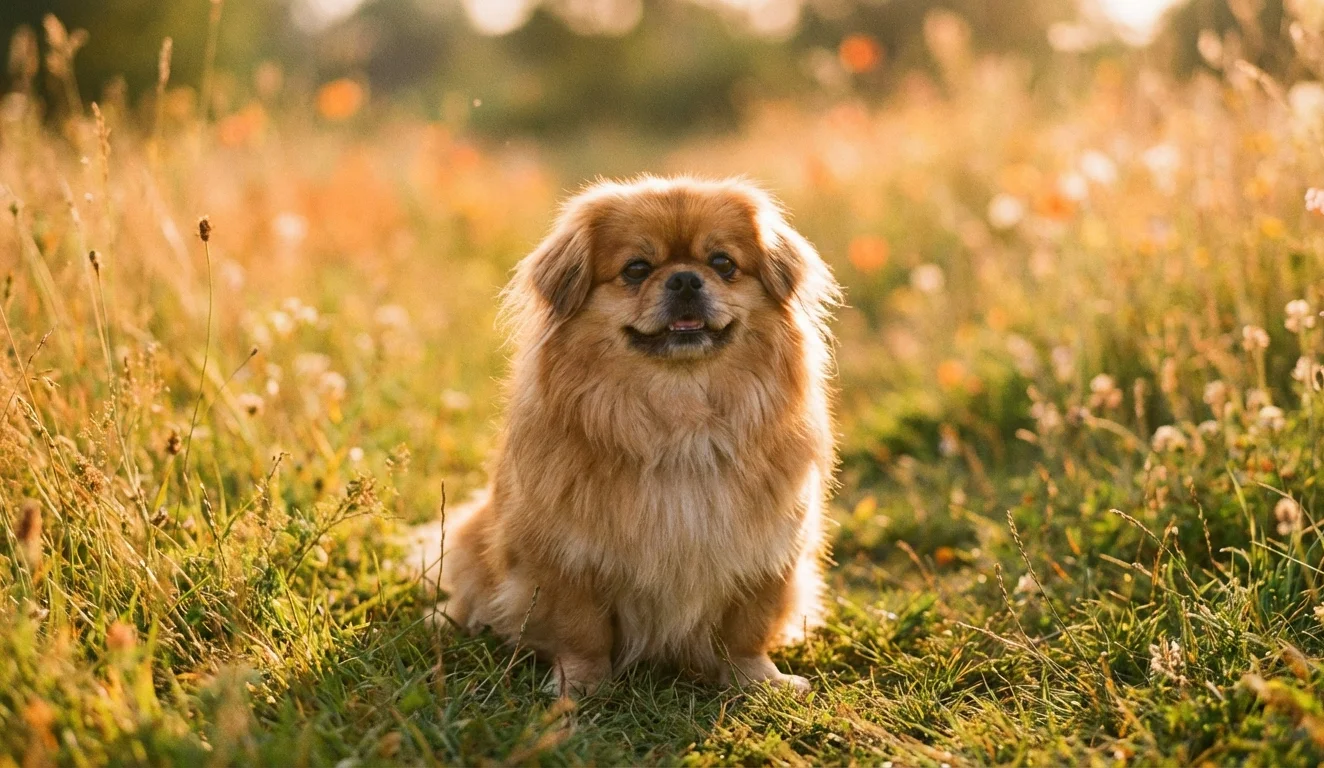
The Pekingese is a compact, low-to-the-ground dog with a stocky build that’s heavier than it looks. The AKC standard specifies a maximum weight of 14 pounds, with most show dogs in the 8-12 pound range. Despite the small stature, Pekes are muscular and surprisingly dense, picking one up for the first time, people often say, “You’re heavier than you look.”
The body is pear-shaped: broad at the front (with a wide chest and heavy bone), narrowing toward the rear. The legs are short and bowed, and the rolling, unhurried gait is distinctive, it’s been described as a swagger. The tail is set high, arched over the back, and drapes with long feathering.
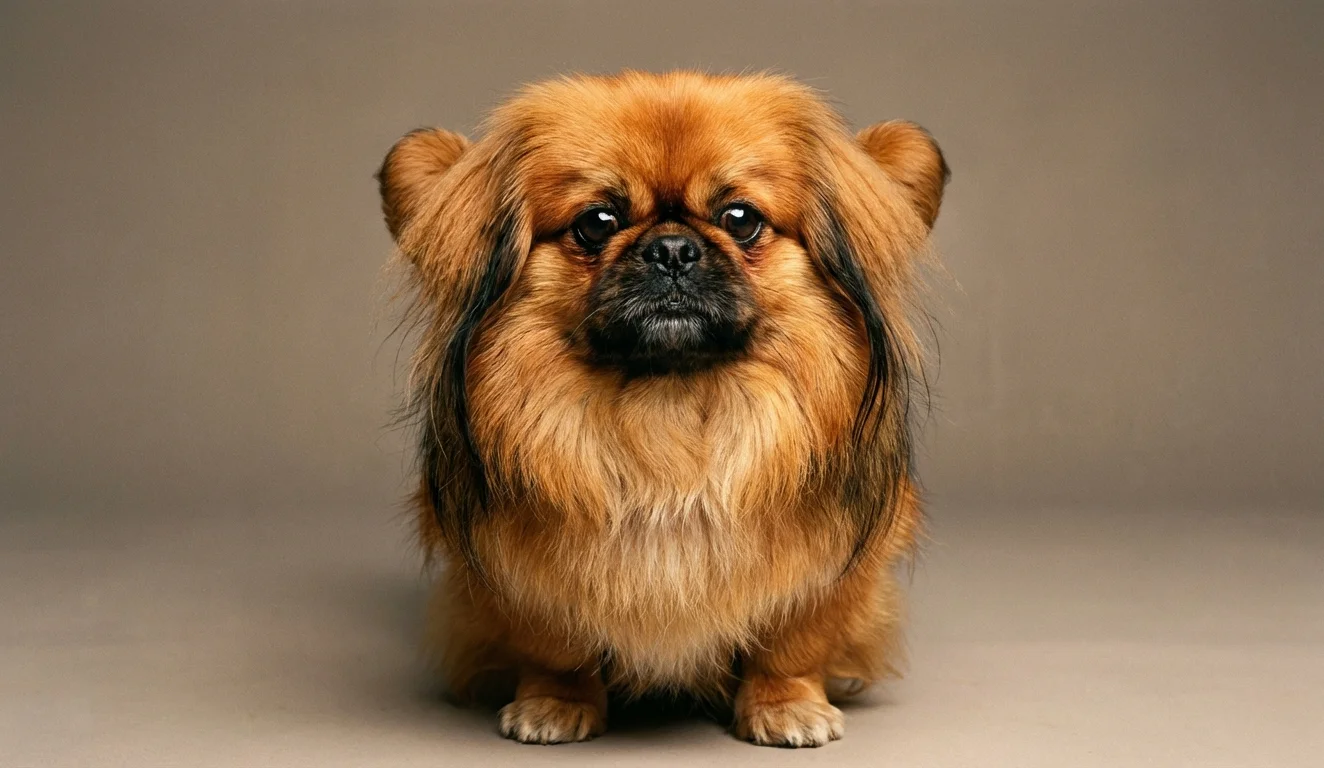
The face is the breed’s most striking (and most medically concerning) feature. The Pekingese has one of the flattest faces in the dog world, a very short muzzle, a broad lower jaw, large round eyes that protrude slightly, and a wrinkled nose. The head is massive relative to the body, framed by an abundant mane that forms a ruff around the neck and shoulders. In full coat, a Pekingese looks like a small, self-important lion, which is exactly the point.
Pekingese Temperament
The Pekingese temperament is best described as “benevolent monarch.” They love their people, but they love them on their own terms. They don’t fetch. They don’t do tricks. They don’t come when called unless it aligns with their existing plans. What they will do is sit beside you with a regal air, accept your affection when they’re in the mood, and patrol the household with a dignity that suggests everything is proceeding according to their plan.
What living with a Pekingese is actually like:
- They’re loyal to their chosen human. Pekes typically bond most strongly with one person and maintain a polite but clear hierarchy with everyone else. The chosen person receives affection, attention, and the honor of carrying the Pekingese when it doesn’t feel like walking (which is often).
- They’re bold beyond their size. Pekingese have zero awareness of their small stature. They’ll face down large dogs, stare down strangers, and defend their territory with a conviction that would be more appropriate in a dog five times their weight. This boldness can create problems if not managed, a Pekingese that picks a fight with a German Shepherd doesn’t understand the math involved.
- They’re independent. Commands are received, evaluated, and often declined. This isn’t defiance, it’s genuine independence. The Pekingese was bred to be a companion, not a worker, and it has never seen the point of obedience for obedience’s sake.
- They’re alert barkers. Pekes take their watchdog heritage seriously. They’ll bark at unusual sounds, visitors, and perceived threats. The bark is deeper and more authoritative than you’d expect from their size. Training can moderate it, but the instinct runs deep.
- They’re affectionate on their schedule. When a Peke wants to cuddle, it’ll climb into your lap and settle in with a satisfied sigh. When it doesn’t, it’ll find its own spot and give you a look that says, “I’ll let you know when I’m ready.” This independence is part of the charm, Pekingese affection feels earned, not automatic.
Exercise Needs
Pekingese need about 20-30 minutes of exercise per day. This can be a couple of short, leisurely walks and some indoor play. They’re not built for speed, distance, or athletic endeavors of any kind. Their short legs, brachycephalic face, and heavy coat make them heat-sensitive and prone to overexertion.
Heat is the biggest concern. Pekingese are among the most heat-sensitive breeds due to their severely shortened airway. In warm weather (above 70-75°F), limit outdoor time, avoid midday walks entirely, and watch for signs of respiratory distress: heavy open-mouth panting, gagging, blue-tinged gums, or collapse. Many Peke owners keep exercise to indoor play during summer months and save outdoor walks for early morning or late evening.
Stairs can be challenging and potentially dangerous. The Pekingese’s long back and short legs make them susceptible to spinal injuries from jumping on and off furniture or navigating steep stairs. Ramps for getting on couches and beds are a smart investment. Many Peke owners baby-gate stairways to prevent unsupervised stair use.
Swimming is not a Pekingese activity. Their heavy front, short legs, and flat face make them extremely poor swimmers. They should never have unsupervised access to pools, ponds, or other bodies of water.
Grooming
The Pekingese coat is spectacular and demanding. In full show coat, it requires daily attention. Even in a pet clip, regular grooming is part of the deal.
For a full-length coat:
- Daily brushing with a pin brush and metal comb, working through all layers. Focus on behind the ears, the chest, the “pants” (rear leg feathering), and under the belly, these are prime matting zones. Allow 20-30 minutes
- Weekly bath and blow-dry: the dense coat needs thorough drying to prevent hot spots and skin infections
- Professional grooming every 4-6 weeks for trimming paw pads, sanitary areas, and maintaining coat shape
For a shorter pet clip:
- Brushing 3-4 times per week
- Professional grooming every 6-8 weeks: budget $50-$90 per session
Regardless of coat length:
- Facial wrinkle cleaning daily: the folds around the nose and under the eyes trap moisture and bacteria. Clean with unscented baby wipes and dry thoroughly
- Tear stain cleaning daily: the prominent eyes produce excessive tearing. Wipe under the eyes with a damp cloth
- Nail trims every 2-3 weeks
- Dental care 4-5 times per week: small breeds with crowded mouths need diligent dental hygiene
- Ear cleaning weekly
Shedding is moderate to heavy. The thick double coat drops undercoat year-round, with heavier seasonal sheds in spring and fall. A high-quality deshedding tool helps during coat-blow season.
Pekingese Health Issues
The Pekingese’s extreme brachycephalic structure creates inherent health challenges. Buying from a breeder who prioritizes moderate facial structure (not the flattest possible face) can reduce, though not eliminate, many of these issues.
Brachycephalic Obstructive Airway Syndrome (BOAS)
This is the breed’s most significant health concern. BOAS encompasses several anatomical abnormalities common in flat-faced breeds: stenotic nares (narrowed nostrils), elongated soft palate, everted laryngeal saccules, and a hypoplastic (undersized) trachea. Affected dogs snore, snort, gag, and have varying degrees of difficulty breathing, from mild noise during exercise to severe respiratory distress. A 2017 study at the Royal Veterinary College found that brachycephalic breeds were 3.5 times more likely to suffer from breathing disorders than non-brachycephalic breeds. Surgical correction of severe cases, widening the nostrils and shortening the soft palate, costs $2,000-$5,000 and significantly improves quality of life. Not every Peke needs surgery, but every prospective owner should understand the breathing limitations.
Intervertebral Disc Disease (IVDD)
The Pekingese’s long back and short legs put it at elevated risk for IVDD. Disc degeneration or herniation causes pain, weakness, and in severe cases, paralysis. The Pekingese Club of America identifies IVDD as one of the breed’s top health concerns. Conservative treatment (strict crate rest for 4-6 weeks plus anti-inflammatory medications) costs $500-$2,000. Surgical decompression for severe cases runs $3,000-$8,000. Prevention strategies include ramps instead of stairs, discouraging jumping on and off furniture, and maintaining a healthy weight.
Eye Problems
Those large, prominent Pekingese eyes are beautiful and vulnerable. Proptosis (the eye literally popping out of the socket due to trauma or pressure) is a breed-specific emergency, it can happen from rough play, being squeezed, or even pulling on a collar. Treatment requires immediate veterinary care ($1,000-$3,000). Corneal ulcers are also common due to the exposed eye surface ($500-$2,000 for treatment). Dry eye (KCS) occurs at elevated rates. Annual ophthalmologic exams are recommended.
Patellar Luxation
OFA data shows the Pekingese among breeds with higher rates of patellar luxation. Mild cases may not require treatment. Severe cases need surgical correction ($1,500-$3,000 per knee).
Training
Training a Pekingese is an exercise in negotiation. You’re not going to command this dog, you’re going to persuade it. And some days, your persuasion won’t be persuasive enough.
Positive reinforcement with high-value treats is the only viable approach. Harsh corrections will either be ignored (best case) or will damage the dog’s trust (worst case). Pekes aren’t fragile emotionally in the way some toy breeds are, they’re more likely to dig in their heels than to crumble, but they’ll remember harsh treatment and hold it against you.
Keep training sessions short: 5-10 minutes, maximum. The Peke’s attention span for structured training is limited, and repetitive drilling produces a dog that walks away rather than a dog that performs on cue. Mix up exercises, keep energy positive, and celebrate small wins.
Housetraining can be a challenge with Pekingese. Their small bladders, low-to-the-ground stature (which makes outdoor conditions more unpleasant), and general distaste for rain, cold, and wind create a combination that tests patience. Consistent scheduling, crate training, and patience are the approach. Some Peke owners successfully use indoor potty stations (pee pads or artificial grass) as a permanent option, especially in regions with harsh winters.
Socialization should start early. Pekingese that aren’t exposed to a variety of people and situations during puppyhood can become excessively suspicious or snappy with strangers. The goal isn’t to make your Peke love everyone, that’s not in the breed’s playbook, but to produce a dog that tolerates new situations without excessive fear or aggression.
Cost
Purchase Price
A Pekingese puppy from a reputable breeder costs $1,500-$3,000. Show-quality puppies from champion lines can reach $4,000+. Given the breed’s brachycephalic health concerns, investing in a breeder who selects for moderate facial structure (not the absolute flattest face) and tests for eye, patella, and cardiac conditions is worth every dollar.
Monthly Costs
| Expense | Monthly Estimate |
|---|---|
| Food (toy breed, high-quality) | $20-$40 |
| Preventive vet care (averaged) | $20-$40 |
| Pet insurance | $30-$55 |
| Professional grooming | $25-$50 |
| Grooming/cleaning supplies | $10-$20 |
| Treats and chews | $10-$15 |
| Miscellaneous | $10-$15 |
| Total | $125-$235 |
First-Year Costs
Beyond the purchase price, first-year costs run $2,000-$4,000. This includes vaccinations, spay/neuter (discuss timing with your vet, as anesthesia in brachycephalic breeds requires extra precautions), a crate, grooming tools, ramps for furniture access, initial vet exams, microchipping, and potentially early evaluation for BOAS severity. If BOAS surgery is recommended in the first year, add $2,000-$5,000.
Is a Pekingese Right for You?
A Pekingese could be a great fit if you:
- Want a low-energy, indoor companion with enormous personality
- Appreciate a dog that’s dignified, independent, and not clingy
- Live in an apartment or small home (no yard needed)
- Are home frequently, Pekes prefer company but don’t demand constant attention
- Can commit to regular grooming
- Want a watchdog in a toy package
- Live in a mild-to-cool climate (or have reliable air conditioning)
A Pekingese is probably not right if you:
- Have young children (Pekes don’t tolerate rough handling, and their eyes are vulnerable to accidental injury)
- Want an eager-to-please, obedient dog
- Live in a hot climate without air conditioning
- Want an active, outdoorsy dog
- Aren’t willing to manage brachycephalic health concerns
- Want a dog that enthusiastically greets everyone
- Prefer a low-grooming breed
Owning a Pekingese is like living with a very small, very fluffy aristocrat who has graciously agreed to share your home. They don’t do tricks, they don’t fetch, and they don’t perform on demand. What they do is occupy their space with absolute certainty that they belong there, give you affection when the spirit moves them (and it does, regularly, despite the aloof reputation), and remind you daily that dignity has nothing to do with size. Two thousand years of imperial breeding produced something genuinely unique, a toy dog with the personality of a lion. You either get it or you don’t. The Peke doesn’t care either way.
Related Breeds
If you’re considering this breed, you might also want to look at:
Frequently Asked Questions
Are Pekingese good apartment dogs?
Excellent apartment dogs. They’re small, low-energy, and don’t need a yard. Their exercise needs can be met entirely with short indoor play sessions and brief walks. The main apartment consideration is barking, Pekes are alert barkers, and neighbors in close quarters may notice. Training a reliable “quiet” command helps, but some alerting is inevitable.
Do Pekingese snore?
Yes. All brachycephalic dogs snore to some degree, and Pekingese snore with commitment. The flattened airway that causes BOAS also produces nighttime (and daytime) snoring, snorting, and breathing noises that can be surprisingly loud for a 12-pound dog. If you’re a light sleeper, the Peke may need to sleep in a different room. Or you may need earplugs. Or you may simply learn to find it charming, which is what most Peke owners eventually do.
How do Pekingese handle heat?
Poorly. The brachycephalic airway means Pekingese can’t pant efficiently to cool themselves, and the heavy coat adds insulation they don’t need in warm weather. Heatstroke is a genuine risk at temperatures that wouldn’t bother most breeds. Above 75-80°F, keep exercise minimal and ensure access to air conditioning. Never leave a Pekingese in a car, even with windows cracked. On hot days, many Peke owners use cooling vests, limit outdoor time to 10-15 minutes, and keep frozen treats available.
Can Pekingese go up stairs?
Physically, yes. But it’s not ideal. The long back and short legs make Pekingese susceptible to spinal injuries, and repeated stair climbing increases IVDD risk. Many veterinarians and breeders recommend limiting stair access and using ramps instead. For homes with stairs between main living areas, carrying your Peke or using baby gates to redirect to a ramp is the safer approach.
Are Pekingese hard to train?
They’re not hard to train in the traditional sense, they understand what you want quickly. They’re hard to motivate. The Pekingese has roughly 2,000 years of breeding that says its job is to be admired, not to perform on command. Short, positive, treat-heavy sessions work best. Housetraining requires patience and consistency. Forget about elaborate trick training unless your particular Peke is unusually food-motivated. Focus on the basics: house manners, leash walking, and a reliable “quiet” command.