Keeshond Breed Guide: The Smiling Dutchman (2026)
The Keeshond is a fluffy, grinning Dutch barge dog that wants to be your best friend. Picture a smaller Husky that actually listens.
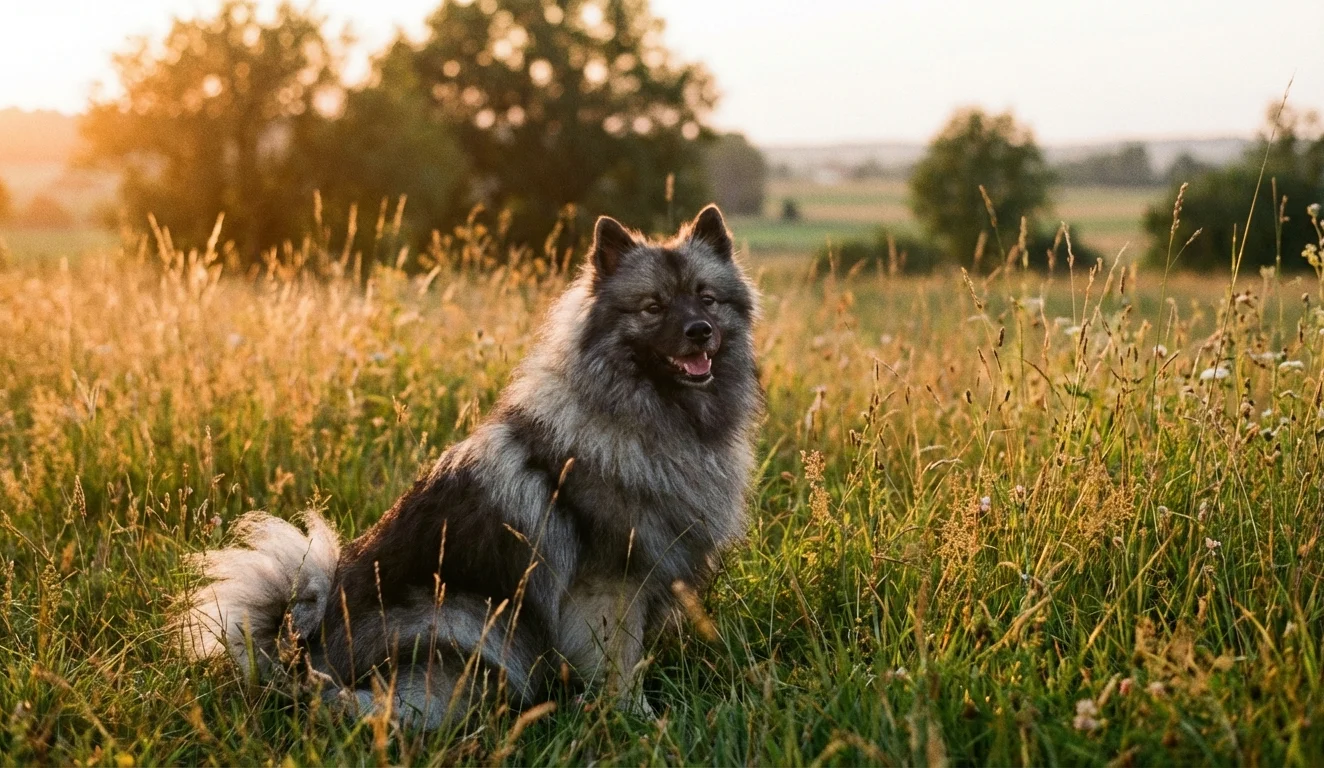
The Keeshond (pronounced “KAYZ-hawnd,” plural “Keeshonden”) stands 17-18 inches tall, weighs 35-45 pounds, and lives 12-15 years. If you’ve never heard of this breed, you’re not alone, the Keeshond is one of the best-kept secrets in the dog world. It’s a medium-sized, spectacularly fluffy spitz-type dog with a distinctive “spectacles” marking around the eyes that makes it look perpetually friendly and slightly surprised. And that expression isn’t misleading. Keeshonden genuinely are that friendly.
In Short: 35–45 lbs, 12–15 years. Moderate energy. Heavy shedding with seasonal blowouts. Watch for Hip Dysplasia and Primary Hyperparathyroidism. Best for families and first-time owners wanting a friendly, adaptable companion.
We think the Keeshond is one of the most underappreciated family dogs out there. It’s got the fluffy, photogenic look of a Husky or Samoyed without the extreme exercise demands or stubborn independence. It’s smart, trainable, great with kids, apartment-friendly, and gets along with basically everyone. So why isn’t it more popular? Honestly, we’re not sure. Maybe it’s the name (people don’t know how to say it). Maybe it’s the coat (it’s a lot of fur). But if you’re looking for a medium-sized companion that’ll love your whole family and actually behave in public, the Keeshond deserves serious consideration.
Keeshond at a Glance
| Trait | Details |
|---|---|
| Breed Group | Non-Sporting (AKC) |
| Height | Males: 18 in / Females: 17 in |
| Weight | 35-45 lbs |
| Life Expectancy | 12-15 years |
| Coat | Long, dense double coat with a thick mane |
| Colors | Mix of gray, black, and cream with distinctive “spectacles” |
| Temperament | Friendly, Outgoing, Lively, Alert |
| Shedding | Heavy (year-round with massive seasonal blowouts) |
| Energy Level | Moderate |
| Good With Kids | Yes |
| Good With Other Dogs | Yes |
| Apartment Friendly | Yes |
| First-Time Owner Friendly | Yes |
History
The Keeshond has one of the more interesting political backstories of any dog breed. In 18th-century Holland, the breed served as a companion and watchdog on Rhine River barges and canal boats, a floating, furry alarm system that alerted bargemen to approaching strangers or changes in conditions.
The breed became a political symbol during the Dutch Patriot movement of the late 1700s. A patriot leader named Kees de Gyselaer owned a dog of this type, and the breed became the mascot of the rebel faction opposing the House of Orange. They were called “Keeshonden”, literally “Kees’s dogs.” When the Orange faction won the political struggle, owning a Keeshond became politically unpopular, and many owners quietly gave up their dogs. The breed’s numbers dropped dramatically.
The Keeshond survived in relative obscurity on Dutch farms and barges until Baroness van Hardenbroek began a breeding program in the 1920s that revived the breed. The AKC recognized the Keeshond in 1930, and it’s remained a steady (if never wildly popular) presence in the dog world since. The breed is the national dog of the Netherlands, which is fitting given its deeply Dutch roots.
Size and Appearance
Keeshonden are medium-sized, square-proportioned dogs with an absolutely enormous amount of fur. Males stand 18 inches and females 17 inches at the shoulder, and both sexes weigh 35-45 pounds. Under all that coat, they’re actually a fairly compact, balanced dog.
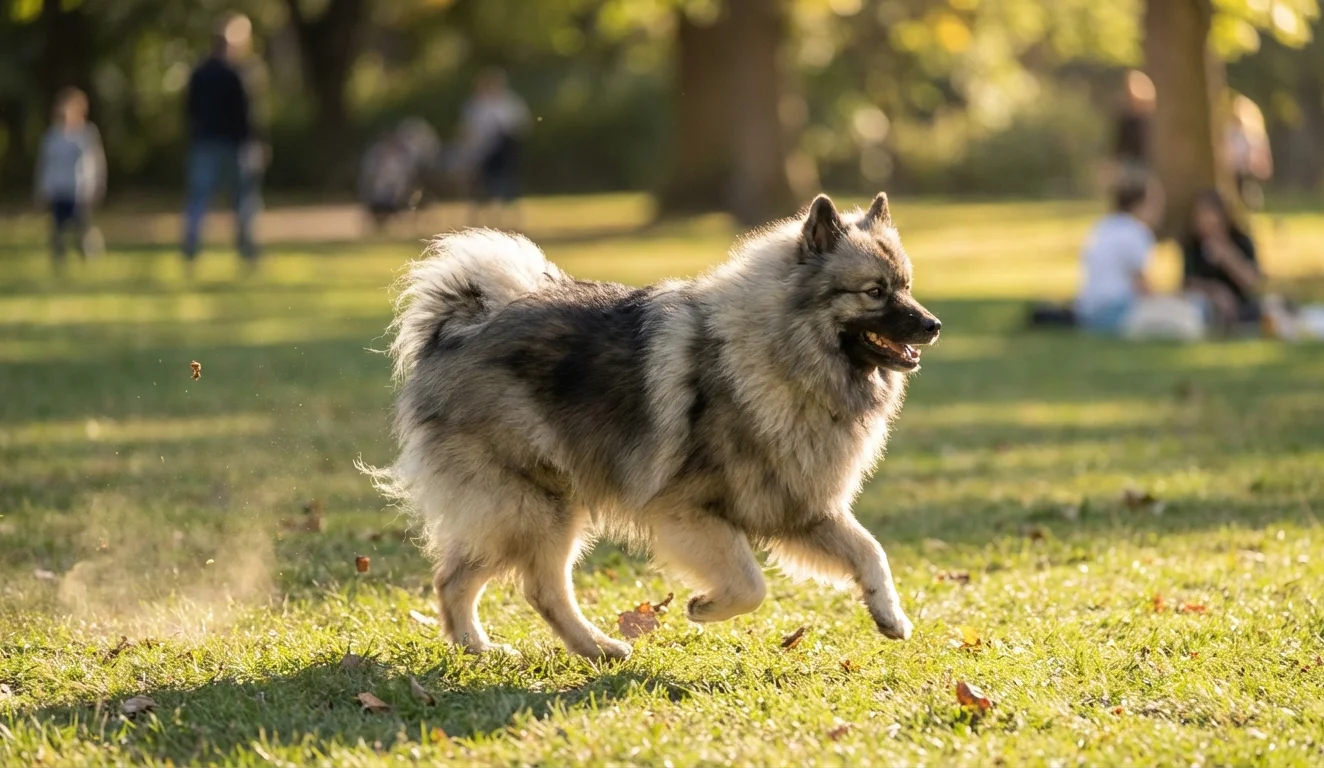
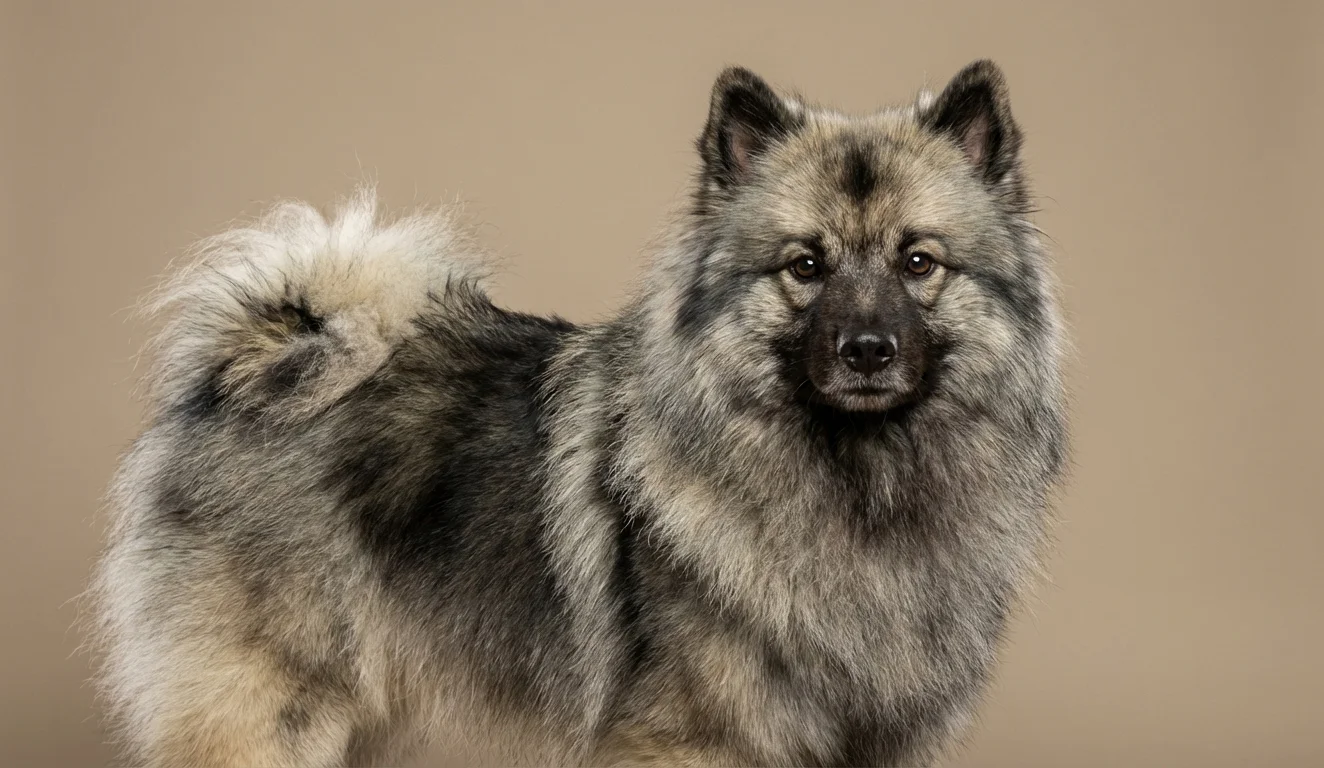
The coat is the showstopper. Keeshonden have a dense, stand-off double coat with a thick mane (called a “ruff”) around the neck and shoulders. The coloring is a distinctive mix of gray, black, and cream, the outer coat is gray with black tips, the undercoat is pale gray or cream, and there’s a characteristic “saddle” of darker gray on the back. The legs and “trousers” (the long fur on the hindquarters) are lighter cream.
The breed’s most recognizable feature is the “spectacles”, a combination of dark markings around the eyes and delicate, lighter-colored shading radiating from the eye in a way that genuinely looks like the dog is wearing glasses. Combined with the alert, dark eyes and the small, pointed ears almost lost in all that fur, the result is an expression of perpetual warmth and good humor.
The tail is tightly curled over the back, plumed with long fur, and typically rests flat against the back. It’s a classic spitz-type feature and adds to the breed’s teddy-bear silhouette.
Keeshond Temperament
The Keeshond temperament is, frankly, wonderful. These dogs are friendly, outgoing, and genuinely enjoy people in a way that’s less needy than a Velcro breed but more engaged than an independent one. The breed’s historical role as a barge companion dog shaped a temperament that’s highly attuned to human emotion.
What living with a Keeshond actually looks like:
- They’re empathetic to an unusual degree. Keeshonden are sometimes called “comfort dogs” because they have an instinct for sensing human distress and responding to it. If you’re sad, your Keeshond will park itself next to you and stay there. This isn’t a trained behavior, it’s a breed trait, and it’s remarkable.
- They’re alert barkers, not nuisance barkers. Keeshonden will bark to alert you that someone’s at the door or something’s different in the environment. Once you acknowledge the alert, most will quiet down. This is a meaningful distinction from breeds that bark reflexively.
- They love their people but aren’t clingy. Keeshonden want to be near you but don’t need to be on top of you. They’re happy in the same room, they don’t need to be in your lap (though they might try, at 40 pounds).
- They’re social with other dogs. Keeshonden generally get along well with other dogs and aren’t prone to dog aggression. They were bred to live on small boats with other animals and people, and that sociability is baked in.
- They smile. Not metaphorically. Keeshonden have a breed-specific behavior where they pull their lips back to show their teeth in what looks unmistakably like a grin. New owners sometimes mistake this for aggression. It’s not, it’s a greeting behavior that’s unique to the breed and a few other spitz types.
Keeshonden are excellent with children and typically patient with the unpredictability that small kids bring. They’re one of the breeds we most often recommend for families with young children who want a medium-sized dog.
Exercise Needs
Keeshonden need about 45-60 minutes of exercise per day, which is one of the breed’s great advantages. They’re active enough to enjoy walks, play, and the occasional hike, but they don’t have the relentless exercise demands of sporting or herding breeds.
Good exercise for Keeshonden:
- Daily walks (one or two 20-30 minute sessions)
- Yard play and fetch
- Moderate hikes, they’ll happily do 3-5 miles but don’t need to summit mountains
- Rally obedience and agility, they enjoy the mental stimulation and social aspects
- Nose work and scent games
Keeshonden are adaptable about exercise. They’ll match your energy level to a reasonable degree, they can hang with an active family or be content with a more moderate routine. They don’t do well with extreme heat, though. That thick double coat makes hot-weather exercise uncomfortable, so summer activities should be limited to cooler parts of the day.
A mentally bored Keeshond is more problematic than a physically bored one. They’re intelligent dogs that need engagement. Puzzle feeders, training sessions, and social interactions do as much for their well-being as physical exercise.
Grooming
Here’s the trade-off for having a dog that looks like a living stuffed animal: the grooming. That gorgeous coat requires consistent maintenance, and if you slack off, you’ll be dealing with mats, tangles, and a miserable dog.
Grooming schedule:
- Brush thoroughly 2-3 times per week with a pin brush and undercoat rake
- Daily brushing during blowout season (spring and fall, heavy shedding for 3-4 weeks)
- Bath every 4-8 weeks: always brush thoroughly before bathing to prevent mats from tightening
- Line brushing (brushing in sections, layer by layer) is the most effective technique for the dense coat
- Nail trim every 2-3 weeks
- Ear check weekly
Critical rule: never shave a Keeshond. The double coat insulates against both cold and heat. Shaving exposes the skin to sunburn, disrupts the coat’s natural temperature regulation, and the coat may never grow back correctly. If you live in a hot climate, manage heat exposure through shade, air conditioning, and timing outdoor activities, not by removing the coat.
Professional grooming every 6-8 weeks ($60-$100 per session) is helpful for thorough deshedding, sanitary trims, and coat maintenance. Many Keeshond owners find that a combination of home brushing and professional grooming keeps the coat manageable.
The shedding is substantial. Keeshonden shed year-round, and during blowout season, you’ll pull out so much undercoat that you could knit another dog. A high-quality pet vacuum and lint rollers in every room are standard Keeshond-owner equipment.
Keeshond Health Issues
Keeshonden are a generally healthy breed with a good lifespan of 12-15 years. The breed’s health profile is better than many purebreds, though there are a few conditions to watch for.
Hip Dysplasia
The OFA reports moderate prevalence of hip dysplasia in Keeshonden. Responsible breeders screen through OFA evaluations. Treatment ranges from conservative management to surgical intervention at $1,500-$6,000.
Primary Hyperparathyroidism (PHPT)
This is the breed-specific condition that Keeshond owners need to know about. PHPT involves overproduction of parathyroid hormone, which elevates calcium levels in the blood and can lead to kidney stones, kidney failure, and bone loss. A DNA test exists and responsible breeders screen for it. Surgical removal of the affected parathyroid gland is the treatment, costing $2,000-$5,000. Early diagnosis through routine blood work dramatically improves outcomes.
Epilepsy
Idiopathic epilepsy occurs in Keeshonden at a moderate rate. Seizures typically begin between ages 1-5 and are usually manageable with medication. Budget $500-$2,000 for diagnosis and ongoing treatment.
Hypothyroidism
An underactive thyroid is documented in the breed and causes weight gain, lethargy, and coat changes. It’s easily diagnosed with blood tests and treated with daily thyroid medication at a cost of $20-$50 per month.
Patellar Luxation
The kneecap can slip out of position in some Keeshonden, causing intermittent lameness. Mild cases may not need treatment. Surgical correction costs $1,500-$3,000 per knee for severe cases.
Training
Keeshonden are one of the easier breeds to train, which is part of what makes them so good for first-time owners. They’re intelligent, want to please, and respond enthusiastically to positive reinforcement. You won’t be battling terrier stubbornness or hound independence with this breed.
Training approach for Keeshonden:
- Positive reinforcement with food and praise. Keeshonden are highly responsive to rewards and will shut down with harsh corrections.
- They learn quickly, basic commands often click within a few repetitions.
- Bark management should start early. Teach a “quiet” command and reward silence. Keeshonden are natural alert barkers, and the behavior can escalate if not addressed.
- Socialization during 8-16 weeks is important but generally easy, Keeshonden are naturally social and usually take new experiences in stride.
- They’re sensitive to tone of voice. A firm “no” carries more weight than you’d expect, no need for anything harsher.
Keeshonden do well in obedience classes, rally, and agility. They also make excellent therapy dogs thanks to their empathetic nature and friendly disposition. The breed’s ability to read human emotions makes them particularly suited to visiting hospitals and care facilities.
Cost
Purchase Price
A Keeshond puppy from a reputable breeder costs $1,000-$2,000. Show-quality puppies from champion bloodlines may reach $2,500-$3,000. The breed isn’t as rare as some, but there aren’t an enormous number of breeders either, expect a wait list of 3-12 months.
Keeshond rescue is available through the Keeshond Club of America rescue network. Adoption fees run $200-$500.
Monthly Costs
| Expense | Monthly Estimate |
|---|---|
| Food (high-quality kibble) | $30-$50 |
| Preventive vet care (averaged) | $15-$25 |
| Pet insurance | $25-$45 |
| Grooming (professional, averaged) | $15-$25 |
| Treats and chews | $10-$15 |
| Miscellaneous (toys, supplies) | $10-$20 |
| Total | $105-$180 |
First-Year Costs
Budget $2,500-$4,000 for the first year, including purchase price, initial veterinary care, vaccinations, spay/neuter, grooming tools ($50-$100 for a quality pin brush, undercoat rake, and slicker brush), supplies, and training. The ongoing grooming costs are higher than short-coated breeds, factor in professional grooming every 6-8 weeks if you prefer not to do it all yourself.
Is a Keeshond Right for You?
A Keeshond is a great fit if you:
- Want a friendly, adaptable medium-sized dog that’s good with everyone
- Are a first-time dog owner looking for a trainable, forgiving breed
- Have children and want a patient, gentle family dog
- Live in an apartment or house, Keeshonden adapt to both
- Don’t need a high-intensity exercise partner but want a dog that enjoys daily activity
- Are willing to commit to regular grooming (this is non-negotiable)
A Keeshond is probably NOT right if you:
- Can’t handle heavy shedding and regular coat maintenance
- Live in a very hot climate without reliable air conditioning
- Want a guard dog, Keeshonden are alert barkers, not protectors
- Prefer a dog with very low grooming needs
- Want a jogging or long-distance running partner (they overheat)
The Keeshond is one of those breeds that, once you meet one, you wonder why they’re not more popular. They’re beautiful, sweet-natured, smart, and genuinely easy to live with (aside from the fur situation). If you’re willing to invest in grooming and don’t mind looking like you’re wearing a fur coat 24/7, a Keeshond might be the best dog you’ve never heard of.
Related Breeds
If you’re considering this breed, you might also want to look at:
FAQ
How do you pronounce “Keeshond”?
It’s “KAYZ-hawnd.” The plural is “Keeshonden” (KAYZ-hawn-den). The name comes from Kees de Gyselaer, an 18th-century Dutch patriot whose dog became the mascot of a political movement. Getting the pronunciation right earns you instant credibility with Keeshond owners, who have heard every possible butchering of the name. “Keesh-ond,” “Key-shond,” “Kee-shund”, they’ve heard them all.
Do Keeshonden bark a lot?
Keeshonden are alert barkers, they’ll bark when someone comes to the door, when they hear unusual sounds, or when something in the environment changes. They’re not nuisance barkers in the way some small breeds are, though. The key difference is that Keeshonden can be taught to stop barking once you’ve acknowledged the alert. Training a “quiet” command early is important, and most Keeshonden pick it up quickly. Without training, the alert barking can escalate, but it’s one of the more manageable barking issues among dog breeds.
Are Keeshonden hypoallergenic?
No. Keeshonden are heavy shedders with a dense double coat, and they’re not suitable for people with dog allergies. The breed sheds year-round and has massive seasonal blowouts twice a year. If allergies are a concern, look at poodle-type breeds or other genuinely low-shedding dogs.
Can Keeshonden handle hot weather?
Keeshonden can live in warm climates, but they need accommodations. Their thick double coat provides some insulation against heat (don’t shave it, that makes it worse), but they’re more comfortable in moderate-to-cool temperatures. In hot weather, limit outdoor exercise to early morning or evening, provide plenty of fresh water and shade, and ensure your home has air conditioning. Keeshonden can overheat if pushed to exercise in high temperatures.
Are Keeshonden good with other pets?
Keeshonden are generally excellent with other pets. They were bred as companion dogs on Dutch barges, where they lived in close quarters with other animals and people. They’re typically friendly with other dogs and can coexist well with cats. They don’t have a strong prey drive, so small pets like rabbits are usually safe (though supervision is always smart). If you’re looking for a breed that’ll integrate smoothly into a multi-pet household, Keeshonden are one of the better options.